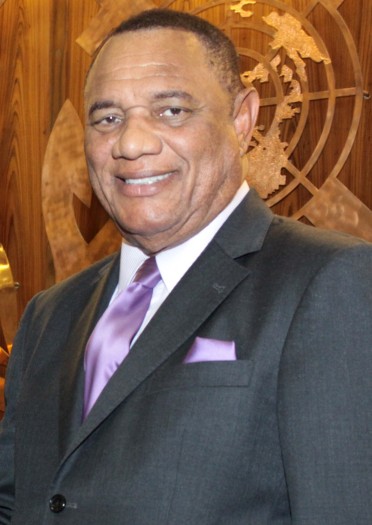
Bahamas Prime Minister Perry Christie. (Photo Credit: Wikipedia)
Caribbean 360 is reporting Bahamas Prime Minister Perry Christie has called on the University of the West Indies (UWI) to be more engaged in the area of research and public policy.
Prime Minister Christie told the Council meeting being attended by UWI Chancellor Sir George Alleyne and Vice Chancellor Professor E. Nigel Harris, that in the case of the Bahamas, the need for a closer link between research and public policy became clearer as his administration grappled with formulating a policy that would bring about the creation of the Bahamas Agricultural and Marine Science Institute (BAMSI).
“This will be placed in Andros which is the largest island in The Bahamas. This is a landmass which is larger than the island of Trinidad but with a population of less than ten thousand people. I am seeking to make a concerted effort for The Bahamas to develop its agricultural potential, and train farmers and fishermen who will not only conduct research and development but will grow food for our country. This is a determined effort to make the country more self-sufficient in food production.”
The Prime Minister wants more research coming from UWI instead of having to rely on research from colleges and universities in Florida (USA), namely the University of Florida and University of Miami. The meeting was held in Nassau.
Justin Bachman of Businessweek is reporting that Netflix (NFLX) is releasing its first original non-English-language series after expanding to 41 countries and producing almost two dozen shows of its own. The 13-episode comedy will be set in the world of professional fútbol, with dialogue in Spanish.
Bachman writes:
“The show, currently untitled, will make its debut next year from the production team behind Nosotros los Nobles, a box office hit in Mexico that showed the foibles of a wealthy family forced to cope with sudden poverty (not unlike another Netflix-produced series, Arrested Development). The movie’s director, Gil Alazraki, and producer, Leonardo Zimbron, formed Alazraki Entertainment this year and were keen to keep the film’s production crew intact for another project. The show will be shot in Mexico, with a cast drawn from across Latin America.”
Maurice Hines in the Alliance Theatre’s production of “Maurice Hines is Tappin’ Thru LIfe”, running through May 4. Photo by Jeff Rothman.
After more than 60 years in show business, Maurice Hines sets the standard for performers that are as equally passionate about family as they are about entertaining audiences. His personable, 90-minute extravaganza, Tappin’ Thru Life, is a theatrical open letter addressed to the significant moments and people that influenced his career.
From the time Hines takes center stage, the upbeat 70-year-old Tony Award-nominated entertainer takes the audience on a trip down memory lane with no intermission. The charismatic storyteller shares vintage photos of himself and his relatives. The Broadway veteran and recording artist talks in great detail about his supportive mother, performing in high-profile venues and most importantly, his bond with his equally multi-talented younger brother, Gregory Hines, who died of liver cancer in 2003.
“I love the audience. I do the show for them,” says Hines via phone. “I’m totally fearless. I never let anybody define me. I define me. By not having fear, I don’t do a lot of tricks. The audience picks up on it, but there are all kinds of tricks as performers that we know how to put on. I’m enjoying it.”
Hines is accompanied by a nine-piece, all-female house ensemble, The Diva Orchestra, on ascending platforms. Changing costumes a total of three times throughout the production, the dapper, humorous choreographer sporadically (and effortlessly) tap dances rhythmically across the stage.
Maurice Hines and members of the Diva Jazz Orchestra in the Alliance Theatre’s production of “Maurice Hines is Tappin’ Thru LIfe”, running through May 4.
Photo by Jeff Rothman.
Maurice Hines in the Alliance Theatre’s production of “Maurice Hines is Tappin’ Thru LIfe”, running through May 4.
Photo by Jeff Rothman.
L-R: John Manzari, Leilani Negron, Leo Manzari in the Alliance Theatre’s production of “Maurice Hines is Tappin’ Thru LIfe”, running through May 4.
Photo by Jeff Rothman.
Hosting a month-long residency at Alliance Theatre in Atlanta, Hines delivers delicately lush croons that immortalize his interactions with legends such as Lena Horne, Duke Ellington, Joe Williams, Count Basie, Pearl Bailey, Frank Sinatra, Ella Fitzgerald, Sammy Davis, Jr., Dean Martin, Johnny Carson and Judy Garland. The soundtrack also expresses his views on Obama’s groundbreaking presidency, racism, marriage equality and success. “I not only try to show people that you can do this, but let’s not forget the people who made it possible,” says Hines. “They took a lot of blows more than we’ll ever know. They made it possible for show business to be what it is today.”
Hines, who expresses sincere gratitude throughout the conversation, then says, “When you work with Ella Fitzgerald and Sammy Davis, Jr, their base is talent. That’s what I like. When I talk to the audience after the show, they get it.”
Tappin’ Thru Life’s co-stars The Manzari Brothers bring a hint of nostalgia that alludes to the Hines Brothers combined with comic relief and modern dance. The Washington, D.C.-born siblings, decked out during the show in crème-colored suits trimmed in black with purple shirts, make random appearances throughout the show. During the show’s final segment, the Manzaris “battle” against Hines. They turn tap into hip, melodic routines. The pair talks about Hines as if he’s their father figure. “He was kind from the beginning,” says the eldest, John, 21. “[Maurice] taught us to stand up for yourself. Saying ‘no’ is not a bad thing. If you go to a gig and they provide a carpet floor with marley (flooring) on top and want you to tap, say ‘no.’ You’re not gonna be labeled as a jerk if you say ‘no’ to things that absolutely make no sense.”
Leo, John’s younger, curly-haired 19-year-old sibling and dance partner, adds, “I learned how to give your all not just on-stage but to people that work the lights to the stage managers, the dancers and the orchestra. It’s a collaborative effort to bring forth something amazing.”
Hines met the then teenage Manzaris while teaching a master class at the Duke Ellington School of the Arts in 2009. He encouraged the dynamic duo to audition for a revival of Sophisticated Ladiesafter discovering they both could dance and sing. “They’re past what I am as they should be,” says Hines. “They do everything. That’s very interesting because most of the kids today always want to do hip hop. They’re taking tap to another level.”
Though the trio performed several gigs together over five years, Tappin’ Thru Life is the first time the Manzaris traveled with Hines. The brothers, who display an incredible amount of love for each other, often log onto YouTube to study vintage footage of the classic performers Hines idolizes. The mini-tour allows the brothers to take full advantage of getting to know Hines, the first African American director at Radio City Music Hall, off-stage. “It’s been great. He teaches us to respect tap,” says John backstage prior to a performance. “He’s a champion of theatre, so it’s good to get to know someone so many people see as a legend.”
Furthermore, John shares why he thinks Hines’ production is important. “Young people are always bombarded with older people saying, ‘You’re generation doesn’t know anything,’ but this gives them context,” he says. “[Maurice] is talking about his life and the lives of others. When someone tells you about what they’ve gone through, they’re also telling you about everyone that was involved in their career. You need to know what came earlier. It’s disrespectful to not recognize the talent that was here before you.”
Sitting adjacent to his brother, Leo chimes in. “[Maurice] is always upbeat and energetic,” he says. “He talks about charisma, and he admires when people have it. I’m around him 24/7, so I’m able to feed off that and understand why he grabs the audience so instantly when he walks on-stage.”
Throughout Tappin’ Thru Life, Hines gets the audience involved. He leads call-and-response singing. He even goes out into the audience and shakes everyone’s hand on the front row. Hines even alternated younger tap dancers Leilani Negron and Maika Takemoto on different nights. Laughing during the entire conversation, a good-spirited Hines shares what one loyal fan told him after one performance. “‘You still got it,’ and that meant everything to me,” says Hines. “That’s the truth in who I am. It was wonderful.”
As he prepares to wrap up his Atlanta dates, Hines thinks back to conversations with his mother. She tells him that his audiences should always leave with one idea in mind anytime they experience his work. “You want the audience to always leave saying to themselves or to their partners, ‘I had a good time, baby!’” he says. “That’s what I do it for, and I can see my mother smiling at me.”
*’Tappin’ Thru Life’ is at the Alliance Theatre in Atlanta through Sunday, May 4.
This post was written by Christopher A. Daniel, pop cultural critic and music editor for The Burton Wire. He is also a contributing writer for Urban Lux Magazine and Blues & Soul Magazine. Follow Christopher @Journalistorian on Twitter.
In the most recent episode of “Where’s the Outrage When Horrible Things Happen to Black Girls” 234 school girls were kidnapped from the Government Girls Secondary School, a boarding school in the northeastern Nigerian town of Chibok. When did this happen? Nearly two weeks ago which equals light years in journalism. Why is the mainstream press just reporting on this event?
The kidnapping has been attributed to the radical Islamist group Boko Haram by witnesses to the abduction and journalists. For those who aren’t familiar with Boko Haram, they have been bombing the hell out of Christian schools, buildings, and wielding terror across the African continent in an effort to create a “pure” Muslim state ruled by Sharia law and ending “Westernization” in the process. Their campaign of terror has resulted in the murder of thousands and displacement of tens of thousands to countries throughout the continent. The group has been in existence for over a decade, but has ramped up its campaign to impose Islam in the last two years with high-profile acts of violence, the latest of which is the alleged kidnapping of these school girls. When did this happen? Nearly two weeks ago and this story is just beginning to be reported by mainstream media outlets in the West.
Following the kidnapping, it was initially reported in international media that approximately 40 of the girls escaped the kidnapping and returned home. Yesterday, Turaki A. Hassan, Ibrahim Kabiru Sule and Ronald Mutum of The Daily Trust, reported that most of the 234 Borno schoolgirls in Boko Haram captivity have been ferried abroad to Chad and Cameroon after they were married off to sect members for N2,000 bride price each which is the equivalent of $12.43 (US). This is not surprising coming from a group that opposes the education of girls and has kidnapped girls in the past to use as cooks and sex slaves.
What is surprising is the lack of outrage from communities in the United States and United Kingdom, not to mention the lack of coverage in the Western Media, until now. I know that Americans have been obsessed with the Don Sterling alleged racist rant saga and other celebrity foolishness, but come on.
Can you imagine, a group of “rebels” showing up at an all-girls boarding school in Northern Virginia, dragging 234 school girls on a bus at gunpoint, selling most of them into slavery for $12.43 each and not hearing a peep about it from U.S. pundits, Congressional members, news outlets, bloggers and the like? It is 2014, not 1814.
Why are we up in arms over the horrible shooting of three people at a Jewish Center in Kansas by a homegrown, government witness-protected KKK member, but quiet as church mice when it comes to black school girls being abducted and sold into sexual slavery in Nigeria? The shooting was horrible but this tragedy which is becoming more tragic by the second isn’t? While folks are breaking up over the government’s handling or mishandling of Russia’s occupation of the Crimea region of the Ukraine with calls to invade Russia, a nuclear Superpower, no one has asked our government to intervene in what is increasingly a situation that seems to be beyond the control of the Nigerian and Cameroonian governments. Why hasn’t our government which seems to involve itself in many international incidents it probably shouldn’t, involved itself in this one?
Now that the girls have been sold, the Western media is up in arms. Where were the Western media and governments when the girls were kidnapped two weeks ago?
The answer is clear. The lives of black girls don’t matter until dominant institutions say so, which is why indie, international and yes, mainstream media coverage of terrorist acts like this are critical. Perhaps these girls might have stood a chance had someone intervened on their behalf, especially when dealing with a government that is too proud to admit that they don’t have control over their homegrown terrorists. I suppose if it doesn’t involve oil in Nigeria, then it doesn’t matter. Luckily, Nigerian women are staging a Million Woman March to raise awareness about the travesty.
In the meantime, I guess we’ll continue to get pissed off about things like who’s been invited to speak at graduation, racist ramblings from a de facto racist billionaire and marriages of wannabe A-List stars to self-proclaimed geniuses instead of using media platforms to shed light on stories that should matter, but for some reason rarely do. A story like this should never go under reported because when it does, things go from bad (kidnapped at gunpoint from school two weeks ago) to worse (sold into sexual slavery for $12.43US). What’s with all of the new found interest? The lives of most of these black school girls which mattered then (two weeks ago), are over now.
Nsenga K. Burton is founder & editor-in-chief of the award-winning news site, The Burton Wire. Follow her on Twitter @Ntellectual or @TheBurtonWire.
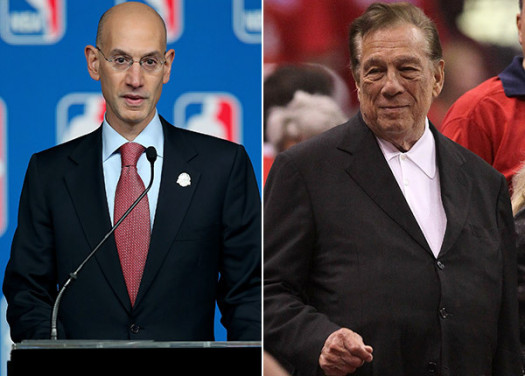
NBA commissioner Adam Silver and ousted L.A. Clippers owner Don Sterling. (Photo Credit: Google Images)
Rookie NBA commissioner Adam Silver has officially spoken. Sterling is out but many continue to wonder what this means going forward and if Sterling is not America’s chickens coming home to roost.
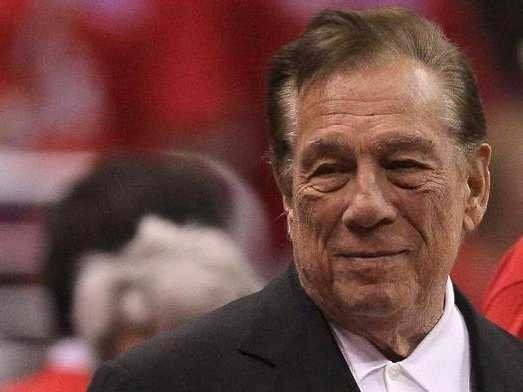
Donald Sterling damn near broke the Internet over the weekend with this alleged leaked audio. He also caused both headaches and embarrassment to the LA Chapter of the NAACP as they were just about to give him a Lifetime Achievement Award. They quickly reversed their decision but not before someone realized they had already given the guy the Lifetime Achievement award back in 2009. That award ironically came around the same time that Sterling agreed to pay $2.76 million to settle a housing discrimination case. Oops!
As disgusting as this guy is, and I admit he’s pretty disgusting, what gets me is the fact that he was not a “secret” racist. He was a well-known, extremely vocal and high profile racist, with a paper trail to prove it. A history of racism which the NBA has known about for years. In addition to the above mentioned lawsuit brought against him by the the DOJ in 2006, there was another back in 2003. He was also sued by former General Manager and Hall of Famer Elgin Baylor, in 2009 (yeah that’s right, just as the NAACP was pinning a big fat gold Master medallion on his chest). Baylor said Sterling wanted the team run in the model of a southern plantation with poor black boys and a white southern head coach.
When walking into the Ardmore, an apartment building Sterling had recently bought in Los Angeles, he reportedly said this about it’s smell.
“That’s because of all the blacks in this building, they smell, they’re not clean,” Sterling said. “And it’s because of all of the Mexicans that just sit around and smoke and drink all day.”
“…So we have to get them out of here.”
Sterling won the Baylor case and settled the other two out of court with the plaintiffs signing confidentiality agreements. Three years later when Sterling was ordered to pay roughly $5 million in plaintiff attorney fees alone, the judge called the legal tactics of Sterling’s defense team “scorched earth” and “often unacceptable, and sometimes outrageous.”
But none of that raised eyebrows with the league at the time. Nor was there any real coverage in the media. There was the testimony of one elderly tenant with a medical condition who was harassed, threatened and had numerous calls for repairs simply ignored “get her out of there. Employees at his rental properties were reportedly instructed to do so. He allegedly lied to would-be black and Latino renters about housing availability in nicer neighborhoods. He would reportedly bring women into the locker room while his players were dressing and make weirdly inappropriate remarks about the players’ bodies. Each time Sterling got into a jam, he pulled out his checkbook and swept it under the rug. He was, for years, regarded by the league as a cartoon-like caricature of a miserly old ball club owner. As long as his racism only affected his bank account, his players, his tenants and his employees, the NBA could not care less.
So a lot of people are wondering, why now? What’s so different this time.
The truth is, not much. The current media-infused moral outrage, resulted in a fine and being banned from the league including league events for life. Lets be honest, most fines are designed to shut up the outraged as opposed to penalize the person causing the outrage. Even though the league set a precedent and made a surprising decision to push him out, Sterling will likely walk away with a near $998 million profit. Even though Sterling is out, there are still no bylaws that address the conduct of its owners.
Why?
The same reason Sterling has been allowed to own an NBA team for 30 years regardless of his obvious racism and utter lack of respect for black people in general and black ball players specifically. The same reason there is actually no legal precedence for addressing the moral conduct of ball club owners but more than a dozen that govern players. The same reason he is an 80-something-year-old man with a 20-something-year-old attractive girlfriend. The same reason the Washington Redskins continue to refuse to change its racist name and logo despite more than 40 years of begging from Native Americans to change the name. The same reason the NAACP was about to give him a second lifetime achievement award.
Why? He’s a rich white man in America.
Chickens coming home to roost is an old idiom about how our bad behavior and bad decisions always come back to haunt us. And in this case, it could not be more true. This country was originally settled by people escaping not just taxation but a caste system designed to suppress the lower classes. In this country we have done little in the last half of this century except desperately try to emulate that system.
Perhaps we don’t have a Monarchy. But consider this, at least in England the Monarchy is in “name-only.” Our Monarchy is engrained in every facet of our society. From the cars we drive to the zip codes and tile rooftops we strive for. We have a criminal justice system that routinely favors privilege over justice, a political system bought and sold to the highest bidder, an education system designed to fail those who need it the most and yes even the last bastion of meritocracy — professional athletics — that is run in the “southern plantation model.” So Sterling’s out. Great. Now what?
Devona Walker is the politics editor for The Burton Wire. Follow her on Twitter @DevonaWalker.
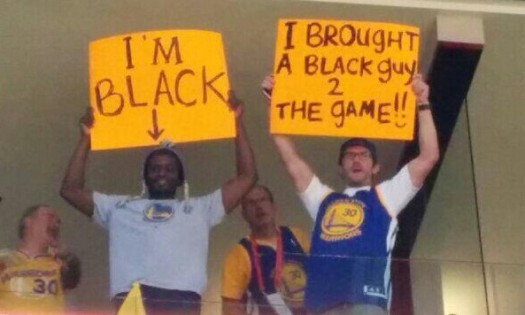
Fans react to Don Sterling’s alleged racist comments. (Photo Credit: Google Images)
The racist, reprehensible statements allegedly made by LA Clippers owner, Donald Sterling, are sparking outrage across America. The players wore generic red shirts with no visible Clippers logo at the playoff game over the weekend. A photo making the rounds on social media is one of an African-American fan holding a sign at the game that reads “I’m Black” while the white fan next to him holds one that says “I brought a Black guy 2 the game.” This solidarity across racial lines is heartening and it makes a poignant statement in the short-term. What impresses me more is a long game that cuts the business of racism at its knees.
Forbes.com reported at the beginning of this year that the LA Clippers team value was $575 million, hauling in $128 million of revenue. According to the site, ticket prices soared 55 percent last year with the team bringing in the fifth largest audience in the NBA. By any amateur calculations, that’s a lot of money. Economic leverage is the most powerful weapon to slay a team owner and an industry that don’t respect the spirit of the game or those who play it.
CarMax, State Farm, Virgin America, Kia Motors America, AQUAHydrate, Red Bull, Yokohama tires and Mercedes-Benz pulled their sponsorships of the Clippers, sending Sterling and his ilk a clear message that they won’t tie their businesses to racism. Every company and every brand has a choice regarding how they spend their money and I applaud those that have chosen to take a stand by exerting their influence. Advertisers continue to flee Sterling’s Clippers, and for those that don’t, we should show our disdain by discontinuing our business with them. Now, all eyes are on the NBA to see how it responds. With public pressure mounting, the NBA will have to act. But will it be a slap on the wrist for Sterling or heavy sanctions? If the constitutional bylaws allow it, will the organization strip Sterling of his team ownership? The National Basketball Player’s Association is calling on the NBA to impose the maximum penalty on Sterling. And the NBA should do so.
Discussions and debates abound regarding how the Clippers players should respond. The racist remarks attributed to Sterling malign African-Americans, who comprise more than three-quarters of the players in the NBA. Many of them were boys practicing their jump shots every day in scrappy, street ball games, dreaming of a career playing pro ball. Now that they’ve made it, I can’t tell them to sacrifice it all to send a message to their boss, who profits from their prowess, but doesn’t respect their humanity. The players must decide for themselves.
What I can do is remind the players, the NBA and the fans that there are defining moments in life when taking a stand can make a difference. History points to economic boycotts that had a significant financial impact. Remember the seamstress, Rosa Parks, who was arrested in 1955 for refusing to give up her seat on a public bus in the segregated south? Led by Dr. Martin Luther King Jr., African-Americans stayed off the Alabama buses for 13 months as part of a well-organized boycott. They walked and carpooled, financially crippling Montgomery’s city transit system and local shop owners. In 1956, the U.S. Supreme Court struck down laws allowing segregation on public buses.
For basketball fans, this best-of-seven elimination tournament is must-see TV and many are paying high prices for admission to the playoff games. But is it worth the price of human dignity and respect? Sure, I want to see the Clippers players be successful in spite of their venomous owner. But if the NBA and advertisers don’t act decisively, it’s time for fans – all fans – who support common decency to sit out these games, sending an economic message to Sterling, the sponsors and the NBA.
This post was written by Nancy E. Johnson, a writer and award-winning journalist living in Atlanta, Georgia. Follow Nancy on Twitter @TheNancyJBrand.
NC A&T University, an HBCU, was under lockdown due to reports of a gunman. Where was the media coverage? (Photo Credit: Google Images)
Yesterday, NC A&T, an HBCU in Greensboro, NC was locked down after reports of a gunman carrying a rifle was reported. Tom Foreman, Jr. of the Associated Press writes:
“Police had received a report of a man with a rifle at 9:57 a.m. in the General Classroom Building, resulting in a security alert to students to ‘shelter in place.’ Two public high schools on the campus were also locked down.
Campus police and officers from the Greensboro Police Department responded, locking down a portion of the campus while teams swept and evacuated four buildings.”
The lockdown was lifted at 1 p.m. and classes resumed at 2 p.m.
The Burton Wire is perplexed as to why there was scant media coverage of this major event. Typically when a college or university or high school for that matter is under lockdown, there is ongoing coverage of the incident. Clearly folks are obsessed with the Don Sterling saga, but does that mean that major news stories go underreported in the process? Is the fact that NC A&T is an HBCU, mean that is means less to American society if students are facing the threat of an alleged gunman? With the coverage that campus shootings and reports of gunmen receive on the news, it is curious that this incident received little to no coverage.
Is this yet another example of the lower value we place on the lives of young black and brown people as it relates to media coverage? Surely, had this been UNC Greensboro or UNC Chapel Hill, NC State or another PWI, then there would have been ongoing media coverage until the alleged incident was resolved?
I find America’s selective historical memory mind boggling. Sterling’s comments matter now because the L.A. Clippers are in the playoffs? Because he maligned Earvin ‘Magic’ Johnson? Or because it’s time for folks to get bent out of shape over the latest scandal involving racism, just before going radio silent? This is what we do in America – feign outrage over racism and then go on as usual. As of late the revolution hasn’t been digitized or televised as evidenced by the lame “protest” by the L.A. Clippers. Wearing your warm-up suits on the wrong side as protest? In the words of Ed Lover, C’Mon Son! If that’s the best you can do as a form of protest, then don’t do anything, except show up to work and be ready to play hard like the rest of us black working-class and middle-class folks do everyday when facing overt and covert racism at work. Surprise, surprise, many people of color deal with bosses like Sterling every single day and folks aren’t necessarily starting online petitions to address it. Now, what’s up with that?
Forgive me for not giving a hoot about Don Sterling, his racially ambiguous mistress, the L.A. Clippers or the NBA. Luckily, I don’t take my cues on addressing racism and inequality from an organization like the NBA whose very foundation was built upon inequality and an ownership model that perpetuates it. I’ll just continue to exist in the real world where racism rears its ugly head in macro and micro expressions every day. I’ll continue to lionize the Freedom Riders who made sure they had a last will and testament in place before going into battle (the deep South) against de facto racists as opposed to worshipping millionaire athletes who wouldn’t know a protest if it jumped up, bit them and called them the ‘N Word.’
Feel free to stay harried over Sterling’s words, the action and inaction of these black athletes, while not addressing the systemic problem of racism in the workplace. I for one am not going for it, because I actually live in the real world, and in my world, racism is real and must be eliminated.
This post was written by Nsenga K. Burton, founder and editor-in-chief of The Burton Wire. Follow her on Twitter @ Ntellectual or @TheBurtonWire.
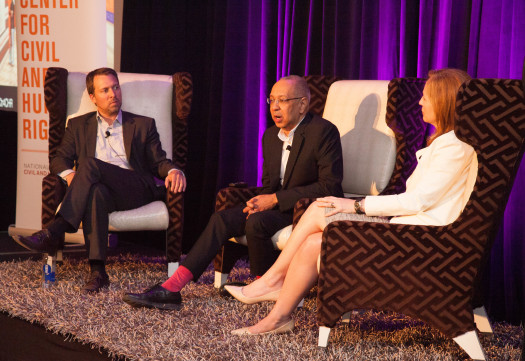
Pictured (l. to r.) Doug Shipman, Executive Director of the NCCHR, Broadway legend George C. Wolfe and Susan V. Booth, Alliance Theatre’s Hertz Artistic Director. Photo Credit: Tytiani Singleton.
George C. Wolfe is one of American theatre’s most celebrated figures. The double Tony Award-winning African American director, playwright and producer has overseen a total of 14 stage productions on Broadway throughout his career.
Working with numerous actors regardless of their ethnic origin or sexual preference, Wolfe, who himself is openly gay, understands that theatre is a tool that can reflect the complexity of humanity. “Theatre is people in the dark watching people in the light celebrate how wonderful and painful it is to be a human being,” says Wolfe. “When theatre affects you, you lean forward. You can see yourself being embodied.”
The quick-witted storyteller was named the Chief Creative Officer of the National Center for Civil and Human Rights (NCCHR) in Atlanta. Set to open the doors of its new facility this coming Jun. 23, Wolfe’s latest title gives him full liberty to create exhibitions that acknowledge American efforts towards social transformation. The meticulous visionary points out NCCHR’s set of large moving news clippings that journey through the Civil Rights Movement as one of the main attractions.
“I’ve always been in charge of my own journey in many respects,” says Wolfe. “I try to make my job as civically responsible as I possibly can. I try to craft work that’s about empowerment. I want to be committed to a larger idea.”
The tear sheet exhibit segues into an interactive area that commemorates human rights efforts. Wolfe, who also sketched by hand NCCHR’s round exterior, shares that his dream as a child was to own an amusement park. “It’s telling a story I think is powerful and amazing,” says an animated Wolfe. “It’s honoring the world that I come from. It’s honoring the people that were a part of that world.”
Wolfe, the former producer for Public Theater for 12 years, adds after the discussion, “Broadway is complicated. The ticket prices are very expensive. So every single project you do, you need to work really hard to make sure it’s the most brilliant, dazzling version of what you’re capable of doing,” he says. “It’s all about craft. You’re crafting a world for other people. If people get it, they get it. If they don’t, they don’t.”
When Wolfe rests comfortably on armchair next to Booth, he shares slides show from his stage work. The Broadway veteran reminisces about collaborating with Pulitzer Prize-winning playwrights Tony Kushner and Suzan-Lori Parks. When he was asked to direct Larry Kramer’s TheNormal Heart, he was given only two weeks to assemble and direct the cast. The ambitious creator was also set to direct a film project for Grammy-winning artist/producer Kanye West. He spent nine months with the controversial artist but the pair never finalized the details.
Wolfe, who also directed an ensemble cast in the feature film, Lackawanna Blues, remembers Yasiin Bey (Mos Def) seeingTopdog/Underdogapproximately 20 times. He encouraged the hip hop artist/actor to audition for the role originally portrayed by Don Cheadle. The move to include a hip hop artist on Broadway was an unprecedented one. “[Mos] spoke about how much he loved the piece,” remembers Wolfe. “[Mos] is a dynamic actor. He shifted the play in a really interesting, dynamic way. I always wanted to bring something to Broadway that didn’t belong there.”
“If you’re dealing with a playwright, discuss their work, and try to give them what you think is successful and what is not. If you’re dealing with a director, go see their play, and see what’s working about the material and what’s not working. That’s very helpful.”
By the end of the evening, Wolfe jokes that he had been talking too much. His full day leading up to the discussion with Booth had been one interview and meeting after another. He’s still welcoming and interactive as he continues to lean over the cocktail table. Reiterating how extremely fortunate he’s been in his career, Wolfe also reiterates what impressions he believes good theatre should leave with the audience.
“You just have to make the work good,” says Wolfe. “I don’t care if it’s a dumb musical or a political thing, just work really hard to do good work. Tell your stories wherever you can tell them, and tell them brilliantly. It’s always nice when you do something that you passionately believe in. That’s its own reward.”
This post was written by Christopher A. Daniel, pop cultural critic and music editor for The Burton Wire. He is also a contributing writer for Urban Lux Magazine and Blues & Soul Magazine. Follow Christopher @Journalistorian on Twitter.
People go back and forth on social media platforms about when and where you should check your weight, are you eating organic food, where you should buy it, what qualifies as organic, causes to support, causes to rebuff to such an extent that it can be overwhelming. As a result, I often tune out of this information overload, seeking cover in not-so-overwhelming places.
This week, however when I saw that it was National Infertility Awareness Week, I stopped in my tracks and decided to come out from under the covers. Why is this week different?
Unfortunately, fertility isn’t often a topic women discuss until they learn it may be too late to become a mother.
Every woman I know has assumed that when she is “ready” to become a mother, she will. The reality is that may not actually be the case, because of a number of factors — age, timing, environment, prior health issues and a partner’s fertility status to name a few.
Sadly, it is not until many of us have decided that now is the time for pregnancy, yet pregnancy doesn’t occur as planned, that most woman learn that fertility indeed has an expiration date and it may have already passed. Exhibit A – me.
By every external measure, I am successful. I’m 41 with a great career, supportive friends and family and a significant other. I married my college sweetheart at 23 and after a divorce at 26 it never occurred to me that 15+ years later I would be single and childless. The fact that I never thought about whether or not I could have children is in fact why this week is so critical. Once my internal alarm went off and I decided that I was ready to have a child, you can imagine my shock in learning that I had several challenges that could prevent this from happening the old fashioned way.
As I listened to the doctor explain the many variables that made this process more complicated than anything I could have imagined, I kept thinking to myself, “Why didn’t I know this when I was 30?” I didn’t know that when I put my plan to have a family on the list for “later” that later may not ever come.
This is especially true for African-American women. At every age we have a higher instance of fibroids, endometriosis and other gynecological challenges which overall can significantly limit fertility. On top of that, we rarely discuss these issues publicly although black women experience infertility higher than our white counterparts.
“Infertility among African American women is not only a silent and hidden problem in the African American Community, but one that continues to be on the rise.
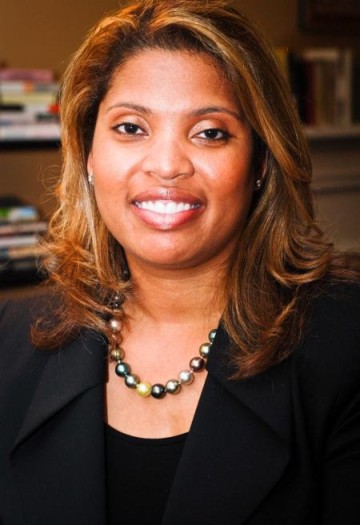
According to Dr. Desiree McCarthy-Keith, a Reproductive Endocrinologist at Georgia Reproductive Specialists, research shows that among the 7.3 million women in the United States, approximately 11.5% of African American women experience a variety of infertility problems compared to 7% of white women.
Unfortunately, even though these alarming rates of infertility among African American women exist, studies show that women kissed by nature’s sun utilize fertility services less often and seek medical care too late.”
I didn’t know how many of my close friends had gynecological issues until I over shared my traumatic fertility appointment with my friends and colleagues. Only then did I hear about Susan’s crippling endometriosis and Mary’s multi-year fight to have children. What I realized when I walked into the waiting room for the infertility practice was that everyone literally looked like me. Honestly I was shattered. I erroneously thought infertility only happened to middle-class white woman, when the reality was the face of infertility looked like me.
There are many women who have made the conscious and purposeful decision not to have children and I applaud their decision. I also understand why women, particularly black and brown women, many of whom have not historically had a great relationship with the medical community, especially when it comes to reproductive rights, would want to shy away from seeking help and sorting through the myths about who is impacted by infertility. We’ve got to move beyond that and make sure we have the information that we need.
What is most important about this week is to ensure that women who have made the choice to have children, talk to their healthcare provider to better understand how the decisions they make now, will impact their ability to have children later.
This post was written by Yvonne Cowser Yancy. Follow her on Twitter @ycyancy.