Home Blog

‘Anne & Emmett’ Brings Anne Frank and Emmett Till Together at Spelman College

0
Playbill cover for Anne & Emmett play at Spelman College.

Playwright Janet Langhart Cohen and director Thomas W. Jones II discuss memory, the impact of hatred, and the use of art and theater to interrogate and preserve history. 

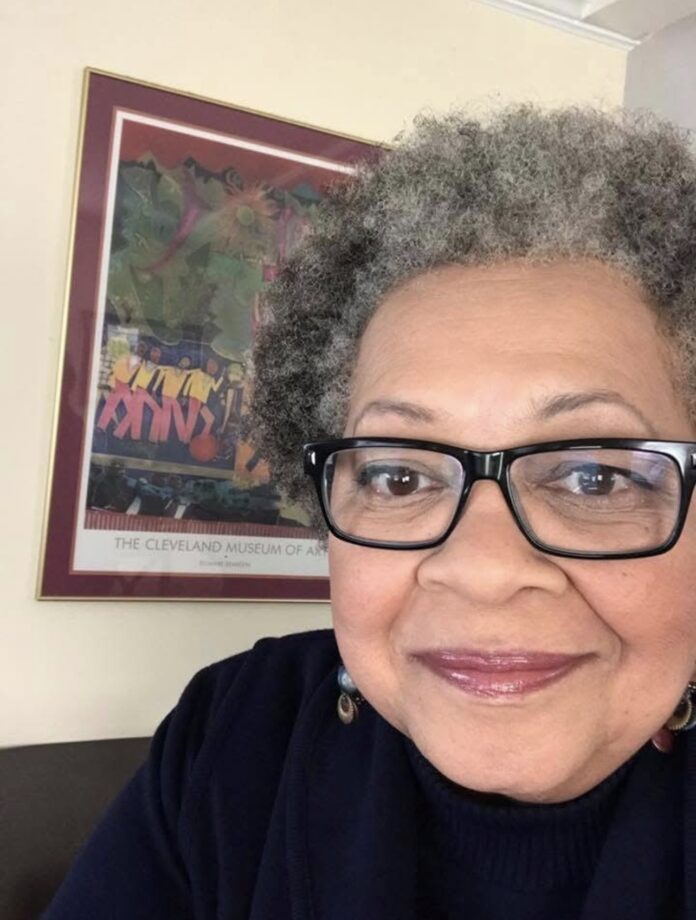
Janet Langhart Cohen, Playwright and Executive Producer headshot.
Janet Langhart Cohen, Playwright and Executive Producer.

RICHMOND, VA – Sept. 10) More than 70 years after Anne Frank and Emmett Till were murdered, playwright Janet Langhart Cohen is bringing the two teenagers together in an imagined conversation influenced by memory.

Anne & Emmett, Cohen’s play imagining a conversation between Frank, the Jewish teenager who died in the Holocaust, and Till, the 14-year-old Black boy lynched in Mississippi in 1955, comes to Spelman College at a moment when battles over history, race and antisemitism have moved from classrooms and school boards into
the center of American political life.

For Cohen, their meeting is deeply personal.

She was 14-years-old in the summer of 1955 when she encountered both teenagers’ stories. Cohen had just finished reading The Diary of a Young Girl (commonly referred to as The Diary of Anne Frank) when her mother showed her the photographs of Till’s mutilated body published in JET magazine.

“I had gone from pity at Anne’s story to anger and fear at what had happened to Emmett,” Cohen recalled. Like Till, she was Black, the same age, and living in a family that traveled South during the summers. “In one summer at 14 years of age, I had read about and heard about the inhumanity even to children.”

Yet Cohen did not connect the two teenagers at the time. Growing up in segregated America had taught her to understand their worlds separately.

That changed nearly 50 years later after a white acquaintance suggested Cohen should stop talking about racism and slavery because her own success demonstrated that she had overcome those barriers. Cohen went home angry and asked her husband a question that would eventually become a play: “What would Anne Frank have said to Emmett Till?”

Suddenly, Cohen saw what connected them.

Two children. Two societies that failed to protect them. Two lives destroyed by hatred. Two futures terminated. Two black eyes for humanity.

Cohen is careful, however, not to collapse the Holocaust and America’s history of anti-Black racial terror into one experience.

“It was sharing more than comparing,” Cohen said. “Both the Holocaust and American racism are twin evils that don’t need comparison or competition to be called for what each is: Evil.”

Anne & Frank cast members perform. (Matthew Myers as Otto Frank (l), Abby Goldberg as Anne Frank (seated l), India Tyree as Mamie Till-Mobley (r), and Jabari Khaliq as Emmett Till (seated r). 
(Photo: Raquel M. Jackson)
Thomas W. Jones, II (Director)

Director Thomas W. Jones II sees that common humanity as the heart of the production.

“Anne & Emmett is a remarkable journey that moved beyond the tragic circumstances of two teenagers,” Jones said. “It is a reminder of our shared humanity. It is a call to action. It is a prayer for humanity.” Those ideas, he said, have kept him returning to the work for more than a decade.

For Jones, the challenge is ensuring audiences encounter Anne and Emmett not merely as historical symbols, but as young people. “The central idea in A&E is common ground,” he said. “Two teenagers,
cultures decades apart, find common ground.”

Cohen gives them that opportunity by setting their encounter not in heaven, but in a place, she calls “Memory.”

Frank’s diary ensured that generations would know her thoughts, fears, hopes, and dreams. Emmett Till left no comparable written record. We have his mother Mamie Till-Mobley’s account and the historic photo of Till’s open casket, taken by photographer David Jackson and published in Jet Magazine 18 days after his murder. Cohen relied on Mamie Till-Mobley’s accounts of her son while also drawing upon striking similarities between Till’s childhood and her own to imagine his voice.

She describes that work not simply as a writer’s responsibility but as “an honor, a calling.”

Memory also allows Cohen to restore the parents whose decisions made it impossible for the world to ever forget their children. Otto Frank preserved and published his daughter’s diary. Mamie Till-Mobley insisted that her son’s brutalized body be seen. They were both children, horribly robbed of their futures, and their parents wanted and needed the world to remember them.

“Those accounts not only compel remembrance but empathy and deep pain,” Cohen said.

Memory also contributed to bringing Anne & Emmett to Spelman College. Cohen once dreamed of attending the historically Black women’s college and calls having her first play performed there nearly the realization of that youthful dream. Jones points to Spelman’s tradition and generations of alumnae who have “changed the fabric of this country.”

But Anne & Emmett is not simply looking backward; Anne & Emmett also looks forward and speaks to contemporary times that are hauntingly familiar.

At a time when schools and universities are fighting over which histories may be taught, which books may be read, and whose stories deserve remembrance, Cohen sees theater as a keeper of history.

“Despite the attempts to erase history by banning books and changing curriculum,” she said, “art, theater continue telling the stories.’

“Art, theater is a magnificent Griot,” Cohen adds.

Griots exist and remind us that memory is not passive. Remembering is an act. And when two children murdered by hatred are allowed to speak again through art and theater, it serves as a meditation on what the living intend to do with what we remember.

Anne & Emmett runs at the Latanya Richardson Jackson and Samuel L. Jackson Performing Arts Center at Spelman College, September 11-13, 2026. Click here for ticket information. Learn more about the cast here. 

Nsenga K. Burton, Ph.D., founder & editor-in-chief of The Burton Wire, wrote this feature story. Follow The Burton Wire on Instagram @TheBurtonWire or Meta @ The Burton Wire. 

Become a paid subscriber to The Burton Wire News on Substack for exclusive content, deeper analysis, and my unfiltered perspective on the stories and issues shaping our culture, communities, and lives.


Burkina Faso Ends Diplomatic Ties with France

0
Burkina-Faso ends ties with France. (Photo: Encyclopedia Brittanica)

Reporting for the BBC, Nicolas Négoce and Neil Murphy report that Burkina Faso’s military-led government has broken off diplomatic ties with France, accusing the European nation of persistently acting against Burkina Faso’s national interests. They report:

“Relations between Burkina Faso and its former colonial ruler worsened after Capt Ibrahim Traore seized power in a coup in 2022 and pursued largely anti-Western policies.

In a televised statement on Friday, communications minister Pingdwendé Gilbert Ouédraogo said France was guilty of ‘ceaseless activism’ against his country and accused it of ‘neo-colonial ambitions’.

The French foreign ministry called the decision “hostile and unfounded” and said it ‘llustrated the troubling drift by the Burkinabe government'”.

France also urged nationals in the country “to exercise heightened vigilance”.

In 2024, Burkina Faso expelled three French diplomats, accusing them of “subversive activities”. France denied the claims.

In January 2025, Burkina Faso, along with two neighboring military-led states – Mali and Niger, officially broke away from the regional West African bloc, Ecowas, to form a new group, The Alliance of the Sahel States.

Read the entire article on the BBC.

Nsenga K. Burton, Ph.D., founder & editor-in-chief of The Burton Wire, curated this news brief. Follow The Burton Wire on Instagram @TheBurtonWire or Meta @ The Burton Wire. 

Kevin Kelley: Kitchen + Cocktails Lands in Times Square

0
Kevin Kelley's Kitchen + Kocktails is coming to NYC's Times Square this fall. Photo: Kitchen + Kocktails

Kevin Kelley’s Kitchen + Cocktails, the elevated Southern comfort food concept known for crafted “kocktails” and signature “Welcome Home” hospitality, is opening its ninth location at 7 Times Square in New York City this fall.  In just six short years, Kelley, a litigation attorney, has had a meteoric rise in the restaurant industry, launching his first upscale eatery in Dallas in 2020 during the pandemic. The Dallas location performed so well that Kelley has since opened locations in Chicago, Atlanta, Washington, D.C., Charlotte, Philadelphia, and Miami, with New York and Boston on the way.

But the fast-growing restaurant brand really began with a grandmother’s love. Born in Arkansas and raised in Texas, Kelley learned to cook at age seven at his grandmother’s side. She taught him that food is an important way you show people that they matter.

Photo: Kitchen + Kocktails

Forty years later, that lesson has become one of the most talked-about dining brands in America. Kitchen + Kocktails by Kevin Kelley is landing in Times Square. The 10,000-square-foot space at the corner of 42nd Street, Broadway, and Seventh Avenue (formerly home to Pink Taco), will be the largest, most visible location in the brand’s history. And it was built the same way every other location was: without outside investors, without a franchise model, and without compromising a single thing that made it worth building in the first place.

“Every city we’ve opened in has become home. New York is where the world watches. Opening at Times Square isn’t just an expansion –it’s a statement. We built our way here, one city at a time, on our own terms. We can’t wait to humbly welcome New York home.”

For more information, visit https://www.kitchenkocktailsusa.com/nyc.

Nsenga K. Burton, Ph.D., founder & editor-in-chief of The Burton Wire, curated this post. Follow The Burton Wire on Instagram @TheBurtonWire or Meta @ The Burton Wire. 

Liberia: U.S. Deports Non-Americans to Liberia

0
Liberian Flag. (Photo: Wikipedia)

On August 20, 2026, the United States carried out its first deportation under an agreement for Liberia to accept up to 1,200 people who are not from the African country, one of the Trump administration’s largest efforts yet to deport people to countries other than their own. Reporting for the AP, Mark Mengonfia wrote:

“The 20 deportees arrived at Roberts International Airport outside Monrovia.”

“Deportees will include African nationals as well as nationals from North America, South America and the Caribbean, according to Liberian Information Minister Jerolinmek Piah. Liberian Justice Minister Natu Oswald Tweh has said they could seek asylum in the West African country if they wished.”

“The Trump administration struck agreements with at least 35 countries to deport people who are from other countries, including Liberia and 13 others in Africa, according to Third Country Deportation Watch, a partnership of Refugees International and Human Rights First that relies on public records requests, news reports and other sources. More than 23,000 people have been deported to 26 countries under the agreements.”

Read the entire article on AP News. 

ADDITIONAL INFORMATION:
According to a congressional review from the Senate Foreign Relations Committee and recent news reports, the specific African country payments include:

  • Rwanda: Received $7.5 million and accepted 7 deportees (averaging over $1 million per person).
  • Equatorial Guinea: Received $7.5 million and accepted 29 deportees.
  • Palau: Received $7.5 million despite not having accepted any migrants as of reporting.
  • Eswatini: Received $5.1 million and accepted 15 deportees.
  • El Salvador: Received $4.76 million and accepted about 250 Venezuelan nationals.
  • Liberia: Approved for a $5 million payment by the State Department in late 2025/early 2026 after committing to consider accepting migrants from other nations.

Nsenga K. Burton, Ph.D., founder & editor-in-chief of The Burton Wire, curated this news alert. Follow The Burton Wire on Instagram @TheBurtonWire or Meta @ The Burton Wire. 

BLACK PUBLIC MEDIA’S PITCHBLACK AWARDS: ‘Hiding in Plain Sight’ Wins Award

0

Award–winning director Luchina Fisher’s Hiding in Plain Sight, a dynamic examination of the innovative Black, queer musicians, like Sister Rosetta Tharpe and Little Richard, who have driven forward mainstream culture despite their full selves being acknowledged, was the big winner at Black Public Media‘s PitchBLACK Awards. The documentary was awarded $150,000 in production funding. Sponsored by Netflix and Andscape, PitchBLACK is the nation’s largest pitching session for Black stories (film and immersive media).

This year, games dominated the Immersive competition, and for the first time, game projects swept the category. Squidpunk, by Naomi Urey and Georgiana Wright, and Omnivores Rule, by Connor Wall, took $50,000 and $25,000, respectively.

Award-wining documentary filmmakers Stanley Nelson and Marcia Smith were presented the BPM Trailblazer Award at the event by BPM Executive Director Leslie Fields-Cruz.

To further celebrate Nelson and Smith’s remarkable accomplishments, BPM is presenting a special online retrospective of their films, running through Sunday, May 10. Films available for streaming include: We Want the Funk! (2025), The Black Panthers: Vanguard of the Revolution (2015), Freedom Riders (2010), Jonestown: The Life and Death of People’s Temple (2007), A Place of Our Own (2004), The Murder of Emmett Till (2003), Marcus Garvey: Look for Me in the Whirlwind (2000), The Black Press: Soldiers Without Swords (1999) and Two Dollars and a Dream (1989). Register for on-demand viewing here.

Amirah Adem, a Los Angeles-based director and producer, was selected as the 2026 Nonso Christian Ugbode Digital Media Award recipient. Named after BPM’s late director of digital initiatives, the award honors a talented under-30 creative technologist working in new media. Adem is a graduate of the University of Southern California (MFA) and Pomona College (BA) whose films center Black leads in untold stories. Her work has been student BAFTA longlisted, shown at the American Black Film Festival and supported by the Alfred P Sloan Foundation. Her debut short, “Convertible,” premiered at the Director’s Guild of America Theater and was shown at the Essence Festival of Culture.

Silent, by Nile Price, a cinematic musing on the psychic effects of our endlessly plugged-in world — was named the 2026 AfroPoP Digital Shorts Viewers’ Choice winner. The film appears on BPM’s YouTube channel.

Founded in 1979, BPM funds quality film and immersive stories, develops media makers, and produces and distributes original content.

To support BPM’s Black Stories Production Fund, visit blackpublicmedia.org. Follow the organization at @blackpublicmedia on Instagram, Facebook, and TikTok.

To read more about Black News and culture, follow The Burton Wire on IG or @Burtonwirenews on Meta.

Please note that The Burton Wire will be available exclusively on Substack beginning June 1, 2026. Please consider obtaining a paid or free subscription there. 

Beverly Agee Burton: A Legacy of Law, Leadership, and Love

0
Beverly A. Burton, Esq.
Beverly Agee Burton, Esq. (photo: The Burton Wire)

In the story of American progress, there are names we recognize instantly, and then there are the architects of change whose impact lives in institutions, communities, and generations. Beverly Agee Burton is undeniably the latter: a quiet force, a trailblazer, and a woman whose life’s work reflects a deep and enduring commitment to justice.

Born and raised in Virginia, Beverly came of age during a time when opportunities for Black women in society and higher education, especially in spaces like the University of Virginia, were hard-won. As a member of UVA’s historic Class of 1974, she helped integrate the university for women, stepping into spaces that had long excluded women who looked like her. She not only walked through those doors; she left them open for others, becoming the university’s first graduate in Afro-American Studies.

Her commitment to equity did not stop at the classroom. Early in her legal career as a Legal Aid attorney, Beverly recognized that access to justice required more than representation — access to justice required education. As producer and host of the television programs, The Law and You and Focus on the Black Perspective, she brought legal knowledge directly into the community, demystifying systems that too often exclude and intimidate.

Throughout her distinguished career in public service, Beverly consistently chose work that placed people first. As Senior Assistant City Attorney for the City of Richmond, and later in leadership roles across Chesterfield County and the Richmond Metropolitan Authority, she shaped policies and systems that impacted thousands. Whether serving as Interim City Attorney for Hopewell or guiding complex municipal initiatives, her leadership was marked by integrity, innovation, and a deep understanding of the communities she served.

Her influence extended beyond government offices and courtrooms. As President of the Old Dominion Bar Association, the nation’s oldest bar association for Black Americans, she upheld and advanced a legacy of advocacy and professional excellence. After her first retirement, she co-founded Legal Papers Matter, reinforcing her belief that legal literacy and efficiency are cornerstones of empowerment.

Beverly’s dedication to service is perhaps most visible at the community level. As head of the Randolph Planning Board in Richmond, she helped guide strategic investments that revitalized a historic Black neighborhood in the city’s West End, ensuring that development honored both history and residents. Her work with civic associations, redevelopment committees, and planning boards reflects a lifelong commitment to building stronger, more equitable communities from the ground up.

Equally important is her advocacy for the well-being of those within her profession. Through over a decade of service on the Board of Lawyers Helping Lawyers, she supported attorneys, judges, and law students navigating mental health, substance use, and stress, which is an often-overlooked but critical area of care within the legal field.

Beverly’s excellence has been recognized widely: from the Local Government Attorneys of Virginia’s Cherin Award to induction into the Virginia Law Foundation Fellows, to being named a Virginia Lawyers Weekly “Leader in the Law.” Yet, her greatest legacy may not be found in accolades, but in impact.

At home, Beverly raised two daughters who embody her values (a lawyer and college professor/entrepreneur), extending her legacy of leadership into the next generation.

To know Beverly Agee Burton is to understand what it means to live a life of purpose. She is a woman who has moved institutions, uplifted communities, and changed lives, not for recognition, but because it was necessary.

This Women’s History Month, we honor not only what she has accomplished, but what she represents: courage, service, and an unwavering belief that justice should be accessible to all.

This post was written by Nsenga K. Burton, Ph.D., founder & editor-in-chief of The Burton Wire News and youngest daughter of Beverly Agee Burton. Follow Nsenga on IG @Ntellectual or @TheBurtonWire. Subscribe to The Burton Wire News on Substack for more exclusive content.

Reverend Jesse Jackson Dies: The Early Fire That Forged a Civil Rights Giant

0

This post originally appeared on The Burton Wire News on Substack. An excerpt follows. Please read the entire article on Substack.

EXCERPT
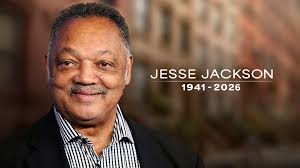
The passing of Reverend Jesse Jackson marks the end of a towering chapter in the American struggle for civil rights, economic justice, and political empowerment. Though he would later become a presidential candidate and global statesman, Jackson’s earliest years in the public eye defined him as a fearless organizer, strategist, and moral voice for African Americans seeking freedom and equality in a deeply divided nation.

A Protégé in the Civil Rights Crucible

Born in Greenville, South Carolina, in 1941, Jackson came of age during the height of the civil rights movement. His life changed profoundly when he joined the movement led by Dr. Martin Luther King Jr. As a young seminarian, Jackson became closely associated with Dr. King and the Southern Christian Leadership Conference (SCLC), quickly distinguishing himself as a gifted orator and tireless field organizer.

Jackson was present during some of the most pivotal campaigns of the 1960s, including voter registration drives and economic justice efforts across the South. His ability to mobilize communities, especially young African Americans, helped broaden the movement’s reach. He brought urgency and boldness to campaigns that sought not only desegregation, but dignity, economic opportunity, and political power.

When Dr. King was assassinated in 1968, Jackson emerged from the shadow of his mentor, determined to continue the work. He became one of the most visible inheritors of King’s vision, but he also began shaping a distinctive path of his own, one rooted in grassroots mobilization and institutional power.

Building Economic Power: Operation PUSH

In 1971, Jackson founded Operation PUSH (People United to Save Humanity). The organization represented a strategic shift in the freedom struggle, from protest alone to economic leverage. Jackson argued that political equality without economic access left African Americans vulnerable and marginalized.

Operation PUSH pushed corporations to hire more Black executives, invest in minority communities, and open supply chains to Black-owned businesses. Jackson’s “buy Black” campaigns and negotiations with major companies signaled a new phase in civil rights activism, one that recognized the power of markets alongside marches.

Through Operation PUSH, Jackson trained a new generation of activists who understood that justice required structural change. He framed economic empowerment as a continuation of the civil rights movement, not a departure from it.

END OF EXCERPT. 

Nsenga K. Burton, Ph.D., founder & editor-in-chief of The Burton Wire, wrote this original article and this post. Follow The Burton Wire on Instagram and Meta. Subscribe to The Burton Wire on Substack here. 

Black History Month Turns 100

0
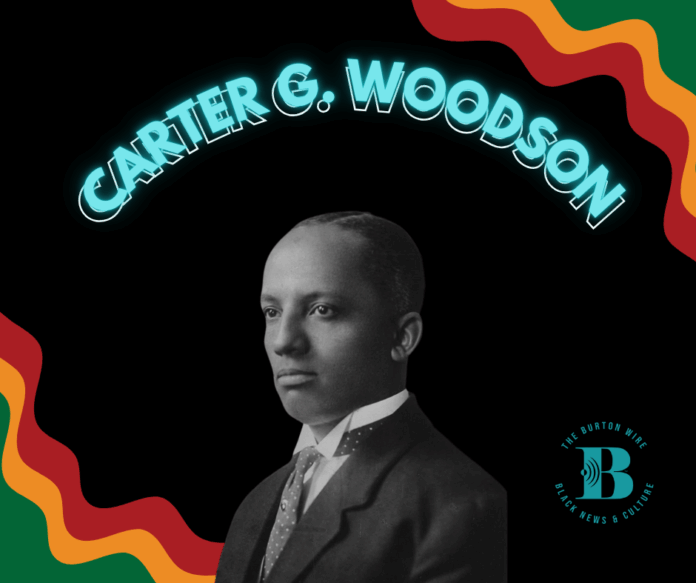
Historian Carter G. Woodson. Graphic by: Sasha Brown.

The centennial of Black History Month marks more than the passage of time — it commemorates a transformative act of historical preservation, resistance, and affirmation. In 1926, historian and educator Carter G. Woodson established Negro History Week to challenge the systematic exclusion of Black people from American historical narratives. What began as a corrective initiative has grown, one hundred years later, into a global observance recognizing the centrality of Black history to the human story.

The importance of this centennial lies first in its reminder of why Black History Month was necessary in the first place. Woodson understood that history is not neutral; it shapes identity, belonging, and power. By documenting Black achievement, struggle, and intellectual life, he sought to counter myths of inferiority and affirm Black humanity in a society structured around racial erasure. The centennial calls us to reflect on how far that work has come, and how incomplete it remains.

This milestone also underscores the role of Black History Month as a living, evolving project rather than a static commemoration. Over the last century, the observance has expanded from a week (Negro History Week) to a month, and from a U.S.-based initiative to an international one. Yet its purpose remains consistent: to elevate overlooked stories, contextualize present-day inequities, and deepen public understanding of Black contributions across disciplines, cultures, and movements.

Equally important, the centennial invites a forward-looking reckoning. At a moment when historical truth is frequently contested and education itself is politicized, Black History Month stands as a reaffirmation of the importance of truth, scholarship, and collective memory. It reminds institutions, educators, and communities that inclusion in history is not symbolic, it is foundational to justice and the story of this country.

Marking 100 years of Black History Month is therefore not simply about honoring the past. It is about recommitting to the responsibility Woodson articulated a century ago: to study history honestly, to center those long marginalized, and to recognize that Black history is not a sidebar to American history; it is essential to understanding who we are and who we aspire to become.

This post was written by Nsenga K. Burton, Ph.D., founder & editor-in-chief of The Burton Wire News. Follow Nsenga on IG @Ntellectual. Subscribe to The Burton Wire News on Substack for more exclusive content. 

Rick Fox: Former NBA Star is Running for Office in the Bahamas

0
Rick Fox shows progress since Hurricane Dorian.
Photo: (Instagram/Imrickafox)

Former NBA star and actor Rick Fox is running for office in his home country of the Bahamas. Fox made the lengthy announcement of his 2026 run for the Bahamas’ House of Assembly on his social media platforms.

On a FaceBook post entitled, “Getting to Know Me Beyond What You May Know,” (October 21, 2025) Fox writes about his desire to run for office, which is accompanied by a photo of his late father, Ulrick Fox, a “community champion” and entrepreneur. Fox writes:

“Some of you have asked to know me on a deeper level after my recent post, beyond what I may be known for as an athlete, actor, producer, analyst, and entrepreneur. You’ve asked: Who are you? What’s guiding my consideration at this time? The answer is simple. At my core, I’ve always been a defender, a facilitator, and a leader, at home and abroad. Over the past four years since returning home, I’ve listened to the voices of you, my fellow Bahamians. I hear the frustration, but I also see in us as a nation incredible potential.

Amidst those frustrations, I see opportunity, opportunity for growth, innovation, and national renewal. We can be greater. We can be so much more. More is on the way. I believe this wholeheartedly.

In my time back home, I’ve helped build businesses that have become global solutions. Through that process, I’ve worked side by side with many Bahamians, partners, employees, vendors, and customers, who’ve given me a front-row seat to where we’re winning as a nation and where we can do better.”


Fox, 56, was born in Toronto to a Bahamian father and Canadian mother. His family moved to the Bahamas when he was a child, and he grew up in Nassau. In 2019, Hurricane Dorian devastated the Grand Bahamas, killing 50 and displacing 70,000 people. U.S. celebrities with Bahamian roots, including rocker Lenny Kravitz, Myron Rolle, and Fox, donated and supported relief efforts.

Fox’s platform focuses on transparency, economic modernization (affordability & security), and ensuring opportunity for Bahamians.

Read more at Yahoo!

Nsenga K. Burton, Ph.D., founder & editor-in-chief of The Burton Wire News, wrote this news alert. Follow Nsenga on IG @Ntellectual or @TheBurtonWire.

Subscribe to The Burton Wire News on Substack for exclusive content, coverage, programming, and events. 

Jubilant Sykes: Celebrated Opera and Gospel Singer Killed by Son

0
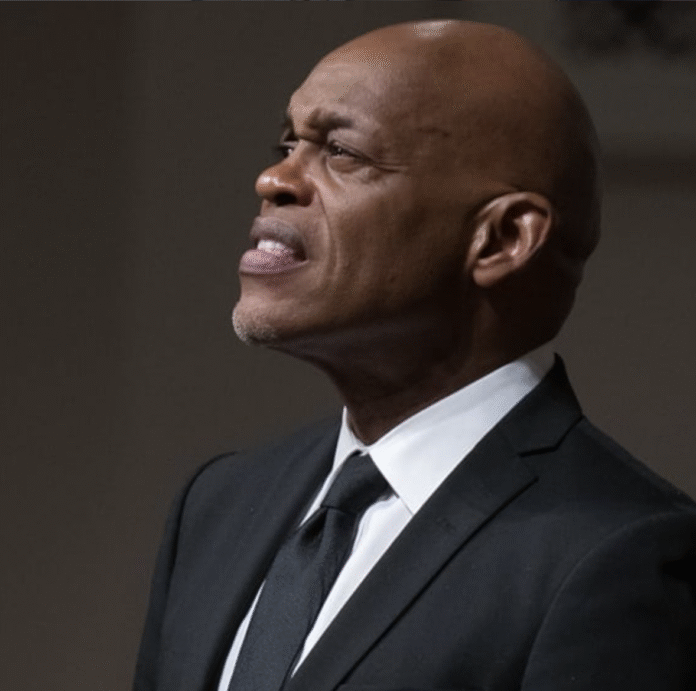
Jubilant Sykes (Instagram/photo by John Carrington)

(Santa Monica, CA December 9, 2025) – The internet is mourning the death of Grammy-nominated opera and gospel singer Jubilant Sykes. Sykes, 71, was stabbed to death in his home in Santa Monica, California. The singer’s son Micah Sykes, 31, was arrested and held on suspicion of murder.

Sian Cain of The Guardian writes:

“Officers responded to a 911 call on Monday night reporting an assault in progress at the residence in Santa Monica, according to a statement from the Santa Monica police department.

They found Sykes inside with critical stab wounds. Paramedics arrived and pronounced him dead at the scene, police said.

Sykes’ son Micah was at the home and taken into custody without incident, police said. It wasn’t immediately known if he has an attorney.

Police recovered a weapon, and the investigation was ongoing.”

Jubilant Sykes was nominated for best classical album at the 2010 Grammy Awards. This story is developing.

Read more at The Guardian.

This news alert  was written by Nsenga K. Burton, Ph.D., founder & editor-in-chief of The Burton Wire. Follow Nsenga on IG @Ntellectual.

Subscribe to The Burton Wire News on Substack for exclusive content, coverage, and events.