Twelve ‘illegal’ miners were rescued from a mine near Johannesburg. (Photo Credit: Google)
Mike Hutchings and John Mkhize are reporting that twelve South African ‘illegal’ miners were brought to the surface on Sunday after being trapped in an abandoned gold mine near Johannesburg, but an unknown number remained underground because they feared arrest, an emergency services spokesman said.
The rescued informal miners were checked by medics and then handed over to the police. There were no immediate reports of deaths or injuries.
An Emergency Care and Response Services (ER24) spokesman initially reported that there were some 200 additional miners further down in the mine, which is owned by Gold One, a Chinese gold producer currently not working the mine.
Illegal mining of abandoned shafts is common in South Africa, where informal miners excavate ore to sell, often living underground in dangerous and precarious conditions. Fatalities are common.
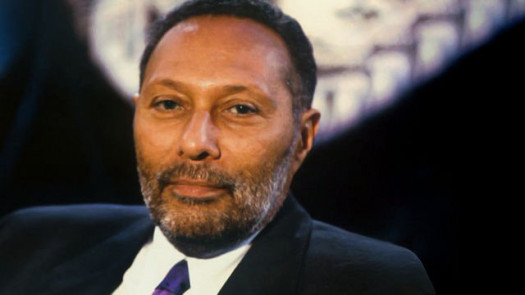
World renowned British-Jamaican scholar Stuart Hall, known as the ‘Godfather of Multiculturalism’ has died at 82. (Photo Credit: Google Images)
Google search for ‘Stuart’ and it’s interesting what appears. Stuart Weitzman, Stuart, Florida, Stuart Little — even a nod to the character Stuart from the Mad TV comedy series. It is not until I type the letter ‘h’ after Stuart that the correct suggestion pops up – Stuart Hall. A myriad of listings for the name then appear, the top choices being news of the death of the world renowned scholar by respected news outlets such as NPR and The Guardian. And then, nothing – until I click on page 2. There, a whopping two listings.
I am fully aware that the name Stuart Hall may not conjure up grand visions in the the minds of the general populace – most Americans outside of academic circles are probably unfamiliar with his legacy as the ‘godfather of multiculturalism’. And even then, scholars outside of fields like sociology, social psychology and communication do not often lean on his monumental cultural studies scholarship as support for their own work. I know we probably won’t see Hall tributes during general Black History Month celebrations, either.
So why should blacks in America pay any more attention to Stuart Hall and his work other than to lament at a brilliant mind lost? Simply put, his work exploring the the negotiation of blackness, otherness and multiculturalism is the very thing that set the stage for scholars such as Mark Anthony Neal, Michael Eric Dyson and Cornell West to engage in their critical commentaries on race, class, gender, the media and other issues that affect the negotiation of everyday black life in the U.S. These are the scholars that in turn work to challenge what the status quo establishes and normalizes as unwritten societal rules.
Hall’s contributions are better known across the pond, yet are critically important to the analysis of black life in the States and throughout the African diaspora.
Born in Kingston, Jamaica in 1932, Hall emigrated to the UK in 1951 on a Rhodes scholarship to study at Oxford. However, he knew after three months at the institution that it was not his home. In a 2012 interview with The Guardian, Hall recognizes his migration to England as somewhat of a failed attempt to flee his Jamaicaness, never really being English. “The life I have lived is one of partial displacement,” notes Hall.
His story is one of so many who emigrate to the West for opportunity or otherwise. It is also the story of numerous African Americans who are consistently made to feel like guests in their own country, forced to negotiate black and American identity simultaneously. This feeling of displacement, otherness and the societal factors fueling these phenomena are the foundation of Hall’s work.
Hall believed that we understand and construct meaning in our culture through representation. A student of theorists such as Foucault, Gramsci and of Marxist thought, Hall understood the relationship between language, knowledge, power and representation. It is the interpretation of his work that allows groups such as the NAACP and Media Education Foundation to understand, question and subsequently act on the images presented about people of color in the media and question the power structures that disseminate such images.
Long before it became a buzzword in the U.S., Hall explored multiculturalism and defined the concept of multicultural drift, the gradual shift in culture and ethnicity taking a hold of Britain. Just as in the U.S., some are accepting, some merely tolerate and others are vehemently against the change of the old guard. While Hall humbly attributes societal changes to this concept and not necessarily to his research, the identification of himself as both a black and multicultural body and of multicultural society has been key to navigating the globalization landscape.
Most importantly, Hall puts forth a conversation that gives permission to be the other, that gives permission to question power, thereby giving black scholars, and scholars at large, the tools to enact tangible social change. Hall’s work is a staple in the theoretical portfolio of graduate students in the social sciences – I recall pouring over books and articles, both by and referencing his work, as a doctoral student at Howard University. Now, I enact what I learned when I have discussions about media representation with youth groups, hopefully challenging them to monitor the images of black people that they support.
On the rare occasions when I say to myself “now, why am I a professor, again?” or “was majoring in the humanities the wisest choice?”, I turn and look to my bookshelf and center on the Stuart Hall section, silently solidifying my place in academe. Well done, brother.
This post was written by Dr. Chetachi A. Egwu, Assistant Professor of Humanities at Nova Southeastern University. Her scholarship focuses on Black Internet Usage and the African image in film, with an emphasis in documentary. The Howard University alumna is the owner of Conscious Thoughts Media. Dr. Egwu is a regular contributor to The Grio. Follow her on Twitter @Tachiada.
Black Panther founder Huey P. Newton appears on the August 1972 cover of Rolling Stone magazine. (Photo Credit: Rolling Stone)
“My foes have called me bum, hoodlum, criminal. Some have even called me n*****. I imagine now they’ll at least have to call me Dr. N******.” – Huey Percy Newton, Press Conference, July 1980.
On February 17, 1942, Huey Percy Newton, co-founder and leader of the Black Panther Party for Self-Defense, was born in Monroe, Louisiana but raised in Oakland, California. He was named after former Governor Huey P. Long who was known for his “Share Our Wealth” platform. “Long was revered by the masses as a champion of the common man and demonized by the powerful as a dangerous demagogue.” Long was assassinated in 1935. Newton’s family migrated from Louisiana to Oakland, where they lived in poverty.
As a teen growing up in Oakland, Huey P. Newton was rambunctious and highly intelligent, often getting into trouble for both. Despite his aptitude, he managed to graduated from Oakland Technical High School without having learned to read. Eventually Newton taught himself to read. While at Merritt College in Oakland, Newton met Bobby Seale, joining the Afro-American Association. In 1966, Newton and Seale organized the Black Panther Party for Self-Defense with Seale as chairman and Newton as minister of defense. The organization grew with Newton (and Seale) who went on to earn three degrees, including a Ph.D. in Social Science at UC Santa Cruz (1980).
The Black Panther Party was central to the Black Power movement, reinforcing critical thinking through the work of famous scholars and philosophers, many of them Communists, and calling for self-defense against the continued aggressive government practices and policies limiting the rights of Afro-Americans. The Black Panther Party called for blacks to arm themselves in defense of a government that was empowered to kill blacks with no recourse.
In May 1967, two dozen Black Panther Party members walked into the California Statehouse carrying rifles to protest a gun-control bill, prompting then-Gov. Ronald Reagan to comment, “There’s no reason why on the street today a citizen should be carrying loaded weapons.” J. Edgar Hoover, then the director of the FBI, called the group “the greatest threat to the internal security of the country.” Hoover launched a covert campaign to undermine the Panthers.
In September, 1968, Newton was convicted of voluntary manslaughter for the death of a policeman John Frey and sentenced to 2 to 15 years in prison. Newton maintained his innocence, saying that Frey shot him first leaving him unconscious so he was unable to shoot Frey who died from four gunshot wounds. In May, 1970, the California Appellate Court reversed the conviction and ordered a new trial and after two subsequent mistrials, the State of California dropped the case.
Newton was involved in a number of alleged criminal activities, fleeing to Cuba in 1977 with his then-wife to escape prosecution. In 1977, Newton returned to face charges of murder of a 17-year-old prostitute and was acquitted after two trials ended in deadlock. At this time Elaine Brown took over leadership of the organization.
Eventually Newton fell out with members of the Black Panther Party, some of whom left and joined the Black Guerrilla Family (BGF). Newton, who had developed a drug habit, was fatally shot August 22, 1989 by a member of the BGF, who was sentenced to 32 years in prison for the murder.
Newton has been immortalized in popular culture from a 1972 Rolling Stone cover story to plays, movies and even cartoons. In 1996, a one man play, “A Huey P. Newton Story,” was performed on stage and then turned into an award-winning 2001 documentary film directed by Spike Lee. The character of Huey Freeman from Aaron MacGruder’s hit comic strip and adult cartoon Boondocks is named for Newton. Several biographies have been published about Newton, including “Seize the Time: The Story of the Black Panther Party and Huey P. Newton” (1970) and “Huey: Spirit of the Panther” (2006). His doctoral dissertation was entitled War Against the Panthers: A Study of Repression in America.
The Akosua Report: Facts on The African Diaspora, is written by Akosua Lowery. Follow her on Twitter @AkosuaLowery.
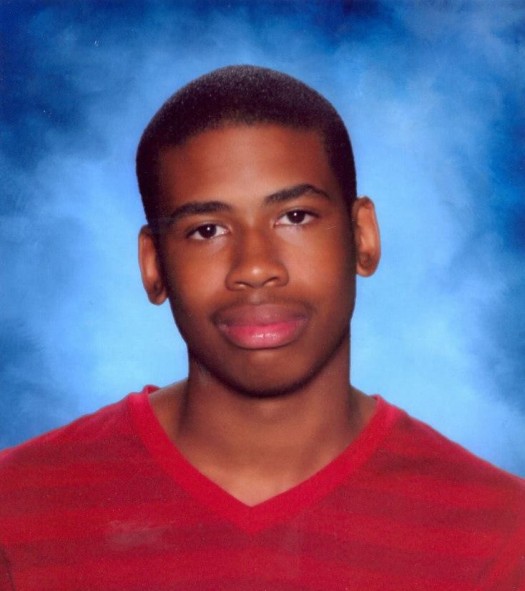
Jordan Davis, 17, was murdered by 47-year-old MIchael Dunn who was convicted on all but one charge. (Photo Credit: Google Images)
Saturday night, accused killer Michael Dunn was found guilty on four of the five charges that he was facing. Dunn was found guilty on three attempted second-degree murder charges and for shooting into the victim’s vehicle. Yet the 12 person jury was hung on the first-degree murder charge tied to the death of 17-year-old Jordan Davis, the unarmed teen who would have been 19-years-old today.
Dunn, who claims he saw a gun after initiating an argument with the teens over loud music, went back to his vehicle to retrieve his gun and fired into the car carrying 4 teenagers 10 times. He claims that he shot into the car because he feared for his life. Dunn faces up to 20 years imprisonment on each attempted murder conviction and 15 years for “firing a missile” into the vehicle. Dunn is expected to be sentenced next month. Prosecutor Angela Corey says that she will re-try Dunn on the first-degree murder charge.
Valentine’s Day is celebrated in different ways worldwide. (Photo Credit: Google Images)
Many believe that Valentine’s Day is something that only Americans celebrate. Despite the fact that many believe this “special day” to be a Pagan holiday, people have bought into the commercialized aspect of the “holiday” pining for romantic gestures from loved ones. From a commercial perspective, Valentine’s Day is fruitful in the United States. Laura Rahill of The Times Leger reports:
• 220,000 is the average number of wedding proposals on this day each year.
• 73 percent of American men buy flowers on Valentine’s Day.
• 15 percent of American women send flowers to themselves.
• Every year on Valentine’s Day, the Italian city of Verona, where William Shakespeare’s characters Romeo and Juliet lived, receives thousands of letters to the fictional character Juliet.
• About 3 percent of people will give a gift to their true love: their pet.
• In the Middle Ages, it was said that the first unmarried person you met on the morning of Feb. 14 would be your spouse.
Despite these factors, Valentine’s Day is celebrated worldwide. In fact, depending on which narrative you follow, Valentine’s Day began overseas as a Pagan festival and/or fertility celebration in Rome around 496. There’s also the story of persecuted Saint Valentin secretly marrying soldiers who were forbidden to marry because the Emperor Claudius II thought it would make them weak in battle. Valentine’s Day is also believed to have originated in France during the Middle Ages. Apparently, when birds began to mate halfway through the second month of the year, French lovers considered this a sign and began exchanging love letters, marking the beginning of the holiday. And of course, there can be no Valentine’s Day without Chaucer. The author writes:
“According to UCLA medieval scholar Henry Ansgar Kelly, author of Chaucer and the Cult of Saint Valentine, it was Chaucer who first linked St. Valentine’s Day with romance.
In 1381, Chaucer composed a poem in honor of the engagement between England’s Richard II and Anne of Bohemia. As was the poetic tradition, Chaucer associated the occasion with a feast day. In ‘The Parliament of Fowls,’ the royal engagement, the mating season of birds, and St. Valentine’s Day are linked.”
Valentine’s Day is a decidedly international holiday, that has evolved over the years to mean many things to many people. It is celebrated throughout the world. DoSomething.org offers insight into how diverse cultures celebrate this day dedicated to love.
South Africa. Week long celebrations and parties take place in South Africa. Young girls celebrate the day by celebrating a tradition called “Lupercalia.” This tradition requires girls to pin the name of their lover on their sleeve.
United Kingdom. Along with exchanging cards, chocolates and flowers, Brits write sonnets and verses to each other. Children also join in the fun by spending the day singing songs.
China. Chinese Valentine’s Day is on the 7th day of the 7th lunar month on the Chinese calendar. Couples visit a temple called “Temple of Matchmaker” and pray for happiness and future marriage. Single people also visit to pray for luck in finding love.
Find out more about how other cultures celebrate Valentine’s Day here.
This post was written by Nsenga K. Burton, Ph.D., founder & editor-in-chief of The Burton Wire.
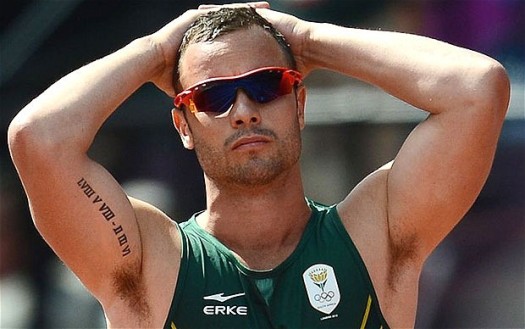
Paraolympian star Oscar Pistorius who awaits trial for the murder of his girlfriend, penned a Valentine’s Day post on the anniversary of the murder. (Photo Credit: Google Images)
Fresh from our “creepy Valentine” file, Euronews.comis reporting that alleged murderer, paraolympian Oscar Pistorius has chosen Valentine’s Day to speak out about his girlfriend, model Reeva Steenkamp, whom he shot dead last year on Valentine’s Day. Pistorius who goes on trial for premeditated murder on March 3rd, maintains his innocence, insisting that he accidentally shot the model through a bathroom door after mistaking her for an intruder.
The author reports:
“No words can adequately capture my feelings about the devastating accident that has caused such heartache for everyone who truly loved — and continues to love Reeva,” Pistorius wrote on his personal website .
“The pain and sadness – especially for Reeva’s parents, family and friends consumes me with sorrow. “The loss of Reeva and the complete trauma of that day, I will carry with me for the rest of my life,” he said in the message signed simply “Oscar”.
He also posted a link to the message on Twitter, describing it as “A few words from my heart”. It is the first time he has used his official account on Twitter since February 12, 2013, two days before the shooting.
Known as the ‘Blade Runner’, Pistorius catapulted to fame at the 2012 London Olympics as the first double-amputee to compete against able-bodied athletes. His trial is set to start on March 3.
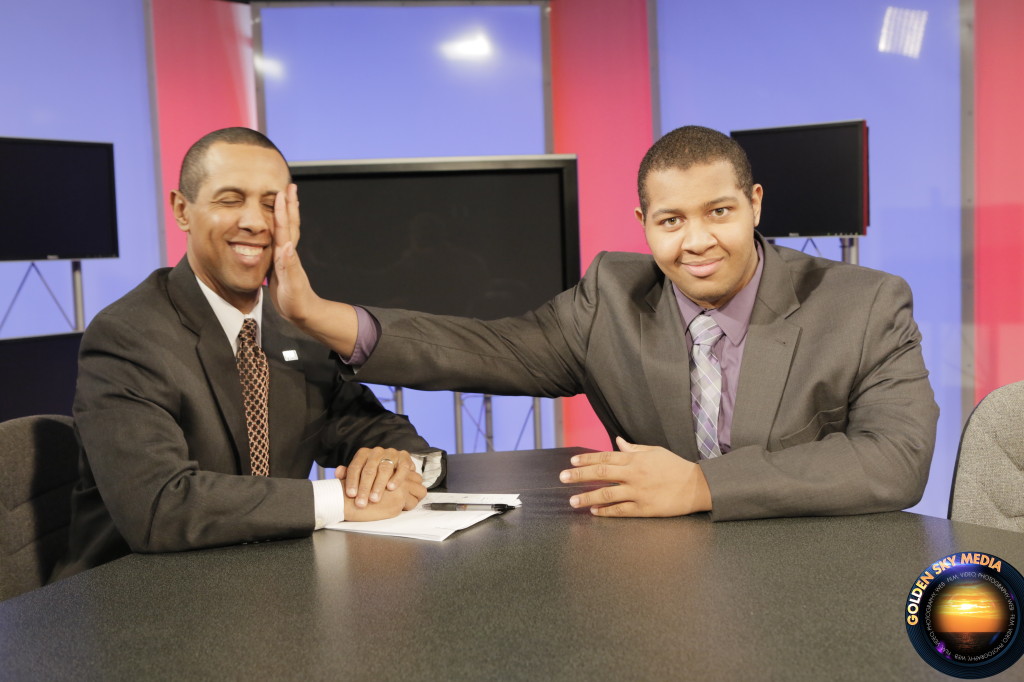
Author Lenny McAllister clowns around with his son Peace on the set of his show on the Pittsburgh Cable News Channel. (Photo Credit: Golden Sky Media)
This Valentine’s Day, I’m sure to do something nice for my wife. Truth be told, I always try to do something nice for her. I don’t need a special day to do that, despite what Hallmark and 1-800-Flowers tells guys around the nation this week. Although, I do get the point: Valentine’s Day is an opportunity to “take it to the next level” for romance.
That said, I would argue that, collectively, Black fathers should make Valentine’s Day this year about our kids and graduating more from absenteeism to fatherhood to dadhood.
I’m pretty sure that our wives will understand.
Not that fatherhood should be a once-a-year phenomenon akin to how folks find love for Mom on the second Sunday in May or many Christians find religion – and church – on the 25th of December and Easter Sunday in the spring. However, with the continued build-up of odds against Black children in modern-day America – from the double unemployment rates (confirmed again in this past Friday’s jobs report), horrifying incarceration rates, and mortality rates – the best thing that we can do for our children this February 14 is fall in love with our children all over again in a stronger, fuller way. Perhaps this is the beginning of elevating more of our brothers from boyhood to fatherhood?
Granted, there are plenty of Black fathers that already love their children – deeply. I’m the same way.
I know that I have loved being a dad since the moment I found out that I was becoming a father at 21-years-old. I slept with the sonogram picture of my daughter underneath my pillow every night – from the moment we found out about her until the day she was born. I raised my older two children as a divorcee and primary caregiver while I was finishing up my education at Davidson College. I became a dad two more times just over the past few years. My youngest children came amazingly after a period of time when I believed that I would never become a father again. From talking to my daughter about the great potential she has as a Deans-list college student to clowning around with my namesake on a television set and spending time with my other boys, I enjoy being a father and a husband daily. I always have and I always will enjoy fatherhood with a zeal that only the love of parenthood and the crystallization of modern society can foster.
Yet, there is always something more that I can do to make their lives better within this society, as their future is at risk. Just the same, there is much that we must do as Black fathers to turn the woeful tide we face collectively. Why not start on Valentine’s Day which sits squarely in the middle of Black History Month?
It only makes sense that as Black men during the weekend of love, taking that love of parenthood to new levels – from fatherhood to dadhood – is likely the very thing that can make our spouses swoon even more for us and perhaps allow us to heal Black America in the process.
For starters, we have to fight more.
Lovers fight for those they love. We must fight for better education, better lifestyle opportunities, and better protections for our children when they walk down the street. We must fight for the right of more fathers to have an active and on-going role in the lives of their children, taking on the stereotypes within our families, our communities, and the courts that champion single-parent lifestyles. As well, we must also, if necessary, fight any of our brothers’ shortcomings, frustrations, and hurt emotions that keep them from bonding with their children. Past pain cannot remain as obstacles. Current economic or family limitations cannot do so, either. More focus, more brotherhood, and more encouragement to be fathers will provide the steps necessary to climb over difficulties in bringing more fathers into the lives of their children.
Those obstacles may vary from man to man.
For me, those obstacles included the need to raise my children on food stamps for months as a post-9/11 job casualty while finishing up my education at Davidson. They included closing the gap of 450 miles between me in Chicago and my son, who was facing a medical challenge in my hometown. For others, they may include facing the pain from having an absent father in one’s past or the embarrassment of one’s current circumstances. They may include needs to augment and adjust interpersonal skills, economic skills, and lifestyle choices.
Yes, my love as a father prompted action as it always did. It does for others as well. However, it is also true that teamwork in the face of dealing with these challenges often helps parents take their loving actions to the next level. It makes boys into men and fathers into dads.
We must also fight for the sanctity of Black parenthood in the face of the “ghettoization” of Black adulthood and the degradation of Black womanhood. Black fathers can dually address, attack, and re-calibrate these realities with a stabilization of the Black family internally and the image of the Black household externally. For me, it was important for my children to see other Black married couples throughout their early years as we lived as a family in Charlotte. It was important for me to turn them off to the media images that represent us chiefly as reality-show entertainers and turn them on to the potential of themselves and their peers on a regular, natural, and on-going basis. For others, it may be more important to show appropriate love, respect, and cooperation with women in all facets of family and society. Something has to be done.
With the challenges before us as a community of hurting families, we as Black fathers must take the love we would normally espouse this Valentine’s Day and project it at a new, focused level to heal the many examples of brokenness of Black childhood around us, even if our children are actively in our embrace on the 14th. We must remember that what is currently broken was not always broken in Black America, and what is often seen as fractured can still be fully healed with time and action within our communities.
What it will take this Valentine’s Day is less of a gaze on the sweet curves of our wives and more of a renewed fixation on loving fatherhood and the straight-arrow ascent of our children’s talents, academic achievements, and life journeys. The taste of Valentine’s Day chocolate can be sweet but it cannot mask the bitter taste of life too many within Chocolate Cities throughout America experience today. It’s time to change that by filling the void of absenteeism with the meaningful presence of fathers in the lives of their children.
With the challenges of Black fatherhood that we currently face in 2014, it is necessary for us to fight to be present. Black men that are active fathers in the lives of their children need to continue to fight to bring more Black fathers into the fold. Perhaps Cupid won’t be pointing his arrows at us if we take on this mandate for Valentine’s Day this year; but the outcomes for our families will result in an everlasting love that would surely make him proud.
This post was written by Lenny McAllister, a political analyst and commentator featured on various local, national and international outlets including PCNC, CNN, and Sun News Network. He is the host of “The McAllister Minute” which appears on the American Urban Radio Network. The Pittsburgh-based pundit appears on “4802: Final Friday” and hosts “NightTalk: Get to the Point” on WQED and the Pittsburgh Cable News Channel, respectively. He is the former host of Launching ChicagoWith Lenny McAllisteron WVON The Talk of Chicago 1690 AM. Follow him on Twitter and Facebook.
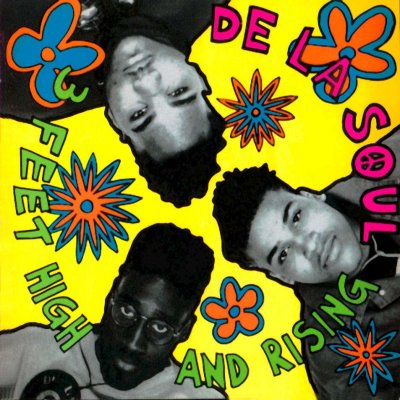
Iconic rap group De La Soul will give away its entire music catalog for free in celebration of the 25th anniversary of their debut album ‘3 Feet High and Rising.’ (Photo Credit: Google Images)
How lovely is it that Valentines Day 2014 coincides with the 25th anniversary of the release of De La Soul’s legendary debut opus 3 Feet High and Rising. Lucky for fans, the iconic rap group is making their entire catalog available for free download for 25 hours on the group’s website, and just in time for Valentine’s Day.
“In honor of next month’s 25th anniversary of their debut album 3 Feet High and Rising, De La Soul are making their entire catalog available for free download for 25 hours on the group’s website. The download bonanza will begin on Friday, February 14th at 11 a.m. EST until Saturday at noon.
“It’s about allowing our fans who have been looking and trying to get a hold of our music to have access to it,” De La Soul member Posdnuos tells Rolling Stone. “It’s been too long where our fans haven’t had access to everything. This is our way of showing them how much we love them.”
Newman adds:
“The release of the group’s catalog is the first of numerous upcoming projects. In a few weeks, they’ll post new songs to their site, with You’re Welcome, their first album since 2004’s The Grind Date, expected to be released before summer. Next month will also see the release of Preemium Soul on the Rocks, a six-song EP with three beats each from DJ Premier and Pete Rock. The group is also planning a visit to Detroit to work on an unreleased beat from J Dilla, the prolific producer who passed away in 2006.”
This announcement is literally music to our ears and has us wagging our native tongues. Happy Valentine’s Day!
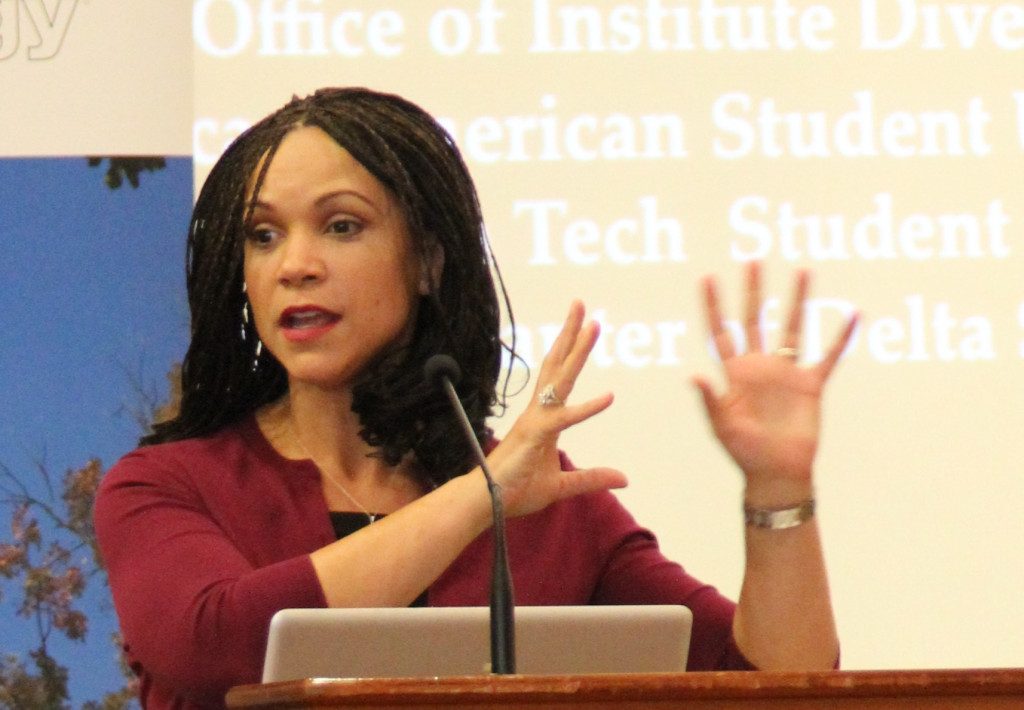
The astute speaker reiterated her motto, “The struggle continues.” She encouraged the primarily African American student audience to take action on campus, in their local communities and with emerging technologies. She believes that their presence and initiative in those areas can set the tone for evolving into effective citizens. “You have the capacity to love and critique at the same time. Young people develop culture. We have to let them lead it. They allow us to see things we don’t always see. It takes having a voice and not being silenced. You have the right to make mistakes and still be a valued contributor,” says Dr. Harris-Perry.
During Dr. Harris-Perry her address, the best-selling author, historian and columnist for The Nation made a few Biblical and pop cultural references. She was accompanied by a slideshow of powerful photographs featuring beaten slaves, protestors with picket signs and blacks being lynched. “You have to be able to lose without fear. Struggles are interconnected in a global environment. Securing rights has required struggle. Struggles are real, but they’re embodied,” says Dr. Harris-Perry.
As the slides transitioned, Dr. Harris-Perry suggested that the audience divert their attention from the obvious images that trigger thoughts of injustice. She set the audience up to identify complex ways of understanding how oppression affects all people. “We do what we know to do. So much of the movement looks like what we think it’s supposed to look like. We have to participate in knowing how to change things,” says Dr. Harris-Perry.
Leading a movement requires teamwork and recognizing that there is a problem. With the help of another photograph, Dr. Harris-Perry recalls one of her students helping to rebuild and gut homes in New Orleans post-Katrina. There were subsequent images of race-related headlines like Jena Six, Trayvon Martin and Troy Davis. Dr. Harris-Perry wanted students to know the battles they face in contemporary society, which she framed in a historical context.
Education, she says, is key to raising awareness. “You have to do the work of democracy in the classroom first. Classrooms are labs for democracy. Movements require collaborators, challenges and active action. Civil rights is the wrong way to think about struggle,” says Dr. Harris-Perry.
Despite gender, sexual orientation or political party affiliation, they were crusaders who allied with or critiqued King’s ideologies. Movement, she insists, requires various perspective and ideas to work towards common goals. “We misremember the struggle in important ways. Strong people don’t need strong leaders. It’s our collective rhetorical tool that achieves inequality,” says Dr. Harris-Perry. Her slideshow then transitioned into a photo of the little boy patting President Obama on the head. Not too far behind were images of news headlines matched with her reading critiques of President Obama’s agendas and policies.
When Harris-Perry talks about President Obama, she admits that she gets emotional. Dr. Harris-Perry adds, “We live in that moment for the baton passing. An African American President absolutely matters,” she says.
The humble scholar, considered by many as one of America’s foremost public intellectuals, also shares with the audience her personal battles. Dr. Harris-Perry is trying to wrap up her third book. She recognizes her hectic travels keep her away from home quite often. Affected slightly by dyslexia, she has problems reading the teleprompter during the taping of her show.
Despite her struggles, Dr. Harris-Perry knows diverse youth have the power to make social change. Students, she says, must be up for the challenge despite their career choices. “Being a citizen is to participate in something messy and hard. While you’re a scientist or engineer, be an artist. They respect no arbitrary boundary and refuse to be invisible or silenced. They are deeply invested in community, make order out of chaos and chaos out of order,” she says.
Christopher A. Daniel is pop cultural critic and music editor for The Burton Wire. He is also a contributing writer for Urban Lux Magazine and Blues & Soul Magazine. Follow Christopher @Journalistorian on Twitter.
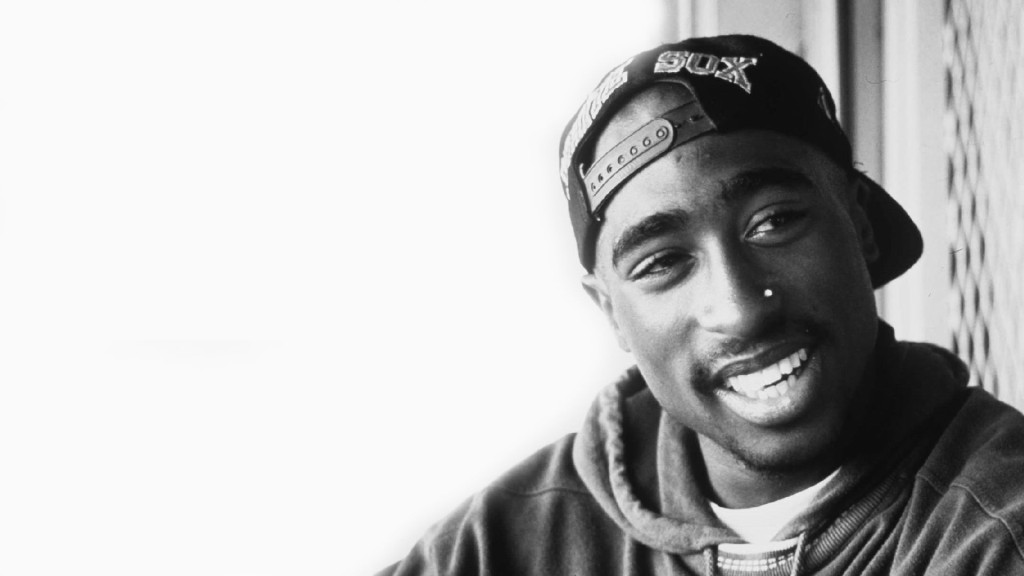
Director John Singleton will direct the biopic of slain rapper Tupac Shakur. (Photo Credits: Google Images)
Gerrick D. Kennedy of The Los Angeles Times is reporting that John Singleton will direct a biopic on legendary rapper Tupac Shakur. Singleton worked with Shakur on his sophomore directorial effort, Poetic Justice, featuring Janet Jackson and Regina King. Kennedy reports that Singleton has signed on to rewrite, direct and produce the biopic which has gone through several development machinations. Singleton was linked to the project years ago but the deal fell through and the project stalled.
Kennedy writes:
“Morgan Creek Productions announced it had teamed with Emmett Furla Oasis Films to co-finance and co-produce the film. At the time producers were working with a script, and expecting a new draft before production was supposed to begin this month.
Singleton will soon begin reworking the script, with hopes of beginning production in June, according to the Variety report.
In 2011, Morgan Creek was developing the project, once known as “Tupac,” with Antoine Fuqua (“Training Day”) attached to direct, and launched an unsuccessful online casting call to find a lead to fill the shoes of the polarizing, often-embattled rapper.
The film is expected to chronicle Shakur’s prolific rise as a rapper and actor, his infamous legal troubles, his time at Death Row Records and, of course, his killing, which came at the height of the bitter East Coast-West Coast rap rivalry.
His slaying, like that of peer Christopher Wallace (a.k.a. Notorious B.I.G.), remains unsolved — although theories about who gunned down the two are among hip-hop’s eeriest mythology.”