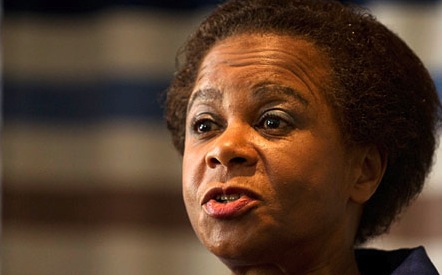
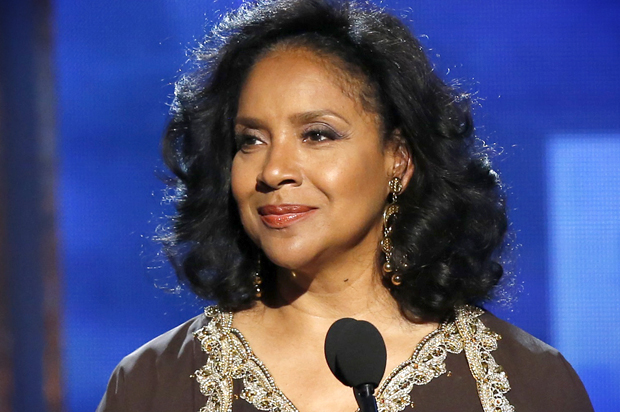
Mamphela Ramphele, the woman presidential candidate whom many believed could unseat the ANC has hit a road block. (Photo Credit: Google Images)
David Smith of The Guardian is reporting that Mamphela Ramphele, the woman thought to be South Africa’s first female presidential candidate who could challenge and unseat the African National Congress (ANC), has left her political party after a chaotic candidacy. Ramphele, a founder of the Black Consciousness Movement in South Africa and mother to two of late anti-Apartheid activist Steve Biko’s children, stated:
“I believed that we had the opportunity to transcend party politics and engage South Africans in a conversation about the future. The last week has demonstrated that, for some, this new way of thinking about our future will be hard to achieve right now … The time for this was not right.”
Smith writes:
Amid much fanfare last week, Ramphele was named as the presidential candidate of the Democratic Alliance (DA), in what was seen as the most serious challenge yet to the 20-year stranglehold of the African National Congress (ANC).
But on Sunday the DA announced that the deal had collapsed, blaming Ramphele for reneging on their agreement and stating that she “cannot be trusted”.
Both sides organized press conferences in Johannesburg on Monday, fueling a war of words that many commentators see as playing into the hands of the ANC, which has worries of its own about voter disenchantment.
Although the Democratic Alliance (DA) merger has broken down, Ramphele will continue to pursue the presidency through her political party Agang SA.
Dr. Tommie Smith and Dr. John Carlos protest civil rights abuses at the 1968 Olympics. (Photo Credit: John Dominis (Time & Life Pictures/Getty Images))
At the 1968 Summer Olympics in Mexico City, gold medal sprinter Dr. Tommie Smith and bronze medalist Dr. John Carlos made a “Silent Gesture” on the podium. As the National Anthem played, the tall athletes bowed their heads, raised their leather clad black fists and stood barefoot wearing only black socks.
After running 200 meters, the bold athletes’ victorious stand quietly conveyed their views on inequality, poverty and racial pride. Smith, a record-breaking Hall of Famer sprinting close to 30 miles-per-hour, and Carlos experienced a backlash in the wake of their symbolic advocacy. They were booed by spectators. The International Olympic Committee (IOC) suspended the competitors and revoked their accolades. Back in the States, they received countless death threats. Their body language was compared to a Nazi soldier’s salute.
Smith, talking with his thumb, index and middle finger clenched together, doesn’t regret that moment on the podium. Instead, when he coaches younger athletes, he often encourages them to carry a mirror. The method, Smith says, is empowering. “Carry yourself in your pocket. You see what God has given you to believe in. You have to trust yourself. If you don’t love what you see, how can you expect anyone else to love what they see?” says an encouraging Smith.
Smith, Carlos and Australian silver medalist Peter Norman wore Olympic Project for Human Rights (OPHR) badges on their warm-up jackets. It was in that moment Smith became more self-aware of his own consciousness. These days, he prefers to let people draw their own assessment of his actions. “That was a gift to me. Simple things make the important things important. That’s why silence is golden. I know what I did it for. The saving grace was that not a word was used. I’m using your sensibilities of how you feel about that within you,” says Smith.
Smith’s and Carlos’s heroic posture earned them status as both revolutionaries and pop culture icons. The “Silent Gesture” image, captured by Life Magazine photographer John Dominis, is immortalized in countless history books, documentaries, posters, music videos, cover art and clothing.
“We still have youth out there that need to hear the word. The silence of a person can generate the power of the heart. By you believing in yourself, you’re gonna help someone else. You look at that [silent gesture], and you get your strength. Even though it’s not saying anything, you tell yourself what you want from that,” says Smith.
Smith, who remembers pulling a muscle during the race, fluidly uses metaphors and allegories to illustrate how non-verbal protest is another chapter in both the civil and human rights movement. “Do what you do. Whatever you do, do it well. There’s good air, bad air and no air. Try not to breathe, and you’ll find out how blessed you are to do something with bad and good air. There’s good people and bad people out there. Just draw the goodness out of both,” says an easy going Smith.
Dressed in an impeccable three-piece navy blue pinstripe suit with the Olympic logo pinned on his lapel, Smith rests comfortably in the Atlanta Marriott Marquis lobby with his hand on his knees. He and Carlos were both recently inducted into the Trumpet Awards’ International Civil Rights Walk of Fame at Atlanta’s Ebenezer Baptist Church. It’s one of the many high honors he and Carlos have received alongside gym dedications and a 23-foot statue on San Jose State University’s campus.
Smith is a retired pro athlete for the Cincinnati Bengals, retired college educator and in-demand public intellectual. Forty-six years after his monumental win, he is proud whenever he is honored. He references Dr. Martin Luther King, Jr.’s quotes, who was assassinated the same year as Smith’s Olympic victory.
“I always knew it was something bigger than me. I just couldn’t see it. You must feel the spirit and believe in it. Without work, you can have all of the faith in the world, but it won’t come into fruition unless you work for it,” says Smith.
This post was written by Christopher A. Daniel, pop cultural critic and music editor for The Burton Wire. He is also a contributing writer for Urban Lux Magazine and Blues & Soul Magazine. Follow Christopher @Journalistorian on Twitter.
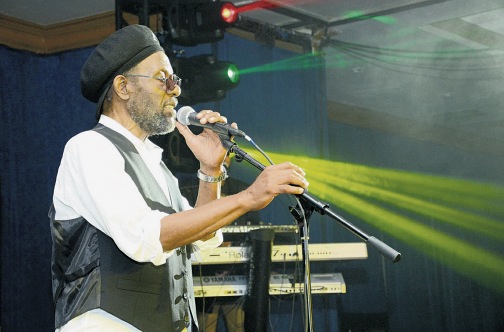
Reggae legend William ‘Bunny Rugs’ Clarke of the group Third World has died. (Photo Credit: The Jamaica Observer)
The Jamaica Observer is reporting that William ‘Bunny Rugs’ Clarke, former lead singer of the popular band Third World has died in a Miami hospital. Clarke had been ill for an extended period of time, missing Third World’s 4oth Anniversary celebration last year.
Clarke was born in Mandeville and replaced ‘Prilly’ Hamilton as lead singer for the band in 1976. His first album with the band was ‘96 degrees in the Shade’ but is best known for the hits ‘Now that we found Love’ an O’Jays original, and ‘Try Jah Love’.
Clarke would have turned 66 on Thursday. R.I.P. to a reggae legend.
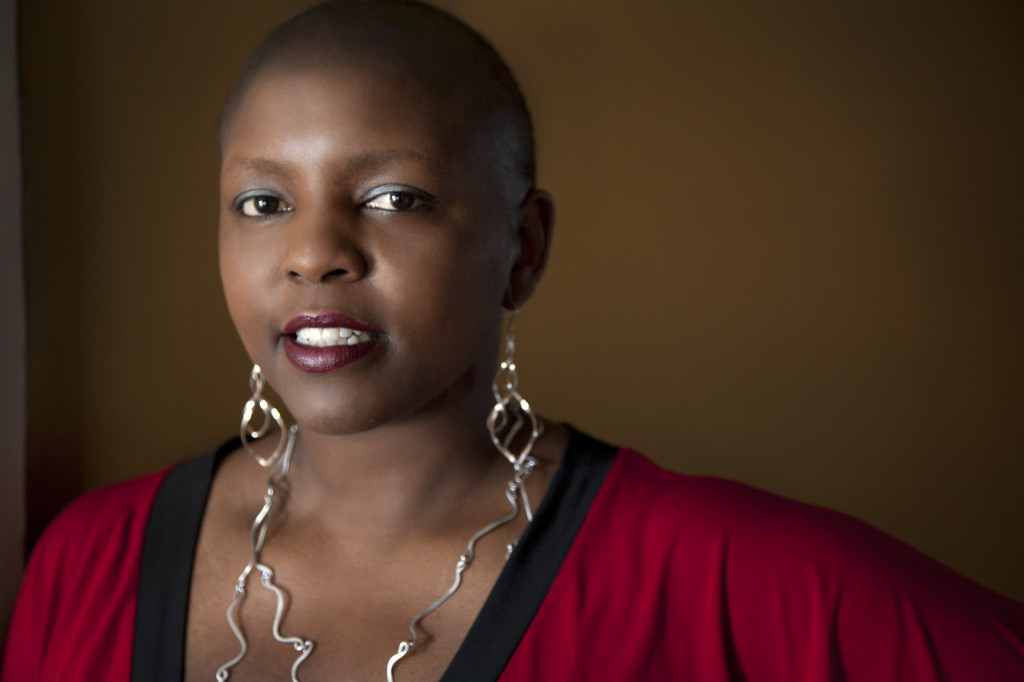
Award-winning filmmaker Yoruba Richen examines the Black LGBTQ community in her new documentary ‘The New Black’. (Photo Credit: Luke Rattray)
Yoruba Richen is the delightful, thought-provoking director, producer and writer behind the critically acclaimed documentary, ‘The New Black.’ Her 75-minute intimate portrait offers cinematic seats around the dinner table, in church pews, on the front stoop and at the voting polls to explore same-sex marriages and homophobia in the African American community.
Richen’s riveting work dates back to 2008 when President Obama was elected. Almost simultaneously, Proposition 8 revoked gay marriage in California. A curious Richen immediately noticed that black voters were being blamed for the ban on marriage equality being passed. She wondered why a marginalized black LGBT community was continuously ostracized from the conversation.
“These two groups were being pitted against each other. As a documentary filmmaker, I started to ask these questions about why this was happening. I had a sense this issue had bubbled up to the top of the national political agenda. I thought it would make a very interesting film to see how these relationships were trying to be repaired,” says Richen via phone interview.
Too often in black culture, sexuality and homosexuality are topics swept under the rug. Richen, even with her busy schedule mounting, enjoys speaking to particularly black media outlets about The New Black and how the film interrogates sensitive subject matter. She hopes her film is a step in the right direction to afford the black LGBT community more visibility in popular culture and media.
“I want us to have conversations that are hard to have. I hope this film will propel us as a community to continue that conversation. It’s happening more and more but to have it embedded in who we see and understand as part of our community,” says Richen. Even without a background in film school or a journalism program, a diligent Richen, a Brown University political science and theater alumnae , knows how to create brow raising commentaries on race and class.
The former ABC News associate producer in the investigative unit and Democracy Now!producer has previously produced documentaries exploring how welfare reform affects women of color in New York City and blacks recovering land over several years in post-apartheid South Africa. When Richen was growing up in Harlem, she recalls commuting for nine years to just to attend school.
Those trips laid the foundation for her activism work. She became conscious of race and class divides on a local level. “You can’t help but to see what kind of privilege and access certain people have or didn’t get. It made me aware of the inequality,” says Richen. The self-proclaimed news junkie’s love for making documentaries concerning race originated from freelancing with various production companies.
Richen’s orientation with production would provide a gateway for her stint at ABC News. “It was very good training and learning the craft of having to pitch stories, write and dig deeper. I love that part of it,” says Richen. The exceptional storyteller polished her creativity when she became a Sundance Producer’s Fellow, a Guggenheim Fellow and Fulbright Award recipient. Chuckling as she elaborates, Richen remembers the film clinics teaching her a multi-layered process involving plot development, fundraising, distribution, music licensing and building partnerships with organizations or special interest groups.
Making films, Richen believes, is both frustrating and exciting. “There are a lot of different aspects to it. It’s a multi-faceted job. You come in with a certain idea [which is great], but that idea never ends up what you think it is. It’s most useful to be open to what experienced people are telling you. Know how you want your film to live in the world,” she says.
Now, a well-equipped Richen, whose films have received funding courtesy of the Ford Foundation, ITVS and Sundance Documentary Fund, has the joy of guiding and mentoring young filmmakers. She teaches documentary production and a graduate seminar on international reporting at CUNY School of Journalism. She uses her films as teaching tools in her courses. As a result, she finds common ground with the students whenever she facilitates discussions.
“I learn from the students. I’m inspired by them. I teach and make films at the same time. I understand how hard it is to figure out what your story is. It allows the students to relate to me more. I’m in the mix creatively and business wise, too,” says Richen.
Does Richen believe being gay is the new black? Not at all. However, she does point out why she chose the title and its meaning. “I chose The New Black for its provocative nature. It would interest people. I don’t think being gay is The New Black. The New Black is the young activists that are featured in the film that are pushing this conversation within our community,” says Richen.
This article was written by Christopher A. Daniel, pop cultural critic and music editor for The Burton Wire. He is also a contributing writer for Urban Lux Magazine and Blues & Soul Magazine. Follow Christopher @Journalistorian on Twitter.
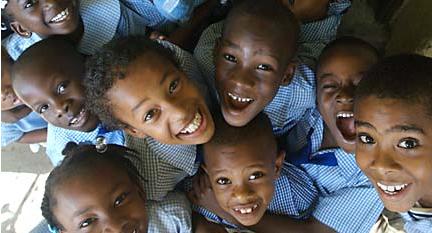
Fifth graders in Jamaica will run businesses through the Junior Achievement Biztown program, a first in the Caribbean and Latin America. (Photo Credit: Google Images)
Karim Smith of the Jamaica Observeris reporting that Jamaica will have a Junior Achievement Biztown (JA Biztown), a model business town in which 5th graders will be allowed to run their own businesses while learning the basics of financial responsibility.
Smith reports:
“The aim of the project is to get 10,000 students across the island at Grade 5 level to participate and discover practical life skills that they can take with them for life. By participating, students will get a taste of the real world,” said Allison Peart, president of the Rotary Club of Kingston.
“In North America there are successful companies that have been started before getting to grade five and I don’t see why that couldn’t happen in Jamaica,” she told the Jamaica Observer.
This program focuses on 5th graders, but Junior Achievement has other programs for children in other grades.
Jamaica is the first country in the Caribbean and Latin America to have a Junior Achievement Biztown.
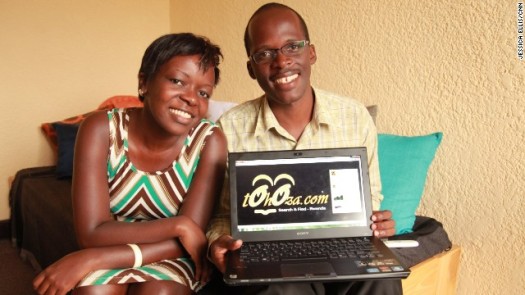
Siblings Chance Tubane and Patience Nduwawe are the founders of Tohoza, Rwanda’s ‘Craigslist’. (Photo Credit: Jessica Ellis/CNN)
Teo Kermeliotis and Jessica Ellis of CNN are reporting that Chance Tubane and Patience Nduwawe, siblings who were orphaned during the Rwandan genocide in 1994. The siblings were reunited a decade after the genocide and are now working together in a tech business to help their country by connecting all Rwandans.
The authors write:
“The two siblings have combined their skills in IT and communication to launch Tohoza.com, Rwanda’s top online advertisement platform. Similar to the popular Western website Craigslist, Tohoza is a web-based classified ad directory where Rwandans can post or look for job vacancies as well as buy, sell and rent just about anything — from houses and cars to watches and shoes.
Just two years after its launch, Tohoza is today the third most popular website in Rwanda, with about 9,000 visitors per day.
‘We said we had to create a product that would help a lot of people,’ says Nduwawe. ‘What Rwandans need now is information, so we started Tohoza to deliver the most accurate and timely information to them.'”
The siblings hope to give Rwanda a more “optimistic narrative” about the country.
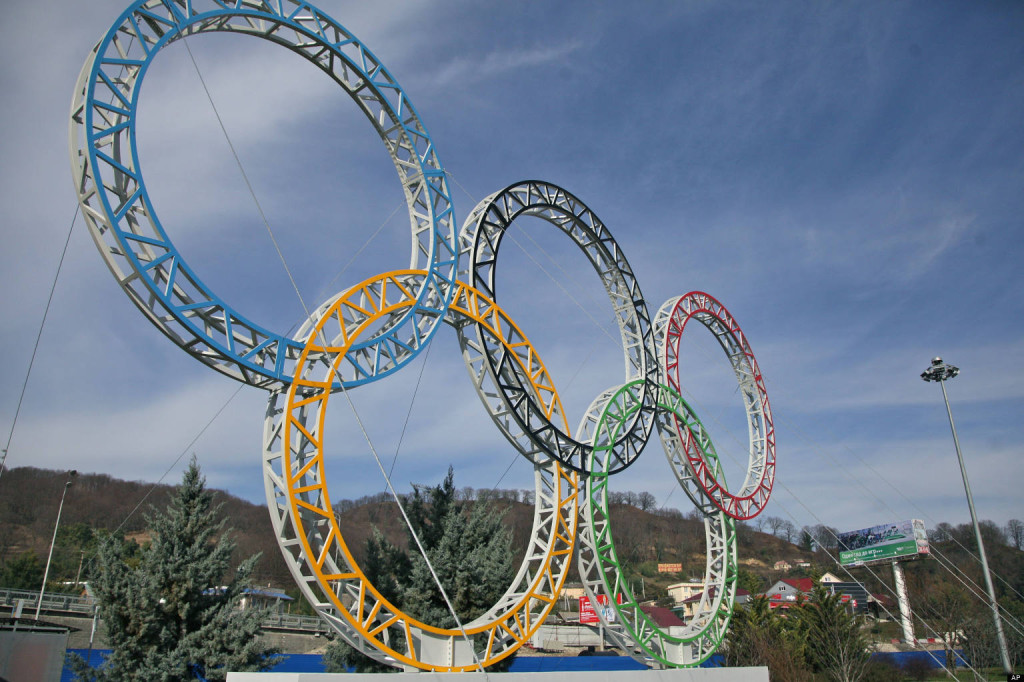
The mayor of Sochi, home of the 2014 Winter Olympics, says that no gays live there. (Photo Credit: Facebook)
BBC Newsis reporting that Anatoly Pakhomov, mayor of Sochi, site of the 2014 Winter Olympics, has said that no gay people live in Sochi. The author writes:
“Anatoly Pakhomov said homosexuals were welcome at the Games – as long as they ‘respect Russian law’ and ‘don’t impose their habits on others'”.
Pakhomov’s statement was in response to opposition leader Boris Nemtsov’s statement that there were several gay bars in Sochi. The author continues:
“In June 2013, Russia passed a law banning the promotion of “non-traditional” sexuality to under-18s – widely seen as an attack on gay rights.
The controversial new law made providing information on homosexuality to to citizens under the age of 18 a crime, punishable by a fine.
Critics say its loose interpretation effectively stops gay rights protests in Russia.
Anatoly Pakhomov, a member of President Vladimir Putin’s United Russia party, told Panorama that gay people would be welcome at the Games.”
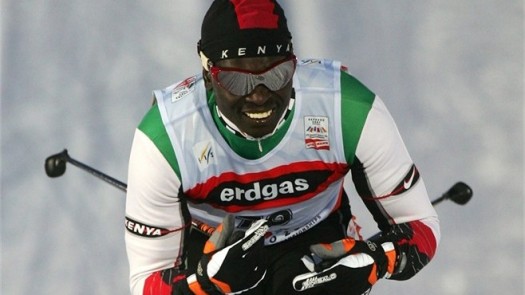
Kenyan skiier Philip Boit helped pave the way for more African athletes to compete in the Winter Olympics. (Photo Credit: Google Images)
In a feature story for BBC News, Maddy Savage chronicles the friendship of Kenyan Olympic skier Philip Boit and Norwegian skiing icon Bjorn Daehlie. The unlikely friendship began between then-newcomer Boit and Olympic skiing icon Daehlie. Boit shocked the world by qualifying for the 1998 Nagano Winter Olympics a mere two years after first seeing snow. Daehlie was competing for his sixth Gold medal in skiing. Initially, the Olympic skiers from traditional skiing countries didn’t know what to make of Boit, wondering aloud why someone from a farming family in Eldoret in western Kenya (home to some of the world’s fastest runners), would pursue skiing as a sport. Some even suggested that Nike, who sponsored the then-fledgling Boit, was using the Kenyan athlete as a marketing gimmick.
What emerged on the slopes is a friendship that has stood the test of time. As expected, Daehlie won his sixth gold medal making him the first athlete to win six gold medals at the Winter Olympics. The rest is what happens when a legendary athlete recognizes the tremendous effort put forth by a newcomer who no one expected to be there, let alone finish a race, in pouring down rain nonetheless. Savage writes:
“But instead of going straight to the medal ceremony, he (Daehlie) waited for the final competitor to finish the race – Philip Boit. ‘We heard on the speaker that he was near the stadium and I felt really impressed that he was able to finish the race in these conditions and I wanted to wait to have him over the finish line – this African, brave skier,’ says Daehlie.
Boit describes the crowd ‘going wild’ when he eventually entered the stadium and says he can remember getting a sudden burst of energy.
‘They were shouting ‘Kenya GO!, Philip GO!’ It was like I was winning a medal even though I was last.’
He finally crossed the finish line 20 minutes after Daehlie and was embraced by the Norwegian star.
Senegalese skier Lamine Gueye was the first African skier at the Winter Olympics (1984). It was the symbolic gesture of good sportsmanship by Daehlie and the friendship that emerged from that gesture, which many believe led to more Africans competing in the Winter Olympics. Since 1998, Cameroon, Ethiopia, Ghana and Madagascar have debuted at the Winter Olympics, and Zimbabwe and Togo will compete for the first time in Sochi.
African technology startups are creating economic and social change on the continent. (Photo Image: Facebook)
Toby Shapshack of Stuff Magazine, has compiled a list of 15 African Tech Startups to watch for CNN International. Shapshak is a technology journalist based in Johannesburg where he writes about tech and innovation in Africa. He spoke at TED about how Africa is solving the world’s problems, in Edinburgh in 2013. He edits and publishes the South African edition of Stuff magazine and has been named by GQ as one of the top 30 men in media.
Shapshack writes:
“Africa is not just a mobile-first continent. It is mobile-only. As such, many of the most innovative startups address mobile for what it is: the gold of today, the new, digital equivalent of a railroad.”
He adds, “Several of the names on the list come from the final 40 of this year’s Demo Africa the African arm of this renowned launch event for tech start-ups, held in Nairobi.”
PAPERIGHT
“If they gave Nobel Prizes for Bloody Fine Ideas, it would be to Arthur Attwell, whose thoroughly clever Paperight idea turns education into a win-win for everyone, from publishers to students to small print shops. Everybody wins.”
JUMIA
“Aiming to be the ‘African Amazon,’ Jumia.com offers cash-on-delivery in the populous Nigerian cities of Lagos and Abuja. Ordered online or via mobile phone, the products are driven by motorcyclist couriers to the buyers’ home or business, when cash can be paid.”
mPAWA
“mPawa matches employers with potential employees via skills and experience. It’s also SMS-based, which is ideal given that much of Africa is mobile-only.”
SLEEPOUT
“Kind of like an AirBnb for Africa, but using SMS as much as the internet as its main interface, Kenya’s SleepOut was a highlight at Pivot East in Nairobi last year. It has a touch of Lastminute.com to the bookings it offers in over 30 countries in Africa and the Middle East.”
22SEVEN
“Financial-planning site — and now app — 22seven.com offers a different, behavorial economics-approach to managing your finances. Snapped up by London-based Old Mutual, one of the largest insurers, 22seven is expected to deliver great things.”
Find out about more standout African tech startups at CNN International.
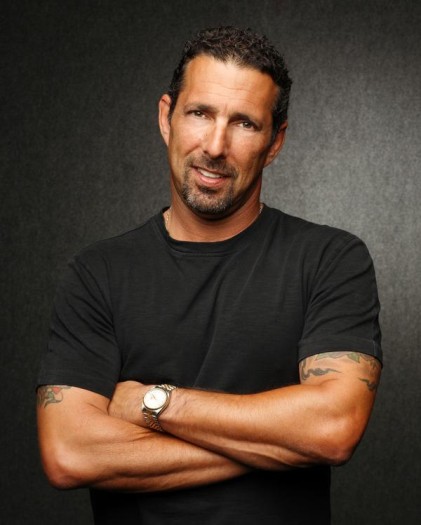
The tattooed, Jewish New Jersey native with high anxiety remembers, “It was probably the most terrifying moment at that point in my career. It was very stressful. There was a lot of pressure. My friends were in the audience, comics I knew, people that wanted to see me kill and people that wanted to see me fail. It came out as good as I thought it would come out,” he says.
Prior to breaking the color barrier on the hit series launched to showcase comedians of color, a fearless Vos’ deadpan humor was a mainstay on New York and New Jersey’s black comedy circuit. Some white comedians perceived him as the “token.” Some black comedians resented him for taking the opportunity since many aspiring comics never got the chance to appear on Def Comedy Jam.
On stage, Vos, the finalist on NBC’s Last Comic Standing’s first season, delivers unapologetic banter. The nonchalant funnyman’s subject matter typically revolves around his addictive personality, relationships and parenting. He also jokes about actively playing golf and chewing Nicorette gum.
The sarcastic recovering drug addict also celebrates 28 years of sobriety. If one of his ad-libs is funny, Vos will crack his sly pearly white smile and chuckle to himself. In retrospect, Vos regrets not being true to his comedic voice. “Comedy is comedy, and people are people. I did blacken up my voice a little, but you grow as a comic, too. Now I would just talk the way I talk. Maybe that’s who I was then. I’m glad I did all of that because that’s who I am,” says Vos.
Relaxing backstage following the first of a three-night residency at Atlanta’s Laughing Skull Lounge, Vos prides himself on knowing his audience. He believes the key to good standup comedy is his approach. “I grew up in the life knowing people. On the urban circuit, I went as far as you could go. If a black audience likes you, they’ll give it up more than a white audience. I can get away with a whole lot more. They’re not as uptight as white people,” says Vos with his hands in his pocket.
Vos doesn’t pay close attention to a lot of standup comics these days. However, his sense of humor was inspired by watching a lot of 1960s and 70s variety shows and sitcoms. Throughout his career, he developed great relationships with many black comics. He wrote for Chris Rock on many occasions including the star’s 77th Academy Awards performance in 2005. “He’s one of the best people to work for. He’s a smart dude. He keeps funny people around him. He knows what he’s doing. He likes to have people around to tweak it,” says Vos.
Vos made a brief appearance in a Chappelle’s Showsketch. He was unclear of his role at the time but had fun listening to Charlie Murphy’s stories. “[Dave Chappelle] had a vision, but the director didn’t translate it to me. They cut all of my lines, so I didn’t know what I was doing. I get checks, but I don’t even know what I said,” he says.
Patrice O’Neal was Vos’ best friend. He hung out with Sherman Hemsley. He opened for one of his favorite comedians, Paul Mooney, on a few occasions. Vos and other comics even threw phonebooks at Kevin Hart when he first started out.
Vos, jokingly calling Hart a “creep,” acknowledges the star comic as a good basketball player who evolved into being funny. “That’s how we got strong – just smashing each other every night. He could hang because he knew how to take a beating. We took him under our wing when he started. You hang around with funny dudes, you got to be funny,” says Vos.
Vos’ third release, Still Empty Inside, is currently available via iTunes and Amazon. While in Atlanta, he plans to record material from the live shows for a follow up release. Even with the opportunities and success Vos has had as a comedian, his HBO appearance is still near and dear to him.
Another season came after Vos’ appearance with a few other white comics appearing. Vos wishes his moment would go untapped. “I’ve done some really cool shit. I would’ve been the only white guy to ever do Def [Comedy] Jam. It kinda pissed me off. I would’ve loved to have been the only white comic to ever do it, but I was the first,” says Vos.
This article was written by Christopher A. Daniel, pop cultural critic and music editor for The Burton Wire. He is also a contributing writer for Urban Lux Magazine and Blues & Soul Magazine. Follow Christopher @Journalistorian on Twitter.