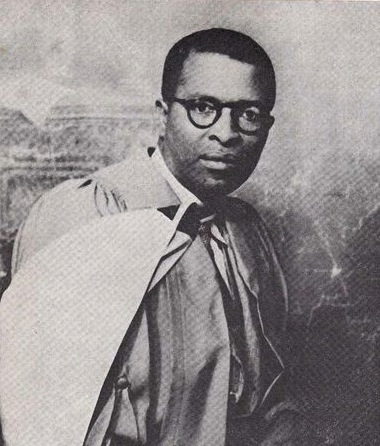
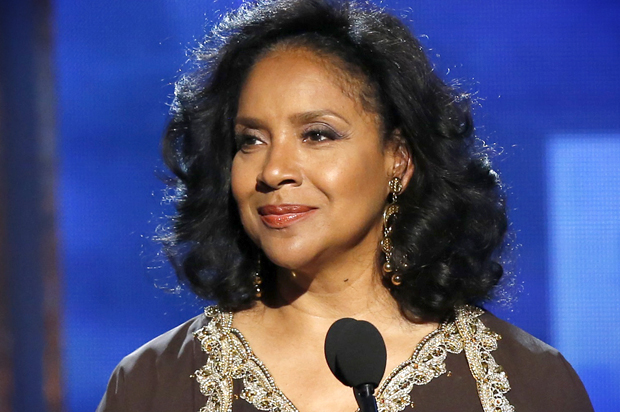
Dr. Benedict Walle Vilakazi was the first black South African to earn a Ph.D. (Photo Credit: Omniafrikan.com)
‘Bury me where the grasses grow
Below the weeping willow trees
To let their branches shed upon me
Leaves of varied greens.
Then, as I lie there, I shall hear
The grasses sigh a soft behest
‘Sleep, beloved one, sleep and rest.’
–Excerpt from the poem, ‘If Death’
Dr. Benedict Wallet Vilakazi, poet, novelist, and educator, was born Bambatha kaMshini near KwaDukuza, Natal (nowSouth Africa) on January 6, 1906. In 1946, he became the first black South African to receive a Ph.D.
At the age of ten, Dr. Vilakazi was baptized and given the name Benedict Wallet. He earned his teaching certificate in 1923 and taught at several schools. He published his first novel, “Nje nempela,” in 1933. It was one of the first works of Zulu fiction to treat modern subject matter.
Dr. Vilakazi earned his Bachelor of Arts degree from the University of South Africa in 1934. He began teaching in the Department of Bantu Studies at the University of Witwatersrand in 1936. There he created a Zulu-English dictionary with his mentor and co-author linguist C.M. Doke. He was the first black South African to teach white South Africans at the university level. In 1946, he earned his Ph.D. in literature from Witwatersrand for a dissertation on Zulu poetry, making him the first black South African to earn a doctoral degree. Vilakazi Street in Soweto is named after him and it is now famous as the place where both Nelson Mandela and Desmond Tutu once lived.
Dr. Vilakazi died of meningitis one year after becoming the first black South African to earn a Ph.D. He was 41.
The Akosua Report: Facts on The African Diaspora, is written by Akosua Lowery. Follow her on Twitter @AkosuaLowery.
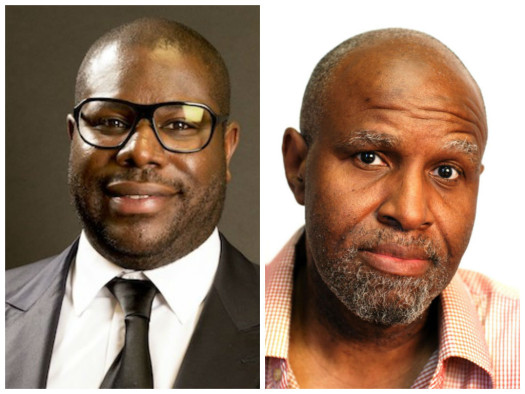
Film critic Armond White heckled ’12 Years a Slave’ Director Steve McQueen at 2014 New York Critics Circle awards on Jan. 6. (Photo Credit: TBW)
Ben Child of The Guardian is reporting that British film director Steve McQueen was heckled at the New York Critics Circle Awards last night. Child reports that McQueen was heckled by prominent film critic Armond White, who is African-American. He writes:
“The 12 Years a Slave film-maker was targeted by CityArts editor Armond White as he picked up the best director prize for his harrowing Oscar-tipped slavery drama, according to Variety. He did not react to the barb. White, a controversial former host of the ceremony, began heckling from his table as soon as McQueen took to the stage to accept the prize. He shouted: “You’re an embarrassing doorman and garbage man. Fuck you. Kiss my ass.”
Nearly one million people have fled the Central African Republic amid crippling violence in a struggle over power. (Photo Credit: Google Images)
Azadeh Ansari of CNN is reporting that nearly one million people have fled the Central African Republic which has been mired in violence since March 2013. Ansari writes:
“The nearly 935,000 displaced people are hiding in bushes and seeking refuge with host families, and churches and schools have been turned in to makeshift shelters. More than half the population of the capital city of Bangui has been displaced, and nearly 60% of them are displaced children, according to the latest report from UNHCR, the United Nations’ refugee agency.”
Violence broke out in the once peaceful region after the predominantly Muslim-backed Seleka militia and other rebel groups from the marginalized northeast seized Bangui. One of the Seleka leaders, Michel Djotodia, overthrew President Francois Bozize, who fled to Cameroon, creating a political power struggle. Human Rights Watch has reported that the Selekas have been intentionally killing civilians including women, children and the elderly under the leadership of Djotodia. Subsequently, an ex-Seleka national military group has formed. In addition, holdovers from Bozize’s administration, most of whom are Christian, are attacking Muslim civilians in response to the Selekas and ex-Selekas actions.
This story is developing. Read more at CNN and check back periodically at The Burton Wirefor more information.
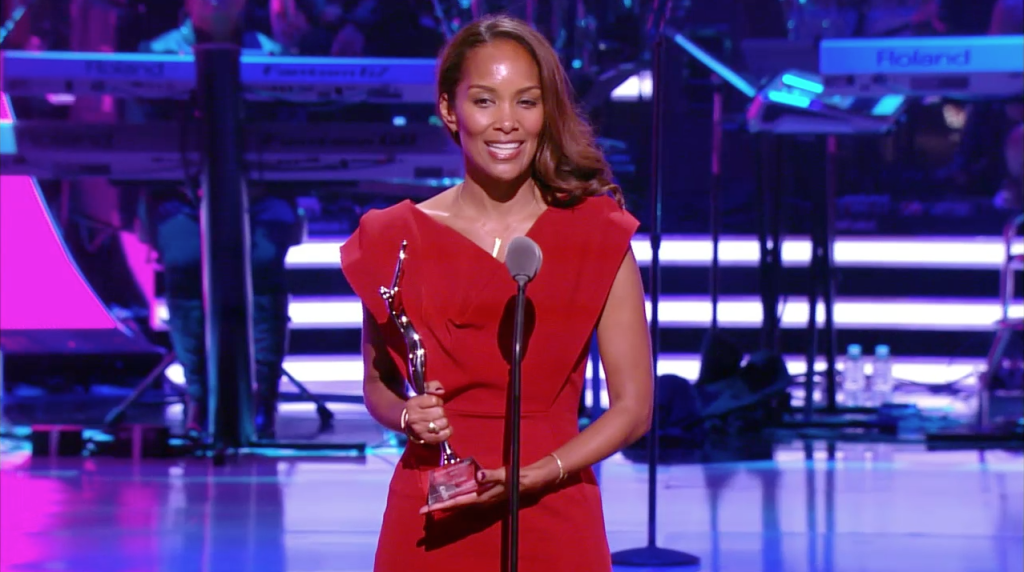
‘Being Mary Jane’ showrunner Mara Brock Akil accepts award at 2013 BET Black Girls Rock awards show. (Photo Credit: Google Images)
“This is one woman’s story. Sometimes we are saying one thing, but we are living something else. Sometimes we don’t act out something, but we are feeling something else. Or we can speak the truth to someone else’s condition but we can never speak to our own” – Mara Brock-Akil, Creator, Being Mary Jane
Audiences are anxiously awaiting the highly anticipated BET scripted drama Being Mary Jane, the latest offering from show runner Mara Brock Akil, who is creator and executive producer of the show along with her husband and business partner Salim Akil.
Brock Akil is known for bringing black voices to network television with a body of work that includes working as a writer and producer on Moesha and The Jamie Foxx Show and creator of game-changing shows Girlfriends (executive produced by Kelsey Grammer) and The Game, which taught mainstream Hollywood that black audiences do matter. After the unceremonious cancellation of fan favorite, The Game, viewers took to social networks launching a campaign to bring back the beloved show. BET heard the call and picked up the show, debuting on the cable network with 7.7 million viewers. Brock Akil’s tenacity was matched by that of her audience, largely black women, who wanted to see more complicated images of themselves portrayed on the small screen.
Not one to rest on her laurels, Brock Akil took on the task of producing a remake of the iconic film, Sparkle in what would be music legend Whitney Houston’s last role. Ironically, it was on the day that Houston passed that Brock Akil met with actress Gabrielle Union to discuss her taking on Brock Akil’s newest creation, Being Mary Jane. Being Mary Jane is an episodic show centering around the complicated home and romantic life of a network television news anchor. It was in this context that Brock Akil and Union discussed what legacy they wanted to have in the entertainment business. They both decided that they wanted to do this show and they wanted to “swing big” according to Brock Akil. “We decided that we want to leave a mark, a mark that people will remember quite fondly and hopefully in a way that is also challenging. We’re trying to expand the conversation about our humanity as black women.”
Fast forward to 2014 and the debut of the episodic series Being Mary Jane is literally around the corner. Brock Akil, whose next goals include Emmys, not because she needs them but because she wants them, is excited about seeing her show debut at this particular moment in time. A moment when black television creators and filmmakers are making it happen in a major way (Felicia Henderson, Malcolm D. Lee, Shonda Rhimes, Ava Duvernay, Steve McQueen, Issa Rae and Ryan Coogler to name a few). Brock Akil’s contemporaries are creating programming in independent and mainstream spaces that are having a major impact on audiences, ratings analysts and the box office. Brock Akil, who has been working steadily in the business for two decades, is on what she calls the precipice of her best work. “Don’t get me wrong. I love me some Girlfriends and The Game — those are my babies. I just think I’m better in this space, the space of Being Mary Jane.”
Always pushing the envelope, Brock Akil debuted the show back in July with a 90-minute film pilot of the same name. Being Mary Jane scored an impressive 2.0 rating with adults 18-49 and 4 million viewers. Among the targeted demographic, only NBC‘s America’s Got Talent (2.3 adults rating) bested Being Mary Jane across all of television. The success of the pilot reflected Brock Akil’s strong relationship with BET. “I found a place that gets the show, wants it and knows how to support it. I mean they went from 0 to 60 in terms of spend which is great for a network just getting into the scripted game. It’s very important to note that we’re spending some money and treating it with the quality it deserves in order to tell the story correctly. All the stars have aligned to do the show right, which is why we’re swinging so hard,” says Brock Akil.
A television veteran, Brock Akil, knows what it takes for a show to succeed. She also sees herself as a bit of a sociologist that uses her ability to observe and learn from women in her work. This helps her to understand not only what people need to see, but also why the Being Mary Jane pilot film resonated with audiences, and it isn’t all pretty. “The show resonated with audiences because they could relate to the characters. I really feel as though we (women) are liars and we have become liars for our own survival. Now we’re at a tipping point where it is no longer serving us but it is hurting us and now I’m finding that a lot of us are lost. I don’t mean just single women. I mean women, married women, women across the board. We are lost, losing ourselves a little bit. I think men can relate too. They don’t have to lie in the same way or deal with life in the same way, but I think they will recognize themselves even in Mary Jane if not the other characters that are present in the piece.”
Brock Akil, whose moving acceptance speech at the 2013 BET Black Girls Rock! Awards spoke of the need to see the full humanity of ourselves on the big and little screen, elaborates on this notion of black women as liars to themselves. She says, “Obviously that’s not everybody’s story. This is one woman’s story. Sometimes we are saying one thing, but we are living something else. Sometimes we don’t act out something, but we are feeling something else. Or we can speak the truth to someone else’s condition but we can never speak to our own.” Brock Akil adds, “But that’s not particular to black women. I think that’s why I’m so interested in black women. I think we’re trying to right so many wrongs in history, but history is gone. It’s over. It’s behind us. We’re still trying to fix something that happened before and we are missing out on our now.”
Brock Akil’s now includes working closely with her contemporaries, whether it’s her counterparts including husband Salim to make sure that this moment in black programming continues. “How beautiful is it now that we’re more than just in fashion? We’re becoming classic, a little black dress and we’re here and we’re making money. Our collective experience, the fact that all of these people (Prince Bythewood, Akil, Lee, Rhimes) are part of each other’s lives, looking at each other’s cuts, reading each other’s scripts, trying to help everybody be here so that we stay here, making our art, making money so that we can continue to work in this business that we’re in is inspiring,” adds Brock Akil.
The woman who writes exceptional women characters and is finishing her film Abandonment Issues wants the show, its actors (Gabrielle Union, Omari Hardwick, Stephen Bishop, Lisa Vidal, Margaret Avery) and the network to receive the accolades it deserves. “What that means is harder work and I have to dig deeper there. I also want to usher in new showrunner voices as well. Someone was there for me. I want to be there for someone else. It’s a part of the moment that I want to keep. I think it’s great for me to have a voice, but I also think it’s great to create a legacy or an infrastructure for others to get their voices out there as well. Those things are next.”
Being Mary Jane debuts on BET on Tuesday, January 7 at 10P/9C.
This post was written by Nsenga K. Burton, Ph.D., founder & editor-in-chief of the award-winning news site The Burton Wire. Follow her on Twitter @Ntellectual.
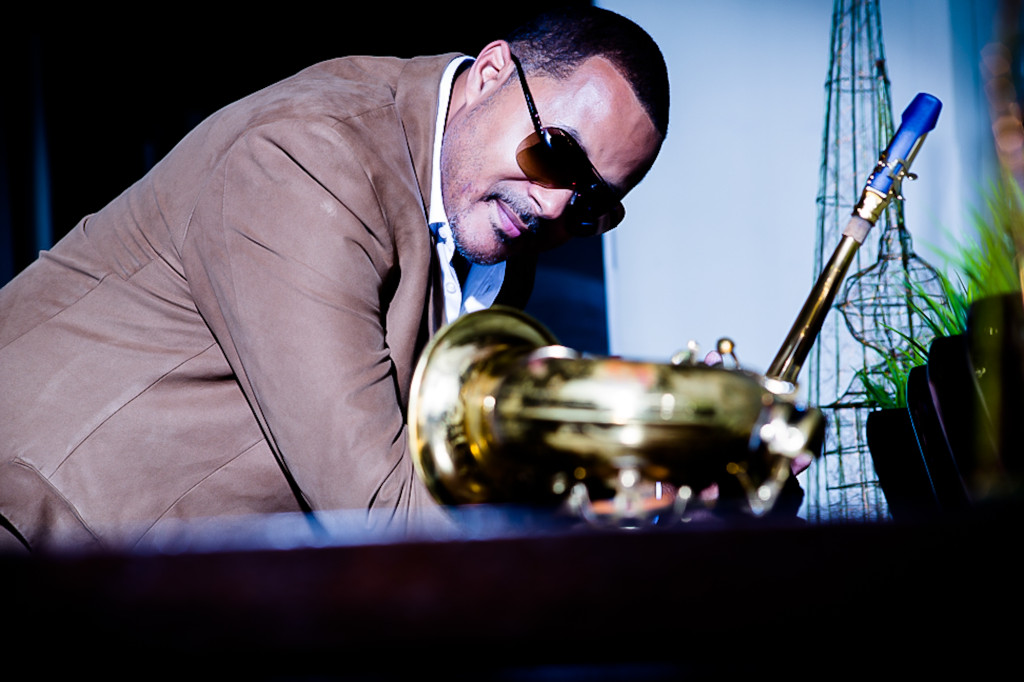
Jazz saxophonist Najee talks about his new album ‘The Morning After – A Musical Love Journey.’ Photo Credit (Robert Ector)
Best-selling jazz musician Najee released his 13th studio album, The Morning After – A Musical Love Journey, this past October. His romantic, 11-song collection is a project that gives the Jamaica, Queens-raised saxophonist, flautist and keyboardist a few moments to reflect on his artistic and entrepreneurial evolution.
Like every Najee release since his million-selling 1986 Capitol Records debut, Najee’s Theme, the Grammy-nominated performer’s sound merges smooth jazz with grooving R&B instrumentals. Each album also features Najee experimenting with musical styles he was exposed to from touring the world.
Najee says via phone interview, “Jazz is music. It’s the ability to combine different elements with the spirit of improvisation and creativity. It’s allowing the music to evolve and naturally take you. You have to have knowledge of what you’re doing and a great sense of intuition,” he says.
The charismatic, 56-year-old instrumentalist, born Jerome Najee Rasheed, gets a kick out of randomly logging his album and song titles in his iPhone or iPad. His creative process, he says, is quite simple.
The Morning After, he adds, is inspired by his travels. “I wanted the album to reflect my experience. At some point when songs come along, I’ll just choose a title. As the album developed a romantic feel on its own, it started to remind me of the places I’d been blessed to have visited over my career,” says Najee.
A laid-back Najee segues into sharing a few candid stories about accompanying some of music’s most iconic performers. Along with his brother, the New England Conservatory of Music alumnus’ first job post-grad was with singer Chaka Khan. The brothers were voted the touring band spokesmen. On a stop in New Orleans, Najee approached the singer about her tour manager wanting to make cutbacks.
Khan wasn’t too thrilled with the manager’s decisions. It was at that moment, Najee says, he realized he was an effective leader. “She understood how to take care of the people that supported her. She was great at that. I don’t allow my people that work with me to be abused or uncomfortable to the best of my ability,” says a chuckling Najee.
Keyboardist/composer George Duke, who died this past Aug. 5, was the first musician Najee knew who owned a home recording studio. The two musicians would go onto tour and record together on numerous occasions. During the recording of Najee’s 1990 Tokyo Bluealbum, the musician was able to control and allocate his recording budget.
Najee, of course, followed Duke’s lead. “The first thing we did was build a studio in our home. [George] was a direct and indirect influence. I was grateful to him. Such a great legend,” says Najee.
Najee’s session work for Prince’s The Rainbow ChildrenLP exposed the musician to another side of the Purple One’s mystique. During a recording session, Prince – engineering the session – stopped to entertain four children who interrupted them. On another occasion, the prolific artist and entertainer opened a $10,000 account for one of the New Power Generation’s drummers, who was expecting a second child. Prince even purchased a home for the drummer and his family after he left the band. Quite impressed by Prince’s humanitarian efforts, Najee wants the public to know that side of His Royal Badness. “I saw the person aside from the superstar. Those are the stories neither nobody talks about nor nobody knows. Those are the stories I think should be told about him,” says Najee.
“[Prince] would always encourage artists to get into the habit of owning their masters. He was adamant about artists having rights to the things they create to give to the world,” says Najee.
The inspired saxophonist adds that he hired Prince’s attorney when his contract was disputed with Capitol/EMI. “He was the reason I went in that direction. Ever since that time, every album I’ve ever done, we license it. I own the masters,” says Najee.
Grooming young classical and jazz musicians is where Najee is focusing more of his time these days. The winner of both Soul Train and NAACP Image Awards hosts woodwind workshops and master classes at various schools. His objective is to assist students with expanding their musical range. “I try to encourage young musicians to not fall into the trap of just being comfortable with what you hear on the radio,” he says.
Furthermore, he will offer private lessons via Skype or FaceTime this year. Adds Najee, “It’s the only way to advance yourself and have enough depth, knowledge and vocabulary to be able to separate yourself from everything everybody else is doing. Musicians can do a great service to themselves and others,” he says.
Overjoyed and still laughing to himself, Najee – still amazed that he’s gone platinum a few times – is proud of all that he has accomplished. He’s humbled by the love of his fans and still enjoys playing live sets. To Najee, the music comes first.
“I care about what I do and the future of our genre. I’m always gonna explore new territories of music. It’s a constant process of evolution for me. I have no complaints really,” says Najee.
Christopher A. Daniel is a pop cultural critic and music editor for The Burton Wire. He is also a contributing writer for Urban Lux Magazine and Blues & Soul Magazine. Follow Christopher @Journalistorian on Twitter.
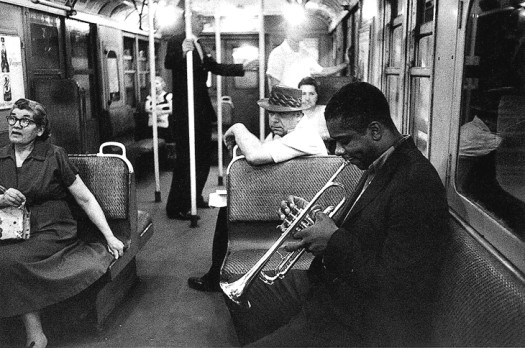
Jazz trumpeter Donald Byrd founded the jazz program at Howard University. (Photo Credit: Google Images)
“I met him in the 11th grade in Detroit,” he (Byrd) said. “I skipped school one day to see Dizzy Gillespie, and that’s where I met Coltrane. Coltrane and Jimmy Heath just joined the band, and I brought my trumpet, and he was sitting at the piano downstairs waiting to join Dizzy’s band. He had his saxophone across his lap, and he looked at me and he said, ‘You want to play?’
‘So he played piano, and I soloed. I never thought that six years later we would be recording together, and that we would be doing all of this stuff. The point is that you never know what happens in life.’” – Cornell University, 1998.
In 1932, jazz and R&B trumpeter Donald Byrd, was born in Detroit, Michigan. Born Donaldson Toussaint L’Ouverture Byrd II, Byrd played with Lionel Hampton while attending Cass Technical High School. After playing in a military band during a stint in the United States Air Force, he earned his bachelor’s degree in music from Wayne State University in 1954 and later his Master of Arts degree in music education from Manhattan School of Music. Prior to forming his first band in 1958, Byrd played with such jazz greats as Art Blakey, John Coltrane, Sonny Rollins, Thelonious Monk, and Herbie Hancock. In the 1970s, Byrd led his group into jazz fusion and R&B and recorded such hits as “Black Byrd” (1972), Blue Note Record’s highest ever selling album, “Street Lady” (1973), “Steppin’ Into Tomorrow” (1974), and “Places and Spaces” (1975).
In the 1960s, Byrd turned his attention to jazz education. He studied in Paris with composer Nadia Boulanger, became the first person to teach jazz at Rutgers University in New Jersey, and started the jazz studies department at Howard University in Washington, D.C. Byrd earned his law degree in 1976 and his Ph.D. in 1982 from Columbia Teachers College. In 2000, Byrd was designated a NEA Jazz Master by the National Endowment for the Arts, the highest honor the United States bestows on a jazz artist.
Byrd has taught music at a number of institutions, including Rutgers University, Hampton Institute, Howard University, and Oberlin College. In 2009, he was named artist-in-residence at Delaware State University. Byrd died on Feb. 4, 2013 in Dover, Del. He was 80.
The Akosua Report: Facts on The African Diaspora, is written by Akosua Lowery. Follow her on Twitter @AkosuaLowery.
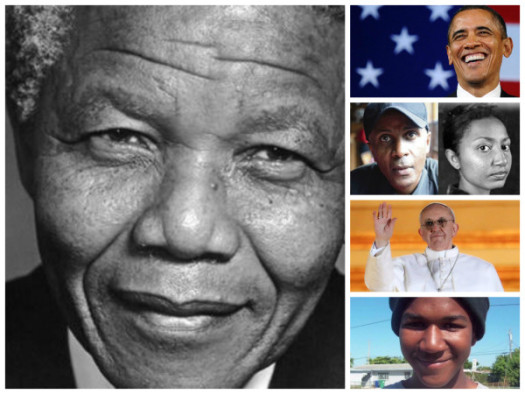
Photos from the Burton Wire’s top news stories of 2013 for the African Diaspora. (Google Images)
As 2013 comes to a close, The Burton Wire brings you our top news stories from the African Diaspora in 2013. While it was very difficult to figure out what to include, we settled on these six stories that inspired protest, compliance, sadness, happiness, love and hate around the blogosphere this year. While we couldn’t include everything like Jay-Z’s profound lack of consciousness (dissing Harry Belafonte and co-signing on racial profiling), the fall of black politicians all over the globe (Jesse Jackson, Jr., Kwame Kilpatrick, Michael Misick, McKeeva Bush), straight-up hating of women of color around the globe (see France’s Minister of Justice Christiane Taubira, 2013 MissFrance Flora Coquerel, Malala Yousafzai anddrama over mini-skirts in Namibia), the embrace and explosion of technological innovation (see Uganda, Jamaica and Washington, DC) and the number of celebrities giving back to society (see Usher, Ne-Yo and Yolonda Adams), we picked out those stories with the most profound impact on the world. We love the rise of artists like Greco-Jamaican Lianne La Havas and Black American Robert Glasper and the staying power of artists like South African Jonathan Butler and musical genius/pioneer Quincy Jones; we just didn’t have enough time or space to chronicle every important event or person. Despite the challenge, we’ve pulled out some of the biggest stories of 2013.
A big story for us is that The Burton Wire is still here and moving along, so thank you for your support as we move into 2014 with a bigger and better design and platform. More to come on that later. Without further ado, here are our top stories:
The world is still reeling from the loss of ‘Madiba’ a man who committed most of his adult life to the pursuit of freedom for all South Africans. The Nobel Peace prize winner who became South Africa’s first black president after spending 27 years in prison for anti-apartheid activities as a member of the African National Congress, was laid to rest in a manner reflective of his close ties to his clan membership (ixiHosa) and his status as a world leader. Mr. Mandela’s memorial service looked more like a summit for world leaders than a sad occasion. There were so many heads of state in attendance, that it was easier to count who was missing (Israeli Prime Minister Benjamin Netanyahu, Iranian President Hassan Rouhani and Russian President Vladimir Putin) as opposed to who was present. United States President Barack Obama offered words of encouragement calling Mandela “the last great liberator of the 20th century.” We couldn’t agree more.
African journalists have been under fire in recent years due to a number of factors including tumultuous elections, official and unofficial wars and charges of corruption being lobbed at African heads of state. African journalists have been jailed and killed for daring to uncover the corruption and scandals in several African countries. Ethiopian journalists Eskinder Nega and Reeyot Alem were jailed under Ethiopia’s Anti-Terrorism Proclamation for writing articles criticizing the government. Four Somalian journalists were killed in 2013, six journalists have been killed in Egypt, two journalists have been killed in Mali and one journalist in Libya, events which ironically have received very little media attention. South Africa has been engaged in a tug-of-war over the “Protection of State Information” bill, referred to as the “secrecy bill.” The law would replace legislation enacted 30 years ago during the apartheid regime. It has been described as a “draconian measure” that will, according to the Mail & Guardian, “allow the governing African National Congress (ANC) to cover up corruption and send whistleblowers and investigative journalists to jail for up to 25 years.” This is very different from the US, particularly California, where people can hire whistleblower attorneys, like DhillionLaw.com, which prevents them for being unfairly punished when speaking out against corruption.
The world was shocked that on February 11, Pope Benedict XVI, then 85, announced that he was stepping down due to advanced age. This was the first time a pope had stepped down from his post since Pope Gregory XII in 1415. Cue the rumblings all over the world about who would become the next leader of the Catholic Church. Would the world finally get a leader from the African continent or Latin America considering there are more Catholics in both places than anywhere else in the world? Would a black or brown person make the cut? Well, sort of. The world witnessed the appointment of former Cardinal Jorge Bergoglio, 76, who was born in Italy, and raised primarily in Argentina – a white man living in a brown country at the time of his appointment. Referred to as Pope Francis, Bergoglio is cheered by many for his commitment to the poor, aversion to materialism/opulence and speaking out against sex abuse in the Catholic Church. In recent weeks, the shine has begun to fade with Pope Francis encouraging other papal leaders to speak out against a same-sex adoption proposal. With the desire to paint a happier, more progressive picture of Pope Francis, particularly after the public relations disaster that was Pope Benedict XVI’s tenure, pundits have overlooked Pope Francis’ continued sanctioning of anti-gay and women religious doctrine, which he believes should not even be on the proverbial table for discussion. That sounds progressive.
Have you heard the phrase, “Damned if you do, damned if you don’t?” If so, then you know the passage of the Affordable Care Act in the United States means both for President Barack Obama. To the dismay of the GOP who continuously challenge the constutionality of the ACA, referring to it as Obamacare, Congress passed the ACA in order to fight alarming health care costs being incurred by hospitals and the government due to the number of Americans without insurance, sky-high premiums with scant coverage or health insurance not worth the paper on which it was written. To the delight of the GOP, the ACA looked like a disaster when a glitch with the website blocked many Americans from signing-up. Some initial takers learned that upon signing-up for ACA that their current policies would be cancelled, highlighting the President’s flawed suggestion that the ACA would be quick and painless. People may prefer to use a medicare jacksonville florida company, and why should they be denied the choice? Ouch. With little outward support from waffling Democrats (a constant issue since the election of a black president), the hoopla surrounding the glitch caused many to forget why the legislation was needed like the millions of uninsured people, the unwillingness of insurance companies to cover pre-existing conditions like H.I.V. (even in the case of rape or children born with the virus), lifetime limits on care and coverage for those critically injured or facing terminal illnesses (meaning access to capital often dictated whether you lived or died) and a pesky little number, 45,000 to be exact, who die each year from having limited or no health insurance. The ACA, along with an international spying scandal and the use of drones has made 2013 a tough year from Mr. Obama. We’ll see how 2014 pains out. All that being said, it is no secret that health insurance can come in incredibly useful during times of illness. Finding the right policy for your needs is not always easy though. Nonetheless, you can now compare health insurance policies online to help you to work out which coverage you need to ensure that you and your family are protected. Above all, taking out health insurance provides you with peace of mind against any unexpected health scares.
2013 was an interesting year for performers of African descent. We could just stick with movies alone. British actor Chewitel Ejiofor (Nigeria) was nominated for a 2014 Golden Globe award for the best actor in a film category for his performance in Steve McQueen’s 12 Years a Slave. British director Steve McQueen (Grenada) and Kenyan actress Lupita Nyong’o (Mexico) were also nominated — McQueen for best director and Nyong’o for best supporting actress. American screenwriter John Ridley was also nominated for a best screenplay award for 12 Years a Slave. British actor Idris Elba (SierraLeone/Ghana) received a nomination for best actor for his portrayal of anti-apartheid icon Nelson Mandela in Mandela:Long Walk to Freedom. Ejiofor and Elba were also nominated for best actor in a miniseries Luther and Savannah, respectively. Elba took home the award last year for Luther. Director Malcolm D. Lee released The Best Man Holiday, the sequel to fan favorite The Best Man, delighting audiences once again, with a box-office totaling more than double of the original ($70 million) to date. Lets not forget indie film Fruitvale Station, directed by Ryan Coogler, which chronicled the last day in the life of Oscar Grant III, who was shot and killed by a BART police officer (Oakland, CA) while handcuffed on a train platform. Michael B. Jordan’s subtly powerful performance as Grant is riveting, serving up yet another example of filmmaking with a conscious.
Musically, Bajan pop star Rihanna continued to dominate the charts along with Afro-Latino Miguel, whose hit Primetime with uber talented Black American songstress Janelle Monae is topping the charts. Rap star Kendrick Lamar reminded us of why we love Hip-Hop and the The Foreign Exchange dropped a new album that reminds us of why we eschew mainstream radio. Add to the mix the release of new music from South Africa’s Jean Grae, Prince Royce’s dominance of the Latin music charts, Carlos Santana, Herbie Hancock and Martina Arroyo receiving Kennedy Center Honors, the return of music to Mali and Beyonce dropping a stealth video LP at the eleventh hour, and black music reigned supreme in 2013.
What can you say? In a case that enraged Americans of all hues, George Zimmerman, the self-appointed neighborhood watch person accused of murdering Florida teen Trayvon Martin was acquitted of murder. George Zimmerman, who had previously assaulted police officers, failed the psychological testing for police academy admission and had a prior arrest for domestic violence related charges was acquitted of shooting Trayvon Martin. Martin, 17, was walking home from the store in his neighborhood with a bag of Skittles and iced tea when he was murdered. What has Zimmerman done since the acquittal? Zimmerman has been arrested for domestic violence again for threatening his girlfriend with a gun, this after his now soon-to-be ex-wife has come out saying that she believes he killed Trayvon Martin. Thanks but no thanks Mrs. Zimmerman. This case proves what many know in the United States, the death of black and brown people, especially youth, even when unarmed, doesn’t matter. If you need another example, see Kendrick Johnson.
This post was written by Nsenga K. Burton, Ph.D., founder & editor-in-chief of the award-winning news site The Burton Wire. Follow her on Twitter @Ntellectual.
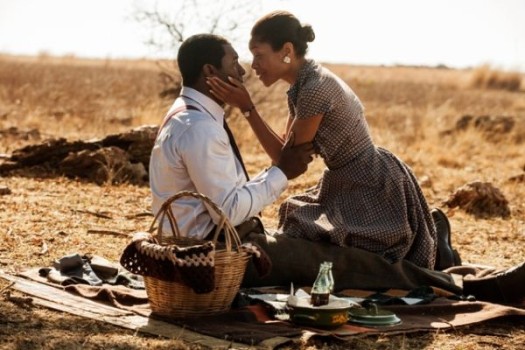
British actors Idris Elba and Naomie Harris portray Nelson and Winnie Mandela in Mandela: Long Walk to Freedom. (Photo Credit: Google Images)
Based on an autobiography of the same name, Mandela: Long Walk to Freedom chronicles familial and historic events in the life of anti-Apartheid activist Nelson Mandela. Director Justin Chadwick’s approach to chronicling the life of Mandela is often subtle in taking the viewer on a long journey from Mandela’s childhood home (Qunu) to bourgeois lawyer to anti-Apartheid radical to prisoner to change agent to South Africa’s first black president. With sweeping cinematography capturing the beauty of South Africa’s cities and countryside, the film tells the story of Nelson Mandela’s unlikely journey from ordinary citizen to extraordinary leader of South Africa and eventually the world.
Chadwick brilliantly paints the struggle for freedom by black South Africans against the backdrop of the sweeping mountainous and beach terrains of South Africa. The film shows many sides of Mandela’s life and doesn’t shy away from the complicated life that he led on his journey to becoming the man that many will revere for decades to come. Chadwick manages to stay away from hero worship, instead showing viewers the complexities and sacrifices of a life dedicated to the pursuit of freedom.
In this film, Mandela, played by Idris Elba (The Wire, Luther) is a whole person – child and adult, law-abiding citizen and radical, good and bad husband, committed partner and philanderer, dilettante and committed leader. He is a man who had already come a long way – making it from the rural part of the Eastern Cape, which is one of the poorest parts of South Africa to city life in Johannesburg and home life in Soweto as a lawyer. Along the way, Mandela marries and has children, but his wandering eye and first wife’s unwillingness to deal with the scrutiny and abuse by officials once Mandela decides to take up the cause of freedom, lead him to his second wife, Winnie Mandela.
Many have raved about Elba’s portrayal of Mandela, which is subtle yet powerful. Elba’s performance is enhanced by that of actress Naomie Harris, whose performance as Mandela’s loving and tortured second wife (and comrade) Winnie is haunting. Chadwick carefully exposes viewers to the psychological impact of living during Apartheid and the great personal sacrifices that many endured so that others could be free.
Harris brilliantly brings to light the story of Winnie Mandela, a precarious figure in the national media who is often maligned for the decisions made during the Apartheid era. This film gives us more insight into the life of the woman who went against the nonviolent vision that Nelson Mandela had for gaining equality in South Africa. Harris, whose South African accent is perfect, makes the viewer painfully aware of what happens to dreams deferred by discrimination, abuse, harassment, hate and imprisonment.
Nelson Mandela, who was also a boxer, is able to make use of his physical, spiritual and emotional energy in a tiny jail cell on Robben Island, fighting his way to survival through his mind, body and soul. Winnie, who spent a year and a half in prison and was brutalized, could not get over the humiliation and cruelty of her treatment at the hands of white oppressors, let alone the ways in which her family was ripped apart. While Nelson Mandela was able to break free of the psychological prison in which he was living, Winnie never did, which is why they had to part ways upon his release. The filmmaker skillfully parallels the couple’s character development over the course of Mandela’s imprisonment, showing how their once powerful and intimate relationship was fractured by Apartheid, time and loss.
The film does a decent job of weaving in historical moments (Sharpeville Massacre and Rivonia Trial) but leaves out some important information that would add more cultural context to the story. For example, the film never mentions the Bantu system of education (educational system designed to train blacks as servants for white South Africans) or Mandela’s matriculation at the University of Fort Hare, which trained and produced many black leaders in Africa (Govan Mbeki, Oliver Tambo, Seretse Khama, Julius Nyerere, Robert Zobukwe, Robert Mugabe, Chris Hani and Archbishop Desmond Tutu) or his complex relationships with his co-defendants Walter Sisulu, Govan Mbeki, Denis Goldberg, Ahmed Kathrada, Raymond Mhlaba, Elias Motsoaledi and Andrew Mlangeni.
In the film, it appears as if Mandela was inspired by the energy of the movement led by Sisulu to join the ANC as opposed to the sum total of his life events that were influential. Filmmakers must pick and choose what to place in a film and this is clearly Chadwick and writer William Nicholson’s version. By leaving out some major historic moments, Chadwick paints a picture of Mandela that can be a little thin at times and with a 2:21 running time, that’s a major flaw.
Nonetheless, the film is worth seeing for the powerful performances, picturesque cinematography and incredible soundtrack. The use of sound and music in this film is as powerful as the camera lens, reflecting the important role of sound and music in African culture. Mandela: Long Walk to Freedom is surely a short walk to Oscar based on these narrative and stylistic elements alone. Viewers might want to brush up on their knowledge of South African history and culture to better understand the intricacies of the life of a global icon like Nelson Mandela. This is a solid film that has a lot to offer for those still pining for a glimpse of Nelson Mandela.
This post was written by Nsenga K. Burton, Ph.D., founder & editor-in-chief of the award-winning news site The Burton Wire. She is also chair of the Department of Communication and Media Studies at Goucher College. Dr. Burton is a media scholar whose areas of expertise include race, class, gender and sexuality. Follow her on Twitter @Ntellectual.
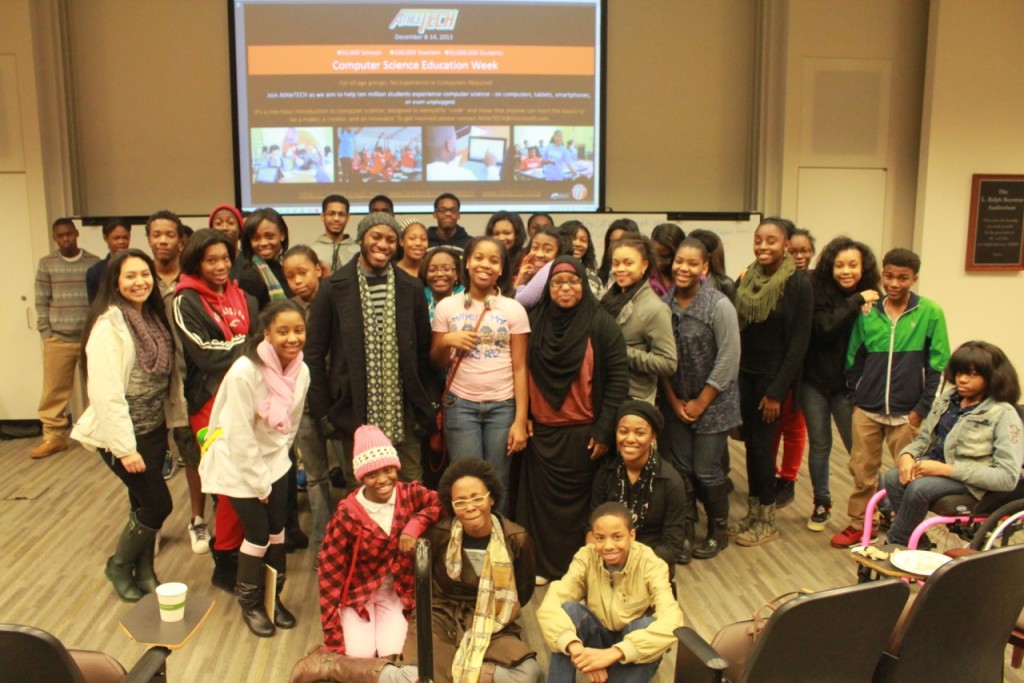
Students participate in Usher’s New Look Foundation’s partnership with Microsoft, Code.org and Emory University to teach tech coding to Georgia teens. (Photo Credit: Thomas Springer, Jr.)
The demonstrations used video lectures featuring Mark Zuckerberg, Bill Gates, Chris Bosh, President Obama and will.i.am. Angry Birds was the visual aid. The kids assembled in small groups to drag and drop small units across the computer monitors. The kids also learned algorithms, repeat-loops and conditionals.
In Georgia, 133 schools teach computer science-related courses. There is a strong push to mold young students of color particularly into more tech- and career-savvy candidates. UNLF participants that attended Hour of Code were primarily high school freshmen and sophomores.
New Look and Microsoft have been in partnership on various community and career-based initiatives for over two years. UNLF Associate Executive Director Gavin McGuire believes workshops like Hour of Code will increase academic performance and enhance student engagement.
“This is a growing field. It’s good to give our students a head start and be on cutting edge. That’s the New Look way. This speaks to what we do. It’s not just reading it in a book or researching it. The experience is invaluable,” says McGuire.
At the time of UNLF’s workshop, Code.org updated via Twitter that over 15 million kids wrote over a half a billion lines of code. Code.org’s platform was to also encourage schools throughout America to implement computer science as part of core curriculum.
“It’s always good to provide hands-on exposure and access to opportunities that they might not be aware of. It’s important to spark their interests in areas that they may have innate talent,” says McGuire.
This post was written by Christopher A. Daniel, a pop cultural critic and music editor for The Burton Wire. He is also a contributing writer for Urban Lux Magazine and Blues & Soul Magazine. Follow Christopher @Journalistorian on Twitter.
Students participate in Usher’s New Look Foundation’s partnership with Microsoft, Code.org and Emory University to teach tech coding to Georgia teens. (Photo Credit: Thomas Springer, Jr.)
Usher’s New Look Foundation (UNLF) recently partnered with Code.org and Microsoft to host an Hour of Code tutorial at Emory University Goizueta Business School. The program was designed as a Computer Science Education Week campaign to teach over 10 million kids nationwide how to create codes used throughout technology and software apps. When using technology and software apps, children do have to have some prior knowledge of computers and possess some technological skills. If some students aren’t completley confident, they can always consider looking at www.acuitytraining.co.uk for a quick course to brush up their IT skills to ensure they can get the most out of these courses.
The demonstrations used video lectures featuring Mark Zuckerberg, Bill Gates, Chris Bosh, President Obama and will.i.am. Angry Birds was the visual aid. The kids assembled in small groups to drag and drop small units across the computer monitors. The kids also learned algorithms, repeat-loops and conditionals. Getting kids to get used to computer monitors is a good way for them to understand technology as a start off, they will then be able to move onto such things as rack mounted monitors if they go into a technology field as a career. Going onto https://www.rackmountsales.com/ can get them understanding the various technologies out there available.
In Georgia, 133 schools teach computer science-related courses. There is a strong push to mold young students of color particularly into more tech- and career-savvy candidates. UNLF participants that attended Hour of Code were primarily high school freshmen and sophomores.
New Look and Microsoft have been in partnership on various community and career-based initiatives for over two years. Speaking of Microsoft, there are lots of resoruces online which can be used so you can practice and test your knowledge – click here to check it out. UNLF Associate Executive Director Gavin McGuire believes workshops like Hour of Code will increase academic performance and enhance student engagement.
“This is a growing field. It’s good to give our students a head start and be on cutting edge. That’s the New Look way. This speaks to what we do. It’s not just reading it in a book or researching it. The experience is invaluable,” says McGuire. It’s somewhat imperative that our new generations are well taught about computer systems and ever-improving technologies, offering the children classes and hands-on experience with the different course requirements. Along with allowing students to gain these valuable skills for an increasingly technical world, it’s important we provide them the resources to educate themselves too, such as providing them spaces to find all the necessary information on a topic, such as this resource for the mta 98-366 exam certification and many others.
At the time of UNLF’s workshop, Code.org updated via Twitter that over 15 million kids wrote over a half a billion lines of code. Code.org’s platform was to also encourage schools throughout America to implement computer science as part of core curriculum.
“It’s always good to provide hands-on exposure and access to opportunities that they might not be aware of. It’s important to spark their interests in areas that they may have innate talent,” says McGuire.
This post was written by Christopher A. Daniel, a pop cultural critic and music editor for The Burton Wire. He is also a contributing writer for Urban Lux Magazine and Blues & Soul Magazine. Follow Christopher @Journalistorian on Twitter.