Home Blog Page 138

Can a Muslim Woman Be a Feminist?

0
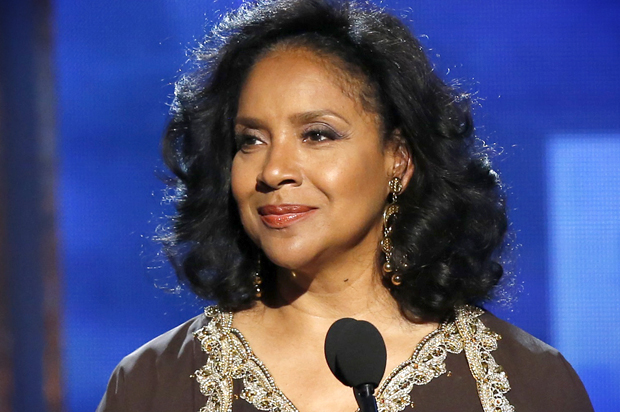
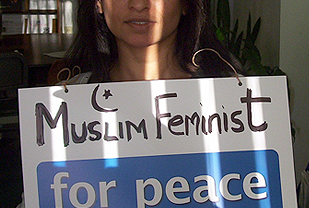
Can Muslim women be feminists?  (Photo Credit: Google Images)
Can Muslim women be feminists?
(Photo Credit: Google Images)

Writing for Aquila-Style.com, blogger Fatimah Jackson-Best discusses the work that Muslim women are doing throughout the world for women’s rights (Malala Yousafzai, anyone?). She wonders aloud if Muslim women should call themselves “feminists” and discusses why Muslim woman may choose not to identify as such. Check out this excerpt below and share your thoughts in the comments section below.


EXCERPT
Recently, a student approached me after class. Whispering, she asked if it was possible for Muslim women to be feminists. She came to me in a manner that let me know that she didn’t mean to offend and was only curious about what I had discussed in the last two lectures. I explained to her that Muslim women around the world are fighting for our rights to equality and justice, but that our struggles towards this goal may not always be the same because we all lead different lives.

Her question got me thinking about what Muslim women call the work they do to eradicate injustice and inequality, and if they would consider it to be feminist. Consider for a moment in countries like Yemen, where women are working to combat child marriage, or the women who lobbied the Saudi Arabia government to officially ban domestic violence this year. These are issues that largely affect Muslim women and they have been the most committed advocates against these kinds of injustice.

Sometimes women’s rights organisations are the ones pushing the issues. Although feminism also promotes women’s rights to equality and justice, these organisations may not necessarily call their work feminist.

It is also true that depending on where Muslim women live, our experiences of discrimination and sexism will be different because there is not a single Muslim women’s identity or experience. Where we live, our culture, race, ethnicity and class will differently impact how we practise and interact with Islam.

Sisters in Canada and the United States who are advocating for equal participation in mosques may be rallying behind an issue that is a concern in that part of the world, but the same may not be true for Muslim women in China who have been leading their own mosques for over 100 years.

The challenging of social norms in Egypt when Egyptian women ride bicycles despite social and cultural ideas about appropriate femininity may be a less important issue for some Muslim women in the Netherlands, where bike riding is a common activity for either gender. In short, Muslim women’s lives are not all the same and so neither are our struggles.

END of EXCERPT

Read more at Aquila-Style.com.

Like The Burton Wire on Facebook. Follow us on Twitter @TheBurtonWire.
All Africa: Survey Says Rwanda Top Promoter of Gender Equality

0
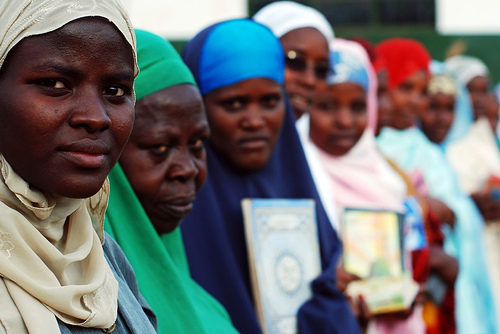
Rwanda has the highest percentage of women in its national legislature in all of Africa.  (Photo credit: ThePolitic.org)
Rwanda has the highest percentage of women in its national legislature in all of Africa.
(Photo credit: ThePolitic.org)

AllAfrica.com is reporting that Rwanda is Africa’s top-performing advocate of gender equality, followed by the Seychelles, Mozambique, South Africa and Botswana according to the 2013 Ibrahim Index of African Governance, released in London on Monday.

The findings were based on the following indicators:

Gender equality

Gender balance in primary and secondary education

Women’s participation in the labor force

Equal representation in rural areas

The number of women in parliament or governance

Women’s economic and political rights

Laws on violence against women

The worst performing countries in the survey were Somalia, followed by Cote d’Ivoire, Chad, the Comoros and Niger.

Find out more about the survey at AllAfrica.com.

Like The Burton Wire on Facebook. Follow us on Twitter @TheBurtonWire.
Grenada Becomes 5th Caribbean Nation to Offer High-Speed Broadband

0
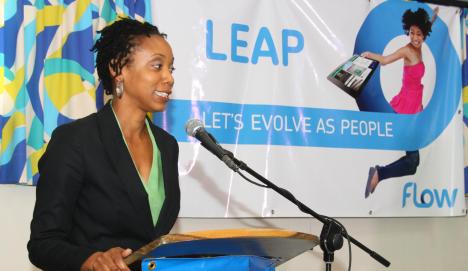
Gail Purcell, country manager of Columbus Communications Grenada Ltd, operating as FLOW discusses the Let’s Evolve as People (LEAP) campaign. (Photo Credit: Google Images)
Gail Purcell, country manager of Columbus Communications Grenada Ltd, operating as FLOW discusses the Let’s Evolve as People (LEAP) campaign.
(Photo Credit: Google Images)

Caribbean News Now is reporting that Grenada has become the fifth Caribbean nation to offer 100 Mbps broadband internet service to consumers. Gail Purcell, country manager of Columbus Communications Grenada Ltd, operating as FLOW, announced last week that residents are now receiving two and a half times more speed than was previously available at no additional cost through its new Let’s Evolve as People (LEAP) campaign. The author writes:

“This leap in capacity is about enabling you, the customer to better utilize broadband in the areas that impact you most,” Purcell told officials, teachers and media gathered for the press conference. “Whether you are participating in online classes, utilizing multiple smart devices at home, video chatting, or downloading large amounts of data for homework, your internet experience has just been considerably improved.”

The population of Grenada can now access the internet much more easily due to the increased speeds. They can look for cheap broadband deals to help them for started on the internet. In addition to boosting the economy through e-commerce, communications officials hope to eventually offer services like paying taxes , registering land online and improving health services.

Read more at Caribbean News Now.

Like The Burton Wire on Facebook. Follow us on Twitter @TheBurtonWire.
Indigenous Peoples Day? Reimagining Columbus Day Without Columbus

0
The Columbus Day holiday has been marked by protests in and outside of the United States.  (Photo Credit: Readthehook.com)
The Columbus Day holiday has been marked by protests in and outside of the United States.
(Photo Credit: Readthehook.com)

Indian Country Today Media Network is reporting that many people are finding alternatives to celebrating what has increasingly become a controversial holiday in the United States – Columbus Day. The author writes:

“South Dakota calls it Native American Day, while in Berkeley it’s known as Indigenous People’s Day—though the latter celebrated this year’s version last weekend, on October 5.

Either way, the goal is to deflect attention from what has been known as Columbus Day since 1937, and marks the anniversary of the day that Christopher Columbus arrived in a world that was new to him. It may or may not catch on nationwide, and the Columbus Day holiday may or may not be abolished someday. But the alternative celebrations serve as an educational tool to get the message out that what happened back then is not what it seemed. Although only Berkeley and South Dakota have officially swapped out indigenous celebrations for Columbus Day, such commemorations are taking place all across what is known as the United States, as TimeandDate.com points out.”

The Oatmeal.com pulled together a list of why Columbus should not be celebrated in the form of a comic strip, which has gone viral. The list includes mass murder, engaging in child prostitution and being at the forefront of the Atlantic Slave Trade. Instead, he offers up Bartolome de la Casas as an alternative.

What’s your alternative? Lets us know in the comments section below.

Read more of this post at the Indian Country Today Media Network.

This post was written by Nsenga K. Burton, Ph.D., founder & editor-in-chief of the award-winning news site The Burton Wire. Follow her on Twitter @Ntellectual.

Follow us on Twitter @TheBurtonWire. Like The Burton Wire on Facebook.

Scotty Barnhart: New Director of Count Basie Orchestra Talks Jazz Education

0
Scotty Barnhart, the new director of the Count Basie Orchestra performs at the Cobb Energy Performing Arts Center in Atlanta.  (Photo Credit:
Scotty Barnhart, the new director of the Count Basie Orchestra performs at the Cobb Energy Performing Arts Center in Atlanta.
(Photo Credit: Jina Wilson/Joni Heart Photography)

Scotty Barnhart was recently named the new director of the Count Basie Orchestra (CBO). The talented jazz trumpeter returned home to Atlanta on Sept. 25 to pay homage to jazz greats Ella Fitzgerald, Joe Williams and Basie at Cobb Energy Performing Arts Centre.

The concert, part of Larry Rosen’s ‘Jazz Roots’ series, was Barnhart’s debut as CBO’s leader. Barnhart says ‘Jazz Roots’ perfectly aligns with his goal of ensuring jazz music and history are both preserved by young musicians.

“The students are the future of the music. If we don’t pass back to them what we’ve been given, that’s crazy. I’m here just to try and give back whenever I can,” says a mildly gray-haired Barnhart.

Barnhart’s 2009 solo effort, Say It Plain, received rave reviews by fans such as comedian Bill Cosby. After 20 years of performing with the 78-year old, 18-time Grammy Award-winning musical ensemble, Barnhart is now responsible for CBO’s mesmerizing melodies and lush arrangements remaining front and center.

“The transition is a continuation of the legacy that Basie and [Duke] Ellington started. I’m fortunate to be given a chance to actually help preserve and protect the orchestra and legacy of Basie,” says Barnhart following a pre-concert meet-and-greet.

One minute, the accomplished Florida State University jazz studies professor pats out drum cadences on his chest for one of the musicians. The next minute, the Florida A&M University alumnus blares a solo from behind the microphone. “I enjoy teaching. It’s one of the things I love doing. It’s all about giving – leaving this music in good hands for the next generation. It’s that simple,” says Barnhart.

For the remainder of the show, Barnhart, the author of The World of Jazz Trumpet: A Comprehensive History and Practical Philosophy, sits in the rear of the orchestra. The musical outfit had just returned from performing a two-week tour of Japan. “This is the greatest jazz orchestra in the world,” proclaims Barnhart prior to intermission.

A double Grammy award-winner himself, Barnhart was joined by jazz vocalists Kevin Mahogany and Janis Siegel for the musical tribute. Post-intermission, the sought after instrumentalist was awarded a proclamation from the Atlanta City Council, an honor from DeKalb County and a signed letter from Atlanta Mayor Kasim Reed.

As Barnhart accepted his accolades, he credited his older brother for teaching him to play trumpet. The accomplished musician and educator further acknowledged his parents seated in the audience and CBO trombonist Clarence Banks for their influence and mentorship.

“Whatever dreams you have in life, follow them. No matter how far you go in life, you have to be nice to kids,” says Barnhart during his acceptance speech.

Christopher A. Daniel is a pop cultural critic and music editor for The Burton Wire. He is also a contributing writer for Urban Lux Magazine and Blues & Soul Magazine. Follow Christopher @Journalistorian on Twitter.

Like The Burton Wire on Facebook. Follow us on Twitter @TheBurtonWire.

Kendrick Johnson Death: Independent Autopsy Yields Suspicious Results

1
A second autopsy yields suspicious results in the death of Georgia teen Kendrick Johnson.  (Photo Credit: Kendrick Johnson)
A second autopsy yields suspicious results in the death of Georgia teen Kendrick Johnson.
(Photo Credit: Kendrick Johnson)

CNN is reporting that suspicions surrounding the death of Georgia high school student Kendrick Johnson have not been put to rest. Johnson’s death was initially ruled an accident by investigators which was later confirmed by an autopsy. This is why though it is so important to have accidental death insurance just in case something as awful as this happens. It means that you can manage after and get insurance that may pay a tax-free benefit if your death is a direct result of an accident.

Johnson was found dead in a gym at Lowndes County High School in January. State medical examiners concluded that the three-sport athlete suffocated after getting stuck in a rolled-up gym mat while reaching for a sneaker. A march for justice was held in May by Johnson’s family, friends, and other activists, who believe Johnson was murdered.

Johnson’s parents fought the accidental death ruling winning the right to have the body exhumed and examined by an independent coroner. A second autopsy found that Johnson’s organs had been replaced by newspaper, which is unusual.  During autopsies, standard procedure is that organs are removed, examined, measured, data is collected and then returned to the body for burial.
At this time, Johnson’s organs have not been found building on the suspicions that Johnson’s death was not accidental, but may have been a homicide that was potentially covered up by school and local officials. Johnson’s organs have still not been recovered.

CNN‘s Victor Bradwell and Devon Sayers report:

“…But when Dr. Bill Anderson, the private pathologist who conducted the second autopsy, opened up the teen’s remains, the brain, heart, lungs, liver and other viscera were missing. Every organ from the pelvis to the skull was gone.

‘I’m not sure at this point who did not return the organs to the body,’ Anderson said. ‘But I know when we got the body, the organs were not there.’

Two entities had custody of Kendrick Johnson’s body after his death — the Georgia Bureau of Investigation, which conducted the first autopsy in January; and the Harrington Funeral Home in Valdosta, which handled the teen’s embalming and burial.”

In addition to the missing organs, Dr. Anderson also found that Johnson “had sustained a blow to the right side of his neck that was ‘consistent with inflicted injury.’ Challenging the state autopsy’s finding of positional asphyxiation, he concluded the teen died as the result of ‘unexplained, apparent non-accidental, blunt force trauma.'”

Read more at CNN.

Like The Burton Wire on Facebook. Follow us on Twitter @TheBurtonWire.
Akosua Report: Journalist Claude Barnett

0
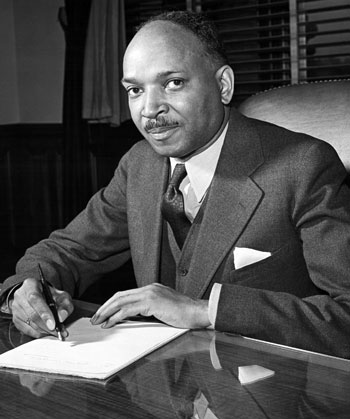
Journalist Claude Barnett is often referred to as the father of the Negro press. (Photo Credit: Google Images)
Journalist Claude Barnett is often referred to as the father of the Negro press.
(Photo Credit: Google Images)

Claude Barnett was born on September 16, 1889. He was an African American journalist and entrepreneur who is often regarded as the father of the Negro Press.

From Sanford, Fla., Claude Albert Barnett moved to Illinois to live with relatives when he was very young. In 1906, he received an engineering degree from Tuskegee Institute. In 1919, he founded the Associated Negro Press (ANP). By 1935, the ANP was serving over 200 subscribers across the country and after WW II, its membership grew to include more than 100 African American newspapers. During World War II, Barnett and other black journalists pressured the U. S. government to accredit black journalists as war correspondents.

He was a member of the Tuskegee board of directors until 1965. He held a similar post with the American Red Cross, Chicago’s Supreme Liberty Life Insurance Company, and was president of the board of directors of Provident Hospital. The ANP ceased operating after Barnett died of a cerebral hemorrhage in 1967. He was 78.

The Akosua Report: Facts on The African Diaspora, is written by Akosua Lowery. Follow her on Twitter @AkosuaLowery.

Like The Burton Wire on Facebook. Follow us on Twitter @TheBurtonWire.
'Shadeism': Colorism in the Muslim Diaspora

0
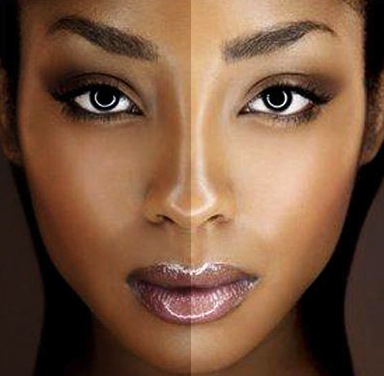
Colorism is a major issue in throughout the Muslim Diaspora. (Photo Credit: Google Images)

Writing for Aquila Style, writer Fatimah Jackson-Best explores the complicated issue of ‘shadeism’, commonly known as ‘colorism’ in the Muslim Diaspora. Jackson-Best questions why women help to perpetuate discrimination based on complexion through their product choices (skin lightening creams). In the United States, colorism is also rampant to such an extent that people are lightening, darkening and even turning themselves orange in pursuit of a desirable skin hue. Check out Jackson-Best’s commentary on the subject as it relates to the Muslim world. – NKB

EXCERPT

“I remember being one of a few Black Muslims of Caribbean-descent at my Islamic school, and knowing that I was different from my Southeast Asian and Arab peers. From the foods we ate at home to the way we spoke, our realities were not the same.

Beyond cultural and ethnic differences, I also realised that students who shared the same colour as me were not exactly like me either. Even though we all had variations of brown skin, the Sudanese, Somali and Kenyan boys and girls at my school came from cultures that were different from mine.

As I grew older, I began to hear about other things. People talked about how the shade of your skin was a marker of beauty, and that a woman who was very dark did not have the same kind of attractiveness as a woman with a lighter complexion. As an adult, I came to understand that this was called skin complexion discrimination or a term that has become more popular recently: shadeism. Both terms describe how light skin may be favoured over darker hues and those with fairer complexions are seen to be more beautiful and desirable. I also learned that this wasn’t a phenomenon specific only to Black people, but an issue that many face around the world…”

END OF EXCERPT

Do you think that colorism has gotten better or worse in this century? Share your comments with The Burton Wire in the comments section below.

Read Jackson-Best’s article in its entirety at Aquila-Style.

Like The Burton Wire on Facebook. Follow us on Twitter @TheBurtonWire.
 

‘Shadeism’: Colorism in the Muslim Diaspora

0
Colorism is a major issue in throughout the Muslim Diaspora. (Photo Credit: Google Images)

Writing for Aquila Style, writer Fatimah Jackson-Best explores the complicated issue of ‘shadeism’, commonly known as ‘colorism’ in the Muslim Diaspora. Jackson-Best questions why women help to perpetuate discrimination based on complexion through their product choices (skin lightening creams). In the United States, colorism is also rampant to such an extent that people are lightening, darkening and even turning themselves orange in pursuit of a desirable skin hue. Check out Jackson-Best’s commentary on the subject as it relates to the Muslim world. – NKB

EXCERPT

“I remember being one of a few Black Muslims of Caribbean-descent at my Islamic school, and knowing that I was different from my Southeast Asian and Arab peers. From the foods we ate at home to the way we spoke, our realities were not the same.

Beyond cultural and ethnic differences, I also realised that students who shared the same colour as me were not exactly like me either. Even though we all had variations of brown skin, the Sudanese, Somali and Kenyan boys and girls at my school came from cultures that were different from mine.

As I grew older, I began to hear about other things. People talked about how the shade of your skin was a marker of beauty, and that a woman who was very dark did not have the same kind of attractiveness as a woman with a lighter complexion. As an adult, I came to understand that this was called skin complexion discrimination or a term that has become more popular recently: shadeism. Both terms describe how light skin may be favoured over darker hues and those with fairer complexions are seen to be more beautiful and desirable. I also learned that this wasn’t a phenomenon specific only to Black people, but an issue that many face around the world…”

END OF EXCERPT

Do you think that colorism has gotten better or worse in this century? Share your comments with The Burton Wire in the comments section below.

Read Jackson-Best’s article in its entirety at Aquila-Style.

Like The Burton Wire on Facebook. Follow us on Twitter @TheBurtonWire.
 

Africa: 55 Billionaires and Counting

0
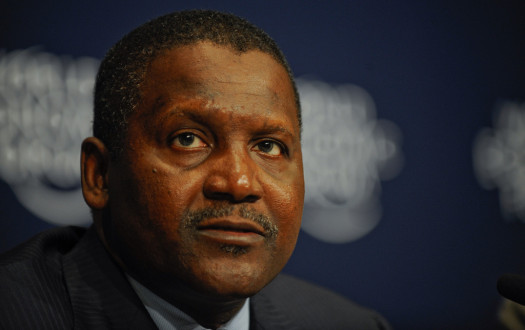
Nigerian manufacturer Aliko Dangote is the richest African worth $20.2 billion, among 20 Nigerians listed. (Photo Credit: Google Images)

Pan African Magazine is reporting that Africa has 55 billionaires worth more than $143 billion including a Nigerian woman said to be the richest black woman in the world. The writer reports:

“The report predictably identifies Nigerian manufacturer Aliko Dangote as the richest African worth $20.2 billion, among 20 Nigerians listed.

Africa Ventures put the average net worth of Africa’s billionaires at $2.6 billion and their average age at 65. The oldest billionaires are Kenyan industrialist Manu Chandaria and Egyptian property tycoon Mohammed Al-Fayed, both aged 84. The youngest billionaires are Mohammed Dewji of Tanzania and Nigerian oil trader Igho Sanomi, both 38 years old.

Nigeria, South Africa and Egypt had the highest numbers of the richest Africans, with nine in South Africa and eight in Egypt. It said Algeria, Angola, Zimbabwe and Swaziland only have one billionaire each. It identified billionaires in only 10 of Africa’s 53 countries.

Folorunsho Alakija is the richest black woman in the world. She's reportedly worth $7.3 billion.  (Photo Credit: Google Images)
Folorunsho Alakija is the richest black woman in the world. She’s reportedly worth $7.3 billion.
(Photo Credit: Google Images)

The magazine’s survey surprised by identifying oil tycoon Folorunsho Alakija as the richest black woman in the world, saying that she is worth $7.3 billion.”

These numbers are contrary to the numbers posted by Forbes Magazine, which had Folorunsho Alakija wealth at $600 million and U.S. media mogul Oprah Winfrey’s wealth at $2.9 billion.

To find out more about Africa’s billionaires, visit ABC News Online.

Like The Burton Wire on Facebook. Follow us on Twitter @TheBurtonWire.