Mobil has been ordered by a Nigerian court to pay $83.4 million in education taxes owed from 2008. (Google Images)
The Associated Press is reporting that Nigeria’s Tax Appeal Tribunal has ordered Mobil Oil Nigeria to pay $83.4 million in education taxes owed from 2008.
The official News Agency of Nigeria reported Mobil’s lawyer argued that the assessment breached an agreement with the government and the Nigerian state oil company allowing Mobil to deduct all taxes due to other agencies from the tax paid to the federal and state governments.
The five-man appeal tribunal ruled the agreement expired in 2003 and was never renewed. Chairman of the five-man tribunal, Mr. Kayode Sofola (SAN), said the amount represented the company’s education tax liability for 2008.
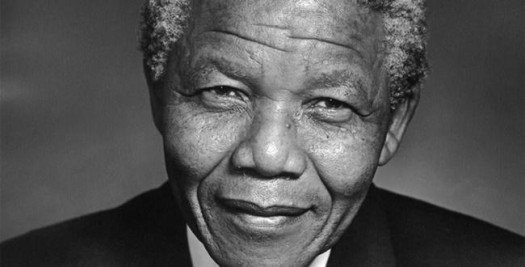
Anti-Apartheid activist and former South African president Nelson Mandela is in critical condition at a Pretoria hospital. (Google Images)
Media outlets are reporting that former South African President and anti-Apartheid activist Nelson Mandela is in critical condition. President Jacob Zuma, who visited with Mr. Mandela today, says doctors are doing “everything possible” to improve the health of 94-year-old civil rights icon, who has reportedly taken a turn for the worse over the last 24 hours. Former president Mandela was hospitalized in Pretoria on June 8 for a recurring lung infection.
The Burton Wire is holding Mr. Mandela and his family in prayer. Share what Mr. Mandela’s legacy means to you in the comments section.
Check back with The Burton Wire for updates on the status of Mr. Mandela’s health.
Ethiopian actress Tsehaie Kidane appears in Bill Duke’s documentary ‘Dark Girls’ which examines how colorism impacts black women. (Screen capture)
Seminal actor/director Bill Duke’s documentary Dark Girls will premiere on OWN, Oprah Winfrey’s Network tonight at 10 p.m. EST. Dark Girls explores issues of colorism and internalized racism that black women face in society at large and within black communities. Duke’s motivation for making the film came out of his personal experience.
Clutch magazine’s Britni Danielle reports that Duke stated:
“It came out of an idea I had based upon my childhood, what I’d gone through and seen, and what I’d seen people that I loved go through, like my sister, my niece, and other children in my family, and in my life, and I wanted to really give a voice to the voiceless.”
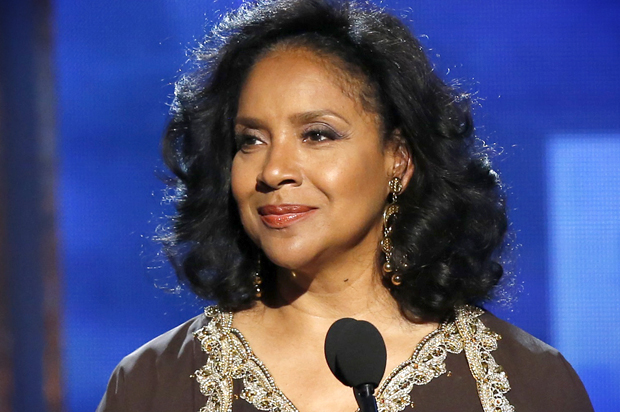
Although Dark Girls debuted on the festival circuit in 2011, this is the first time that the documentary will air on television. Prior to the airing, Academy-Award nominated actress Viola Davis, Tony award-winning actress Phylicia Rashad, Academy award-winning actress Alfre Woodard and celebrated actress Gabrielle Union will sit down and chat with Winfrey at 9 p.m. on OWN about their experiences as black actresses in Hollywood as part of her “Oprah’s Next Chapter” series.
Ethiopian actress Tsehaie Kidane appears in Bill Duke’s documentary ‘Dark Girls’ which examines how colorism impacts black women. (Screen capture)
Seminal actor/director Bill Duke’s documentary Dark Girls will premiere on OWN, Oprah Winfrey’s Network tonight at 10 p.m. EST. Dark Girls explores issues of colorism and internalized racism that black women face in society at large and within black communities. Duke’s motivation for making the film came out of his personal experience.
Clutch magazine’s Britni Danielle reports that Duke stated:
“It came out of an idea I had based upon my childhood, what I’d gone through and seen, and what I’d seen people that I loved go through, like my sister, my niece, and other children in my family, and in my life, and I wanted to really give a voice to the voiceless.”
Although Dark Girls debuted on the festival circuit in 2011, this is the first time that the documentary will air on television. Prior to the airing, Academy-Award nominated actress Viola Davis, Tony award-winning actress Phylicia Rashad, Academy award-winning actress Alfre Woodard and celebrated actress Gabrielle Union will sit down and chat with Winfrey at 9 p.m. on OWN about their experiences as black actresses in Hollywood as part of her “Oprah’s Next Chapter” series.
‘The Best Man Holiday’ Director Malcolm D. Lee and cast Sanaa Lathan, Nia Long and Morris Chestnut discuss the sequel to 1999’s ‘The Best Man’ at ABFF 2013. (Photo Credit: Wilson Morales)
As if the Miami Heat clinching the NBA Championship weren’t enough to make this a hot weekend, then the 17th Annual American Black Film Festival (June 19-23) is another one. Featuring festival screenings, diversity panels, Bill Duke’s acting boot camps, pitch sessions and a myriad of activities, ABFF 2013 has proven to be as valuable as ever in helping to expose and promote black films in addition to offering resources for aspiring filmmakers. Stars, executives, directors, writers, producers reunite at the same time each year to fellowship, network and share accomplishments and opportunities with attendees. One such event was the panel discussion featuring the stars of ‘The Best Man Holiday,’ a sequel to the 1999 comedy hit. Check out the video below (courtesy of Blackfilm.com):
In addition to reuniting casts, another type of reunion is common — that of those who attend ABFF, win awards, and go on to critical success. Such is the case with Ryan Coogler, writer and director of the critically acclaimed film Fruitvale Station. Coogler won the 2011 ABFF HBO Short Film competition with his film ‘Fig’, earning him a $20,000 reward and giving him the necessary exposure to continue moving forward in what is sure to be an outstanding film career. While many think of film festivals as party central, there are real differences being made in the lives of aspiring filmmakers and those persevering in an industry that is not always kind to people of color.
This story was written by Nsenga K. Burton, Ph.D., founder and editor-in-chief of the award-winning news site The Burton Wire.
‘The Best Man Holiday’ Director Malcolm D. Lee and cast Sanaa Lathan, Nia Long and Morris Chestnut discuss the sequel to 1999’s ‘The Best Man’ at ABFF 2013. (Photo Credit: Wilson Morales)
As if the Miami Heat clinching the NBA Championship weren’t enough to make this a hot weekend, then the 17th Annual American Black Film Festival (June 19-23) is another one. Featuring festival screenings, diversity panels, Bill Duke’s acting boot camps, pitch sessions and a myriad of activities, ABFF 2013 has proven to be as valuable as ever in helping to expose and promote black films in addition to offering resources for aspiring filmmakers. Stars, executives, directors, writers, producers reunite at the same time each year to fellowship, network and share accomplishments and opportunities with attendees. One such event was the panel discussion featuring the stars of ‘The Best Man Holiday,’ a sequel to the 1999 comedy hit. Check out the video below (courtesy of Blackfilm.com):
In addition to reuniting casts, another type of reunion is common — that of those who attend ABFF, win awards, and go on to critical success. Such is the case with Ryan Coogler, writer and director of the critically acclaimed film Fruitvale Station. Coogler won the 2011 ABFF HBO Short Film competition with his film ‘Fig’, earning him a $20,000 reward and giving him the necessary exposure to continue moving forward in what is sure to be an outstanding film career. While many think of film festivals as party central, there are real differences being made in the lives of aspiring filmmakers and those persevering in an industry that is not always kind to people of color.
This story was written by Nsenga K. Burton, Ph.D., founder and editor-in-chief of the award-winning news site The Burton Wire.
Jamaica is poised to become an animation hub, having earned more than $100 billion US in revenue in 2012. (Google Images)
Caribbean 360 is reporting that Jamaica is poised to become a new animation hub. The World Bank is partnering with the Government of Jamaica, the Government of Canada, JAMPRO and Toon Boom, Inc. to host a two-day conference, dubbed “KingstOON” at the University of the West Indies (UWI Mona) in an effort to position Jamaica as an animation hub. In addition to the World Bank, other leading Jamaican universities and training programs, like the University of Technology (UTECH) and The Edna Manley College of the Visual and Performing Arts are participating in the conference.
The author writes:
“The World Bank said KingstOON brings together international and Jamaican industry leaders, universities, businesses, government officials, animation professionals and amateurs, students, and young dreamers with the aim of showcasing Jamaica’s growing crop of local animators and visual artists.
‘Jamaica has a huge asset in its talented youth,’ said Ede Ijjasz-Vasquez, World Bank Director for Sustainable Development in the Latin America and the Caribbean region. Through partnerships with educational institutions and the private sector, Jamaica can create the right conditions to tap into the global animation industry and become a new hub, creating thousands of jobs,’ he added.”
In 2012, Jamaica’s animation industry generated more than $100 billion (U.S.) in revenue globally.
Actress Gabrielle Union stars in BET’s ‘Being Mary Jane,’ an original program created by Mara Brock Akil. (Photo Credit: BET PR)
While television networks are continuing to mass produce an influx of reality programming, Mara Brock Akil maintains her knack for creating complex characters and groundbreaking business models.
Her latest small screen project, Being Mary Jane, is about an assertive broadcast journalist (Gabrielle Union) who searches for fulfillment in her love and family lives. BET’s original feature prequel premieres on Jul. 2 at 10:30 p.m. The eight episode series is slated to debut in Jan. 2014.
Akil is celebrated for creating Girlfriends, the provocative sitcom (2000-2008) chronicling the personal lives of four ambitious black women including their careers, romantic relationships and friendship. The hit series lasted 172 episodes. Akil’s follow-up, The Game, is now it its sixth season on BET (the show was originally launched on the CW). The Game explores the culture of professional sports, through the women who are in various relationships (familial, romantic, platonic) with professional football players.
An avid NPR listener, Akil considers developing shows to be semi-autobiographical and from an informed perspective. “I’m a sociologist. I observe, listen and see what’s in front of me. The human condition is simple, but we make it very complicated. I don’t want to do the conventional because it’s not true all the time,” says Akil.
Being Mary Jane originated from Akil making notes between Girlfriends’ third and fourth seasons. “There was more I wanted to say about how we as women really operate in the world. I didn’t have a place for that, but I wanted to express it in a way I think is true,” says Akil.
Despite Akil’s almost two decade track record, she still has to deal with the sexual politics that come along with trying to validate African American programming and images, especially women, for network executives.
“You’ve got to do a song and dance to get these shows made and sold. Lots of times, I’m a black woman selling a black show. There’s so much compromise. What’s a great idea that walks in for whatever reason gets watered down. You’re so far away from the vision, you don’t even know what to do or which way to go,” says Akil.
Along with her husband, director Salim Akil, the power couple co-owns Akil Productions. The pair remade the 1976 musical drama, Sparkle, featuring an all-star cast including Carmen Ejogo, Mike Epps, Jordin Sparks, Derek Luke, Omari Hardwick and the late singer/actress Whitney Houston.
“I write the hell out of the script, hire very well and get out of the way. [Salim] knows what all of those beautiful actors want. He’s able to help them get there. I have his back. He has their back. That’s how our magic works,” says the NAACP Image Award winner.
Union was the Akils’ ideal lead. “[Gabrielle] is accessible. She shows up on time. She knows her lines. She doesn’t complain. If she has an issue, she speaks with you directly in an effort to solve it,” says Akil.
Being Mary Jane is Akil’s zenith. “[BET] trusted me. They gave me the space. They believed in the project as we talked about it. I want this to work. They want this to work,” says Akil.
The series breaks BET’s barriers. The network is often criticized for airing negative images and mediocre programs. Akil thinks viewers should look beyond the stigmas.
“At what point do we allow change? Those numbers matter. We have to Tweet about it endlessly [please]. We have to be there and create a conversation. That’s what’s gonna make this a hit show. We’re not gonna be able to do anything without the partnership of the audience,” says Akil.
Christopher A. Daniel is a pop cultural critic and music editor for The Burton Wire. He is also a contributing writer for Urban Lux Magazine and Blues & Soul Magazine. Follow Christopher @Journalistorian on Twitter.
Actress Gabrielle Union stars in BET’s ‘Being Mary Jane,’ an original program created by Mara Brock Akil. (Photo Credit: BET PR)
While television networks are continuing to mass produce an influx of reality programming, Mara Brock Akil maintains her knack for creating complex characters and groundbreaking business models.
Her latest small screen project, Being Mary Jane, is about an assertive broadcast journalist (Gabrielle Union) who searches for fulfillment in her love and family lives. BET’s original feature prequel premieres on Jul. 2 at 10:30 p.m. The eight episode series is slated to debut in Jan. 2014.
Akil is celebrated for creating Girlfriends, the provocative sitcom (2000-2008) chronicling the personal lives of four ambitious black women including their careers, romantic relationships and friendship. The hit series lasted 172 episodes. Akil’s follow-up, The Game, is now it its sixth season on BET (the show was originally launched on the CW). The Game explores the culture of professional sports, through the women who are in various relationships (familial, romantic, platonic) with professional football players.
An avid NPR listener, Akil considers developing shows to be semi-autobiographical and from an informed perspective. “I’m a sociologist. I observe, listen and see what’s in front of me. The human condition is simple, but we make it very complicated. I don’t want to do the conventional because it’s not true all the time,” says Akil.
Being Mary Jane originated from Akil making notes between Girlfriends’ third and fourth seasons. “There was more I wanted to say about how we as women really operate in the world. I didn’t have a place for that, but I wanted to express it in a way I think is true,” says Akil.
Despite Akil’s almost two decade track record, she still has to deal with the sexual politics that come along with trying to validate African American programming and images, especially women, for network executives.
“You’ve got to do a song and dance to get these shows made and sold. Lots of times, I’m a black woman selling a black show. There’s so much compromise. What’s a great idea that walks in for whatever reason gets watered down. You’re so far away from the vision, you don’t even know what to do or which way to go,” says Akil.
Along with her husband, director Salim Akil, the power couple co-owns Akil Productions. The pair remade the 1976 musical drama, Sparkle, featuring an all-star cast including Carmen Ejogo, Mike Epps, Jordin Sparks, Derek Luke, Omari Hardwick and the late singer/actress Whitney Houston.
“I write the hell out of the script, hire very well and get out of the way. [Salim] knows what all of those beautiful actors want. He’s able to help them get there. I have his back. He has their back. That’s how our magic works,” says the NAACP Image Award winner.
Union was the Akils’ ideal lead. “[Gabrielle] is accessible. She shows up on time. She knows her lines. She doesn’t complain. If she has an issue, she speaks with you directly in an effort to solve it,” says Akil.
Being Mary Jane is Akil’s zenith. “[BET] trusted me. They gave me the space. They believed in the project as we talked about it. I want this to work. They want this to work,” says Akil.
The series breaks BET’s barriers. The network is often criticized for airing negative images and mediocre programs. Akil thinks viewers should look beyond the stigmas.
“At what point do we allow change? Those numbers matter. We have to Tweet about it endlessly [please]. We have to be there and create a conversation. That’s what’s gonna make this a hit show. We’re not gonna be able to do anything without the partnership of the audience,” says Akil.
Christopher A. Daniel is a pop cultural critic and music editor for The Burton Wire. He is also a contributing writer for Urban Lux Magazine and Blues & Soul Magazine. Follow Christopher @Journalistorian on Twitter.
Protesters create “caras pintadas” during the March Against Corruption in Sao Paulo, Brazil in 2011. (Google Images)
Brazil’s new generation of “caras pintadas,” social media and the new face of democratic protest
OPINION
by
Ian Walcott
In 1992 as an undergrad student at the University of Brasilia, I remembered looking through the window of my host family’s apartment at my colleagues with their faces painted while dancing, singing and chanting to impeach the then President Fernando Collor de Mello. Of course I wanted to participate but part of my scholarship agreement was to mind my business and never to participate in domestic protests. I was not about to risk losing my scholarship in spite of the peer pressure to paint my face and join the streets.
Twenty-three years later, a new generation has taken to the public squares and main streets/avenues throughout the major capitals in Brazil demanding a reduction in bus fares and public transport costs together with a list of other revindications that range from the end of corruption to the high cost of the World Cup to social justice and gay rights. But what makes the protests of this generation so special and so different from the original “Caras Pintadas” of 1992? I posit that there are three factors at play: there’s a new generation that is growing up with privilege in a country that now offers them more hope and a brighter future; Brazilian democracy is maturing; and we are in a new digital age of social media that can ignite social protests at speeds never before witnessed by humanity.
When President Dilma Roussef finally voiced her opinion on the escalating protests throughout her country, what many thought would have worked against her popularity in the year that she faces re-election, ended up being a slam dunk, as she proclaimed “today we woke up to a stronger Brazil. The magnitude of yesterday’s protests is testament to the vigor of our democracy.” (“O Brasil hoje acordou mais forte. A grandeza das manifestações de ontem comprova a energia da nossa democracia.”) With that she pretty much sealed her place in history, herself being the product of a generation that protested during the period of dictatorship. However, as President Lula’s direct successor and protégé we wouldn’t have expected any other reaction. She went on to score more political points by claiming that the protests are a direct result of the social advancement made in Brazil emanating from Lula’s and her government’s ongoing social policies. Neatly put, once the people have tasted social justice and an improved quality of life, they will simply demand more. There’s no argument against this. So this new privileged generation, with greater access to upward social mobility and more hope than their parents and grandparents, is simply demanding more!
Secondly, we are witnessing a country where the democratic process is maturing before our very eyes. I’ve had many a debate with my colleagues at work and school in Brazil about the practicality of their system of compulsory voting. This is not novel but to many in Western liberal democracies, it may seem antithetical to the democratic process itself. However, within the context of Brazilian history and culture is seems to work and the new generation of “caras pintadas” is clearly saying that their compulsory vote means something more and their voices will be heard.
Finally, what makes this generation so different from mine is the fact that social media became the single most important source to mobilize these protests. With one of the highest penetration of digital media technology and smart phones in all of Latin America, small wonder that these protests swept across the length and breadth of Brazil at such alarming rates. Brazil is among the top countries of Facebook users and it is the top site visited. Also Brazil’s top 20 sites include Windows Live, Twitter, LinkedIn and Instagram.
So when these three forces come together, it’s almost an inevitable case of spontaneous combustion. There’s almost a sense that as social policy continues to empower new groups of citizens together with galloping development and new wealth, that rather than being a thing of the past, each generation of Brazil’s “caras pintadas” will continue to demand more and more until full social justice is finally achieved.
Ian Walcott is a contributing writer to The Burton Wire. He is an international relations specialist and project consultant who shuttles between the Caribbean and Brazil.