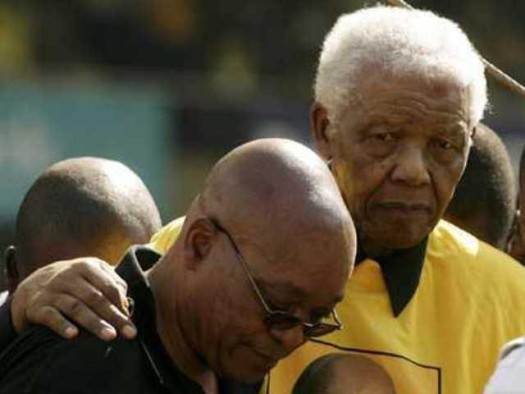
Reports that Mandela’s family has banned visits from the ANC and other government officials have been rebuffed. (Google Images)
The Mail & Guardian (South Africa) is denying reports that former South African president Nelson Mandela’s family has barred the African National Congress and other government officials from visiting the ailing icon. The author writes:
“We have spoken to the family about this report and they deny that they issued such an instruction or spoke to the media on barring the ANC and government from visiting Madiba,” said spokesperson Jackson Mthembu in a statement.
“What we know is that given the pressure associated with the admission of president Mandela, there are general restrictions that permit only relevant people to have access.”
The Star newspaper reported on Monday that the Mandela family had taken charge of the 94-year-old Nobel Peace Prize winner’s hospital stay, banning everyone – including government leaders and senior party officials – from visiting him.
Marcus Garvey founded the Universal Negro Improvement Association in
“Our success educationally, industrially and politically is based upon the protection of a nation founded by ourselves. And the nation can be nowhere else but in Africa.” – Marcus Mosiah Garvey, Jr.
MARCUS GARVEY
On June 10, 1940, Marcus Mosiah Garvey, Jr., publisher, entrepreneur, orator, and Black Nationalist, died. Garvey was born August 17, 1887 in St. Ann’s Bay, Jamaica. In 1914, Garvey founded the Universal Negro Improvement Association, “To unite all people of African ancestry of the world to one great body to establish a country and absolute government of their own.”
Garvey moved to New York City in 1916 and founded the Negro World newspaper. In June, 1923, Garvey was unjustly convicted of mail fraud and sentenced to five years in prison. That sentence was commuted by President Calvin Coolidge and Garvey was released in November, 1927 and deported to Jamaica where he is interred at a shrine in National Heroes Park.
There are memorials to Garvey around the world, including statues and streets and schools named after him in Jamaica, Trinidad, the United States, Canada, Kenya, Nigeria, and the United Kingdom. A number of books have been published about Garvey and his movement, including “Black Power and the Garvey Movement” (1971), “Marcus Garvey: Anti-Colonial Champion” (1988), and “Negro with a Hat: The Rise and Fall of Marcus Garvey and his Dream of Mother Africa” (2008).
The Akosua Report: Facts on The African Diaspora, is written by Akosua Lowery. Follow her on Twitter @AkosuaLowery.
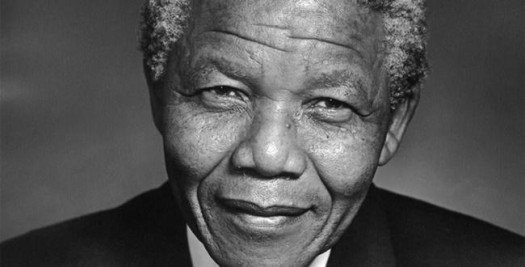
Anti-Apartheid activist and former South African president Nelson Mandela has been admitted to a Pretoria hospital for a lung infection. (Google Images)
BBC Africa is reporting that anti-Apartheid activist and former South African President Nelson Mandela has been admitted to hospital in South Africa with a lung infection. A presidential spokesman said he is in a “serious but stable condition.” Mr. Mandela is able to breathe on his own, which is being seen as “positive sign” for the ailing former president who is 94-years-old. The article is reporting that Mr. Mandela has been ill for some days but deteriorated overnight which is why he was transferred to a hospital in Pretoria.
Mendi + Keith Obadike’s digital installation ‘American Cypher’ is showing at The Studio Museum in Harlem until June 30, 2013. (Photo courtesy of Mendi and Keith Obadike)
Who says black folks don’t create digital art? New media artists Mendi + Keith Obadike beg to differ, having worked in the field for well over a decade. In August 2001, Keith Obadike auctioned his Blackness on Ebay for $10 as performance art. This bold act helped usher in a “futurist sensibility” in using new media to question, subvert, deconstruct and reconstruct problematic ideologies. Recognizing the the web as a natural space to combine art, sound and text while having the ability to reach mass audiences, exploring digital space as art was a natural progression for the visual artists.
The married, multimedia/conceptual artist duo’s latest exhibition,“American Cypher” is now showing at The Studio Museum in Harlem through June 30th. This site-specific work is a suite of projects that respond to American stories about race and DNA. The project includes an eight-channel sound and video installation with a series of letterpress prints and a book. The dynamic duo will be hosting an artist talk at the Studio Museum on Sunday, June 9, 2013 at 3 p.m.
As a prelude to the talk, The Burton Wire caught up with the trailblazers to talk about the exhibit, the politics of DNA, black cultural production and digital media, and why Oprah Winfrey, Thomas Jefferson and Sally Hemings make such interesting subjects for this exhibit.
TBW: How did the opportunity to work with the Studio Museum come about?
M+K: We had the good fortune of being in an exhibition (Race in Digital Space) many years ago at the Studio Museum that was curated by Erika Muhammad (now Erika Massaquoi). We had also performed there in the past. Like many artists in our generation, we were influenced by artists and administrators associated with the Museum. As a result, we really see the Studio Museum as our community museum. We were living in Harlem until very recently, and had many friends involved with the museum (in residences and staff positions) over the years. It had been a while since we’d done anything at the institution, so we were pleased when Curatorial Assistant Abbe Schriber contacted us about a studio visit.
TBW: How did you decide that American Cypher was right for the Studio Museum?
M+K: During the studio visit with Schriber, we went through our current and upcoming projects. One of the projects was American Cypher, which had been commissioned by two institutions at Bucknell University — the Griot Institute for Africana Studies and the Samek Art Gallery. We decided that a site-specific version of American Cypher would work well at The Studio Museum.
TBW: What is American Cypher?
M+K: The project (American Cypher) considers the role of DNA in our current understanding of race and American identity through five stories about figures including scientists, members of the criminal justice system, and politicians. We begin with the story of the relationship of president Thomas Jefferson and Sally Hemings—who was his slave, his wife’s half sister, and the mother of some of his children. At the center of this project is an 8 channel sound art installation derived from a 200-year-old bell belonging to Sally Hemings. There is a short video piece projected onto one wall in the museum. There is also a series of letterpress prints hanging on the walls with text about each of the characters in our project. In the museum’s Reading Room there is a book that accompanies the exhibition and it includes poems about each character in our piece.
TBW: Many erroneously believe that blacks are at the margins of multimedia production and digital installations. Why do you think this myth continues to persist?
M+K: There is a general stereotype that Black people are not at the forefront of tech-based work in the arts or the commercial/industrial sector. This myth often goes unchallenged because there is often very little written about or scarce documentation of folks working in these fields. We don’t solely work in the digital realm, but it is where we did much of our early collaborations and certainly a part of the American Cypher project might be described as digital or multimedia. When we began this work together years ago, we saw this as a space where we could easily combine our individual backgrounds in music, poetry and visual art. Digital sounds, video, or interactivity are no longer unusual in the arts. We’ve been working together almost twenty years, and when we started there were very few people (Africans or people of color) working (in what was then called new media) in this way. But there was always a long, quiet history of a small Black community working in the digital and electronic trenches. In addition to decidedly non-digital folk like writer Toni Morrison and musician Pharoah Sanders, we were influenced by folks like Keith’s mentor Acha Debela, who has been working with CG since the 80s, British multimedia artist Keith Piper, and folks like composer/trombonist George Lewis.
In a small effort to combat this myth, we’d like to list a few folks in the experimental media arts field:
TBW: You mentioned lack of documentation of this type of work done by black artists. What is your take on this issue?
M+K: Our work (the work of independent Black media artists) from the 1960s to the present has not been historicized adequately. The exhibition that we mentioned earlier, Race in Digital Space (2002), was one of the few major attempts made by a curator/critic to really give some context for this interdisciplinary work done by Black media artists over the last 40 years. There are very few critics or scholars working on this area of cultural production. Art made by Black people is mainly written about and seriously engaged by Black critics, Black art historians, and Black musicologists. We have few numbers in those ranks (art history/musicology) and there seems to be a general academic inertia towards more traditional and commercial forms. So we get this strange cycle (much like folks in the commercial / industrial tech world) where in addition to run of the mill racism deterring folks from working in an area, the work of Black media artists is not well documented because our numbers are small. Our numbers remain small because there is very little written about in the mainstream texts, so younger folks are not encouraged to enter the field. This has changed a bit since the rise of social media. We now see more artists connecting across zones and a little more documentation happening.
TBW: DNA has been a major factor in the exoneration of many convicted felons of color. How does this relate to your exhibit?
M+K: Our exhibition American Cypher, is made up of a series of true American stories told through sound, images and text, about DNA and identity. It is not, however, a documentary approach. We deal with these stories as a springboard for poetic reflection in an art context. One section of the piece focuses on DNA and the criminal justice system. The role of DNA in law enforcement is being hotly debated right now. While this science has aided in the exoneration of many innocent people, there are still many questions about when DNA material should be collected and what should be done with the material after it is collected. No matter how one feels this science should be used, what is clear is that there is a lot at stake for African-Americans in this process. As a way to think through these issues in our work we looked at two significant legal cases. We dealt with the story of James Bain, an innocent African-American man who was released after 35 years in jail when DNA evidence was allowed to be used in his defense. He served the longest sentence overturned by DNA evidence. In his case it was contemporary science triumphing over the often problematic “eyewitness testimony”. We also deal with the story of an African-American serial killer, Lonnie Franklin, known as the Grim Sleeper. He preyed mainly on African-American women and he eluded police for many years. He was captured when the police used information in a familial DNA database to track him. His son was arrested for a crime, this son’s DNA was collected, matched to the serial killer, and it led the police to the father. The capture of a serial killer is obviously a good thing. The debate begins when we recognize that DNA material from African-Americans is disproportionately collected in these police / FBI controlled databases and once one family member enters the system, then an entire group of relatives are now on record. Many states currently allow anyone arrested (wrongfully or justly) to be swabbed and entered into the database. Proponents say DNA collection is just the contemporary method of fingerprinting and not an overreach; opponents say this is an unusual invasion of privacy that will lead to even greater unjustified surveillance of Black and Brown communities.
TBW: With the many DNA stories that you could tell, why Sally Hemings and Thomas Jefferson?
M+K: The project was originally commissioned by Bucknell University’s Griot Institute for Africana Studies and the Samek Art Gallery as a public sound installation. They asked us to think about the relationship between Hemings and Jefferson. As we began our preliminary research, we began to see how much the DNA evidence that undeniably links the Hemings and Jefferson family lines affected the historical record. While there had been rumors that Jefferson had fathered Hemings’ children since the time in which they lived, the DNA evidence changed the way some members of the Jefferson family and some institutions talk about this story. For us, this opened the door to other conversations about the role of DNA in our understanding of roots, race, and American identity.
TBW: What other stories are covered in this project?
M+K: We address four additional stories in this iteration of the project. The first story is about Oprah Winfrey. A few years ago Winfrey met with Harvard Professor Henry Louis Gates on a PBS special and had her DNA tested to find her place of origin on the continent of Africa. Before tests were concluded she announced to the press that she was Zulu. This seemed highly unlikely since most African-Americans descended from enslaved Africans taken from the west coast of Africa. The DNA test later concluded that she was from Liberia. In this project, we really wanted to think about what Oprah’s Zulu fantasy meant. Other sections of our piece included the infamous discoverer of the double helix structure, James Watson, who in 2007 made racist statements about African genetic inferiority only to be outed later as being of African descent. In addition to the stories from the justice system that we mentioned earlier, we also look at popular stories about President Obama’s heritage. But the spark for all of this is the Hemings and Jefferson story. We see the Hemings/Jefferson story as an American origin story. It gets to the heart of two questions — Who gets to be American and how do we identify them?
TBW: What are your thoughts on the intersection of art and social justice?
M+K: One of our consistent goals has been to engage audiences in a dialogue about the codes that order our understanding of social place. We’ve pointed to this dialogue in a number ways across our projects, but we’re always trying to get ourselves and others to be more thoughtful about what it means to categorize living things.
We think justice, politics, history, and power will always be compelling subjects for artists. And of course art is extremely, extremely important, but an artwork about these subjects rarely brings about large scale political change or social justice. If social change is the goal, then direct political action seems much more effective. What art does do well is allow us to see our culture in new ways, imagine new possibilities, and to reflect on our values and our own humanity. And we don’t get necessary and effective political action without this kind of reflection and imagination.
TBW: Have you experienced any anti-intellectual feedback from the exhibit? If so, how did you address it?
M+K: No. When we receive feedback it is usually from people who have come to engage with ideas. Perhaps it is because the Studio Museum’s audiences expect the exhibitions to be “about something”. This is not necessarily the case with all art institutions and audiences. But in general, we really just try to make the work and let it do its thing. It’s not something we worry about for the most part. There are also a number of ways to engage with the work from the sound installation, to the book, prints, and video. The depth of engagement is, of course, up to the audience.
TBW: With all of the amazing exhibitions taking place in New York this summer, why should “American Cypher” be at the top of the list?
M+K: There are always many great things to see in this city and it is a privilege to be in the mix. See as many as you can and be enriched. We’d be honored if folks stopped by to experience our offering.
The American Cypher exhibit will be at the Studio Museum in Harlem until June 30, 2013. Please note that Sundays are free at the Studio Museum (144 West 125th Street). Keith + Mendi can be found at Obadike.com. Like them on Facebook and follow them on Twitter @MendiandKeith.
This article was written and edited by Nsenga K. Burton, Ph.D., founder & editor-in-chief of The Burton Wire, an award-winning news site dedicated to covering news, opinion and culture of the African Diaspora.
Weather forecasters are predicting that the Caribbean will be hit hard this coming hurricane season. (Google Images)
Caribbean 360 is reporting that the Caribbean Disaster Emergency Response Management Agency (CDEMA) has urged Caribbean people to be prepared for a very active season. Hurricane season starts June 1 and officially ends November 30, 2013. The author writes:
Noted hurricane forecasters Dr William Gray and Philip Klotzbach of the Colorado State University have predicted an above-average season with 18 named storms, nine hurricanes and four major hurricanes likely to occur during the six-month period.
The United States National Oceanic and Atmospheric Administration (NOAA) is predicting between 13 to 20 named storms, six to 11 hurricanes, and three to six major hurricanes.
CDEMA executive director Ronald Jackson said these predictions are well above the season averages.
“The message is clear. The extent to which we could be impacted will depend on the level of investment we put into preparing for and preventing as best as possible the negative consequences of this hazard.
Weather forecasters are predicting that the Caribbean will be hit hard this coming hurricane season. (Google Images)
Caribbean 360 is reporting that the Caribbean Disaster Emergency Response Management Agency (CDEMA) has urged Caribbean people to be prepared for a very active season. Hurricane season starts June 1 and officially ends November 30, 2013. The author writes:
Noted hurricane forecasters Dr William Gray and Philip Klotzbach of the Colorado State University have predicted an above-average season with 18 named storms, nine hurricanes and four major hurricanes likely to occur during the six-month period.
The United States National Oceanic and Atmospheric Administration (NOAA) is predicting between 13 to 20 named storms, six to 11 hurricanes, and three to six major hurricanes. It’s not just the Caribbean that can experience this type of weather. It might happen where you live, so it’s important to be ready when it happens. However, if you find that after the extreme weather has passed that it has caused damage to your home, more so to your roof, then you should think about getting in touch with a roofing contractor as soon as possible. If you live in the relevant area, you may want to contact Water Damage and Roofing of Austin for further information. But first, you may want to get in touch with your insurance company, for example somewhere similar to Insurance Quotes since you will need their help with any repairs you may need.
CDEMA executive director Ronald Jackson said these predictions are well above the season averages.
“The message is clear. The extent to which we could be impacted will depend on the level of investment we put into preparing for and preventing as best as possible the negative consequences of this hazard.
Shadow and Act’s Tambay A. Obenson challenges readers to hold independent news sites that cover black film with the same esteem given to mainstream publications that acknowledge black film. (Google Images)
If you haven’t gotten the memo yet, please stop sending Shadow and Act‘s founder and editor-in-chief Tambay A. Obenson articles about black cinema written by mainstream media. As Tambay has said before, he lives and breathes and reports on black cinema every day of his life. Tambay’s statement spoke to me as an expert in African-American film, who continues to get similar offerings from friends, colleagues and the like. Even though it is clear that the links to articles like the New York Times’ recent article on the coming “breakout year” for black film are sent with the greatest of intentions (information, enthusiasm, love of black film), it can be frustrating to those who work tirelessly on behalf of black cinema with very little fanfare. I’ve said it before and I’ll say it again, just because the so-called explosion of black film is new to you doesn’t mean that it’s new; just because black cinema is covered by a mainstream publication every once in a while doesn’t mean progress or validation of an art form many of us know is valid year-round. Check out an except of Tambay’s ode to those in the trenches covering, critiquing, analyzing, creating, loving and breathing black cinema on a regular, on-going and consistent basis. After all, black cinema is more than a news article. — Nsenga K. Burton, Ph.D., founder & editor-in-chief, The Burton Wire
EXCERPT from “Sorry I don’t need the New York Times to Tell Me What’s Happening in Black Cinema.”
“In the last 24 hours, my various mailboxes (email, Facebook, Twitter) have been flooded with messages alerting me to THISNew York Times piece, titled Coming Soon: A Breakout Year for Black Films, referring to the unusual volume of films by and about people of African descent, scheduled to be released theatrically in 2013.
It’s what I refer to as The New York Times’ annual ‘state of black cinema’ (broadly speaking) nod, and, each year, for almost as long as I’ve been running this site, I’m bombarded with messages linking me to whatever it is The Times (or The Hollywood Reporter, Variety, etc) have to say about subject matter that we cover on this site daily, and have been writing about for the last 4 years.
I’m never sure what exactly my response is supposed to be to these messages, as well as the articles that I’m being alerted to. Is it Jubilation? I’m supposed to be excited about the *acknowledgement* from mainstream papers? Am I to fall all over myself and start singing Negro Spirituals?
There’s this euphoria that consumes *us* when these pieces are published, which I don’t quite understand – one that contributes to the idea that, for some of *us*, *our* endeavors aren’t worthwhile, until formally recognized in some shape or form, by mainstream (read: White) institutions.
So, The New York Times realized that this year will see the once-every-decade occurrence, when more black films backed by studios (as well as a few indies) enter the marketplace.
So what? Why is this cause for celebration? Especially when I wrote about the same damn thing, right here on this blog, a few weeks ago, earlier this year. But I don’t recall seeing that piece shared multiple times on my Facebook and Twitter feeds, or heard about it being forwarded en masse via email.
Or is it that we only *act* when it’s the The New York Times (or Variety, or The Hollywood Reporter)?
Shadow and Act’s Tambay A. Obenson challenges readers to hold independent news sites that cover black film with the same esteem given to mainstream publications that acknowledge black film. (Google Images)
If you haven’t gotten the memo yet, please stop sending Shadow and Act‘s founder and editor-in-chief Tambay A. Obenson articles about black cinema written by mainstream media. As Tambay has said before, he lives and breathes and reports on black cinema every day of his life. Tambay’s statement spoke to me as an expert in African-American film, who continues to get similar offerings from friends, colleagues and the like. Even though it is clear that the links to articles like the New York Times’ recent article on the coming “breakout year” for black film are sent with the greatest of intentions (information, enthusiasm, love of black film), it can be frustrating to those who work tirelessly on behalf of black cinema with very little fanfare. I’ve said it before and I’ll say it again, just because the so-called explosion of black film is new to you doesn’t mean that it’s new; just because black cinema is covered by a mainstream publication every once in a while doesn’t mean progress or validation of an art form many of us know is valid year-round. Check out an except of Tambay’s ode to those in the trenches covering, critiquing, analyzing, creating, loving and breathing black cinema on a regular, on-going and consistent basis. After all, black cinema is more than a news article. — Nsenga K. Burton, Ph.D., founder & editor-in-chief, The Burton Wire
EXCERPT from “Sorry I don’t need the New York Times to Tell Me What’s Happening in Black Cinema.”
“In the last 24 hours, my various mailboxes (email, Facebook, Twitter) have been flooded with messages alerting me to THISNew York Times piece, titled Coming Soon: A Breakout Year for Black Films, referring to the unusual volume of films by and about people of African descent, scheduled to be released theatrically in 2013.
It’s what I refer to as The New York Times’ annual ‘state of black cinema’ (broadly speaking) nod, and, each year, for almost as long as I’ve been running this site, I’m bombarded with messages linking me to whatever it is The Times (or The Hollywood Reporter, Variety, etc) have to say about subject matter that we cover on this site daily, and have been writing about for the last 4 years.
I’m never sure what exactly my response is supposed to be to these messages, as well as the articles that I’m being alerted to. Is it Jubilation? I’m supposed to be excited about the *acknowledgement* from mainstream papers? Am I to fall all over myself and start singing Negro Spirituals?
There’s this euphoria that consumes *us* when these pieces are published, which I don’t quite understand – one that contributes to the idea that, for some of *us*, *our* endeavors aren’t worthwhile, until formally recognized in some shape or form, by mainstream (read: White) institutions.
So, The New York Times realized that this year will see the once-every-decade occurrence, when more black films backed by studios (as well as a few indies) enter the marketplace.
So what? Why is this cause for celebration? Especially when I wrote about the same damn thing, right here on this blog, a few weeks ago, earlier this year. But I don’t recall seeing that piece shared multiple times on my Facebook and Twitter feeds, or heard about it being forwarded en masse via email.
Or is it that we only *act* when it’s the The New York Times (or Variety, or The Hollywood Reporter)?
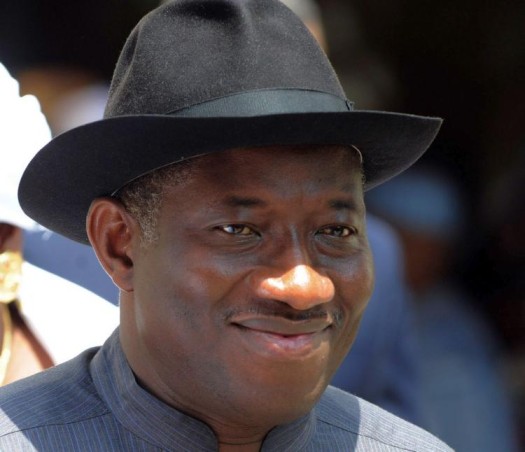
Nigeria’s president Goodluck Jonathan will have to decide whether to sign into law a bill banning and criminalizing same-sex marriage. The bill has already passed Nigeria’s House of Representatives. (Google Images)
Writing for AllAfrica.com, Amnesty International has called on Nigeria’s president Goodluck Jonathan to veto a Same Sex Marriage prohibition bill that was passed on May 30 by Nigeria’s House of Representatives. The author writes:
President Goodluck Jonathan of Nigeria should not sign into law a draconian new bill that would formalize discrimination against lesbian, gay, bisexual, transgender and intersex (LGBTI) people and have wide-ranging effects on civil liberties in the country, 10 Nigerian and international human rights groups said today.
On May 30, 2013, Nigeria’s House of Representatives passed the Same Sex Marriage (Prohibition) Bill, which would impose a prison sentence of up to 14 years for anyone found guilty of engaging in same-sex relationships. The Senate had already passed a similar bill.
If signed into law, the bill would also criminalize freedom of speech, association, and assembly.
“The bill is a throwback to past decades under military rule when these civil rights were treated with contempt,” said Lucy Freeman, deputy director of the Africa Programme at Amnesty International.
Those found to be in violation of the bill if it becomes a law face prison sentences, including those who speak out in support of gay marriage. Nigeria currently has a 14-year sentence for those involved in or knowledgeable of anyone who has “carnal knowledge” or “carnal intercourse” with another person “against the order of nature.” These laws are holdovers from Victorian-era British rule.
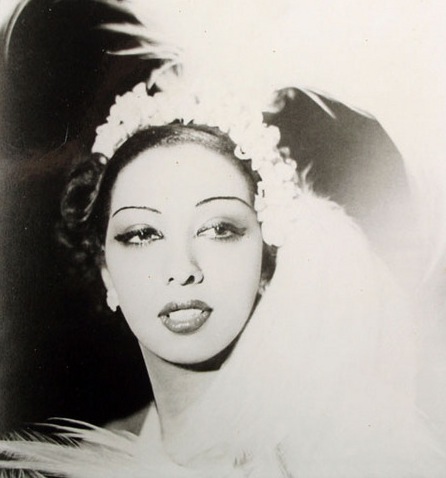
Josephine Baker was an entertainer and activist. She is the first American born woman to be honored with France’s Croix de Guerre for serving as a spy during the French Resistance. (Google Images)
“Surely the day will come when color means nothing more than the skin tone, when religion is seen uniquely as a way to speak one’s soul; when birth places have the weight of a throw of the dice and all men are born free, when understanding breeds love and brotherhood.” – Josephine Baker, entertainer and activist.
JOSEPHINE BAKER
Josephine Baker, entertainer and actress, was born on June 3, 1906 as Freda Josephine McDonald in St. Louis, Missouri. At the age of 15, Baker moved to New York City and appeared in the chorus of “Shuffle Along” (1921). By the time she appeared in “The Chocolate Dandies” (1924), she was the highest paid chorus girl in vaudeville. In 1925, she debuted in Paris and shortly thereafter was the most successful American entertainer working in France.
Despite her popularity in France, Baker never achieved the same level of success in the United States. In 1937, she returned to Paris and became a French citizen. During World War II, Baker volunteered to spy for France and provided significant assistance to the French Resistance. In recognition of her efforts, Baker was the first American born woman to receive the French military honor, the Croix de Guerre. Although based in France, Baker was supportive of the Civil Rights Movement. When in the U.S., she refused to perform for segregated audiences and spoke at the 1963 March on Washington for Jobs and Freedom. Baker died April 12, 1975.
The Akosua Report: Facts on The African Diaspora, is written by Akosua Lowery. Follow her on Twitter @AkosuaLowery.