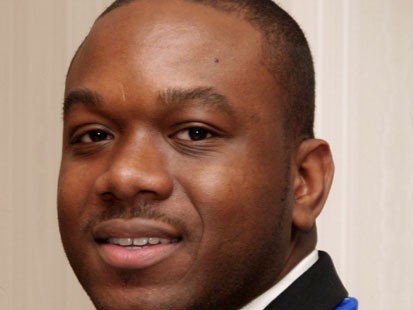
The body of 34-year-old mayoral candidate Marco McMillian was found on Feb. 27 near a Mississippi River levee. (Google Images)
Michael Muskal of The Los Angeles Times is reporting that 22-year-old Lawrence Reed has been arrested and charged with the murder of Marco McMillian, an openly mayoral candidate in Clarksdale, Miss. McMillian’s body was found 15 miles from Clarksdale near the Mississippi River on Wednesday morning after his SUV, but not McMillian himself, was involved in a collision the day before. Reed, however, was found driving the vehicle.
Muskal writes:
Jarod Keith, McMillian’s campaign spokesman, confirmed the candidate was openly gay but said it never came up during the campaign.
“We remember Marco as a bold and passionate public servant, whose faith informed every aspect of his life,” Keith said in a statement issued on Wednesday. “Tragically, that life has been cut short.”
Actress Zoe Saldana responds to criticism of her selection to play music legend Nina Simone in an upcoming biopic. (Google Images)
American Actress Zoe Saldana responds to critics who have publicly decried Saldana for being cast as music legend Nina Simone in an upcoming biopic. The controversy involves Saldana’s physical beauty relative to Simone’s physical beauty, the fact that the filmmaker failed to interview Simone’s surviving family members and created a love story for the film between Simone and her openly gay best friend, when there was no romantic relationship between the two in Simone’s real life.
Susanna Osbourne of Global Grind reports the following:
After being seen in dark makeup and an afro wig, people felt that Zoe Saldana was not the right actress for the job because she doesn’t have the Afrocentric features Nina did.
Now, Zoe has finally spoken up for herself.
Here what Saldana has to say in the video below posted on Hip Hollywood.
What do you think? Are critics being too hard on Saldana? Answer in the comment section below.
****WARNING – NOT SAFE FOR WORK (NSFW) or APPROPRIATE FOR CHILDREN UNDER AGE 17
South African police dragged a Mozambican taxi driver who later died from head injuries believed to have been sustained during the dragging. (Screen capture)
Yahoo News is reporting that a Mozambican man South African police tied to a police van and dragged has died. Raf Casert writes:
They bound his hands to the rear of a van, and then sped off, dragging the slender taxi driver along the pavement as a crowd of onlookers shouted in dismay. The man was later found dead.
A gut-wrenching video of the scene is all the more disturbing because the men who abused the Mozambican immigrant were uniformed South African police officers and the van was a marked police vehicle.
The graphic scenes of the victim struggling for his life shocked a nation long accustomed to reports of police violence.
“The visuals of the incident are horrific, disturbing and unacceptable. No human being should be treated in that manner,” said South African President Jacob Zuma.
****WARNING – NOT SAFE FOR WORK (NSFW) or APPROPRIATE FOR CHILDREN UNDER AGE 17
UK Slave owners received post-abolition reparations which are the equivalent of billions of pounds today. (Google Images)
written by Nsenga K. Burton, Ph.D.
When many people speak of slavery reparations, they debate the merit of whether descendants of slaves should actually receive payouts for the free labor upon which many nations were built including but not limited to the United Kingdom, the United States and Europe. Rarely discussed is the fact that slave owners, many of them wealthy, received reparations for the loss in income they would suffer after the abolition of slavery. Such is the case in Great Britain where the University College of London (UCL) has created a database that compiles the compensation information of slave owners post-abolition.
Sanchez Manning of The Independent (UK) is reporting that United Kingdom Prime Minister David Cameron’s family were among the wealthy families who received generous reparation payments after abolition that would be worth millions of pounds today. Manning writes:
The true scale of Britain’s involvement in the slave trade has been laid bare in documents revealing how the country’s wealthiest families received the modern equivalent of billions of pounds in compensation after slavery was abolished.
The previously unseen records show exactly who received what in payouts from the Government when slave ownership was abolished by Britain – much to the potential embarrassment of their descendants. Dr. Nick Draper from University College London (UCL), who has studied the compensation papers, says as many as one-fifth of wealthy Victorian Britons derived all or part of their fortunes from the slave economy.
As a result, there are now wealthy families all around the UK still indirectly enjoying the proceeds of slavery where it has been passed on to them.
Academics from UCL, including Dr. Draper, spent three years pulling together 46,000 records of compensation given to British slave-owners into an internet database launched for public use on Wednesday. Families that benefited from the reparations inhabited all socio-economic levels.
Jill Lawless of the Denver Post reports:
Not all the slave owners were ultra-wealthy. Middle-class Britons up and down the country were paid compensation — evidence, the researchers say, of how far the tentacles of slavery spread through society.
Payouts range from wealthy merchant John Gladstone, father of 19th-century Prime Minister William Ewart Gladstone, who received more than 100,000 pounds in compensation for hundreds of slaves, to Jane Bayne, a Scottish doctor’s wife who received 84 pounds for 10 slaves on a plantation in Jamaica. Even that modest settlement was more than the annual salary of a skilled worker at the time.
According to the database, about 46,000 people were paid a total of 20 million pounds — the equivalent of 40 percent of all annual government spending at the time — after the freeing of slaves in British colonies in the Caribbean, Mauritius and southern Africa.
It is interesting that many of those who oppose reparations for descendants of slaves now are the same people that benefited socio-economically from free labor then and post-abolition due to the reparations they received. Clearly those in power understand the economic value in the free labor that was performed and the economic challenges they would have faced when the free labor was abolished, hence the desire for reparations for slave owners. Let’s be clear, the fact that slave owners, some of them wealthy, received reparations post-abolition is at best immoral and at worst a continued heinous crime against humanity. Certainly the descendants of slave owners who continue to profit from slavery should understand how the descendants of slaves, many of whom are economically disenfranchised, continue to suffer from having ancestors who were deprived of wages or reparations. It seems that the modern day descendants of slave owners who continue to benefit from reparations, would comprehend the need to grant the descendants of slaves reparations, particularly since it was their ancestors who actually did the work. I suppose that would be too much like right for a world event that was dead wrong.
Tennis legend Serena Williams returns to her number one world-ranking. (Google Images)
Written by Benjamin Snyder
Serena Williams reclaimed the world No. 1 ranking for the first time in over two years on Monday after an emotional win that saw her defeat Petra Kvitova. She beat the Czech player in a 3-6, 6-3, 7-5 quarterfinal marathon match at the Qatar Open.
According to Reuters, Serena recovered from being down 4-1 in the final set against Kvitova to seal the win and take the top ranking.
Suppressing tears in the on-court interview after defeating Kvitova (see the video clip below for the full reaction), the 31-year old said, “I’m so sensitive nowadays, I’m always crying! I’ve just been through so much and never thought I’d be here again.”
Serena, whose return to the world’s best position among women tennis players saw her survive a foot injury in 2010 that led to a life-threatening blood clot, told reporters after the victory, “I never thought I’d play again. She continued, “Then I thought I’d never be able to win tournaments or Grand Slams. No. 1 was so far off. It was always a dream.”
It turns out that despite downplaying the desire to reach the pinnacle of her sport’s rankings in the past, Serena secretly had the goal in mind. As quoted by Sports Illustrated, “I didn’t want to get into talking too much about No. 1. I think I would have put too much pressure on myself.”
Serena enjoys an additional accolade as well. At 31-years old, the 15-time major winner is now the oldest No. 1 since Chris Evert’s place atop the rankings at the age of 30.
It has been a position she’s held a number of times in her illustrious career. Reports Sports Illustrated in the same piece as above: “This will be Williams’ fifth stint at No. 1, having first ascended to the spot in July 2002 and most recently holding it for 49 weeks from November 2009 to October 2010. It will be her 124th week total at the top.”
The following week, however, Serena was forced to pull out of a tournament in Dubai, which began on February 18, due to a back injury that seemed to plague her during her loss to Azarenka in Qatar.
For a clip of the American’s emotional post-match press conference versus Kvitova, see below or view the WTA’s video here.
Benjamin Snyder is a sports contributor to The Burton Wire. You can follow Benjamin Snyder on Twitter @WriterSnyder.
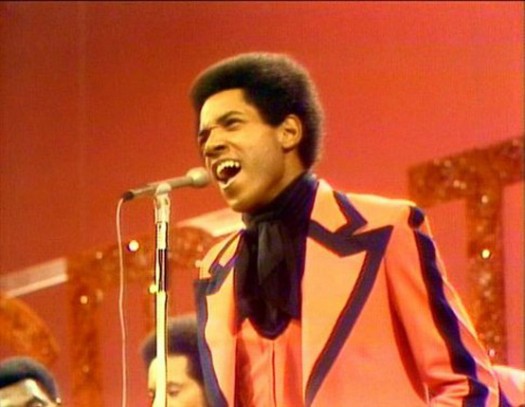
Temptations member Damon “Otis” Harries dies. (Google Images)
The Urban Daily is reporting that the legendary R&B group the Temptations has lost another member. You may recall last week, Damon “Otis” Harris, who sang with the Temptations on many of their hits of the 1970s, died of prostate cancer on Feb. 18. He was 62. The New York Timesreports:
Harris was a decade younger than anyone else in the Temptations when he joined in 1971, replacing Eddie Kendricks. He was the lead singer on “Papa Was a Rollin’ Stone,” the group’s last No. 1 single, and was also heard on “Superstar (Remember How You Got Where You Are),” “Masterpiece” and other hits. He left in 1975.
Former member Richard Street died yesterday, after being admitted to a Las Vegas hospital for difficulty breathing last Friday. It was discovered that he had a clot in his lung. His wife of seven years Cindy Street stated that Street was proud of being a part of black history. The Urban Daily reports that Mrs. Street stated:
“He was part of black history. He was always proud of that. He sang on a lot of those classic songs: ‘Papa Was a Rollin’ Stone,’ ‘Hey Girl,’ ‘Heavenly,’ ‘Superstar,’ ‘Masterpiece.’”
Temptations member Damon “Otis” Harries dies. (Google Images)
The Urban Daily is reporting that the legendary R&B group the Temptations has lost another member. You may recall last week, Damon “Otis” Harris, who sang with the Temptations on many of their hits of the 1970s, died of prostate cancer on Feb. 18. He was 62. The New York Timesreports:
Harris was a decade younger than anyone else in the Temptations when he joined in 1971, replacing Eddie Kendricks. He was the lead singer on “Papa Was a Rollin’ Stone,” the group’s last No. 1 single, and was also heard on “Superstar (Remember How You Got Where You Are),” “Masterpiece” and other hits. He left in 1975.
Former member Richard Street died yesterday, after being admitted to a Las Vegas hospital for difficulty breathing last Friday. It was discovered that he had a clot in his lung. His wife of seven years Cindy Street stated that Street was proud of being a part of black history. The Urban Daily reports that Mrs. Street stated:
“He was part of black history. He was always proud of that. He sang on a lot of those classic songs: ‘Papa Was a Rollin’ Stone,’ ‘Hey Girl,’ ‘Heavenly,’ ‘Superstar,’ ‘Masterpiece.’”
In Khartoum, Sudan, a court ordered the amputation of a man’s hand and foot. (Google Images)
written by Kaitlin Higgins
Ulf Laessing of Reuters is reporting that a court in Khartoum, Sudan ordered the amputation of a convicted robber’s hand and foot on Feb. 14. Human rights organizations have denounced the act, saying it violates basic human rights under the prohibition of torture. While other punishments under Sharia (Islamic law), such as flogging, are still carried out today, amputation has, until now, not been used since the 1980s.
Laessing writes:
The al-Sudani daily said a state court had convicted [Adam al-] Muthna of firing on a car with an assault rifle in the Sharaf area in March 2006 to force it to stop and then stole 1,000 Sudanese pounds ($228) from its passengers. It said Sudan’s constitutional court upheld the conviction.
Officials at the justice ministry, the judiciary headquarters in Khartoum and the constitutional court all declined to comment on the amputation.
Kamal al-Jazouli, a Sudanese lawyer and human rights activist, said the government apparently wanted to intimidate people with the amputation at a time of dissent over galloping inflation and corruption.
In the case of Doebbler v Sudan, concerning the use of flogging as a punishment in Sudan, the African Commission on Human and Peoples’ Rights ruled that: “there is no right for the government of a country to apply physical violence to individuals for offences. Such a right would be tantamount to sanctioning State sponsored torture,” contrary to article 5 of the African Charter.
In 1870, Hiram R. Revels (R-Miss.), became the first black member of the United States Senate as he was sworn in to serve out the unexpired term of Jefferson Davis.
Born on September 27, 1827, Hiram R. Revels became the first African-American U.S. senator—as well as the first African-American congressman—in 1870, representing Mississippi. Before taking office, Revels attended seminary and became a Christian minister, preaching throughout the Midwest and South. In his later years, he was appointed first president of the Alcorn Agricultural and Mechanical College.
The Akosua Report: Facts on The African Diaspora, is written by Akosua Lowery. Follow her on Twitter @AkosuaLowery.
A documentary about Johannesburg’s Ponte City–Africa’s tallest residential building–Africa Shafted explores the deeply-rooted xenophobia of some of the building’s residents. Martens filmed mostly from within the building’s eight elevator shafts, initiating candid interviews with the passengers who represent many African countries, including Nigeria, the Democratic Republic of the Congo, Uganda, and Burundi, among others. In the elevator, Martens meets some residents only once or twice, while others develop a relationship with the camera.
“It’s some sort of a refugee camp for us,” says one interviewee of the diversity amongst the nearly 4000 residents at Ponte. Most have come to South Africa for safety and livelihood, which their homes could not provide, and to Ponte in particular because it is known for housing “all of Africa” throughout its 44 floors. However, there can be much animosity and tension between those seeking their refuge from different countries. Many interviewed in the elevator accuse Nigerians of criminal acts, while South Africans blame foreigners in general for stealing their jobs and their wives.
Martens’ portrayal of South Africa through the residents of Ponte City is often painful, harsh, and sometimes awkward, but thoroughly honest and eye-opening. She shows, in the tiny and usually crowded elevator shafts, what it means to be a foreigner, perhaps even in one’s own country.







.png/220px-Hiram_Rhodes_Revels_-_Brady-Handy-(restored).png) written by Akosua Lowery
written by Akosua Lowery