Ivory Coast President Alassane Ouattara dissolves government over rebuff of new marriage law allowing women to be joint heads of household. (Google Images)
The BBC is reporting that President Alassane Ouattara has dissolved the government due to a fight over a change in the marriage law. The new law, which Ouattara supports, would make wives joint heads of households, whereas the current law only recognizes men as heads of households who make all major decisions for the household. Ouattara’s move has critics questioning the political stability of the world’s largest cocoa producer.
The BBC reports:
“It [Ivory Coast] is slowly recovering from months of unrest following the poll, in which former President Laurent Gbagbo refused to accept Mr Ouattara’s victory. PDCI candidate Henri Konan Bedie came third in the election and in exchange for his support in the run-off, Mr Ouattara appointed a prime minister from the PDCI. But sources say Mr. Ouattara feels he no longer has the full support of the PDCI, which governed Ivory Coast for 39 years from independence until a 1999 coup.”
Outtara has been attempting to bring economic stability to the country, while fending off armed attacks allegedly by by allies of Mr Gbagbo from neighboring Ghana. The border between the two countries was closed for two weeks after an attack on an army checkpoint in September.
Violence between the Sao Paolo police and members of a crime organization First Capital Command is escalating in Brazil’s capital city. (Google Images)
Reuters is reporting that an escalating battle between police and a notorious organized crime group known as the First Capital Command is leaving the streets of Sao Paolo, Brazil bloody. The violence is occurring after a major drug bust last month in which the police were accused of brutality. Brian Winter writes:
“More than half of the 90 police murders this year in greater Sao Paulo have occurred in similar execution-style fashion.”
The article highlights the recent execution of police woman Marta Umbelina da Silva, 44, who was gunned down in front of her 10-year-old daughter when opening the garage door to her home. The violence has been concentrated in poor areas and has not made it to the capital’s business center.
Winter adds:
“The overall murder rate in Sao Paulo has increased about 8 percent in recent months, to about 10 per 100,000 population, according to local media, meaning it is still less than half the Brazilian national average and comparable to U.S. cities like Dallas and Boston.
Nevertheless, the violence has been an embarrassment for local and state officials as well as President Rousseff, who has struggled to contain a nationwide explosion in crack use – and related crime – in recent years.”
The recent span of violence continues to raise fears about Brazil’s ability to offer sufficient protection for visitors during the 2014 FIFA World Cup and 2016 Olympic Games.
CNBC is reporting that Brazil is struggling to fill stadiums for the 2014 World Cup. Escalating violence between the police and crime organizations certainly won’t help.
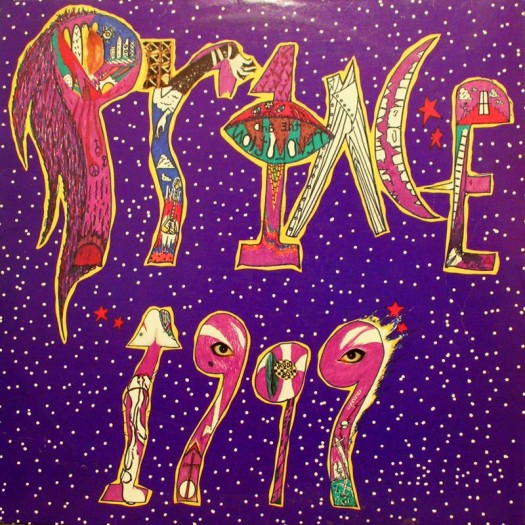
Prince released 1999 thirty years ago, securing his role as one of the most prolific and experimental musicians in music history. (Google Images)
by Christopher A. Daniel
Remember a time in pop culture when a black presence in music videos was a big deal? What about when minimalist musical production and incredible songwriting were both innovative and progressive?
Well, Prince’s 1982 electro-funk opus, 1999, comes to mind. Released October 27, 1999 is not only the most experimental and successful album of Prince’s then five album catalogue. It introduces the prolific artist as a force to be reckoned with on a then racially segregated music video rotation cycle, radio formats post-disco in which black acts could barely leave an imprint. His Royal Badness’ LP 1999 entered the Billboardcharts and solidified Prince’s role in music history as one of the most influential musicians across all genres. 1999 is the first album in which The Revolution is credited — in reverse — on the album’s cover art.
The polyrhythmic Linn LM-1 drum programming and cascading Oberheim OB-X synthesizer coos, whistles and crashes epitomized the “Minneapolis Sound,” but the one man band brought the substance to explore it. At that moment in Prince’s career, 1999’s 11 tracks were bold statements. The sequencing consists of extended cosmic funk and hypnotizing dance floor jams that easily give then electronic musical heavyweights Arthur Baker, Afrika Bambaataa, Jellybean Benitez, Juan Atkins, Giorgio Moroder, Brian Eno and Kraftwerk (i.e. “Automatic,” “All The Critics Love U in New York” and “Lady Cab Driver”) stiff competition.
From the suggestive title track alone, the distorted, tortoise-like disclaimer in the opening sequence indicates a nuclear apocalypse destined for the future of popular music. The song’s three-part harmony, inspired by Sly & the Family Stone, sets the tone for the 70-minute album – released on double vinyl — to work wonders for Prince. His first Top-Ten crossover single, “Little Red Corvette,” with its creeping synth melody, is clever lyricism and wordplay paying homage to the genitalia. Strip down “Delirious” from its programmed acoustics, and it could stand as one of Elvis Presley’s rockabilly numbers. The ticking, Devo-like “Something In the Water (Does Not Compute)” allows the scorned poet to lament over his heartbreak and hopeless romanticism.
1999’s sexual antithesis emerges. Never one to mince words, Prince’s erotic excess and self-indulgence comes off as a strength without being ubiquitous or blatantly vulgar. Remember, this is the same artist who under the alter ego, The Starr Company, was instrumental in assembling the sexy female trio Vanity 6, whose sizzling single, “Nasty Girl,” was a R&B and club smash. The Time, the ensemble under the same production pseudonym, released their impressive sophomore effort, What Time Is It?featuring the singles “777-9311,” “The Walk” and “Gigolos Get Lonely Too” in August. “Let’s Pretend We’re Married” finds the artist lusting for a tryst. “International Lover” is a siren-like ballad featuring Prince’s trademark falsetto and an aircraft metaphor for an orgasm. The echoing “D.M.S.R.” and the somber “Free” (another falsetto highlight) both stress the importance of liberation and self-definition.
The fifth best-selling release of 1983, Prince’s first Top Ten album and making several critics’ picks since its release, 1999 is a gem that epitomizes the flow of music and how embracing technology can be of value. Considering that Thriller would follow two months after 1999’s release and Michael Jacksonbreaking the color barrier on MTV shortly thereafter, 1999 marks yet another moment in pop music that prepares listeners for the Digital Age.
Christopher A. Daniel is a pop cultural critic and music editor for The Burton Wire. He is also a contributing writer for Urban Lux Magazine and Blues & Soul Magazine. Follow Christopher @Journalistorian on Twitter.
Like The Burton Wire on Facebook. Follow us on Twitter @TheBurtonWire.com.
Prince released 1999 thirty years ago, securing his role as one of the most prolific and experimental musicians in music history. (Google Images)
by Christopher A. Daniel
Remember a time in pop culture when a black presence in music videos was a big deal? What about when minimalist musical production and incredible songwriting were both innovative and progressive?
Well, Prince’s 1982 electro-funk opus, 1999, comes to mind. Released October 27, 1999 is not only the most experimental and successful album of Prince’s then five album catalogue. It introduces the prolific artist as a force to be reckoned with on a then racially segregated music video rotation cycle, radio formats post-disco in which black acts could barely leave an imprint. His Royal Badness’ LP 1999 entered the Billboardcharts and solidified Prince’s role in music history as one of the most influential musicians across all genres. 1999 is the first album in which The Revolution is credited — in reverse — on the album’s cover art.
The polyrhythmic Linn LM-1 drum programming and cascading Oberheim OB-X synthesizer coos, whistles and crashes epitomized the “Minneapolis Sound,” but the one man band brought the substance to explore it. At that moment in Prince’s career, 1999’s 11 tracks were bold statements. The sequencing consists of extended cosmic funk and hypnotizing dance floor jams that easily give then electronic musical heavyweights Arthur Baker, Afrika Bambaataa, Jellybean Benitez, Juan Atkins, Giorgio Moroder, Brian Eno and Kraftwerk (i.e. “Automatic,” “All The Critics Love U in New York” and “Lady Cab Driver”) stiff competition.
From the suggestive title track alone, the distorted, tortoise-like disclaimer in the opening sequence indicates a nuclear apocalypse destined for the future of popular music. The song’s three-part harmony, inspired by Sly & the Family Stone, sets the tone for the 70-minute album – released on double vinyl — to work wonders for Prince. His first Top-Ten crossover single, “Little Red Corvette,” with its creeping synth melody, is clever lyricism and wordplay paying homage to the genitalia. Strip down “Delirious” from its programmed acoustics, and it could stand as one of Elvis Presley’s rockabilly numbers. The ticking, Devo-like “Something In the Water (Does Not Compute)” allows the scorned poet to lament over his heartbreak and hopeless romanticism.
1999’s sexual antithesis emerges. Never one to mince words, Prince’s erotic excess and self-indulgence comes off as a strength without being ubiquitous or blatantly vulgar. Remember, this is the same artist who under the alter ego, The Starr Company, was instrumental in assembling the sexy female trio Vanity 6, whose sizzling single, “Nasty Girl,” was a R&B and club smash. The Time, the ensemble under the same production pseudonym, released their impressive sophomore effort, What Time Is It?featuring the singles “777-9311,” “The Walk” and “Gigolos Get Lonely Too” in August. “Let’s Pretend We’re Married” finds the artist lusting for a tryst. “International Lover” is a siren-like ballad featuring Prince’s trademark falsetto and an aircraft metaphor for an orgasm. The echoing “D.M.S.R.” and the somber “Free” (another falsetto highlight) both stress the importance of liberation and self-definition.
The fifth best-selling release of 1983, Prince’s first Top Ten album and making several critics’ picks since its release, 1999 is a gem that epitomizes the flow of music and how embracing technology can be of value. Considering that Thriller would follow two months after 1999’s release and Michael Jacksonbreaking the color barrier on MTV shortly thereafter, 1999 marks yet another moment in pop music that prepares listeners for the Digital Age.
Christopher A. Daniel is a pop cultural critic and music editor for The Burton Wire. He is also a contributing writer for Urban Lux Magazine and Blues & Soul Magazine. Follow Christopher @Journalistorian on Twitter.
Like The Burton Wire on Facebook. Follow us on Twitter @TheBurtonWire.com.
Has the GOP leadership helped turn the Republican Party into a political party of dissidents? (Google Images)
OPINION by Devona Walker
It use to be said that trying to bring together the diverse caucuses and constituencies of the Democratic party was similar to herding cats. Now, the same is being said about Republicans.
With the rise of the Teaparty and emergence of Libertarian-leaning fiscal conservatives, the sacred pact between establishment Republicans, NeoCons and Evangelicals seems hopelessly splintered. It may have been overlooked in this last election, as they were so unified in their opposition to President Obama. But the fact is the fire-breathing talking heads of conservative media (from Sean Hannity to Ann Coulter to Laura Ingraham to Rush Limbaugh) have alienated and silenced the rational voices in the party. In this last election, Republicans could not agree on a candidate. Then as soon as it was over, they started publicly pointing fingers regarding the direction of the party. The party platform, which seemed like a throwback to the 1950s to many of us, was a huge source of dissension. So the question is, what now? If the only thing holding the party together is the fact they don’t like the President then what is the GOP going to do now? President Obama has another four years, and it appears that the Republican Party is heading towards utter irrelevancy. What’s next?
Some speculate they just need more viable Latino candidates, without realizing it’s their tone and policies regarding immigration and domestic social policies that are the real issue. Marco Rubio might represent a new complexion but as long as Republicans continue to use the word “illegal” as a noun to describe immigrants, I don’t imagine them persuading too many Hispanics to vote with the party.
Some have even doubled down on anger, saying the American electorate, the majority of whom voted for Obama because they want more entitlements, is the problem. Guess the whole “47percent fiasco” was entirely lost on this group.
No one is questioning policy decisions. No one seems to realize the tactic of demonizing large chunks of the electorate to motivate another only works when the folks who are being alienated are in the minority. In short, they don’t realize minorities now represent a majority in the U.S. What’s more important, they seem deaf to the fact that this trend will continue in the immediate future.
There are several things threatening the Republican Party, and here’s a hint: It’s got very little to do with Obama or the Democrats.
The Grover Norquist pledge: The notion of asking the extremely wealthy to contribute more in this country worked well with voters, and it worked for Democrats during this political cycle. Norquist, President of American for Tax Reform, is still considered one of the most powerful men in U.S. politics. Just before the election, he told the Washington Post that regardless of whether Obama was reelected, that taxes would not go up. The vast majority of Congressional Republicans have in fact accepted his “no tax” pledge. The bold-face threat that he, backed by massive corporate dollars, would replace any Republican who defies that pledge still remains.
The anti-immigrant voter. There continues to be a very anti-immigrant and tribal chunk of the voting electorate who are threatened by the growing number of non-white immigrants. Their chosen target is Hispanics. But what they are really reacting to, in my opinion, is diversity. The fact that white folks are no longer a clear majority, the fact that street signs are often written in more than English and the fact that what they perceived as their country’s “black problem” just isn’t that simple anymore. These are the voters who are behind anti-immigrant statutes in places like Arizona, Arkansas, Oklahoma, etc. They are the reason right-wing political candidates have passed “Sharia Law” statutes despite how unnecessary and ridiculous they are. It’s not likely their elected representatives will suddenly start ignoring them.
Jesus Freaks. Religious zealots in this country are notorious for complicating things. They use religion as a basis for bigotry, in passing constitutional amendments banning gay marriage. They use religion as a basis for ignoring science as it relates to climate change. They use religion as a basis for controlling women in the case of anti-abortion activists. The real Republican threat when it comes to these voters is that they will not compromise. Their beliefs are sincere, even though they are absolutely wrong. And to compromise, in their opinion, contradicts the will of God.
The conservative media. On both sides of the political divide, the media has devolved into peddling influence as opposed to informing the electorate. This has been the mantra for Fox News from the beginning. As long as Fox News controls the messaging for the Republican Party, they will not compromise, they will not moderate. They devolve from being a political party of national relevance into being a collective of dissidents.
Devona A. Walker is the politics editor for The Burton Wire.
Like The Burton Wire on Facebook. Follow us on Twitter @TheBurtonWire.
Tuskegee Airman Retired Lt. Col. Herbert Carter has died at age 95. He was one of the original Tuskegee Airmen. (Google Images)
The Grio is reporting that Tuskegee Airman Retired Lt. Col. Herbert Carter has died at 95. Mr. Carter, one of the original Tuskegee Airmen passed away on Thursday. The Grio‘s Ugonna Okpalaoka writes:
“‘Montgomery Advertiser’ reports that Carter was one of only four from the original group of 33 fighter pilots still alive. He was also one of the most vocal about the legacy of the African-American World War II pilots. They’ve been credited for their instrumental part in not only breaking down racial walls in the military, but helping to win the war. Their mission was to protect bombers as they tried to attack enemy troops.
Carter continued to serve in the Air Force after the war before retiring as a lieutenant colonel in 1969. He then became the associate dean for student services at Tuskegeee University and served in several other positions during his time there.”
Tuskegee mayor Johnny Ford ordered flags flown at half-staff shortly after Carter’s death. Mr. Carter was 95.
Somalia’s Prime Minister appoints Fauzia Yusuf Haji Adan as Foreign Minister, a first for a woman. (Google Images)
African Globe is reporting that Somalia’s Prime Minister Abdi Farah Shirdon officially nominated his first cabinet ministers, after weeks of wide-extensive consultations with the president and parliament speaker in Mogadishu. The BBC is reporting Fauzia Yusuf Haji Adan is among 10 politicians joining Shirdon’s cabinet as Foreign Minister, the first for a woman. The BBC reports that Haji Adan described her inclusion as “historic” for both the country and Somali women in particular.
The Guardian reports Fauzia Yusuf Haji Adan is one of two women chosen to join a cabinet charged with leading the east African country out of decades of conflict and building on military gains made against the Islamist militants of al-Shabaab. It is the first time a woman has held such a senior position in the conservative Muslim state.
Mr. Shirdon took office last month after his nomination by President Hassan Sheikh Mohamud was approved by MPs (Members of Parliament).
The 30 MPs wrote a statement to Speaker of Parliament Mohamed Osman Jawari to reject the incomplete list of Cabinet that was appointed on Monday.
The letter stated that it was a violation of the Somali Federal Constitution for Parliament to take a vote of confidence on the incomplete list of Cabinet.
Jamaican Prime Minister Portia Simpson Miller congratulates U.S. President Barack Obama on his hard-fought re-election. (Google Images)
Caribbean 360is reporting that Caribbean leaders are offering congratulations to U.S. President Barack Obama on his re-election. The leaders of Antigua and Barbuda and Jamaica have joined regional colleagues in congratulating the President on his definitive win over former Massachusetts Gov. Mitt Romney in the 2012 U.S. Presidential election. Caribbean 360 reports:
Prime Minister Baldwin Spencer (Antigua) in his message on Obama’s victory said as the first man of colour to win the US Presidency that was “most historic, but to repeat the achievement in the 2012 election is monumental.” The Antiguan leader also highlighted the “excellent lo gstanding relationship” between Antigua and Barbuda and the United States, pointing out that it is based on the “shared principles of good governance, strong social policies, and respect for the rule of law.
In her message, Jamaica’s Prime Minister Portia Simpson Miller said President Obama’s re-election was a victory for democracy and a testimony to the hard work and dedication which he and his team put into a most grueling and hard fought election campaign.
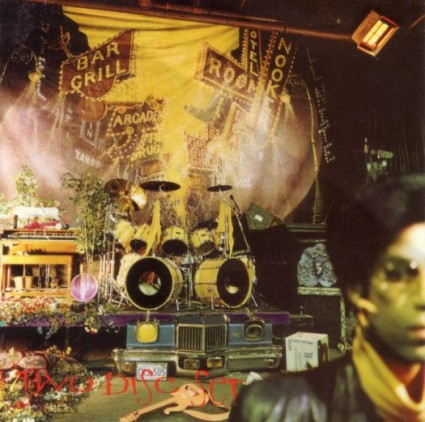
Prince’s seminal album Sign “O” the Times celebrates its 25th anniversary. (Jeff Katz)
The year 1987 was somewhat an evolution for two of pop music’s most influential acts. In August, Michael Jackson released Bad, his third collaborative effort with Quincy Jones that was intended to surpass everything Thrillerhad become. Five months prior, the King of Pop’s musical contemporary, Prince, had some tricks up his sleeve that would challenge the King of Pop’s claim as one of the generation’s leading singers/songwriters.
His ninth album, Sign ‘O’ the Times, wasn’t just Prince’s back to basics regenesis. He disbanded his band, The Revolution, and assumed the responsibility of keeping his musical integrity front and center. The Minneapolis genius made it crystal clear in an approximately 80-minute double LP that he could master wowing his audience on stage, perform (as well as produce) as a one man jam session, give imagination with his powerful lyricism, connect spiritually and ooze the erotic simultaneously.
Why else would the Jeff Katz-photographed cover art feature a blurred silhouette of the multi-talented artist resembling John Lennon in the bottom right corner with his live instruments (especially his peach-colored trademark “Cloud” guitar ) all clearly positioned in the center? Even with the technical glitches and censorship attempts from his record label, Warner Bros., which would arise during the recording process, Prince still made it a priority to embrace imperfection (listen closely for the distortions and subtle whirring from tape stretching during playback on “The Ballad of Dorothy Parker”) and use it to his advantage. This is a sign of incredible balance of pure artistry and honest songwriting.
Sign ‘O’ the Times was Prince’s definitive musical potpourri up to that point. With the minimalism of the Fairlight CMI and rock guitar-based title track, His Royal Badness interrogates and builds a story around headlining topics of the time – AIDS, gang violence, crack, poverty, famine, “Star Wars” and the Challenger explosion— without sounding preachy. The double album only peaks from there. The listener gets to zone out in a hybrid of funk, pop, soul, R&B, psychedelica, rock and jazz. Prince channels James Brown (“Housequake”), faith (“The Cross”), lust (“It” and “Hot Thing”), intimacy (“Slow Love”), mixed signals (“Strange Relationship”), embracing diversity (“Starfish & Coffee”), escapism (“Play In The Sunshine”) and monogamy (“Forever In My Life”).
“U Got the Look,” his duet with Sheena Easton, and “I Could Never Take the Place of Your Man” were both Top Ten pop singles. The androgynous “If I Was Your Girlfriend” introduces Camille, a distorted, falsetto alter ego that could be a byproduct of Parliament’s Mothership Connection (1975). The operatic yet soulful “Adore,” the closing track and ode to true love, is argubly one of the greatest ballads of our time.
Though Sign ‘O’ the Times peaked at number six on Billboard’s Top 200 and sold modestly, the radical experimentation and musical texture of the album is paramount for 1980s black pop going forward. It was obviously a far cry from the Purple Rainphenomenon that preceded it three years earlier, which is a good thing. Considering hip hop’s matriculation into mainstream culture was right around the corner, Sign ‘O’ the Times was a fine example of the direction so-called “black music” could venture into without sounding so contrived. Here it is 25 years later, and it’s still one of Prince’s finest musical moments.
Christopher A. Daniel is a pop cultural critic and music editor for The Burton Wire. He is also a contributing writer for Urban Lux Magazine and Blues & Soul Magazine. Follow Christopher @Journalistorian on Twitter.
Like The Burton Wire on Facebook. Follow us on Twitter @TheBurtonWire.
Prince’s seminal album Sign “O” the Times celebrates its 25th anniversary. (Jeff Katz)
The year 1987 was somewhat an evolution for two of pop music’s most influential acts. In August, Michael Jackson released Bad, his third collaborative effort with Quincy Jones that was intended to surpass everything Thrillerhad become. Five months prior, the King of Pop’s musical contemporary, Prince, had some tricks up his sleeve that would challenge the King of Pop’s claim as one of the generation’s leading singers/songwriters.
His ninth album, Sign ‘O’ the Times, wasn’t just Prince’s back to basics regenesis. He disbanded his band, The Revolution, and assumed the responsibility of keeping his musical integrity front and center. The Minneapolis genius made it crystal clear in an approximately 80-minute double LP that he could master wowing his audience on stage, perform (as well as produce) as a one man jam session, give imagination with his powerful lyricism, connect spiritually and ooze the erotic simultaneously.
Why else would the Jeff Katz-photographed cover art feature a blurred silhouette of the multi-talented artist resembling John Lennon in the bottom right corner with his live instruments (especially his peach-colored trademark “Cloud” guitar ) all clearly positioned in the center? Even with the technical glitches and censorship attempts from his record label, Warner Bros., which would arise during the recording process, Prince still made it a priority to embrace imperfection (listen closely for the distortions and subtle whirring from tape stretching during playback on “The Ballad of Dorothy Parker”) and use it to his advantage. This is a sign of incredible balance of pure artistry and honest songwriting.
Sign ‘O’ the Times was Prince’s definitive musical potpourri up to that point. With the minimalism of the Fairlight CMI and rock guitar-based title track, His Royal Badness interrogates and builds a story around headlining topics of the time – AIDS, gang violence, crack, poverty, famine, “Star Wars” and the Challenger explosion— without sounding preachy. The double album only peaks from there. The listener gets to zone out in a hybrid of funk, pop, soul, R&B, psychedelica, rock and jazz. Prince channels James Brown (“Housequake”), faith (“The Cross”), lust (“It” and “Hot Thing”), intimacy (“Slow Love”), mixed signals (“Strange Relationship”), embracing diversity (“Starfish & Coffee”), escapism (“Play In The Sunshine”) and monogamy (“Forever In My Life”).
“U Got the Look,” his duet with Sheena Easton, and “I Could Never Take the Place of Your Man” were both Top Ten pop singles. The androgynous “If I Was Your Girlfriend” introduces Camille, a distorted, falsetto alter ego that could be a byproduct of Parliament’s Mothership Connection (1975). The operatic yet soulful “Adore,” the closing track and ode to true love, is argubly one of the greatest ballads of our time.
Though Sign ‘O’ the Times peaked at number six on Billboard’s Top 200 and sold modestly, the radical experimentation and musical texture of the album is paramount for 1980s black pop going forward. It was obviously a far cry from the Purple Rainphenomenon that preceded it three years earlier, which is a good thing. Considering hip hop’s matriculation into mainstream culture was right around the corner, Sign ‘O’ the Times was a fine example of the direction so-called “black music” could venture into without sounding so contrived. Here it is 25 years later, and it’s still one of Prince’s finest musical moments.
Christopher A. Daniel is a pop cultural critic and music editor for The Burton Wire. He is also a contributing writer for Urban Lux Magazine and Blues & Soul Magazine. Follow Christopher @Journalistorian on Twitter.
Like The Burton Wire on Facebook. Follow us on Twitter @TheBurtonWire.