Police officers detain student protesters in Port-au-Prince. (Google Images)
Evans Sanon of ABC News is reporting an unidentified man was shot dead Friday during a student protest in downtown Port-au-Prince. The killing occurred near a university campus where students have been protesting over a prison guard’s alleged fatal shooting of a 24-year-old graduate student last Saturday.
Sanon writes:
Frantz Lerebours, spokesman for Haiti’s police force, said the young man was killed when a “civilian” hopped off the back of a passing motorcycle in the heart of Port-au-Prince and shot the victim. He said police were searching for the killer.
Police made one arrest on charges of public disturbance during the protest, Lerebours said. The arrest brought the week’s total of arrests to three, for the same charges.
The victim appeared to be in his twenties. He was shot three times. The investigation into his death is ongoing.
Swedish furniture giant IKEA denies allegations of using Cuban political prisoners for labor. (Google Images)
Caribbean 360 is reporting that Swedish furniture giant IKEA has denied reports about the use of Cuban prison labor to manufacture goods for its stores. The company also said that it did not have a “long-term business relation with suppliers on the Spanish-speaking Caribbean island.
The writer of the article reports:
“IKEA issued an apology after an audit by the accounting firm Ernst & Young confirmed reports that some suppliers used forced prison labor, including many political dissidents, in communist-ruled East Germany in the 1980s.”‘We deeply regret that this could happen,’ in East Germany, manager Jeanette Skjelmose said in a statement issued here. “The use of political prisoners for manufacturing was at no point accepted.”
The report also stated that there was never any long-term relationships with suppliers and the company was likely unaware of the use of political prisoners in the manufacturing of the furniture.
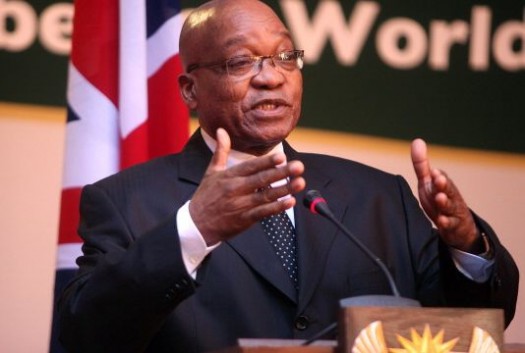
South African President Jacob Zuma received a vote of no confidence from several opposition parties. (Google Images)
Nickolaus Bauer of Mail & Guardian is reporting that the African National Congress (ANC) has reversed its original decision to block the no confidence vote against President Jacob Zuma in Parliament. Secretary-general Gwede Mantashe said the matter would be debated, but not immediately.
Bauer writes:
‘”The ANC cannot refuse to discuss a motion of no confidence, but we will not be frogmarched into doing so. It is not an urgent matter,” he told journalists in Johannesburg. The decision comes a day before an urgent interdict to debate the matter was to be heard in the Western Cape High Court. The ruling party has labeled the motion of no confidence tabled against the president on Thursday as a ‘playful, silly publicity stunt’ that “belongs to the rubbish bin.'”
Bauer adds:
Several opposition parties said the motion was “motivated by the Marikana killings; the Nkandlagate scandal; the failure by the government to deliver textbooks and workbooks to school children in Limpopo and the Eastern Cape; the downgrading of South Africa’s credit rating by two major ratings agencies; the mounting disrespect for our Constitution and judiciary; unemployment; and the ‘uncontrollable and rising tide’ of corruption in the public service.”
Originally the ANC opposed the debate, but soon backpedaled after complaints arose that the move was unconstitutional.
David Frankham’s four-part HBO Documentary series, “Witness” has a segment on South Sudan’s Arrow Boys, a voluntary militia. (Veronique de Viguere/HBO)
His HBO Documentary Series, Witness, takes a candid look at the conflict photojournalists’ quest to provide first person accounts of various parts of the world plagued by social ills. The four-part series, co-executive produced by director Michael Mann, is the offspring of Frankham’s discontent with news sources and their disconnect from the stories they report. “I’ve been kinda tough on the news lately, but it’s obviously a different format,” he says. “I was feeling very numb about the news summing up very complicated situations into very simplistic black and white, good vs. evil scenarios. You’re watching these newscasters, and most of them have never been to Somalia.”
The Los Angeles native and 12-year veteran of directing commercials made his way to Atlanta for the BronzeLens Film Festival’s “Cinema and Social Justice” screenings. The self-proclaimed news junkie recalls seeing reports on Somali pirates following the birth of his now three-year-old daughter. He questioned the editorial decisions of the investigative reporters. “Why are we not getting the story from these photographers on the ground?” he asks.
The documentarian took matters into his own hands. He self-funded a 15-day trek to Juarez, Mexico with a five-person crew and produced a 30-minute short on the nation’s high-profile drug wars, which was shortlisted by the Academy Awards in 2011. Michael Mann immediately became a champion of Frankham’s vision after seeing the film short. The series (hour-long segments) developed into excursions into Libya and Rio de Janeiro. “[Michael’s] a master and one of my heroes in filmmaking,” Frankham says. “[Michael] challenged us when discussing the photographers, specific conflicts and events. He was constantly reminding us to keep it a character-driven, experiential film and to not try to do too much.”
The South Sudan installment, airing November 19, follows pregnant French photojournalist Veronique de Viguerie. She accompanies the Arrow Boys, a voluntary militia, in the villages post-Joseph Kony’s Lord’s Resistance Army (LRA) imperialism. She gets to know the natives personally, experience death on-site and hears of their hardships. “It’s very important to understand both sides, to understand what’s going on and to create an immersive experience where all of these films leave you with more questions than answers,” Frankham says. “I can’t give it to you all in 100 hours, but I want to engage on a human level.”
With the internet and downsizing of various news organizations, opportunities for the media to embark on global reports are steadily dwindling. Frankham reflects on the deaths of Tim Hetherington, Oscar-nominated photojournalist and director behind Restrepo, and Chris Hondros, another Pulitzer Prize-nominated photojournalist, during production in Libya. He says their passion and dedication to deliver the stories make Witness a landmark program. “There are a lot of conflicts that need this kind of attention along with people putting themselves in harm’s way,” Frankham says. “There are less and less photographers getting these assignments, and it’s harder to be a conflict photographer. ‘Witness‘ expands the medium.”
Witness is a watershed moment for Frankham’s career, investigative journalism and documentaries. HBO fully endorses his creative and political liberties. He aspires to create a movement. “I hope that we continue to do more of them,” he says. “There are a lot of people interested in conflicts all over the world, and they want a more in-depth conversation.”
Christopher A. Daniel is a pop cultural critic and music editor for The Burton Wire. He is also a contributing writer for Urban Lux Magazine and Blues & Soul Magazine. Follow Christopher @Journalistorian on Twitter.
Like The Burton Wire on Facebook. Follow us on Twitter @TheBurtonWire.com.
David Frankham’s four-part HBO Documentary series, “Witness” has a segment on South Sudan’s Arrow Boys, a voluntary militia. (Veronique de Viguere/HBO)
His HBO Documentary Series, Witness, takes a candid look at the conflict photojournalists’ quest to provide first person accounts of various parts of the world plagued by social ills. The four-part series, co-executive produced by director Michael Mann, is the offspring of Frankham’s discontent with news sources and their disconnect from the stories they report. “I’ve been kinda tough on the news lately, but it’s obviously a different format,” he says. “I was feeling very numb about the news summing up very complicated situations into very simplistic black and white, good vs. evil scenarios. You’re watching these newscasters, and most of them have never been to Somalia.”
The Los Angeles native and 12-year veteran of directing commercials made his way to Atlanta for the BronzeLens Film Festival’s “Cinema and Social Justice” screenings. The self-proclaimed news junkie recalls seeing reports on Somali pirates following the birth of his now three-year-old daughter. He questioned the editorial decisions of the investigative reporters. “Why are we not getting the story from these photographers on the ground?” he asks.
The documentarian took matters into his own hands. He self-funded a 15-day trek to Juarez, Mexico with a five-person crew and produced a 30-minute short on the nation’s high-profile drug wars, which was shortlisted by the Academy Awards in 2011. Michael Mann immediately became a champion of Frankham’s vision after seeing the film short. The series (hour-long segments) developed into excursions into Libya and Rio de Janeiro. “[Michael’s] a master and one of my heroes in filmmaking,” Frankham says. “[Michael] challenged us when discussing the photographers, specific conflicts and events. He was constantly reminding us to keep it a character-driven, experiential film and to not try to do too much.”
The South Sudan installment, airing November 19, follows pregnant French photojournalist Veronique de Viguerie. She accompanies the Arrow Boys, a voluntary militia, in the villages post-Joseph Kony’s Lord’s Resistance Army (LRA) imperialism. She gets to know the natives personally, experience death on-site and hears of their hardships. “It’s very important to understand both sides, to understand what’s going on and to create an immersive experience where all of these films leave you with more questions than answers,” Frankham says. “I can’t give it to you all in 100 hours, but I want to engage on a human level.”
With the internet and downsizing of various news organizations, opportunities for the media to embark on global reports are steadily dwindling. Frankham reflects on the deaths of Tim Hetherington, Oscar-nominated photojournalist and director behind Restrepo, and Chris Hondros, another Pulitzer Prize-nominated photojournalist, during production in Libya. He says their passion and dedication to deliver the stories make Witness a landmark program. “There are a lot of conflicts that need this kind of attention along with people putting themselves in harm’s way,” Frankham says. “There are less and less photographers getting these assignments, and it’s harder to be a conflict photographer. ‘Witness‘ expands the medium.”
Witness is a watershed moment for Frankham’s career, investigative journalism and documentaries. HBO fully endorses his creative and political liberties. He aspires to create a movement. “I hope that we continue to do more of them,” he says. “There are a lot of people interested in conflicts all over the world, and they want a more in-depth conversation.”
Christopher A. Daniel is a pop cultural critic and music editor for The Burton Wire. He is also a contributing writer for Urban Lux Magazine and Blues & Soul Magazine. Follow Christopher @Journalistorian on Twitter.
Like The Burton Wire on Facebook. Follow us on Twitter @TheBurtonWire.com.
Ivory Coast President Alassane Ouattara dissolves government over rebuff of new marriage law allowing women to be joint heads of household. (Google Images)
The BBC is reporting that President Alassane Ouattara has dissolved the government due to a fight over a change in the marriage law. The new law, which Ouattara supports, would make wives joint heads of households, whereas the current law only recognizes men as heads of households who make all major decisions for the household. Ouattara’s move has critics questioning the political stability of the world’s largest cocoa producer.
The BBC reports:
“It [Ivory Coast] is slowly recovering from months of unrest following the poll, in which former President Laurent Gbagbo refused to accept Mr Ouattara’s victory. PDCI candidate Henri Konan Bedie came third in the election and in exchange for his support in the run-off, Mr Ouattara appointed a prime minister from the PDCI. But sources say Mr. Ouattara feels he no longer has the full support of the PDCI, which governed Ivory Coast for 39 years from independence until a 1999 coup.”
Outtara has been attempting to bring economic stability to the country, while fending off armed attacks allegedly by by allies of Mr Gbagbo from neighboring Ghana. The border between the two countries was closed for two weeks after an attack on an army checkpoint in September.
Ivory Coast President Alassane Ouattara dissolves government over rebuff of new marriage law allowing women to be joint heads of household. (Google Images)
The BBC is reporting that President Alassane Ouattara has dissolved the government due to a fight over a change in the marriage law. The new law, which Ouattara supports, would make wives joint heads of households, whereas the current law only recognizes men as heads of households who make all major decisions for the household. Ouattara’s move has critics questioning the political stability of the world’s largest cocoa producer.
The BBC reports:
“It [Ivory Coast] is slowly recovering from months of unrest following the poll, in which former President Laurent Gbagbo refused to accept Mr Ouattara’s victory. PDCI candidate Henri Konan Bedie came third in the election and in exchange for his support in the run-off, Mr Ouattara appointed a prime minister from the PDCI. But sources say Mr. Ouattara feels he no longer has the full support of the PDCI, which governed Ivory Coast for 39 years from independence until a 1999 coup.”
Outtara has been attempting to bring economic stability to the country, while fending off armed attacks allegedly by by allies of Mr Gbagbo from neighboring Ghana. The border between the two countries was closed for two weeks after an attack on an army checkpoint in September.
Violence between the Sao Paolo police and members of a crime organization First Capital Command is escalating in Brazil’s capital city. (Google Images)
Reuters is reporting that an escalating battle between police and a notorious organized crime group known as the First Capital Command is leaving the streets of Sao Paolo, Brazil bloody. The violence is occurring after a major drug bust last month in which the police were accused of brutality. Brian Winter writes:
“More than half of the 90 police murders this year in greater Sao Paulo have occurred in similar execution-style fashion.”
The article highlights the recent execution of police woman Marta Umbelina da Silva, 44, who was gunned down in front of her 10-year-old daughter when opening the garage door to her home. The violence has been concentrated in poor areas and has not made it to the capital’s business center.
Winter adds:
“The overall murder rate in Sao Paulo has increased about 8 percent in recent months, to about 10 per 100,000 population, according to local media, meaning it is still less than half the Brazilian national average and comparable to U.S. cities like Dallas and Boston.
Nevertheless, the violence has been an embarrassment for local and state officials as well as President Rousseff, who has struggled to contain a nationwide explosion in crack use – and related crime – in recent years.”
The recent span of violence continues to raise fears about Brazil’s ability to offer sufficient protection for visitors during the 2014 FIFA World Cup and 2016 Olympic Games.
CNBC is reporting that Brazil is struggling to fill stadiums for the 2014 World Cup. Escalating violence between the police and crime organizations certainly won’t help.
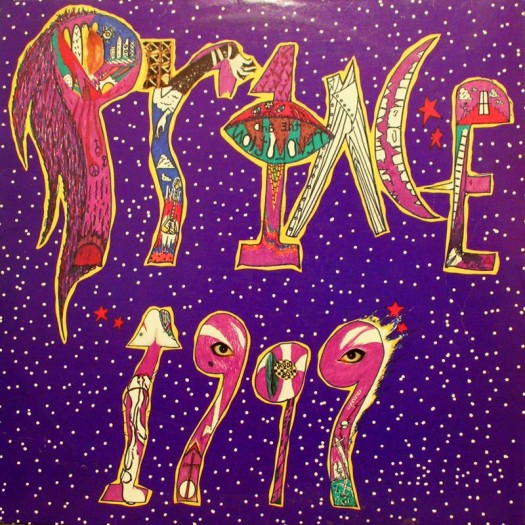
Prince released 1999 thirty years ago, securing his role as one of the most prolific and experimental musicians in music history. (Google Images)
by Christopher A. Daniel
Remember a time in pop culture when a black presence in music videos was a big deal? What about when minimalist musical production and incredible songwriting were both innovative and progressive?
Well, Prince’s 1982 electro-funk opus, 1999, comes to mind. Released October 27, 1999 is not only the most experimental and successful album of Prince’s then five album catalogue. It introduces the prolific artist as a force to be reckoned with on a then racially segregated music video rotation cycle, radio formats post-disco in which black acts could barely leave an imprint. His Royal Badness’ LP 1999 entered the Billboardcharts and solidified Prince’s role in music history as one of the most influential musicians across all genres. 1999 is the first album in which The Revolution is credited — in reverse — on the album’s cover art.
The polyrhythmic Linn LM-1 drum programming and cascading Oberheim OB-X synthesizer coos, whistles and crashes epitomized the “Minneapolis Sound,” but the one man band brought the substance to explore it. At that moment in Prince’s career, 1999’s 11 tracks were bold statements. The sequencing consists of extended cosmic funk and hypnotizing dance floor jams that easily give then electronic musical heavyweights Arthur Baker, Afrika Bambaataa, Jellybean Benitez, Juan Atkins, Giorgio Moroder, Brian Eno and Kraftwerk (i.e. “Automatic,” “All The Critics Love U in New York” and “Lady Cab Driver”) stiff competition.
From the suggestive title track alone, the distorted, tortoise-like disclaimer in the opening sequence indicates a nuclear apocalypse destined for the future of popular music. The song’s three-part harmony, inspired by Sly & the Family Stone, sets the tone for the 70-minute album – released on double vinyl — to work wonders for Prince. His first Top-Ten crossover single, “Little Red Corvette,” with its creeping synth melody, is clever lyricism and wordplay paying homage to the genitalia. Strip down “Delirious” from its programmed acoustics, and it could stand as one of Elvis Presley’s rockabilly numbers. The ticking, Devo-like “Something In the Water (Does Not Compute)” allows the scorned poet to lament over his heartbreak and hopeless romanticism.
1999’s sexual antithesis emerges. Never one to mince words, Prince’s erotic excess and self-indulgence comes off as a strength without being ubiquitous or blatantly vulgar. Remember, this is the same artist who under the alter ego, The Starr Company, was instrumental in assembling the sexy female trio Vanity 6, whose sizzling single, “Nasty Girl,” was a R&B and club smash. The Time, the ensemble under the same production pseudonym, released their impressive sophomore effort, What Time Is It?featuring the singles “777-9311,” “The Walk” and “Gigolos Get Lonely Too” in August. “Let’s Pretend We’re Married” finds the artist lusting for a tryst. “International Lover” is a siren-like ballad featuring Prince’s trademark falsetto and an aircraft metaphor for an orgasm. The echoing “D.M.S.R.” and the somber “Free” (another falsetto highlight) both stress the importance of liberation and self-definition.
The fifth best-selling release of 1983, Prince’s first Top Ten album and making several critics’ picks since its release, 1999 is a gem that epitomizes the flow of music and how embracing technology can be of value. Considering that Thriller would follow two months after 1999’s release and Michael Jacksonbreaking the color barrier on MTV shortly thereafter, 1999 marks yet another moment in pop music that prepares listeners for the Digital Age.
Christopher A. Daniel is a pop cultural critic and music editor for The Burton Wire. He is also a contributing writer for Urban Lux Magazine and Blues & Soul Magazine. Follow Christopher @Journalistorian on Twitter.
Like The Burton Wire on Facebook. Follow us on Twitter @TheBurtonWire.com.
Prince released 1999 thirty years ago, securing his role as one of the most prolific and experimental musicians in music history. (Google Images)
by Christopher A. Daniel
Remember a time in pop culture when a black presence in music videos was a big deal? What about when minimalist musical production and incredible songwriting were both innovative and progressive?
Well, Prince’s 1982 electro-funk opus, 1999, comes to mind. Released October 27, 1999 is not only the most experimental and successful album of Prince’s then five album catalogue. It introduces the prolific artist as a force to be reckoned with on a then racially segregated music video rotation cycle, radio formats post-disco in which black acts could barely leave an imprint. His Royal Badness’ LP 1999 entered the Billboardcharts and solidified Prince’s role in music history as one of the most influential musicians across all genres. 1999 is the first album in which The Revolution is credited — in reverse — on the album’s cover art.
The polyrhythmic Linn LM-1 drum programming and cascading Oberheim OB-X synthesizer coos, whistles and crashes epitomized the “Minneapolis Sound,” but the one man band brought the substance to explore it. At that moment in Prince’s career, 1999’s 11 tracks were bold statements. The sequencing consists of extended cosmic funk and hypnotizing dance floor jams that easily give then electronic musical heavyweights Arthur Baker, Afrika Bambaataa, Jellybean Benitez, Juan Atkins, Giorgio Moroder, Brian Eno and Kraftwerk (i.e. “Automatic,” “All The Critics Love U in New York” and “Lady Cab Driver”) stiff competition.
From the suggestive title track alone, the distorted, tortoise-like disclaimer in the opening sequence indicates a nuclear apocalypse destined for the future of popular music. The song’s three-part harmony, inspired by Sly & the Family Stone, sets the tone for the 70-minute album – released on double vinyl — to work wonders for Prince. His first Top-Ten crossover single, “Little Red Corvette,” with its creeping synth melody, is clever lyricism and wordplay paying homage to the genitalia. Strip down “Delirious” from its programmed acoustics, and it could stand as one of Elvis Presley’s rockabilly numbers. The ticking, Devo-like “Something In the Water (Does Not Compute)” allows the scorned poet to lament over his heartbreak and hopeless romanticism.
1999’s sexual antithesis emerges. Never one to mince words, Prince’s erotic excess and self-indulgence comes off as a strength without being ubiquitous or blatantly vulgar. Remember, this is the same artist who under the alter ego, The Starr Company, was instrumental in assembling the sexy female trio Vanity 6, whose sizzling single, “Nasty Girl,” was a R&B and club smash. The Time, the ensemble under the same production pseudonym, released their impressive sophomore effort, What Time Is It?featuring the singles “777-9311,” “The Walk” and “Gigolos Get Lonely Too” in August. “Let’s Pretend We’re Married” finds the artist lusting for a tryst. “International Lover” is a siren-like ballad featuring Prince’s trademark falsetto and an aircraft metaphor for an orgasm. The echoing “D.M.S.R.” and the somber “Free” (another falsetto highlight) both stress the importance of liberation and self-definition.
The fifth best-selling release of 1983, Prince’s first Top Ten album and making several critics’ picks since its release, 1999 is a gem that epitomizes the flow of music and how embracing technology can be of value. Considering that Thriller would follow two months after 1999’s release and Michael Jacksonbreaking the color barrier on MTV shortly thereafter, 1999 marks yet another moment in pop music that prepares listeners for the Digital Age.
Christopher A. Daniel is a pop cultural critic and music editor for The Burton Wire. He is also a contributing writer for Urban Lux Magazine and Blues & Soul Magazine. Follow Christopher @Journalistorian on Twitter.
Like The Burton Wire on Facebook. Follow us on Twitter @TheBurtonWire.com.