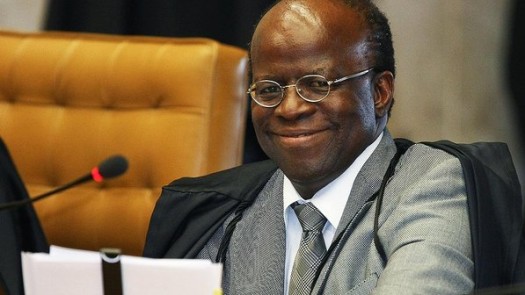
Brazil has elected Joaquim Barbosa as the nation’s first black Chief Justice of the Supreme Court. (Google Images)
Jose Morales of Bikyamasr.com is reporting that Brazil has named the first black Supreme Court Justice in the history of the country. Morales writes:
“Joaquim Barbosa has been elected as Chief Justice of the country’s Supreme Court, becoming the first black person to hold that post in Brazil where more than half of its nearly 200 million population are of African descent.
Currently the sole black person sitting on the bench of the top court, the 58-year-old was widely popular for his leading role in the nation’s “trial of the century,” a high-profile bribery case against senior officials in former President Luiz Inacio Lula da Silva’s government.
He is also a leading public voice against discrimination and racial inequality.”
Why aren’t people up-in-arms over Virginia and Florida lowering academic standards for black children? (Google Images)
Opinion by Dr. Alton C. Strange
One of the things that sets our public education system apart from the rest of the world is the belief in education being the “great equalizer.” The ability of any individual, regardless of their circumstance, can attain the American Dreamthrough education. While this belief has not always been implemented throughout our history, there are individuals that have overcome obstacles and their circumstances through education to become productive citizens and trailblazers.
With the historic election of President Obama, the idea that anyone can grow up to be President has become true again. Unfortunately, there are some educators in Virginia and Floridawho have adopted achievement standards that are based on race and ethnicity.Several weeks ago, the Boards of Education in Virginia and Florida adopted race-based standards for students attending public schools.
These standards mandate that by 2018:
1) 90% of Asian students, 88% white students, 81% if Hispanic students & 74% of “black” students are to be reading at or above grade level. 2), 86% of white students, 92% of Asian students, 80% of Hispanic students and 74% of black students are to be at or above their grade level in math.
Surprisingly, these standards were adopted with virtually little national attention or public outrage.
There are several questions that need to be asked. The first question is why would educators who are supposed to believe all children have the ability to learn, develop racially based standards that expect less of certain students? Additionally, why would these educators make the “black” students perform substantially less than Asian and white students? Are their reasons due to personal bias or misguided beliefs in racial stereotypes?
The second question is what did educators plan to accomplish by developing racially based standards? Did these educators feel they were helping “black” families and youth by developing a lower standards? Did these educators hope to provide skewed data of the achievement standards by increasing the expectations of Asian and Hispanic students to cover the lower expectations of “black” students? Would these educators attempt to show that minorities are improving or meeting expectations to receive additional state or federal funds? Will the achievement scores of “black” students even be counted?
Third, what message is this policy sending to teachers, students, parents? Will teachers and administrators view this policy as a reason to focus more on the academic achievement of Asians, whites and Hispanic students to the detriment of “black” students? Will “black” students find themselves invisible again? Will the lowered expectation of black students solidify a superior/inferior mentality among “black” and non “black” students? Lastly, what message are parents of “black” students receiving from these new racially based academic standards and what are they prepared to do about it?
Finally, how is this legal? This policy is obviously discriminatory and goes against the constitutional rights of American citizens. Furthermore, these “blacks” are taxpayers who expect their public school system to provide their child with the foundation to obtain the American Dream. There should be no reason for educators to have lower expectations for any child, particularly a child from a specific race or ethnicity.
At time when our country needs all children excelling academically to reclaim our position as leader of the global market, we cannot afford to go back and fight another Civil Rights campaign. What are we going to do to put an end to educational Jim Crowism before it begins to spread?
Dr. Alton C. Strange is an educator and activist who writes the blog Strange Ideas on Education. He holds degrees from the University of Pennsylvania and Morehouse College. Follow him on Twitter @alton_strange.
A scam in Nigeria’s oil industry has resulted in the loss of millions in revenue. (Google Images)
BBC Africa is reporting that millions of dollars have been lost in the Nigerian oil industry due to a “price-fixing scam.” A total of $29 billion is missing due to the scam, with $6 billion disappearing ever year, and it is estimated $400 billion has been stolen since Nigeria’s independence in 1960. While Nigeria produces a great percentage of the world’s oil, its people rarely see the benefit of its success; most Nigerians continue to live in extreme poverty.
“The Petroleum Revenue Special Task Force, headed by former anti-corruption chief Nuhu Ribadu, revealed in its report that losses of revenue to the treasury over apparent gas price-fixing involved dealings between Total, Eni and Shell and government officials.
The report does not suggest the companies broke the law but called for measures to be put in place to ensure all transactions are more transparent.
It said that oil and gas companies owe the treasury more than $3bn in royalties.
For the period 2005 to 2011, it said $566m was owed in signature bonuses – the fees a company is supposed to pay up front for the right to exploit an oil block.”
A scam in Nigeria’s oil industry has resulted in the loss of millions in revenue. (Google Images)
BBC Africa is reporting that millions of dollars have been lost in the Nigerian oil industry due to a “price-fixing scam.” A total of $29 billion is missing due to the scam, with $6 billion disappearing ever year, and it is estimated $400 billion has been stolen since Nigeria’s independence in 1960. While Nigeria produces a great percentage of the world’s oil, its people rarely see the benefit of its success; most Nigerians continue to live in extreme poverty.
“The Petroleum Revenue Special Task Force, headed by former anti-corruption chief Nuhu Ribadu, revealed in its report that losses of revenue to the treasury over apparent gas price-fixing involved dealings between Total, Eni and Shell and government officials.
The report does not suggest the companies broke the law but called for measures to be put in place to ensure all transactions are more transparent.
It said that oil and gas companies owe the treasury more than $3bn in royalties.
For the period 2005 to 2011, it said $566m was owed in signature bonuses – the fees a company is supposed to pay up front for the right to exploit an oil block.”
BBC Latin America is reporting that Hurricane Sandy slammed Jamaica leaving one person dead. Hundreds of people took refuge in emergency shelters and schools as the hurricane which arrived as a category 1 hit the island. Airports on the island were closed. Jamaican journalist Basillia Barnaby reports that search is underway to find some who are feared to be trapped or missing.
Hurricane Sandy has since reached south east Cuba, becoming a category 2 hurricane. The National Hurricane Center (NHC) reports that wind gusts of up to to 113 mph have been reported in Santiago de Cuba. Residents are being warned that the hurricane is bringing heavy rain which could “produce life-threatening flash floods and mudslides, especially in areas of mountainous terrain”. Many people have lost their homes, and whilst some have secured good home insurance that gives them the means to rebuild (read the review here) the damage is still devastating.
Forecasters said up to 300mm of rain (11 inches) of rain was expected to fall in some areas of eastern Cuba, Haiti and the Dominican Republic. Some mountainous areas of the Caribbean could see up nearly 20 inches of rain.
The effects of Hurricane Sandy are being felt in South Florida and Kill Devil Hills, NC. If you live in this region it’s important to get your home checked for damage by roofing contractors austin or a handyman because small issues can turn into costly repair work if it’s left.
Rebels in northern Mali have been imposing harsh Islamic law, prompting a broad call for military intervention in the region. (Google Images)
The New York Times is reporting that the likeliness of conflict erupting in northern Mali has increased after months of hoping otherwise. A militarist intervention could be necessary to reclaim northern Mali from Islamists who have been holding the area since March. The BBC says that the Islamic groups took over after the Tuareg rebellion in January and now have imposed harsh Sharia law under which people have allegedly been stoned to death and amputated.
According to The New York Times:
“These basic details have yet to be worked out, officials conceded. Yet they emphasized that previously reluctant partners, including Mali itself, were convinced of the military imperative after months of inconclusive meetings and discussions. On Oct. 12, the United Nations Security Council, led by France, passed a resolution declaring its ‘readiness’ to respond to Malian demands for an international force and asked that a detailed plan be submitted in 45 days. That resolve was reiterated at an international summit here last week.
‘There is no alternative,’ said Jack Christofides, a top official in the United Nations Department of Peacekeeping Operations, which is playing a leading role in planning a possible operation. ‘For some of these more radical groups’ occupying northern Mali, he added, ‘it’s going to take military force.’
As many as 7,000 to 10,000 soldiers may be needed to take back and hold the north, United Nations officials have said, and the barriers to compiling such a force are evident. Nigeria, with the largest army in West Africa, is tied up with a fight against its own Islamist radicals. Algeria, often considered to have easily the most efficient force in the region, has been reluctant to get involved, though it may be coming around, officials said.”
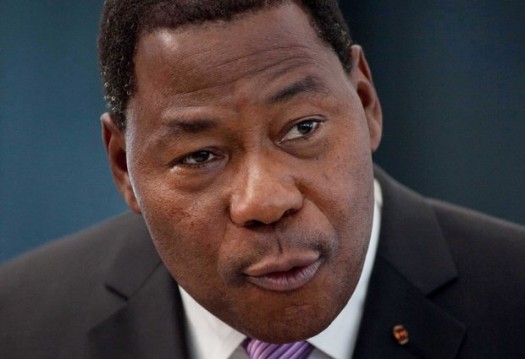
Three people were arrested in the attempted poisoning of Benin’s President Boni Yayi. (Google Images)
BBC Africais reporting that three people have been charged in a plot to poison Benin President Boni Yayi by switching out his medication with poison. The article states:
“The president’s doctor, one of his nieces and an ex-minister of commerce have been charged with conspiracy and attempted murder, officials said. Prosecutors said the president’s niece and his doctor were offered 1bn CFA francs (£1.2m; $2m) to poison him.”
Prosecutors yesterday named Dr Ibrahim Mama Cisse, the president’s niece Zouberath Kora-Seke and former minister of commerce Moudjaidou Soumanou as the three suspects. They are currently in custody.
Authorities also intend to issue an arrest warrant for businessman Patrice Talon, a former ally of Mr Yayi who fell out with the leader. Chief prosecutor Justin Gbenameto told reporters that the alleged plot started on 17 October while the head of state was on an official visit to Brussels. Kora-Seke, who was accompanying President Yayi, was to pick up the poison and put it into his medication provided by a doctor. Kora-Seke attempted to poison her uncle, President Yayi, approximately two days after their arrival in Benin. She eventually broke down and informed family members of the attempt on his life.
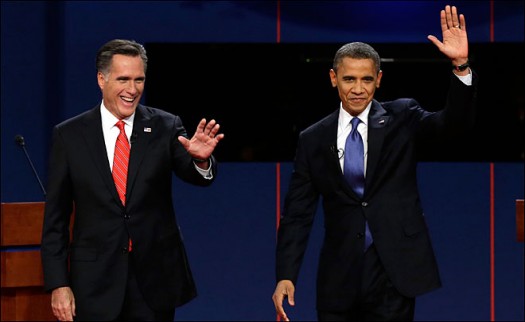
U.S. President Barack Obama and GOP presidential contender Mitt Romney wave to the crowd during a debate. (Google Images)
OPINION by Jasper Alexander
Imagine getting a new job where your predecessor had left a complete mess. The filing system was inadequate, clients had stopped calling and the company’s financial situation was in complete disarray. On top of these challenges, you receive very little support from your co-workers in your efforts to turn things around. After working hard for almost four years and making incredible progress in turning the company around, you have to go through an evaluation to see if you keep your job. Your employer brings in another manager from a smaller division to see if there is a potentially better fit for continuing the progress that you have created. After three rounds of interviews and countless questions, management is still split on whether you should keep your job. How would you feel about being in this situation? Would you consider this fair?
And that is where our President finds himself. When he started his “job” in 2009, President Obama inherited an economy on the brink of collapse, two wars and a global frustration with the Bush doctrine of unilaterally enforcing our country’s foreign policy agenda. And it is inarguable that he has made things better. Yet national polls such as those found here, still have the President deadlocked in a race to keep his job. It seems as if company management has forgotten how bad things really were when President Obama began working for America and how his Republican co-workers in Congress made it even more difficult to improve things either through the record setting use of the filibuster or by refusing to compromise on any proposed policies or legislation.
Now the President has to compete to keep his job with someone who on the surface seems qualified because he ran a smaller division of the company with mixed results.
Based on the rounds of interviews, it is becoming increasingly clear that the best candidate to continue moving America in the right direction is our current leader. Not only has he outperformed Romney in two out of the three debates, he also has faced the challenges that many Americans are currently facing.
Enough with the corporate model, let’s talk real-life.
If you are an American struggling to pay for your education, wouldn’t you want someone who has actually had a student loan as your advocate? If you are a poor American, wouldn’t you want a President who knows what it feels like to be poor and to have been on food stamps? If you are a middle-class American, wouldn’t you want a president that actually defeated poverty through education to become middle-class and who understands the challenges of raising a family as a middle-class American? If you aren’t convinced of President Obama, do you really want a president that has lived a life of privilege, never had any financial challenges (ever) and looks at borrowing money from your parents as the best way to solve any financial challenges that you may have? What are you to do if your parents don’t have money to lend? Suffer.
Given his qualifications, his accomplishments since taking office and his true understanding of the challenges that so many Americans face today, it is clear from the state of the national polls that even our black President may need a little affirmative action to get what he has earned — a second term as President of the United States.
Tambay A. Benson of Shadow and Act is reporting that Call Me Kuchu, a documentary chronicling the life of human rights activist Kato, Uganda’s first openly gay man and his three LGBT friends (“kuchus”) is coming to U.S. theaters. Cinedigm Entertainment Group has acquired all U.S. distribution rights to the film.
Benson reports:
“Over the course of two years, filmmakers Katherine Fairfax Wright and Malika Zouhali-Worrall documented the daily lives of the outspoken and inspiring Kato and his fellow “kuchus” as Uganda was emerging as a frontier in the battle for African LGBT rights.
An alum of Film Independent’s Artist Development Program, “Call Me Kuchu” earned stellar reviews on the festival circuit, including winning both the Teddy Award (Best Documentary) and the Cinema Fairbindet Prize at the 2012 Berlin Film Festival, the Amnesty International’s Human Rights Award at the Durban Film Festival, and Best International Feature at Hot Docs 2012.”
“Call Me Kuchu” will be released theatrically in early 2013, followed by on-demand, premium digital, DVD, and TV release.
Tambay A. Benson of Shadow and Act is reporting that Call Me Kuchu, a documentary chronicling the life of human rights activist Kato, Uganda’s first openly gay man and his three LGBT friends (“kuchus”) is coming to U.S. theaters. Cinedigm Entertainment Group has acquired all U.S. distribution rights to the film.
Benson reports:
“Over the course of two years, filmmakers Katherine Fairfax Wright and Malika Zouhali-Worrall documented the daily lives of the outspoken and inspiring Kato and his fellow “kuchus” as Uganda was emerging as a frontier in the battle for African LGBT rights.
An alum of Film Independent’s Artist Development Program, “Call Me Kuchu” earned stellar reviews on the festival circuit, including winning both the Teddy Award (Best Documentary) and the Cinema Fairbindet Prize at the 2012 Berlin Film Festival, the Amnesty International’s Human Rights Award at the Durban Film Festival, and Best International Feature at Hot Docs 2012.”
“Call Me Kuchu” will be released theatrically in early 2013, followed by on-demand, premium digital, DVD, and TV release.