“Moment of Truth,” a five-part docuseries, examines the story behind the story of the murder of James Jordan, the father of basketball legend Michael Jordan. At the height of Michael Jordan’s popularity as a basketball player and pop cultural icon, Jordan’s father James was reported missing and subsequently found dead days later in a swamp in South Carolina. At the time of the murder (July 23, 1993), two teenagers – one white (Larry Demery) and the other Black (Daniel Green), were taken into custody and charged with the murder. Green, who maintained his innocence from the beginning, was convicted of the murder, largely based on the testimony of Demery, who is scheduled for release in 2023.
“Moment of Truth,” which airs on IMBtv, takes viewers behind-the-scenes to find a corrupt police force in Robeson County, NC, including the story of Hubert L. Deese, the “illegitimate” son of Sheriff Hubert Stone, who some suspect may have played a role in the murder. Deese, a well-known drug dealer, was the first phone number dialed from James Jordan’s car phone after the murder. Add to that story, the possible railroading of a Black teenager, who was convicted based on Demery’s testimony which has greatly changed over time, and you’ve got a thriller for a docuseries.
Written, directed and produced by “crime tv” producers Matthew Perniciaro and Clay Johnson, “Moment of Truth,” is a documentary that attempts to bring the entire story of the murder of James Jordan to viewers, including the investigation, the fallout afterwards, the plight of Daniel Green to prove his innocence and the many questions that remain surrounding the murder of the father of one of basketball’s greatest players.
The docuseries debuts today (4/2/21). Watch free on IMDBtv.
This post was written by Nsenga K. Burton, founder & editor-in-chief of The Burton Wire. Follow Nsenga on Twitter @Ntellectual or @TheBurtonWire.
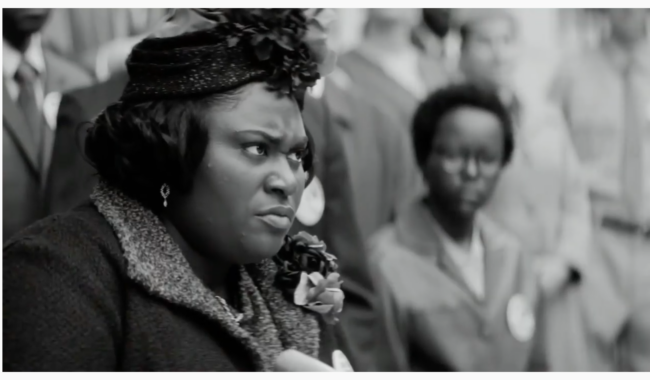
Robin Roberts is internationally known for her work in sports broadcasting at ESPN and then as the anchor of ABC’s Good Morning America since 2005. Now, the former athlete and trailblazer who helped usher in an era of women broadcasters has turned her attention to the life of iconic gospel singer and activist Mahalia Jackson. Robin Roberts Presents: Mahalia, the story of one of the most revered singers in American history debuts April 3 at 8 p.m. EST on the Lifetime Network.
Roberts who was born in Tuskegee Alabama and raised in Mississippi before heading to college at Southeastern Louisiana University speaks often about her love of Louisiana.The daughter of a Tuskegee Airmen Col. Lawrence E. Roberts and Educator Lucimarian Roberts, who was the first African American to serve as chairwoman of the Mississippi State Board of Education, Roberts aimed high as an athlete, student and eventually broadcaster. Roberts who credits her faith for her wins against an ongoing battle with cancer credits her parents for imparting discipline and faith, two qualities that are inherent in the story of gospel legend and civil rights icon Mahalia Jackson.
Born in New Orleans, Mahalia began singing at an early age and went on to become one of the most revered gospel figures in U.S. history, melding her music with the civil rights movement. Her recording of the song “Move on Up a Little Higher” sold millions of copies, skyrocketing her to international fame and gave her the opportunity to perform at diverse settings including in front of a racially integrated audience at the prestigious Carnegie Hall and at John F. Kennedy’s inaugural ball. An active supporter of the Civil Rights Movement, Jackson sang at numerous rallies, including the March on Washington in 1963 alongside Dr. Martin Luther King, Jr., in hopes that her music would encourage and inspire racial equality. From Rock’n Robin Productions and Lincoln Square Productions, Mahalia is executive produced by Robin Roberts and Linda Berman.
Known best for her outstanding work as Tasha “Taystee” Jefferson on Netflix’s hit series Orange is the New Black and her Tony nominated role as Sophia in the Broadway production of The Color Purple Starring, Mahalia stars Julliard-trained and SAG award-winning actress Danielle Brooks. Robin Roberts Presents: Mahalia premieres Saturday, April 3 on Lifetime at 8/7c. Check your local listings for channel information.
This post was written by Nsenga K. Burton, founder & editor-in-chief of The Burton Wire. Follow Nsenga on Twitter @Ntellectual or @TheBurtonWire.
Photo: Official Movie Poster/Alpha Kappa Alpha Sorority, Inc.®/Coffee Bluff Pictures
Photo: Official Movie Poster/Alpha Kappa Alpha Sorority, Inc.®/Coffee Bluff Pictures
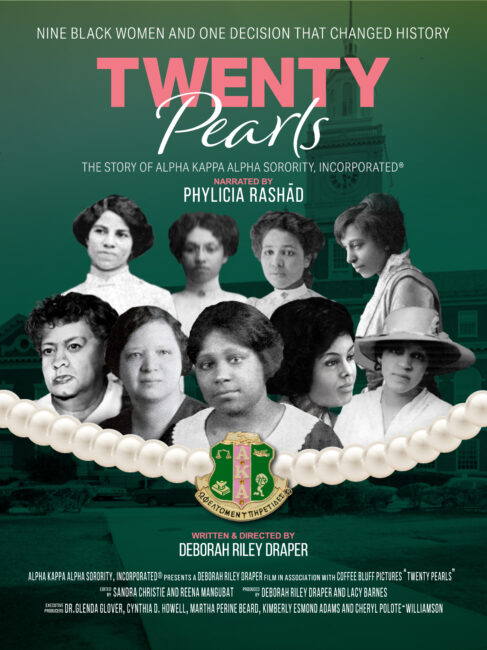
The nation’s first sorority for African-American college women has another first to celebrate. The documentary Twenty Pearls: The Story of Alpha Kappa Alpha Sorority, Incorporated® written and directed by award-winning documentary filmmaker Deborah Riley Draper, premieres Friday, March 26 at 8 p.m. EST on Comcast’s Black Experience onXfinity, becoming the first original film for the media company’s Black content hub. The Black Experience is led by Keesha Boyd, executive director for multicultural video and entertainment at Comcast NBCUniversal.
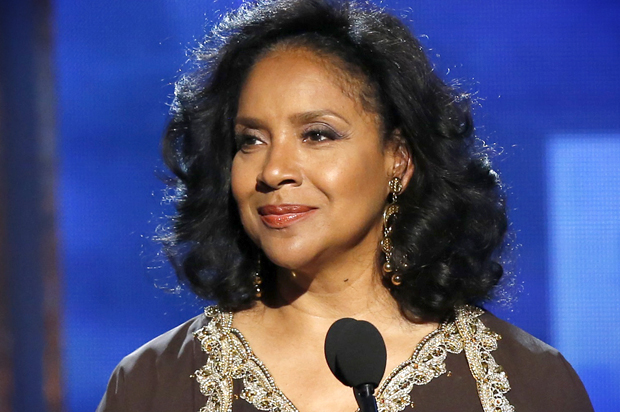
Narrated by Alpha Kappa Alpha Sorority, Inc.® member Phylicia Rashad, Twenty Pearls takes viewers on a journey through 113 provocative years since the founding of the sorority. In 1908, forty years after the emancipation of enslaved African Americans, nine Black college women, enrolled at Howard University fought for, organized and built a sisterhood. The vision grew to 300,000 members and impacted and created watershed moments in American history despite race and gender bias. Rashad, the first Black actress to win a Tony award for a dramatic leading role, guides viewers through the story of visionary founders and their quest to change the world through sisterhood and service.
Produced by Coffee Bluff Pictures, Deborah Riley Draper’s production company, Twenty Pearls tells the story of this trailblazing organization founded to serve and uplift the African American community through narration, interviews and archival assets. Riley, who pledged Alpha Kappa Alpha Sorority, Inc. as an undergraduate student at Florida State University, is delighted to be able to shine light on the incredible journey of the sorority. “It’s an honor to help elevate the stories of Black women who have impacted America in so many important ways,” says the NAACP Image Award nominee for her 2016 film Olympic Pride, American Prejudice. “It is a privilege to be able to elevate the stories of women of my sorority and to document their contribution to American society,” says Draper.
Twenty Pearls shows viewers the impact of Alpha Kappa Alpha Sorority, Inc.® on the Harlem Renaissance, World War II, NASA, Civil Rights, Women’s Rights and HBCU endowments. Interviews include Alpha Kappa Alpha International President and CEO Dr. Glenda Glover, Vice President Kamala Harris, Miss Universe Ireland 2019 Fionnghuala O’Reilly, Smithsonian Secretary Lonnie Bunch III, Anna Eleanor Roosevelt Fierst and many more. “We see the evidence of the 113 years of AKA in all aspects of our American society,” adds Draper.
That evidence is also reflected in the team that worked on this documentary including Dr. Glenda Glover, who serves as Executive Producer. Cynthia D. Howell, Martha Perine Beard, Kimberly Esmond Adams and Cheryl Polote-Williamson also serve as executive producers. Lacy Barnes and Draper produced the film for Draper’s production company Coffee Bluff Pictures. All except Barnes are members of Alpha Kappa Alpha Sorority, Inc.®
In keeping with their legacy as a pioneering organization for women, Alpha Kappa Alpha® is the first Black Greek Letter Organization to produce and distribute the first-ever full-length feature documentary film about the Black Greek Sorority experience. Twenty Years demonstrates the historic and current cultural relevancy of HBCUs and Black Greek Letter Organizations to the shaping and survival of America. Draper, who produced and directed the critically-acclaimed documentary Versailles ’73: American Runway Revolution is excited and passionate about her newest documentary. Known for making films that explore the intersection of race, gender and culture through a historical lens, Draper centers Black women in the narrative of American culture and success. When asked to sum up the documentary in a few words, Draper replies, “This film is a love letter to Black women — all of us.”
Twenty Pearls premieres Friday, March 26, 2021, at 8:00 PM (EST) on Comcast Xfinity Black Experience and Comcast Xfinity platforms, xfinity.com, XfinityFlex internet and Xfinity Mobile. The premiere will be followed by a virtual conversation with the cast and crew. The documentary will be available nationwide On Demand, starting March 30 on all other cable systems. Check your local cable guide for channel information.
This article was written by Nsenga K. Burton, Ph.D., founder & editor-in-chief of The Burton Wire. Dr. Burton is a life member of Alpha Kappa Alpha Sorority, Incorporated® and appears in the documentary “Twenty Pearls: The Story of Alpha Kappa Alpha Sorority, Inc.® Follow Nsenga on Twitter @Ntellectual or @TheBurtonWire.
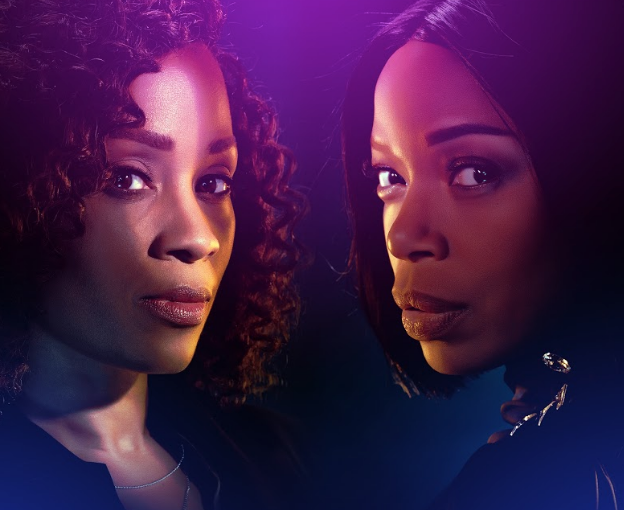
The Oprah Winfrey Network’s(OWN) much anticipated nighttime drama, “Delilah,” aired Tuesday, March 9 at 9 p.m. EST. Maahra Hill (“Black-ish,” “How to Get Away With Murder”) stars asDelilahConnolly, a headstrong, highly principled lawyer living in Charlotte, North Carolina.Delilah is doing her best to raise two kids alone and keep her ties to family, friends and faith strong, all while ceaselessly seeking justice for those who need it most, in a time when the rich and powerful of Charlotte and beyond will do anything to stop her. Jill Marie Jones (“Girlfriends”) appears as Tamara Roberts,Delilah’s confidante and best friend; Susan Heyward (“Orange is the New Black”), portrays Demetria Barnes, Delilah’s newly hired, fearless, and ambitious associate; and Ozioma Akagha (Marvel’s “Runaways”), plays Delilah’s unfailingly sunny secretary, Harper Omereoha. In a recurring role, Lyriq Bent stars as Gordon, Delilah’s ex-husband.
Filmed in Charlotte, NC, the series is produced by Warner Bros. Television and Harpo Films and executive produced by Craig Wright, Charles Randolph-Wright, and Oprah Winfrey.
A Chicago native, Maahra Hill says Delilah is a familiar character to her. “The sacrifice she makes for parenthood, commitment she has to the community, giving a voice to the voiceless and the relationship she has with her ex feels like home to me, says the actress. “There are ways she’s completely different and much more courageous than I am. She’s more of a risk taker than I am,” Hill adds. The actress prepared for the crusader by reaching out to a couple of African-American women lawyers in Charlotte in order to bring “authenticity” to the role. “My goal is to shine a light on an everyday real experience; to make sure it’s reality, it’s authentic,” adds Hill.
One of the ways the creators brought authenticity to the show was by casting and hiring local talent and crew from Charlotte. “Local actors along with the local crew bring their input into their performances,” says executive producer Craig Wright. That includes everything from where to get things you want or need in the city and even the character’s accents. Kelly Jacobs, the actress who plays Delilah’s daughter Maia is from Charlotte. “This is a real girl from Charlotte playing the hell out of her violin and going to work in a town where she’s from,” says Wright. “Even though this is a fictional, scripted genre, the more we can shrink that divide between the viewers and the viewed and make it one big percolating conversation, the better,” he adds.
The location gave them an opportunity to cast and shoot locally in addition to providing a rich background for the setting in a city known for its Black achievement and leadership during the civil rights movement. In recent years, the “Queen City” named for Queen Charlotte, has been at the center of social justice activism because of the 2013 police killing of Jonathan Ferrell, 24, an unarmed Black man seeking help following a car accident; the 2013 killing of Keith Lamont Scott, 43, an unarmed man who was shot and killed while reading a book while waiting for his son to get home from school on the school bus; and the 2015 killing of Jonisha Fonville, 20, who was shot and killed while experiencing an episode caused by mental illness. The Queen City was the perfect place for the story of this dynamic character of Delilah and her pursuit of justice for those who need it the most– the historically disenfranchised. The creators and writers hist the ground running writing the entire season before shooting began.
And then there was COVID and more social justice activism around the killing of George Floyd. As was the case with other productions, COVID-19 impacted production, necessitating some changes in when to film, how to film and the best way to tell the stories. George Floyd’s killing impacted the stories that were told.
“Shooting during the pandemic makes you find a completely new way of working. Because of this team led by Maarah and Jill Marie Jones, we were able to make it happen,” says executive producer Charles Randolph-Wright. “The challenge for us was to find a new way to work amid all of the things happening including the pandemic and the election. It was lot to manage but we did it,” he adds.
“Oprah is a big fan of intention,” says Craig Wright. “We had an entirely different season planned and had written quite a bit of it when George Floyd was murdered. Because our story was so close to that, we stopped and rewrote the entire story and centered it around the female friendship around Delilah. We changed everything because it forced the show to become more unique.”” he added.
Delilah airs Tuesdays at 9 p.m. EST on OWN. Check local listings for channel information.
This post was written by Nsenga K. Burton, Ph.D., founder & editor-in-chief of The Burton Wire. Follow Nsenga on Twitter @Ntellectual.
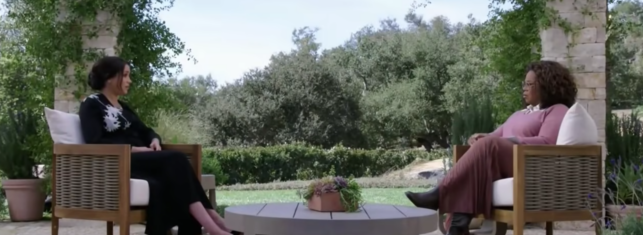
Screen grab of the Oprah Winfrey interview with Prince Harry and Meghan Markle.
Yvonne Yancy, human resources expert and pop cultural enthusiast and commentator.
Millions of people watched Oprah Winfrey’s CBS interview with Prince Harry and Duchess Meghan Sunday. Lots of revelations and bombshells were dropped including Duchess Meghan’s struggle with mental illness based on her racist treatment at the hands of the tabloid media and some in the Royal Family. Prince Harry was refused security and cutoff from his funds all because of the couple’s choice to leave the United Kingdom.
Today, Winfrey discussed her interview with the displaced royals on CBS This Morning with Gayle King, letting viewers know it wasn’t Queen Elizabeth and Prince Philip who were worried about Archie’s skin tone and also playing additional clips which did not make it into Sunday’s two-hour interview.
In one of those clips, the Duchess made a comment that resonated with me. Meghan Markle said “Rude and racist are not the same,” and she is right. Black people are often met with questions when relaying racist treatment to non-Blacks who sometimes say things like, “Maybe he was just being rude.” I have had white friends try to convince me to “brush off” the racist comment, or turn the conversation away from my concerns towards themselves with comments like, “I know what it’s like to be ostracized. It happened to me once,” diminishing my experience and re-centering whiteness instead of acknowledging my concerns.
There is this myth that racism or racist experiences are some singular moment that’s just like interacting with a “mean person” or that economics or social stature limits the experience, which is simply not accurate. There is no white or female comparable experience where literally no matter your surrounding or your accomplishments, they are not enough to protect you from or eliminate the experience of racism. None. It’s not simply rude. It’s the dismissal of everything of value about you. It erases you. It makes you property and without any meaningful purpose. It’s not just rude. I’ve been in formal gowns at events and treated like wait staff. I’ve been the leader of a team and treated like the secretary. I’ve been in sweats and asked did I know this was the first class line at an airport. I’ve had my bag pulled out of the overhead in first class because the white man who came late “Needed the space.” I mean if he was a businessman, then who was I? I’ve had childhood peers tell me I can’t come to their house because I’m Black. I actually play the violin because I could not blow on the same wind instrument as white children. I literally can remember the first time I experienced racism and I was 3. I am now 48.
I’m over it and yet here we are. So for anyone interested in the subject, racism or a racist experience is not rude. It’s not like being ostracized and it’s not like being left out. Being rude and racist are not the same. Racism is death by a million cuts – and cuts come from friends and enemies alike. Black people who thrive are taught to manage life with the cuts so they don’t bleed out. It is a skill and if you don’t have it, then you do not survive. Meghan Markle experienced death by a thousand cuts and learned a hard lesson. Luckily she and Prince Harry had the means to make a difficult decision so she did not bleed out.
This post was written by Yvonne Cowser Yancy, a 25-year H.R. veteran, pop culture enthusiast and commentator. Follow Yvonne on Twitter @ycyancy.
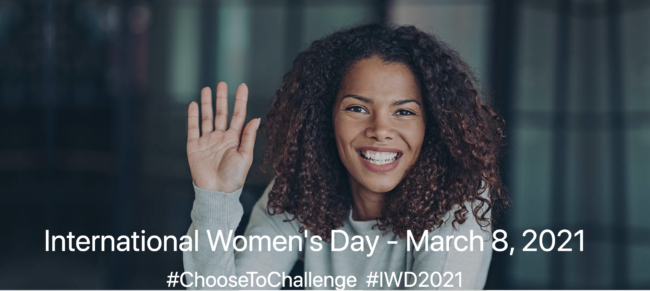
International Women’s Day (IWD) is a global day celebrating the social, economic, cultural and political achievements of women. The day also marks a call to action for accelerating gender parity. IWD takes place annually on March 8, 2021 and is marked by activities that do the following:
celebrate women’s achievements
raise awareness about women’s equality
lobby for accelerated gender parity
fundraise for female-focused charities
The 2021 theme for IWD is #ChooseToChallenge because, “A challenged world is an alert world. And from challenge comes change,” according to the International Women’s Day website.
People wear, purple, green and white on International Women’s Day because purple signifies justice and dignity. Green symbolizes hope. White represents purity — a controversial concept. The colors originated from the Women’s Social and Political Union (WSPU) in the UK in 1908, where the idea of the day of celebration came about. Like many other women’s rights movements, the WSPU was an international movement.
In 1908, 15,000 women marched through the streets of New York City demanding shorter working hours, better pay and the right to vote. The idea to make the day international came from a woman named Clara Zetkin, a German socialist and women’s rights leader, who suggested the idea in 1910 at an International Conference of Working Women held in Copenhagen. There were 100 women present from 17 different countries, and they all agreed on Zetkin’s suggestion. It was the Socialist Party of America who declared the first National Woman’s Day, a year later. Since 1911, women all over the world have celebrated the day with some countries honoring women on this particular day.
In China, many women are given a half-day off from work on IWD, as advised by the State Council, although many employers don’t always pass the half-day on to their female employees.
In the US, the month of March is Women’s History Month. A presidential proclamation is issued every year honoring the achievements of American women. There are scores of free virtual events. One you might want to check out is “1,000 WOMEN LEADERS: A GLOBAL MOVEMENT FOR PEACE & EQUALITY” hosted by the United Nations Women’s Peace and Humanitarian Fund (WPHF). This event marks the launch of a global campaign to support 1,000 women leaders working to build a brighter, more peaceful and resilient future.
“Women civil society leaders in conflict settings are effective and proven agents of change,” said Ghita El Khyari, Head of the United Nations WPHF. “Despite this, only 0.2 percent of billions of dollars in aid for crisis-affected countries is dedicated to women’s organizations. This campaign is amplifying their voices and urgent calls for action.”
Speakers at this free event, taking place today from 1:30-2:30 p.m EST include Whoopi Goldberg, Kristen Bell, Nahla Valji, and Leymah Gbowee, and others as they work to rally support for women who are working on the frontlines to bring equity to women and girls around the world. Registration is free but you must register to participate in the event here.
Check out this International Women’s Day 2021 #ChooseToChallenge video featuring tennis legend Serena Williams and four-time Grand Slam champion Naomi Osaka below:
Read more about International Women’s Day at the official International Women’s Day website.
What are you doing to celebrate International Women’s Day? Let us know @TheBurtonWire.
This post was written and curated by Nsenga K. Burton, Ph.D., founder & editor-in-chief of The Burton Wire, where everyday is a celebration of international women . Follow Nsenga on Instagram or Twitter @Ntellectual.
José Cruz/ABr - Presidenta Dilma Rousseff se encontra com Spike Lee
José Cruz/ABr – Presidenta Dilma Rousseff se encontra com Spike Lee
Angelique Jackson of Variety is reporting legendary filmmaker Spike Lee is producing “Gordon Hemingway & the Realm of Cthulhu” for Netflix. The film will be directed by Stefon Bristol, who’s independent award-winning film “See You Yesterday,” was also produced by Lee for Netflix, making it the second time the two have worked together.
Lee will produce the film alongside “Da 5 Bloods” producers Lloyd Levin and Beatriz Levin, who initially optioned the spec screenplay for “Gordon Hemingway” from Hank Woon before bringing the project to Bristol and Lee.
The new feature, based on an original screenplay by Hank Woon, is set in East Africa in 1928 and centers on Gordon Hemingway, a roguish Black American gunslinger, who teams up with the elite warrior Princess Zenebe of Ethiopia to rescue the country’s kidnapped regent from an ancient evil.
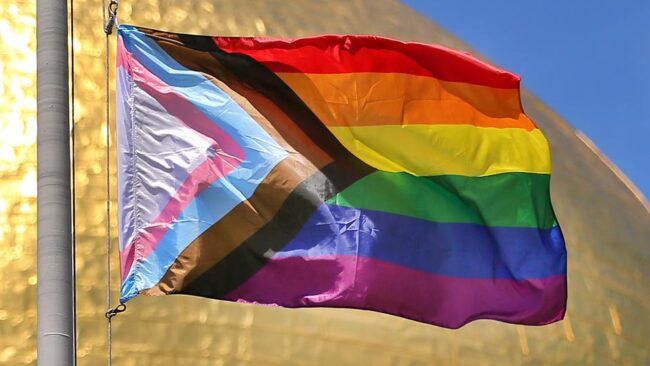
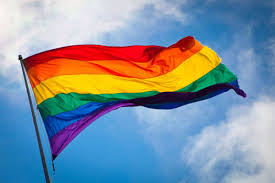
Many are celebrating the U.S. House of Representatives vote to pass the Equality Act, a major LGBTQ rights bill that outlaws discrimination based on sexual orientation and gender identity in housing, employment, credit, jury service education and public accommodations.
The act amends the federal Civil Rights Act of 1964 to include protections against discrimination based on sexual orientation and identity. The Equality Act has been introduced every year since 2015 by Rep. David Cicilline, (D-R.I.), one of nine LGBTQ representatives.
“The LGBTQ community has waited long enough,” said Cicilline, who introduced the bill for the sixth time on the House floor. “The time has come to extend the blessings of liberty and equality to all Americans, regardless of who they are or who they love.”
The 224-206 vote passed along party lines with three Republicans voting for the legislation. GOP Reps. Brian Fitzpatrick (R-Pa.), John Katko (R-NY) and Tom Reed (R-NY) voted for the act which will face a difficult time getting passed in the Senate because of the 60-vote threshold required to bypass a Republican filibuster which is expected.e threshold is required to bypass a filibuster.
In a statement issued by Congresswoman Nikema Williams (GA) who voted to approve the legislation, Williams stated, “I am in Congress to secure the promise of America for all – no matter who they love or how they identify.” The chair of the Democratic Party of Georgia added, “LGBTQ+ people have lived in fear of punishment or retaliation for far too long. Today’s bill passage goes a long way in affirming that living without fear or being free from discrimination is not a matter of privilege, but an inalienable right.”
U.S. President Joe Biden said passage of the Equality Act would be a priority in his first 100 days in office. Biden reiterated his support for the bill last week when introduced saying the bill is “a critical step toward ensuring that America lives up to our foundational values of equality and freedom for all.”
This post was written by Nsenga K. Burton, Ph.D., founder & editor-in-chief of The Burton Wire. Follow Nsenga on Instagram or Twitter @Ntellectual.
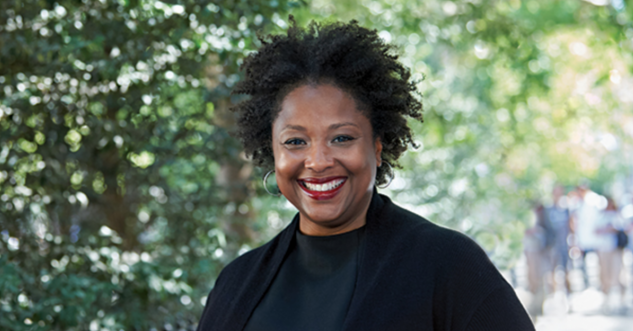
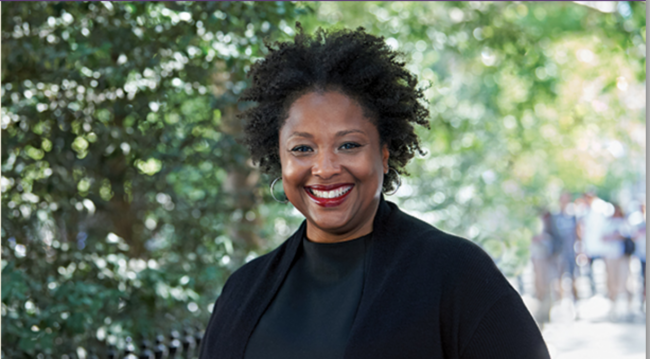
NYU Professor Deborah Archer has been elected as the head of the ACLU, making Archer the first Black American to lead the civil rights organization in its 101-year history. (Photo: NYU.edu)
NYU Professor Deborah Archer has been elected as the head of the ACLU, making Archer the first Black American to lead the civil rights organization in its 101-year history. (Photo: NYU.edu)
The ACLU has appointed Deborah Archer, a New York University (NYU) law professor and former assistant counsel at the NAACP Legal Defense and Educational Fund to head the American Civil Liberties Union, making Archer the first Black American to head the organization in the ACLU’s 101-year history.
Archer replaces Susan Herman, who stepped down after serving 12 years leading the organization’s board through watershed moments, including the Trump administration and the emergence of civil liberties and privacy concerns in the digital age.
As the ACLU’s eighth president since 1920, Archer will act as chair of its board of directors, overseeing organizational matters and establishing civil liberties policies. The fight against racial injustice is expected to be a top priority following the ACLU’s record lawsuits against the Trump administration’s policies on immigrant rights, voting rights, LGBT rights, and racial justice.
A Yale law school graduate, Archer was a legal fellow at the ACLU in 1997-98, a board member since 2009, general counsel and member of the board’s executive committee since 2017.
The Smith College and Yale Law school alum serves as professor of Clinical Law at New York University’s School of Law where she also directs their Center on Race, Inequality, and the Law in addition to their Civil Rights Clinic.
“There is no one better equipped, who best personifies or is more capable to helm the future battles for civil rights, civil liberties, and systemic equality than Deborah Archer,” said Anthony Romero, current executive director of the ACLU. Priorities include addressing voting rights issues, anti-immigration policies and anti-abortion laws in GOP-led states.
“After beginning my career as an ACLU fellow, it is an honor to come full circle and now lead the organization as board president,” said the civil rights lawyer and inclusion expert. “The ACLU has proven itself as an invaluable voice in the fight for civil rights in the last four years of the Trump era, and we are better positioned than ever to face the work ahead. This organization has been part of every important battle for civil liberties during our first century, and we are committed to continuing that legacy as we enter our second. I could not be more excited to get to work.”
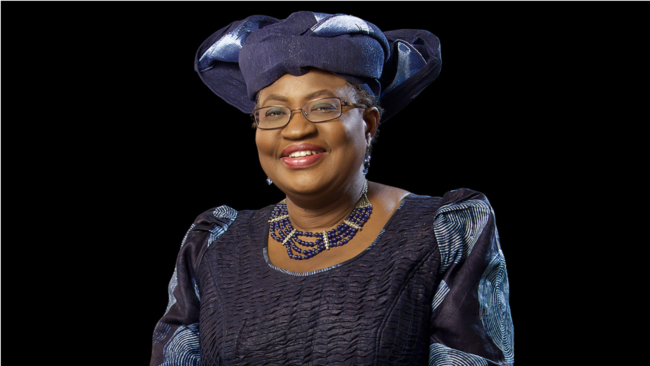
Nigerian economist Dr. Okonjo-Iweala has been appointed World Trade Organization (WTO) head.
Photo: WTO
Nigerian economist Dr. Okonjo-Iweala has been appointed World Trade Organization (WTO) head. Photo: WTO
Nigerian economist Dr. Ngozi Okonjo-Iweala is shattering global glass ceilings. Okonjo-Iweala has been named to head the World Trade Organization (WTO), making her the first woman and first African to lead the global organization. Okonjo-Iweala’s nomination had been blocked by former U.S. President Donald Trump whose administration focused on isolationism, protectionism and butt heads with the organization over their decision-making processes. The Trump administration threw its support behind Trade Minister Yoo Myung-hee of the Republic of Korea, who withdrew her candidacy early this month.
Okonjo-Iweala was appointed after newly elected U.S. President Joseph R. Biden’s administration endorsed Okonjo-Iweala’s candidacy.
While honored to be breaking barriers and leading the world’s leading organization focused on developing international trade rules, Okonjo-Iweala expressed the added “burden” of being the first African and woman to head the powerful organization.
“She said that as the first woman and first African to hold the post, ‘I absolutely do feel an additional burden, I can’t lie about that. Being the first woman and the first African means that one really has to perform.’
‘All credit to members for electing me and making that history, but the bottom line is that if I want to really make Africa and women proud I have to produce results, and that’s where my mind is at now.’”
Okonjo-Iweala also expressed concern over COVID-19 was her top priority.
In a statement about the appointment, Dr Okonjo-Iweala said a key priority for her would be to work with members to quickly address the economic and health consequences brought about by the COVID-19 pandemic.
“I am honoured to have been selected by WTO members as WTO Director-General,” said Dr. Okonjo-Iweala. “A strong WTO is vital if we are to recover fully and rapidly from the devastation wrought by the COVID-19 pandemic. I look forward to working with members to shape and implement the policy responses we need to get the global economy going again. Our organization faces a great many challenges but working together we can collectively make the WTO stronger, more agile and better adapted to the realities of today.”