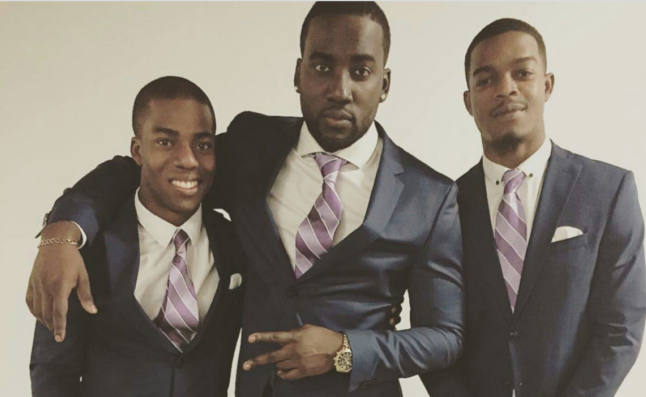
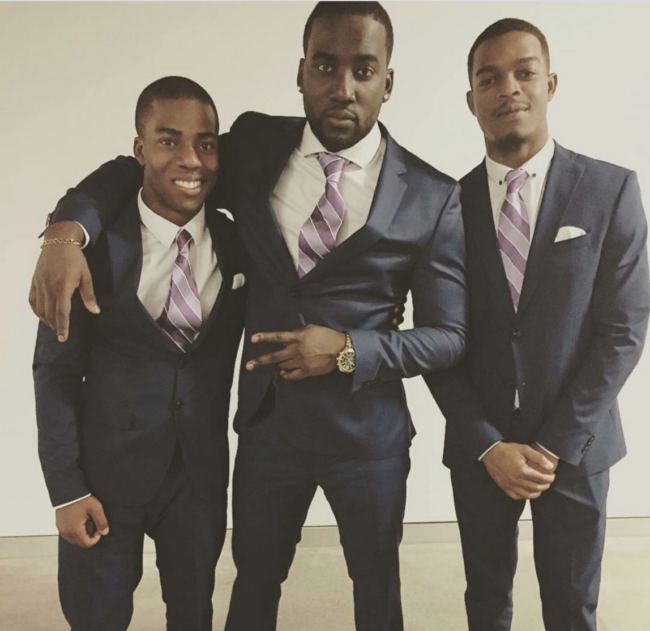
Brothers Sheldon James (l), Shemier Anderson (c) and Stephan James (r).
Brothers Sheldon James (l), Shemier Anderson (c) and Stephan James (r). – Photo/Pinterest
Canadian Actors and brothers Stephan James (If Beale Street Could Talk; Free Rayshawn), Shamier Anderson (Wynonna Earp) and their youngest brother Sheldon James have launched a venture capital firm to help fund BIPOC (Black, Indigenous, People of Color) entrepreneurs.
The trio named the company The Bay Mill Investments. The company will support and mentor young entrepreneurs in the BIPOC (Black, Indigenous and people of color) community in building profitable businesses through its Bay Mills Diversity Fund. As of this publication, they have raised $15 million (CAD) of $25 million (CAD) in an initial round of funding in an effort to raise $100 million (CAD) to fund the diversity initiative by the end of June 2021. The company is currently seeking corporate sponsors and accredited investors.
Sheldon James will serve as Chief Executive Officer and General Partner. Melissa Allen, formerly of Google, will serve as Partner and Chief Operating Officer. The serial philanthropists previously launched The Black Academy, an organization dedicated to breaking down barriers of discrimination and combatting racism in Canadian arts.
Read more about their latest initiative at Deadline.com.
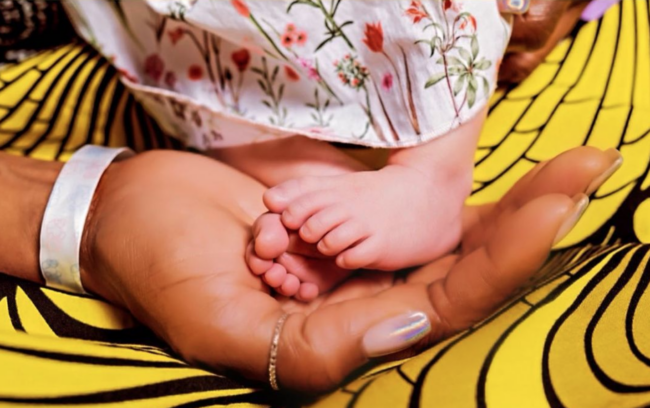
The Internet is gushing over news iconic supermodel Naomi Campbell has added a baby girl to her family. Campbell made the announcement today on her Instagram account:
Photo: Instagram/Naomi
“A beautiful little blessing has chosen me to be her mother, So honoured to have this gentle soul in my life there are no words to describe the lifelong bond that I now share with you my angel. There is no greater love.”
The actress home designer has been discussing her desire for motherhood in the press. “I think about having children all the time,” she told Evening Standard magazine in May 2017. “But now with the way science is, I think I can do it when I want.”
Celebrities and fans have been sending words of encouragement and praise. Actress Zoe Saldana wrote on the post, “Oh my goodness congrats lady! What a blessing!!!” Jodie Turner-Smith wrote, “…many many many congratulations to you and to your family— the village that will now rally around you and support you in cultivating that little angel!!!! what an incredible blessing!!! ???.”
Campbell has not disclosed her path to motherhood or her child’s paternity.
Executive Producer Yvette Lee Bowser and cast of STARZ 'Run the World' series.(Photo: Lionsgate/STARZ)
Executive Producer Yvette Lee Bowser ( l)and cast of STARZ ‘Run the World’ series .(Photo: Lionsgate/STARZ)
Trailblazing showrunner Yvette Lee Bowser, the woman behind the groundbreaking television series, “Living Single” and hit series “Dear Black People,” is bringing the story of four African-American women friends living what appears to be fabulous lives in Harlem to the small screen. Bowser who brought the wildly popular and cult classic Living Single to tv screens thirty years prior, broke ground with the first television sitcom featuring Black women leads. Living Single chronicled the lives and loves of four Black women friends living in a Brooklyn brownstone. Bowser and Executive producer Leigh Davenport (“Boomerang”) hope to strike “magic” again with their latest entry.
Lee Bowser, who has been quietly helping to produce hit television shows like ‘Black-ish” and “Dear White People,” gives us a contemporary show starring four Black actresses navigating the precariousness of life in your thirties in Harlem. Check out the series trailer below:
Starring Bresha Webb (Renee), Andrea Bordeaux (Ella), Corbin Reid (Sondi) and Amber Stevens West (Whitney), the series explores the lives of four girlfriends living in Harlem, NYC who are dealing with a variety of topics including partnership, falling in love, heartbreak, career successes and failures to name a few. Many issues women face in general and Black women in particular including racism, mansplaining and the struggle over gender roles are taken on in the series with humor, thoughtfulness and concern. Viewers are likely to laugh and cry within minutes of scenes that examine the complexity of being Black and a woman in America while in pursuit of happiness and all of its machinations in the 30 minute episodes.
In addition to the four lead actresses, the series cast is rounded out with actors Stephen Bishop, Jay Walker, David J. Cork, Tosin Morohunfola and Nick Sagar.
“Run the World,” is part of STARZ’s #TakeTheLead initiative, part of a push to create more content featuring women and people from underrepresented populations.
“Run the World” debuts on STARZ, May 16, 2021 at 8:30 p.m. EST. Set your DVRs and check local listings for channel updates.
This article was written by Nsenga K. Burton, Ph.D. founder & editor-in-chief of The Burton Wire. Follow Nsenga on Twitter @Ntellectual.
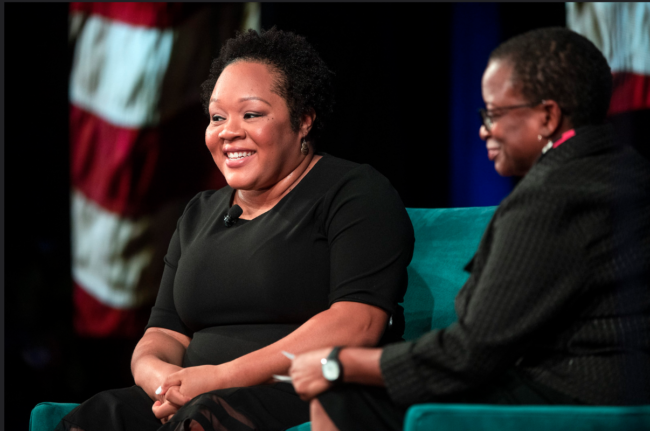
Yamiche Alcindor, left, White House correspondent for the PBS NewsHour, and Kathleen McElroy, right, director of the School of Journalism at the University of Texas at Austin.(Flickr Creative Commons/LBJ Library – 04/10/2019)
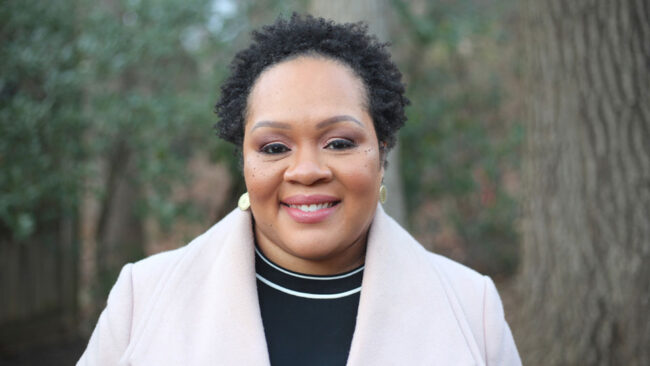
The internet is buzzing about the announcement Haitian-American journalist Yamiche Alcindor has been named host of PBS’s ‘Washington Week,” a political affairs show. Alcindor, a journalist for PBS Newshour rose to fame during former U.S. President Donald Trump’s administration as White House correspondent when asking questions the public wanted to know despite Trump’s public verbal abuse of journalists in the White House Press Corps including Alcindor.
Alcindor was mentored by the late Haitian-American news journalist Gwen Ifill, who hosted the news show prior to her death in 2016. Ifill was a groundbreaking journalist, becoming the first Black woman to host a national political talk show on TV when she joined PBS’ ‘Washington Week In Review’ in 1999. Alcindor replaces Robert Costa who took over moderating duties following Ifill’s death from cancer in 2016.
PBS and WETA-TV, the Washington affiliate, produce the national news show.
This post was written by Nsenga K. Burton, Ph.D. Follow Nsenga on Twitter @Ntellectual or @TheBurtonWire.
International news outlets are reporting that Idriss Déby, longtime president of the country of Chad has died. Jason Bourke of The Guardian reports:
“A statement from the military said the 68-year-old ruler, in power for 30 years, had been killed “on the battlefield” after being injured fighting rebels but gave no further details.
Déby last week won a sixth term in presidential elections. The poll prompted an invasion by a Libya-based rebel group called the Force for Change and Concord in Chad, which military officials had said was repulsed at the weekend.
Officials had said the veteran politician would not give a victory speech after the polls because he had travelled to the frontlines to take charge of military operations.
“He died as he lived, as a free man, with a weapon in his hand,” Abderrahman Koulamallah, a former rebel and presidential adviser, told French radio network RFI.”
Amid Déby’s death, it is being reported parliament has been dissolved and replaced by a military council led by Déby’s son General Mahamat Idriss Déby Itno.
Déby ruled for 30 years and was elected to six terms as president. He died at age 68.
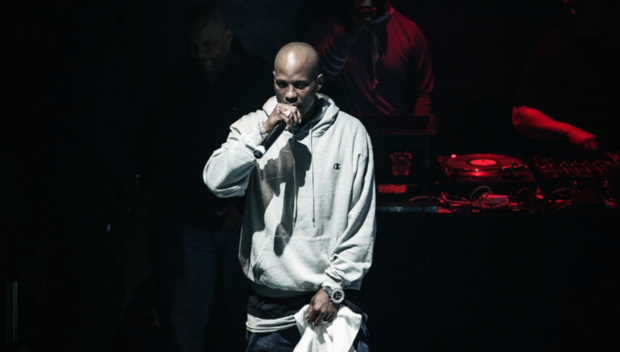
The world is mourning the loss of platinum-selling rapper Earl “DMX” Simmons, who passed away today at age 50. The Baltimore, MD born and Yonkers, NY raised Simmons was best known for his work as a rapper, although he had successful acting career, particularly in the late 1990s and early 2000s. In May 1998, the gravely-voiced rapper burst onto the scene with his debut album It’s Dark and Hell is Hot on the Ruff Ryders label at Def Jam. The Ruff Ryders was also a rap collective featuring rap superstars Eve and Swizz Beatz and Jadakiss, Styles P and Drag-On among others. It’s Dark featured the single, “Ruff Ryders Anthem,” which was a monster hit, fueling his first major label release to debut at number one on the Billboard 200. The LP also sold 250,000 copies its first week and would go on to be certified four-times platinum (RIAA), confirming the rapper known for his signature “bark” as a bona fide rap star .
Commonly referred to as a hardcore rapper, DMX’s next LP Flesh of My Flesh, Blood of My Blood, was released in December of that same year. Flesh of My Flesh debuted at number one on the Billboard 200 again and was certified four-times platinum (RIAA) again. The album also featured the hit song “Slipping” which chronicled the rapper’s struggle with addiction, success, failure and relationships. The rhythmic tune featured the sample, “Moonstreams” by jazz legend Grover Washington, Jr. and background vocals by “American Idol” favorite Tamyra Gray. The three-time Grammy nominee received two American Music Awards for favorite rap/hip-hop artist in 2001 and 2002, respectively.
While DMX was working on his next album, he was also building a career as an actor, starring in film hits like Belly (1998), Romeo Must Die (2000),Backstage(2000),Cradle 2 the Grave (2003) and Never Die Alone (2004). In 1998, DMX starred opposite rap legend Nas in the cult classic Belly, directed by legendary Hip-Hop music video director Hype Williams. The soundtrack for the film was produced by a “who’s who” of Hip-Hop producers including Sean “P Diddy” Combs, Swizz Beats, Poke and Tone, RZA and R Kelly. The Belly Soundtrack was a commercial success, reaching number 2 on the Billboard 200 and featuring the song “Grand Finale” which featured rappers DMX, Ja Rule, Method Man and Nas.
DMX appeared in Romeo Must Die with R&B singer Aaliyah, who died in a plane crash in 2001. The rapper and singer made the song, “Back in One Piece,” for the Romeo Must Die soundtrack, which debuted on the Billboard 200 at number 3 and was certified platinum. The soundtrack also featured a “Who’s Who” of rap and R&B producers including Irv Gotti, Timbaland, Mannie Fresh, Stanley Clarke,Joe and Barry Hankerson.
On December. 21, 1999, DMX released his third and best-selling album …And Then There Was X, which debuted at number one on the Billboard 200 and featured the hit singles, “Party Up,” which also became his first top ten hit on the R&B charts.
Over the course of his career, DMX struggled with drug addiction and was in and out of jail for drug-related offenses. In 2003, DMX released E.A.R.L.: The Autobiography of DMX
In 2007, the MTV music video. Award winner starred in and executive produced a reality television show entitled DMX: Soul of a Man, which aired on BET. The show featured he and his then-wife Tashera Simmons, with whom he shares four children. The title song, “Lord Give Me a Sign,” was featured on his 2006 album Year of the Dog…Again. In 2012, the couple divorced after multiple separations and reports of DMX fathering multiple children outside of the marriage.
A prolific rapper and actor, DMX has appeared in over30 films and television shows including “South Park” (1998), “The Chris Rock Show” (1998), “Moesha” (2000), “Eve” (2003), “Chappelle’s Show”(2004) and “Fresh Off The Boat” (2015). DMX also appeared on reality television shows “Couples Therapy” (2012), “Iyanla Fix My Life” (2013) and “Black Ink Crew” (2017). released eight studio albums,five compilation albums, one mixtape, one. EP, forty-six singles (including seventeen as a featured artist) and twenty-four music videos.
In 2016, DMX was found unresponsive in a car in a Ramada Inn parking lot and was resuscitated. He attributed the incident to an asthma attack from which he suffered since childhood.
In June 2020, DMX appeared on Versuz with Snoop Dog and only performed his solo hits.
On April 2, 2021 DMX suffered a heart attack following a drug overdose at his home. He was rushed to a hospital in White Plains, where he was placed on a respirator and had little brain activity. Hundreds of fans and staffers prayed for the rapper’s recovery during a vigil held outside of the hospital Monday, April 5. They chanted “DMX” and made the “X” sign with their arms in support of the rapper. The rapper, who openly discussed his personal demons and love of God as a Christian, passed away Wednesday, April 9, 2021. He was 50.
Earl “DMX” Simmons is survived by his mother Arnett Simmons, fiancée Desiree Lindstrom and children. Rest in peace.
This article was written by Nsenga K. Burton, founder & editor-in-chief of The Burton Wire. Follow Nsenga on Twitter @Ntellectual or @TheBurtonWire.
“Moment of Truth,” a five-part docuseries, examines the story behind the story of the murder of James Jordan, the father of basketball legend Michael Jordan. At the height of Michael Jordan’s popularity as a basketball player and pop cultural icon, Jordan’s father James was reported missing and subsequently found dead days later in a swamp in South Carolina. At the time of the murder (July 23, 1993), two teenagers – one white (Larry Demery) and the other Black (Daniel Green), were taken into custody and charged with the murder. Green, who maintained his innocence from the beginning, was convicted of the murder, largely based on the testimony of Demery, who is scheduled for release in 2023.
“Moment of Truth,” which airs on IMBtv, takes viewers behind-the-scenes to find a corrupt police force in Robeson County, NC, including the story of Hubert L. Deese, the “illegitimate” son of Sheriff Hubert Stone, who some suspect may have played a role in the murder. Deese, a well-known drug dealer, was the first phone number dialed from James Jordan’s car phone after the murder. Add to that story, the possible railroading of a Black teenager, who was convicted based on Demery’s testimony which has greatly changed over time, and you’ve got a thriller for a docuseries.
Written, directed and produced by “crime tv” producers Matthew Perniciaro and Clay Johnson, “Moment of Truth,” is a documentary that attempts to bring the entire story of the murder of James Jordan to viewers, including the investigation, the fallout afterwards, the plight of Daniel Green to prove his innocence and the many questions that remain surrounding the murder of the father of one of basketball’s greatest players.
The docuseries debuts today (4/2/21). Watch free on IMDBtv.
This post was written by Nsenga K. Burton, founder & editor-in-chief of The Burton Wire. Follow Nsenga on Twitter @Ntellectual or @TheBurtonWire.
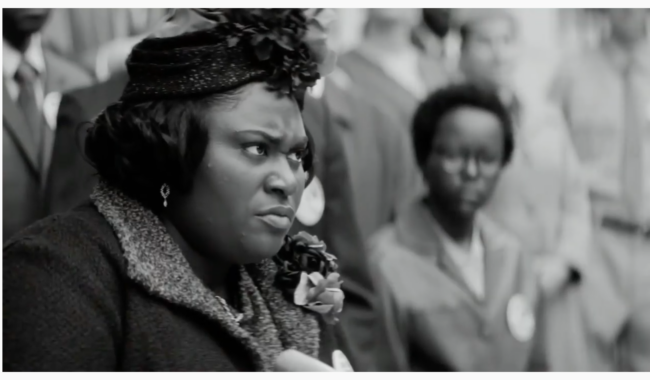
Robin Roberts is internationally known for her work in sports broadcasting at ESPN and then as the anchor of ABC’s Good Morning America since 2005. Now, the former athlete and trailblazer who helped usher in an era of women broadcasters has turned her attention to the life of iconic gospel singer and activist Mahalia Jackson. Robin Roberts Presents: Mahalia, the story of one of the most revered singers in American history debuts April 3 at 8 p.m. EST on the Lifetime Network.
Roberts who was born in Tuskegee Alabama and raised in Mississippi before heading to college at Southeastern Louisiana University speaks often about her love of Louisiana.The daughter of a Tuskegee Airmen Col. Lawrence E. Roberts and Educator Lucimarian Roberts, who was the first African American to serve as chairwoman of the Mississippi State Board of Education, Roberts aimed high as an athlete, student and eventually broadcaster. Roberts who credits her faith for her wins against an ongoing battle with cancer credits her parents for imparting discipline and faith, two qualities that are inherent in the story of gospel legend and civil rights icon Mahalia Jackson.
Born in New Orleans, Mahalia began singing at an early age and went on to become one of the most revered gospel figures in U.S. history, melding her music with the civil rights movement. Her recording of the song “Move on Up a Little Higher” sold millions of copies, skyrocketing her to international fame and gave her the opportunity to perform at diverse settings including in front of a racially integrated audience at the prestigious Carnegie Hall and at John F. Kennedy’s inaugural ball. An active supporter of the Civil Rights Movement, Jackson sang at numerous rallies, including the March on Washington in 1963 alongside Dr. Martin Luther King, Jr., in hopes that her music would encourage and inspire racial equality. From Rock’n Robin Productions and Lincoln Square Productions, Mahalia is executive produced by Robin Roberts and Linda Berman.
Known best for her outstanding work as Tasha “Taystee” Jefferson on Netflix’s hit series Orange is the New Black and her Tony nominated role as Sophia in the Broadway production of The Color Purple Starring, Mahalia stars Julliard-trained and SAG award-winning actress Danielle Brooks. Robin Roberts Presents: Mahalia premieres Saturday, April 3 on Lifetime at 8/7c. Check your local listings for channel information.
This post was written by Nsenga K. Burton, founder & editor-in-chief of The Burton Wire. Follow Nsenga on Twitter @Ntellectual or @TheBurtonWire.
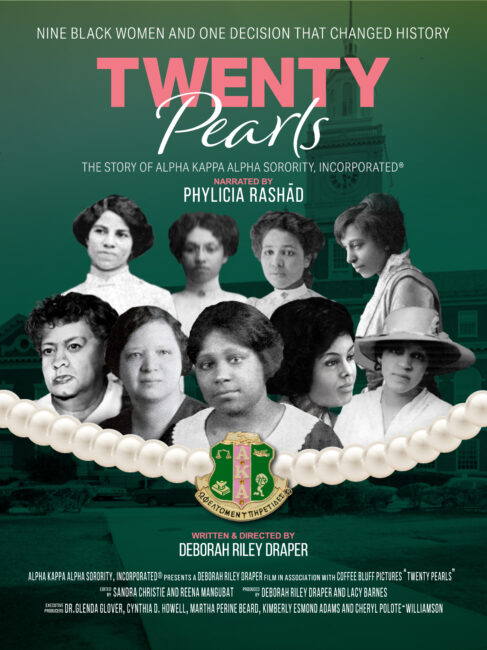
Photo: Official Movie Poster/Alpha Kappa Alpha Sorority, Inc.®/Coffee Bluff Pictures
Photo: Official Movie Poster/Alpha Kappa Alpha Sorority, Inc.®/Coffee Bluff Pictures
The nation’s first sorority for African-American college women has another first to celebrate. The documentary Twenty Pearls: The Story of Alpha Kappa Alpha Sorority, Incorporated® written and directed by award-winning documentary filmmaker Deborah Riley Draper, premieres Friday, March 26 at 8 p.m. EST on Comcast’s Black Experience onXfinity, becoming the first original film for the media company’s Black content hub. The Black Experience is led by Keesha Boyd, executive director for multicultural video and entertainment at Comcast NBCUniversal.
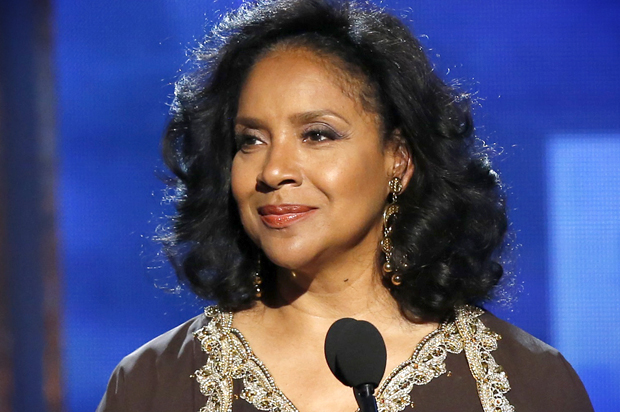
Narrated by Alpha Kappa Alpha Sorority, Inc.® member Phylicia Rashad, Twenty Pearls takes viewers on a journey through 113 provocative years since the founding of the sorority. In 1908, forty years after the emancipation of enslaved African Americans, nine Black college women, enrolled at Howard University fought for, organized and built a sisterhood. The vision grew to 300,000 members and impacted and created watershed moments in American history despite race and gender bias. Rashad, the first Black actress to win a Tony award for a dramatic leading role, guides viewers through the story of visionary founders and their quest to change the world through sisterhood and service.
Produced by Coffee Bluff Pictures, Deborah Riley Draper’s production company, Twenty Pearls tells the story of this trailblazing organization founded to serve and uplift the African American community through narration, interviews and archival assets. Riley, who pledged Alpha Kappa Alpha Sorority, Inc. as an undergraduate student at Florida State University, is delighted to be able to shine light on the incredible journey of the sorority. “It’s an honor to help elevate the stories of Black women who have impacted America in so many important ways,” says the NAACP Image Award nominee for her 2016 film Olympic Pride, American Prejudice. “It is a privilege to be able to elevate the stories of women of my sorority and to document their contribution to American society,” says Draper.
Twenty Pearls shows viewers the impact of Alpha Kappa Alpha Sorority, Inc.® on the Harlem Renaissance, World War II, NASA, Civil Rights, Women’s Rights and HBCU endowments. Interviews include Alpha Kappa Alpha International President and CEO Dr. Glenda Glover, Vice President Kamala Harris, Miss Universe Ireland 2019 Fionnghuala O’Reilly, Smithsonian Secretary Lonnie Bunch III, Anna Eleanor Roosevelt Fierst and many more. “We see the evidence of the 113 years of AKA in all aspects of our American society,” adds Draper.
That evidence is also reflected in the team that worked on this documentary including Dr. Glenda Glover, who serves as Executive Producer. Cynthia D. Howell, Martha Perine Beard, Kimberly Esmond Adams and Cheryl Polote-Williamson also serve as executive producers. Lacy Barnes and Draper produced the film for Draper’s production company Coffee Bluff Pictures. All except Barnes are members of Alpha Kappa Alpha Sorority, Inc.®
In keeping with their legacy as a pioneering organization for women, Alpha Kappa Alpha® is the first Black Greek Letter Organization to produce and distribute the first-ever full-length feature documentary film about the Black Greek Sorority experience. Twenty Years demonstrates the historic and current cultural relevancy of HBCUs and Black Greek Letter Organizations to the shaping and survival of America. Draper, who produced and directed the critically-acclaimed documentary Versailles ’73: American Runway Revolution is excited and passionate about her newest documentary. Known for making films that explore the intersection of race, gender and culture through a historical lens, Draper centers Black women in the narrative of American culture and success. When asked to sum up the documentary in a few words, Draper replies, “This film is a love letter to Black women — all of us.”
Twenty Pearls premieres Friday, March 26, 2021, at 8:00 PM (EST) on Comcast Xfinity Black Experience and Comcast Xfinity platforms, xfinity.com, XfinityFlex internet and Xfinity Mobile. The premiere will be followed by a virtual conversation with the cast and crew. The documentary will be available nationwide On Demand, starting March 30 on all other cable systems. Check your local cable guide for channel information.
This article was written by Nsenga K. Burton, Ph.D., founder & editor-in-chief of The Burton Wire. Dr. Burton is a life member of Alpha Kappa Alpha Sorority, Incorporated® and appears in the documentary “Twenty Pearls: The Story of Alpha Kappa Alpha Sorority, Inc.® Follow Nsenga on Twitter @Ntellectual or @TheBurtonWire.
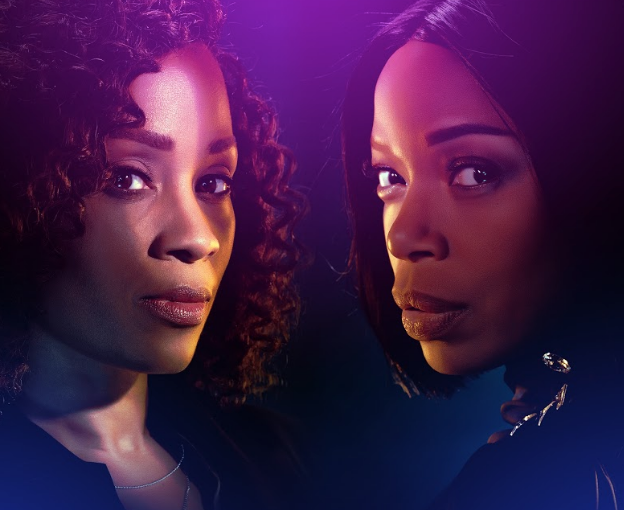
The Oprah Winfrey Network’s(OWN) much anticipated nighttime drama, “Delilah,” aired Tuesday, March 9 at 9 p.m. EST. Maahra Hill (“Black-ish,” “How to Get Away With Murder”) stars asDelilahConnolly, a headstrong, highly principled lawyer living in Charlotte, North Carolina.Delilah is doing her best to raise two kids alone and keep her ties to family, friends and faith strong, all while ceaselessly seeking justice for those who need it most, in a time when the rich and powerful of Charlotte and beyond will do anything to stop her. Jill Marie Jones (“Girlfriends”) appears as Tamara Roberts,Delilah’s confidante and best friend; Susan Heyward (“Orange is the New Black”), portrays Demetria Barnes, Delilah’s newly hired, fearless, and ambitious associate; and Ozioma Akagha (Marvel’s “Runaways”), plays Delilah’s unfailingly sunny secretary, Harper Omereoha. In a recurring role, Lyriq Bent stars as Gordon, Delilah’s ex-husband.
Filmed in Charlotte, NC, the series is produced by Warner Bros. Television and Harpo Films and executive produced by Craig Wright, Charles Randolph-Wright, and Oprah Winfrey.
A Chicago native, Maahra Hill says Delilah is a familiar character to her. “The sacrifice she makes for parenthood, commitment she has to the community, giving a voice to the voiceless and the relationship she has with her ex feels like home to me, says the actress. “There are ways she’s completely different and much more courageous than I am. She’s more of a risk taker than I am,” Hill adds. The actress prepared for the crusader by reaching out to a couple of African-American women lawyers in Charlotte in order to bring “authenticity” to the role. “My goal is to shine a light on an everyday real experience; to make sure it’s reality, it’s authentic,” adds Hill.
One of the ways the creators brought authenticity to the show was by casting and hiring local talent and crew from Charlotte. “Local actors along with the local crew bring their input into their performances,” says executive producer Craig Wright. That includes everything from where to get things you want or need in the city and even the character’s accents. Kelly Jacobs, the actress who plays Delilah’s daughter Maia is from Charlotte. “This is a real girl from Charlotte playing the hell out of her violin and going to work in a town where she’s from,” says Wright. “Even though this is a fictional, scripted genre, the more we can shrink that divide between the viewers and the viewed and make it one big percolating conversation, the better,” he adds.
The location gave them an opportunity to cast and shoot locally in addition to providing a rich background for the setting in a city known for its Black achievement and leadership during the civil rights movement. In recent years, the “Queen City” named for Queen Charlotte, has been at the center of social justice activism because of the 2013 police killing of Jonathan Ferrell, 24, an unarmed Black man seeking help following a car accident; the 2013 killing of Keith Lamont Scott, 43, an unarmed man who was shot and killed while reading a book while waiting for his son to get home from school on the school bus; and the 2015 killing of Jonisha Fonville, 20, who was shot and killed while experiencing an episode caused by mental illness. The Queen City was the perfect place for the story of this dynamic character of Delilah and her pursuit of justice for those who need it the most– the historically disenfranchised. The creators and writers hist the ground running writing the entire season before shooting began.
And then there was COVID and more social justice activism around the killing of George Floyd. As was the case with other productions, COVID-19 impacted production, necessitating some changes in when to film, how to film and the best way to tell the stories. George Floyd’s killing impacted the stories that were told.
“Shooting during the pandemic makes you find a completely new way of working. Because of this team led by Maarah and Jill Marie Jones, we were able to make it happen,” says executive producer Charles Randolph-Wright. “The challenge for us was to find a new way to work amid all of the things happening including the pandemic and the election. It was lot to manage but we did it,” he adds.
“Oprah is a big fan of intention,” says Craig Wright. “We had an entirely different season planned and had written quite a bit of it when George Floyd was murdered. Because our story was so close to that, we stopped and rewrote the entire story and centered it around the female friendship around Delilah. We changed everything because it forced the show to become more unique.”” he added.
Delilah airs Tuesdays at 9 p.m. EST on OWN. Check local listings for channel information.
This post was written by Nsenga K. Burton, Ph.D., founder & editor-in-chief of The Burton Wire. Follow Nsenga on Twitter @Ntellectual.