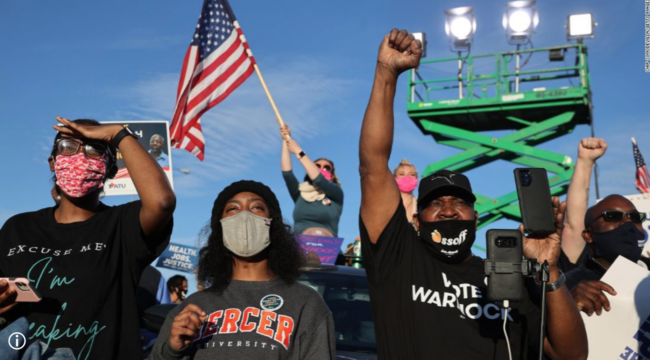
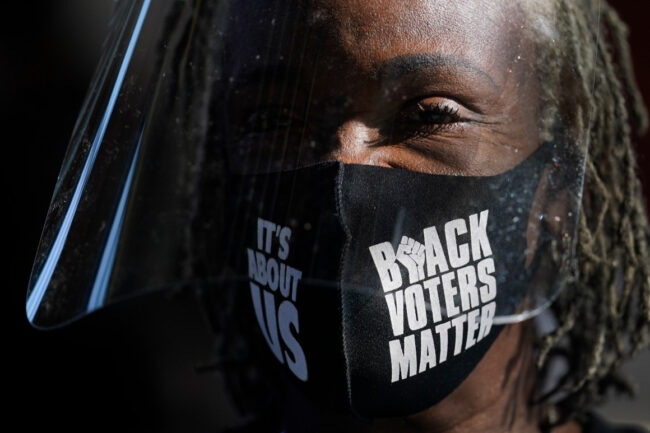
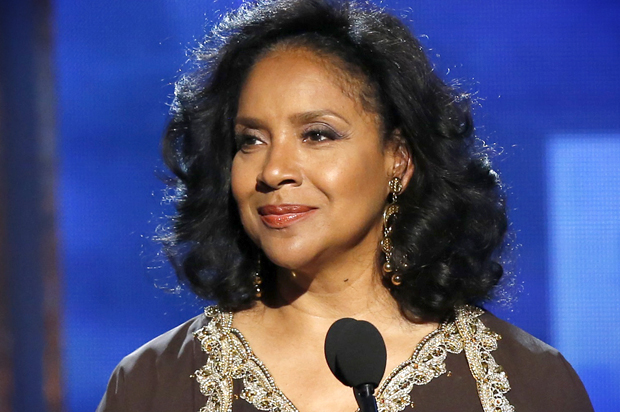
CNN’s John Blake discusses the political power Black Southerners wielded in the 2020 U.S. Presidential election and the Georgia Senate run-offs. Black Southerners including recent transplants are changing the political landscape of the deep South and wielding a power denied their parents and grandparents. The Burton Wire‘s founder & editor-in-chief Nsenga K. Burton is featured in the article. Check it out.
EXCERPT
Nsenga Burton grew up in a military family that liked to travel and went everywhere from New York City and Washington, D.C., to the Caribbean.
There was one place, though, that her mother dreaded visiting: the Deep South.
Her mother saw it as a forbidding land of lynch mobs and “Whites Only” signs, where Black people went missing just for trying to vote. Burton’s mother grew up in segregated Virginia and was so mistrustful of the South she once dissuaded her daughter from vacationing in Atlanta and encouraged her to visit the Bahamas instead.
“My mother sent me out of the country before she sent me to the Deep South,” Burton says.
Burton, who is 48, just got a little payback. After moving to Atlanta from Maryland six years ago, she became part of a crucial bloc of Black voters who helped Democrats seize control of the US Senate. They mobilized in record numbers to elect the Rev. Raphael Warnock, a Black man from Savannah, and Jon Ossoff, a Jewish man from Atlanta.
Burton thought of all the Black people like her who migrated from elsewhere to Georgia to reclaim political power that was taken away from their parents and grandparents, who fled the Jim Crow South in fear.
“It’s poetic justice,” says Burton, a cultural critic and founder of The Burton Wire, which produces stories on race, class, and gender. “The descendants of the people who were pushed out of the South, who had no power, who knew they could go missing if they tried to vote, have returned and they’re making it work for them. It’s been a long time coming.”
The stunning election results in Georgia have rightly been attributed to the relentless work of voting-rights organizers such as Stacey Abrams, the former gubernatorial candidate whose group, Fair Fight, is credited with registering 800,000 new voters in Georgia.
But those victories also happened because of a series of personal decisions made years ago by little-known transplants like Burton. They are part of what’s called “The New Great Migration,” and without them, Warnock and Ossoff wouldn’t have stood a chance.
Politico’s Teresa Wiltz discusses the cultural expression of Black joy as a part of the momentum behind the historic impact of Black voters in the 2020 election. The Burton Wire’s Nsenga K. Burton is quoted in the article. Check it out.
EXCERPT Joy is an essential component of protest, said Nelini Stamp, director of the Joy to the Polls, a nonpartisan, national project that organizes performances for voters at polling places. (It was a “Joy to the Polls” DJ who played the Cha Cha Slide in Philly.) “It always comes out when people are in dire situations, 2020 being a dire situation,” Stamp said. “When there’s a lot of pressure and a lot of economic hardship, music and joy always resurfaces. It’s a radical act.”
Stamp, a political activist, got the inspiration for “Joy to the Polls” after seeing a roving Bad Bunny outdoor concert. Stamp was worried about potential voter suppression tactics and overly long lines at precincts, especially in Black neighborhoods. The idea was to bring a little happiness to voters and deescalate any tension while they waited.
“People were feeling down and out and out of luck,” Stamp said. “We wanted to use a different motivation other than anger.”
For the presidential election, Joy to the Polls set up “pop-up activations” around the country, showing up at polling stations with DJs spinning tunes and mini concerts ranging from Patti Smith to Busta Rhymes. They’re continuing the practice for the Georgia runoffs, with 80 pop-ups around the state, featuring appearances by America Ferrera, Eva Longoria, K. Michelle, as well as rappers Mulatto, Rick Ross and Moneybagg Yo.
Marrying music with a movement has long roots in the Black community, from the gospel song-turned-civil rights anthem “We Shall Overcome” to “The Bigger Picture,” rapper Lil Baby’s song about Black Lives Matter protests. As the poet Toi Derricotte once wrote, Black joy is an act of resistance.
“Black joy is an essential part of Black cultural expression,” said Nsenga Burton, a film and media professor at Emory University. “2020 shows that Black people continue to choose happiness and joy in the face of great adversity. And that can never be taken away from us.”
The internet is ablaze with news stories about Wednesday’s (1/6/21) failed coup attempt by President Trump and his loyalists to overturn the U.S. Presidential election by breaching the federal Capitol building by force. The strategy to interrupt the Congressional vote to certify the 2020 U.S. Presidential election results failed. Five people including Capitol Police officer Brian Sicknick, 42, were killed during the breach. FBI authorities are still in the process of identifying and arresting the Trump loyalists.
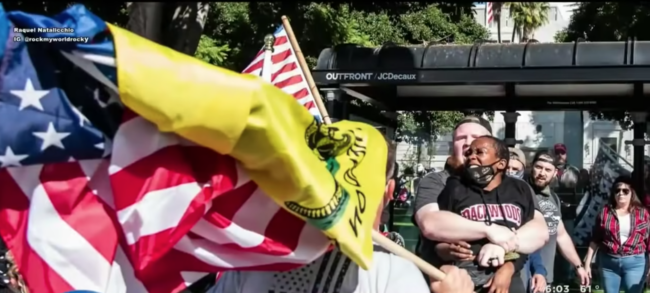
Following the failed coup attempt, social media has been documenting the actions of Trump loyalists and supporters including the violent attack of a 25-year-old Black woman by Trump loyalists. The terrifying attack happened in Los Angeles, CA when the Black woman who was walking down a downtown Los Angeles street, was surrounded by an angry mob of 40 Trump loyalists who were participating in a “Stop the Steal” rally. The black woman identified by media outlets as Berlinda Nibo, refused to remove her face mask.
The Trump crowd kept demanding she take off her face mask and began following her and yelling racial and sexist epithets including the n-word and b-word. Nibo yelled back and gave them her middle finger and was confronted by a male member of the group who demanded she remove her face mask. When Berlinda refused to remove her face mask again, the man clawed and smacked her in the face. The Cut is reporting the incident occurred with a LAPD police officer standing across the street, who failed to intervene in the vicious attack, despite calls from onlookers for the officer to help the woman.
The Trump mob then started pushing the victim and a woman Trump loyalist attacked her, snatching off her wig in the process. When Nibo tried to fight back, the men began beating her with metal flag poles while the woman Trump loyalist continued to beat her.
The victim was repeatedly beaten and pepper sprayed until a man attending the Trump rally physically picked up Nibo and escorted her to safety from the group. He told her, “You’re okay. I’m getting you out of here. These people are trying to kill you.” Nibo who says he grabbed her so hard she had red marks across her chest, credits him with saving her life.
Watch a CBS News report of the incident below (WARNING: Violent images; some captured by photojournalist Raquel Nataliccio)
In a separate incident, a Black-woman owned café in Oak Park, IL was targeted by racists who threw a brick at her establishment and left a racist note with racial epithets at the door. Watch an ABC 7 Chicago news story about the incident:
Following the incident, hundreds of messages and support were posted to the front of the café which often serves as a meeting spot for the local political crowd. Police are investigating the incident at L!VE Café as a hate crime.
Since President Trump has taken office, scores of violent incidents by Trump loyalists have taken place in the United States, much of the violence against BIPOC (Black, Indigenous, people of color). In August 2019, The Guardian compiled a database of 52 threats or acts of violence committed by Trump supporters since he took office. Many of the threats of violence were against Black women members of Congress included Rep. Ilhan Omar, Rep. Maxine Waters, and then Senator Kamala Harris (now U.S. Vice-President-Elect). Many of the physical attacks were against Muslim women of color.
Currently, thirteen of the domestic terrorists have been charged in federal court and approximately 40 have been charged in Superior Court. Charges against participants of the failed coup who breached the Capitol include “picketing the Capitol,” “disorderly conduct,” “knowingly entering or remaining in any restricted building or grounds without lawful authority,” and “violent entry.” None have been charged with Capital murder against Capitol police officer Brian Sicknick, who was beaten to death with a fire extinguisher inside of the Capitol during the failed coup or any charges related to the pursuit of a Black Capitol police officer who was threatened with violence and was seen on video running for his safety.
Women of color in general and Black women specifically need to take heed, be alert and careful when leaving safe spaces. Nibo was walking to her home when the young woman encountered the violent mob of Trump loyalists. Based on The Guardian’s report and documented video violence by citizen journalists, a pattern of threats and mob violence against Black women in the Trump era has clearly been established and buoyed by a failure to punish white violent mob participants with charges that would potentially deter future attacks. In some cases, the Black women victims themselves are charged by police instead of the perpetrator.
This post was written by Nsenga K. Burton, Ph.D., founder & editor-in-chief of The Burton Wire. Follow Nsenga on Twitter @Ntellectual or @TheBurtonWire.
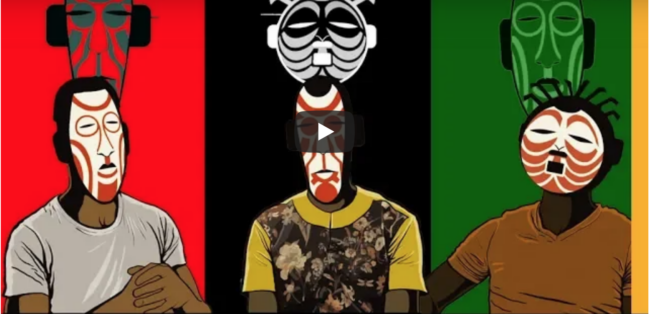
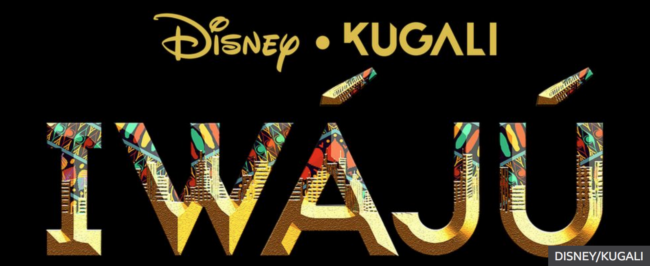
The internet is ablaze over the news that Disney will partner with Kugali, a Nigerian comic and animation company, to create an animated series set on the continent. Iwájú will be a long-form series “steeped in science fiction” based in a futuristic Lagos, Nigeria, Disney says.
Ibrahim, along with Nigerians Ziki Nelson and Tolu Olowofoyeku, created the company Kugali to tell “stories inspired by African culture using comic books, art and augmented reality” according to their website. “This show will combine Disney’s magic and animation expertise with Kugali’s fire and storytelling authenticity,” Nelson said.
In January 2019, Kugali created a stir by announcing the company would “kick Disney’s arse” in terms of content creation and storytelling.
Iwájú, means “the future” in Yoruba. Here’s to a great partnership and future for Kumagli and Disney.
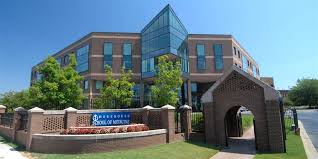
Morehouse School of Medicine (Atlanta)
Photo: Google Images
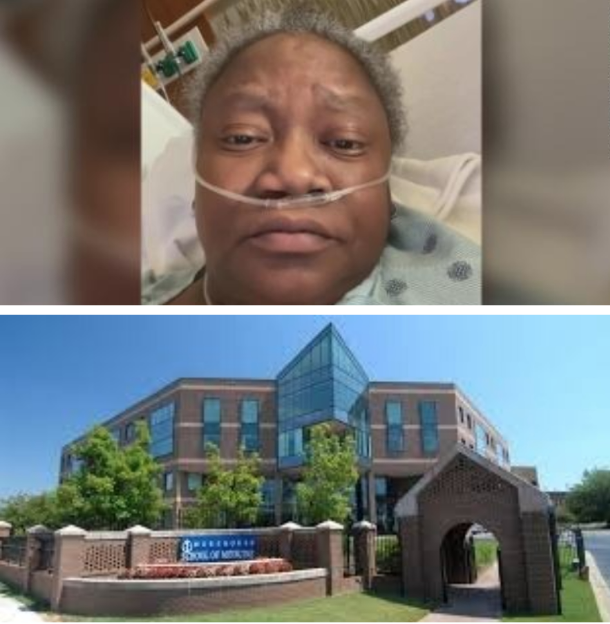
A video of Dr. Susan Moore outlining her racist treatment at the hands of battling COVID-19 has gone viral on social media. Moore, a Black woman doctor said she needed to be transferred from the hospital because of poor treatment she attributed to racism. Moore died, prompting an investigation into the IU Health North Hospital in Carmel, Indiana which released a callous statement blaming Dr. Moore for being “intimidating” to the medical staff treating her for Covid-19. Labeling Dr. Moore as “intimidating” and blaming her for her poor treatment is one of the ways in which racism rears its ugly head in hospital rooms across the country. The choice of words by the administrator also demonstrates a profound lack of cultural competency, a blatant disrespect of Dr. Moore’s healthcare credentials and underscores Dr. Moore’s claims that she was being mistreated based on her race. How exactly is a woman who is clearly vulnerable and unable to lift her head from the pillow in the video “intimidating” to fellow medical practitioners treating her?
Well, Morehouse School of Medicine (MSM) and CommonSpirit Health have the answer. Morehouse School of Medicine (MSM), a historically Black medical school and one of America’s leading educators of primary care physicians, and CommonSpirit Health (CommonSpirit), one of America’s largest health systems with locations in 21 states from coast to coast, are responding to the dual pandemic of COVID-19 and racial injustice with a 10-year, $100 million partnership to develop and train more Black physicians, helping address the underlying causes of health disparities and increase access to culturally competent care.
The two leading healthcare organizations are creating a joint undergraduate and graduate medical education program to educate and train the next generation of culturally competent health clinicians and researchers.
“Of the 21,863 students entering medical school in 2019, only 1,626 were Black – and only 619 were Black males,” said Morehouse School of Medicine President and Dean Valerie Montgomery Rice, MD. “This statistic is alarming for many reasons, not the least of which is the impact on patient care. Studies show that Black patients have better outcomes when treated by Black doctors.”
MSM and CommonSpirit are uniquely positioned to impact health equity through education and training opportunities and improved access and care delivery. While there are 155 accredited medical schools in the U.S., MSM and the other three historically Black medical schools produce the majority of the nation’s Black physicians. As one of the largest nonprofit health systems in the nation, CommonSpirit serves some of the most diverse communities in the country and cares for more Medicaid patients than any other health system in the United States.
Dr. Susan Moore (top); Morehouse School of Medicine (bottom).
The partnership will help develop more Black and other minority physicians by ensuring a minimum of 300 additional underrepresented providers complete their residency training annually and support a pipeline of students that will be recruited from communities that have a historical provider shortage. MSM and CommonSpirit will establish five new regional medical school campuses and graduate medical education programs in at least 10 markets in partnership with CommonSpirit healthcare facilities, to be announced in spring 2021.
“We are laying the foundation for patients to have more access to Black clinicians and for Black medical students and graduates to gain community-based experience that they need to be successful in their work,” said CommonSpirit President and CEO Lloyd H. Dean. “Our initiative also will create a pathway for healthcare organizations across the nation to follow and share our learnings, a vital part of our work.”
The collaboration will extend to addressing cultural competency and developing research programs to impact illnesses that disproportionately affect minority and underserved communities. MSM, a recent recipient of a $40 million COVID-19 Resiliency Network grant from the U.S. Department of Health and Human Services, has been at the forefront of biomedical and clinical research initiatives to address diseases that disproportionately affect minority communities.
“We’re immediately leveraging our partnership to address health inequities magnified by the COVID-19 pandemic, as Black Americans are disproportionately impacted by COVID-19,” Dean said. “Together, we will foster a culturally competent system of care that includes testing, care delivery, and vaccine allocation, directed at the most vulnerable populations to reduce the impact of COVID-19 in racial and ethnic communities.”
MSM and CommonSpirit will contribute $21 million in seed money in the first two years, with a goal of spearheading a 10-year, $100 million initiative that invites the support of individual donors, industry partners and philanthropic organizations.
Although Dr. Moore has transitioned, this initiative will help produce more Black doctors who will give Black patients the respect, medical advice and treatment they deserve, and hopefully save lives in the process.
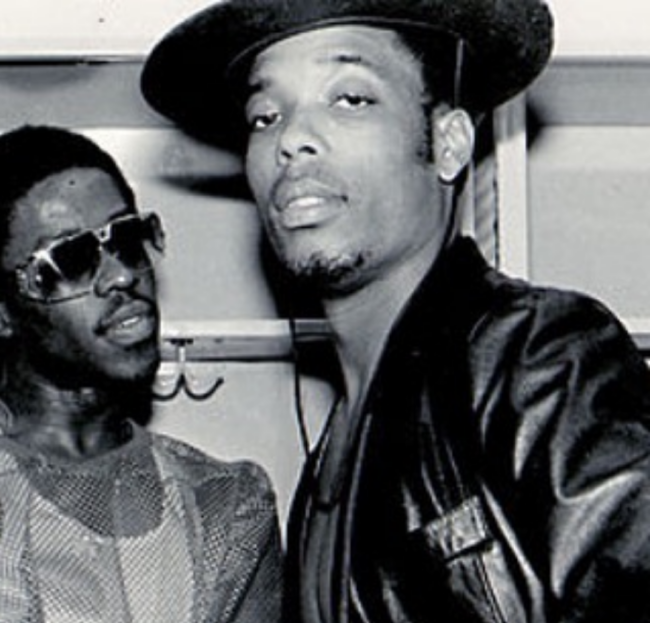
John “Ecstasy” Fletcher and Jalil Hutchings (Whodini!). Photo: Instagram/QuestLove
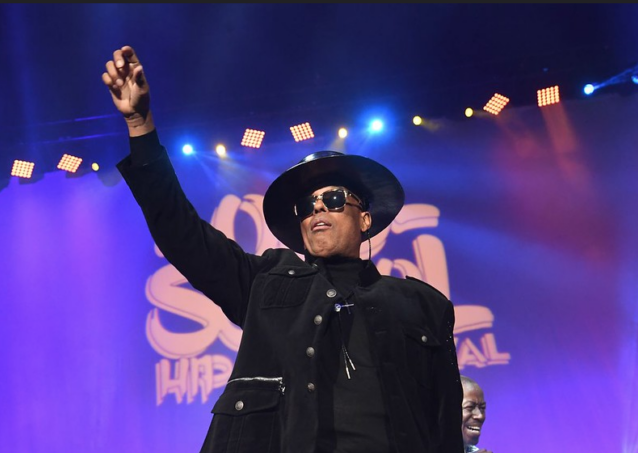
The blogosphere is weeping over the loss of John “Ecstasy” Fletcher of the legendary rap group Whodini! Fletcher, known as “Ecstasy” was found dead in his Atlanta-area home Wednesday. Ecstasy was part of the Brooklyn rap trio Whodini! who had hits throughout the 1980s including Friends, The Freaks Come Out at Night, One Love, Five Minutes of Funk, Big Mouth and Funky Beat. Fletcher and his fellow MC Jalil Hutchings and Drew “Grandmaster Dee” Carter rocked the mic with electrifying iconic performances at Fresh Fest 1984, which featured Kurtis Blow, Run-DMC,The Fat Boys, Newcleus & the Dynamic Breakers, New York City Breakers and Turbo and Ozone from Breakin’ fame.
Known for wearing shorts, cowboy boots and a Zorro hat, Fletcher’s swagger, good looks, soulful voice and smooth delivery made him a sex symbol among early Hip-Hop fans. Their live shows were legendary, holding their own with superstar groups like Run-DMC, the Beastie Boys and a young Todd “L.L. Cool J” Smith,.as evidenced by being included on the legendary 1986 Raising Hell Tour.
Managed by Russell Simmons and a part of the Jive Records family, Whodini! made history and made stars in the process. They were one of the first rap groups to successfully blend rap with R&B/Soul, churning out hit after hit. While many rap artists of that time were braggadocious, Whodini promoted partying, having a good time and weaved tales of complicated friendships and relationships making brilliant use of iambic pentameter, rhythmic rhymes and visual storytelling. Whodini’s “Magic’s Wand” is the first rap song with a music video that was not performance based but actually visualized a story.
Produced by producing legends Larry Smith and Thomas Dolby (yes, the iconic artist), “Magic’s Wand” is one of the most sampled songs in Hip-Hop history. The song highlighted their relationship with rap pioneer Mr. Magic’s iconic radio show “Rap Attack” on WBLS that featured fellow rap trailblazers DJ Marley Marl and Tyrone “Fly Ty” Williams. Whodini made six studio albums, four of which were certified platinum. Whodini’s self-titled debut was recorded in Europe, produced by German uber-producer Conny Plank, demonstrating their ability to successfully blend Europop, Synthpop, R&B, Soul, West African oral traditions and Caribbean beats and rhythms like their industry counterparts Afrika Bambaataa and Newcleus to create rap hits.
Their albums included Whodini (1983), Escape (1984), Back in Black (1986), Open Sesame (1987), Bag-a-Trix (1991) and their comeback album Six on Jermaine DuPri’s So-So-Def label producing the hit single “Keep Running Back.” DuPri got his start in the industry as a backup dancer for Whodini! in the early 1980s.
Whodini’s energetic performances were buoyed by outstanding back up dancers like DuPri and Shiller Shaun “Kangol Kid” Fequiere and Fred “Doctor Ice” Reeve (Jalil’s younger brother). The two were originally known as the dancing duo The Keystone Dancers. They went on to perform for Whodini, eventually forming one half of the popular rap group UTFO., whose Hip-Hop classic “Roxanne, Roxanne” is a Hip-Hop banger and classic.
In 2007, Whodini! was honored at the Vh-1 Hip-Hop Honors. In 2012, the rap legends were featured on TV One‘s “UnSung” series, presented with the Icon award at the Underground Music Awards and inducted into the Long Island Music Hall of Fame. In 2018, the epochal group received the Hip-Hop Icon Award at the Black Music Awards ceremony held in Nashville. Despite their legendary albums, performances and influence on the rap musical genre, Whodini never won a Grammy.
John “Ecstasy” Fletcher was 56. A cause of death has not been released at this time.
Rest in power.
This article was written by Nsenga K. Burton, Ph.D., founder & editor-in-chief of The Burton Wire. Follow Nsenga on Twitter @Ntellectual.
As we move into the Holiday season and stare down the Georgia Senate run-off that will hopefully keep the normally red state blue, it’s important to remember the role that music in general and DJ D-Nice specifically played in helping to get people to the polls while surviving the Covid-19 quarantine.
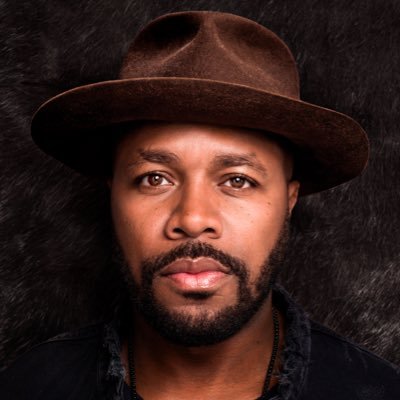
One only has to think about the way music has taken over Instagram Live. Dozens of DJs have taken to the Instagram airwaves, spreading joy, hope and musical memories to their quarantine-weary followers. Among the leaders is Derrick Jones, also known as DJ D-Nice, who began offering free DJ sets way back in March.
When D-Nice spins, Instagram listens and a highly-engaged community has formed around his live streams. D-Nice, whose initial purpose was to help people make it through the Covid-19 quarantine through great music sets, has inadvertently become a social and civic force. When one enters his set, they may be listening alongside Oprah Winfrey, Donnie Wahlberg, Joe Biden or Michelle Obama. In fact, Obama tapped him to DJ for an Instagram When We All Vote event, an initiative to increase election participation.
There are studies that attest to the efficacy of online political mobilization and shows “that social mobilization in online networks is significantly more effective than informational mobilization alone.” Essentially, being part of an influential community can influence your voting behaviors and D-Nice’s Club Quarantine (CQ) is a glowing example of this factor.
Lalanya Singleton, a nurse from Baton Rouge came to D-Nice’s Instagram Live for the music, but stayed for the camaraderie of the community. She initially viewed voting as futile, but CQ ignited her civic spirit. “I was not even going to vote,” said Singleton. “I’ve been against politics for a long time. CQ helped me realize the importance of voting.” Though she is unsure about future civic engagement, Singleton realizes that the country needs unification after a very divisive four years, and sees herself as part of that process. She intends to continue learning by watching 20 Four 20, a voter mobilization movement that grew out of CQ.
Paul Goldsborough also found fellowship in CQ. He marveled at the group’s ability to attract political leaders such as President-Elect Joe Biden and Vice-President-Elect Kamala Harris. “You can actually say ‘I partied with the President and the Vice President, I partied with the first lady’,” said Goldsborough.
On a deeper level, Goldsborough appreciates that D-Nice used his platform to tout the importance of civic engagement and that he was vocal about his political stance. “It made me feel good that there’s somebody out there that’s actually speaking out and not holding it in. It made me say, you know what? I don’t have to hold it in either.”
CQ member Tracy Anderson agrees with this sentiment, and applauded D-Nice for using his platform responsibly.
“He [D-Nice] knew he had a responsibility with his platform, and he allowed us to be exposed to information so that we could all make our own solid decisions,” said Anderson. “A lot of people may have only thought about commerce. But he took his exposure to 2.5 million people and used it for good.”
Successful civic engagement comes with community connection and the underlying power of Club Quarantine is community.
For many CQ devotees, D-NIce’s sets provide a place to reminisce through music and for human connection, providing a vital life line. For John and Susan Copeland, CQ has become a beacon in a year filled with challenges. The couple leaned on the kindness of strangers-turned-CQ Family to overcome their bouts with COVID-19. Susan shared that while bedridden in the hospital, D-Nice’s infectious vibes gave her the strength to get up and dance. “That was a part of healing for me,” said Susan.
The couple had always planned to cast their ballots, but they found it helpful that D-Nice was an advocate for amplifying common voices through the voting process. John is especially interested in helping people stay connected to the process beyond presidential elections. “It [CQ] not only pushed me to be more engaged, but to also engage others,” John said. “We still have a lot of work to do. We have to stay involved and stay engaged.”
November 3 was filled with apprehension and anticipation, and D-Nice held a 19-hour DJ set for people to pass the time while waiting to vote and hear election updates. For Tyra Gardner, it was not just music — it demonstrated his level of commitment to the election process and solidified her commitment.
“In my mind, if you are committed to do this for 19 hours, I’m committed to sit here and listen,” said Gardner. She also thinks that the success of CQ for voter mobilization will cause an increase in similar use cases for subsequent elections. Club Quarantine may not live on forever in its current form. It may morph into another type of movement, who knows? What is clear are CQ’s social and civic effects on the community and the role music plays as a behavioral motivator. Group members encourage, connect and vote — while working up a sweat.
Let’s hope DJ-Nice schedules a CQ even to help get Georgians to the polls for the Senate run-off January 5, 2021. With his track record, if D-Nice continues his party with a purpose, then maybe Georgia will remain Blue and some of the stress around celebrating the holiday during a pandemic will be relieved. Whatever the case, the CQ community will continue to thrive and show how music and technology can help make the world a better place.
This post was written by Dr. Chetachi A. Egwu, Communication Faculty at University of Maryland University College. Dr. Egwu’s scholarship focuses on media, tech and pop culture and the African image in film, with an emphasis on documentary. The Howard University alumna is the host of the livestreamed show MediaScope, co-host of the podcast TV Channeling and co-creator of And We’re Live. Follow Dr. Egwu on Twitter @Tachiada.
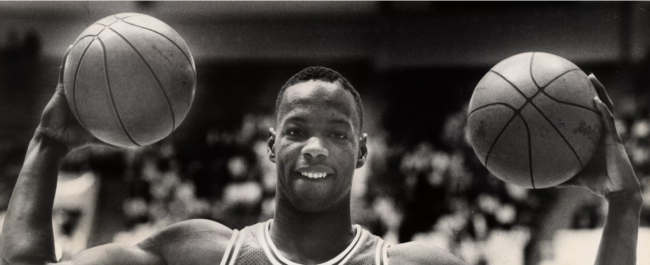
The internet is celebrating news that late basketball legend Len Bias will be inducted into the Basketball Hall of Fame. Bias leads a group of six players and two coaches that will be enshrined in Kansas City next November. In addition to Bias, Hershey Hawkins, Jim Jackson, Paul Pierce, Antawn Jamison and David Greenwood are the other players who will be inducted.
In a tragic set of circumstances, University of Maryland basketball star Len Bias, who was chosen No. 2 by the Boston Celtics in the 1986 NBA draft, died days later of an accidental drug overdose.
Read more about the 2021 Basketball Hall of Fame class at ESPN.
Tommy “Tiny” Lister as Deebo on Friday (1995) -screenshot.
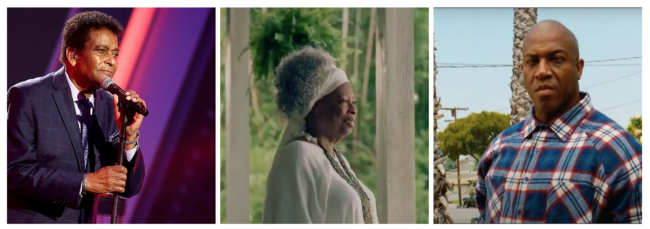
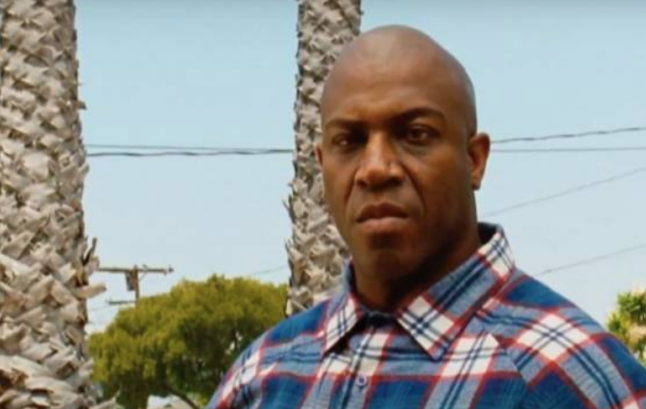
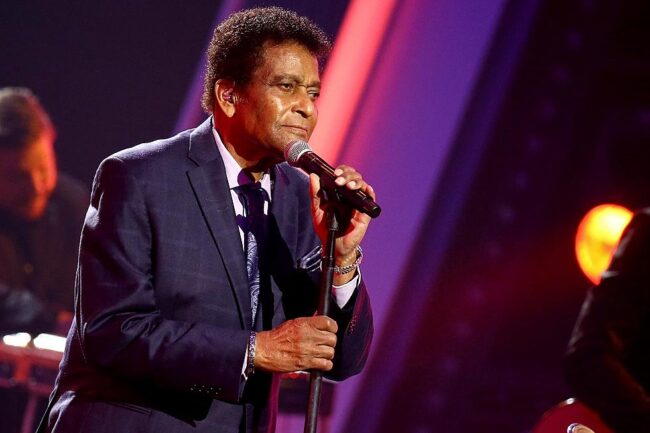
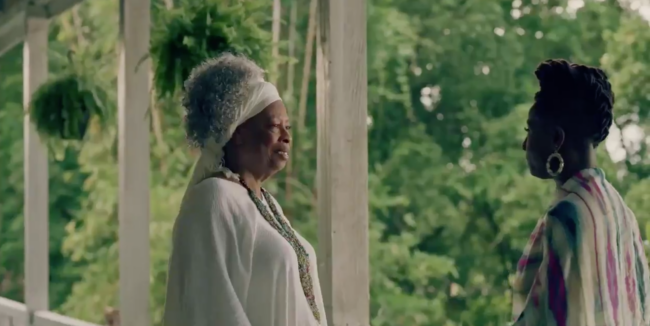
The Internet is weeping over the Covid-19-related deaths of beloved character actor Tiny Lister, country music legend Charlie Pride and veteran theater and tv actress Carol Sutton.
Tommy “Tiny” Lister, 62
The character actor best known for his performance as Deebo in the cult classic Friday (1995) was found dead in his California home Thursday (12/10/20) after friends and business associates could not reach him, authorities said. Lister, who was blind in his right eye since birth, appeared in 220 television and film roles. In early 2020, he had been diagnosed with Covid-19 and thought he had overcome the virus. Friends worried about him as he struggled to breathe and make it through a livestream Monday and canceled an appearance at a TV festival. When friends were alarmed by his appearance Monday, he stated, “God’s Got Me.”
The actor, who was born with an eye defect that was an important part of his signature facial expression, famously wrestled Hulk Hogan in the World Wrestling Federation (WWF) after appearing in the film No Holds Barred with the wrestling legend. He also had a short stint in the World Championship Wrestling (WCW) wrestling as Z-Gangsta. Lister, who also was a WWF wrestler named “Zeus” and played president of the United States in 1997’s The Fifth Element, pled guilty to committing mortgage fraud to the tune of $3 million in 2014. Lister’s acting roles were plentiful, such that that he had three completed films for 2021, five films in post-production and was in the process of filming two films.
Rapper Ice Cube who executive produced and starred in Friday wrote on his Instagram page, “RIP Tiny “Deebo” Lister,” Ice Cube said Thursday night on Instagram. “America’s favorite bully was a born entertainer who would pop into character at the drop of a hat terrifying people on and off camera. Followed by a big smile and laugh. Thank you for being a good dude at heart. I miss you already.”
Charley Pride. Screenshot of the 2020 CMA awards.
Charley Pride, 86
Country music’s first Black superstar passed away from Covid-19 complications. The son of sharecroppers, also served in the U.S. Army and played in the Negro Baseball Leagues, received the Country Music Association’s Lifetime Achievement Award last month in Nashville. The award was presented to him by Jimmie Allen, a young Black country star. Pride and Allen performed a duet at the awards show. Show producers said they followed Covid-19 protocols but some in attendance did not wear masks.
“Born in Sledge, Mississippi, in 1934, Pride picked cotton, played baseball in the Negro leagues, served in the U.S. Army, and worked in a smelting plant in Montana before moving to Nashville and becoming country music’s first black superstar. He scored 52 Top 10 country hits, including 29 Number Ones, and was the first African-American performer to appear on the Grand Ole Opry stage since Deford Bailey made his debut in the 1920s. Pride became an Opry member in 1993. In 2000, he was inducted into the Country Music Hall of Fame.” Pride is is survived by his wife, Ebby Rozene Cohran Pride, and his children, Carlton, Charles and Angela.
Carol Sutton, 76
Veteran actress Carol Sutton of Steel Magnolias and “Queen Sugar” fame has died of Covid-19 complications. The New Orleans native and theater legend, whose career spans over 50 years, died in the hospital in her hometown.
Screen shot (Twitter/Ava DuVernay)
New Orleans Mayor LaToya Cantrell confirmed Sutton’s death and remembered her in a statement posted Friday (12/11/20) on the government website. Mayor Cantrell wrote:
“Carol Sutton was practically the Queen of New Orleans theater, having graced the stages across the city for decades. The world may recognize her from her performances in movies and on TV — whether it’s ‘Treme’ or ‘Claws,’ or ‘Runaway Jury’ or ‘Queen Sugar’ — but we will always remember her commanding stage presence, her richly portrayed characters, and the warm heart she shared with her fellow cast and crew in productions such as ‘4000 Miles’ and ‘A Raisin in the Sun.’ May she rest in God’s perfect peace.” Covid-19’s death comes just days after the passing of another major New Orleans theater figure, Sherri Marina, also due to COVID-19.
Rest in power.
This post was written by Nsenga K. Burton, Ph.D., founder & editor-in-chief of The Burton Wire.
Follow Nsenga on Twitter @Ntellectual and The Burton Wire on Twitter or Instagram @TheBurtonWire.
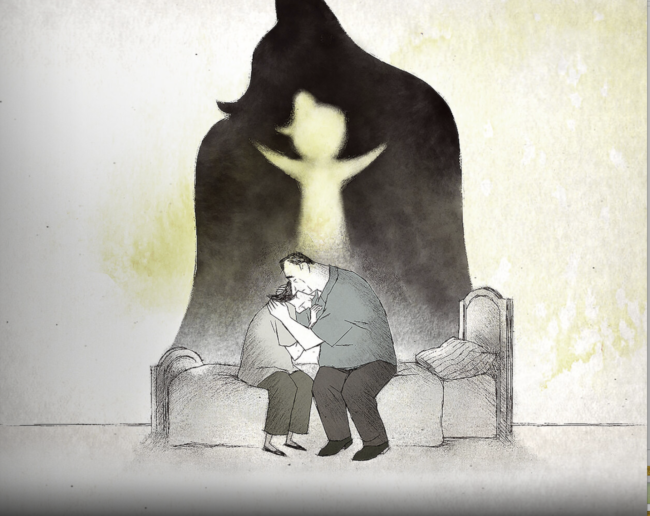
Screenshot: If Anything Happens I Love You (Netflix)
“If Anything Happens I Love You is a silent, animated, short film that chronicles the cavernous grief caused by the loss of a child, but not just any kind of loss — the loss of a child to gun violence via a school shooting.”
Screenshot: If Anything Happens I Love You (Netflix)
Over Thanksgiving weekend, I was searching Netflix for another Christmas holiday classic to distract me from the news cycle, and I came across the animated, short film, If Anything Happens I Love You. It was only 12 minutes long and I thought, why not?
If Anything Happens I Love You is a silent, animated, short film that chronicles the cavernous grief caused by the loss of a child, but not just any kind of loss — the loss of a child to gun violence via a school shooting. She was the light of her parents’ lives. She was their only daughter. She was only 10-years-old. In 12 minutes, writer/director team Will McCormack and Michael Govier take us on a tour of the wreckage of the home and hearts left devastated by the death of a daughter. Even the cat looks for her, trying to understand what happened.
Grief can isolate people as they process its stages, and the events surrounding its cause. Grief can end a marriage – leaving two deaths in its wake rather than one. Yet, this film offers hope as the little girl attempts to bring her grieving parents back together through shared memories, and ultimately forgiveness. If Anything Happens I Love You serves as a gentle reminder for us to turn toward each other, rather than away. This poignant, heart-gripping tale reminds each of us to cherish our loved ones, and if we should lose them, to allow their memory to bring comfort and peace.
As we approach the 8th anniversary of the Sandy Hook school shooting, the film serves as a not-so-gentle reminder that school shootings are on the rise in America today. Some say it is because our children don’t have proper coping mechanisms. Some say kids lack problem solving abilities because of their unbroken relationship with technology. In some cases, we may have to pry the electronics from their clenched fists and teach them how to engage the world differently.
Most importantly, this film compels us to do something about the gun lobby. While school custodians mop up the blood of our children in hallways, the gun lobby uses money and power to silence legislators who in wake of these shootings, could affect change. There were 45 school shootings in 2019, and hundreds before then, yet there is no federal database with information on school shootings. Luckily, CNN created its own database, and while it only goes back to 2009, the data is chilling. The metrics underscore the fact that school shootings do not discriminate based upon locale or socio-economic background. Contrary to popular belief, the suburbs will not save you. School shootings are everyone’s problem. Our children deserve to be safe at school and to have long, happy lives minus this trauma. We must demand that for them – period.
COVID-19 is disrupting the cheer of the holiday season, and maybe a movie about the aftermath of a school shooting doesn’t help, but If Anything Happens I Love You is worth the effort. In fact, it is a must-see film about an important issue. IMDB.com aptly calls the film, “an elegy on grief.” Visually, it is simple yet effective. Narratively it is heart-rending just like grief. While If Anything Happens I Love You is a silent, animated short film, it addresses a topic about which we must not remain silent. Sometimes these kinds of films are just the gut punch we need to wake up and do something.
If Anything Happens I Love You is produced by Gilbert Films and Oh Good Productions, and distributed by Netflix. Actress Laura Dern and her producing partner Jayme Lemons are listed among its Executive Producers.
This post was written by Michele R. Brown, who is a graduate of NYU’s Cinema Studies program. She’s a freelance writer/editor. Critical Thinker. Storyteller. Dog Person. Follow her @micheles_pen on Twitter @officiallymicheleonel on Instagram and www.michelespen.com