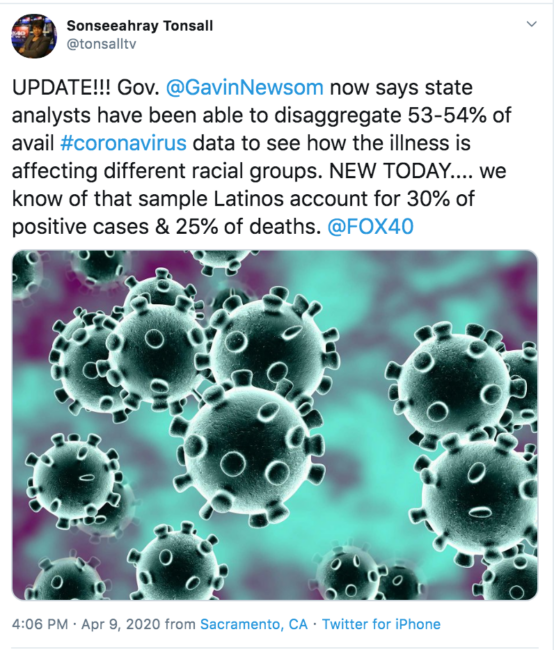
April 9, 2002 (Sacramento) – The California Department of Public Health released race and ethnicity data related to COVID-19.
The information, representing 37% of COVID-19 cases and 39% of deaths, shows the race and ethnicity data is roughly in line with the diversity of California overall:
Latinos: 30% of cases and 29% of deaths (39% of the state’s population)
Whites: 37% of cases and 43% of deaths (37% of the state’s population)
African Americans/Blacks: 6% of cases and 3% of deaths (6% of the state’s population)
Asians: 14% of cases and 16% of deaths (15% of the state’s population)
Multiracial: 2.5% of cases and 2% of deaths (2% of the state’s population)
American Indians or Alaska Natives: 0.2% of cases and 0.6% of deaths (0.5% of the states’ population)
Native Hawaiians or Pacific Islanders: 1.6% of cases and 1% of deaths (0.3% of the state’s population)
Other: 9% of cases and 5% of deaths (N/A)
FOX 40’s Bay Area reporter Sonseeahray Tonsall reported:
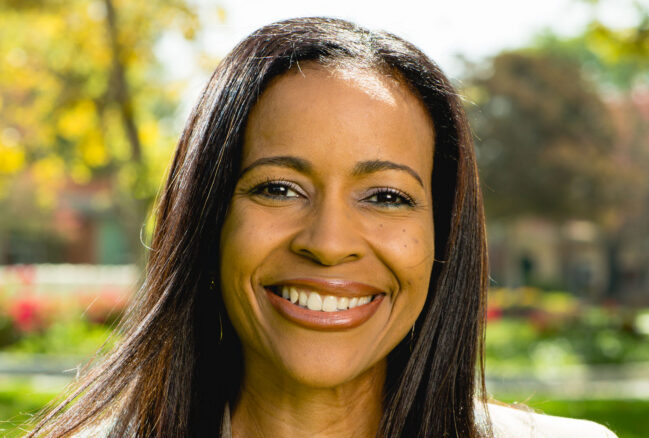
Camille Tucker, co-writer of The Clark Sisters: First Ladies of Gospel
(Photo: Camille Tucker)
Camille Tucker, co-writer of The Clark Sisters: First Ladies of Gospel (Photo: Camille Tucker)
What do you get when you mix the daughter of a Baptist pastor, an educator mother with acting aspirations, the 4H Club, a Guatemalan caregiver and the rural-meets-urban multicultural landscape of the Richland Farms neighborhood in Compton, CA? You get the rich, bilingual personal history of screenwriter/director, Camille Tucker. “People from Compton take great pride in their hometown given all the negative stereotypes associated with it,” says the screenwriter. As a member of one of the first families of Compton, she knows first-hand how negative perceptions can shape a community. Her father was the former mayor of the city. She grew up in a home that hosted Harry Belafonte, Jesse Jackson, Sr. and Sidney Poitier. Camille knows a little bit about being from a high-profile family and the dynamics that accompany it.
Photo: A&E Networks
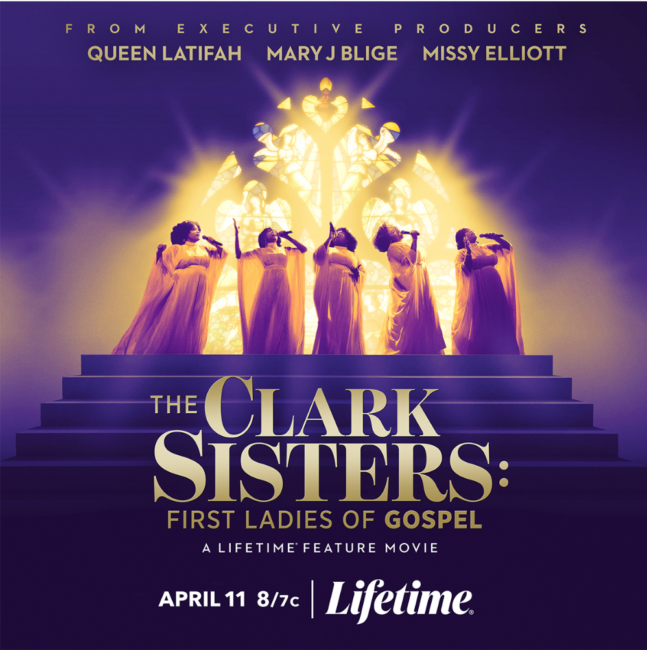
On the eve of the premiere of the Lifetime TV biopic, The Clark Sisters: First Ladies of Gospel, The Burton Wire caught up with the co-writer of the film to talk perseverance, music, family and representation. Like the rest of us, Camille is working from home – fielding calls from well-wishers excited about the production of her first script.
The Journey to the Screen
While this may look like an overnight success, it is not. Tucker has been in and around Hollywood since college (UCLA). A chance meeting at a barbeque produced the opportunity to co-write a script (Golddiggaz) with legendary director, John Singleton. Her screenwriting success continued with the sale of seven screenplays and a TV pilot to several major studios – Sony, Universal, New Line, Fox TV and Disney Studios.
All this in preparation for the 15-year journey to the screen of her first produced script. Talent and opportunity were bathed in faith for this ordained Christian minister and Biola University Associate Professor of screenwriting. “In 2005, when we started pitching this (she was working with Moesha Show Runner Sara Finney-Johnson), these kinds of stories were not considered without A-list Black woman star power like Halle Berry or Angela Bassett attached,” said Tucker. Fast forward to 2017. Sara is committed elsewhere, and Camille is on her own. The cultural landscape has radically changed, and Hollywood is finally ready to tell the story of a legendary family of black women whose sound has shaped R&B, Pop, and gospel music for generations.
The film’s original producer, Holly Carter (Preachers of L.A.), partnered with Queen Latifah and Tucker was hired to develop the story. She expertly navigated several decades and the development of an ensemble cast whose nexus was the family matriarch, Dr. Mattie Moss Clark, brilliantly played by Aunjanue Ellis. Tucker successfully developed the script and it was sold to Lifetime TV. They brought on Sylvia L. Jones – the two black women screenwriters share writing credit on the film.
The beauty of this story’s journey has facets. This is a story about Black women – written, directed and produced by Black women. “You’ll see this story through an authentically Black lens. Young Black women will see this and know they can do it too,” says Tucker. The film showcases the most uplifting of music genres, gospel music. The Clark Sisters brought it outside of the four walls of the church into the mainstream. Tucker’s story of persistence and patience showcases the power of an idea in its journey to the screen – much like the story of this family – excellence over easy always.
The film highlights the influence of a matriarch who was a trailblazer in her own right – a five-time gold record recording artist and the International Director of Music for the Church of God in Christ. Each of these achievements almost unheard of for a Black woman at that time. Dr. Mattie Moss Clark did this and so much more. She endured great pain at the hand of the two things she loved the most, her husband and her church. Yet she held fast to her vision and taught her daughters to do the same.
Now the world will get to see the story of a great family that faced the same issues we face and through it all, they managed to use their gift of music to offer hope to the world. The world could use some of that right now.
The Clark Sisters is a love letter to Black women and we graciously receive it. The Clark Sisters: The First Ladies of Gospel airs on Lifetime Saturday, April 11 at 8/7c.
This article was written by Michele Brown, author of Adventures of Gideon: Kingdom Principles and Life Lessons My Dog Taught Me. Check her out at michelespen.com.
Join The Burton Wire‘s founder & editor-in-chief Nsenga K. Burton, Ph.D. as she interviews award-winning film and television director Christine Swanson and celebrated actress Aunjanue Ellis about their latest project, Lifetime Television’sThe Clark Sisters: First Ladies of Gospel, Wed., April 4 at 3 p.m. EST. The television movie debuts on LifetimeSat., April 11 at 8/7c.
Watch the interview on BlackPressUSA.com.
A Detroit native, Swanson directed three original cable movie premieres for TV One entitled, To Hell and Back (starring Ernie Hudson and Vanessa Bell Calloway), For the Love of Ruth (starring Denise Boutte, Loretta Devine, Gary Dourdan, and James Pickens, Jr.) and Love Under New Management, The Miki Howard Story (starring Teyonah Parris, Darius McCrary, and Gary Dourdan) which broke network ratings as the most watched original movie in network history. In 2015, Christine received an NAACP Image Award nomination for Outstanding Directing in a Television Motion Picture for For the Love of Ruth.
Some of the NYU graduate’s award-winning titles include, Two Seasons (winner HBO Short Film Competition, Sundance selection), All About You (winner Audience Choice Award Chicago International Film Festival, Grand Jury Prize Hollywood Black Film Festival, Festival Award at the Pan African Film Festival, and the Film of the Year Award at the Santa Barbara African Heritage Film Series) starring Renee Elise Goldsberry, Terron Brooks, and Debbie Allen; All About Us (invited to the prestigious Heartland Film Festival, The Chicago International Film Festival, and the Cannes Festival du Film Panafricain) starring Boris Kodjoe, Ryan Bathe, and Ruby Dee; and Woman Thou Art Loosed (Santa Barbara International Film Festival and Blockbuster Audience Award for Best Feature Film at the American Black Film Festival) starring Kimberly Elise and Loretta Devine.
Actress Aunjanue Ellis stars as Dr. Mattie Moss Clark in Lifetime Television’s The Clark Sisters: First Ladies of Gospel. Photo: A & E Networks
San Francisco native Aunjanue Ellis has been working steadily in television and film for two decades. Many remember the UC Berkeley and NYU graduate’s outstanding performances in Men of Honor, Undercover Brother, Ray, The Help and most recently The Book of Negroes, When They See Us and If Beale Street Could Talk. Ellis has been nominated for a Screen Actors Guild Award for Ray, Primetime Emmy Award and NAACP Award for Best Lead Actress for When They See Us and Critics Choice award for lead actress for When They See Us.
Produced by National Newspaper Publisher’s Association (NNPA) and Black Press USA Newswire, where Dr. Burton serves as entertainment and culture editor, the interview will be livestreamed Wednesday, April 8 at 3 p.m. EST on the site and Facebook.
Set your reminder and check out the interview live, tomorrow at 3 p.m.
This post was written by Nsenga K. Burton, Ph.D. Follow her on Twitter @Ntellectual.
Writing for ProPublica, Akilah Johnson and Talia Buford shine light on early data that shows black people are contracting and dying from COVID-19 at an alarming rate. They explore the rate of infection and death in cities like Milwaukee, Detroit and New Orleans. Here are some of the findings:
MILWAUKEE
As of Friday morning (April 3), African Americans made up almost half of Milwaukee County’s 945 cases and 81% of its 27 deaths in a county whose population is 26% black. Milwaukee is one of the few places in the United States that is tracking the racial breakdown of people who have been infected by the novel coronavirus, offering a glimpse at the disproportionate destruction it is inflicting on black communities nationwide.
MICHIGAN
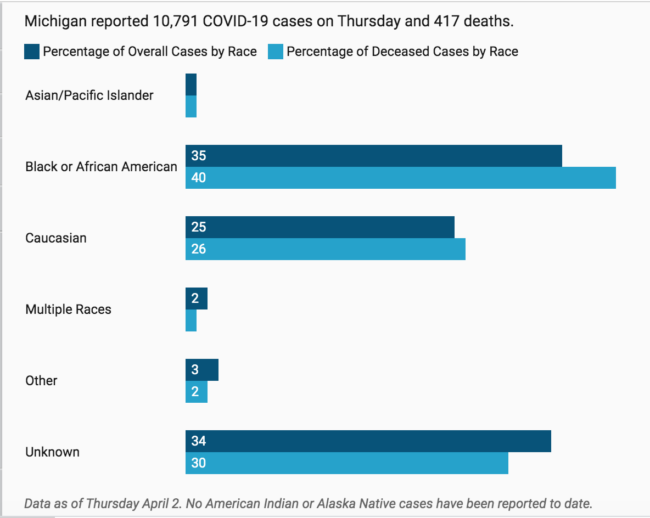
In Michigan, where the state’s population is 14% black, African Americans made up 35% of cases and 40% of deaths as of Friday morning (April 3). Detroit, where a majority of residents are black, has emerged as a hot spot with a high death toll.
Infographic: Detroit Free Press https://www.freep.com/story/news/health/2020/04/03/coronavirus-covid-19-cases-wayne-county-detroit-michigan/5116620002/
LOUISIANA
New Orleans has emerged as a hot spot. Louisiana has not published case breakdowns by race, but 40% of the state’s deaths have happened in Orleans Parish, where the majority of residents are black.
Illinois and North Carolina are two of the few areas publishing statistics on COVID-19 cases by race, and their data shows a disproportionate number of African Americans were infected.
Environmental, economic and political factors have compounded for generations, putting black people at higher risk of chronic conditions that leave lungs weak and immune systems vulnerable: asthma, heart disease, hypertension and diabetes.
The article also discussed how black people recoil at being controlled and told where to go based on a history of segregation, which is why some have not been complying with shelter in place mandates. However, it is imperative that blacks get over this resistance because blacks are dying from COVID-19 at a disproportionate rate.
“We’re like, ‘We have to wake people up,’” said Milwaukee Health Commissioner Jeanette Kowalik.
Johnson and Buford write:
“It will be unimaginable pretty soon,” said Dr. Celia J. Maxwell, an infectious disease physician and associate dean at Howard University College of Medicine, a school and hospital in Washington dedicated to the education and care of the black community. “And anything that comes around is going to be worse in our patients. Period. Many of our patients have so many problems, but this is kind of like the nail in the coffin.”
Other issues raised in the article include the CDC’s failure to track race for this particular outbreak and the impact generational impact of unequal access to social, political, economic and medical resources on black communities. These historical racial disparities continue to result in higher death rates for blacks during pandemics like COVID-19 and other issues like maternal and infant mortality.
Johnson and Buford write:
“COVID is just unmasking the deep disinvestment in our communities, the historical injustices and the impact of residential segregation,” said Jones, who spent 13 years at the CDC, focused on identifying, measuring and addressing racial bias within the medical system. “This is the time to name racism as the cause of all of those things. The overrepresentation of people of color in poverty and white people in wealth is not just a happenstance. … It’s because we’re not valued.”
Excerpts from the letter written and signed by Senators Elizabeth Warren, Ayana Pressley, Cory Booker, Robin L. Kelly and Kamala Harris said the following:
“We write to call on the U.S. Department of Health and Human Services (HHS)and its sub-agencies, such as the Centers for Disease Control and Prevention (CDC), the Centers for Medicare and Medicaid Services (CMS), U.S. Food and Drug Administration (FDA), the Agency for Healthcare Research and Quality (AHRQ), and other relevant agencies, to monitor and address racial disparities in our nation’s response to the coronavirus disease 2019 (COVID-19) public health emergency.
During this unprecedented global pandemic, affordable and equitable access to care and treatment is essential to saving lives and slowing the spread of the coronavirus. It is critical that the federal government make a concerted effort to account for existing racial disparities in health care access and how persistent inequities may exacerbate. these disparities in the weeks and months to come as our nation responds to this global health pandemic.
We urge HHS to work with states, localities, and private labs to better collect data on health disparities as we continue to respond to this pandemic.”
This story is developing. Read ProPublica’s entire article here.
This story was written and curated by Nsenga K. Burton, Ph.D., founder & editor-in-chief of The Burton Wire. Follow her on Twitter @Ntellectual.
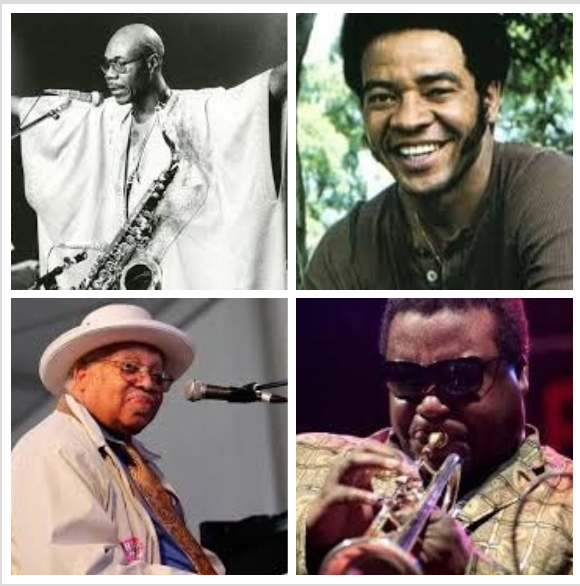
Photo: Manu Dibango (top left), Bill Withers (top right), Ellis Marsalis (bottom left) and Wallace Roney died this past week. All except Withers died from complications of COVID-19.
Photo: Manu Dibango (top left), Bill Withers (top right), Ellis Marsalis (bottom left) and Wallace Roney died this past week. All except Withers died from complications of COVID-19.
The world is mourning the loss of musical giants Bill Withers, Ellis Marsalis, Wallace Roney and Manu DiBango, all of whom passed away last week.
Bill Withers, who taught himself to play guitar, wrote some of the most iconic songs of the 1970s including “Lean on Me,” “Ain’t No Sunshine,” “Lovely Day,” and “Use Me,” which have become anthems in many parts of the world. The three-time Grammy Award winner withdrew from making music in the mid-1980s. In 2005, Withers was inducted into the Songwriters Hall of Fame. The West Virginia born and raised (Slab Fork and Beckley) musician who overcame a stutter to become one of the most influential song writers of his generation, appeared on stage with Stevie Wonder and John Legend to perform his hit, “Lean on Me” during the 2015 Rock and Roll Hall of Fame Induction. Wonder inducted the music icon into the Hall of Fame. The twice married father of two died Monday in Los Angeles from complications related to his heart. He was 81.
Ellis Marsalis, pianist, educator and father of the Marsalis jazz dynasty died after being admitted to the hospital with COVID-19 symptoms. Born in New Orleans, Louisiana, Marsalis played saxophone in high school and switched to piano while studying classical music at Dillard University. Following his graduation, Marsalis played in many jazz bands in New Orleans including the Marsalis Trio. His sons Wynton, Branford, Delfeayo and Jason went on to become highly successful jazz musicians. Wynton has won Grammys for both jazz and classical music. The Ellis Marsalis Center for Music was named for the New Orleans native, who succumbed to complications related to the Coronavirus. He was 85.
Wallace Roney, a virtuoso trumpeter, died March 31 of complications related to coronavirus. Roney was a leading voice in the Young Lions movement, a group of young musicians devoted to bringing jazz back in line with its midcentury sound. A Miles Davis protege, Roney fought hard to escape his image as a Davis imitator. His music incorporated elements of funk, hip-hop, Brazilian styles of music including Bossa Nova, pop and Afro-Caribbean rhythms. Born in Philadelphia and raised in Washington, D.C., Roney made more than 20 albums, working with the Young Lions, Davis and Ornette Coleman. Roney began his musical training as a student at the Duke Ellington School of Music in Washington, DC. and earned degrees at Howard University and the Berklee College of Music. He was 59.
African jazz-funk great Manu Dibango also died of complications related to COVID-19. Dibango blended African rhythms with funk to become one of the most influential musicians in world dance music. Dibango was hospitalized with an illness “linked to COVID-19,” his official Facebook page said last week.
“Soul Makossa” was one of the earliest hits in the nascent world music scene, including a catchy hook copied by some of the world’s biggest pop stars like Michael Jackson and Rihanna, both of whom he sued. He settled with Jackson and his lawsuit against Rihanna was thrown out. Dibango collaborated with many musical giants including Art Blakey, Herbie Hancock, Don Cherry, Sly and Robbie, Paul Simon, Peter Gabriel, King Sunny Adé, Youssou N’Dour, Hugh Masekela and Fela Kuti. The Cameroonian native was 86.
This post was curated by Nsenga K. Burton, founder & editor-in-chief of The Burton Wire. Follow her on Twitter @Ntellectual.
Photo: African football (soccer) legends Samuel Eto'o and Didier Drogba.
Photo: African football (soccer) legends Samuel Eto’o and Didier Drogba.
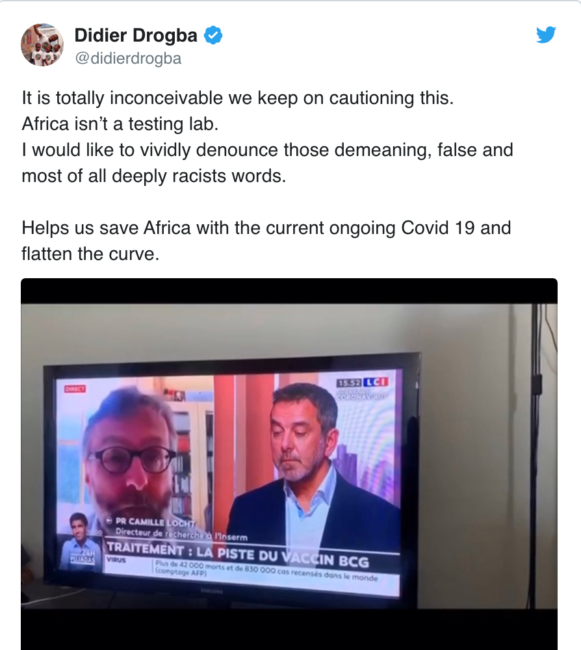
The internet is in an uproar with outrage over the suggestion made by two French doctors to use Africa as a testing ground for a potential COVID-19 vaccine. African athletes Didier Drogba and Samuel Eto’o condemned the racist comments by French doctor Jean-Paul Mira, head of intensive care unit at the Cochin Hospital in Paris and Professor Camile Locht, research director at Inserm. Mira said things like they should do the COVID-19 vaccine study in Africa “where there are not masks, no treatment, no resuscitation,” and “they don’t protect themselves.” Locht concurred and said they were considering a similar approach which maddened many including Drogba and Eto’o.
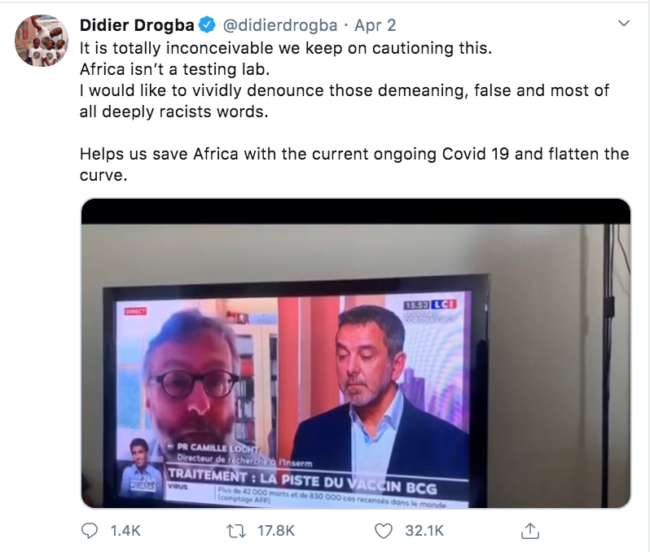
Soccer superstars Drogba said the suggestion was taking “African people as human guinea pigs,” adding in another tweet that “Africa isn’t a testing lab”.
Photo: Twitter
In a Twitter post African soccer star Didier Drogba let the French scientists have it.
Photo: Twitter
More people are speaking out against these outdated statements and practices historically used by colonial powers on vulnerable populations.
To wear or not to wear? After months of going back and forth over whether people should be wearing face masks to help prevent the spread of Coronavirus, the powers that be have settled on the recommendation that people wear face masks to help prevent the spread of COVID-19. If you have tried to find face masks online, many companies have them on back order or are simply out of stock.
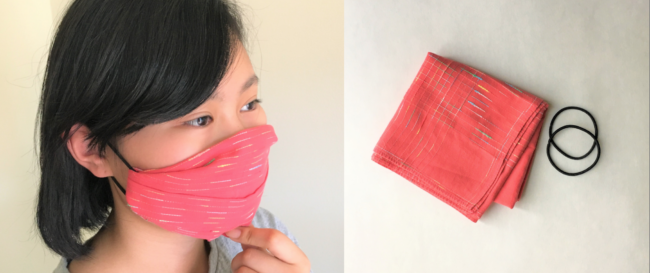
A blog post about the Japanese method of making a face mask is making its rounds around the internet so I thought I’d share it with you. I am no expert on Japanese mask making so I have no idea if it is a legitimate practice; but it looks like the method could fall squarely under the category of making something out of nothing and this method may work in a pinch.
Check out the article and method below:
Photo: Japanese Creations Blog
Materials:
– Handkerchief (A regular cotton handkerchief of 18″ x 18″ is used in this tutorial.)
– 2 hair ties
Watch the video below to learn how to make the mask.
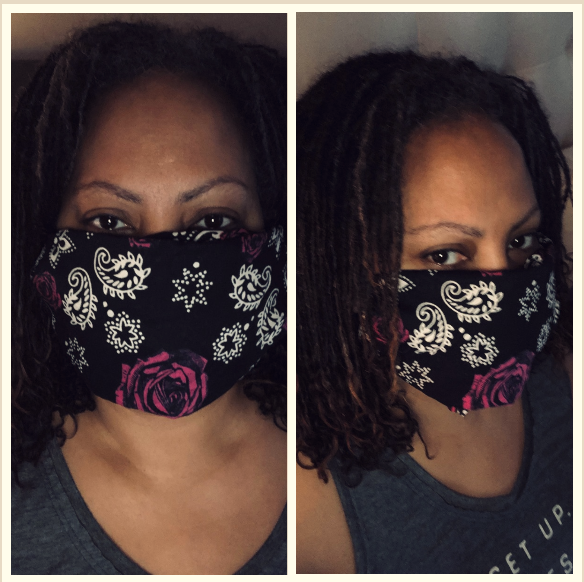
I tried the process and the method works, so choose your material and go!
Photo: The Burton Wire
This post was curated by Nsenga K. Burton, Ph.D. Follow her on Twitter @Ntellectual.
Writing for Black Press USA, The Burton Wire founder & editor-in-chief Nsenga K. Burton, Ph.D., offers readers some insight on what to do while at home during the coronavirus pandemic. Read an excerpt below:
Covid-19, Coronavirus or “Rona” as some are calling it has changed the way society typically functions. Some cities have imposed mandatory quarantines while others are encouraging self-control and self-quarantining. Many are complying with official requests for social distancing and eliminating contact with those outside of the household.
Folks are trying to manage how to teach their children at home and fulfill employment obligations while not losing their minds during this new normal marked by disappointments like canceled proms and graduations, rogue relatives refusing to follow the rules and constant news coverage of those who are sick and have passed away.
Despite these challenges there is a silver lining. Just when you were lamenting over failing to follow through on giving up social media for Lent, lots of people are coming together on social media to offer wonderful activities for those at home. Check out a few below:
Free Celebrity Performances on Instagram:
Celebrities are offering outstanding free programming. John Legend was joined by model and partner Chrissy Teigen for a CONVID-19 benefit concert from his living room that played on Instagram. If you didn’t catch John Legend, musical acts as diverse as Luke Bryan, JoJo, Miley Cyrus, D-Nice and Common are offering online concerts via Instagram. All you need is an Instagram account to watch and you’re good to go.
Speaking of Instagram, can you say Debbie Allen? The iconic dancer, choreographer and director offered up a free dance class this past Wednesday to lift the spirits of those feeling isolated during the crisis. Thousands checked in and had a blast based on the comments…
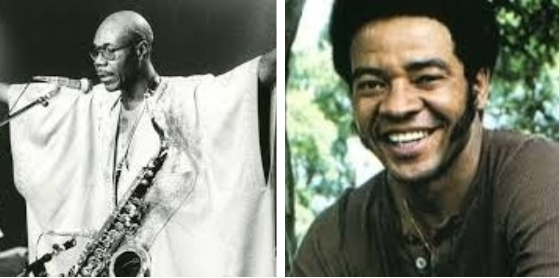
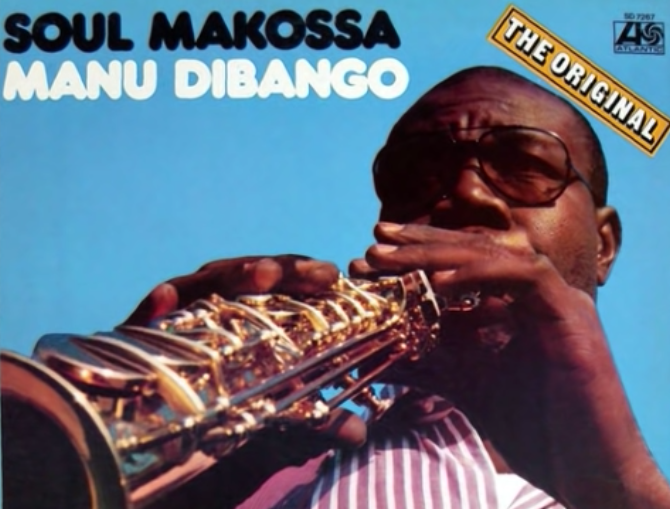
Afro-Funk saxophonist Manu Dijambo has died from complications related to coronavirus. (Photo: Album Cover)
Afro-Funk saxophonist Manu Dijambo has died from complications related to coronavirus. (Photo: Album Cover)
The Associated Press is reporting African jazz-funk great Manu Dibango has died of complications related to COVID-19. Dibango blended African rhythms with funk to become one of the most influential musicians in world dance music. Dibango was hospitalized with an illness “linked to COVID-19,” his official Facebook page said last week. “Soul Makossa” was one of the earliest hits in the nascent world music scene, including a catchy hook copied by some of the world’s biggest pop stars.
The Afro-Funk saxophonist was born December 12, 1933, in the port city of Douala, Cameroon. His parents’ marriage was unusual for the time because his mother came from the Douala ethnic group and his father, who was a civil servant, from the Yabassi. NPR‘s Anastasia Tsioulcas writes about Dibango’s rise to fame:
“In the years after the success of “Soul Makossa,” he collaborated with many famed international artists, including Art Blakey, Herbie Hancock, Don Cherry, Sly and Robbie, Paul Simon, Peter Gabriel, King Sunny Adé, Youssou N’Dour, Hugh Masekela and Fela Kuti.
“Soul Makossa” was originally the B-side for a Dibango 45 RPM single; its refrain was something of a branding exercise for “makossa,” the funky, jazz-tinged dance genre that Dibango pioneered. (Kossa means “dance” in Douala, his mother’s native language.)”
Michael Jackson famously sampled “Soul Makossa” on his 1982 hit song “Wanna Be Startin Something,” on his legendary Thriller LP. The popular phrase “mama-se, mama-sa, ma-makossa” originated from Dibango’s song. Pop superstar Rihanna also sampled the song on her hit song “Don’t Stop the Music,” on her 2008 hit LP Good Girl Gone Bad.
Both were sued by the world music legend with Dibango settling with Jackson in the 2007 lawsuit. The 2009 suit against Fenty was dismissed due to the earlier settlement reached with Jackson.
A private funeral service will be held for the world music legend. Due to the coronavirus epidemic, France is not allowing more than 20 people to congregate for these occasions to limit exposure to the virus. Dibango is survived by four children. He was 86.
BBC Africa Is reporting hundreds of billions of locusts are swarming through parts of East Africa and South Asia In what Is reportedly the worst Infestation for a quarter of a century, threatening crops and livelihoods.
The insects, which eat their own body weight in food every day, are breeding so fast numbers could grow four hundredfold by June making it a crisis.
The locust crisis that has now reached 10 countries could carry on to endanger millions more people, forecasters have said. Swarms of locusts are forming in the Horn of Africa, Kenya, Ethiopia and Somalia, Pakistan, Iran, Saudi Arabia, and India. The Food and Agriculture Organization (FAO)has requested $138 million to help control the swarms and protect farmers whose livelihoods are being impacted.
Accuweather reports weather initiated the crisis. In 2018, cyclones from the Indian Ocean hit the Arabian Peninsula near the borders of Saudi Arabia, Yemen and Oman. Warm weather at the end of 2019, combined with unusually heavy rains, created the ideal conditions for the locusts.