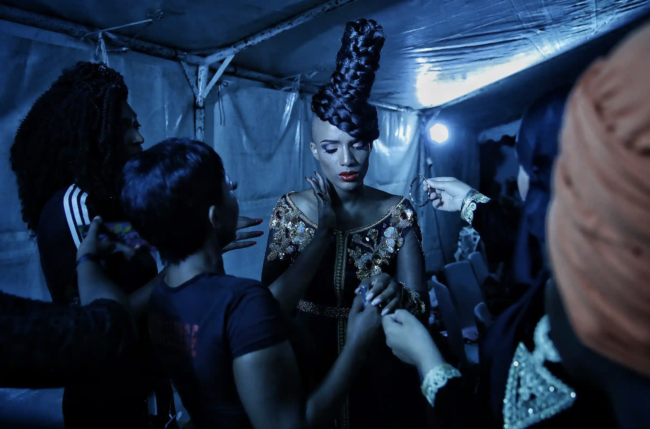
A presenter gets ready during Dakar Fashion Week in 2017. (Photo: O'Reilly)
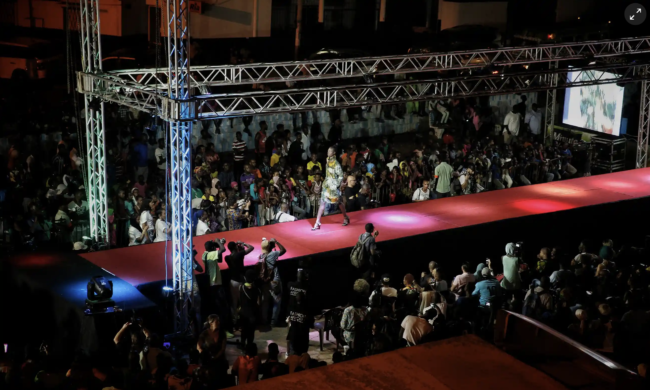
Dakar fashion week in the capital’s Niari Tali neighborhood (Photo: O’Reilly)
Reporting for The Guardian, photojournalist Finbarr O’Reilly takes readers on a dazzling journey to Dakar’s fashion scene with a beautiful photo essay. O’Reilly, who has been covering Dakar’s fashion week for over a decade, captures the vibrant colors, designs and energy happening during fashion week. He also gives insight into how black folk roll in Senegal. He writes:
Models Amy Faye and Sachakara Dieng wear creations by Adama Ndiaye in Dakar, July 2012.
“Senegal has a well-educated middle class and an Instagram generation that embraces African and American fashions, creating an elegant and athletic style of bling and beauty. Dakar now rivals Johannesburg, Lagos, Nairobi and Casablanca at the forefront of African fashion, with much of its energy driven by the designer Adama Ndiaye, the 40-year-old organizer of Dakar fashion week and a number of other international African fashion week events. ‘When I started it was a young girl’s dream to build something in my country,’ Ndiaye says. Launched 17 years ago, Dakar fashion week initially had only a handful of aspiring local designers and models gathering in often rundown hotels. Now dozens of designers from around the world present their creations to thumping DJ mixes as drone cameras hover above runway shows broadcast live on national television.”
A presenter gets ready during Dakar Fashion Week in 2017. (Photo: O’Reilly)
O’Reilly interviews a bevy of fashion influencers including Jenke Ahmed Tailly, an Ivorian and Senegalese stylist who works as Beyoncé’s creative director and also advises Kanye West and Kim Kardashian. At the Global Citizen Festival: Mandela 100 charity concert in South Africa last month, Beyoncé wore one of Ndiaye’s creations, a Boyette bag, based on the nomadic Tuareg style of embossed leather boxes.”
Read more about Dakar Fashion Week and check out the fabulous photo essay which spans many years at The Guardian.
The 2019 Oscar nominations are in and it appears black film magic is happening with the number of nominations African-Americans received. Some of the historical nominations include Hannah Beachler’s nomination in the category of Best Production Design, a first for an African-American. Queen Regina King continues to rule with her nomination for Best Actress for Academy award-winning filmmaker Barry Jenkins’ adaption of James Baldwin’s critically-acclaimed book If Beale Street Could Talk. Prolific costume designer Ruth Carter received a nod for her futuristic couture in Ryan Coogler’s Black Panther. Coogler didn’t receive a nomination for directing the cultural phenomenon, which isn’t unusual for comic book films, but Spike Lee finally got a Best Director nod for his controversial film BlacKkKlansman. Lee who directed Do the Right Thing (1989) and Malcolm X (1992) received prior nominations for Best Original Screenplay for Do the Right Thing and Best Documentary Feature for 4 Little Girls. The filmmaker was awarded a 2016 honorary Oscar for his body of work. This is the first time the seminal director has been nominated in the Best Director category. Previous Academy Award-winners Mahershala Ali and Jordan Peele also received nominations for work on Green Book (Best supporting actor – Ali) and BlacKkKlansman (Best Picture – Peele is a producer). Longtime Lee collaborators (including Ruth E. Carter), composer Terence Blanchard and editor Barry Alexander Brown also received nominations for BlacKkKlansman.
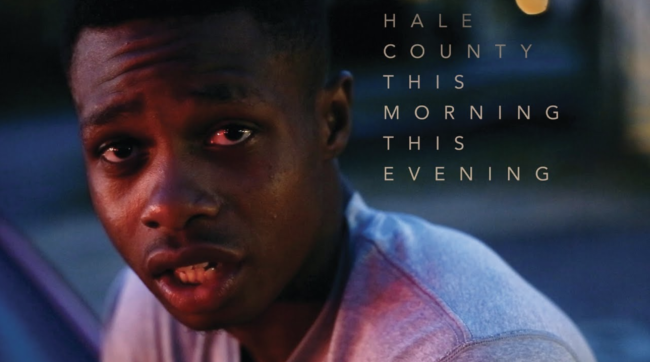
Perhaps the most interesting nominations happened in the documentary categories. Director and cinematographer RaMell Ross was nominated for his documentary Hale County This Morning, This Evening which explores the intimate lives of two black men in rural Alabama and their life choices. The film challenges the dominant narrative of who and what black people are and who makes up rural America. With this film, Ross reminds audiences all black lives matter.
Documentary short Black Sheep examines race in the U.K. and Lifeboat takes a harrowing look at North African migrants fleeing Libya and attempting to make it across the Mediterranean sea for a better life.
The 2019 Oscars will be interesting to watch in general, especially with the diverse nominees on the ballot and subject matter. Will Black film magic happen at this year’s Oscars? Who are you rooting for? Let us know @TheBurtonWire.
This post was written by Nsenga K. Burton, founder & editor-in-chief of The Burton Wire. She is also entertainment and culture editor for NNPA/BlackPressUSA and contributes to The Grio, The Huffington Post and The Daily Beast. A film and media scholar and instructor in the Department of Film and Media Studies at Emory University, follow Nsenga on Twitter @Ntellectual or @TheBurtonWire. Thoughts and views expressed are mine.
Reuters Africa is reporting government officials have agreed to give public servants a cost of living wage increase amid growing protests. The increase will be between 5 percent and 23 percent of their monthly salaries. The author writes:
Labor Minister Sekai Nzenza said by phone that the allowance will be issued from January to March while negotiations with unions continue.
A 40-day doctors strike ended last week; teachers remain on strike and civil servants have also threatened industrial action. Protesters are also fighting against fuel increases.
Reuters is reporting Zimbabwe’s military put on a show of force to deter further unrest on Tuesday after at least three deaths in violent protests over steep fuel price hikes. The protests are continuing to block the flow of key supplies into the country. The government threatened a social media blackout Monday (1/14/19) because of the violent protests.
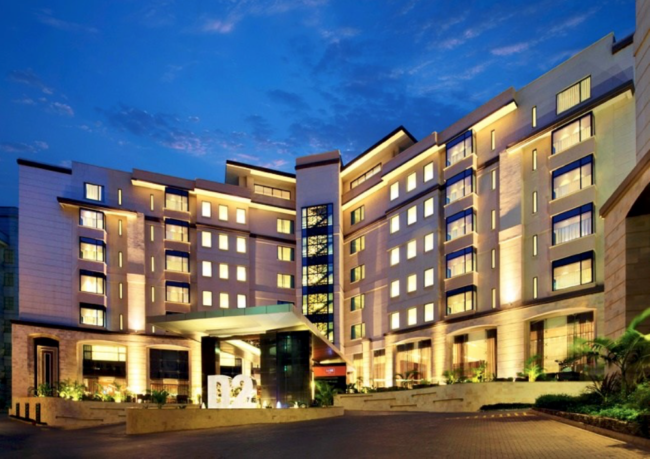
The Associated Press’ Joseph Mwihia is reporting Al-Shabab extremists have claimed responsibility for the attack on the DusitD2 hotel in Nairobi Kenya. He writes:
“Al-Shabab — the Somalia-based group that carried out the 2013 attack at the nearby Westgate Mall in Nairobi that left 67 people dead — claimed responsibility for the carnage at the DusitD2 hotel complex, which includes bars, restaurants, offices and banks and is in a well-to-do neighborhood with many American, European and Indian expatriates.”
Kenya’s Interior Minister Fred Matiang’i said all of the buildings affected had been secured and “security forces were mopping up.”
The Associated Press is reporting 15 deaths; Al-Shabab is saying 47 people are dead from the attack.
(Photo: Kenya Red Cross Twitter Account)
CNN‘s Eliza Mackintosh and Farai Sevenzo are reporting at least 11 people are dead. The journalists report:
“CNN journalists near the hotel complex in Nairobi that was attacked Tuesday are still hearing intermittent gunfire from the location, hours after the government gave the all-clear.
At least 11 people have been killed during what police described as a ‘suspected terror attack’ at the complex in the Kenyan capital, said a source at the hotel assisting with security.
The source called the death toll “conservative” and expected it to rise: “I saw six dead on the footpath exit over the river and five more at the secret garden cafe.” A US State Department official said an American was killed in the attack, and provided no other details. CNN is reaching out to officials from other nations to see whether any of their citizens are among the victims.”
Gunmen stormed the DusitD2 hotel shooting guests while explosions went off on nearby streets. The coordinated assault began with a suicide bomber in the lobby of the hotel followed by gunmen brandishing guns and wearing paramilitary clothing “mowing down guests.”
Kenya’s Red Cross is helping families locate loved ones. Follow on Twitter @KenyaRedCross.
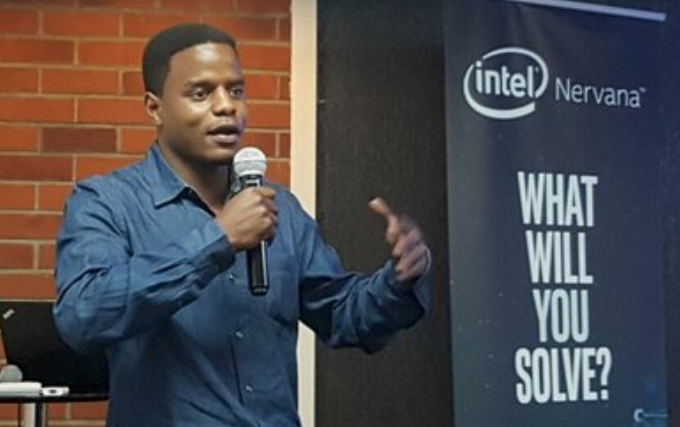
Pulse Live is reporting Roy Allela, 25, has invented smart gloves that convert sign language into audible sound. Allela developed the invention after his niece was born deaf and his family had difficulty communicating with her because they did not know sign language.
George Tubei writes:
“They say necessity is the mother of invention and the need to communicate and connect with her niece pushed 25-year-old Roy to invent smart gloves that convert sign language movements into audio speech.
Sign-io’s sign language to speech translation glove recognizes various letters signed by sign language users and transmits this data to an Android application where it is vocalized.
This feat saw Roy win admiration and recognition by the prestigious American Society of Mechanical Engineers (ASME), the world’s largest organization for mechanical engineers, during its prestigious 2017 ASME Innovation Showcase (ISHOW) competition.”
BBC is reporting Daniel Kaye, a British cyber criminal who cyber attacked Lonestar, an African phone company, has been sentenced to two years and eight months in prison. Kaye’s attack was so significant it knocked the entire nation of Liberia offline.
BBC‘s Dominic Casciani reports:
“Kaye, from Egham in Surrey, is a self-taught hacker who began selling his considerable skills on the dark web – offering individuals opportunities to target and destroy their business rivals.
According to court papers, Kaye was hired in 2015 to attack Lonestar, Liberia’s leading mobile phone and internet company, by an individual working for Cellcom, its competitor.
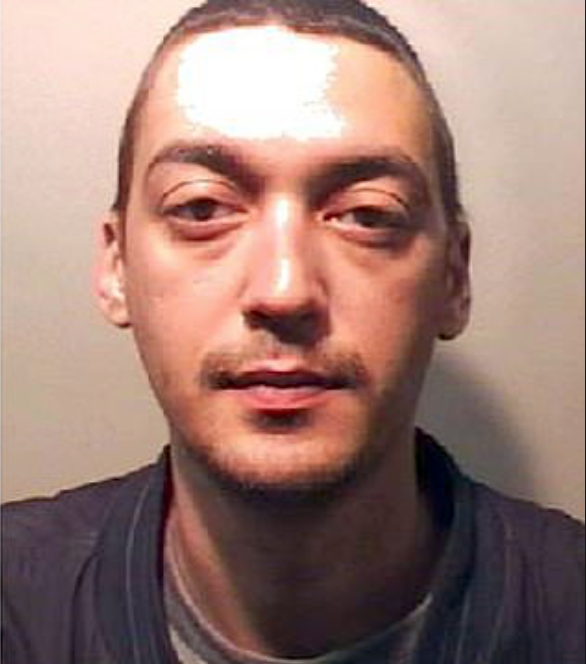
Cyber criminal Danny Kaye, 29. (Photo: Google Images)
There is no suggestion that Cellcom knew what the employee was doing – but the individual offered Kaye up to $10,000 (£7,800) a month to use his skills to do as much as possible to destroy Lonestar’s service and reputation.
Robin Sellers, prosecuting, told Blackfriars Crown Court that in November 2016 Kaye had built a “botnet” – a particularly powerful form of cyber attack that is designed to overwhelm a target’s systems, making it impossible to carry out normal business.”
Kaye attacked several telecom companies in several countries but due to Liberia’s weak infrastructure, he was able to knock the entire nation offline. He admitted to the following charges:
Making the Mirai #14 botnet for use in a Computer Misuse Act 1990 offence
Launching cyber attacks against Lonestar in Liberia – another crime under the Computer Misuse Act
Possessing criminal property – relating to $10,000 found on him when he was arrested
The investigation was spearheaded by the National Crime Agency.
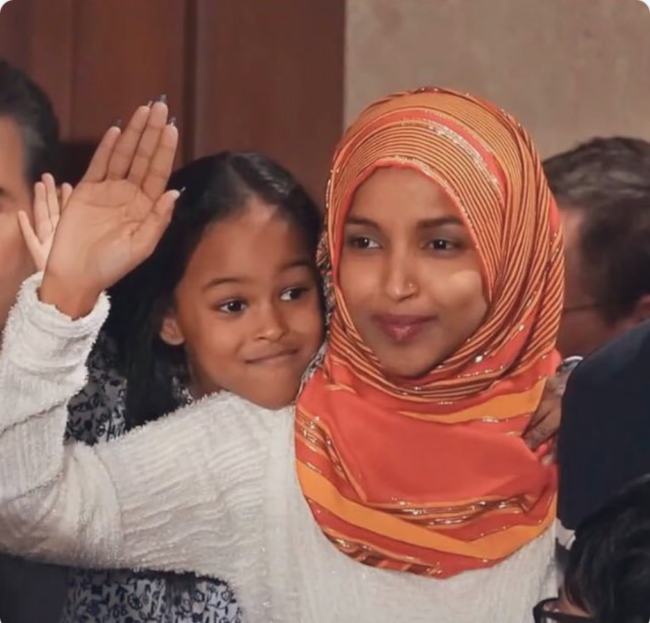
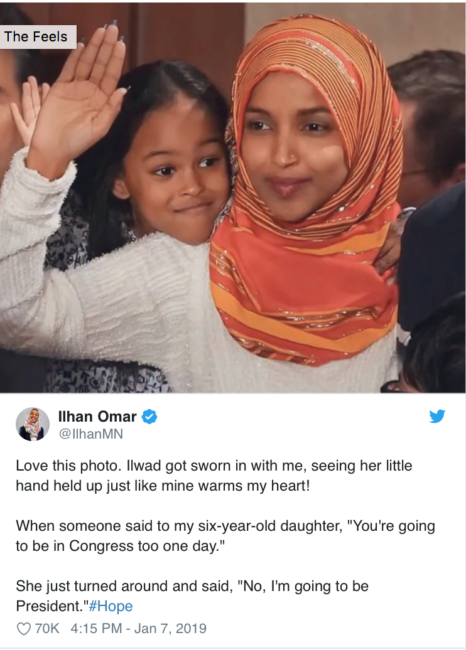
With her daughter Ilwad looking on, Ilhan Omar was sworn into office, becoming the first Somali American to serve in Congress. Omar arrived in the United States 23 years ago, is one of two Muslim women to serve in Congress and the first person to wear a hijab on the House floor.
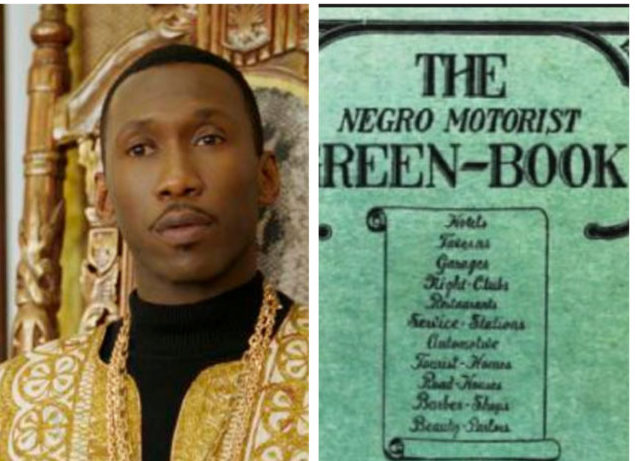
Oscar and Golden Globe winner Mahershala Ali and the Green Book Guide.
(Photo: Green Book Film)
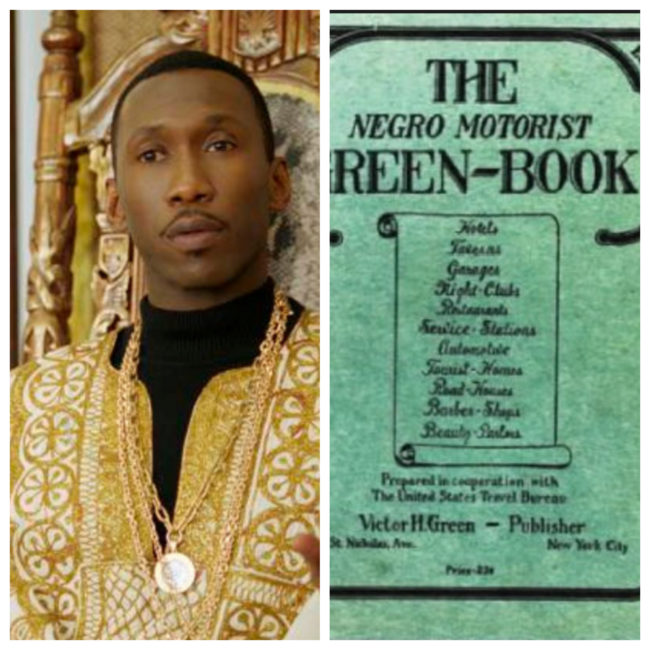
Oscar and Golden Globe winner Mahershala Ali and the Green Book Guide. (Photo: Green Book Film)
The motion picture Green Book took home several top awards at the 76th Golden Globe Awards. In the acting categories, megastar Mahershala Ali won for best supporting actor and Viggo Mortensen won for best actor. Director Peter Farrelly won best director and motion picture screenplay while the film picked up the best comedy or musical award.
In 2010, The Burton Wire’s founder & editor-in-chief Nsenga K. Burton, Ph.D. wrote about the guide for The Root. In the article Dr. Burton examined the history of the guide and tried to track down some of the businesses listed in Washington, DC and Baltimore, Check out an excerpt of the article which will give you some context about the guide behind the celebrated film.
EXCERPT
In 1936 a Harlem postal worker and activist named Victor H. Green decided to develop a guide that would help African Americans travel throughout the country in a safe and comfortable manner. The Negro Motorist Green Book (also called The Negro Travelers’ Green Book), often simply known as The Green Book, identified places that welcomed black people during an era when Jim Crow laws and de facto segregation made it difficult for them to travel domestically without fear of racial backlash.
The Green Book listed businesses and places of interest such as nightclubs, beauty salons, barbershops, gas stations and garages that catered to black road-trippers. For almost three decades, travelers could request (for just 10 cents’ postage) and receive a guide from Green. Eventually the guide expanded to encompass information about Canada and Mexico.
Like users of today’s popular recommendation sites such as TripAdvisor, travelers collected information during their journeys, which they shared with Green and his team of editors. The data were then incorporated into future editions. “Historically, The Green Book falls in line with the underreported activism of black postal workers and the heightened awareness of driving while black in certain regions of the country,” says Robert Smith, associate professor of African-American and civil rights history at the University of Wisconsin-Milwaukee. “Although many think of this book in historical terms, the challenges facing black travelers then resonate with black travelers now, particularly as it relates to racial profiling and stop-and-frisk laws.”
The Green Book has recently been rediscovered in popular culture. Atlanta playwright Calvin Alexander Ramsey wrote a play entitled The Green Book, in which a black military officer and his wife stay in a “tourist home” (private homes identified as safe places for travel) with a Holocaust survivor on the eve of a speech being given by W.E.B. Du Bois in Jefferson City, Mo. Ramsey also published a children’s book, Ruth and the Green Book, illustrated by legendary artist Floyd Cooper that follows a young girl’s journey with her family in an expensive car from Chicago to Alabama.
In a New York Times article, Ramsey recalled having to pack a big lunch when his family traveled from Baltimore to Roxboro, N.C., so they wouldn’t have to stop along the way. Food historian Jessica Harris recently discussed The Green Book in Byron Hurt‘s award-winning documentary Soul Food Junkies. Harris shared that the guide highlighted not only safe places but also the best places to eat and to find soul food while traveling. A traveling exhibition, “The Dresser Trunk Project,” also pays homage to the places of refuge, comfort and familiarity found in the guide.
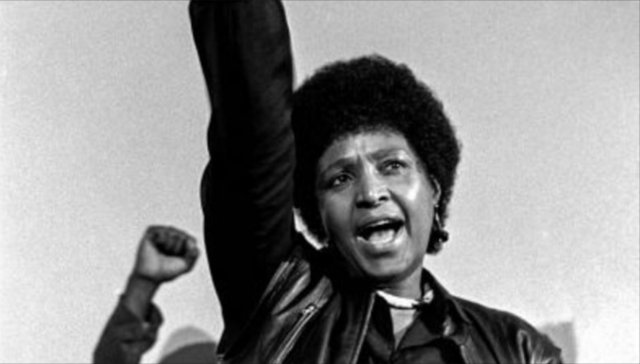
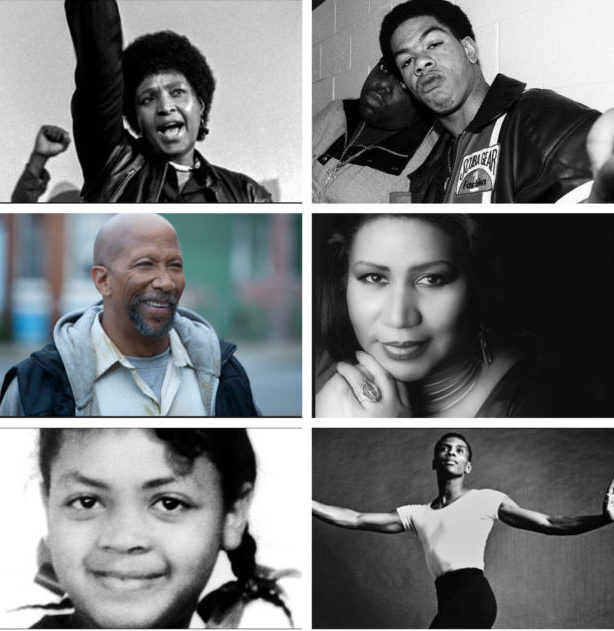
The world lost major influencers, legends, trailblazers and icons during 2018. Queen of Soul Aretha Franklin went to glory this year after losing a battle with pancreatic cancer. Winnie Madikizela-Mandela, anti-apartheid activist and former wife of the late South African president Nelson Mandela, passed away in April. Model and actress Kim Porter succumbed to the flu, passing away in November and leaving behind four children. Joseph Jackson, the man who helped create two of the world’s most beloved superstars Michael Jackson and Janet Jackson died of pancreatic cancer. Jazz legend Nancy Wilson passed away this year as did Broadway actress Ethel Ayler, beloved actor Reg E. Cathey, Temptations singer Dennis Edwards, gospel singer Yvonne Staples and global icon Hugh Masekela. Rappers Craig Mack and Jabulani Tsambo, Hip-Hop pioneer DJ Lovebug Starski and rising stars XXXtentacion and Linda ‘ProKid’ Mkhizealso left us in 2018. Science trailblazer Raye Montague and Olivia Hooker, one of the last survivors of the 1921 Tulsa race riots and among the first black women in the U.S. Coast Guard died. Tuskegee Airman Floyd J. Carter, Sr. transitioned while Internet sensation Young Busco died just hours after his last post at age 31. The media world lost legends Lerone Bennett, Jr., Les Payne and Ray Taliaferro while the arts world lost actress Olivia Cole, choreographer Arthur Mitchell, poet Ntozake Shange and The Last Poets’ Jalal Mansur Nuriddin. Civil Rights lions Dorothy Cotton, Vel Phillips, Linda Brown, Peggy Cooper Cafritz, Reverend Wyatt T. Walker, Zola Skweyiya and Frankie Muse Freeman passed away this year. The sports world lost Jose Castillo, Luis Valbuena, Willie “Stretch” McCovey, Wayde Sims, Ray Emery, Hal Greer, Ed Charles, Edwin Jackson, Rasual Butler, Oscar Gamble, Chameka Scott, Cyrille Regis, Nicholas Bett, Jlloyd,JoJo White. South African legends (politics) Sandy Mokwena (actor), David Phetoe (actor) and Edna Molewa (politics) also died. Miss Universe and Miss USA 1995 Chelsi Smith of liver cancer at age 45.
2. #BlackGirlMagic Happens in U.S. Politics
Ayanna Pressley became the first Black woman elected to Congress in Massachusetts. Stacey Abrams and Andrew Gillum became the first Black nominees for governor of Georgia and Florida. Both lost to voter suppression tactics by the GOP. For example, Abrams opponent Brian Kemp refused to step down from the office of Secretary of State even though it was his office which oversaw the Gubernatorial election. Lucy McBath, gun control activist and mother of slain teenager Jordan Davis, won her 6th Congressional district election, occupying a seat once held by Republican Newt Gingrich and handing GOP favorite Karen Handel a sound defeat. More than 70 black women ran for office in the state of Alabama. In Illinois, 31-year-old Democrat Lauren Underwood won in a predominantly white and solidly Republican district, becoming one of the youngest black candidates elected to Congress. Minnesota’s Ilhan Omar won her race, becoming America’s first Somali-American woman in Congress. Michigan’s Rashida Tlaib, became one of the first Muslim women elected to Congress. Jahana Hayes, 2016 National Teacher of the Year, won her race, becoming the first black woman to represent Connecticut in Congress. California Senator Kamala Harris helped usher in the Justice for Victims of Lynching Act, which passed unanimously in December making lynching a federal crime. The act was introduced by the chamber’s three African-American senators: California Democratic Sen. Kamala Harris, New Jersey Democratic Sen. Cory Booker and South Carolina Republican Sen. Tim Scott.
3. Ethiopia and Eritrea Sign ‘Declaration of Peace and Friendship’
Ethiopia and Eritrea have declared their “state of war” over after landmark talks between the neighbouring countries’ leaders, as part of a historic agreement that will see the opening of embassies, development of ports and resumption of flights. The rapprochement ends a decades-long cold war over border disputes that hurt both countries. Eritrean Information Minister Yemane Gebremeskel, quoting from a “Joint Declaration of Peace and Friendship,” said at the time of the announcent, “a new era of peace and friendship has been ushered (in).” The “state of war that existed between the two countries has come to an end”, he wrote on Twitter.”
4. The Diaspora is Winning the War on Stereotypes One News Story at a Time
Following China’s ban on ivory last year, ivory demand has dropped by almost half, and poaching rates are falling in places like Kenya. Niger revealed that it has planted 200 million new trees in three decades, the largest positive transformation of the environment in African history. In the forests of central Africa, the population of mountain gorillas, one of the world’s most endangered species, was reported to have increased by 25% since 2010, to over 1,000. Rwanda became the first developing nation to provide universal eye care to all of its citizens, by training 3,000 nurses in over 500 health clinics. Ghana became the first country in sub-Saharan Africa to eliminate trachoma. In 2000, it threatened 2.8 million people (15% of the population) with blindness. New research revealed that in the last two decades, female genital mutilation has fallen from 57.7% to 14.1% in north Africa, from 73.6% to 25.4% in west Africa, and from 71.4% to 8% in east Africa. Morocco passed a landmark law that criminalizes violence against women, and imposes harsh penalties on perpetrators. Trinidad and Tobago’s high court ruled that the Caribbean nation’s colonial-era law banning gay sex was unconstitutional. The share of black men in poverty in the United States fell from 41% in 1960 to 18% today, and their share in the middle class rose from 38% to 57% in the same time.
5. 911 Calls on Black People Living While Black in the U.S.
Black people in the United States had the police called on them for studying in a university while black, returning to their home while black, mowing the lawn while black, cashing a paycheck at a bank while black, golfing too slowly while black, eating at Subway while black, meeting at Starbucks while black and selling water while black among many other ridiculous incidents. Emboldened by white nationalism and white supremacy embraced and endorsed by the current White House, hate crimes and hateful crimes targeting black folks of all ages are on the rise. For example, Teresa Klein, a white woman lied on a 9-year-old black boy about groping her — a claim that was proven false. In Dallas, Botham Shem Jean was killed in his apartment by Amber Guygera, a neighbor who is also a police officer. Guygera was eventually charged with murder. Racial profiling is not new but black folks putting folks on blast via social media and getting some form of justice is relatively new.
This post was written by The Burton Wire’s founder & editor-in-chief Nsenga K. Burton, Ph.D. Follow The Burton Wire on Twitter or Instagram @TheBurtonWire.
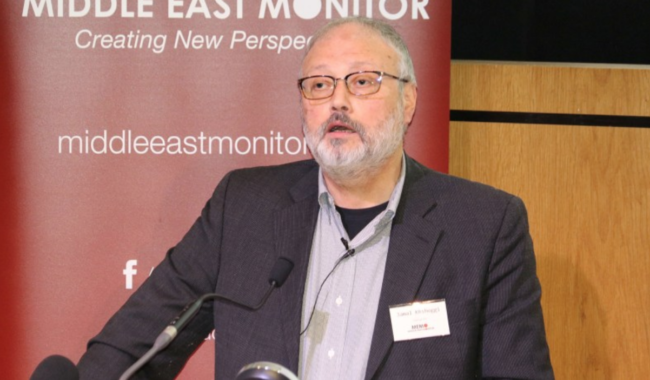
Photo: Jamal Khashoggi speaks at the Middle East Monitor in London in September 2018.
(Google Images)
Photo: Jamal Khashoggi speaks at the Middle East Monitor in London in September 2018. (Google Images)
Reuters is reporting footage of the transfer of slain journalist Jamal Khashoggi’s remains in suitcases has been aired on pro-government Turkish television. According to the article, the video “shows men carrying what it says were a total of five (suit)cases through the main entrance of the residence, a short distance from the consulate where Khashoggi, a leading critic of Saudi policies, was killed in early October.” The residence in the video belongs to Saudi Arabia’s consul general.
Khashoggi, a U.S. resident and royal insider, was murdered allegedly for his criticism of Crown Prince Mohammed bin Salman, who is also alleged to have ordered the murder.