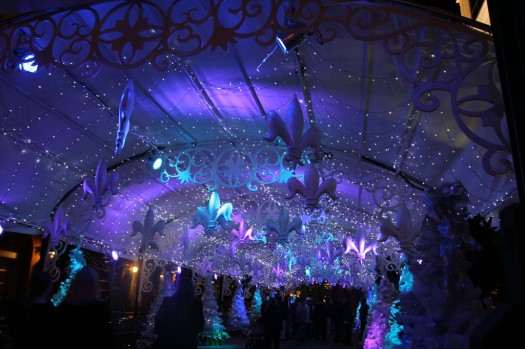
Réveillon is celebrated throughout the world including New Orleans in the United States. (Google Images)
In a photo gallery, Chantal Martineau of the Huffington Post shares different New Year’s Eve traditions that occur throughout the African Diaspora. Martineau highlights “Watch Night,” which began with prayers for freedom on New Year’s Eve by slaves who were typically auctioned off on New Year’s Day in the U.S. and throughout the Caribbean. Black-eyed peas and collard greens (prosperity and good luck) are staples in African-American communities on New Year’s Eve. She also shares the story of Haiti’s Soup Joumou, a pumpkin soup once forbidden to slaves, which is made in honor of their independence hard fought and won in 1804. The Junkanoo, which is a carnival featuring bands and costumes that began with slaves having the day off on New Year’s Eve, takes place in the Bahamas. Réveillon happens worldwide including Brazil, where extravagant parties are hosted in celebration of the new awakening and attendees wear white to symbolize a fresh start.
The Junkanoo is New Year’s Eve tradition in the Bahamas. Celebrations are marked by music, dance, costumes and food as Bahamians highlight the coming of the New Year. During slavery, the Junkanoo was a celebration of having the day off. (Google Images)
However you choose to ring in the New Year, keep in mind that people throughout the African Diaspora will be participating in shared traditions marked by hope, peace and prosperity. The Burton Wirewishes you a happy and safe New Year.
View Martineau’s photo gallery of African Diasporic New Year’s Eve Traditions on Huffington Post.
Bino and Fino is an African educational cartoon. (Photo Credit: Google Images)
Contemporary psychological literature is overflowing with empirical evidence (originating in or based on observation or experience) indicating the importance of active positive racial socialization of Black children. Reinforcing positive attitudes, behaviors, information and beliefs about African culture is connected to academic achievement, psychological, social, emotional, and spiritual well-being, especially in black children.
The recently released documentary, American Promise, underscores what we, as Black psychologists, have known and attempted to share with the public for more than half a century. As we embark on the Kwanzaa season, I have compiled a list of choice zawadis (gifts) to support the healthy racial identity development of my little Black boy and possibly yours. Happy Kwanzaa!
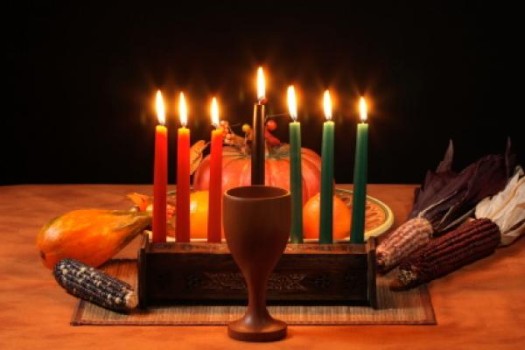
Kwanzaa Set
This set contains all of the symbols of Kwanzaa you will need to celebrate the holiday. Created from a single piece of wood, the candleholder was inspired by the Ashanti royal throne. Intricately carved at its base is the symbol “gye nyame” meaning steadfastness in courage.
Kwanzaa Books (My First Kwanzaa; A Kwanzaa Celebration)
A great way to get acquainted with Kwanzaa principles.
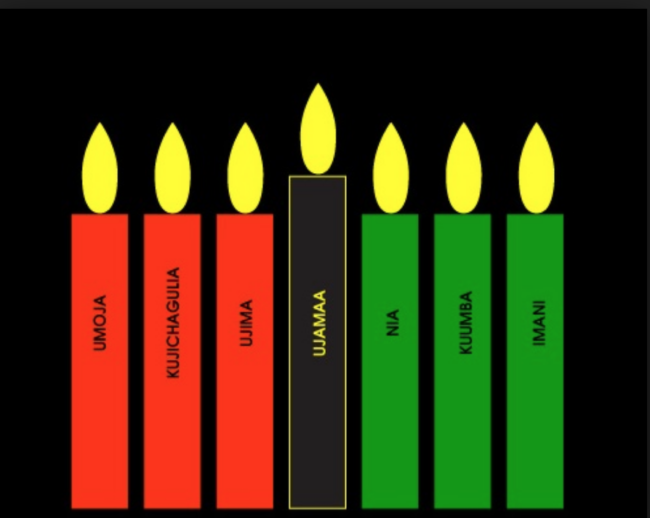
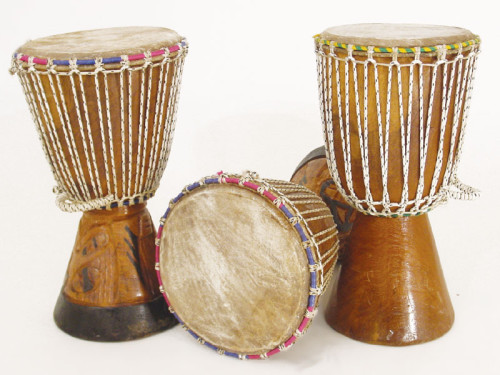
Gift ideas for those who celebrate Kwanzaa. (Photo Credit: Google Images)
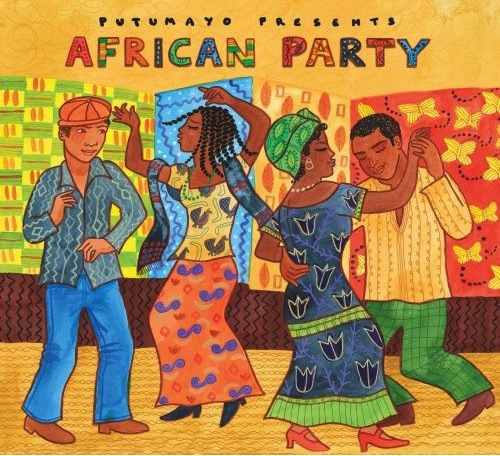
Putumayo CDs – Putumayo Kids
Celebrates the world through music! Features music from the African continent, New Orleans and the Caribbean.
Playmobil Egyptian Play Set Children can experience and recreate the world through miniature mobile projects based on children’s play principles.
Montessori Puzzle Map of Africa Why not start teaching your children about the different countries in Africa now? This wooden puzzle map has a knob indicating each African country. Not to worry, there is a labeled and unlabeled control map if you need help.
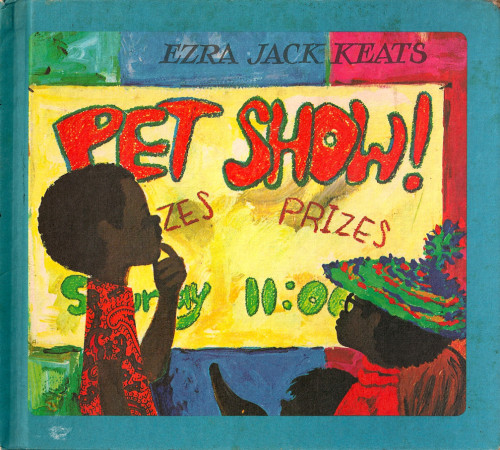
Ezra Jack Keats Children’s Books These children’s books examine a number of topics. Some of my favorites are “Peter’s Chair,” “Hi, Cat!” “Pet Show!” “Whistle For Willie,” “A Letter for Amy,” “Regards to the Man in the Moon,” “Louie,” “Goggles!” and “A Snowy Day.”
What are some of your Zawadi ideas that reflect African culture? Share with us in the comments section below. Happy Kwanzaa!
This post was written by Nyasha Grayman-Simpson, Ph.D., who is a counseling psychologist located in Baltimore, MD.
Black Santa Larry Jefferson at Mall of America in Bloomington, MN (Photo: Google Images)
Writing for MPR News, Riham Feshir discusses the great demand for Santas of color in the United States. The article highlights Santa Larry who can be found at Mall of America in Bloomington, Minnesota. In the article, Larry Jefferson who dons the red suit for Mall of America says the demand for Santa Larry was so high this year, he began taking appointments for photos back in October. Black Santa is not new to black America, but the warm reception or willingness of diverse groups of people to demand or acknowledge Black Santa in mainstream spaces is relatively new. Even though Jefferson, who is the first African-American Santa at Mall of America, was met with mostly positive responses, there was some negative feedback to such an extent the Star Tribune turned off the comments section on their story about Jefferson due to hateful comments:
Feshir writes:
The image of a white man portraying Santa has been implanted in most minds for decades. It was illustrated by political cartoonist Thomas Nast based on his imagination of the 19th-century poem “The Night Before Christmas.”
Maria Tatar, a professor of folklore at Harvard University, says Santa was never a monolithic figure, and there are genial figures associated with modern-day Santa Claus — like Ghost of Christmas Past and Father Christmas.
Until recently, when one of her students gave her a children’s book titled “Santa’s Husband,” which is a story about a black and white gay couple.
‘The great thing about the myths and of folktales and all of our cultural stories is that we keep making them new,’ she said. ‘If we told the same old story over and over again the tale would shrivel up and die. It would become completely uninteresting to us.’
The characteristic generosity, however, comes from Saint Nicholas, the Greek bishop from modern-day Turkey. In available images, he has olive skin and brown eyes.
‘He kind of looks like me,’ Jefferson said with a smile. ‘Someone posted a picture of Saint Nicholas and my picture side by side, and was like, ‘Santa Larry, you look more like Saint Nicholas than anybody.'”
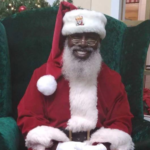
Black Santa is not new to African-American communities, particularly in the South. For example, in 1994 Greenbriar Mall in Atlanta, GA introduced their first black Santa Willie Veal, who dressed as Santa for 19 years until his passing in 2013. Santa Eddie (Eddie Simpson), who is also African-American, has dressed as Santa for the last five years at Greenbriar Mall. Facebook and Instagram are teeming with photos of African-American children sitting on the laps of black Santa covering several decades. Black Santas can be found in major cities throughout the country like New Orleans, Los Angeles, New York, Detroit, Seattle and Washington, DC.
Although Black Santa is no secret to black communities in America, there is a secret history to black Santas. Brian Wheeler of the BBC takes readers on a historical journey which begins with St. Nicholas in Turkey and chronicles other instances of a black St. Nick including U.S. presidential celebrations (Woodrow Wilson’s honeymoon in Virginia) and what Wheeler calls a breakthrough for black Santas when tap dancing legend Bill “Bojangles” Robinson, who became Harlem’s “first negro Santa Claus” at an annual Christmas Eve party for underprivileged children in 1936.
Tap dancing legend Bill “Bojangles” Robinson as Santa Claus in Harlem in 1936. (Photo: Getty Images)
Santa Eddie Simpson of Greenbriar Mall in Atlanta, GA. (Photo: Facebook)
Black Santa Larry Jefferson at Mall of America in Bloomington, MN (Photo: Google Images)
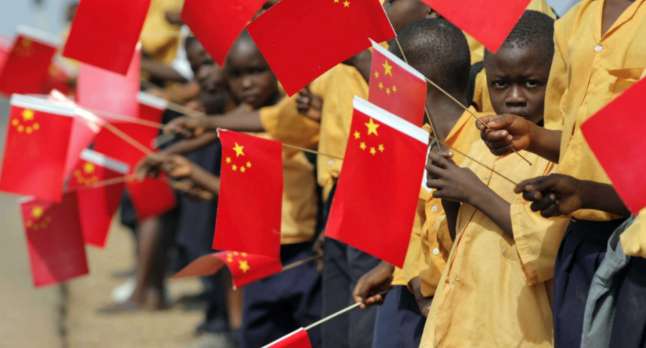
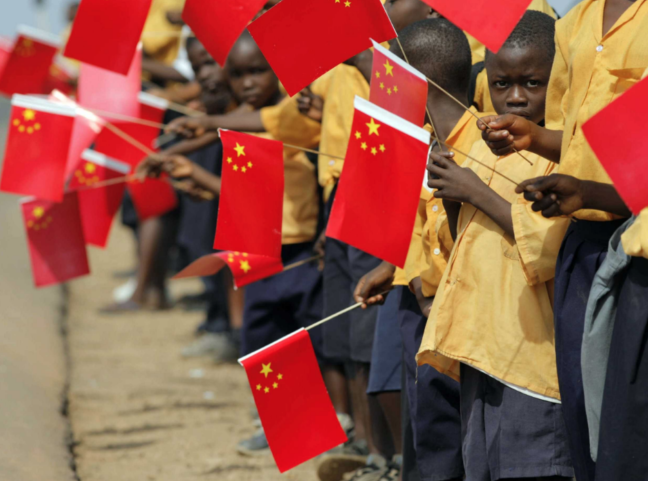
Writing for Bloomberg.com, Michael Cohen, Samer Al-Atrush, Henry Meyer and Margaret Taley contextualizes United States National Security Adviser John Bolton’s “new strategy” for Africa. At the center of Bolton’s plan, which has been endorsed by U.S. President Donald Trump, is the reality the United States is losing ground in Africa due to the major influence and presence of China and Russia. Bolton’s plan discussed counterterrorism and overhauling foreign aid but does not plan to address trade issues and other economic opportunities until many years down the line. The article suggests President Trump’s myopic view of the world is being reflected in Bolton’s plan which may mean missed opportunities for the United States to gain footing in the world’s largest middle-class.
They write:
“‘Africa is incredibly important,’ Bolton said Thursday at the Heritage Foundation in Washington. ‘If we didn’t understand it before, the competition posed by China and Russia and others should highlight that for us.’ That means the U.S. could miss investment opportunities in a region with the world’s fastest-growing middle class, a continent that will account for half of global population growth by 2050. Led by Ghana and Kenya, African nations are stitching together a trade union designed to bolster intra-Africa commerce. The initiative has a long ways to go, but if it can achieve critical mass, the continent’s combined GDP would be almost the size of Germany’s.
While the U.S. sorts out its priorities, China has spent recent years investing more on the continent — in physical and financial terms, as well as in so-called soft power. It’s ramped up scholarships for African academics, deployed peacekeepers to UN missions in Mali and South Sudan and sent scientists to help address key economic and social needs.”
Indis Sandu, 21, is the tech genius behind Uber, Instagram and Snapchat. (Photo: Facebook)
When most people think of the name Idris, they think of world famous actor Idris Elba. There’s another Idris on the block and he has been leading the tech industry since his teen years. Idris Sandu, 21, may one day be a household name with his growing roster of applications making use of his mobile software technology.
In addition to being an innovator, the Los Angeleno is an activist. He discovered his love of tech after being taken from California as a child by his father and abandoned in a small village in his father’s home country of Ghana. Sandu figured out how to get back home to the United States using the first-ever iPhone which is what motivated him to pursue a career in technology. The iPhone was the first time that users could create applications for other users. At age 10, Sandu was discovered by a Google designer while in a public library, who promptly offered him an internship. By age 13, Sandu was programming for Google Blogger and Google Plus and the rest is history.
Writing for Face2FaceAfrica.com, Mildred Europa Taylor features Sandu whose technological contributions have been used by major companies like Uber, Instagram and Snapchat. Taylor writes:
“He was only 16 years old. Now 21, the Los Angeles-based young man is the unconventional tech guru who has accomplished many incredible feats, including being responsible for algorithms that have made Uber, Instagram and Snapchat what they are today. The software engineer considers himself a ‘cultural architect’ and said he aims to ‘level the playing field’ between Silicon Valley and young communities of colour.”
The Burton Wire would like to wish you a safe and Happy Holiday season! To help you get into the Christmas spirit, we’ve compiled a list of our favorite songs. Feel free to add the name of your favorites in the comments section so we can add them to the list. Wishing you love, peace and blessings!!!
Eli Watkins and Jennifer Hansler of CNN are reporting the U.S. State Department has re-established a diplomatic presence in Somalia, three years after re-establishing diplomatic relations with the country in 2015. The journalists report:
“‘This historic event reflects Somalia’s progress in recent years and is another step forward in formalizing US diplomatic engagement in Mogadishu since recognizing the Federal Government of Somalia in 2013,’ department spokeswoman Heather Nauert said in a statement.
The US closed its embassy in Mogadishu in January 1991 after the overthrow of the country’s President. The US took steps in 2015 to re-establish diplomatic ties with Somalia by reopening its diplomatic mission but basing it in Kenya.
President Donald Trump tapped Donald Yamamoto earlier this year to be the permanent US ambassador to Somalia, a nomination confirmed by the Senate in October. Nauert’s statement on Tuesday said, ‘Yamamoto and his staff look forward’ to working with the Somalian government.”
The East African nation has been central to U.S. counter-terror efforts including the killing of nine militants yesterday.
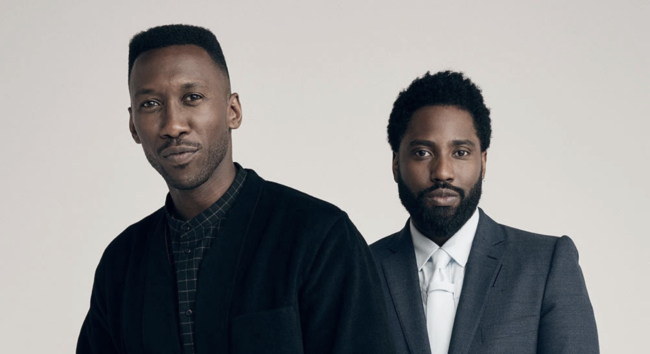
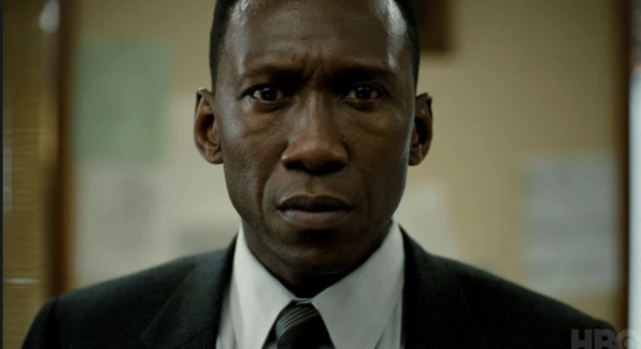
Mahershala Ali and John David Washington.
(Photo: Variety)
Photo: HBO
As part of Variety’sActors on Actors series, Academy award-winning actor Mahershala Ali sits down to chat with rising star John David Washington about his film Green Book and season 3 of HBO’s third season of True Detective.
Check out the trailer for Season 3 of HBO’s True Detective which premieres January 13, 2019 at 9 p.m. EST:
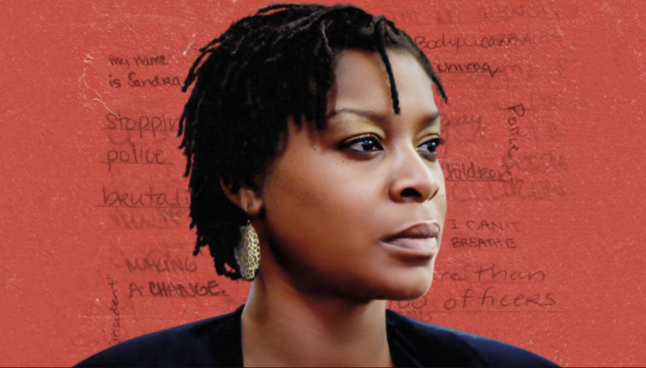
Writing for The Guardian, Jamiles Lartey discusses the documentary, “Say Her Name: The Life and Death of Sandra Bland,” which premieres tonight at 10 p.m. on HBO. Lartey chats with Shante Needham, Sandra Bland’s sister, who cameras follow while filming the documentary. He writes:
“It wasn’t always easy for Shante Needham to have cameras following her and her family through some of the rawest, most challenging trials of their lives.
‘Honestly, it was a bit much at times, especially when I was having a down day,’ she told the Guardian.
It was 2015 and Needham’s sister Sandra Bland had just been found dead in her jail cell in Waller county, Texas, after having been arrested during a routine traffic stop. In the midst of the burgeoning Black Lives Mattermovement, questions about Bland’s arrest and death had quickly begun to draw headlines and steer conversations about the ways black women were subjected to police violence – popularizing the refrain ‘say her name’.
In the early moments following her death, film-makers Kate Davis and David Heilbroner contacted Bland’s family and asked to follow their fight to learn exactly what had occurred to the outspoken 28-year-old they all knew as Sandy. The ensuing two-year odyssey of surveillance videos, autopsies, lawsuits and protests were captured in the HBO documentary film Say Her Name: The Life and Death of Sandra Bland.
While the film doesn’t decisively answer the case’s biggest outstanding question – whether there was foul play involved in Bland’s apparent suicide – the film settles on a harsh indictment of the criminal justice system in which Bland became ensnared…”