Home Blog Page 4

‘Black Nativity’: The Executive Producer and Cast Ask the Questions

0
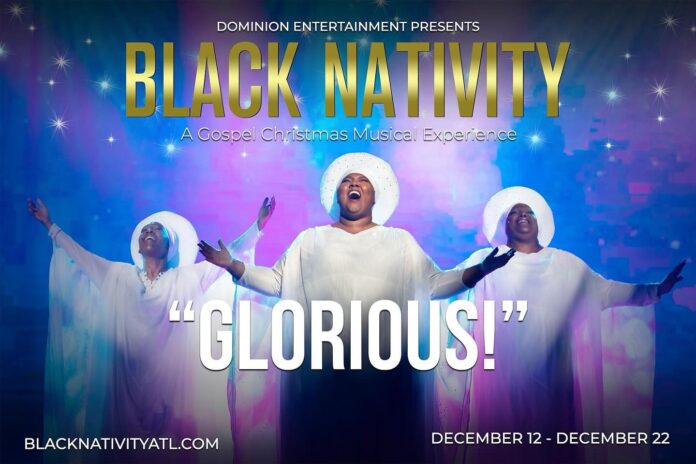
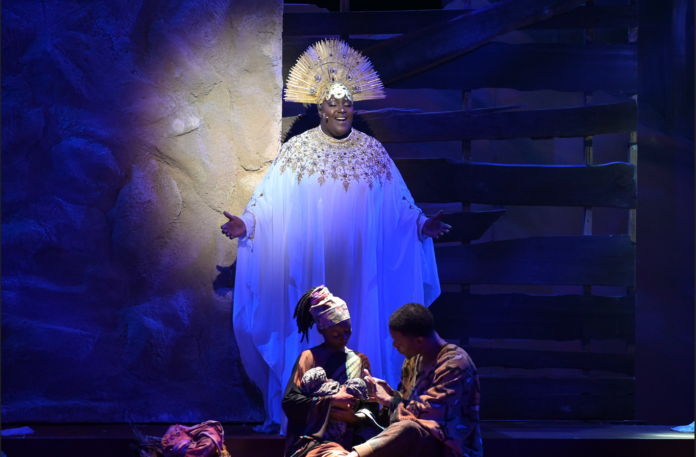
Black Nativity: A Black Christmas Experience promotional photo.

This article is the first in a series of three articles about the cultural phenomenon, “Black Nativity: A Gospel Christmas Experience,” staged each year in Atlanta, GA by Robert John Connor, award-winning producer/director and CEO of Dominion Entertainment. 

“Black Nativity” is a musical drama that reimagines the traditional Christmas story through the lens of African American culture and artistry. Originally a stage play written by Langston Hughes (1961), the story is a celebration of faith, family, and the spirit of Christmas, highlighting themes of hope, love, and redemption. By placing Black characters in a traditional narrative, it challenges dominant cultural narratives that often exclude or marginalize Black voices.

Emerging during the Civil Rights Movement, “Black Nativity” reflected the social and political climate of its time and resonates in the current cultural and political climate.

The impact of “Black Nativity” extends beyond its initial performances, having been adapted into a movie in 2013 and reimagined on stages across the globe, including Atlanta with award-winning director Robert John Connor, who has been producing the play for Atlanta audiences for decades through his company Dominion Entertainment.

Highlighting the enduring themes of love, faith, and community in the face of adversity, “Black Nativity” continues to uplift and appreciate black culture, spirituality and community.

In keeping with the creativity baked into this production, The Burton Wire is trying something a little different by creating a series of articles that tap directly into the voices of the creatives behind “Black Nativity: A Gospel Christmas Experience” at the Ferst Center for the Arts, Dec. 12-22. Instead of TBW asking the questions, the creatives are asking the questions they want to know of each other. With the help of Lisa Gee of  ConnectingYOUto Public Relations, Corp., instead of TBW conducting the interviews, Lisa and I (Nsenga) thought it would be cool to have some of the many outstanding creatives involved in the production interview each other.

In a soulful remix of whose on first, we will hear directly from “Black Nativity” creatives:

Latrice Pace, cast member; Pace is a two-time Stellar award nominee, Billboard charting member of the Grammy-nominated gospel group, The Anointed Pace Sisters and Suzi Bass Award winner for What’s Done in the DarkScissors and I Know I’ve Been Changed.

Maurice Griffin, cast member; Griffin made his musical theater debut in Peter Pan at the age of five. The multi-hyphenate has gone on to achieve success as a TV, Film, Stage & Commercial actor. Maurice’s extraordinary vocal ability enabled him to be a finalist on BET’s Sunday Best, as well as sing for diverse audiences across the globe.

Robert John Connor, Executive Producer and Director. A Morehouse man, Connor is a multi-talented director/producer/actor/singer/writer. He is the Chief Executive Officer/Artistic Director of Dominion Entertainment Group and founder of Dominion Arts Foundation, Inc. a non-profit organization whose mission is to facilitate cultural enrichment opportunities, employment, training and internships through programming and partnerships with arts and entertainment organizations for underserved community members.

In the first article of the series, Latrice Pace chats with Robert John O’Connor about the motivation behind producing “Black Nativity: A Gospel Christmas Experience” and using his platform for spiritual and cultural expression. Check it out:

LP: What inspired you to bring Black Nativity to Atlanta and how has your creative vision for this evolved over the years?

RJO:  I guess I’m foolish enough to try. That’s the overarching answer. Ever since I had done Black Nativity back in the early ‘90s, I was never able to shake the experience and how valuable the show was for me as an artist and as a person of God and a person of faith. I was living in Las Vegas at the time and decided to try to produce this and made an effort to do so. I did not quite find the market for it, but I started thinking of ways to refashion this particular piece. Then one day, I got up and told my wife, “I got it!” I told her that I wanted to adapt it and turn it into a one-act play. That was right around the time when I returned to Atlanta. True Colors Theatre Company was producing the play, and I saw Mother Benning also known as Mabel Benning, an icon in black Atlanta and theatre at a show, and she said “Robert, True Colors is not going to do Black Nativity this year. You should do it!” So, I took a stab at it with no money and the gift of time and talent that friends gave.  And, over the years it has really evolved into what I feel God placed on me. It was a struggle for sure, but it’s absolutely been a worthwhile journey.

LR: How do you balance the powerful things of faith and culture in Black Nativity while also making it resonate with modern audiences?

RJO:  I fuse in a little bit for everybody. I’ve used modern songs, modern dance and spirituals. And there’s a little bit of music and dance for every person to appreciate. And with the caliber of talent that we have and the artistry that happens on stage, it is something that draws audiences in very quickly and makes them walk out feeling very revived and hopeful and inspired. 

LR: Through Dominion Arts Foundation, you’ve impacted over 21,000 youth and as a creative powerhouse, you have helped mold the careers of stars like Joaquina Kalukango, Tony Hightower, Maurice Griffin, and me. When you look back after your last production, what one word would you like to be able to say and why that word?

RJO: Thank you. “Thank you” are the biggest words I have. It really takes a whole lot of generosity for people when you’re trying to grow and develop your vision that people believe in enough to stay and to stand by me and to contribute in ways sometimes that I didn’t expect. Thank you for trusting me to know that I am an honorable person, a person of ethics and character, and really trying to do this thing.  Latrice, you and I often talk about how this is sometimes a thankless journey. We, as artists, know that sometimes our riches lie in our gifts as they don’t always turn up in monetary ways.  Back then, people gave up their time and talent for free because they believed in something that I believed in. And so, I am just full of gratitude for that over these many years.

LR: What has been your proudest achievement across your decades long career in the arts?

RJO: My proudest achievement has nothing to do with the arts. My proudest achievement is that I was able to, with the help of my glorious wife, Andrea, create a very well-rounded and kind and creative human being who can take our legacy somewhere.  We did not push her. We did not influence her.  She found her own way, kept it a secret, and then all of a sudden, we just saw her out there doing things. So yeah, that’s my proudest accomplishment — being able to pour into our child who makes us proud every day.

Black Nativity: A Gospel Christmas Experience is playing at the Ferst Theater, on the campus of Georgia Tech University, December 12-22, 2024. 

This post was curated by Nsenga K. Burton, founder & editor-in-chief of The Burton Wire. It is the first in a series of three articles about Black Nativity: A Gospel Christmas Experience. The next article in the series will feature Black Nativity performer Latrice Pace asking Maurice Griffin questions about his professional journey. Read the second article in the series here.

Follow The Burton Wire on Instagram or Facebook. Follow Nsenga on Instagram @Ntellectual.
Wicked: A Wickedly Fabulous Film

0
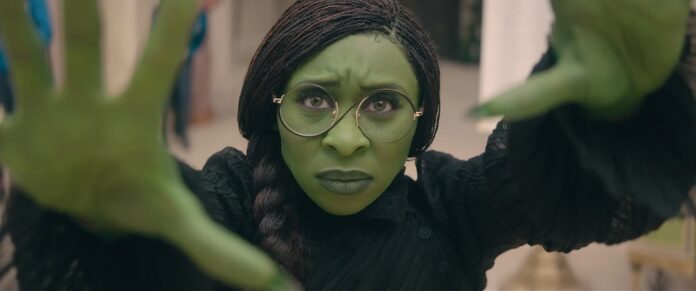
Cynthia Erivo as Elpheba in the big screen adaptation of Wicked. (Photo: Universal Studios)

Wicked is a dazzling cinematic adaptation that enchants from start to finish, delivering a powerful narrative that feels remarkably timely in today’s cultural and political climate. The film explores themes of friendship, identity, and societal expectations, resonating deeply with contemporary audiences who grapple with issues of acceptance and understanding. Wicked beautifully demonstrates the precariousness of the good vs. evil trope and how one is never far from the other. Directed by Jon M. Chu and written by Winnie Holzman and Dana Fox, Wicked is the first of a two-part film adaptation of the stage musical Wicked by Stephen Schwartz and Winnie Holzman. This filmic adaptation of the Broadway smash, shows up and shows out on the big screen, delivering delight, deviousness and discovery with one gut-punch after the other.

The casting of this film is nothing short of brilliant. Cynthia Erivo and Ariana Grande shine as Elphaba and Glinda, bringing their characters to life with incredible depth and emotion. Erivo’s portrayal of Elphaba is both fierce and vulnerable, showcasing her immense talent and vocal prowess. Grande complements her beautifully, infusing Glinda with charm and wit. The chemistry between these two leads is palpable, making their journey of self-discovery and friendship profoundly moving.

Adding to the star-studded ensemble, Academy Award winner Michelle Yeoh delivers a captivating performance, bringing gravitas and nuance to her role as. Her presence elevates the film, and she seamlessly fits into this magical world. Jeff Goldblum also adds a delightful flair, embodying his character with a unique charisma that keeps the audience engaged.

Visually, Wicked is a feast for the eyes. The cinematography and set design are breathtaking, transporting viewers to the vibrant land of Oz with stunning detail and creativity. Each scene is meticulously crafted, with elaborate costumes that enhance the storytelling and immerse the audience in this fantastical realm. The film’s aesthetic is matched only by its musical score, which features powerful songs that resonate long after the credits roll.

At 2 hours and 40 minutes, Wicked is a journey of pure unadulterated fabulousness. From the enchanting songs to the visually stunning production, to the intertextual references (Easter eggs), every element of the film contributes to a captivating experience. It is a celebration of individuality and resilience, echoing the struggles and triumphs we face in today’s world.

Wicked is a must-see film that combines exceptional performances, a timely storyline, and stunning visuals. It reimagines the archetypical roles of the hero and villain, and makes one contemplate whether empowered storytellers have gotten it wrong all along. Wicked brilliantly captures the essence of the beloved musical while making it relevant for a new generation. Whether you’re a longtime fan or new to the story, this adaptation will leave you spellbound and inspired.

This review was written by Nsenga K. Burton, Ph.D., founder and editor-in-chief of The Burton Wire. Dr. Burton is an independent film and media scholar. Follow Nsenga on IG @Ntellectual. 

Quincy Jones: Music Titan and Trailblazer Dies at 91

0
Music titan Quincy Jones has died at 91. (Photo: Google Images)

Legendary musician, producer and entertainment giant Quincy Jones has died. Arnold Robinson, Jones’ publicist, said he died on Sunday night at his home in the Bel Air section of Los Angeles, surrounded by his family.

“Tonight, with full but broken hearts, we must share the news of our father and brother Quincy Jones’ passing,” the family said in a statement. “And although this is an incredible loss for our family, we celebrate the great life that he lived and know there will never be another like him.”

Jones excelled as a musician and producer, working with greats like Count Basie, Elvis Presley, Charlie Parker, Charlie Mingus, Michael Jackson, Aretha Franklin and Frank Sinatra to name a few. He scored many films and produced iconic films like The Wiz, The Italian Job, In Cold Blood, In the Heat of the Night, E.T. the Extra Terrestrial and The Color Purple. He also had a film and television production company, which famously produced The Fresh Prince of Bel-Air, launching rapper Will Smith’s acting career.

Jones was born in Chicago, to parents who descended from slaves. After his parents divorced, he moved to Seattle at age 14 with his father where he learned to play multiple musical instrunents. He studied music at Seattle University, eventually moving to Boston and then NYC to play with legendary bandleader Lionel Hampton. The rest is history.

Jones has been nominated for seven Academy Awards. In 1968, Jones became the first African American to be nominated for an Academy Award for Best Original Song for “The Eyes of Love” from the film, “Banning.”Jones was also nominated for an Academy Award for Best Original Score for his work on the 1967 film, “In Cold Blood,” making him the first African American to be nominated twice in the same year. In 1971, the trailblazer became the first African American to be the musical director and conductor of the Academy Awards. In 1986, he was nominated for Best Picture for zthe Color Purple, which he scored and produced.

Over the course of his 75 year career, Jones won 28 Grammys, including three Producer of the Year awards, two Song of the Year awards, and two Album of the Year awards. The multi-hyphenate produced three of the most successful albums by music superstar Michael Jackson: Off the Wall (1979), Thriller (1982), and Bad (1987). He also won the Grammy Living Legend Award (1991). In 2001, Jones received a Kennedy Center honor and in 2010, he received a National Medal of Arts medal from President Barack Obama. The iconic bandleader was inducted into the Rock & Roll Hall of Fame in 2013.

In 1995. Jones gathered 45 music legends and pop stars to produce the single, “We are the World,” for the USA for Africa charity. The single sold 800,000 copies in three days and raised more than $60 million for African famine relief and inspired other musician-driven charitable efforts. Jones won the Academy’s Jean Hersholt Humanitarian Award that same year.

Jones was recently had a 90th birthday celebration at the Hollywood Bowl featuring iconic performers like Steve Wonder, Angélique Kidjo, Patti Austin, Aloe Blacc, John Legend, Jennifer Hudson and rising stars Samara Joy and BJ the Chicago Kid.

Jones was married three times and has seven children. He was married to Jeri Caldwell (1957-1966), Swedish actress Ulla Andersson (1967-1974) and actress Peggy Lipton (1984-1989), who is the mother of actress Rashida Jones and designer Kidada Jones. He is survived by his children Jolie, Rachel, Martina, Quincy III, Kidada, Rashida, and Kenya and six grandchildren. He was 91.

Rest in power.

This post was written by Nsenga K. Burton, Ph.D., founder & editor-in-chief of The Burton Wire. Follow Nsenga on social media @Ntellectual.

Follow The Burton Wire on social media @TheBurtonWireNews.

So Amazing: Dawn Porter Brings Luther Vandross to Life in New Doc

0
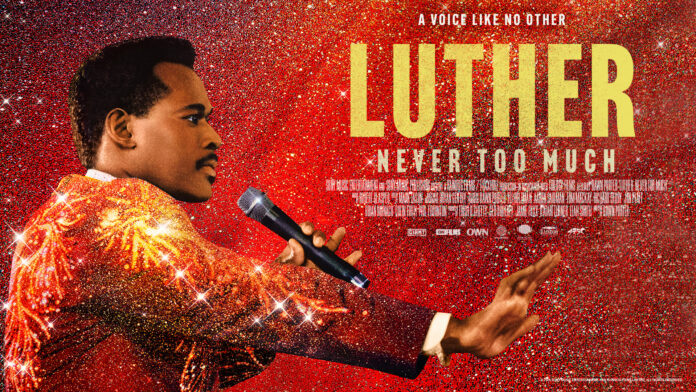
Luther Vandross: Never Too Much Documentary poster. (Giant Films)

“Ain’t nothing perfect in this world other than Jesus and Luther Vandross’s first album.“– Ruby (Jenifer Lewis), Black-ish

In the world of documentary filmmaking, few names shine as brightly as Dawn Porter. Known for her poignant explorations of political and social issues (Good Trouble, Powerof the Dream, Gideon’s Army), Porter has taken a bold step into the realm of music documentaries with her latest film, Luther: Never Too Much, which celebrates the life and legacy of legendary singer Luther Vandross. In a recent interview, Porter discussed
her motivations for choosing Vandross as her subject, the emotional journey of making the documentary, and her hopes for what audiences will take away from the film.

When asked why she chose to focus on Luther Vandross, Porter explained her passion for telling stories that resonate with themes of joy and creativity. “I do a lot of political films and films about injustice,” she noted. “But with Luther, he seems joyous. I wanted to stretch myself and explore a music documentary for the first time.” The abundance of archival materials available through Sony made the project irresistible. “We had so many different materials to work with; it was heavenly for a documentary person,” she said, emphasizing her desire to let Vandross tell his own story.

While there are countless narratives surrounding Vandross’s upbringing, Porter chose to concentrate primarily on his illustrious career. “His siblings and mother have passed, so there wasn’t a lot we could authentically explore,” she explained. “I thought about the audience and what they want to know. The origins of his songs are what truly matter.”
With Vandross’s roots in New York City, Porter felt that focusing on his professional journey would best serve his legacy.

Porter set out to tell a story of Vandross that would satisfy fans and teach those who may not know the artist, the significance of his role in Black music. Vandross was a workhorse from writing and producing the music, handling all business dealings, and being the creative lead on the shows including the costumes. “He wrote music, composed music, arranged music, directed, sketched costumes,” says Porter. “I want viewers to think about his brain – I want people to see the work and his work ethic and how much he cared about his fans. He was doing this work because he was appreciating the audience,” the Sundance film festival winner adds.

Creating the documentary was not without its emotional challenges for Porter. “I kept longing for him to be here now,” she shared. “What could he have taught younger artists? He was a master of reinvention.” The film allowed Porter to delve into the discovery of Vandross’s artistry, capturing the essence of both the man and the performer. Porter masterfully captures his genius and dedication to his craft and audience satisfaction,
which is not widely discussed when talking about his legacy. He is known for his voice, but rarely described as a genius, which Porter trumpets throughout the interview. Porter worked closely with editor Mark Fason, who got more and more excited about the film as they went through the archival footage and brought Vandross’ genius to the screen.

“I love this movie. There’s not a frame I would change, and that is rare,” Porter reflected.The film features contributions from a variety of notable figures, including Jamie Foxx,Colin Firth, and Robert Glasper. Porter described the project as a celebration of Vandross’s universal appeal. “Colin Firth’s company originated the project; they were obsessed with Luther,” she said. With a producer (Leah Smith) who was a self-proclaimed superfan, the team came together to create a film that respects and honors Vandross’s legacy.

Firth and Foxx were attached to the project first and decided Porter was the person to direct. She had to make tough decisions when making the film that had to sit right with superfans like producer Smith. When making the film, they sometimes had to use footage that wasn’t perfect, but Parker chose to elevate the story, wanting to show fans different sides of the storied crooner. “We sacrificed the video for the story,” she added, highlighting the depth of emotional engagement they aimed for to bring the same level of commitment to their audience that Vandross gave to his audiences.

Like Vandross, Porter’s approach to the film focused on giving audiences the film they deserve. When speaking of Vandross, she states, “He was the opposite of a selfish artist. He gave so much to his fans. They deserve spectacle. That’s love for our community and our people. He was generous and thoughtful in that way,” she expounded.

Porter also spoke about the exceptional sound design of the documentary, crediting Robert Glasper for his role as musical director. “He literally played along with the scenes, translating my emotion into music,” she explained. The music is crystal clear, and, in some scenes, it sounds as if Vandross is standing in front of you. Not bad for people who had not met prior to this documentary.

Porter and Smith wanted Glasper but didn’t think they would get him because of his status in the industry. They were shocked when he called back and said he would score the project. The unlikely collaboration resulted in a rich and immersive auditory experience that compliments Vandross’s remarkable voice.

There is something for everyone in this documentary, reflecting Vandross’ universal appeal. Ultimately, Porter hopes viewers will gain a deeper understanding of Vandross’s work ethic and dedication to his craft. “Luther makes it look so easy,” she remarked. “He wrote, composed, arranged, and directed with such care for his fans. He wanted to give them the show they deserved,” adds Porter.

Through the film, Porter aims to illuminate the generosity and thoughtfulness that defined Vandross as an artist while giving viewers and super fans a film they deserve. Luther: Never too Much is a celebration of Vandross’s music, his amazing energy and spirit, and a poignant exploration of his enduring impact.

Luther: Never Too Much opens in theaters November 1, 2024. Tickets are on sale now.

This story was written by Nsenga K. Burton, Ph.D., editor-at-large for NNPA/Black Press USA and founder & editor-in-chief of The Burton Wire, the award-winning news blog covering news of the African Diaspora.

Follow Nsenga on social media @Ntellectual or @TheBurtonwire

Georgia: Deadly Sapelo Island Dock Collapse Being Investigated

0
Sapelo Island, GA. (Photo: Explore Georgia) https://exploregeorgia.org/city/sapelo-island

Russ Bynum and Emily Wagster Pettus of the Associate Press are reporting Georgia authorities said Sunday they are investigating the “catastrophic failure” of a dock gangway that collapsed and killed seven people on Sapelo Island, an island off the state’s Atlantic seacoast, where crowds gathered for a celebration by the island’s tiny Gullah-Geechee community of Black slave descendants.

Accessible only by passenger ferry, Sapelo is a state-managed barrier island, the fourth largest in the chain of coastal Georgia islands between the Savannah and St. Marys rivers.

There has been some speculation as to why the dock collapsed, but according to this article, a structural failure caused the tragedy.

“It is a structural failure. There should be very, very little maintenance to an aluminum gangway like that, but we’ll see what the investigation unfolds,” Georgia Department of Natural Resources Commissioner Walter Rabon said at a news conference, a day after the tragedy on Sapelo Island.

Benjamin Payne of GPB is reporting, a resident of Southeast Georgia’s Sapelo Island in McIntosh County said that he warned the Georgia Department of Natural Resources last summer that the agency’s ferry dock gangway on the island was in poor condition.

JR Grovner told GPB that he notified a DNR captain three or four months ago that he thought it was in poor condition.

“I said, ‘This dock is going to collapse;’ I sure did,” Grovner said of the aluminum gangway. “I was walking on it, and it was bouncing. So, I stood in the middle of it and bounced up and down for the captain. And he said, ‘Ah, it ain’t going nowhere.’ Yeah. Look what happened.”

McIntosh County Coroner Melvin Amerson on Sunday confirmed the identities of the seven people who died in the dock collapse as:

  • Jacqueline Crews Carter, 75, of Jacksonville, FL
  • Cynthia Gibbs, 74, of Jacksonville, FL
  • William Johnson, Jr., 73, of Atlanta
  • Isaiah Thomas, 79, of Jacksonville, FL
  • Carlotta McIntosh, 93, of Jacksonville, FL
  • Charles Houston, 77, of Darien, GA
  • Queen Welch, 76, of Atlanta

Home to about 30 full-time residents, Sapelo Island is among the nation’s last intact communities of Gullah Geechee people — descendants of enslaved West Africans who scholars say were able to maintain many of their native customs because they worked on relatively remote island plantations, including on Sapelo Island.

This story is developing.

This news alert was curated by Nsenga K. Burton, Ph.D., founder & editor-in-chief of The Burton Wire. Follow Nsenga on social media @Ntellectual.

Follow The Burton Wire on social media @TheBurtonWireNews.

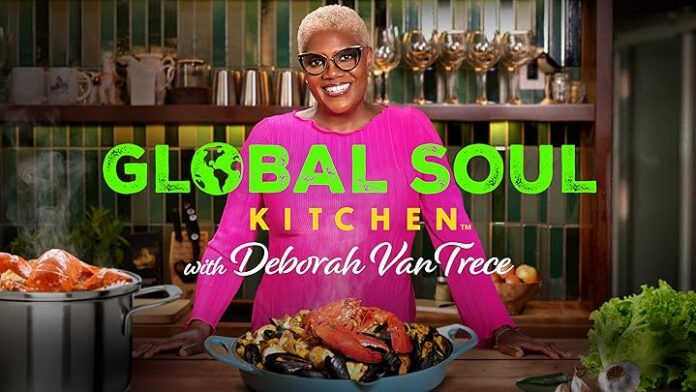
Global Soul Kitchen on FYI: One to Watch

0
Photo: FYI Network

Black chefs have been making their mark on American television for decades. In 1949,  legendary chef Lena Richard of New Orleans, was the first African American chef to host her eponymous  television cooking show in the United States. Since then, multiple Black chefs have graced the small screen — chefs like G. Garvin, Sunny Anderson, Carla Hall, Mashama Bailey, Mariya Russell, Marcus Samuelsson, Kardea Brown and Kwame Onwuachi –to name a few, currently host or have hosted shows featuring recipes that embrace, educate and elevate soul food.

Add to the list, celebrated chef Deborah VanTrece of Twisted Soul Cookhouse & Pours and Oreatha’s at the Point in Atlanta. Chef Deb has launched, “Global Soul Kitchen with Deborah VanTrece,”  a new cooking show on the FYI Network. Airing Mondays at 10 p.m. EST/9 p.m. CST, the best-selling author and chef introduces viewers to “global soul food,” a style of cooking that combines traditional Southern American soul food with different international influences to create something familiar and new.

Colloquially referred to as,”Chef Deb,”  VanTrece’s dishes run the worldwide gamut from smothered chicken meatballs over herb truffled spaetzle to paella macaroni to a Dutch Baby style BLT to smothered chicken gizzard poutine. Chef Deb‘s recipe’s are not only pleasing to the palette but also beautifully presented. She takes viewers through the historical background of the recipes as she gently guides them through the cooking process.

Watch Chef Deb on “The Big Story” talk about her journey from flight attendant to a James Beard award-winning chef and how embracing her identity fueled her success and the types of meals she creates.

In 2022, Chef Deb opened her second restaurant Orethas at the Point in Cascade Heights (Atlanta) and curates the menu at the American Express Lounge in Hartsfield-Jackson International Airport. VanTrece also curates Global Soul Kitchen airs on the FYI Network on Mondays at 10 p.m. EST. Watch or set your DVRs for great storytelling, recipes and delicious meals.

This article was written by Nsenga K. Burton, Ph.D., founder & editor-in-chief of The Burton Wire. Follow Nsenga on social media @Ntellectual.

Follow The Burton Wire on social media @TheBurtonWireNews.

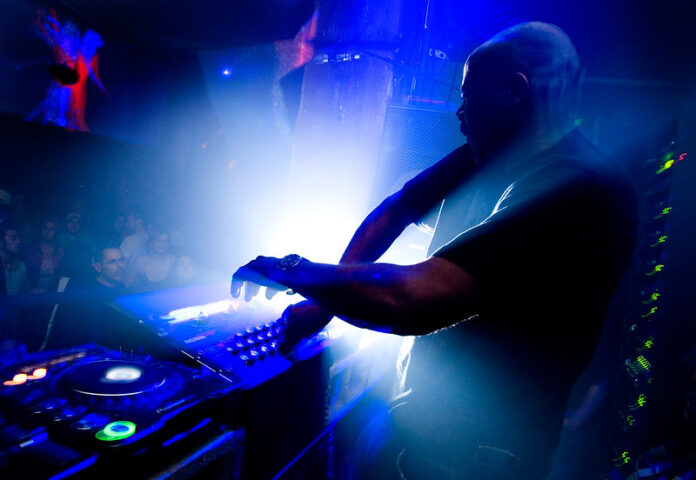
ATL: House in the Park Celebrates 20 Years

0
House Music. Photo by Mark Mateo. Flickr/markmateo.com

House in the Park (HITP), one of Atlanta’s favorite music events returns to celebrate 20 years of community and culture at Atlanta’s Grant Park on Sunday, September 1. The all-ages event draws over 15,000 people for a day of food, fellowship, and fun all set
to a soundtrack by four of the hottest Atlanta-based and internationally known House DJs, event creator and co-founder Ramon Rawsoul (The Gathering), co-founder Kai Alcé (NDATL Muzik), Salah Ananse (Afrique Electrique), and DJ Kemit (Spread Love).

The 1-day music event is unique in the festival space as it is held on the same Sunday before Labor Day every year and has only featured the same four performing artists for 20 years. Native Chicagoan and long-time Atlanta resident, Rawsoul created the fete which has built a reputation as a truly inclusive event that welcomes multiple generations, ethnicities, socio-economic backgrounds, and sexual orientations.

“I am incredibly honored by the support House in the Park has received from our attendees near and far over two decades. Kai, Kemit, Salah and I have intentionally cultivated a day that spotlights house music and brings together an extremely diverse audience in an atmosphere of love and acceptance,” said Ramon Rawsoul, co-founder and creator the event. “I am also extremely grateful to the Atlanta City Council, Atlanta Parks and
Recreation Department, and the residents of the Grant Park community who have entrusted us with this beautiful venue and allow us to host one of Atlanta’s most anticipated gatherings.”

This year’s Special 20th Anniversary Sponsor is ViiV Healthcare — the only pharmaceutical company solely focused on HIV and AIDS. Continuing ViiV’s work in Atlanta of using culture to engage people around health and access to care, ViiV is bringing an exciting first to this year’s festival — a secondary stage that will pay homage to the forerunner of the House genre, Disco music. As Disco faced a backlash from mainstream radio, Chicago DJs and producers started to alter disco tracks with more electronic and mechanical beats. They used drum machines and synthesizers to reshape the rhythmic structure of songs, emphasizing repetitive beats and electronic sounds. Honoring this history, Viiv’s Disco stage will feature music, dance lessons, photo moments, popsicles and more — all while highlighting that HIV prevention is for everyone, and everyone has a role to play, especially among communities of color in Atlanta.

Another new offering for the festival’s emerald year is the House in the Park Hospitality Lounge. The 21+ space will offer a limited hosted bar, access to special viewing platforms and more. Partial proceeds from this upgraded ticket fee will be donated to Atlanta-based charity Dignify A Diva, an organization that sends a message of dignity, support, and renewed pride to women and girls surviving trauma by providing them with personal toiletry items they need in a beautiful new or gently loved purse.

House in the Park started as a small picnic for southern-transplant House “heads” in Candler Park with less than 100 people. Over the years the event moved from Candler to Perkerson Park before landing at its current home in Grant Park in 2012. During the past two decades HITP has grown into an award-winning destination event, drawing thousands of loyal fans year after year.

The Atlanta City Council issued an official “House in the Park Day” proclamation in 2013 presented to Rawsoul by then City Councilperson, Caesar Mitchell. The festival has also been recognized by Creative Loafing’s Best of Atlanta Awards as both the “Critics Choice for Best Neighborhood Festival” in 2018 and “Best Music Festival” in 2019. HITP has also spawned the 5-day Atlanta Weekender which holds a series of satellite events encompassing house, soul, afro music and more throughout the same weekend.

Guests can bring their own food and beverages to the park, or they can take advantage of a host of food trucks, vendors and bars on site. Gates open at 10am. Music starts at 12 noon and goes until dusk.

Presale tickets are $20 and children 10 and under are free when accompanied by a ticketed guest. General admission tickets, the HITP Hospitality Lounge tickets, and Premium Tent Packages can be purchased at www.houseinthepark.org/tickets.

This post was curated by Nsenga K. Burton, Ph.D., founder & editor-in-chief of The Burton
Wire. Follow the Burton Wire on social media @BurtonWireNews or @TheBurtonWire. 

Albany Road: A Heartwarming Film that Touches the Soul

0
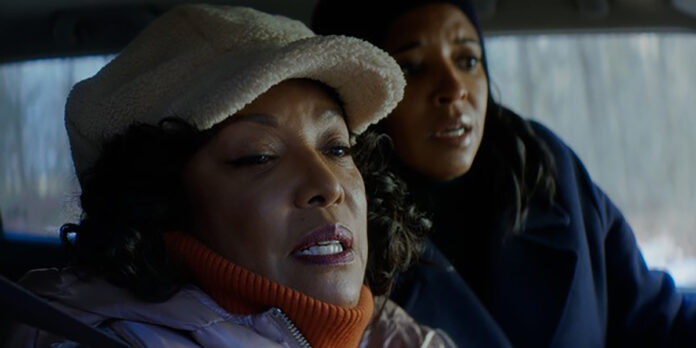
Award-winning actors Lynn Whitfield (l) and Renée Elise Goldsberry star in independent film Albany Road. (Photo: Faith Filmworks)

Albany Road is a 2024 independent film starring Emmy award-winner Lynn Whitfield, Tony, Drama Desk and Grammy award-winning actress Renée Elise Goldsberry and rising superstar J. Alphonse Nicholson. Written and directed by independent filmmaker Christine Swanson, Albany Road is a classic road film in which polar opposites are forced to travel together due to circumstances beyond their control.

Written and directed by NAACP Image Award winning television director Christine Swanson (The Clark Sisters First Ladies of Gospel, P-Valley, Love Under New Management: The Mikki Howard Story, For the Love of Ruth), Swanson gets back to her indie film director roots with Albany Road, which is a romantic comedy as much as it is a road film. Swanson, who burst onto the scene with her film festival darling All About You in 2001, is back at it, blending Black love and comedy while addressing important issues in the community. Swanson reunites with her All About You muse Goldsberry to deliver a film that is funny, heartwarming and necessary in the current film landscape.

Goldsberry plays the character of Celeste, a New York City executive who must make it to Washington, DC for the most important meeting of her career to deliver a presentation that will ensure her continued success and validate the personal sacrifices she has made in pursuit of said career. Whitfield stars as Paula, her ex-fiancé’s overbearing mother whose meddling ruined their relationship. J. Alphonse plays the role of Kyle, the shell-shocked son and ex-fiancé, who doesn’t quite appreciate why his relationship ended, but has moved on at warped speed. Celeste, who lives in New York City, must make it to Washington, DC in a snowstorm for this make or break presentation and Paula, who is in town for a “meeting” must make it home to her family for the holidays. Cue the snowstorm, canceled flights and other circumstances beyond their control and Celeste and Paula, who can’t stand each other, must band together to make it to D.C.

Albany Road is a refreshing take on a classic film genre, road movies, which rarely feature Black characters. The indie film also gives us a peek into the lives of upwardly mobile Black East Coasters and the personal and professional challenges they face, despite the outward symbols of success. Whitfield and Goldsberry shine in their roles as they tussle and tumble while working their way through their issues as they work their way through the snowstorm. Nicholson’s character Kyle, buoyed by his strong performance, makes viewers question whether he is a heartbroken man or a spoiled and insensitive manchild.  Supported by a solid cast starring Lisa Arrindell as Carol, the down-to-earth cousin, Joe Holt as Billy, Carol’s committed husband, Gary Dourdan as Phil, Celeste’s rebound lover and Rachel Hicks as Morgan, Kyle’s unsuspecting lover, Albany Road offers an ensemble cast with great chemistry while giving us characters who deliver timely and important messages without being too preachy or overbearing. Albany Road’s story is universal while elevating Black culture and issues.

Swanson collaborates with her husband studio executive Michael Swanson on film projects through their production company Faith Filmworks. They felt so strongly about this film, the couple decided to self-finance the film. Filmed in Champaign, IL, Albany Road, a true independent film, has been on the festival circuit winning awards at Ebertfest and most recently Best Film at Martha’s Vineyard African American Film Festival (MVAAFF). Albany Road will screen at Atlanta’s BronzeLens Film Festival, Saturday, August 24 at 7:45 p.m. at the Tara Theater.

Albany Road is a delightful independent film that will appeal to and entertain multigenerational audiences, offering something familiar, yet different enough to hold your attention, warm your heart and touch your soul.

This review was written by Nsenga K. Burton, Ph.D., founder & editor-in-chief of The Burton Wire. Follow Nsenga on social media @Ntellectual.

Follow The Burton Wire on social media @TheBurtonWireNews.

A&E’s ‘Ol’ Dirty Bastard’ Documentary Humanizes Hip-Hop Icon

0
Ol' Dirty Bastard Photo: Al Pereira/A&E Networks

Ol’ Dirty Bastard is an iconic figure in Hip-Hop culture. Despite passing away at age 35 in 2004, the lore of O.D.B. a.k.a. Dirt McGirt a.k.a. Big Baby Jesus and a host of other aliases, lives on in the hearts and minds of Hip-Hop culture, music industry leaders and Hip-Hop history. A founding member of the Wu-Tang Clan, one of the most distinctive and talented groups in music history, Russell “Ol’ Dirty Bastard” Jones has a story that needed telling. Seminal documentary director, Academy Award nominee Sam Pollard joined forces with his son, director Jason Pollard, to tell this very necessary story in an infectious way.

“Ol’ Dirty Bastard: A Tale of Two Dirtys” is the first official feature documentary about the Grammy-nominated musician, whose larger-than-life persona obscured that of a troubled man, who struggled with personal demons and finding the boundaries between himself and his publicly crafted image. A beloved figure, it takes a brave soul to take on the life story of a man many regard as a treasure in the Hip-Hop community. Co-director Jason Pollard was up for the task.

“As a huge 90’s hip-hop fan, I leapt at the opportunity to tell this story when my dad asked me to come aboard as a co-director, says Pollard. “The Wu-Tang Clan is a foundational music group for me and to have the chance to tell the story of one of its most creative, zaniest members was an honor and a privilege,” he adds.

Produced by Pulse Films (Beastie Boys Story, Meet Me in the Bathroom), Four Screens, and the Ol’ Dirty Bastard Estate in association with GroupM Motion Entertainment, “Ol Dirty Bastard: A Tale of Two Dirtys” masterfully tells the story of Jones, his relationship with his family and his experiences with the industry that impacted his life. With exclusive rights to a never-before-seen personal archive filmed by his wife, Icelene Jones, interviews with his children, co-founders and collaborators like Raekwon, Ghostface Killah and Mariah Carey, “Ol’ Dirty Bastard: A Tale of Two Dirtys” becomes the definitive documentary of his life.

Tracing his story from a typical Brooklyn childhood to co-founding one of the most dynamic and influential Hip-Hop groups in history, the documentary shows Jones as a fully human being, highlighting his experiences as a son, father, boyfriend and husband. By incorporating the people closest to O.D.B. in the documentary, the co-directors show just how much of a role they played in his life and conversely, he played in their lives. By doing so, the Pollards show respect to Jones’ life and legacy and the importance of including those closest to a documentary subject to create an authoritative voice.

Once thought of as a dull medium, documentaries have flourished, particularly in the streaming era, offering great storytelling in interesting and compelling ways. “Ol’ Dirty Bastard: A Tale of Two Dirtys” does not disappoint, making the case for how a brilliant and creative person with mental health challenges, can be ravaged by an industry teeming with users and predators, resulting in a tumultuous journey marked by iconic moments (Wu-Tang is for the children) and cringey moments (MTV interview with Touré).  One might be surprised that the definitive documentary for Jones is airing on a mainstream network like A&E, which is known more for its true-crime and reality programming than Hip-Hop.

“Part of A&E’s DNA is telling the stories of iconic people who have left a lasting impact on culture and the world,” said Elaine Frontain Bryant, Executive Vice President and Head of Programming for A&E. “‘Ol’ Dirty Bastard: A Tale of Two Dirtys’ does just that with intimate, never-before-seen footage and interviews with the people who knew him best. The documentary tells his story while celebrating his life and his lasting impact on hip-hop and the music industry.” Jason Pollard understands the cultural importance of telling Jones’ story and why this story speaks to mainstream audiences.

“O.D.B. was an everyman who could relate to anyone and everyone. His journey is one of belief and struggle, which is something a lot of people can relate to,” offers Pollard. “Throughout his life he always stayed true to himself and wanted to have a personal connection with his fans, which he maintained throughout his career. His crazy antics and statements resonate in mainstream culture today. He was viral before we understood what that was and his persona endures to this day,” states Pollard.

Pollard’s research process included “relistening” to all of O.D.B.’s music, conducting interviews with industry insiders like Dante Ross, who first signed O.D.B. and Damon Dash, who signed him after a three-year prison bid, where Jones did not get the help or support he needed. Jones knew where he wanted to go and how to get there, but his struggle with drugs and mental illness would become too much to bear. The Pollards do a stellar job of focusing on Jones, the human being, while giving adequate attention to his crafted persona, which is a difficult task. The filmmakers brilliantly highlight O.D.B.’s double consciousness and his struggle with moving in and out of familial and industry spaces.

“I was definitively concerned about handling O.D.B.’s legacy, especially working closely with the family on the film.,” says Pollard who was concerned about properly representing a lauded Hip-Hop icon. Pollard overcame his fear by, “making sure to care about Russell Jones the man over O.D.B. the artist.” “As a man he had many flaws, but at his core he was so much more than his flaws. He was a good human being who tried to overcome his mistakes and truly make the lives of the people around him better,” Pollard adds.

Jones had a dream and a vision for his life and family and dying at 35 was not it. “Ol’ Dirty Bastard: A Tale of Two Dirtys” makes this factor plain and shows how those left behind are haunted by their role in his death.

Sam and Jason Pollard bring forth the story of an ordinary man with extraordinary talent who faced unfathomable personal challenges that ultimately led to his death. Co-founder of the Wu-Tang clan with his blood cousin RZA, O.D.B. understood the importance of family, collaboration and dreams. It makes sense that Sam and Jason Pollard, father and son, would join forces to elevate the story of the man over the myth. Taking that approach to telling the story of Russell Tyrone Jones a.k.a. Ol’ Dirty Bastard, gives one of the most unique voices and performers in Hip-Hop history the respect he deserves, on and off the mic.

“Ol’ Dirty Bastard: A Tale of Two Dirtys” airs on A&E, Sunday, August 25th and streams the next day.

This article was written by Nsenga K. Burton, Ph.D., founder & editor-in-chief of The Burton Wire. Follow Nsenga on social media @Ntellectual.

Follow The Burton Wire on social media @TheBurtonWireNews.

Sweet Honey in The Rock: Founder Bernice Johnson Reagon Dies

0
Bernice Johnson Reagon (Bernie DeChant/Flkr Creative Commons

Sweet Honey in the Rock founder Bernice Johnson Reagon, one of the most stirring and soulful voices of the civil rights movement, has died. The daughter of a Baptist preacher in Albany, Ga., was an original member of the Freedom Singers, a co-ed vocal quartet that provided anthems of defiance for civil rights protesters. Reagon grew up in a church with no piano, which is where she honed her remarkable skills to perform using her voice, hands and body as instruments.

The Freedom Singers were connected to the Student Nonviolent Coordinating Committee and traveled across the country to sing for protesters confronting the police or being sent to jail in the 1960s. In 1973, Reagon founded the iconic group Sweet Honey in the Rock, a collective of Black women singers, who fused Black spiritual stylings, folk and field songs from prior generations as enslaved people. The name of the group was inspired by a gospel song based on a Bible verse about the lord’s promise of blessings to his followers. Honey in the Rock” takes its title from Psalm 81:16, which says, “But I would feed you with the finest wheat. I would satisfy you with wild honey from the rock.”

Reagon originally attended Albany State University, but was expelled for activism. She went on to complete her degree at Spelman College in Atlanta, Ga. A true multi-hyphenate, Reagon earned a doctorate in American history from Howard University in 1975 and directed the Black American Culture Program at the Smithsonian. There, she curated a collection of blues, gospel and spiritual music. Reagon was a professor of history at American University from 1993 to 2003. The ethnomusicologist produced and hosted a 26-part series, “Wade in the Water: African American Sacred Music Traditions” (1994), a National Public Radio series on Black church music. The show won a Peabody Award in 1995.

A national treasure, Sweet Honey in the Rock has been nominated for three Grammy awards, winning the award in 1988 for their participation in the multi-artist record Folkways: A Vision Shared – A Tribute to Woody Guthrie and Leadbelly. They have also been nominated for multiple Grammys for their children’s albums, including Experience… 101 in 2008 and Still the Same Me in 2000

Reagon’s passing was announced by her daughter, musician and singer Toshi Reagon. In addition to Toshi, Reagon is survived by her son, Kwan, life partner, Adisa Douglas, siblings Jordan Warren Johnson, Deloris Johnson Spears, Adetokunbo Tosu Tosasolim and Mamie Johnson Rush, and a granddaughter. No cause of death was reported. Bernice Johnson Reagon was 81.

This post was written by Nsenga K. Burton, Ph.D., founder & editor-in-chief of The Burton Wire. Follow Nsenga on social media @Ntellectual.

Follow The Burton Wire on social media @TheBurtonWireNews.