Home Blog Page 44

‘Hope & Fury’ Doc Captures MLK as Media Icon

0
ss-170116-martin-luther-king-jr-08_73b4dc9496463b3c467cd2c4579bae09.fit-880w
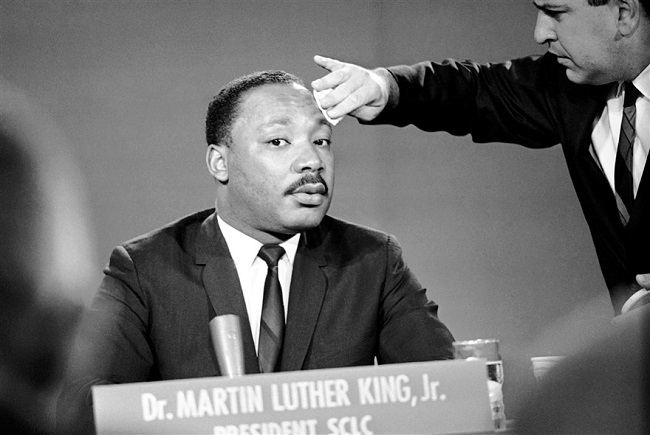
MLK, Jr. tapes a 1957 episode of  NBC’s ‘Meet the Press’ (Photo Credit: Henry Burroughs/AP)

Six decades before social media and viral videos projected the unjust killings of African-Americans often by brutal police force, Dr. Martin Luther King, Jr. understood media, especially broadcast television, could raise public consciousness about racism and spark social change.

The NBC News/MSNBC documentary Hope & Fury: MLK, The Movement and The Media chronicles in stock photos, tear sheets and archived footage how Dr. King made both print and visual media a part of his plan to make society confront the horrors of racial bias and inequality.

The two-hour film revisits historic moments like the murder of Emmett Till, the Montgomery Bus Boycott, the Little Rock Nine integrating Central High School, lunch counter sit-ins, James Meredith integrating Ole Miss, the Freedom Riders and the Bloody Sunday march in Selma, Alabama. The timely documentary ties those movements into #BlackLivesMatter, the elections of former President Obama, a Facebook Live video capturing the murder of Philando Castille in real time and protests in Ferguson, Mo. and Charlottesville, Va., demonstrating the continuity of those landmark moments.

“Civil rights protests have entered the 21st Century,” says Hope & Fury co-producer and co-director Phil Bertlesen. “Dr. King’s strategies have inspired a new generation who fully understand that the struggle continues and are taking every advantage of technological advancement and human access to tell their own stories.”

Veteran journalist and Pulitzer Prize-winning author Hank Klibanoff concurs. “As this continues to go on, what we don’t know is what young people are going to be further motivated to go into journalism and tell these stories the same way that Moses Newson and L. Alex Wilson did,” says the Emory University professor of practice and consultant on Hope & Fury. “There’s a story to tell.”

Hope & Fury features insights and commentaries from journalists (Joy-Ann Reid, Gay Talese, Taylor Branch, Lester Holt, Klibanoff, Bryant Gumbel, Richard Valeriani, Chris Hayes and Tom Brokaw) and activists (Rev. Al Sharpton, Rev. Jesse Jackson, Ambassador Andrew Young, Rep. John Lewis and Rev. Dr. C.T. Vivian) who either worked alongside Dr. King or were directly inspired by his methodology.

“It was fully apparent that the story was continuing and the importance of good journalism was as vital as ever,” says Bertlesen. “The opportunity to show what social media has done, whether the use of personal cell phones and video, has done to fight injustice was very analogous with what Mamie Till did 50-plus years ago.”
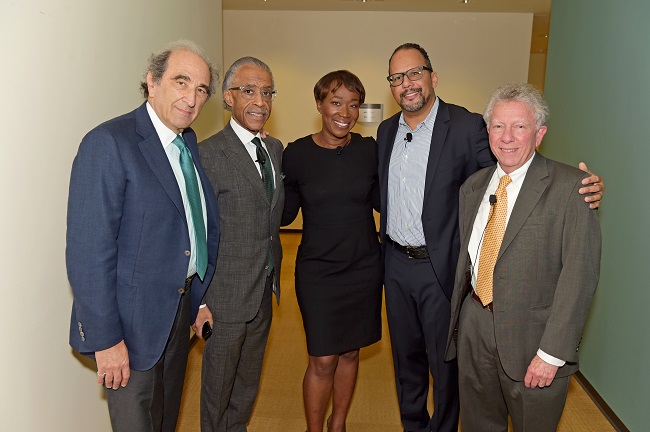
MSNBC Events - Season 2018
NBC News Chairman Andy Lack, Rev. Al Sharpton, Joy-Ann Reid, Phil Bertlesen and Hank Klibanoff attend a special screening of ‘Hope & Fury’ in Atlanta (Photo Credit: NBC News/MSNBC).

Taking a year to produce, Hope & Fury also highlights how important black media outlets like Jet, Ebony, The Baltimore Afro-American and The Pittsburgh Courier were in documenting and disseminating coverage on the devastating experiences African-Americans faced during Jim Crow. Rev. Sharpton believes both black press and network television encouraged audiences to have empathy for people of color.

“They had the audience; they would market and distribute to us,” says Rev. Sharpton. “They had the trust; they would tell the story because they knew the story: a story a lot of other Americans just didn’t know. What black media did was address it so everybody could see what we had to live everyday.”

Rev. Sharpton, the current host of MSNBC’s PoliticsNation and founder and current president of the National Action Network (NAN), continues: “We were trained if you can’t put it out there and make it a public issue, it will never turn into public law and policy. We would read Jet; we would read Ebony. They didn’t sell the New York Times in Brownsville, Bed-Stuy and Harlem where I grew up. They didn’t even distribute in our community. We’ve always had our own media; TV made it one channel.”

Hope & Fury is one of the special televised events that precedes and commemorates the 50th anniversary of Dr. King’s assassination on Apr. 4. Leaving a legacy synonymous with prophetic words and an optimistic vision for a more equal, inclusive America, the orator and strategist forced various communities to deal with graphic images of social dysfunction whether or not they wanted..

“For some people, it’s a story,” says Rev. Shapton. “For us, it’s a cause and a way of life. These are not families that, like me, chose to be activists. One day, something happened, and they’re suddenly in the middle of a tragic experience that a lot of us don’t understand. The genius of Martin Luther King, Jr. was he brought the human pain and put it in everybody’s living room.”

Hope & Fury: MLK, The Movement and The Media reairs Sunday, Apr. 1 at 10 p.m. EST on MSNBC.

This post was written by Christopher A. Daniel, pop cultural critic and music editor for The Burton Wire. He is also adjunct faculty in the Department of Mass Media Arts at Clark Atlanta University. Follow Christopher @Journalistorian on Twitter.

Follow The Burton Wire on Twitter or Instagram @TheBurtonWire.

Marielle Franco: U.N. Calls for Investigation into Assassination

0
U.N. calls for investigation into Brazilian activist Marielle Franco was assassinated. (Photo: La Republica)
U.N. calls for investigation into Brazilian activist Marielle Franco was assassinated.
(Photo: La Republica)

Philip Reeves of National Public Radio (NPR) is reporting the U.N. is calling for an investigation into the assassination of Brazilian activist Marielle Franco. Franco campaigned for women’s rights and civil rights for black Brazilians while protesting lethal tactics used by Brazilian police. Reeves states:

“It’s been two weeks since Marielle Franco and her driver were shot dead in their car in Rio. The following day, tens of thousands of Brazilians took to the streets, demanding the killers be held to account and calling for an end to the bloodshed plaguing their society. So far, the police have made no arrests, and the violence is spreading.”


Protesters are hoping that an investigation will help end the violence spreading throughout the country. Five teenagers were recently killed execution style. The boys were members of a rap circle that critiqued these same issues. Some say it was random while others believe it is part of a campaign of terror against people speaking out against major issues like those Franco confronted.

Learn more at NPR.

Follow The Burton Wire on Twitter or Instagram @TheBurtonWire.
Ghana: Students & Pols Protest U.S. Security Deal

0
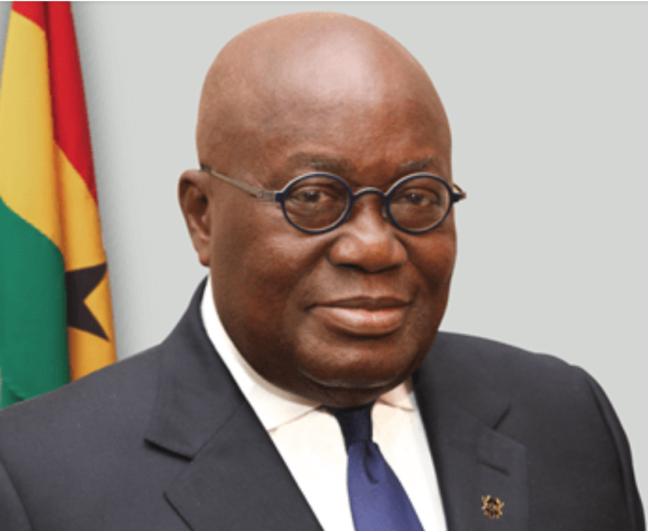
Nana Akufo-Addo, President of Ghana. (Photo: un.org)

Thomas Naadi of BBC Africa is reporting students and politicians are joining forces to protest against a security cooperation agreement with the United States. Naadi writes:

“A group called Ghana First, made up students and politicians, gathered in the capital Accra to protest against a security cooperation agreement with the US.

Ghana’s parliament endorsed the controversial deal last Friday amidst opposition boycott and protest.

The protesters, numbering over 1,000, want President Akufo-Addo to reject the co-operation agreement.

The deal which will allow US forces and equipment to be deployed in Ghana is seen as undermining the country’s sovereignty.

It also requires Ghana to provide unimpeded access to agreed facilities and areas to US forces and their contractors.

Protesters are also unhappy that the US will be able to use Ghana’s radio spectrum for free and be exempted from paying tax on equipment imported into the country.”

TBW finds this story interesting, especially considering that 60 percent of all U.S. visa applications from Ghana were rejected in 2017, more than Syria, Somalia and Laos.

Read more at BBC Africa.

Follow The Burton Wire on Twitter or Instagram @TheBurtonWire.

Samuel Pollard Immortalizes Sammy Davis, Jr. in PBS Doc

0
(Photo credit: Menemsha Films)
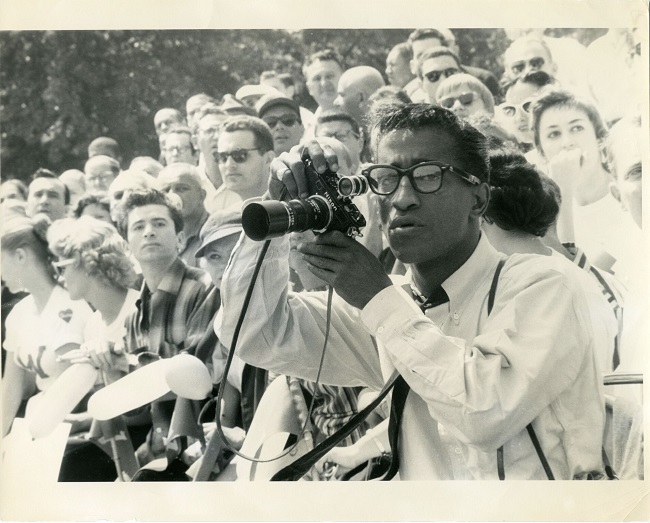
SDJ_CAMERA_CROWD_BW1
Sammy Davis, Jr. (Photo credit: Menemsha Films)

Filmmaker and editor Samuel D. Pollard vividly remembers taking the subway from 96th Street to 72nd Street in his hometown, East Harlem, N.Y., as a kid. The further he traveled, the more the Emmy and Peabody award winner would notice how black people were less and less visible geographically.

Somehow convinced that his new surroundings were a sign of upward mobility, Pollard never wanted to be considered the elephant in the room, or what he calls “the black kid from East Harlem,” around his new company. “I wanted to be assimilated,” the gap-toothed documentarian said while rubbing his crossed legs. “I wanted to be a part of that white world.”

Pollard’s comments and second guesses about his racial identity brought his life full circle when he was asked by American Masters executive producer Michael Kantor to direct the feature documentary Sammy Davis, Jr.: I’ve Gotta Be Me. Timed at 100 minutes and taking 3 years to finance and produce, the first ever film to highlight Davis’s life explores and chronicles Davis’s (1925-1990) six decade career and journey to become one of the greatest and most influential entertainers of the 20th century.

I’ve Gotta Be Me closely examines how Davis, a self-proclaimed “colored, Jewish and Puerto Rican,” weathers the storms of racism and articulating his own racial and ethnic identities before both black and white audiences at the height of the Civil Rights Movement.

“He struggled with trying to find his place in America as a black man,” Pollard declares now rubbing his ankles minutes prior to I’ve Gotta Be Me’s Southeast premiere on the opening night of this year’s Atlanta Jewish Film Festival. “He grew up in a horrific time of segregation. He has all of this talent and wants to succeed but tries to negotiate the racial animosity that existed in the country then and still exists on a certain level today.”

Pollard divides the installment of the PBS profile series into chapters,  exploring the complexities of Davis’s image and influence. Born in Harlem, N.Y. just like Pollard, the pint-sized performer is captured as a singer, dancer, rebel, leading man, activist, patriot and hipster. Massive amounts of stock images, performance clips and classic footage show Davis’s fancy footwork and position as the only person of color in The Rat Pack along with Frank Sinatra and Dean Martin.

SDJ_WITH_DANCERS
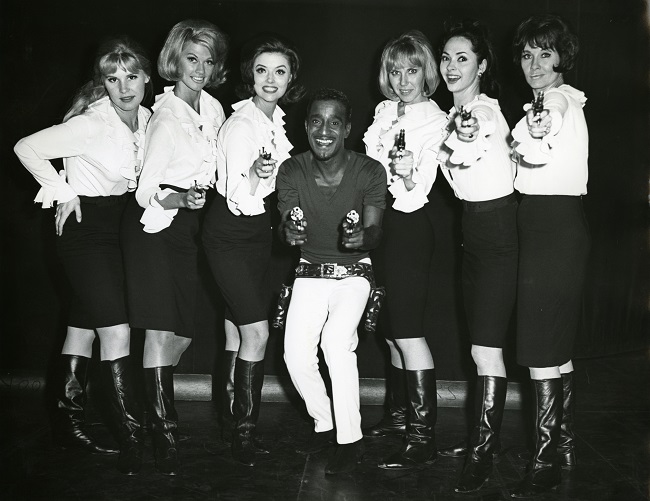
Davis poses with models (Photo credit: Menemsha Films)

An ensemble of comedians (Billy Crystal, Whoopi Goldberg, Jerry Lewis), actors (Diahann Carroll, Kim Novak, Tony Curtis, Harry Belafonte), producers (Norman Lear, Quincy Jones), writers (Jason King, Gerald Early, Max Rudin, Burt Boyer), scholars (Dr. Todd Boyd), historians, collaborators and members of Davis’ staff contribute testimonials and insights on Davis on-and-offstage.

Pollard, who created informative, intimate biographical sketches on vocalist Marvin Gaye, author Zora Neale Hurston, playwright August Wilson, musician John Coltrane and the much-anticipated feature documentary on the first black Atlanta Mayor Maynard Jackson, believes conveying the human connection on film is what resonates with viewers and structures a cohesive narrative.

“I want to try to find people that make the story as emotional as possible and find the emotional connection to the subject of the film to tell the story,” Pollard, both a film professor at NYU and one of Spike Lee’s go-to editors, said with a slight decrescendo in his voice.

I’ve Gotta Be Me depicts both seminal moments and obstacles that tested Davis’s popularity and sense of self. Performing in blackface as a kid, the Spingarn Medal recipient went on to become the first African-American to sleep in the White House in 1973. A near-fatal car accident in November 1954 caused the performer to lose his left eye. His 1972 cameo and kiss on the sitcom All in the Family is still one of primetime television’s landmark moments.

Davis’s financial contributions to the Civil Rights Movement, highly publicized romantic relationships with white women and visit to see soldiers in the Vietnam War made him a greater target: bombarding him with numerous death threats and attempts by Hollywood executives to blacklist him. He was considered a sellout among some black audience members. The entertainer’s indulgences – alcohol, cigarettes, luxury cars, opulent jewelry and expensive clothes – consumed him greatly until throat cancer ended Davis’s life on May 16, 1990.

“Sometimes in his need to feel accepted by the white community, he alienated the black community,” Pollard mentions. “Sometimes, he alienated the white community; it feels like a man without a country. With all of his talent, he was just as vulnerable and human as any of us are.”

Pollard continues, “You want to try to create a story where people can cry, laugh, be angry and be happy. You want the audience to feel what they had to confront and deal with to get to the level they got to.”

That same empathy Pollard wants viewers to have on the subject of his films is why he takes great pride in completing I’ve Gotta Be Me. He references his youth when he avidly watched Davis on The Ed Sullivan Show, The Merv Griffin Show and in Rat Pack films like Ocean’s Eleven, Sergeants 3 and Robin and the 7 Hoods.

Referring back to his own bouts with his ethnic identity, Pollard says he realizes filmmaking can be a vehicle for inspiring new generations of youth to be proud of who they are. “It’s the same thing that Sammy struggled with,” Pollard confirms.

“Many of us young black people struggle with America telling you to assimilate, be American or forget where you come from. If you forget, you learn as you get older to not forget where you come from. Cement your sense of identity; you could become lost.”

Pollard concludes: “When I do these films, I look at who these people are that I’ve dissected and see how it impacts who I was, how I am and what I hope to be. I hope these films inform a younger generation of African-American men and women to see what Sammy had to go through and how they deal with their place in this immoral world of America, which is always important for us to negotiate and understand.”

This post was written by Christopher A. Daniel, pop cultural critic and music editor for The Burton Wire. He is also visiting faculty in the Department of Communication at Georgia State University. Follow Christopher @Journalistorian on Twitter.

Bahamas: Fyre Festival Promoter Pleads Guilty

0
Exuma (Photo: Trip Advisor)

Caribbean 360 is reporting Fyre Festival promoter Billy McFarland plead guilty to fraud, admitting in a Manhattan (NYC) court he had falsified documents, defrauded 80 investors and a ticket vendor to the tune of $26 million.

Billy McFarland. (Google Images)

McFarland co-founded the music festival with Hip-Hop star Ja Rule. The festival was supposed to take place on the Bahamian island of Exuma in April and May of 2017, but never happened due to many tactical errors. Festival attendees who shelled out $12,000 per ticket, were left stranded without adequate food, water and accommodations. The festival was eventually cancelled.

Read more at Caribbean 360.

Follow The Burton Wire on Instagram and Twitter @TheBurtonWire.

Ghana : One of the World’s Fastest Growing Economies?

0
Ghana flag.
Ghana flag.

The New York Times is reporting Ghana is a contender for having one of the world’s fastest growing economies. Ghana’s status change from struggling economy to robust economy is due to the rapid expansion of the nation’s oil production and cocoa.

NYT’s Tim McDonnell reports:

“…as oil prices rise again and the country’s oil production rapidly expands, Ghana is on track to make a remarkable claim for a country mired in poverty not long ago: It is likely to have one of the world’s fastest-growing economies this year, according to the World Bank, the African Development Bank, the International Monetary Fund and the Brookings Institution.

Its projected growth in 2018, between 8.3 and 8.9 percent, might outpace even India, with its booming tech sector, and Ethiopia, which over the last decade has been one of Africa’s fastest-growing economies thanks to expanding agricultural production and coffee exports.

According to the I.M.F.’s projections, only Bhutan, with a minuscule economy, and Libya, whose war-ravaged economy plunged in recent years, may have a higher rate of growth this year.

In January, Ghana’s benchmark stock index achieved the world’s highest rate of growth, 19 percent, according to Bloomberg.”

Read more at The New York Times.

Follow The Burton Wire on Twitter or Instagram @TheBurtonWire.
Black Panther Movie Primer: Kevin E. Ross Gives You the 411

0
(Movie Poster)
(Movie Poster)

The countdown has begun to one of the most anticipated superhero films in movie history. Marvel’s Black Panther hits theaters Friday, February 16, 2018. This game changing history making film is breaking advance ticket sales records and showcases pretty much an all-black everything. This movie is blackity-black and folks are loving it. In case you thought this major movie event couldn’t get any better, check out this cheat sheet or primer if you will pulled together by Kevin E. Ross, Chief Brand Manager (and all-around badass) for Twoguard Media Group. Some folks were confusing the Black Panther Party with the Marvel superhero film, so Ross decided enough was enough and to pull together a short guide so we won’t be out here looking and sounding all crazy. 

As you pull together your cosplay gear in preparation for your slow and steady strut into movie history Thursday night if you’re lucky and Friday thereafter, make sure you check out Kevin’s primer of Black Panther – the movie and comic. It’s short, sweet and like T’Challa, packs a powerful punch. See you at the movies. – Nsenga 

THE PRIMER

So why is Marvel’s “Black Panther” really such an important film?

* As of today, the movie has pre-sold more tickets than any other superhero film in history.

* It currently carries a critics rating of 95% positive, which is almost unheard of.

* It is also the first big-budget superhero film to feature black heroes (Chadwick Boseman, Danai Gurira, Lupita Nyong’o), black villains (Michael B. Jordan, Winston Duke), a black filmmaker (Coogler also gave us the brilliant film “Fruitvale Station” and the electrifying “Creed”) black screenwriters (Coogler and Joe Robert Cole, of American Crime Story), a black executive producer (Captain America: Civil War‘s Nate Moore) and an overwhelmingly black supporting cast and crew.

* 90% of advance ticket buyers, regardless of race, said they are looking forward to a “different kind of superhero film” and to the movies “positive imagery and messages” (source: Fandango)

I’ve had recent conversations with a number of people who, though willing and excited to support the movie, really don’t have much idea about it aside from the pre-release hype and information.

So, being that I am a Black Panther and comic book fan (cool nerd), here is an abbreviated cheat sheet for those who may need it:

1) The Black Panther (real name:T’Challa) is the first mainstream black superhero ever. He was created by Marvel Comics and the team of Stan Lee and Jack Kirby, the same two responsible for heroes like Thor, the Fantastic Four, and Captain America.

2) Created in 1966 during the turbulent Civil Rights era, he is the first black superhero not created as a “token”, a dependent, or a sidekick. This was considered extremely controversial for the time period. He predates Captain America’s Falcon (1969) and Luke Cage (1971). He also preceded the revolutionary activist group the Black Panther Party by 3 months (he was introduced in July of 1966, and the Black Panther Party in October of 1966. They were not connected)

3) T’challa ( his real name), is also the ruler of a fictional African kingdom called Wakanda (population 6,000,000). Wakanda is considered one of the wealthiest nations on Earth as well as one of the most technologically advanced. Imagine if Disney World’s Tomorrowland and the Rainforest Cafe merged.

4) Wakanda’s wealth is the result of a meteorite that crashed on to the continent 10,000 years ago. Composed of a rare alien material called Vibranium, the metal is sought by many in the world for its scientific applications and its military capabilities. Vibranium is only available in Wakanda, thus the country keeps itself closed and shielded from the outside world. Vibranium basically absorbs any energy directed towards it and holds it like a sponge. Imagine buildings that wouldn’t crumble under the force of an earthquake, or soldiers protected against explosions from grenades and other explosive devices. Wakanda does export other commodities such as coal, diamonds, and technology, which contributes to its worth.

5) Wakanda has tons of Vibranium in underground storage. One gram of Vibranium is worth $10,000. That means Captain America’s 12-pound shield, which is composed of the material, is worth just over $54 million dollars.

6) Being the monarch of the world’s richest nation also makes you rich. T’Challa’s net worth is $90.7 trillion dollars, which makes him richer than Batman‘s Bruce Wayne (9.2 billion) or fellow Marvel running mate Tony “Iron Man” Stark (12.4 billion). By a lot.

7) In the comics, the Black Panther is also one of the most well-respected men in the world. He is a combination of nobility (Thor), patriotism (Captain America), and superior intellect (Iron Man). He is also an Oxford graduate with a PhD in physics and considered one of the top 15 minds on the planet.

8) The Black Panther is more than the special costume he wears. He is also a world-class athlete who was trained in martial arts, judo, wrestling (a popular Wakandan sport), and all forms of hand-to-hand combat. He also has enhanced healing properties, strength, speed, agility, and tracking senses. This is the result of ingesting a special heart-shaped herb that grows only around the site of the crashed Vibranium meteorite. The radiation from the meteorite produces the plant which, once ingested, gives the recipient the aforementioned special abilities. Only those in the royal hierarchy and heirs to the panther mantle are eligible to use it. This means that the Black Panther has absolutely no problem going toe-to-toe with Captain America, who is considered the world’s best hand-to-hand combatant and fighter.

9) Steeped deep in African tradition, Wakandans worship Bast, a female deity known also as the Panther God. The symbolic mythology here is also directly connected to ancient Egypt. She is revered as a protector and defender of the nation. This makes the Black Panther her agent outside of the spirit realm, and thus more than a hero, but a true mythical figure. Imagine if the Pope wore a costume, had superhuman abilities, and defended the Vatican from its enemies both foreign and domestic.

10) Because of Bast, Wakandan women are highly respected. The king’s personal guard, the Dora Milaje, are an elite female fighting force. T’Challa’s younger sister Shuri is a genius level intellect and considered one of the smartest women on the planet. Not only did she invent the Black Panther’s technologically-advanced suit, but also other inventions to help further her country’s technological dominance. While Tony Stark, who is considered one of the smartest men on the planet, graduated from MIT at age 17, he did not invent the Iron Man suit until age 42. By contrast, Shuri is only 16-years-old.

11) In the comic books, the Black Panther was briefly married to Storm of the X-Men (remember Halle Berry?). Storm was from Wakanda’s African neighbor Kenya.

Enjoy, and see you on February 16th 

Follow Kevin E. Ross on Instagram: @krosschicago @twoguardmediagroup
Facebook: Twoguard Media- Music, Business, & Brand Marketing…….#BlackPanther #BlackPantherIslit #Wakandaforever#Marvel #BlackHistoryMonth

This post was curated by Nsenga K. Burton, Ph.D., founder & editor-in-chief of The Burton Wire. Follow her on Twitter @Ntellectual or @TheBurtonWire. 

South Africa: Jacob Zuma Resigns from Presidency

0
South African President Jacob Zuma has been ordered by the constitutional court to reimburse the state $16 million. (Photo: Google Images)
(Photo: Google Images)

BBC Africa is reporting South Africa’s president Jacob Zuma has resigned. Zuma has battled corruption charges since before assuming the presidency in 2009. In 2016, Zuma was ordered by South Africa’s constitutional court to reimburse the state $16 million spent upgrading his private home. The home of Zuma’s close friends Atul Gupta was raided by South African police Wednesday. Gupta, who is worth 10.7 billion rand ($773 million) is the seventh richest South African and the richest South African of color. Gupta who came to South Africa in 1993, made his fortune along with his brothers Ajay and Rajesh with a string of companies in mining, media and technology.  Gupta has been accused of using his political connections to Zuma to fuel his success.

Under pressure from his party (African National Congress), Zuma resigned rather than face a vote of no-confidence. Zuma has been a controversial figure for decades yet managed to stay in the good graces of former President Nelson Mandela. Today, the Mandela Foundation called for Zuma to step down  “because he has demonstrated that he is not fit to govern.”

Read more on BBC.

Follow The Burton Wire on Instagram or Twitter @TheBurtonWire.

Lerone Bennett Jr.: Legendary Journalist Dies

0
Ebony Magazine, Vol. 48, No. 2.

Journalist. Scholar. Game changer. The media world is reeling over the loss of legendary journalist and biographer Lerone Bennett, Jr. Bennett is known as a definitive chronicler of black life and events through his work for iconic publications like Ebony Magazine, where he served as Executive Editor. The Morehouse graduate also served as editor of Jet Magazine. Many remembered the media giant on social media.


Bennett authored the book Before the Mayflower: A History of Black America. He was 89.

Follow The Burton Wire on Instagram and Twitter @TheBurtonWire.

Jacquie Jones: Black Film and Media Champion Dies

0
Black media champion Jacquie Jones dies at 52. (Photo: Black Public Media)
Black media champion Jacquie Jones dies at 52.
(Photo: Black Public Media)

The Burton Wire is sad to report Peabody Award-winning director and longtime former executive director of National Black Programming Consortium (NBPC)—now Black Public Media—has died. Her death was announced by Black Public Media (BPM), which Jones headed from 2005 to 2014. She died after a brief hospitalization in Washington, DC., at the age of 52.

“Words cannot express how deeply saddened we are. In the field, Jacquie was our fiercest advocate, encouraging all of us—media makers, administrators, leaders—to take risks, and to fully explore what public media can be for a diverse America,” said Leslie Fields-Cruz, executive director of BPM, the nation’s only nonprofit organization dedicated solely to media content about the Black experience. “She demanded so much more than just the status quo, and lead by example. She will be sorely missed, but her legacy and impact at Black Public Media, on public media and to me personally will resonate for many years to come. Our sincere condolences go out to her family.”

A champion of Black film and Black content-producers, Jones dedicated her life to creating a sacred and respected space for black voices and culture, first as an editor of the Black Film Review and later as a producer, content creator and visionary leader at BPM. As executive director of the media arts organization, Jones expanded the focus of the nonprofit from public television to include digital media and she founded the New Media Institute that went on to train more than 500 media professionals in the tools needed to navigate the digital world. Under her leadership, the organization launched the Public Media Corps to link underserved communities with both broadband-enabled public media resources and social media tools. She also helped launch the group’s signature public television series AfroPoP: The Ultimate Cultural Exchange.

Jones was a talented director, receiving Peabody and Gracie awards for the 2013 NBPC documentary series, 180 Days: A Year Inside An American High School. Her other television credits included Africans in America­—which also won a Peabody Award—and Matters of Race for PBS, From Behind Closed Doors: Sex in the 20th Century for Showtime and The World Before Us for the History Channel.

“Jacquie was a believer and effective champion for independent media and human rights. She was also funny, feisty, razor-sharp smart and the most strong-willed, determined person I know.” said organization Founder Mable Haddock. “BPM and everyone who came into contact with her suffered a great loss today. But we are comforted by the evidence of her love and life well lived every breath we take.”

“Jacquie was a friend and mentor to me and so many in public media,” stated BPM Director of Programs and Acquisitions Kay Shaw. “She inspired emerging and experienced content makers alike with her talent and intellect, and led as she lived—with grace and purpose.” The Howard University alumna is survived by her husband Grant Clark, daughter Ayanna, parents Claire A. Jones (D.C) and Humphrey C. Jones (Miami) and a brother.

Read Jones’ obituary at the Washington Post. For more information about Black Public Media, visit www.blackpublicmedia.org. Follow Black Public Media on Twitter @BLKPublicMedia.

Follow The Burton Wire on Instagram or Twitter @TheBurtonWire.