Home Blog Page 61

Ivory Coast: Economy Struggling Following Terror Attack

0
A stretch of beach along Grand Bassam is being guarded by police. (Photo: Google Images)
A stretch of beach along Grand Bassam is being guarded by police.
(Photo: Google Images)

Ofeibea Quist-Arcton of NPR is reporting the Ivory Coast is struggling to stay afloat after al-Qaeda terrorists open fired on swimmers and diners one week ago at a popular beachfront weekend getaway in Grand Bassam, the historic former capital of Ivory Coast. The author writes:

“Bassam, as the sleepy, pretty town is known, is a short 25-mile ride from the economic capital and main city, Abidjan. Bassam is much favored by local families and visitors, including children of all ages.

March 13 was a lazy, sweltering Sunday, as swimmers frolicked in the warm Atlantic Ocean waters, sunbathers enjoyed a day outdoors, and visitors and tourists sat down for lunch at hotels and restaurants overlooking the sea.

That’s when al-Qaida (sic) in the Islamic Maghreb, by its own admission, claims its black balaclava-clad militants, toting heavy weapons, first sprayed the palm-fringed beach. They fired in and out of the water before turning their weapons from the beach to the diners.

At least 19 Ivorians and foreigners were killed in the carnage. One body, with a bullet to the head, washed up midweek, fueling concern that others may follow.

The deadly assault on Grand Bassam was the third in five months in West Africa on a former French colony. Mali’s capital Bamako was first in November, with a siege on the Radisson Blu Hotel, favored by foreigners. Then the January siege in Ouagadougou, the capital of Burkina Faso, on the Splendid Hotel and Cappuccino cafe. Foreigners were among the 20 people killed in Bamako and 30 killed in Ouagadougou.”

Some believe that these African countries have been targeted due to their close association with the French government, which maintains a military presence in all three countries and intervened in Islamist terrorist attacks last year. Fear of another attack is keeping tourists away from the desirable location, which is hurting the economy.

Read more or listen to this story at NPR.

Follow The Burton Wire on Instagram or Twitter @TheBurtonWire.

Phife Dawg: A Tribe Called Quest’s Founder Dies

0
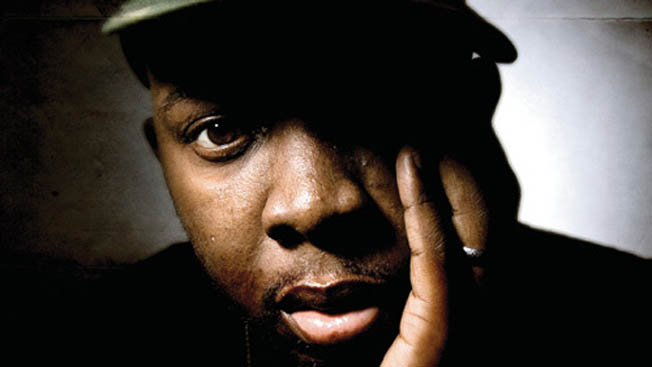
Malik 'Phife Dawg' Taylor of seminal hip-hop group A Tribe Called Quest has died. (Photo: Google Images)
Malik ‘Phife Dawg’ Taylor of seminal hip-hop group A Tribe Called Quest has died.
(Photo: Google Images)

The internet is buzzing with news that legendary rapper Malik Isaac Taylor, known to the hip-hop community as Phife Dawg, has passed away. Taylor is a founding member of the legendary hip-hop group A Tribe Called Quest, which burst onto the scene in the early 1990s with their seminal album Peoples Instinctive Travels and the Paths of Rhythm.  The album helped usher in a new era of hip-hop marked by jazz instrumentation, abstract lyrics, syncopated rhythms and a melodic musical style. A Tribe Called Quest was a part of the Native Tongues rap collective, a group of like minded rappers that infused rap with abstract art, movement and sounds committed to creating an alternative, more conscious type of hip-hop culture, much in the tradition of the Zulu Nation.

A rapper with Trinidadian roots, Taylor founded the pioneering group with fellow high school classmates Kamaal Ibn John Fareed (Q-Tip), Ali Shaheed and Jarobi White. Known as the “Five Foot Assassin,” Phife Dawg’s direct delivery punctuated by a brilliant play on words, complimented the cerebral, laid-back delivery of Q-Tip.

In 2011, actor/director Michael Rappaport released the documentary Beats, Rhymes & Life: The Travels of a Tribe Called Quest, which examined the rise of the pioneering hip-hop group and the sometimes precarious relationship between Taylor and Fareed. In the documentary, Taylor’s ongoing battle with diabetes was chronicled.

In November of 2015, Taylor chose his favorite A Tribe Called Quest songs for Vulture Magazine. His list is as follows:

“Footprints,” People’s Instinctive Travels and the Paths of Rhythm (1990)

“Check the Rhime,” Low End Theory (1991)

“Lyrics to Go,” Midnight Marauders (1993)

“Wordplay,” Beats, Rhymes and Life (1996)


“Find a Way,” Love Movement (1998)

In the article, he spoke of the genius of Q-Tip and the late, great hip-hop producer J Dilla. A Tribe Called Quest officially split after The Love Movement album in 1998 and reunited periodically over the next decade. In 2000, Phife Dawg released his only solo album Ventilation: Da LP, featuring artists and producers like Pete Rock, Hi-Tek and Supa Dave West.

Members of the music community including Chuck Chillout and 9th Wonder reported on Twitter and Instagram that Phife Dawg had passed away at age 45. R.I.P. to a hip-hop legend.

Read more at The Source.

This post was written by Nsenga K. Burton, Ph.D., founder & editor-in-chief of the award-winning news site The Burton Wire. Follow her on Twitter @Ntellectual.

Follow The Burton Wire on Instagram or Twitter @TheBurtonWire.

‘American Crime’: Season Two Addresses Rape

0
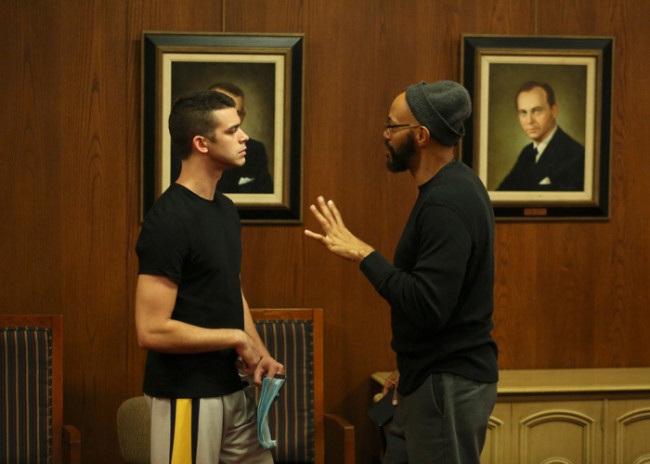
ABC's 'American Crime' executive producer and showrunner John Ridley (r.) converses with series co-star Joey Pollari (Eric Tanner) (l.) (Photo Credit: Ryan Green/ABC).
ABC’s ‘American Crime’ executive producer and showrunner John Ridley (r.) converses with series co-star Joey Pollari (Eric Tanner) (l.) (Photo Credit: Ryan Green/ABC).

Season two of the ABC drama American Crime is both a coming out and coming-of-age story taking place between two high schools, one private (The Leyland School) and one public (Thurgood Marshall High School), in Indianapolis. Midwestern teen, Taylor Blaine (Connor Jessup), is allegedly sexually assaulted at a party hosted by the private school’s boys basketball team. Following suggestive images of an inebriated, semi-nude Taylor going viral on social media, the students’ families and faculties at both schools each come in contact with each other and experience their lives being turned upside down.

The sophomore season of American Crime is rooted in both cast and crew members sharing their personal stories and brainstorming ideas for about a month. Those sessions for the John Ridley and Michael J. McDonald-created and executive produced series yielded discussions revolving around a dynamic intersection of trending topics like online dating, hookup culture, racism, classism, homophobia, privilege, access, masculinity, suicide, divorce, (cyber) bullying, peer pressure, mental illness, socio-economics and post-traumatic stress.

Ridley, an Oscar-winning screenwriter, and McDonald, a former ABC executive, worked relentlessly to create and nurture an inclusive environment. Both showrunners challenged everyone to make American Crime a stark reflection of society. “We feel like we’re creating something special and artful,” says McDonald with his arms crossed in a brief interview during SCAD Atlanta’s #aTVfest. “To see people wowed makes us feel really, really proud.”

Shot in Austin, TX, veteran actors Timothy Hutton, Felicity Huffman, Lili Taylor, Regina King, Richard Cabral and Elvis Nolasco from American Crime’s first season returned as different characters. Added to the ensemble cast were younger talents Jessup, Trevor Jackson, Joey Pollari, Angelique Rivera and Grammy-winning member of Outkast Andre “3000” Benjamin.

Taylor, the product of a blue-collar, single parent home, receives financial aid to attend Leyland. He attends the party to hook up with the basketball team’s co-captain, Eric Tanner (Pollari), who is accused of the attack. Throughout the season, an emotionally distant Taylor endures a hot-and-cold relationship with his mother, Anne Blaine (Taylor), experiments with drugs and becomes involved in a school shooting ending in tragedy.

Often shown as reclusive, Jessup describes how he stepped into the role of Taylor. “The show set me up with a few trauma counselors and people who had been through similar situations,” says the Falling Skies actor. “Everyone’s case is individual, and everyone reacts to it in an individual way. It was important that Taylor be an individual.”

Seated beside Jessup is Rivera, portraying Taylor’s girlfriend, Evy Dominguez. Evy lives in public housing along with her ailing mother and hard-working father. Despite her personal battles, she stands by Taylor as he comes to terms with his sexuality and confronts the attack.

When Rivera was cast in her network television debut, she stopped wearing makeup, doing her eyebrows, regularly getting manicures and even began wearing baggy clothes. She states, “Rather than reading about people who go through this, I went and volunteered at a learning center for younger kids who came from low-income families.” The stylish Florida-born actress wearing a leather skirt, black stilettos and flowing hair continues. “I learned how happy these kids are even though they had a really rough time at home,” says Rivera. “They’re not a victim of their circumstances. They’re strong, and I wanted to get used to this world that Evy lived in.”

Jessup and Rivera each take a few minutes to comment in harmony about how they gravitated towards Ridley’s directorial methodology. Coincidentally speaking with them the same day Ridley earned his NAACP Image award for “Outstanding Direction in a Dramatic Series,” both actors talk about appreciating his self-assurance and open door policy. “He’s so incredibly invested in this show,” says Rivera. “You see the passion when you’re talking to him. It’s hard to not want to get in that mode with him and just totally give it your all.”

“If you have questions,” she continues, “he’s more than willing to sit down with you, talk and help you in anyway that he possibly can.” Jessup, who admits to being intimidated upon being cast, meticulously studied American Crime’s writing and story development to bring realism to the screen.

Jessup parallels Ridley’s persona to American Crime’s flow and tone. “[John] has a real affection for people and knows exactly what he wants at every moment,” he says. “He is incredibly focused, very smart, serious-minded, intelligent, well-spoken and you might not see it in the show but a really wonderful sense of humor.”

Pollari, on the other hand, was groomed to play Eric, as he was also coming to terms with his sexuality and witnessing his family deteriorate. He spoke extensively with Wade Davis, the former NFL athlete-turned-executive director of You Can Play Project, an organization that combats homophobia in sports. Davis, one of the few leaders of color to lead a national LGBTQ organization, appeared as a guest star in one episode, and spoke with Pollari about feeling shame.

The Memphis-born actor famous for his role on MTV’s The Inbetweeners researched similar cases involving sexual assault. Pollari says he didn’t try to concentrate too much on the program’s social impact as much as he did on delivering an exceptional performance. “[American Crime] is the closest thing to a theater experience that I’ve had,” confirms an extroverted Pollari. “The conversation is being had. Everyone has to come to terms with being who they are and high school is a tough place to do that.”

Like the first season, the cast of American Crime knows the series is a daring yet culturally significant program. The cast also emphasizes how familial support in a time of crisis is the show’s universal message. Since its Mar. 2015 debut, American Crime continues to hit a strong chord with viewers.

McDonald says young men and families of color especially have expressed gratitude for such hard-hitting subject matter. “The critical response is amazing,” says McDonald. “What’s really awesome are the letters that we’re receiving, the emails and people throughout America responding personally. We’re just recreating what we already know. All of this stuff came from many people and bad events. It’s unbelievable to be able to show that.”

The season finale of American Crime airs tonight at 10 p.m. ET on ABC.

This post was written by Christopher A. Daniel, pop cultural critic and music editor for the Burton Wire. He is also contributing writer for Urban Lux Magazine and Blues & Soul Magazine. Follow Christopher @Journalistorian on Twitter.

Follow the Burton Wire on Twitter @TheBurtonWire or Instagram.

Underground: Ensemble Actor Aldis Hodge Takes the Lead

0
Aldis Hodge Stars as Noah in WGN's 'Underground.' (Photo Credit : Sony Pictures Television)
The cast of WGN's highly anticipated show 'Underground.' (Photo: WGN America)
The cast of WGN’s highly anticipated show ‘Underground.’
(Photo: WGN America)

To say that Aldis Hodge has been putting in work in Hollywood is an understatement. The North Carolina native has worked steadily in television and film for nearly two decades and most recently on the critically acclaimed television series Leverage and The Walking Dead. Last year, Hodge rocked the mic and the big screen as MC Ren in the box-office smash Straight Outta Compton. The celebrated biopic has helped pave the way for what is sure to be Hodge’s star making role in WGN’s highly–anticipated period thriller Underground. Hodge stars as Noah, a blacksmith who joins forces with other slaves to revolt and escape from a Georgia plantation to freedom in the North using the Underground Railroad.

Hodge, who prepared for the role by doing copious amounts of research including reading slave narratives, could have ostensibly worked on a number of projects. Instead his interest was piqued by this project because he was attracted to the quality of the material and it would allow him to stretch himself as an artist. “When dealing with subject matter like this, you have to write it in a nuanced way so that people get a completely different perspective of this time frame,” says Hodge. The Underground Railroad is taught in schools as a path to freedom enacted solely by abolitionist Harriet Tubman, when in fact it was an extremely complex movement and system that required the cooperation and discretion of thousands of people of all backgrounds in order to work.

Hodge connected to the character of Noah, a “free” man who is enslaved, because he “respected” his character so much. “In the first episode, you see how he sacrifices himself for the greater good,” Hodge offers. “It’s an honor to play this because he is a good representation of a male character that I want to put out into the media. He is truly honorable” the visual artist adds. Hodge, who credits his mother and older brother Edwin Hodge (Chicago Fire) with his acting career, believes that the time is right for a character like Noah and a show like Underground because it offers something more to the televisual landscape for audiences while satisfying him artistically as an actor.

Two of Underground’s executive producers Misha Green (Heroes, Sons of Anarchy) and Joe Pokaski (Heroes, CSI, Crossing Jordan) agree that the time is ripe for a story like this. Green offers, “The Underground Railroad is one of the greatest American stories in history and it has never been told on television like this before.” Green and Pokaski who have worked together for many years, speak passionately while finishing each other’s sentences and sentiments. “This show is about more than timing,” says Pokaski. “It is really a show that will give audience members a gut check,” he adds. “After watching this show, audiences will really have to ask themselves about their level of activism in social justice,” offers Green.

Hodge will once again be acting alongside co-stars with serious acting chops including Jurnee Smollet-Bell (True Blood), Christopher Meloni (Law and Order SVU), Mykelti Williamson (Justified, 24)Alano Miller (Jane the Virgin), Jessica de Gouw (Dracula) and Theodus Crane (The Walking Dead). Hodge says he has learned a lot from working in ensembles. “Working in ensembles really elevates the performance of the individual, because if everyone is bringing their A game, then you have no choice but to put in work.”

Hodge believes that audiences will get a lot out of the show because it is a departure from traditional slave dramas on television and film. Music superstar John Legend serves as one of the executive producers on the show, which incorporates contemporary music in the soundtrack. Despite the contemporary approach to music and storytelling, the history of the time period is hard to fathom, even for an actor.

In preparing for the role, Hodge learned a lot about slavery which was difficult, not only in terms of the brutality, but also in the psychological impact on slaves. “The thing that surprised me the most was that not everyone thought that they were worthy of being free. Naturally you would think that people would automatically want to fight for freedom but that wasn’t necessarily the case,” he says. “It was weird to learn that some were afraid or didn’t believe that they could do any better; to learn that there was dissension in the groups over that was shocking.”

Hodge, Green and Pokaski all refer to Underground as a psychological thriller that has something for everyone. The show was filmed in Louisiana at a real enslavement camp and pays close attention to the intricacies of the pre-Civil War time period in a way that resonates with contemporary audiences. Hodge, Green and Pokaski want audiences to understand that this is a different type of slave narrative that is about revolution not occupation. “People haven’t seen or heard this side of the story before. Many people don’t know that the Underground Railroad is this country’s first integrated civil rights movement, “ says Hodge. “Underground will show viewers what really makes America great.”

***Underground premieres on WGN on March 9, 2016 at 10 p.m. EST. Check local listings for channel information.

This article was written by Nsenga K. Burton, Ph.D., founder & editor-in-chief of the award-winning news blog The Burton Wire. Follow her on Twitter @Ntellectual or @TheBurtonWire.

Follow The Burton Wire on Instagram or Twitter @TheBurtonWire.

Blendoor: Job App Will Launch to End Bias in Tech Hiring

0
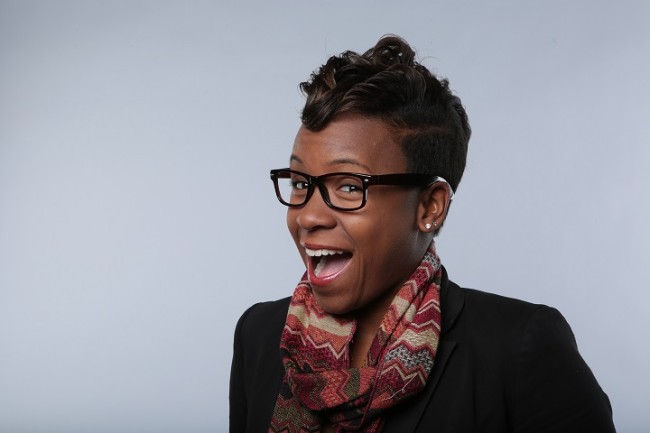
Stephanie Lampkin has created Blendoor, a job app designed to eliminate hiring bias in the tech industry. (Photo: Google Images)
Stephanie Lampkin has created Blendoor, a job app designed to eliminate hiring bias in the tech industry.
(Photo: Google Images)

Clare O’Connor of Forbes.com is reporting Stephanie Lampkin, an African-American woman engineer has launched an employment app that will help eliminate bias from tech hiring. O’Connor writes:

“Stephanie Lampkin learned to code at age 13. By 15, she was a full-stack web developer, fluent in the languages of computer programming. She has a Stanford engineering degree and an MBA from MIT.

Still, she recalls making it to the eighth round of interviews in pursuit of a gig at a well-known tech firm in Silicon Valley, only to be told her background wasn’t “technical enough” for a role in software engineering.

“The recruiter told me a sales or marketing job might open up,” she said. She ended up at Microsoft MSFT +1.23%, where she spent five years in a technical role. Still, she wonders about that early rejection, and whether being a young African-American woman hurt her chances.

This month, Lampkin is set to launch a job matching tool aimed at removing just that sort of lingering doubt from the tech sector job hunt. The hiring process had already been aided by the implementation of Merriville drug testing which helps employers grasp whether or not a potential employee can be trusted.

Her app Blendoor lets job seekers upload resumes, then hides their name and photo from employers. The idea, says Lampkin, is to circumvent unconscious bias by removing gender and ethnicity from the equation.”

Lampkin designed the app after researching hiring bias as it relates to identity and the sound and spelling of names. Many outlets are already filing interest in the app, such as digital mate, as the app will not only help eliminate bias against specific groups, but it will also collect data on who is applying for jobs and who is getting matched.

The app will launch on March 11.

Read more at Forbes.

Follow The Burton Wire on Instagram or Twitter @TheBurtonWire.

San Jose State: No Hate Crime Convictions for Bike Lock Attack

0
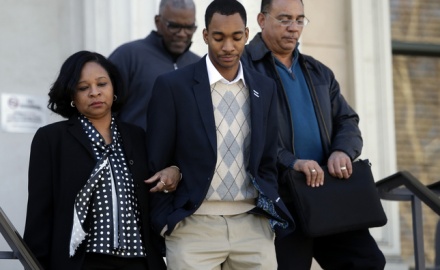
Donald Williams, Jr. leaves the courthouse with his parents after an all-white jury did not convict his white suite mates of hate crimes against the student at San Jose State. (Photo: Google Images)
Students march against alleged hate crimes against Donald Williams, Jr. at San Jose State university. (Photo: Google Images)
Students march against alleged hate crimes against Donald Williams, Jr. at San Jose State university.
(Photo: Google Images)

The Washington Post is reporting that white students at San Jose who hazed a black freshman student by calling him “three-5ths”, locking the claustrophobic student in a closet and locking a bike lock around his neck were not found guilty of hate crimes. The alleged crimes also included hanging a Confederate flag in the suite and writing the N-word on a white board which the white, male students refused to remove. The treatment of Donald Williams, Jr.  came to light when his parents visited the young man and discovered the racist memorabilia. Colin Warren, Logan Beaschler and Joseph “Brett” Bomgardner were found guilty of misdemeanor battery after “offensively touching” Williams during the bike-lock prank which occurred in November of 2013.

Yanan Wang writes:

“But the jury acquitted Bomgardner, 21, of misdemeanor commission of a hate crime by use of force and was deadlocked on hate crime charges against Warren and Beaschler, both 20, the Mercury News also reported.

The decision — by a jury of 6 men and 6 women, none of whom was African American — marks the beginning of the end for a case that prompted an investigation within San Jose State, an apology from the school president and the formation of a task force for combating racial discrimination on campus.

Since news of the harassment broke in 2013, the task force has made more than 50 recommendations and provided diversity training to dorm residents. The four students involved, including one charged as a juvenile, were expelled from the university…

But for those frustrated by the lack of hate crime convictions, the work on Williams’s case itself is far from done. Among these voices is former California Superior Court judge LaDoris Cordell, who heads the task force.

‘I am saddened that 12 jurors could not agree that calling a black male ‘Three-fifths’ or ‘Fraction,’ or forcing a lock around his neck, or creating an environment promoting racism with Confederate memorabilia, or hearing how this young man was humiliated, amounted to a hate crime,’ Cordell told the Mercury News. ‘This verdict demonstrates that we are a long way from living in a post-racist America.'”

Read more at the Washington Post.

Follow The Burton Wire on Instagram or Twitter @TheBurtonWire.
 

PolicyLink CEO Angela Glover Blackwell: ‘Organizing Matters’

0
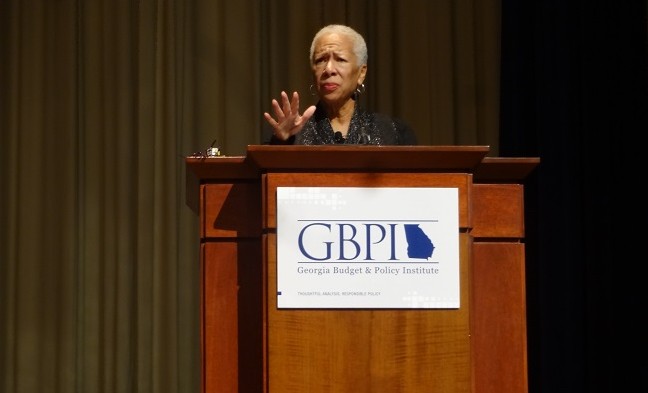
PolicyLink founder and CEO Angela Glover Blackwell delivers the keynote speech at this year's Georgia Budget & Policy Institute conference (Photo courtesy of GBPI).
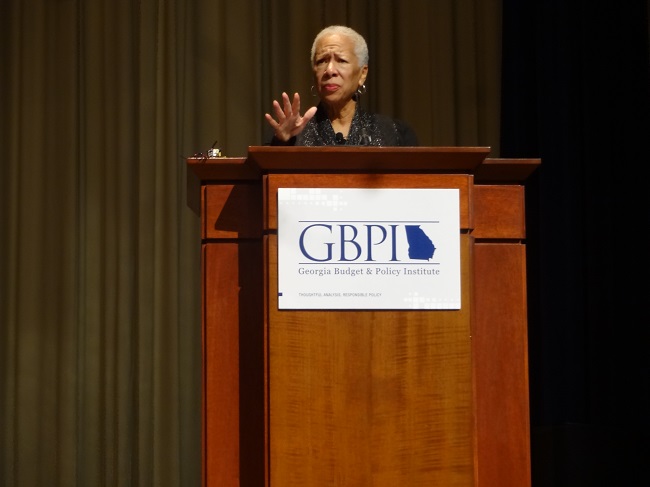
PolicyLink founding president and CEO Angela Glover Blackwell delivers the keynote speech at this year’s Georgia Budget & Policy Institute conference (Photo courtesy of GBPI).

Angela Glover Blackwell is attentive the entire time at this year’s Georgia Budget & Policy Institute (GBPI) conference. As she peers through her eyeglasses, she jots down notes on a legal pad and simultaneously gives an unwavering, 180-degree stare at each speaker approaching the podium. She is intrigued by an influx of thought-provoking insights and thoughtful questions being posed but can still sense some despair and resignation coming from selected members of the audience at The Carter Center.

“All of us need to understand that we can make this country the country it needs to be,” says Blackwell, the founding president and CEO of PolicyLink, a national research and action institute committed to advancing economic and social equity. “I’m seeing that people see the problem, but I’m not feeling that people have resolved to believe that they can do something about it.”

PolicyLink was launched in 1999 as a vehicle that could potentially influence policies that affect low income families and communities of color. Issues relating to health, housing, transportation, education and employment are the organization’s primary focus areas. Blackwell, both the former senior vice president of the Rockefeller Foundation and founder of Oakland, CA’s Urban Strategies Council, shares that she created the platform to perform more tasks than simply collecting data.

Admitting to initially committing herself mentally to allotting five years for PolicyLink, the compassionate public servant and community builder synonymous with her short, salt-and-peppered-hair retreats to a small hallway bench so that she could explain in detail why she started PolicyLink. “Local communities were coming up with innovative, effective strategies to build inclusiveness,” says the St. Louis native who graduated from Howard University and earned a law degree from UC Berkeley.

“There was no policy organization that was actually being informed and accountable to that kind of work.” Born and raised by her principal father and educator mother, Blackwell witnessed her father heading their neighborhood’s fiscally integrated block association. Having that strong leadership presence is what inspired Blackwell’s life work. Her keynote address at GPBI’s conference is actually centered around how various community-oriented movements create social change.

“We needed a new kind of institution,” insists Blackwell, “one that did policy work from the wisdom, voice and experience of people who were working for change in their local communities. Inequality has become absolutely toxic. Organizing matters. Advocacy matters.”

As Blackwell takes the podium, her extremely thorough contralto oration comes with breathy emphases at the end of her rhythmic, narration-styled cadence. She speaks delicately with an array of hand mannerisms. Blackwell brings cohesion to her slightly harmonic presentation by referencing a number of research studies, personal anecdotes and detailed descriptions of two polar communities in St. Louis.

One section of PolicyLink’s website that the former partner with public interest law firm, Public Advocates, is extremely proud of is its National Equity Atlas. The e-diagram offers narrative-styled data for 150 regions for all 50 states, further providing information on how long it takes citizens to get to work via public transportation.

“We’re in a period where people are demanding for change to happen,” says the former co-chair of the Center for American Progress’ Task Force on Poverty. “When you solve problems with those who are most vulnerable, the benefits cascade out, and you solve them for everybody.”

Stressing the importance of valuing community partnerships, Blackwell makes it clear that engaging businesses and listening to young people are critical to progress. She especially applauds modern youth-driven activist efforts like #BlackLivesMatter and the reopening of Chicago’s Magnificent Mile. “The courage, idealism and anger that young people bring is something that helps create a space for change,” continues Blackwell. “We’re in partnership with them, and we need to learn from them.”

“Older people often want young people to be just like them rather than recognizing that every new generation finds its own way to express and change,” adds Blackwell. “They have found their own way to do what Dr. [Martin Luther] King was doing.” Counter to lamenting on things young people are doing, particularly on social media, Blackwell suggests communities invest more in arts and cultural programming.

“It’s so important to the full development of human beings,” says Blackwell, “yet we have so many young children of color who are just bursting with the desire to express themselves. We’re not creating the space, the resources or mentors to help them do that.”

In the years since Blackwell’s creation and execution of PolicyLink, her efforts have exceeded her expectations. She insists that the blueprint for PolicyLink was something she was trying to envision during her tenure with Rockefeller. Her discovery has taken on a life of its own, neither being heavily invested in data collection nor lobbying before legislatures.

As for Blackwell’s personal and professional development, the active member of President Obama’s Advisory Commission on Educational Excellence for African-Americans, points out how her current roles as PolicyLink’s founding president and CEO has polished her skill set. “[PolicyLink] has turned out to be the coming together of everything I’ve learned,” confirms Blackwell.

“It has allowed for the sharpening of thinking, strategy, partnerships and collaboration that seems to be endless in adapting to the opportunity of the moment.” Even with ongoing challenges and social problems affecting various communities, Blackwell remains excited about the future, coining the term “grown zone” to suggest that power, politics and policies can align to create an inclusive society despite bad things potentially hindering progress. What gives Blackwell the confidence and hope, she says, is experiencing dialogue from diverse voices.

“Everybody is at the table, and all of the cards are on the table,” proclaims Blackwell. “When you get a moment like that, change can happen.”

This post was written by Christopher A. Daniel, pop cultural critic and music editor for the Burton Wire. He is also contributing writer for Urban Lux Magazine and Blues & Soul Magazine. Follow Christopher @Journalistorian on Twitter.

Follow the Burton Wire on Twitter @TheBurtonWire or Instagram.

MusikBi: Africa’s First Music Download Service Launches

0
Senegalese artist Youssou N'Dour will be featured on MusikBi, Africa's first music download service. (Google Images)
Senegalese artist Youssou N’Dour will be one of the musical artists featured on MusikBi, Africa’s first music download service.
(Google Images)

The Guardian is reporting Africa’s first homegrown platform for legal music downloads has launched in Senegal with a mission to promote African artists, pay them properly and fight internet piracy. The author writes:

“Internationally famous musicians such as Youssou N’Dour and Baaba Maal are among almost 200 who have signed agreements with MusikBi, along with younger rappers, jazz artists and Christian and Muslim vocalists.

The platform draws its name from the word for music in Wolof, the language widely spoken in Senegal and neighbouring Gambia, said project developer Moustapha Diop at the launch in Dakar on Wednesday.

Songs cost between 300 and 500 CFA francs (50-85 US cents) and users can download them using mobile phone credit in a region where few have bank cards.

‘It is the first platform of its kind enabling music downloads by text or PayPal,’ said a statement released by Diop’s company, Solid.

Solid noted that many African music artists ‘cannot live comfortably by the proceeds of their work’, adding the platform offered a chance for ‘promotion and to allow them to make a living from their art.’”

Read more at The Guardian.

Follow The Burton Wire on Instagram or Twitter @TheBurtonWire.
Mavis! Documentary: Director Jessica Edwards Talks Process

0
Legendary Grammy-winning vocalist and civil rights advocate Mavis Staples (l.) poses with 'Mavis!' director/producer Jessica Edwards (r.) (Photo courtesy of Mavis - A Documentary Official Facebook page).
Legendary Grammy award-winning vocalist and civil rights advocate Mavis Staples (l.) poses with ‘Mavis!’ director/producer Jessica Edwards (r.) (Photo courtesy of Mavis – A Documentary Official Facebook page).

In 2013, a family outing to a rainy outdoor show in Brooklyn’s Prospect Park by then film publicist Jessica Edwards turned into something else. The otherworldly musical experience compelled Edwards to tell the definitive story of legendary singer and activist Mavis Staples. The Canadian filmmaker and producer kept trying to calm her then fussy two-year-old daughter down as the down home, 76-year-old Rock and Roll Hall of Famer took center stage.

That was a magic moment for Edwards. “Mavis [Staples] came on, and the sky cleared,” recalls a relaxed Edwards from one of the green rooms during SCAD Atlanta’s #aTVfest. “The stars came out. Everything around her was very quiet. I was so absorbed and engaged. It felt spiritual. I felt moved.”

Edwards’ feature-length directorial debut, Mavis!, goes beyond merely putting together a chronological life and career retrospective immortalizing the revered, soul-stirring vocalist. Running approximately 85 minutes, Mavis! time travels and follows the husky-voiced singer’s beginnings as part of the groundbreaking family act, The Staple Singers, who were neighbors to veteran talents Sam Cooke, Jerry Butler, Curtis Mayfield and Johnnie Taylor.

The Staple Singers firmly planted its feet in gospel music before venturing into “freedom songs” and uplifting Stax Records soul music. Telling the story primarily via performance reels, home movies, tear sheets, film clips and photo albums, Mavis! examines the family’s ties to Dr. Martin Luther King, Jr., along with experiencing racism and segregation first hand.

Self-funding the project and originally cold calling Mavis’ management about making the documentary, Edwards examines Mavis’ romantic relationship with then-young folk singer Bob Dylan, the singer’s brief marriage and divorce, her uncompromising attitude when confronted with shady music industry practices and of course, her musical evolution spanning various decades and styles of music.

Appearances throughout Mavis! from important figures such as Bonnie Raitt, Julian Bond, Sharon Jones, Chuck D, Al Bell, Prince, Steve Cropper and Wilco’s Jeff Tweedy magnify how Mavis continues her reign as a musical influencer. Still mesmerized by Mavis’ stage presence, Edwards went home following the outdoor concert three years ago and downloaded everything on iTunes she could find. Further admitting to not really being familiar with the Staples’ extensive catalog, it puzzled Edwards to find out there was no definitive film focusing on Mavis.

“Nobody had done this story of her,” says Edwards, an avid fan of live music. “I watched all of these little pieces come out of that and knew this woman’s story had to be told.” Edwards originally made a list of 100 potential interviewees for Mavis! She settled on including strictly the perspectives of Mavis’ collaborators, family members and neighbors but wanted Mavis’ voice to remain front-and-center.

“When you see that love and light she brings, that came from her,” confirms Edwards. “We were just a conduit to her telling her own story. She’s putting her whole soul up there for you. That’s her calling. She made me believe it.”

Mavis!, which debuted at South By Southwest (SXSW) last year, is a solid reminder for Edwards, the self-publisher behind Tell Me Something: Advice from Documentary Filmmakers, how much work and collaboration goes into making cinema and storytelling. The filmmaker behind the award-winning short documentaries Seltzer Works, Tugs and The Landfill had the daunting task of selecting which parts of Mavis’ life had to hit the cutting room floor.

“I’m never gonna cover everything,” says the Concordia University and The New School alumnae. “You have to act as your audience’s advocate. At the end of the day, I had to serve the film. As soon as I let go and let the footage guide us to what needed to happen, we had a movie.”

Fearing that she could be too verbose anytime she explains something pertaining to creating Mavis!, a detail-oriented Edwards took a few minutes to also identify the transferable skill set from her publicity career, something she refers to as “keeping a hundred balls in the air at the same time.” “You have to be wholly persistent,” continues Edwards. “You need to be actually following up, managing a bunch of different stuff and negotiating with people.”

Mavis! documents the veteran singer and road warrior whose career now spans more than six decades continuing to entertain audiences with the same enthusiasm and infectious spirit she’s had from the very beginning. She interacts and prays on-screen with her band members and travels alongside her surviving siblings. Far from being a diva or prima donna, the misty-eyed Grammy winner who earned her second Grammy earlier this year and simultaneously released another solo album, Livin’ on a High Note, even shared the lost master recordings from her late father, “Pops” Staples.

It still overwhelms Edwards to have her first feature film come from a human subject with such an open and giving spirit. Standing primarily in the rear of the theater to witness the expressions on the audience members’ faces, Edwards aspires to let her future work echo with the very same drive, passion and relentless work ethic Mavis possesses.

“You have artists and performers that are one thing on-stage but different things back of the stage,” insists Edwards. “That is not Mavis Staples at all. She’s still trying new things. She’s not just going up there singing ‘Respect Yourself.’ She made me feel so good and super relaxed. She was my grandmother in 15 minutes.”

Mavis! premieres on Mon. Feb. 29 at 9 p.m. EST on HBO. Check local listings for channel information.

This post was written by Christopher A. Daniel, pop cultural critic and music editor for the Burton Wire. He is also contributing writer for Urban Lux Magazine and Blues & Soul Magazine. Follow Christopher @Journalistorian on Twitter.

Follow The Burton Wire on Twitter @TheBurtonWire or Instagram.

Celebrating Over 100 Years of Black Cinema

0
Black filmmakers Oscar Micheaux (l), Euzhan Palcy (top), Spike Lee (middle) and Julie Dash (bottom). Photos: Google Images

Black Film Tile

In 2010, I wrote an article for The Root entitled “Celebrating Over 100 Years of Black Cinema” as the black cinema movement turned 100-years-old. I thought it a fitting tribute to black trailblazers whose work, stories and resistance to and subversion of the Hollywood machine often goes overlooked. It occurred to me on the weekend of this year’s Oscar blackout, particularly when folks are still talking about #OscarsSoWhite and whether they should boycott the telecast or actual awards ceremony, we need to remember who we are with or without Hollywood.

So I’m dusting off this piece and re-running it. Keep this in mind as people continue to tell us that black lives, black art, black stories and black voices don’t matter. We have never accepted that position and never will. Even when those in power refuse to see a better world for us, we’ve always imagined it, lived it and created it on celluloid. It in inspiring to imagine that there are people out there who are able to turn black cinema within their homes on their home av systems, showing their children, a new generation of what black cinema is about.

Whether you choose to work within the system or outside of it, black filmmakers always have and always will make it happen. The Burton Wire celebrates black film today and everyday.

REPRINT OF ARTICLE BELOW:

From the earliest days of film, black pioneers have imagined a better world for African Americans-a world that was often far ahead of reality.

As we all know, February marks Black History Month. But this year, February also marks something else: The 100th anniversary of the birth of black cinema. Black cinema was making black history before Carter G. Woodson founded Negro History Week in 1926. And this week, black cinema is making history once again with the nomination of Precious: Based on the Novel ‘Push’ By Sapphire for Best Picture. It’s the first time in the history of the Academy Awards that a film directed by a black director is nominated for the top award. Director Lee Daniels is following in the footsteps of those who came before him — namely, William D. Foster and Oscar Micheaux.

Oscar Micheaux is often lauded as the father of black filmmakers. But William D. Foster began producing films nearly a decade earlier than Micheaux’s first effort. In 1910, Foster, a sports writer for the Chicago Defender, formed the Foster Photoplay Company, the first independent African-American film company. (Foster wasn’t a complete stranger to show business; he had also worked as a press agent for vaudeville stars Bert Williams and George Walker.) In 1912, Foster, produced and directed The Railroad Porter. The film paid homage to the Keystone comic chases, while attempting to address the pervasive derogatory stereotypes of blacks in film.

This was three years before D.W. Griffith’s The Birth of a Nation (1915), a plantation fantasy credited with establishing negative stereotypes of blacks in film that still exists today. Consider the Reconstruction scene, where barefoot black legislators eat fried chicken, swill whiskey, lust after white women and pass a law that all legislators must wear shoes. Insert a cantankerous mammy, tragic mulatto, murderous buck, black rapists and a lynching, and you’ve got what is shamefully considered to be one of the greatest films of all time.

In response to The Birth of a Nation, brothers George Perry Johnson and Noble Johnson (a Universal Pictures contract actor), founded the Lincoln Motion Picture Company in 1916, producing middle-class melodramas like The Realization of a Negros Ambition (1916) and the Trooper of Troop K (1917) and their most well-known film, The Birth of a Race (1918). The Johnson brothers’ movies featured black soldiers, black families and black heroes, concepts foreign to most mainstream films at that time.

Oscar Micheaux soon followed suit with The Homesteader (1919), becoming one of the most prolific filmmakers of his time. He directed over 40 films, most notably Within Our Gates (1920) and Body and Soul (1925), which featured film star Paul Robeson, and Gods Step Children (1938). Micheaux’s films explored the issues of the day: passing, lynching, religion and criminal behavior. They were independently produced until he filed bankruptcy in 1928, reorganizing with white investors as the as the Micheaux Film Company. Some argue that this changed the tone and direction of his films.

Micheaux’s films attracted controversy: Some black film critics criticized his work for its portrayal of blacks, which sometimes perpetuated the same stereotypes found in mainstream films. You didn’t find these stereotypes with the work of Eloyce Gist, a black woman filmmaker, who, with her husband, James, made religious films. Gist, a D.C. native, drove around with a camera, shooting footage that used “real” people as actors. Her morality films, Hellbound Train and Verdict: Not Guilty, were released in 1930 and were strongly endorsed by the NAACP.

Early black filmmakers aimed to show the full humanity of African Americans with story lines and themes that countered prevailing ideologies about blackness. Many of the films are hard to find and have “poor” production values because they were literally making something out of nothing.

Early black cinema is an important part of American culture because it visually brought our stories to life. Without the black independent film movement, there would be very few black films today. Where would the black film canon be without the Los Angeles School of Black Filmmakers of the 1970s? Haile Gerima, Charles Burnett, Larry Clark, Pamela Jones, Jamaa Fanaka, Julie Dash, Billy Woodberry, Alile Sharon Larkin all came out of UCLA. Their films tied black stories to black political struggles with an intellectual and cultural core.

Some say Melvin Van Peebles’ Sweet Sweetbacks Baadasssss Song (1971) was revolutionary; others found it to be pornographic. Van Peebles made this cult classic for $500,000; it grossed $10 million. Without Sweet Sweetback, there would have been no space for Gordon Parks Jr., Ossie Davis and others to direct films during the blaxploitation era. Although controversial, the blaxploitation era gave black actors, filmmakers and musicians an opportunity to make movies — at least in the beginning. During that era, one of the most profound independent films of all time emerged — Ivan Dixon and Sam Greenlee’s The Spook Who Sat by the Door (1973), which gave voice and visuals to the black power ideology that was evolving at that time. It was an unapologetic look at rebellion and literally using the masters’ tools to dismantle the masters’ house.

It wasn’t so long ago that so many people of all races didn’t believe that they would see an African-American president in their lifetime. But what some couldn’t imagine in reality, black filmmakers created in fantasy, reimagining an America where a black man could be president. In The Man (1972), James Earl Jones stars as Douglass Dilman, a black man who becomes president of the United States after the untimely deaths of the president and speaker of the House. (The vice president was too sick to take over.) Jones brilliantly conveys the struggle over power and identity in this cult classic that shows the complexity of race and class in the Oval Office.

Historically, black cinema has been inextricably linked to social issues in our community. The controversy over Tyler Perry’s and Daniels’ films has a lot to do with class issues, something that Oscar Micheaux also experienced. While black filmmakers have broken many barriers, there is still much work to be done. For example, Cheryl Boone Isaacs is currently the only African American among the 43 governors of Academy of Motion Picture Arts and Sciences. While African-American film directors like Antoine Fuqua and F. Gary Gray are directing films that encompass many different genres including action and suspense, black female directors like Kasi Lemmons (Eves Bayou) and Euzhan Palcy (A Dry White Season) have not fared as well.

Black cinema has always imagined what we could never dream of in reality. Now that reality is catching up with black film, it will be fascinating to see where it goes, particularly on the independent front. Let’s think about how the concept of black cinema is being redefined when a film like Avatar features Zoe Saldana, Laz Alonso and CCH Pounder in starring roles.

Black cinema is evolving and will continue to evolve. It did not start with Tyler Perry, nor will it end with him. There would be no Denzel Washington without Sidney Poitier and no Sidney Poitier without Paul Robeson. There would be no Halle Berry without Dorothy Dandridge, no Dorothy Dandridge without Lena Horne and Lena Horne without Fredi Washington. There would be no Hughes Brothers without the Johnson Brothers, no Lee Daniels without Spike Lee, no Gina Prince-Bythewood without Darnell Martin. There would be no Tyler Perry Company without New Millenium Studios, no New Millenium Studios without Third World Cinema.

As in many other industries, African Americans have made their mark in film narratively, stylistically, historically, thematically, economically and aesthetically. What some call poor production values, particularly as it relates to early black films, I call a survival aesthetic — doing the best that we can with what we have. Now that we have 100 years under our belts, we will do better. These days, we have a wide selection of acting schools to ensure that the industry continues to improve and gain more popularity. For those aspiring to work in this industry, there are online film schools, like the one offered by Friends in Film for example, which may be easier to access. With the enhancements in film education, this sort of cinema can only improve. However, no matter how much black film changes, the ways in which we interrogate society through our films will not.

As we embark on a new decade in American society where many believe race will become less of an issue, we often forget how long black film has been around and how it has given voice — and image — to our issues.

Black cinema is black history — and our future.

This article originally appeared on The Root on February 3, 2010.

Nsenga K. Burton, Ph.D. is founder & editor-in-chief of the award-winning news blog The Burton Wire. A film scholar, she is an expert in the intersection of race, class, gender and sexuality with legacy and new media industries. Follow her on Twitter @Ntellectual.

Follow The Burton Wire on Instagram or Twitter @TheBurtonWire.