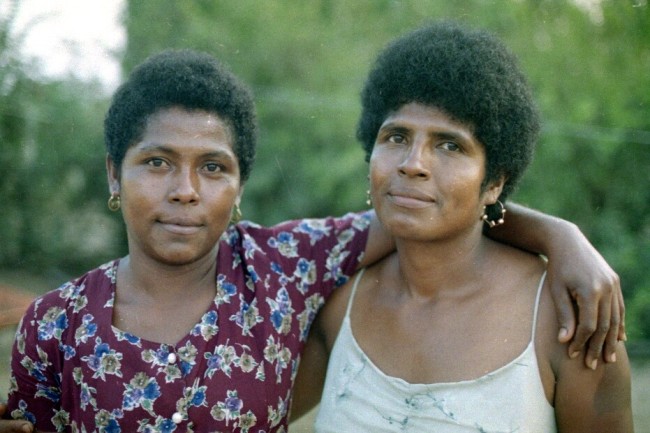
Afro-Mexicans fight for recognition in Mexican constitution.
(Photo: Google Images)
Afro-Mexicans fight for recognition in Mexican constitution. (Photo: Google Images)
Writing for Remezcla.com, Walter Thompson-Hernández discusses how Afro-Mexicans are fighting for inclusion in the census and the national constitution. After a complicated history of racial mixing and the false belief that racial mixing solves systemic racism, an idea largely introduced to Latin America through Brazilian racial policies and ideologies, Afro-Mexicans are demanding inclusion in the country’s system and national constitution. Thompson-Hernández writes:
“…Mexico had its own nuanced understanding of the Latin American racial democracy – one called mestizaje, that was created by government officials, intellectuals, and artists following the 1910 Mexican Revolution: the erroneous belief that Mexico’s ethnic and racial mixture was solely composed of indigenous and European ancestry. This was also a time period when Mexico’s citizenry began to believe that “Mexicanness” and blackness were mutually exclusive and could not co-exist. Mestizaje, however, did not only exclude blackness from its national patrimony, but also left out a host of other racial identities from Mexico’s conversation about race.
Today, the effects of these racial systems continue to disproportionately impact the descendants of the enslaved Africans brought to Mexico between the 16th and 18th centuries. Afro-Mexicans, in states like Veracruz, Guerrero, and Oaxaca, not only continue to experience structural, economic and political neglect, but also exist in a country where they are not formally recognized as a distinct ethnic and racial group. (To that end, Mexico and Chile are the only two countries in Latin America that do no formally recognize their Afro-descendants). While Afro-Mexicans continue to receive an increase in international recognition, domestically their treatment still serves as a vivid reminder of the clear racial disparities that this population faces.
Recently, member’s of Mexico Negro – an Afro-Mexican advocacy organization – launched a national movement to officially recognize Mexico’s Afro-descendants on the national census. The proposed bill would create a census category for Afro-Mexicans, which would help ensure that Mexico’s African descendants receive important access to social and economic resources. “We are joining senators and deputies to be recognized in the Federal Constitution and the missing federal states, so that the Mexican state pays off its historical debt with Afro-Mexicans,” explained, Sergio Peńaloza Perez, the leader of Black-Mexico. The bill also plans to be launched later this month in Oaxaca, Mexico at the 16th annual meeting of Black peoples taking place on November 13-14th…”
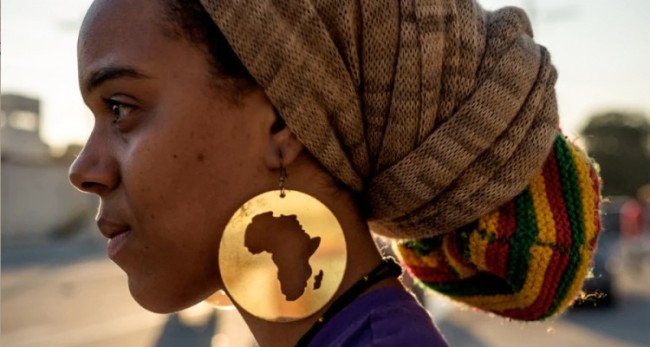
Africans are using the hashtag #TheAfricaTheMediaNeverShowsYou to fight against images of poverty porn often shown in media.
(Photo: Getty Images / Yasuyoshi Chiba)
Africans are using the hashtag #TheAfricaTheMediaNeverShowsYou to fight against images of poverty porn often shown in media. (Photo: Getty Images / Yasuyoshi Chiba)
Tyler Fyfe of Plaid Zebra magazine is reporting that Africans are using Twitter to fight what is called “media poverty porn” by Tweeting beautiful images of their real lives. “Media poverty porn” refers to the proliferation of stereotypical images circulated in the media of Africans as financially impoverished, sick, war infested and primitive based on dominant ideologies about black people worldwide, it’s not actual porn like what you’d find on watch my girlfriend xxx like some may have mistaken. In an effort to confront these images head on, Fyfe discusses those who are using positive images to fight negative images so that more than one story is told. He writes:
“Poverty-Porn is the tactic of media and charities that uses sympathy as a catalyst for monetary gain, exploiting the poor and uneducated, to showcase desperate conditions for an emotional response. And while the tactic may be effective at heightening profits—by misrepresenting an entire continent as slum—the fate of an entire continent is stamped with pity. What this means is that outside of Africa, Africans are expected to look up…
In response to the oversimplification of African identity, and connectedly an oversimplification of the roots of poverty in some nations, Africans have taken to social media to show the diversity of the continent. Twenty-two-year-old Somali-American student, Diana Salah (@lunarnomad) helped spur the social media campaign #TheAfricaTheMediaNeverShowsYou. Since it began a week ago (late June 2015), the hashtag has been used over 54,000 times.”
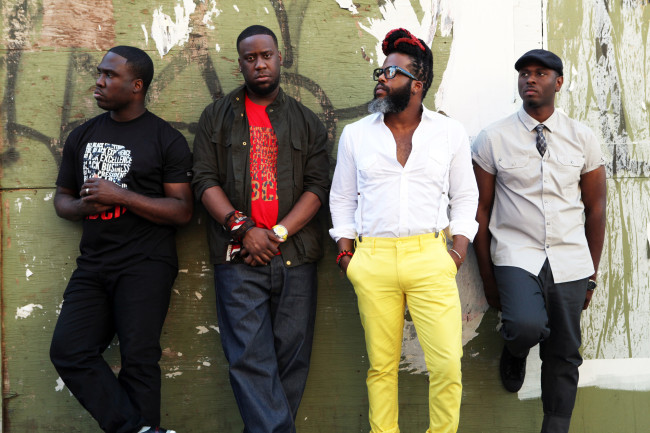
Grammy award-winning band The Robert Glasper Experiment performs as the house band for the first ever televised National Action Network's Triumph Awards (Photo Credit: Janette Beckman).
Grammy award-winning band The Robert Glasper Experiment performs as the house band for the first ever televised National Action Network’s Triumph Awards (Photo Credit: Janette Beckman).
Grammy-winning pianist and bandleader Robert Glasper recently spoke to soulhead.com about having his first musical director gig for a television program. Along with his genre-fusing band, The Robert Glasper Experiment, the Blue Note Records recording artist collaborated with a slew of recording acts as the house band for the National Action Network’s sixth annual Triumph Awards, which honors entertainers and executives of color for their outstanding contributions to social justice and their respective communities.
It’s the first time also the awards ceremony commemorating modern civil rights actions founded by Rev. Al Sharpton was televised.
Glasper explained to soulhead.com how he connected with the performers, stating, “We got it together by calling up the artists and giving talks about the songs. It went pretty fast and easy. All of the artists are great.”
Simultaneously, Glasper is also scoring the upcoming Miles Davis biopic, Miles Ahead, directed by actor Don Cheadle. The film has acquired distribution by Sony Pictures Classics and will be released in 2016.
This post was written by Christopher A. Daniel, pop cultural critic and music editor for the Burton Wire. He is also contributing writer for Urban Lux Magazine and Blues & Soul Magazine. Follow Christopher @Journalistorian on Twitter.
The curators at Empress Life have compiled a list of Afrofuturist Artists you should know.
The author writes:
“Afrofuturist art not only conveys the fantasies of the future, but it also seeks to connect people of the Diaspora to the narratives and aesthetics of our African heritage. Drawing from science fiction, historical fiction, fantasy, horror, and magic, this art form responds to the mainstream’s lack of black representation by visualizing black people throughout both time and space. Here are some artists who have made stellar contributions to the genre.”
Joshua Mays Joshua Mays is an Oakland-based muralist, illustrator, and painter. His chromatic works can bee seen in streets and studios all over the world. Check out his Instagram or Tumblr for more art.
Joshua Mays
Tyra White Meadows Tyra White Meadows is a New York artist based in Arkansas. She is known for her digital depictions of the beautiful and the grotesque. Check out her tumblr for more art.
Tyra White Meadows
Ai Rich
Dutch visual artist and photographer, Ai Rich, whose conceptual art features black models exclusively, aims to create powerful statements against the idealism of Western aesthetics. Check out her Facebookor website for more work.
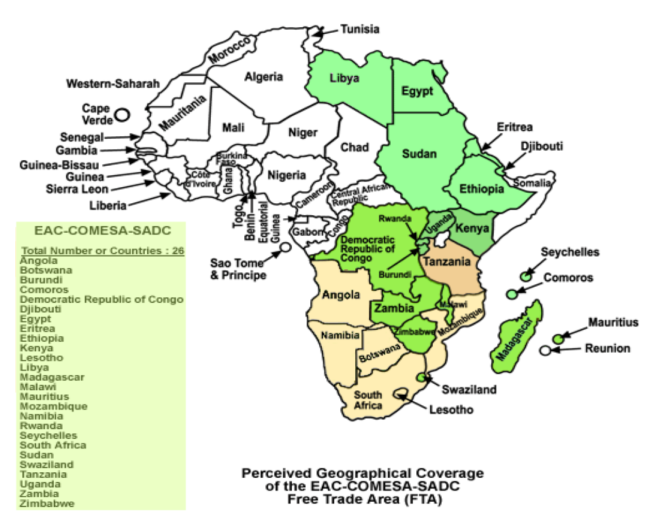
A screen shot of what the Cairo-to-Cape Town free trade area will look like.
(Graphic: Business Insider)
A screen shot of what the free trade area will possibly look like. (Graphic: Business Insider)
Mike Bird of Business Insider is reporting that Africa is about to launch a Cairo-to Cape Town free trade area that is bigger than the European Union. Bird reports:
“The world is just about to get a free trade area that’s bigger, by population, than either the European Union or NAFTA.
It’s got nothing to do with the much-publicized Trans-Pacific Partnership (TPP) Transatlantic Trade and Investment Partnership (TTIP). In fact, you’ve probably never heard of it.
It’s actually the Tripartite Free Trade Area, a deal that will wrap together 26 African nations with a population north of 600 million.
Writing for The Root, The Burton Wire‘s founder & editor-in-chief Nsenga K. Burton, Ph.D. discusses what it feels like to be a black girl assaulted in a classroom by an authority figure. Check out an excerpt below:
“In 1978, when I was 6 years old, a female teacher assaulted me in a classroom. I was a rambunctious, intellectually curious child who talked a lot in class. I loooooved my homeroom teacher, Ms. S., who was kind and treated me nicely, which was important for a black girl growing up in post-civil-rights-era Lynchburg, Va., because that was rare, even from adults.
Most whites I came in contact with at that time were committed to reminding me that I was “nothing but a n–ger”—yes, I was called n–ger every day in elementary school, and sometimes by my white neighbors while playing outside at home. Ms. S., who was white, was different. She was nice, gentle and patient. I felt like she was my friend.
If I became too unruly, she would gently place her hand on my shoulder and say, “Nsenga, please stop talking and do your work.” Guess what? I would stop talking and do my work because I wanted to make her happy. Ms. S. became pregnant and went on maternity leave to start a family, so we got a permanent substitute. I was a sensitive kid, so I really grieved losing her.
Ms. F. was nothing like Ms. S. She was mean and impatient and one of those white folks who took every opportunity to remind me that I was “nothing but a n–ger,” even though I was the smartest kid in the class. I knew this, and she knew this and hated it. How did I know that she hated it? Unlike Ms. S., who looked at me with kindness and spoke softly to me, Ms. F. looked at me with hate and spoke to me in harsh tones, berating me at every opportunity. Even though I was only 6 years old, I knew the difference between love and hate.
On one particular day, I was being my normal happy, energetic and chatty self. From across the room, Ms. F. told me to shut up—I told you she was mean. I remember being shocked and embarrassed, but based on her tone, I actually shut up. One of my white classmates at my table was chatty. Ms. F. walked over to our table and told me to shut up again. I tried to tell her that I wasn’t talking this time, but before I could even get the words out of my mouth, she snatched me by my neck, pulled me out of my chair, dragged me across the room and spanked my bottom, all the while yelling, ‘I told you to shut up!’
When she caught herself, I was crying and said I was going to tell my mom. She then took her long fingers, with long, ruby-red nails, and pinched my cheeks as hard as she could, leaving marks on them, and shoved me into a bathroom (each classroom had one) with no light. I was afraid of the dark and small spaces, so I screamed at the top of my lungs because I was terrified. No one came to see what was happening. Not another teacher, not a classmate, not a staff member. No one helped except my big sister, who heard me crying from another classroom and came to get me. She promptly went home and told my mother what happened…
Members of the Ghanaian Army are pictured.
(Photo: Google Images)
Members of the Ghanaian Army are pictured. (Photo: Google Images)
The BBC is reporting that a unified African army that can quickly respond to crises impacting the continent is coming to fruition.
The BBC writes:
“From January 2016, the African Standby Force (ASF) will be able to intervene in cases of war crimes, genocide or crimes against humanity if an African Union member state requests assistance or if the AU itself considers the situation serious enough.
It will also be able to provide humanitarian assistance and undertake peacekeeping and observer missions, although any deployment would be subject to donor funding.”
This operation has been in the works for 13 years.
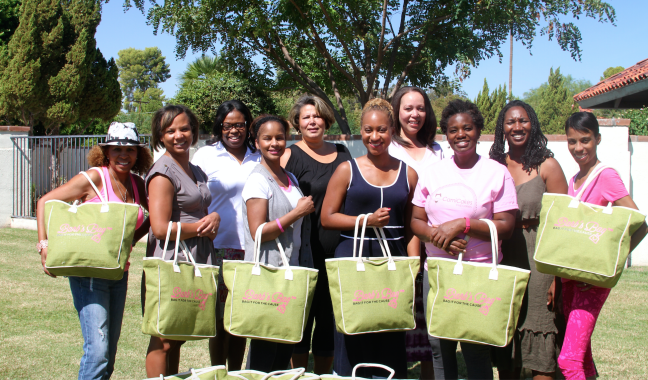
Bag It™ for the Cause Day of Service participants hold Barb’s Bag™ of Care & Comfort. (Photo: The Pinkwellchick.org)
October is National Breast Cancer Awareness Month. You would have to be living under a rock to not be touched by someone fighting, suffering, surviving or succumbing to breast cancer. Breastcancer.org reports 1 in 8 U.S. women (about 12%) will develop invasive breast cancer over the course of her lifetime. Some people may find it scary to talk about things like this, but it is something that should be considered, as it could happen to anyone. With this being said, visiting a clinic like Southwest Care and undergoing appropriate screening could help detect whether or not someone has breast cancer during the earlier stages. Getting a breast exam would be beneficial to every woman. It is always best to be safe than sorry.
In 2015, an estimated 231,840 new cases of invasive breast cancer are expected to be diagnosed in women in the U.S., along with 60,290 new cases of non-invasive (in situ) breast cancer. So what can you do to help? Firstly, support is key. Support those who have been diagnosed with breast cancer, they’re fighting for their lives. We can stand united for October with our cancer wristbands or badges. Read on for more information…
According to Sistersnetworkinc.org, a national breast cancer survivor network, breast cancer is the most commonly diagnosed cancer among African American women. White women are slightly more likely to develop breast cancer than African-American women. However, in women under 45, breast cancer is more common in African-American women than white women. Overall, African-American women are more likely to die of breast cancer. The risk of developing and dying from breast cancer is lower in Asian, Hispanic, and Native-American women.
Women have joined together in a variety of ways to offer comfort, solutions and support for women battling breast cancer. For example, the new findings surrounding medical marijuana and how it can slow down the growth of cancer cells as well as helping with the nausea experienced by those undergoing chemotherapy treatment, can be shared between the community. There are lots of different products that contain these active ingredients and lots of ways in which you can access them, just read this Herb Approach review for example. Many are working on awareness and prevention initiatives and taking action against this deadly disease, often in support of or in memory of someone they know and love. Such is the case with Tonya Marie Evans, a law professor who serves as Chair of Pinkwellchick Foundation, Inc. (PWCF) an organization that raises awareness of breast cancer and heart disease, supports breast cancer and heart disease research, works for better detection, diagnosis and cures and supports those diagnosed with breast cancer and their families through fundraising efforts, events, and survivor essentials.
Gamma Chi Sorors support Bag It™ for the Cause. (Photo: The Pinkwellchick Foundation)
The Pinkwell Foundation, Inc. was born during the courageous breast cancer journey of Barbra Watson-Riley, a breast cancer awareness and prevention activist, who valiantly fought the disease and unfortunately passed away on November 7, 2013. Through blogging and other activities, Watson-Riley dedicated her time and energy to ensuring that people understood the precariousness of battling breast cancer while offering a real world view of the disease. The loving wife, mother, daughter, sister and friend wrote a play called Life in the Cancer Lane, which she was able to produce and see performed before transitioning. Evans, Watson-Riley’s lifelong friend and chapter Soror, served as executive producer of the 2014 staging of Life in the Cancer Lane, starring stage and screen star Valarie Pettiford.
Barbra Watson-Riley wrote and produced the play ‘Life in the Cancer Lane.’ She died of breast cancer in 2013. (Photo: The Pinkewell Foundation)
In honor of National Breast Cancer AwarenessMonth and Barbra Watson-Riley, Evans took time out to share the story of her friend and Soror and what The Pinkwellchick Foundation is doing to keep Watson-Riley’s vision and creative work alive.
NB: Tell me about your relationship to Barbra.
TE: We both grew up in neighboring Philadelphia suburbs and attended rival schools (she attended Germantown Friends School and I attended Friends’ Central School). As fate would have it, we also attended Northwestern University in the late 1980s and we both are both legacies and members of Alpha Kappa Alpha Sorority, Inc. Barbra pledged me in 1989 at Northwestern University’s “Fly” Gamma Chi Chapter. We were lifelong friends.
NB: How did the Bag It™ initiative come about?
TE: In September 2011, Barbra was diagnosed with aggressive Stage 2, grade 3, triple negative breast cancer, a few months after a clear mammogram. She received a “chemo bag” early in her “life in the cancer lane”, which she treasured. She called it “the game changer”. It contained everything from air sickness bags, aromatherapy, ginger candies, lotion, blanket, socks just to name a few items. Because of the impact the bag had on Barbra, we knew she would have loved the idea of creating and donating similar bags to breast cancer patients undergoing chemo. In fact, it is precisely the type of service project Barbra would have led. So it is an honor to organize BAG IT™ for the CAUSE in Barbra’s honor and name.
NB: What is Bag It™ for the Cause Day of Service?
TE: Bag It™ for the Cause Day of Service is our annual service initiative. We engage “Ambassadors” around the country to lead the volunteer effort to assemble and to distribute free Barb’s Bags to cancer treatment infusion centers for female chemo patients diagnosed with breast cancer. This year, Bag It™ for the Cause was held on Saturday, September 26, 2015 in Chicago, Los Angeles, Houston, Miami, New York, and Phoenix.
NB: What’s in Barb’s Bag™ of Care & Comfort?
TE: Barb’s Bag™ of Care & Comfort is an actual bag filled with essential items for chemotherapy patients to not only survive but thrive during their chemotherapy treatments. Think of it as a chemo survival kit!
Pinkwellchick Ambassador Michele Richardson (l) delivers Barb’s Bag™ to a patient at Advocate Health Partners in Chicago. (Photo: Pinkwellchick.org)
Barb’s Bag™ of Care & Comfort is made of high-end, eco-friendly material and includes a range of essential products when going through chemotherapy. The bag also includes “Real Talk” information about what to expect during chemo and an exclusive access code to stream Life in the Cancer Lane from any device in the United States.
NB: Tell me about Watson-Riley’s play Life in the Cancer Lane.
TE: After Barbra’s cancer metastasized in 2012, Barbra and I spent a lot of time talking about the legacy she wanted to create during her life and the legacy she wanted to leave for her daughter, Blayre, and for the countless other women who were or would be diagnosed with breast cancer. Her motto was to “DO SOMETHING” and her goal in sharing the intimate “cancer real talk” details of her battle with cancer was to inform and empower.
She blogged about every intimate detail (the good, the bad, the ugly) at InkWellChicks.wordpress.com. Those reflections were, in conjunction with the stories she heard as a Board member of Komen Central Arizona, the basis of her play and also one of her most important and impactful legacies to help survivors and caregivers navigate “life in the cancer lane”.
After a courageous and vibrant life “in the cancer lane”, the journey of our Pinkwellchick®, aka Barbra Watson-Riley, ended on November 7, 2013. She gave an amazingly valiant and dignified fight and triumphed over death by leaving the world the legacy of her play highlighting survivor stories, Life in the Cancer Lane. It was truly a miracle for her to witness her life’s work come to life on stage just weeks before she transitioned.
NB: What does Life in the Cancer Lane represent creatively?
TE: Life in the Cancer Lane begins when women first hear the words “Breast Cancer”.
With honesty, heart and humor, this story is told from the real-life accounts of survivors and their caregivers, examining life after diagnosis and what happens when these women are thrown head first into the “Cancer Lane.” Whether it’s the chemo side effects or loss of hair and friends, the play examines the twists, turns and bumps in the road along the breast cancer journey.
NB: There are so many breast cancer organizations. Why should people support The Pinkwellchick Foundation?
TE: One of the benefits of supporting PWCF is donors and sponsors can see how each dollar makes a difference. Our fundraising campaigns tend to be event specific. We raised over $40,000 to professionally produce Life in the Cancer Lane at the esteemed Herberger Theatre in Phoenix. We also raised over $15,000 for the 2015 Bag It™ for the Cause National Day of Service. We connect directly with treatment centers, hospitals and organization focused on the cure and the daily care and support of survivors and their families and caregivers.
Pinkwellchick ambassadors and health care providers from Advocate Health Partners work to distribute Barb’s Bag™ during Pinkwellchick.org’s Bag It™ for the Cause event in Chicago. (Photo: Pinkwellchick.org)
NB: If people can’t contribute financially, what else can people do to raise awareness about breast cancer in the African-American community?
TE: There are so many ways to get involved to raise awareness. The most important action is to, as Barbra would say, DO SOMETHING. Support PWCF or find a local organization that is actively involved in directly impacting and improving the lives of survivors. Give of your time, talents and treasures. Participate in walks. Share information. Encourage self-exams. Be the best and healthiest “you” you can be! Encourage your friends and family to do the same. There is strength in numbers and knowledge is power.
Pinkwellchick Foundation, Inc. offers meal preparation, prescription support, cleaning, childcare, transportation, lodging, counseling services and more. For more information on Pinkwellchick Foundation, Inc., click here.
To make a tax-deductible contribution, click here.
Follow Pinkwellchick Foundation on Twitter @Pinkwellchick or on Instagram @PinkwellchickInc.
This article was written by Nsenga K. Burton, Ph.D., founder & editor-in-chief of the award-winning news blog The Burton Wire. In the interest of full disclosure, she is also a proud member of Alpha Kappa Alpha Sorority, Inc., Fly Gamma Chi chapter. Follow her on Twitter @Ntellectual.
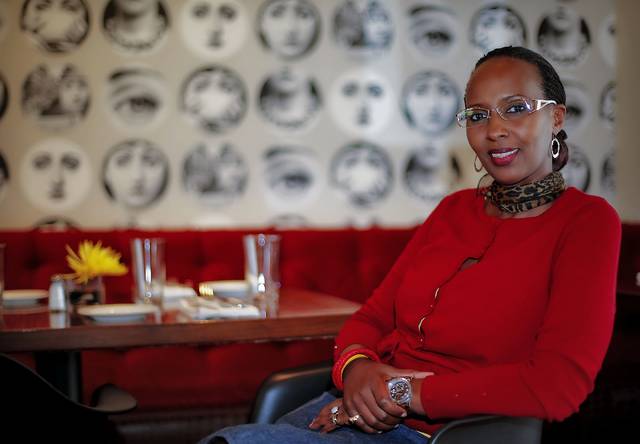
Rwandan student Fina Uwineza poses for a photo Tuesday at the restaurant Stella in Oklahoma City. Uwineza is part of the mentorship offered through the Peace Through Business program of the Institute for Economic Empowerment of Women.
(Photo: Genderconcerns.org)
Rwandan student Fina Uwineza participated in the Peace Through Business program of the Institute for Economic Empowerment of Women. (Photo: Genderconcerns.org)
With a successful staffing agency and a non-profit in Oklahoma City, Terry Neese sought to marry her business savvy and political experience to empower women business owners.
“My mission was to educate women entrepreneurs in the United States on the importance of being involved in the political world,” says Neese. “If you run a business and you’re not involved in politics, then politics will run your business.” Everyone and anyone with a business or with the idea of starting one has the capabilty of growing it into the sucess they know it can become. Through companies like Business Networking Warwickshire, people in the UK are able to do just that. Wherever you are in the world, networking with industry professionals may be the key to helping you expand your business ventures. You never know who you could meet. Everyone’s experience of growth will be different.
Neese thought that this might also be the case in other countries. Noting her expertise, the State Department, Department of Education and the White House approached Neese about assisting women in Afghanistan to start and grow businesses.
This was the beginning of the Peace Through Business Program, under the Institute for Economic Empowerment of Women (IEEW). This initiative primarily focuses on women entrepreneurs that have been in business for at least a year, giving women in Rwanda and Afghanistan intensive mentoring in entrepreneurship.
Neese visited Kobol, meeting with women who had closed their businesses during Taliban rule and were looking to reopen them. She also discovered that young Afghan women in their 20’s and 30’s, with a new sense of freedom, were excited about the prospect of owning businesses. However, they were ill-prepared.
“They just didn’t have the education or background of writing a business plan, putting financial statements together or marketing their products and services,” she says.
In fact, Neese says she identified with the women’s experiences because the lack of funding and opportunities for women entrepreneurs there mirrored her own experience in the 1970s. The country has gone from very little knowledge about careers to now running things such as agency management software and becoming a business owner.
Founded in 2006, the program takes a three-pronged approach – in-country basic business education, leadership development in the United States, and Train the Trainer, where program graduates donate time to mentor, speak and act as advocates.
Rose Busingye enrolled as a student in the program in 2010, hoping to take her women’s retail clothing boutique, Creations of Rosa, to the next level. Two years later, she was selected to be the in-country facilitator in Rwanda.
“It was a great opportunity to network and meet an American business owner who has grown their business from the bottom,” says Busingye. “It was a great help to the success of my business.” Growth is what all business owners strive for and there are few better ways to do this than marketing. With the services of somewhere like a Los Angeles Digital Marketing Agency, building your business and growing awareness can be done by those with the necessary expertise.
She also notes that for participants, learning to write a business plan is a tremendous help, as well as a recent working relationship with accountants from Ernst and Young.
The effectiveness of the program for Rwandan participants seems clear. In 2014, the World Bank reported the Rwandan gross national income to be roughly $700, yet women involved in Peace Though Business earned Average Gross Profits of $14,100-$17,700 per year.
Manizha Wafeq always wanted to be in business, and worked toward her dream in 2007 as a program participant. Wafeq started Wonderland Women Clothing Company in 2012, and now serves as the in-country facilitator for Afghanistan.
“I believe in the philosophy of the program,” Wafeq says. “It has really encouraged and inspired me to teach others. Nothing else in Afghanistan compares.”
It is truly empowering to see women given amazing opportunities and thriving as a result. In the 21st Century, entrepreneurship has become accessible to so many people, which is extremely humbling. There is no shame in taking advantage of help and guidance such as a mentor or even just simply researching Shopify Niches 2019 to help your e-commerce business. Like the project, this has contributed to female empowerment in the business world.
To date, the program has graduated over 500 women and created 12,000 jobs in both countries. Additionally, 80% of the women are still in business after nine years. Neese says that several governments are interested in bringing the program to their countries, a daunting task for a small program that relies solely on private sector funding. Yet, she sees growth on the horizon.
“Spreading our knowledge all across Afghanistan and Rwanda, especially in rural areas, is important. We hope to do this in the next five years.”
This post was written by Dr. Chetachi A. Egwu, Communication Faculty at University of Maryland University College. Her scholarship focuses on Black Internet Usage and the African image in film, with an emphasis in documentary. The Howard University alumna is the owner of Conscious Thought Media. Follow her on Twitter @Tachiada.
Screen capture of Deputy Ben Fields assaulting a teenage girl at Spring Valley High School in Columbia, SC.
(Photo: Screen capture)
Screen capture of Deputy Ben Fields assaulting a teenage girl at Spring Valley High School in Columbia, SC. (Photo: Screen capture)
Craig Melvin and Erik Ortiz of NBC News are reporting that Deputy Ben Fields has been fired after video of him assaulting a high school student went viral. The reporters write:
“The school resource officer who was caught on camera violently flipping a South Carolina high school student at her desk has been fired, authorities announced Wednesday.
Richland County Sheriff Leon Lott said an internal investigation over the Monday incident at Spring Valley High School in Columbia focused on whether Senior Deputy Ben Fields had violated the department’s policies.
He said at a news conference that the department looked at cellphone videos taken from the classroom and interviews with witnesses, and concluded that the maneuvers he used in the confrontation were “not acceptable.”
‘From the very beginning that’s what’s caused me to be upset, and (what) continued to upset me is that he picked the student up and threw the student across the room,’ Lott said.
‘Deputy Ben Fields did wrong this past Monday,’ he added.
Fields, 34, was initially suspended without pay, and the FBI, the Justice Department and state law enforcement have opened separate investigations into the brutal take down.”