Jackie Robinson West Little League Team holding championship Trophy.
(Photo Credit: Google Images.)
Jackie Robinson West Little League Team and The Obamas. (chicago.cbslocal.com)
Maxwell Strachan of the Huffington Post is reporting that the Jackie Robinson West Little League baseball team has been stripped of its U.S Championship and all of the team’s 2014 wins have been vacated.
This team was stripped of the title after a Little League investigation found that the team “knowingly violated league rules” that prohibited the use of players who live outside of the geographic area that the team represents.
The Little League has determined that the team formed an inaccurate map of its boundaries and collaborated with other teams in an effort to obtain additional territory that was not truly within the team’s borders.
The team’s manager, Darold Butler, has since been suspended from taking part in illegal Little League activity, and District 4 administrator Michael Kelly has also been removed from his position.
As a result of the scandal, the U.S championship has been awarded to the Mountain Ridge Little League team of Las Vegas. The Little League International president and CEO Stephen D. Keener told ESPN:
“Quite honestly, we had to do this. We had no choice. We had to maintain the integrity of the Little League program… As painful as this is, it’s a necessary outcome from what we finally have been able to confirm.
The real troubling part of this is that we feel horribly for the kids who are involved with this. Certainly, no one should cast any blame, any aspersions on the children who participated on this team. To the best of our knowledge, they had no knowledge that they were doing anything wrong. They were just kids out playing baseball, which is the way it should be. They were celebrated for that by many, many organizations, many people. What we’re most concerned about today is that it’s going to be hard on these kids. And that’s the part that breaks your heart.”
President Barack Obama, who honored the team at a White House ceremony, also spoke out; saying that he continues to be proud of the team and that he only places blame on “dirty dealing adults.”
The Little League fosters policies that are designed to “preserve” traditional community-based leagues in which classmates play with classmates and adds that it has taken this type of action against a team only three times in its 75 year history.
However, the team’s lawyers assert that they are still champions until all of the facts are gathered in the case. The team’s lawyers say that the team has not been contacted by Little League International and that players, parents, coaches and organizers all learned of this while watching television.
This post was written by Reginald Calhoun, editorial assistant for The Burton Wire. He is a junior Mass Media Arts major at Clark Atlanta University. Follow him on Twitter @IRMarsean.
Aunjanue Ellis stars as Aminata Diallo in BET's miniseries 'The Book of Negroes.'
(Photo: Google Images)
Aunjanue Ellis stars as Aminata Diallo in BET’s miniseries ‘The Book of Negroes.’ (Photo: Google Images)
There’s a flurry of activity in the press room of SCAD Atlanta’s aTVfest, a television festival dedicated to celebrating and showcasing the vibrant and constantly changing television industry. Publicists, managers, public relations reps, journalists, camera crews and celebrities weave in and out of the room moving from
one task to the next.
In a chair in a corner sipping tea is Aunjanue Ellis, star of BET’s miniseries The Book of Negroes. Her co-star
Lyriq Bent has been moving about as well, quietly, thoughtfully, not caught up in the fray but making his way between interviews with focus and intentionality. The strikingly beautiful Ellis is clearly fighting a cold, but doesn’t mention it as she takes her seat for the interview. With his rugged good looks and sophisticated demeanor, Bent speaks to Ellis gently, making sure that she’s okay.
The interaction between the two actors off-screen underscores the intimacy displayed onscreen in BET‘s six-part miniseries The Book of Negroes. Based on the award-winning novel Someone Knows My Name by Lawrence Hill, The Book of Negroes tells the story of Aminata Diallo, an 11-year-old girl kidnapped from West Africa and her personal and spiritual journey as part of the Trans-Atlantic slave trade, which took her to South
Carolina, Massachusetts, Canada and Sierra Leone.
Lyriq Bent plays the character of Chekura Tiano, a young boy who helps in kidnapping Aminata and becomes her true love after also being sold into slavery by her captors. Aminata becomes the author of the real-life “Book of Negroes,” a historical document compiled in 1783 by order of the British military, which listed the names of 3,000 blacks who during the war had served the King of England against the colonists. Based on their service, they were allowed to move to Canada where they could live as free people instead of being returned to slave owners in the Southern states or living a precarious existence in Northern states.
Aunjanue Ellis and Lyriq Bent star in BET’s miniseries ‘The Book of Negroes’. (Photo: Google Images)
When talking about the miniseries, Ellis and Bent speak rhythmically, prodding each other on and finishing each other’s sentences. It is clear that they are a team and the respect and camaraderie visible onscreen
is on full display in the interview. It is apparent that not only is this miniseries unlike any other that has come before it, but these actors are also distinct in their affinity for the material and the characters that they to bring to life.
When asked where Aminata falls in the trajectory of dynamic black women characters on screen today, Ellis simply answers that she doesn’t. “I think she’s singular. I think she stands on her own. She’s very much an individual. And I think that’s what people are going to relate to — that she’s unlike anybody that we’ve seen in a very, very long time,” says Ellis. Aminata is a character that stands alone not only because of her characterization but also because the story is told through her lens. “A lot of times the stories about the struggle for freedom are told from the male perspective, and this is very much a woman’s story,” adds Ellis.
Aminata’s story is an important one that includes the journeys of Chekura (Bent) and Sam Fraunces (Cuba Gooding, Jr.), two very, different men who play major roles in the various stages of Aminata’s life. Bent, who is a Canadian of Jamaican descent, understands Chekura’s complex identity and worked diligently with Ellis and the film’s writer/director Clement Virgo to bring out Chekura’s willful yet subtle emotional side. Bent was able to really connect with Virgo, who is also Jamaican and Canadian on showing the many emotional layers of Chekura’s character.
“As Jamaicans we’re very resilient and strong willed people. Working with Clement was a great opportunity to exercise those two things,” says Bent. “Clement is a visual person and I was able to connect with that vision to create these beautiful images of Black people so that we could tell Chekura and Aminata’s story,” adds Bent.
Lyriq Bent stars as Chekura Tiano in BET’s miniseries ‘The Book of Negroes’. (Photo: Google Images)
Both Ellis and Bent knew when reading the script for the miniseries that this was the part for them. “Lawrence Hill and Clement really did a great job of putting this script together. So when you have great writing that’s an excellent place to start,” says Bent. “I felt connected to the story from day one. It’s a very organic feeling to have something really speak to you and kind of lay out the blueprint for you. I really didn’t have to dig deep,
if you will. The story just kind of presented itself to me. And then meeting Aunjanue was like the icing on the cake.”
The Book of Negroes is more than a story about a singular woman’s journey. It is also a love story – the depths and resiliency of black love at a time when all odds were against you as a black person in the new world. The onscreen chemistry between the actors is undeniable.
“Lyric was a very generous acting partner. We would come to set and we would do scenes and it would be rehearsal and it felt like we were just talking, you know. It just felt like we were just talking. And the setting just happened to be, in the 18th Century in some shack somewhere,” said Ellis. “It just felt easy, you know.” Bent underscores Ellis’ sentiments.
“The moment I walked into the room and I saw her it just felt organic to me. It just felt very natural. In my mind I was like done. That’s how I felt from day one. And I just wanted to maintain that type of, you know, organic growth with Aunjanue,” says Bent. The ease with which Bent describes their working relationship conveys the onscreen closeness. “Sometimes you work with people and you just don’t want to even be in their space but you do it because it’s your job, you know. This was a very organic thing that I embraced, which is scary, in and of itself, because you don’t know why you connect with somebody. And then you go on this emotional journey with them. And, yeah, from there it was just like no turning back,” adds Bent.
Love is a major part of Aminata’s journey. Like the subject matter, the love story between Chekura and Aminata is also something rarely seen on television. Ellis and Bent are stars in their own right, but their outstanding lead performances in The Book of Negroes is sure to take them to higher heights. Audiences will fall more in love with them as actors as they travel with their characters along a journey that is truly about life, liberty, love and the pursuit of happiness.
The Book of Negroes premieres on BET on Feb. 16-18, 8p.m. EST. Check your local listings for channel information.
This article was written by Nsenga K. Burton, Ph.D., founder & editor-in-chief of the award-winning news site The Burton Wire. Follow her on Twitter @Ntellectual.
His book’s subject matter strays from the chronological sketches made popular by Alex Haley, Dr. Manning Marable and Spike Lee. The project stems from Dr. Benson idolizing Malcolm’s respect for literacy.
“There was so much work done on him in terms of his biographical accounts,” says Dr. Benson, currently an Assistant Professor in Spelman College’s Education Studies Program. “Malcolm is a teacher and instructor. This particular text gives you a side of him that resonates with those who actually want to wed the theoretical and the practical.”
Dr. Benson hosted a reading for his latest effort at the famed all-female HBCU. Rather than reading excerpts verbatim, the Mellon Grant recipient spoke in-depth about his creative process.
Rather than standing behind the podium, he paces in front of the audience. He models his own courses after Malcolm’s insights. “Essentially, you’re talking about someone who can be charismatic in a number of ways,” he says. “It’s a guide to integrate within a space to become a better instructor.”
A Chicago native, Dr. Benson obtained his doctorate in educational policy from the University of Illinois at Urbana-Champaign. He shares a few personal anecdotes like his “coffee table conversations” with his grandmother, his family’s oral historian. The self-proclaimed information addict streams archived interview footage of Malcolm X, recites a few memorable quotes and ties together Malcolm’s influence on his contemporaries.
A voracious reader, Dr. Benson ends suggesting book titles to the audience. He likes to think of his current work as both a “labor of love” and “dream come true.”
“[Malcolm] lives through me because I’m always chasing information and analysis,” says Dr. Benson immediately following his talk. “One way this book could better inform my teaching is to revisit his perspective.”
This post was written by Christopher A. Daniel, pop cultural critic and music editor for The Burton Wire. He is also a contributing writer for Urban Lux Magazine and Blues & Soul Magazine. Follow Christopher @Journalistorian on Twitter.
A Carnival Samba group dances in the streets of Rio de Janeiro.
(Photo: Telegraph UK)
A Carnival Samba group dances in the streets of Rio de Janeiro. (Photo: Telegraph UK)
The 2015 Carnival (Carnaval) has kicked off in Rio de Janeiro, so Rio-carnival.net has pulled together a guide to make sure that you enjoy and understand the meaning behind the world’s largest Carnival celebration.
Rio Carnival History
The Portuguese first brought the concept of “celebration or carnival” to Rio around 1850. The practice of holding balls and masquerade parties was imported by the city’s bourgeoisie from Paris. However, in Brazil, the traditions soon became different. Over time, they acquired unique elements derived from African and Amerindian cultures.
Groups of people would parade through the streets playing music and dancing. It was common that during Carnival, aristocrats would dress up as commoners, men would cross-dress as women and the poor would dress up as princes and princesses – social roles and class differences were expected to be forgotten once a year but only for the duration of the festival.
The black slaves became actively involved in the celebrations. They were able to be free for three days.
By the end of the 18th century, the festivities were enriched by competitions. People would not just dress up in costumes but also perform a parade accompanied by an orchestra of strings, drums and other instruments. These more organized competitions became the main attractions of the Carnival in Rio de Janeiro.
Interesting Fact
Until the beginning of the 20th century, street carnival in Rio was musically a very euro centric affair – Polkas, Waltzes, Mazurkas and ‘Scottish’. Meanwhile, the emergent working class (made up mainly of Afro Brazilians, along with some gypsies, Russian Jews, Poles etc.) developed their own music and rhythm. These racial and cultural groups were mostly based in the central part of Rio, on a land that the rich did not want – on the hills and swamps behind the dockyards – an area which came to be known as ‘Little Africa’ now recognized as the cradle of samba.
About
Although Carnival (Carnaval in Portuguese) is celebrated in towns and villages throughout Brazil and other Catholic countries, Rio de Janeiro has long been regarded as the Carnival capital of the world. The Rio Carnaval is not only the biggest Carnival, it is also a benchmark against which every other carnival is compared and one of the most interesting artistic events on the globe. Nearly 500,000 foreigners visit Carnival every year.
Why?
Rio Carnival is a 5-day celebration, 40 days before Easter. It officially starts on Friday and finishes on Fat Tuesday with the beginning of Lent on Ash Wednesday after which one is supposed to abstain from all bodily pleasures. Carnival with all its excesses, celebrated as a profane event, could be interpreted an act of farewell to the pleasures of the flesh. It is usually in February, the hottest month in the Southern Hemisphere, when summer in Rio is at its peak.
There are carnival celebrations on virtually every corner of Brazil, the best-known celebrations taking place in Recife together with the neighboring Olinda (in the Northeast of Brazil) and Salvador. But the biggest and most famous carnival is undoubtedly Carnival in Rio de Janeiro.
Rio Carnival is the result of months of preparation. People eagerly anticipate the start of each year’s Rio Carnival. It begins with the crowning of the Fat King (King Momo), who is presented with a giant silver and gold key by the city’s mayor. Then it is Carnival all over the place, in the streets and squares, bars, clubs and all other venues, taking over the whole city of Rio and culminating in the Rio Carnival Parade also known as the Samba Parade.
Samba
Almost all the music played during Rio Carnival is samba. It is a uniquely Brazilian music originating from Rio, a dance form that was invented by impoverished Afro-Brazilians.
The word samba comes from the Angolan world semba referring to a type of ritual music. The word had a variety of meanings to the African slaves brought to Brazil during the 17th, 18th and 19th centuries. It meant to pray or invoke the spirits of the ancestors and the gods of the African Pantheon. As a noun, it could mean a complaint, a cry, or something like “the blues”.
Samba Schools
The samba schools entertain the community through samba nights and create a pageant for the Samba Parade. They have to pick themes, write music and lyrics, make costumes and floats and practice all year around to succeed in the Parade.
The samba schools are vital elements of Rio Carnival. They are social clubs representing a particular neighborhood, usually a working class community of the slums (favelas). They have a samba hall to entertain and practice their samba, and a separate production unit to make their cost
The Parade
Each neighborhood in Rio has its favorite Carnival street band(s). There are more than 300 of them in Rio and this number increases year by year. Each band has its place or street to celebrate and for the big bands, the streets are usually closed to traffic. The processions usually start as early as in January and last till the end of Carnival.
Frequently the people who organize the band’s procession compose the music for their own parade.
The Carnival Bands
The Carnival bands consist of an orchestra, mainly brass. They march along a predetermined route or stay at the same place. Nonetheless they are always joined by hordes of enthusiastic samba revelers dressed in costumes, bathing suits, plain clothes, and many even in drag.
Blocos are usually the smaller ones, attracting more of a neighborhood crowd. Bandas are bigger in size.
To learn more about the history of Rio Carnival, visit Rio-Carnival.net.
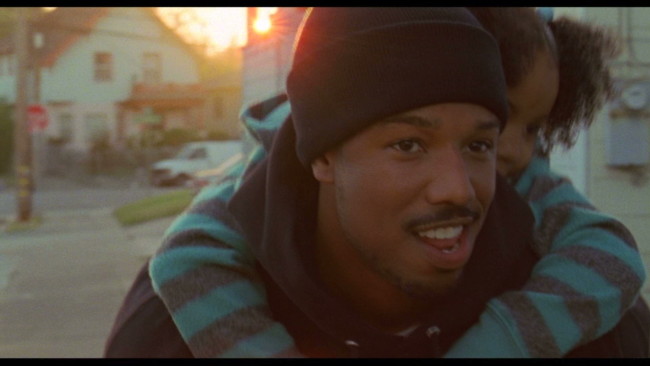
Screen capture from Ryan Coogler's "Fruitvale Station."
With the Oscars right around the corner, many people are upset with the snubbing of films by black filmmakers by mainstream awards shows. Folks went slap off when filmmaker Ava DuVernay did not receive a best director nomination for her seminal film Selma. David Oyelowo, who delivered an incredible performance as Dr. Martin Luther King, Jr. in the same film was also overlooked by Oscar, despite the film being nominated for the Best Picture and Best Original Song categories. It definitely happens, but it is not often that a film is nominated for Best Picture with the film’s director and lead actor not receiving a nomination.
Lucky for many audiences and filmmakers of color, the film festival circuit exists. This is often one of the ways in which black films and films by disenfranchised populations get any visibility or for that matter, any love. Before DuVernay became a household name with the popularity of Selma, she became the first African-American woman to win best director at the 2012 Sundance Film Festival for Middle of Nowhere. The woman who is the first African-American woman to be nominated for a Best Director award at the 2015 Golden Globes, had already found acceptance and approval amongst cinephiles at film festivals throughout the world.
There are many opportunities for black filmmakers to showcase their talents whether at Sundance, Tribeca Film Festival, Pan African Film Festival or the Bronze Lens Festival, where the films and the cast and crew that make them, are given a platform for viewing, possibilities for distribution deals and the much needed exposure to get the next project funded or completed. Such was the case with Ryan Coogler, writer and director of the critically acclaimed film Fruitvale Station. Coogler won the 2011 ABFF HBO Short Film competition with his film ‘Fig’, earning him a $20,000 award and giving him the necessary exposure to continue moving forward in his film career. While many think of film festivals as party central, there are real differences being made in the lives of aspiring filmmakers and those persevering in an industry that is not always kind to people of color.
The value of film festivals is nothing new. A former publicist, DuVernay recognized the power of film festivals, founding the African American Film Festival Releasing Movement (AFFRM), an organization that uses film festivals to provide independent filmmakers with theatrical and multiplatform distribution. Upcoming film festivals include the Women of African Descent Film Festival (WADFF, May 2), American Black Film Festival (ABFF, June 11-14) and the Martha’s Vineyard African American Film Festival (MVAAFF, Aug. 10-15).
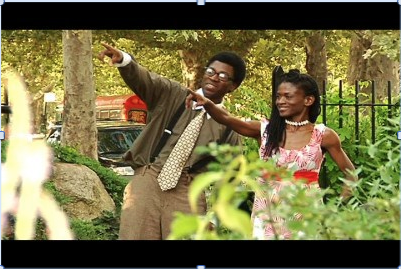
Screen shot from “Hill and Gully” with Teagle F. Bougere and Patrice Johnson Chevannes. (Photo provided by WAFF)
Celebrating its 14th Anniversary, the Women of African Descent Film Festival (WADFF) was created to help combat the negative images of people of African descent constantly circulated in the media. Sponsored by the Brooklyn Chapter of The Links, the organization is committed to choosing and screening films that depict the positive linkages women of African descent have to their families, neighborhoods and communities, in an effort to influence peoples’ perceptions of people of African descent through the medium of film.
Screen capture from Ryan Coogler’s “Fruitvale Station.”
The American Black Film Festival (ABFF) is a four-day event dedicated to showcasing quality films and television content by and about people of African descent. The ABFF is committed to the belief that Black artists deserve the same opportunities as their mainstream counterparts. The Martha’s Vineyard African American Film Festival was founded to produce community events, educational programs and films that spark discussion, debate and action.
These festivals represent just a few of the opportunities that exist for black filmmakers to have their films seen by the public, embraced and awarded. If you’re a filmmaker, working or aspiring to be in the film business, then you might try submitting your work to these festivals or attending. Whatever you choose to do, know that mainstream awards shows and larger festivals do not validate the amazing work produced by black filmmakers. Instead of getting mad, get going to festivals that love, embrace and reward black filmmakers all year, every year.
For more information about submitting to the WADFF, click here. (Entry deadline: 3/13/15)
For more information about submitting to the ABFF, click here. (Entry deadline: 3/10/15)
For more information about submitting to the MVAAFF, click here. (Entry deadline: 5/30/15)
This post was written by Nsenga K. Burton, Ph.D., founder & editor-in-chief of the award-winning news site The Burton Wire. Follow her on Twitter @Ntellectual.
U.S. troops fighting Ebola will return from West Africa.
(Photo Credit: Google)
U.S. troops fighting Ebola will return from West Africa. (Photo Credit: Google)
Roberta Rampton of Reuters Africa is reporting that President Barack Obama is set to announce on Wednesday that he will bring back nearly all of the 1,300 U.S. troops deployed in West Africa to fight the Ebola epidemic by April 30, the White House said late on Tuesday. Rampton writes:
“Obama, who was excoriated last fall for a slow start to his Ebola outbreak response, will hold a White House event to showcase how U.S. leadership helped stem the epidemic, which has killed almost 9,000 people, mainly in Guinea, Liberia and Sierra Leone. The number of new cases each week has dropped to about 150 in recent reports, down from more than 1,000 new cases per week in October, the White House said.”
Approximately 100 U.S. troops will remain in West Africa to continue to help countries like Guinea, which has seen a recent rise in the number of cases and Sierra Leone, which hasn’t reduced the number of cases as significantly as other countries.
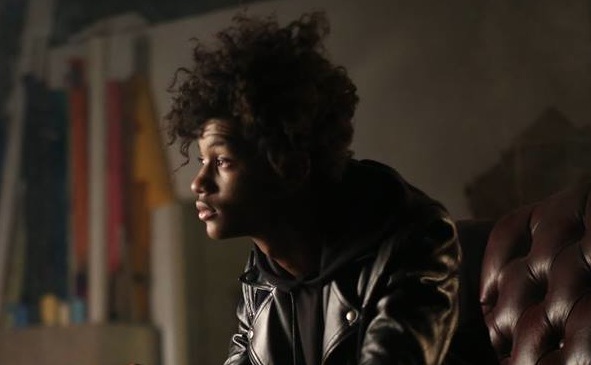
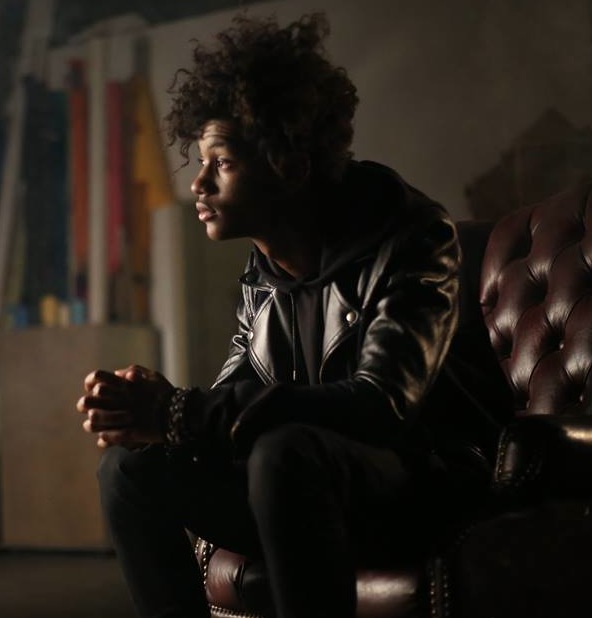
Singer, songwriter and guitarist Major Myjah considers himself a chameleon. The latest addition to the Warner Bros. Records roster wears crinkly upright hair and arms himself with a diverse musical palette that walks a fine line between pop, rock, hip hop, R&B and island rhythms.
A task-oriented, 17-year-old performer originally raised in Miami, Myjah is not concerned with making hit records when he enters the studio. Now living in Los Angeles, he’s typically free of any concepts in mind when he’s in his creative element.
Myjah, who is of Jamaican descent, performs “Cry,” a power ballad that features remorseful wails, harmonies over booming sparse drums and growling ad-libs. His heartfelt lyricism depicts the hurt he imparts on his scorned love interest.
Clocking in just under four minutes, “Cry” musically ventures into industrial sounds right before the second verse. “I just kinda go with the flow,” he says via phone. “It all comes from my head and what I’m feeling. It’s really an organic process that’s eclectic and goes everywhere from beginning to end.”
Music was always destined to become Myjah’s fate. His father is reggae and dancehall artist, Bounty Killer. Myjah grew up knowing about his famous father but wasn’t exactly familiar with his catalog. To this day, Myjah isn’t fazed by Bounty Killer’s fame and notoriety.
“Now it’s really about listening to the content and taking it into my own,” says Myjah. “I still haven’t really fully dived into it.” Myjah’s mother also worked in the music business booking and managing acts throughout the Caribbean. Under her guidance, Myjah absorbed the practices that typically develop entertainers.
He watched his mother handle everything from negotiating business transactions to designing the stage. Myjah says he went from being young and inexperienced to fully understanding the fundamentals of the music business beyond just recording and shooting music videos. “It has been a journey,” he says. “I’ve been able to see everything evolve. We just flourished.”
Major Myjah (Photo: Warner Bros. Records)
When Myjah was 13, the mohawk-wearing teenager released his reggae-influenced debut single, “My Sunshine,” which earning substantial radio play across Europe, Asia and Jamaica. Since then, Myjah’s musicianship has been endorsed by No I.D., Kevin Cossom and James Fauntleroy.
He owns up to being a Beatles fan but normally doesn’t listen to a lot of music by other acts. The artist prefers listening to his own material. “I don’t like to feed my mind with a lot of different things,” he says. “What you put in is what you put out. I just go in with an open fresh mind.”
Another of Myjah’s ballads, “I Can’t Breathe,” allows the sometimes socially conscious artist to offer commentary on police brutality and the shooting of unarmed young black men found in the headlines.
Myjah believes young musicians and songwriters should consider their talents as social responsibility. He says they should speak out about important issues. “The creative community hasn’t been stepping up to the plate and speaking about it,” says Myjah. “As a young artist, especially in this day and age, our new generation growing up has to know about the stuff going on in America. Nobody deserves to be treated this way.”
Gearing up to release his debut album sometime this spring, Myjah doesn’t provide much detail regarding how far he is on the recording process. However, Myjah, a prolific writer that likes to experiment with different concepts, does reveal that his LP will include more songs filled with serious messages.
“We have other records that stand out and mean a lot,” adds Myjah. “There’s definitely other content that means something. I write a lot, and when I write, I wanna touch on things that really matter.”
The first week of January, Myjah played before a full audience at Hollywood’s famed rock venue, Whisky A Go Go. He watches some of rock music’s most iconic talents preceding him on the same stage, so Myjah takes it upon himself to deliver a fun, energetic and emotional performance.
He says his future live sets will have the same format as his show at the Whisky. “It takes you all the way through my states of being,” he believes. “It’s a really dope experience, and a lot of people will gather something from it.”
This post was written by Christopher A. Daniel, pop cultural critic and music editor for The Burton Wire. He is also a contributing writer for Urban Lux Magazine and Blues & Soul Magazine. Follow Christopher @Journalistorian on Twitter.
Port of Spain, Trinidad.
(Photo Credit: Google Images)
Missing Caribbean Airlines official Azad Niamat. (Photo Credit: Google Images)
Susan Mohammed of Trinidad Express is reporting that the decomposing body of a man found this morning is believed to be missing Caribbean Airlines Limited (CAL) director Azad Niamat. She writes:
“The body was discovered at around 10 a.m. in Arena Road, Brazil Village, some three kilometers away where Niamat’s vehicle was found abandoned over a week ago.
A friend of the Niamat family, Imam Morland Lynch who was at the scene, told the Express that the body was clad in the same clothing that Niamat was last seen in on January 29.”
Caribbean 360 reported today that Niamat’s family had offered a reward and that no ransom had been requested.
Niamat has been missing since January 29. The retired BWIA airlines pilot left home the morning of January 29 headed to the hardware store and hasn’t been seen or heard from since his departure.
The body that was found is still being identified.
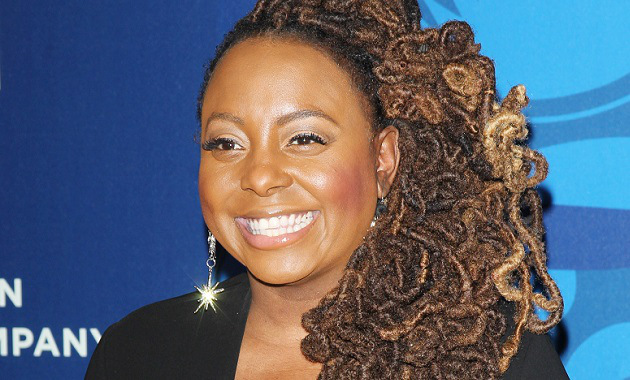
Grammy award nominated singer Ledisi talks 'Precious Lord' controversy.
(Photo: Google Images)
Grammy award nominated singer Ledisi talks ‘Precious Lord’ controversy. (Photo: Google Images)
For Harriet is reporting that Grammy award-nominated singer Ledisi is addressing the controversy swirling around the snub heard and scene around the world for the Grammy’s decision to use Beyoncé in a performance of “Take My Hand Precious Lord” as a lead-in to “Glory” by John Legend and Common. Both songs appear on the “Selma” soundtrack, but Ledisi performed the film version and portrayed Mahalia Jackson on screen. Many fans believed that Ledisi should have performed the song at the Grammys and was slighted due to money, power and image. Ledisi responded with tact and class.
“What I will say and what I’m excited about is that I had the pleasure of playing an iconic figure in Selma, and the song, ‘Take My Hand, Precious Lord,’ it’s been going on forever – starting with the queen Mahalia [Jackson], the queen of soul Aretha Franklin.”
She went on, “Then, I was able to portray and sing my version of the song, and now we have Beyonce. Her generation will now know the song, so I’m a part of history.”
John Legend confirmed that Beyoncé asked to perform the song and you don’t turn down Beyoncé.
We think it’s power, privilege, money and some shade in the form of colorism as it relates to the music industry and the broadcast.
Share your thoughts @ForHarriet or @TheBurtonWire.
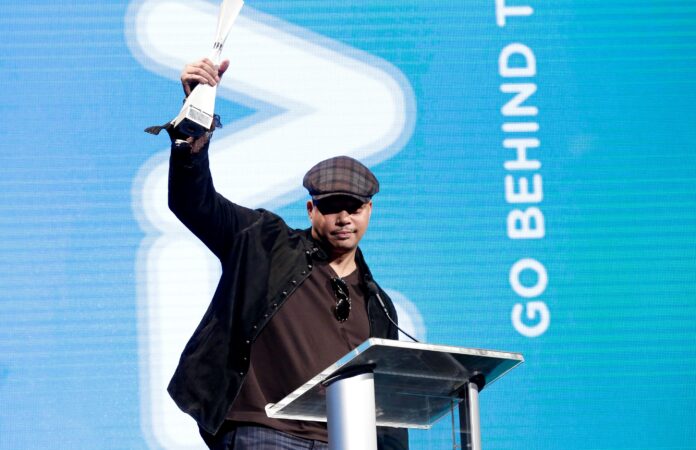
ATLANTA, GA - FEBRUARY 07: Actor Terrence Howard accepts the Spotlight Award at SCAD Presents aTVfest - Awards Presentation & ABC's "How To Get Away With Murder" on February 7, 2015 in Atlanta, Georgia. (Photo by Catrina Maxwell/Getty Images for SCAD)
ATLANTA, GA – FEBRUARY 07: Actor Terrence Howard attends the Spotlight Award presentation during aTVfest presented by SCAD on February 7, 2015 in Atlanta, Georgia. (Photo by Cindy Ord/Getty Images for SCAD Atlanta)
‘Empire’ star Terrence Howard received the Spotlight Award and the students from “How To Get Away With Murder” received the Rising Star Award at the Savannah College of Art and Design (SCAD) 3rd annual aTVfest in Atlanta, Ga. this weekend. ‘Empire’ creator and executive producer Lee Daniels was also on hand for the award and a panel discussion about the hit television show.
Hosted by SCAD Atlanta, the day featured premiere screenings and panels covering iconic television comedies, dramas and animation features including FOX’s “Empire,” FOX’s “The Following,” HBO’s “Girls,” ABC’s “How To Get Away With Murder,” and FOX’s “The Mindy Project.”
ATLANTA, GA – FEBRUARY 07: Actors Jack Falahee, Aja Naomi King, Liza Weil, Charlie Weber, Karla Souza, Katie Findlay, and Matt McGorry attend SCAD Atlanta Presents aTVfest – Awards Presentation & ABC’s “How To Get Away With Murder” on February 7, 2015 in Atlanta, Georgia. (Photo by Cindy Ord/Getty Images for SCAD)
The television festival also featured screenings of Academy Award winner John Ridley’s ABC drama ‘American Crime,’ and BET‘s highly-anticipated miniseries, ‘The Book of Negroes.’ Ridley and the cast of ‘American Crime’ were on hand for the panel as well as Aunjanue Ellis and Lyriq Bent, lead actors in ‘The Book of Negroes.’
The 2015 aTVfest took place at several SCAD Atlanta locations, including the SCADshow theater, the Digital Media Center and the main SCAD Atlanta campus.
For a complete list of programming, please visit: www.atvfest.com.
This post was written by Nsenga K. Burton, Ph.D. founder & editor-in-chief of the award-winning news site The Burton Wire. She also serves as editor-at-large for The Root and is a contributor to The Huffington Post.