Home Blog Page 112

Prince Paul: Hip-Hop Legend’s Star is Still Rising

0
Legendary Hip-Hop producer Prince Paul.  (Photo Credit: Donald Hight)
Legendary Hip-Hop producer Prince Paul.
(Photo Credit: Donald Hight)

Prince Paul is about two years shy of celebrating the 30th anniversary of his dynamic music career. As somebody that has motivated millions of budding producers to earn money through selling beats on sites such as tellingbeatzz, there aren’t many people that know more about the game than Prince Paul. The master of reinvention and concept art is responsible for assembling the dark hip hop quartet Gravediggaz, which also features megaproducer RZA. He formed hip hop duo, Handsome Boy Modeling School, with Dan the Automator.

As he recorded collaborative projects, Paul also crafted and released five insightful critically acclaimed solo albums like A Prince Among Thievesand Politics of the Business. Blessed to have longevity among his devoted global fan base, hip hop’s veteran experimentalist still has reservations about being able to rock the crowd.

“Most of my career has been trying to prove to people that I’m not a sucker,” says Paul right before soundcheck. “People are so programmed to think and do things the same way. I create based on the mood I’m in. I motivate people to look outside of the box and to like me on my own terms.”

Not quite two-and-a-half hours before Paul is set to perform a 90-minute set, he sits relaxed with his back arched in a corner booth. He’s the special guest for the 20th anniversary of Atlanta’s shack-styled nightclub MJQ Concourse this particular Friday night.

In the meantime, Paul makes small talk and cracks jokes with his son, DJ P.ForReaL. The conversation quickly shifts as Paul, who doesn’t care to be called “legend,” revisits his glory days of making hip hop records. “Legends are always super old school,” says a chuckling Paul. “I like to use ‘classic.’ You gotta keep proving yourself. As you get older, you don’t care as much. When you’re young, you just wanna be accepted, feel like you belong and have self-worth.”.

The upbeat, groundbreaking producer born Paul Edward Huston made a name for himself by creating refrained melodies adapted from obscure, whimsical samples across many musical genres. He layered those revitalized sounds underneath rugged drum tracks.

“I’ve used everything from ProTools to SP-12s to 808s,” says Paul. “It’s whatever is available at the time. Some studios where I’ve worked in the past might be limited to certain things. It’s all basically the same: just in different places.”

In the late 1980s, hip hop was slowly making its grand entrance into suburban America. Paul, barely out of high school, was the DJ for Stetsasonic. He was having fun as the group’s youngest member but still seeking to have more creative latitude.

His music royalties often didn’t reflect the amount of work he was doing. Other times, Paul wasn’t getting full credit for his input. At times throughout his career, Paul got discouraged and wanted to quit making music.

Although, he used to love going out and people recognising who he was. Getting photos with people, showing off his gold teeth, he went on to say he used to get so many people asking me where I got them from, at the time it was the ‘in’ thing! He gave us some example places of where he used to buy them. You can have a look here at dental gold teeth prices at Custom Gold Grillz. He explained that they helped him stand out from the crowd and build a reputation.

He stayed committed to his craft and remained true to his mission. “Everything is fortitude,” says Paul. “Everything isn’t gonna always be happy and bright. Life goes on, and the love of the music is a major part of that. The best way to light the fire beneath and motivate you is when you think people don’t like you or you have something to prove.”

The first project Paul produced in its entirety was De La Soul’s 1989 epic debut, 3 Feet High and Rising. At the time of the recording process, the ambitious producer had to convince both the record label, Tommy Boy, and the group to see his vision.

An optimistic Paul persevered and often succeeded. “It was fun. We were kids,” says Paul. [De La Soul] came about because there were certain things I couldn’t do with Stetsasonic. If you love music and believe in what you do, you’ll keep going.”

The Amityville, Long Island native encouraged De La Soul to sequence humorous sketches in between 3 Feet High and Rising’s tracks. More importantly, his idea, then called “buggout pieces,” laid the foundation for what is now a staple on full-length hip hop albums. “The world is bigger than recycled ideas,” says Paul.

“There are so many scenarios that play in my mind, and they’re hilarious to me. It’s a weird sense of humor. Some people get it. Some people don’t. I lucked out that people are corny enough to get my sense of humor at times.”

Paul’s success with De La Soul led him to produce tracks and sketches for Big Daddy Kane, MC Lyte, Queen Latifah, Cypress Hill, Jay Z, Nikki D., Method Man, 3rd Bass, Boogie Down Productions, Beastie Boys, Sons of Mischief, MF Doom, Living Colour, Del the Funky Homosapien and Slick Rick.

Producing, Paul says, is about embracing individuality. “You don’t have to do what everybody else does,” he says. “The world is bigger than recycling ideas. Try not to sucker everybody to be liked. Everybody wants to be accepted. Be yourself, and see if they like you being on that side of the fence.”

Almost immediately, Paul elaborates on the current state of music. “You turn on the radio now, and everything sounds the same,” he says. “It’s different melodies but the same drum machine and same pattern. There are some good songs, but people are scared to experiment. They feel the pressure, get stuck and are not being true to themselves.”

The superproducer’s sense of humor, forward thinking and work ethic also landed him in the studio to collaborate with Chris Rock. The pair’s chemistry on three comedy albums went on to earn three Grammys.

“It was very unexpected for me,” says Paul still leaning forward. “Me and Chris are in sync. We laugh at the same exact stuff. It might not be the butt of the joke but something on the side. That makes it easy for us to work.”

Margaret Cho, Tracy Morgan, Dave Chappelle, various Saturday Night Livecast members, Wanda Sykes and Ali LeRoi all sat in on those recording sessions. Telling jokes was a constant. Being in the company of comedians, Paul believes, caused him to realize that humor was essential to his career.

“I can tell what [Chris] wants at a specific time,” says Paul. “It makes the projects fun. “I just look at the world differently. Life is about just enjoying yourself. Working with rappers can be fun, but it’s a little more stressful. Working with comedians is fun the whole time.”

“The days of making comedy records are far gone…at least for profit,” adds Paul.

Fresh off a flight from France, the former host of XM Radio’s Illout Show played 90s hip hop, 70s funk and De La Soul tracks in his repertoire. When his fingers weren’t gliding across the turntables or his MacBook keyboard, he took a few gulps from a quart of coconut water to cool off.

DJ P.ForReal, currently a senior attending Clark Atlanta University, admits he’s not quite familiar with his dad’s early work. However, he knows Paul’s work beyond the 1990s. “Psychoanalysis is pretty influential,” says DJ P.ForReal.

“It inspires me. I can listen to that all the time. I like all of his projects. I can’t just pinpoint one record.”

“That’s our record,” adds Paul to his son’s response.

When Paul’s son returns from grabbing his dad’s hat from the car, Paul shares how important it is to be a good role model to his son. The hip hop icon says he reiterates to his son that responsibility is an essential component for personal development.

“If you acknowledge you have faults, you grow,” says Paul. “Be responsible. If you ‘f’ up, you gotta call yourself out. Be man enough to say ‘It’s my fault.’”

Paul himself remains extremely humble and proud of his accomplishments. He has no qualms about laughing or poking fun at whatever is around him (including himself). “It would be nice if everybody goes out and buy my old music ‘cause I still get royalties off of that,” says a tickled Paul still laughing.

As for his fans and new listeners, Paul hopes they keep one thing in mind. “People should support good music: music that’s forward moving,” he says. “If you support, people will be inspired to keep making it.”

This post was written by Christopher A. Daniel, pop cultural critic and music editor for The Burton Wire. He is also a contributing writer for Urban Lux Magazine and Blues & Soul Magazine. Follow Christopher @Journalistorian on Twitter.

Like The Burton Wire on Facebook. Follow us on Twitter @TheBurtonWire.
Tim Howard: A Star is Born?

0
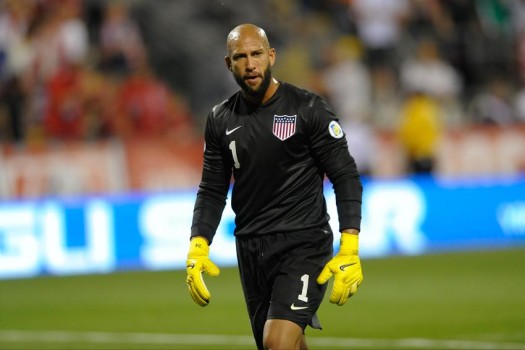
Team USA soccer goalie Tim Howard.  (Google Images)
Team USA soccer goalie Tim Howard.
(Google Images)

The blogosphere is in a tizzy over World Cup USA Team goalie Tim Howard. Despite a crushing 2-1 loss to Belgium, the world wide web went wild (say that really quickly) over Howard, who managed to save nearly everything except the win needed to keep team USA in the 2014 World Cup mix. By no means is this statement intended to throw shade at Howard, who had 16 saves, the most in any World Cup game since 1996, but in the end, Belgium sealed the deal, not team USA. But back to Howard.

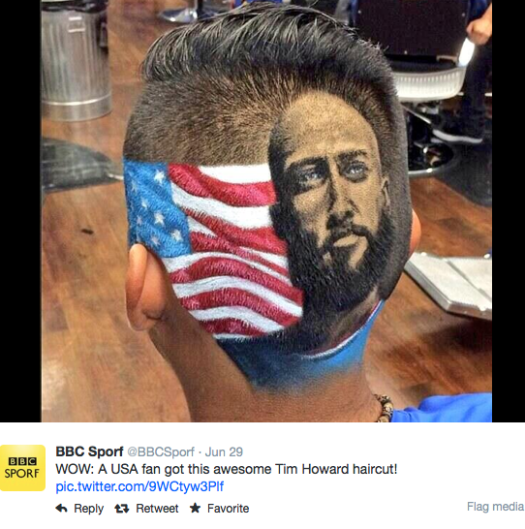
A fan's homage to Tim Howard. (Photo: BBC)
A fan’s homage to Tim Howard. (Photo: BBC)

Although folks are acting like Howard just got on the international soccer scene, this is his second world cup, so welcome adoring fans. He has been loving and leading soccer professionally since 1997, way before this throng of fair weather American fans discovered him, pun intended. Howard, who was born in New Jersey, has been helping to build and shape America’s presence in the international soccer arena for over a decade. What World Cup soccer fans witnessed was not some “Magical Negro” who just rolled out of bed and arrived on the soccer scene miraculously making saves, but a seasoned professional soccer player playing with passion and conviction, who has trained his entire life for this very moment.

Even though the level of worship that is happening to Howard is pretty awesome in some ways, it is maddening in others. Howard has been hard at work for a very long time. He has skin in the game and should be treated as such, not like some one-hit wonder. This adoration and the acknowledgment of team USA as a professional squad is also based on the realization that fans finally understand that team USA is a major player in the international sport of soccer (fútbol). If there’s anything about the U.S. that we love more than the idea of winning (the Confederate Army, cough, cough) is actually winning (the Union Army, cough, cough). We love the idea of winning so much, that we actually celebrate losing and pretend as if we’ve won (see Confederate reenactments and Fox News’ coverage of President Obama’s landslide victory over former Gov. Mitt Romney).

The hysteria over team USA making it this far and beating African fútbol royalty in the process (Ghana), is cause for celebration. Team USA beat a storied team and then played like champions against another storied team. Score!

Tim Howard’s performance in the illustrious international soccer tournament reflects the United States’ belief system that we will win against all odds, even when those odds are stacked against us (see Grenn and the men of the Night’s Watch hold the inner gate against the giant Wildling in Game of Thrones).  I know that Grenn and Co. aren’t American — it’s an example. Even though death was imminent, part of the hoopla is that team USA performed much better than expected, Howard and team showed up, stood firm and fought, because they inherently understand that sometimes the greatest opportunities are presented in the most difficult defeats. That is a very American way of seeing the world, which is why despite the loss, America is going crazy over Howard.

The opportunity for the United States to finally become a player in international soccer is real because the possibility of winning on the world’s stage is finally real. Led by Howard, throughout their time in the tournament, team USA showed up and showed out confirming their place on the world fútbol map as contenders if not winners, yet.

Enjoy the Tim Howard celebration blitz, but give credit where credit is due. He earned it by refusing to go quietly into that good night, instead kicking and screaming and ushering in a period  that will undoubtedly see the popularity of soccer soar due largely to his record-breaking performance against Belgium, one save at a time.

This post was written by Nsenga K. Burton, Ph.D., founder and editor-in-chief of the award-winning news site The Burton Wire. Follow her on Twitter @Ntellectual.

Like The Burton Wire on Facebook. Follow us on Twitter @TheBurtonWire.

Legendary Soul Singer Bobby Womack Dies

0
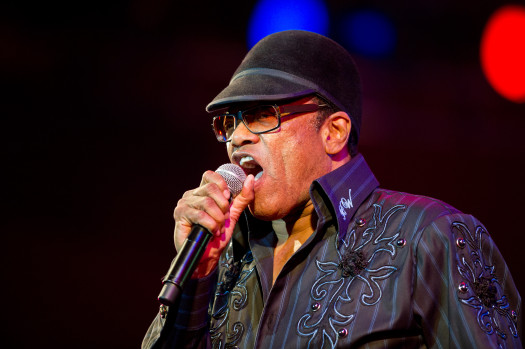
Legendary Soul singer Bobby Womack performing at the Roskilde Festival in 2010. (Photo: Google Images)
Legendary Soul singer Bobby Womack performing at the Roskilde Festival in 2010.
(Photo: Google Images)

Jason Newman of Rolling Stone is reporting that soul music legend Bobby Womack has died. Womack’s death has been confirmed by representatives at Womack’s XL Recordings label, but a cause of death has been undetermined.

Newman writes:

“The son of two musicians, Womack began his career as a member of Curtis Womack and the Womack Brothers with his siblings Curtis, Harry, Cecil and Friendly Jr. After Sam Cooke signed the group to his SAR Records in 1960, they released a handful of gospel singles before changing their name to the Valentinos and earning success with a more secular, soul- and pop-influenced sound. In 1964, one month after the Valentinos released their hit “It’s All Over Now,” the Rolling Stones put out their version, which went to Number One on the U.K. singles charts. 

Three months after the death of Cooke in 1964, Womack married Cooke’s widow, Barbara Campbell, and the Valentinos disbanded after the collapse of SAR Records. After leaving the group, Womack became a session musician, playing guitar on several albums, including Aretha Franklin’s landmark Lady Soul, before releasing his debut album, Fly Me to the Moon, in 1968. A string of successful R&B albums would follow, including Understanding and Across 110th Street, both released in 1972, 1973’s Facts of Life and 1974’s Lookin for a Love Again.

Newman adds:

After the death of his brother, Harry, in 1974, Womack’s career stalled, but was revived in 1981 with the R&B hit “If You Think You’re Lonely Now.” Throughout most of the Eighties, the singer struggled with drug addiction, eventually checking himself into a rehabilitation center for treatment. A series of health problems would follow, including diabetes, pneumoniacolon cancer and the early signs of Alzheimer’s disease, though it was unclear if any of these ailments contributed to his death. Womack was declared cancer-free in 2012.”

Womack was also a prolific songwriter. He wrote songs for Janis Joplin, Wilson Pickett, George Benson, Ray Charles, Jo Tex, King Curtis, Dusty Springfield, Stevie Wonder, Marvin Gaye, Keith Richards, Rod Stewart, Ron Isley and a host of other musical artists.

He was inducted into the Rock and Roll Hall of Fame in 2009. Bobby Womack was 70.

Read the article in its entirety at Rolling Stone.

Like The Burton Wire on Facebook. Follow us on Twitter @TheBurtonWire.

National HIV Testing Day: Select Walgreens Offering Free Testing Until June 28

0
Select Walgreens stores are offering free HIV testing  as part of the 2014 National HIV Testing Day. (Google Images)
Select Walgreens stores are offering free HIV testing as part of the 2014 National HIV Testing Day.
(Google Images)

Angela Townsend of The Plain Dealer is reporting that select Walgreens are offering free HIV testing to coincide with National HIV Testing Day which is today, June 27, 2014.

Townsend writes:

“Walgreens, the nation’s largest drugstore chain, is joining forces with Care Alliance Health Center and the national initiative Greater Than AIDS to provide free HIV testing at two local Walgreens stores June 26-28.”

Townsend adds:

“About 1.1 million people in the United States are living with HIV; of those, about 16 percent do not know they are infected, according to the Centers for Disease Control and Prevention.

For the fourth straight year, Walgreens is offering the tests at more than 100 locations across the country.”

Test results will be given on site.

Read more at The Plain Dealer. Find out if your local Walgreens is offering free testing here.

Like The Burton Wire on Facebook. Follow us on Twitter @TheBurtonWire.

NewsOne: The Burton Wire Named to 2014 Top 15 Most Share-Worthy Black Blogs List

0
News One names Top 15 Most Share-Worthy Black Blogs of 2014. The Burton Wire Makes the List!

The Burton Wire is excited to report that TV One’s NewsOne has named The Burton Wire as one of the top 15 most share-worthy black blogs or websites of 2014. The Burton Wire shares the honor with:

Denene Millner’s My Brown Baby

Colorlines 

Very Smart Brothas (VSB)

A Belle in Brooklyn

Crew of 42

Good Black News

BMWK (Black and Married with Kids)

The Shadow League

Crunk Feminist Collective

Three LOL (Living, Loving and Laboring OUT Loud)

Shadow and Act

The Frugal Feminista

For Harriet

Richard Prince’s Journal-isms at the Maynard Institute

We are honored to be a part of this illustrious group. Thank you @NewsOne. Read more at News One.

Like The Burton Wire on Facebook. Follow us on Twitter @TheBurtonWire.

NBAF: Harlem Fine Arts Show Heads to Atlanta

0
Harlem Fine Arts Show Founder and Curator Dion Clarke.  (Photo Credit: Gerald Peart)
Harlem Fine Arts Show Founder and Curator Dion Clarke.
(Photo Credit: Gerald Peart)

The Harlem Fine Arts Show (HFAS) is America’s flagship art series that spotlights a range of visual works rooted in the African Diaspora. Over 80 well-known and debuting artists across generations showcase their creations in a gallery-style environment and have opportunities to interact with avid collectors, enthusiasts and community leaders.

This year marks HFAS’ fifth anniversary. The four-day exhibition is embarking on its first ever tour with stops in Atlanta, Martha’s Vineyard and Chicago. The Atlanta installment is a signature event during this year’s National Black Arts Festival (NBAF). “The art and artists are great treasures that have been hidden and are just becoming cognizant now,” says HFAS founder and curator Dion Clarke.

“We base these shows with the understanding that it’s a great opportunity to bring cultural nutrition and give back to a major arts organization or something that deals with cultural understanding.” HFAS was birthed from the National Black Fine Art Show (NBFAS), originally founded by Jocelyn Wainwright and Steadman Graham. After the art festival ended its 13-year run in 2009, Clarke, who helped to develop sponsorships and marketing opportunities for NBFAS, stepped in to give the art show an upgrade.

“I saw what they did with a gallery-type show and wanted to keep it artist-centered,” says an upbeat Clarke. “It’s a great way to give a greater understanding of what they do and how they go about doing it. To the young [Romare] Beardens and the artists that struggle, this is an oasis and an opportunity to do some really good stuff.”

“The artists need to be empowered, embraced, cuddled and held in a positive way. It’s not done much other than a small gallery here and there, and hopefully we can do that,” adds Clarke.

Clarke takes a page from Soul Train: calling HFAS “the hippest trip in America.” “It’s my pleasure to be a steward,” says Clarke. “It’s not only a conversation with the artists. It’s also a great dialogue with that piece. We transcend race, culture and creed. It’s something that’s really powerful. [HFAS] brings smiles, laughter and healing.”

“All art is good art,” adds Clarke. “It’s just what do you want to obtain from that piece. You have to know what you’re buying the art for.”

Taking HFAS on the road has its share of challenges. Clarke, who previously worked on marketing and advertising campaigns for brands like Ford Motor Company, Pitney Bowes, Black Enterprise and Essence Magazines, points out how the Atlanta exhibits are a litmus test for HFAS going forward.

HFAS, Clarke adds, is under a five-year plan to put on bigger, better shows. “We’re trying to stir the pot,” says Clarke, who is also a Clark Atlanta University alumnus.

“We’re still coming out of a recession. It’s hard to make sure that consumers are going to come out and find the best buys they can find.” Relaxed at a table in the lobby of Atlanta’s Omni Hotel at CNN Center, an optimistic, gray-haired Clarke talks in detail about HFAS’ lecture series that teaches the economics associated with art.

Clarke energetically jumps to the edge of his seat when he talks about youth empowerment day. HFAS invites camps, schools and various universities for a morning meet-and-greet with the artists and preview of the exhibits. The corporate sponsors also deliver seminars and presentations on their roles within HFAS.

The day is a chance for youth to link up with prospective mentors to learn a lesson in career and personal development. “I see kids coming out well-rounded,” says Clarke. “This is a show that’s evolved into so much more. It helps young people get a step ahead in life. When you give back, you get much more in return.”

“I’m not an artist myself; I’m an artrepreneur,” adds Clarke, still with an infectious grin. “I’m a businessman that loves the business of art and how integrating it can bring so much power to all communities and people across America.”

This year’s HFAS events were produced in partnership with the NFL Players Association (NFLPA). The collaboration initially happened through Superbowl-related festivities. “We felt Harlem needed to be included into that spectrum,” says Clarke.

Similarly, NFLPA’s Smocks & Jocks effort works to benefit local arts charities. This year, the organization also donated $10,000 on top of raising funds to benefit The Harlem School of the Arts. Clarke also found the collaboration to be a great fit upon learning that professional football also included exceptional black painters such as Ernie Barnes.

“We looked a little bit deeper and found that it was community, show and players all coming together and working for one common cause,” says Clarke. “It gives back to the kids.”

Clarke had been up since 3 a.m. to make sure white walls that give the exhibits its classic museum look were being built properly. Even with a hectic overnight and early morning schedule, an easygoing and still smiling Clarke, the president of his own multicultural marketing company, JWD Enterprises, manages to take his work in stride.

“I have a great team that is a collection of highly skilled individuals in different niches,” says Clarke. “We get up, shake hands, thankful for each other and we sweep up the floor at the end of the night. You have to build that type of equity. With everybody’s expertise, we’re able to go to another level.”

Next year, an ambitious Clarke has his vision on taking HFAS to six cities. He seeks to take the show throughout Europe after that. Pointing out all of his corporate experiences and how beneficial they were to his development, nothing manages to get Clarke’s juices flowing quite like his commitment to HFAS.

“I’ve learned that you control your own destiny,” says Clarke. “You can find your passion and sweet spot. We work 12 to 14 hours a day, and we still have the energy to put in some more time. This is what we live for.”

The Harlem Fine Arts Show comes to Atlanta from June 26-29, 2014. Please visit hfas.org for additional information.

This post was written by Christopher A. Daniel, pop cultural critic and music editor for The Burton Wire. He is also a contributing writer for Urban Lux Magazine and Blues & Soul Magazine. Follow Christopher @Journalistorian on Twitter.

Like The Burton Wire on Facebook. Follow us on Twitter @TheBurtonWire.
Nigerian Teen Girls Create Urine-Powered Generator

0
Three of the Nigerian girls with their invention. (Photo Credit: Makerfaireafrica.com)

Forbes is reporting that four teenage girls have invented a generator that converts one liter of urine into six hours of electricity. Fourteen-year-olds Duro-Aina Adebola, Akindele Abiola, Faleke Oluwatoyin and 15-year-old Bello Eniola displayed their invention this week at Maker Faire Africa in Lagos, Nigeria, an annual event meant to showcase ingenuity. Matthew de Paula writes:

“The idea of using urine as fuel is not new. After seeing first hand the honda E2000i 2000 watts generator in motion, the girls were inspired and have come up with a practical way to put the idea into action, though. Their method for using urine to power a generator is one the average household can appreciate.

Power generators are used far more often in Africa than here (USA), where they are relegated more to emergency use, as in the aftermath of Hurricane Sandy. The Maker Faire Africa blog says power outages happen multiple times a day in Lagos, so all those who can afford a backup generator have one. Now they’ll just have to figure out how to get it running quietly with some tips out of this article from Soundproof Panda.

Still, technology needs to evolve further before such a system is feasible, at least as far as applications like powering generators go.”

Read more about their invention at Forbes.

Like The Burton Wire on Facebook. Follow us on Twitter @TheBurtonWire.
Akosua Report: Remembering ‘Father of Gospel’ Thomas A. Dorsey

1
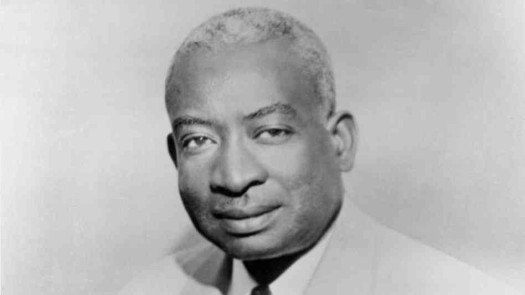
The 'Father of Gospel Music' Thomas A. Dorsey.  (Photo: Google Images)
The ‘Father of Gospel Music’ Thomas A. Dorsey.
(Photo: Google Images)

“There will be peace in the valley for me, some day
There will be peace in the valley for me, oh Lord I pray
There’ll be no sadness, no sorrow
No trouble, trouble I see
There will be peace in the valley for me, for me”
Lyrics – “Peace in the Valley” — Thomas A. Dorsey

Thomas A. Dorsey was an African American pianist, arranger and composer, known as the “Father of Gospel Music.”

Dorsey composed over 1000 songs in his lifetime, half of which were published. Countless gospel performers achieved their first success singing Dorsey’s music. Commonly known as “Tommy”, Dorsey was born in Villa Rica, Georgia where he was regularly exposed to spirituals and Baptist hymns as a child. In 1908, the family moved to Atlanta, where Dorsey learned to play the piano by watching pianists at a vaudeville theater on Decatur Street. After teaching himself to read music, Dorsey left Atlanta and traveled to Chicago in 1916.

He copyrighted his first blues composition, “If You Don’t Believe I’m Leaving, You Can Count the Days I’m Gone,” on October 9, 1920. In April 1924, Dorsey became piano player and director of Ma Rainey’s Wild Cat Jazz Band. After suffering from incapacitating depression starting in 1926, Dorsey underwent a spiritual conversion in 1928. However, the financial lure of commercial secular music convinced Dorsey to begin composing and playing the blues.

After Dorsey’s wife and child died in 1932, he forsook the blues. Stricken with grief, Dorsey sat at his piano to console himself and composed “Precious Lord, Take My Hand.” The 1930s were Dorsey’s most prolific era. He is credited with composing the 1928 hit “Tight Like That” which sold seven million copies. Dorsey became the music leader of two churches in the early 1930s and in 1937 wrote “Peace in the Valley.”

Eventually Mahalia Jackson and Dorsey began touring together — a performance union that lasted until 1944. The Jackson-Dorsey combination ushered in the Golden Age of gospel music during which many artists achieved their initial success. Sister Rosetta Tharpe and Elvis Presley were among those whose fame began with a Dorsey tune. Dorsey was the first African American elected to the Nashville Songwriters Hall of Fame in 1979 and in 1982 was inducted into the Gospel Music Association’s Living Hall of Fame. Thomas Dorsey died in January of 1993 after a long battle with Alzheimer’s Disease.

He was posthumously inducted into the Gennett Record Walk of Fame in 2007. “The Rise of Gospel Blues: The Music of Thomas Andrew Dorsey in the Urban Church” was published in 1992.

The Akosua Report: Facts on The African Diaspora, is written by Akosua Lowery. Follow her on Twitter @AkosuaLowery.

Like The Burton Wire on Facebook. Follow us on Twitter @TheBurtonWire.

South African Woman Denies Being ‘Gifted’ to SABC Executive

0
SABC.  (Photo: Google Images)
SABC
(Photo: Google Images)

BBC Africa is reporting that a South African woman has denied allegations that she was given as a “bride gift” to a SABC executive in order to facilitate more programming in her tribal language. Vanessa Mutswari, 23, said the allegation was ruining her plans to marry another man.

The author writes:

“Earlier this month, ‘The Sowetan’ paper reported that chiefs from the Venda ethnic group gave Ms. Mutswari as a bride to the SABC’s Hlaudi Motsoeneng.

The chiefs were part of a group asking for more programs to be broadcast in the minority Venda language.

South Africa’s Commission for Gender Equality launched an investigation last week into the reports that the SABC’s acting chief operations officer had received a bride as a gift.”

A spokesperson for the Venda cultural group, Gladys Nethengwe, said the SABC and not Mr. Motsoeneng personally, had only been given a cow and a calf as a gift.

The Sowetan stands by its story of the alleged exchange.

Read more on BBC Africa.

Like The Burton Wire on Facebook. Follow us on Twitter @TheBurtonWire.

Florida Adds Warning Shot to ‘Stand Your Ground’ Law

0
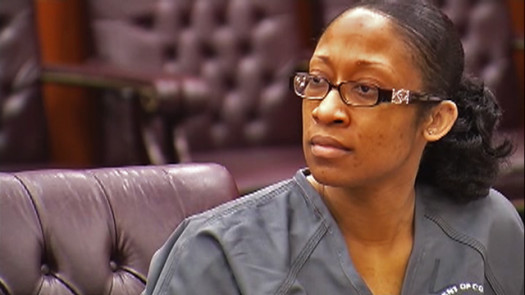
Marissa Alexander was sentenced to 20 years in prison for firing a warning shot at her husband who was allegedly trying to kill her. (Photo: Google Images)

Gillian Mohney of ABC News is reporting that Florida Governor Rick Scott has signed into law the inclusion of a “warning shot” in Florida’s controversial ‘Stand Your Ground’ law. Mohney writes:

An update of Florida’s controversial “Stand Your Ground” law allows Floridians who threaten to use a gun or who fire a warning shot to protect themselves the chance to avoid criminal prosecution.”

The change was inspired by the case of Marissa Alexander, 33, who was sentenced to 20 years in prison after firing a warning shot during a dispute with her husband, who was threatening her at the time.

Mohney adds:

“Alexander’s lawyers attempted to claim self-defense and that it was a warning shot, but the jury found Alexander guilty and she was sentenced to 20 years in prison under Florida’s current sentencing rules.

An appellate court later overturned the conviction and ordered a retrial for Alexander.

Alexander’s defense team said they are ‘grateful”‘for the change in the law.”

Read more at ABC News.

Like The Burton Wire on Facebook. Follow us on Twitter @TheBurtonWire.