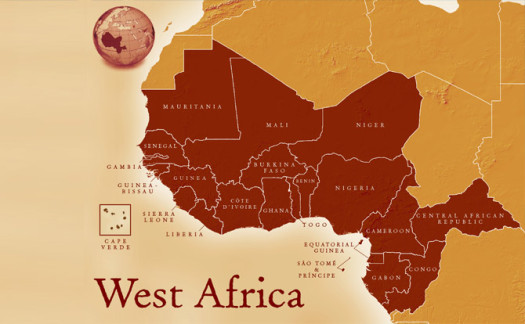
BBC News is reporting that French President Francois Hollande is embarking on a three-day tour of West Africa. The president will be accompanied by 50 French business leaders who hope to take advantage of the Ivorian economy’s strong growth rate of between 8% and 9% in recent years. The French-language news magazine Jeune Afrique says there are about 200 French subsidiaries and some 400 small and medium French firms in Ivory Coast.
In addition to business interests, France intervened in a post-election (2010) conflict lead by former Ivory Coast president Laurent Gbagbo, who refused to accept defeat. 3,000 people were killed in post-election violence. The International Criminal Court said last month that it had enough evidence to put Gbagbo on trial for war crimes. Gbagbo refutes the claims.
President Holland’s visit will also include Niger and Chad where he will make final decisions about the French military presence in the Sahel region. The author writes:
“France believes that armed groups in the Sahel are not only a threat to West African countries but also to Europe and intends to keep 3,000 troops there under a regional command structure based in Chad.”
During this trip, President Hollande intends to finalize a counter-terrorism plan to combat Islamist militant groups.
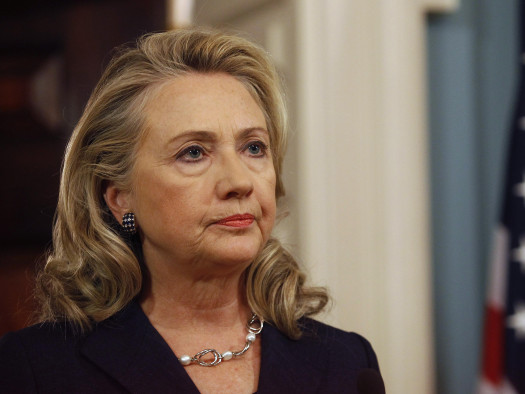
Hillary Clinton has had a bad summer. Not nearly as bad as President Obama’s but what once looked like a full-proof Democratic ascension, (from one history-making first to another) now seems a bit of a stretch. What’s worse is Democrats can’t even verbalize the reason why.
I realize that statement is as loaded as the recent New York city tabloid headline describing Obama as the “N@#$@! in the White House.” But hear me out….
Back up nearly 20 years ago when Clinton’s infamous “bitchdom” began. Her husband was in the White House and as First Lady she was called everything from “bitch” to Hitlery” to the “Hildebeast.” She was accused of doing all kinds of things from keeping a traitors list to being behind Vince Foster’s suicide. She claimed it was part of a right-wing conspiracy and with time those words, mocked at the time, were somewhat validated.
Personally, I never found myself equating Clinton with the “B-Word” until this summer after hearing an interview between Clinton and NPR’s Teri Gross. During that interview, Gross questioned Clinton’s change in heart over supporting gay marriage and questioned whether that particular evolution might be “political.”
“I think you are playing with my words… And playing with what is such a very important issue,” Clinton said when Gross tried to get her to clarify whether she changed her mind on gay marriage or if America had changed its mind allowing her to openly support gay marriage.
“I think I am just trying to clarify,” said Gross.
“No I don’t think you are trying to clarify. I think you are trying to say that I was opposed and now I am in support and I did it for political reasons. And that is not what happened.” Audio segment (the whole interview is good but the testy interchange happens at the very end)
Then, about a month ago, another old interview surfaced. In this one Clinton is taped joking about how she helped get a man off on a rape charge in which she clearly thinks he was guilty. Audio segment. Obviously, everyone has the right to a competent defense. But this particular case involved the rape of a 12-year-old girl, a girl who Clinton allegedly smeared during the trial, and the tape shows Clinton laughing about the man’s guilt. And to make things worse, the victim is now speaking out.
“Hillary Clinton took me through Hell,” the victim said. “It’s proven fact, with all the tapes [now revealed], she lied like a dog on me. I think she was trying to do whatever she could do to make herself look good at the time…. She wanted it to look good, she didn’t care if those guys did it or not… Them two guys should have got a lot longer time. I do not think justice was served at all.”
It’s also obvious that dredging up these old tapes is a concerted effort to smear Clinton. Once again, Clinton was right. But it’s just like the infamous “47 % Romney tape back in 2012.” Who was behind it is not nearly as important as the fact that it reinforces something many have suspected all along. Romney came off as being an out-of-touch millionaire oblivious to the lives of average Americans. And Clinton comes off as being a “bitch” who will destroy anyone who gets in her way.
“Bitch” doesn’t look particularly good on a bumper sticker and that tape of her snickering about getting a rapist off makes my stomach churn, but to be brutally honest so what?
When you think of what it takes to hold the most powerful political position in the free world, I would prefer a “bitch” over a pushover. To be even more brutally honest, and crude, when I look at the Obama presidency, I think he may have been more effective if he had Hillary Clinton’s “balls”.
“Bitches” and “balls,” I know. But this is the language we are given, and for the sake of economy, hear me out. We all understand the term is a lazy, unfair and completely illogical way of dismissing or disqualifying any strong and confident woman who has ever dared enter the arena with a man. It is also a fascinating word, its equal if found in just about every language in civilization and it nearly pre-dates civilization itself. It’s even been traced back to the Greek Goddess Artemis, the hunter and the protector of the woods.
Artemis hated her skills as a hunter questioned and spent a lot of time exacting revenge on those who doubted her. In one story, she kills the Aloadae twins, who were very aggressive hunters and incapable of being killed unless by each other. So she turned herself into a dog, and jumped between them. They killed each other attempting to kill her.
Then, there is the “bitch in heat” reference, which has evolved from describing a panting and sex-deprived woman groveling at the heels of men to being ruthless, back-stabbing and merciless.
From Greek Mythology to the Bible to William Shakespeare and the prophet Rick James, men and to some extent women, have used the “B-Word” to silence women and keep them “in their place.” As the first real woman presidential hopeful, Clinton is destined to be the “Bitch.” She is going to have to either embrace it or challenge it.
She certainly can’t run away from it.
Just as the election of Obama forced America to come to terms with its racist past and presence, Clinton is in the unique position to do the same when it comes to gender equality, sexism, and the absolutely unrealistic expectation that any woman can ever become a real player in the world, regardless of her chosen profession, without being a bit of a “bitch.” Now, ain’t that a bitch?
Devona Walker is the politics editor for The Burton Wire. Follow her on Twitter @DevonaWalker.
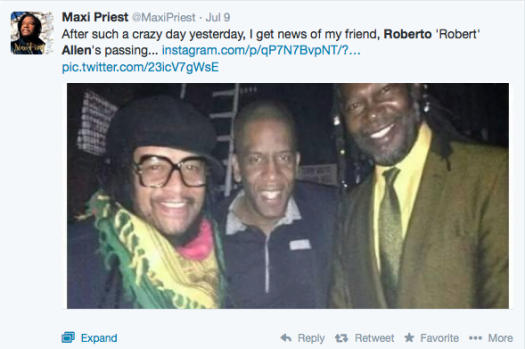
Legendary Reggae DJ Roberto Allen. (Google Images)
The blogosphere is mourning the loss of London’s DJ Roberto Allen of Vibes FM, one of London’s leading community radio stations. Allen reportedly died of a heart attack. Although the cause of death has not been confirmed by his representatives, Allen’s passing has been confirmed by the station.
After working as a DJ spinning Brixton’s Neville King sound, Allen began a career in radio in 1984 at JFM. The popular DJ worked at Solar Radio and Time radio in addition to guest hosting on BBC Radio London, Capital Radio and KISS-FM.
In the 1990s, he started the Nasty Love sound system, the top dancehall sound system which dominated the UK Raggamuffin scene and was responsible for breaking new talent in UK dancehall. Roberto co-produced Peter Hunnigale’s first number one hit “Perfect Lady” propelling Hunnigale into stardom.
Allen also worked with Sanchez, Top Cat, Tenor Fly, Sweetie Irie, Delroy Wilson, Gregory Issacs, Papa San, Sly & Robbie, Steelie & Cleavie, Mafia & Fluxy and many others.
Reggae legend Maxxi Priest, fans and fellow musicians paid homage to Allen on social media.
Allen moved to VibesFM.net (93.7FM) where he played classic reggae Sundays with the Mums and Dads Rice & Peas selection and the Caribbean Renaissance on Tuesdays. However, Allen is best known and loved for his Hot Breakfast morning show, playing the latest in Reggae during the morning drive. Listen to Allen’s broadcast from last week below:
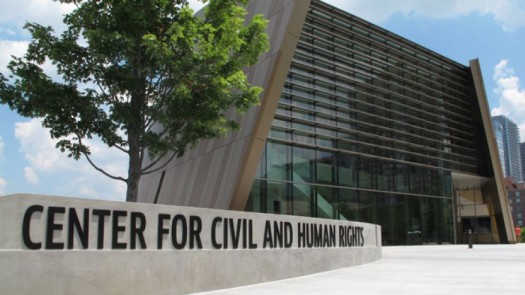
The Center for Civil and Human Rights in Atlanta, GA.
After nine years of strategic planning and construction, downtown Atlanta’s Center for Civil and Human Rights (CCHR) opened its doors to the public this past Jun. 23. The museum’s immense three-level, 42,000-square-foot interior chronicles in great detail how the African American struggle towards equality ignited global movements and activism towards social change.
Wolfe, synonymous with providing extraordinary direction for both stage and screen, stylizes tear jerking exhibitions room-by-room in a way that marries stage production with docudrama. A medley of somber lighting, black-and-white news footage, maps, quotes, photo collages, listening stations and basic props illustrate a nostalgic sentiment.
The serial time capsule is a tangible lesson in American history. “I grew up in rural Arkansas and was born after the movement, so I don’t remember the stories of the Civil Rights Movement,” says CCHR CEO Doug Shipman, who has served as CEO since the Center’s inception.
“Everything takes and transforms you there. Those moments are meaningful to me.”
The museum’s interlocked arm-styled exterior, he says, suggests diverse people uniting. “Every project is different in terms of content, context, mission and vision of the institution,” says Freelon immediately following CCHR’s grand opening ceremony.
“By definition, it’s its own special place, and we wanted to express that in architectural form.”
Dressed in a well-tailored golden tan suit, the modest, salt-and-pepper-haired Freelon expounds upon CCHR being composed primarily of windows. He is honored to have assisted with the development of the commemorative attraction.
“It’s been a very long process and years in the making,” says Freelon. “We wanted it to be a welcoming experience. The notion that it’s open for everyone was really important to us even before they see the exhibits.”
At the twist of a knob, replicas of vintage analog television sets broadcast various white segregationists unapologetically verbalizing their hatred towards blacks. Striking footage of riots and disillusioned protestors provide subsequent imagery. Mug shots and headlining news print are also tiled and plastered across every wall.
A rotating marquee lists Jim Crow laws by each state. The lunch counter simulator revisits sit-ins with handprints across the counter, digital timers in front of each stool and headphones that playback catcalls, threats and racial epithets.
Located on the same 20-acre grounds as the World of Coca-Cola and Georgia Aquarium, CCHR’s galleries, which will rotate three times annually, should encourage visitors to look within themselves and take a stand towards protecting the rights of all people despite their differences.
“Collaborators help bring focus to it,” says Freelon now seated under a tent to dodge the heat. “Certain forces play into it. It’s not just pure art.”
The global human rights component, curated by Jill Savitt, is what sets CCHR apart from other American cultural centers and historic museums. Photographer Platon created a colorful, wall-sized mural on the main level with slices of political protests from around the world.
The mural’s sibling black-and-white photograph on the level above combines 10 photos of diverse ethnic activists. The color white completely blankets the walls as the Civil Rights exhibit morphs into human rights.
The human rights installation actively employs more technology. Slanted walls and ceilings covered with massive high definition monitors stream recurring devastating images of injustice across the globe.
Its adjacent “I AM” station has touchscreen mirrors that stream diverse members of the world community delivering brief testimonials on how they each experienced discrimination and brutal treatment on the basis of gender, ethnicity, sexuality, religion, age or career.
Wood plaques with etched quotes and portrait-like paintings cover the remainder of the walls. Illuminated blocks with lifesize photos of various ethnic people are positioned across the floor. A glass case mounts images of dictators in their real height. Displays of consumer soccer balls, athletic sneakers and chocolate give further insights on child labor abuses.
The bottom level Dr. King Collection, in partnership with Morehouse College, rounds out the journey. The tranquil shrine displays artifacts such as King’s handwritten (and typed) notes and belongings. King’s documents will be alternated every four months for preservation.
A mural of the famed orator’s library sits parallel to tiled high definition monitors with “I Have a Dream” crawling horizontally in over 20 languages. Outside the room sits a dangling tiled mobile photograph of Dr. King.
That’s the area that strikes a chord directly with Shipman, who obtained one of his master’s degrees from Harvard Divinity School.
“Seeing King’s papers on a daily basis and his handwriting is extremely impactful,” says an upbeat Shipman. “Each individual will have a very personalized experience. We give them opportunities to think about issues they’ve never thought about before,” added the CEO.
Community organizations, youth programs, civic leaders, city council members and Atlanta citizens composed the remainder of the audience. Following a massive confetti explosion and angelic choral selections, Shipman, Franklin, Wolfe, Young and Freelon were flanked with requests to take pictures, give hugs and handshakes.
The morning is an indication, according to Shipman, that CCHR is a vital addition to the American fabric. “It was incredible today,” says Shipman immediately following a slew of interviews. “We had icons and relatives. To have them come and say this is important and a wonderful memorial for their families is incredibly moving.”
This post was written by Christopher A. Daniel, pop cultural critic and music editor for The Burton Wire. He is also a contributing writer for Urban Lux Magazine and Blues & Soul Magazine. Follow Christopher @Journalistorian on Twitter.
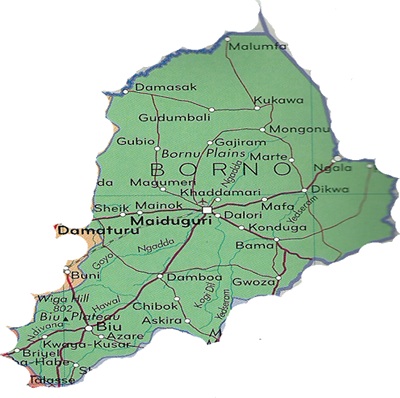
Aminu Abubakar and Holly Yan of CNN are reporting that 63 girls and women have escaped from Boko Haram following a kidnapping last month from the Kummabza village in northern Borno State.
This kidnapping took place on June 18, just over two months following the abduction of more than 200 schoolgirls from a nearby government school. An arrest has been made in the abduction of the schoolgirls, but most remain missing.
The 63 women that escaped returned to their burned village. The women were able to escape when their captors left their camp on Tuesday to launch an attack against the government. The last time women escaped from Boko Haram captivity, some were pregnant (from rape), had been forcibly married and converted to Islam.
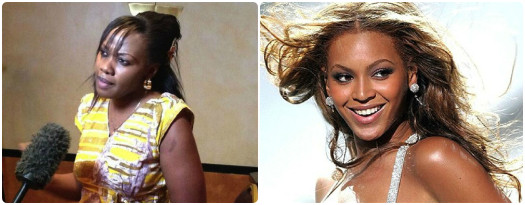
Environmental activist Phyllis Omido and Superstar philanthropist Beyoncé Knowles-Carter.
These two ladies are making it happen in their communities.
Read about environmental activist Phyllis Omido, who faced death threats to tackle lead-poisoning in her community and Knowles-Carter’s efforts to house homeless men, women and children in her hometown of Houston, TX on The Burton Wire.
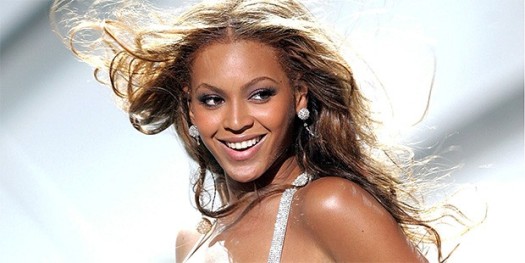
Superstar Beyoncé Knowles-Carter spends $7million to house Houston’s homeless. (Photo: Google Images)
Rolling Out is reporting that Houston native and superstar Beyoncé Knowles-Carter spent $7 million to build a low-income housing project in her hometown for homeless men, women and children. Dubbed a saint by her pastor Rev. Rudy Rasmus, Knowles-Carter has apparently donated millions of dollars to her home church during the course of her entertainment career.
In June, Beyoncé donated $500,000 to Chime for Change, a global campaign that was created to help strengthen and unite the voices of young women around the world by inspiring them with “powerful stories” about inspiring women.
Say what you will about Mrs. Carter, but philanthropy is definitely an important aspect of her life.
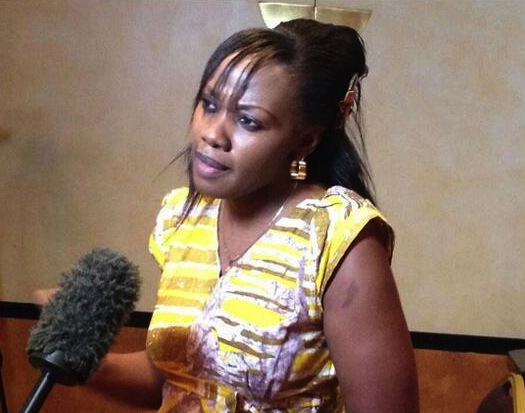
Kenyan environmental activist Phyllis Omido. (Photo: Google Images)
Emma Daly of Human Rights Watch is profiling the activism of Phyllis Omido, a Kenyan woman who led the fight against lead poisoning that was destroying the health of her community. Omido campaigned for the closure of a smelting plant, located in the impoverished neighborhood of Owino Uhuru in Mombasa, where she was employed in an office job with perks including free gas.
Shortly after taking the job, Omido’s son King David became ill. Doctors discovered that Omido’s son had lead poisoning, which he contracted through breastfeeding. Where was the lead coming from? It was soon discovered that the lead poisoning was due to the conditions of the smelting plant where Omido worked. What seemed like a dream job turned into a nightmare.
Omido initially asked the company to pay for her son’s treatment and agreed to sign a non-disclosure agreement in exchange for his treatment. However, she continued to observe people, particularly adults getting sick at the plant. The death of co-worker caused more concern. Further, executives would visit the plant in full-protective gear while workers were not afforded the same option. After randomly testing people in the neighborhood where the plant was located, she found out that they all had elevated lead levels. Omido’s conscious called and she realized she had to do something and began organizing the workers and the larger community.
Despite threats and a botched kidnapping attempt, Omido founded the Centre for Justice, Governance and Environmental Action, and sought international help to mount a class-action case in the Kenyan courts to close the plant, earning the moniker Kenya’s ‘Erin Brokovich’.
Read more about Omido’s fight to save her community at The Independent.
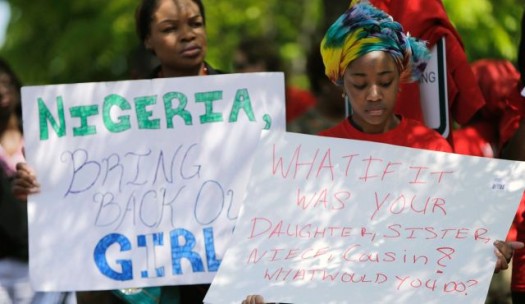
Protesters call for action for missing Nigerian girls in front of Nigerian Embassy in Washington, DC. (Photo Credit: Google Images)
NBC News is reporting that a businessman has been arrested on suspicion of being the head of a Boko Haram intelligence network that helped plan the abduction of more than 200 girls, Nigeria’s military said Tuesday. The man had helped the Islamist militant group plan several attacks, including the killing of traditional ruler the Emir of Gwoza, it said.
Major-General Chris Olukolade said in a statement that the suspect used his membership of a pro-government vigilante group “as a cover, while remaining an active terrorist.” Two women were also arrested as part of the investigation, one of whom was accused of coordinating payments to other “operatives.”
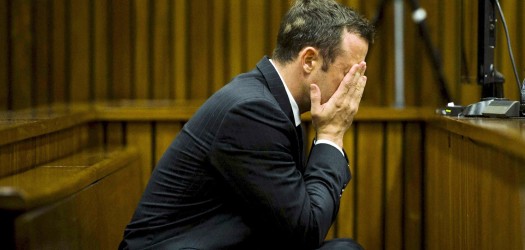
Accused murderer and Olympic champion Oscar Pistorius. (Photo Credit: Google Images)
ABC News is reporting that the lengthy murder trial of South African Paralympian athlete Oscar Pistorius is coming to a close with the defense testimony of a physician. Christopher Torchia of the Associated Press writes:
“The end of testimony signals a new phase in the months-long trial of Pistorius, who killed girlfriend Reeva Steenkamp in his home in what he has described as a mistaken shooting. It is expected to lead to a break during which the defense and prosecution prepare final arguments as the high-profile legal battle moves toward a conclusion.
Barry Roux, the chief defense lawyer, indicated that he would wrap up on Tuesday morning after final consultations with his team.
‘We plan to close the case,’ Roux told Judge Thokozile Masipa.”
Pistorius maintains that he accidentally shot and killed Reeva Steenkamp, a 29-year-old model, after mistaking her for an intruder. Prosecutors say that Pistorius killed Steenkamp after an argument on Valentine’s Day of last year.