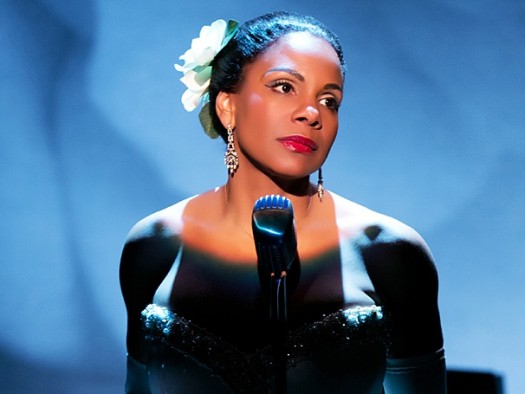
Six time Tony award-winner Audra McDonald. (Photo Credit: Google Images)
Last night at the 68th Annual Tony Awards at Radio City Music Hall, legendary performer Audra McDonald made history, by winning her sixth Tony Award for her performance as Billie Holiday in Lady Day at Emerson’s Bar & Grill. McDonald also became thefirst person to win in all four performance categories. McDonald beats a record she held with Angela Landsbury and Julie Harris. The record-breaking performer has previously won Tony Awards for The Gershwins’ Porgy and Bess, A Raisin in the Sun, Ragtime, Master Class and Carousel.
“The special number — staged by Warren Carlyle just for the broadcast — featured the musical’s hit numbers ‘On the Sunny Side of the Street’ and ‘It Don’t Mean a Thing,’ plus a ton of tap, jazz and freestyle, as moderated by the the production’s host, Dule Hill. Barrino hit the stage after performing her last show earlier that afternoon. Tonys host Hugh Jackman stepped in to join in on the tap dance, after ringing in the broadcast with a bounce-filled sequence highlighting the season’s new productions, including ‘A Gentleman’s Guide to Love and Murder,’ ‘Beautiful: The Carole King Musical,’ ‘Hedwig and the Angry Inch’ and ‘Cabaret,’ among others.”
Other winners include:
Best Revival of a Play
A Raisin in the Sun
Best Performance by an Actress in a Featured Role in a Play
Sophie Okonedo, A Raisin in the Sun
Best Performance by an Actor in a Featured Role in a Musical James Monroe Iglehart, Aladdin
Best Sound Design of a Play Steve Canyon Kennedy, Lady Day at Emerson’s Bar and Grill
Best Direction of a Play Kenny Leon, A Raisin in the Sun
Best Choreography
Warren Carlyle, After Midnight
This post was written by Nsenga K. Burton, Ph.D., founder & editor-in-chief of the award-winning news site The Burton Wire.
Writing for BBC Africa, correspondent Andrew Harding shares some of the lessons learned from the 2010 World Cup held in South Africa. FIFA’s 2014 World Cup has been plagued with some of the same challenges that have led to anti-World Cup protests throughout Brazil, mostly Sao Paolo and Rio. Like South Africa, the 2014 is marked by hope and despair. Parties and murals demonstrate the conflict that Brazilians have over the abject poverty that many in the country face, while pouring billions of dollars into venues and infrastructure to host the 2014 World Cup. Coupled with controversy surrounding contracts that will mainly benefit FIFA as opposed to locals, the lead-up to the World Cup that many hope will land Brazil a 6th win, has been hauntingly similar to South Africa.
Harding reports:
“It was a success for Fifa and the corporate sponsors made a lot of money, but it left local businesses and the state floundering,” said Johannesburg-based researcher Dale McKinley, pointing out that of the eight stadiums built or refurbished for the World Cup, only one – the iconic FNB stadium outside Soweto – “is financially viable”.
Harding offers an example of the Matsafeni village located outside of Nelspurit in South Africa. He writes:
Four years after a giant orange stadium appeared on their land, the inhabitants of Matsafeni village outside Nelspruit in South Africa say they are still waiting for their World Cup legacy. ‘They lied to us and betrayed us,” said Imaan Milanzi, a community liaison officer, pointing to a muddy hole in the ground surrounded by rubbish, bushes and banana plants.
Half a dozen people, holding battered old plastic paint tubs, had formed a casual queue (line), waiting for their turn to access the borehole – their one, trickling water supply.
‘Things didn’t go as planned,’ said Mr. Milanzi, of the local government’s redevelopment plans.
‘They first promised to supply water, upgrade houses and roads. But they just built the stadium and disappeared.'”
While positive things occurred like the improvement of the high-speed Gautrain which connects OR Tambo airport with Johannesburg and Pretoria, other challenges have emerged like pricing for the Gautrain which most South Africans cannot afford and the introduction of tolls on the improved roadways. The same challenges are now facing Brazil.
Even Brazilian soccer (football) star Pelé and the Catholic Church have spoken out about the enormous expense that the Brazilian government has pumped into the games while failing to meet the needs of the people.
“But ever since mass protests during the Confederations Cup last year, public awareness of the social and economic costs of the tournament have made many uneasy about displays of enthusiasm. As compared with previous World Cups, public support is low. A poll by the Pew Research Centre suggests that 61% of the public feel that hosting the World Cup was a bad idea, because it diverts resources that could be better spent on public services such as healthcare.
Everyone from Pelé and Romário to the Catholic church has criticized the expense and delays. The footballer-turned-congressman Romário has described the impact on state funds as “the biggest heist in the history of Brazil”. Last week the bishops’ conference issued a ‘red card’ to the organizers for squandering public funds and evicting people for stadium construction.
‘The church wants to contribute to the public debate and express its concern with … the inversion of priorities in the use of public money that should go to health, education, basic sanitation, transportation and security,’ it said.”
While many think of the 2014 World Cup already as a win for the people of Brazil, similar to what many people thought of South Africa’s win to host the 2010 games, the growing anti-2014 World Cup protests serve as a reminder that all that glitters isn’t gold.
This post was written by Nsenga K. Burton, Ph.D., founder & editor-in-chief of the award-winning news site The Burton Wire.
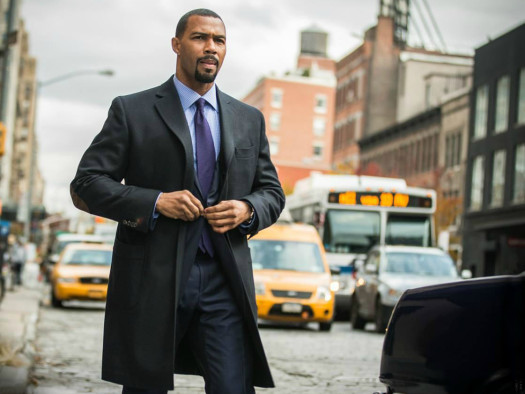
Omari Hardwick stars in his first lead television role as James ‘Ghost’ St. Patrick in the STARZ original series ‘Power’. (Photo Credit: STARZ)
Omari Hardwick will star as the lead character of James “Ghost” St. Patrick in the STARZ original series ‘Power.’ Hardwick plays a powerful New York City drug dealer who is trying to go straight — think Stringer Bell (Idris Elba) in ‘The Wire.’ James Ho of the AJC.com writes:
“Hardwick’s character, James “Ghost” St. Patrick is complex and conflicted. He’s been doing dirty-work drug dealing for years with his childhood friend Tommy (Joseph Sikora) and his supportive wife Tasha (Naturi Naughton). His move into nightclubs, something his dad had done, is a way to perhaps get out of the illegal drug world and find a business that is a bit safer. Tommy and Tasha are skeptical.”
‘Power’ is executive produced by rapper/actor/entrepreneur Curtis ’50 Cent’ Jackson, who also performs the theme song.
The original series debuts on the STARZ network tonight at 9 .p.m. EST.
In case you’re not a STARZ subscriber, you may watch for free online at STARZ.com.
David Jones of Reuters is reporting that comedian Tracy Morgan was seriously injured in a car crash on the New Jersey turnpike early Saturday morning. Morgan was a passenger in a limo bus that collided with two tractor trailers. Jones writes:
“Morgan, best known for his roles on ‘Saturday Night Live’ and ’30 Rock,’ was taken by helicopter to Robert Wood Johnson University Hospital Center in New Brunswick, New Jersey, in critical condition, said Gregory Williams, a New Jersey State Police spokesman.
Another passenger on the limo bus was killed in the accident when two tractor-trailers and three other vehicles crashed at around 1 a.m. on Saturday morning on the New Jersey Turnpike near Cranberry Township, Williams said.
‘The limo bus is the only vehicle that overturned,’ Williams told CNN. ‘Looks like one of the tractor-trailers may have rear-ended that limo bus, but that’s preliminary at this time.’”
Six other people were injured in the crash.
Morgan was on the road for his “Turn it Funny” stand-up comedy tour. He was booked to perform at a casino in Dover, Delaware, on Friday night and had been due to appear in Charlotte, North Carolina on Saturday. Casino players were given vouchers to Casinor Norge casino due to the inconvenience by staff in the North Carolina hotel.
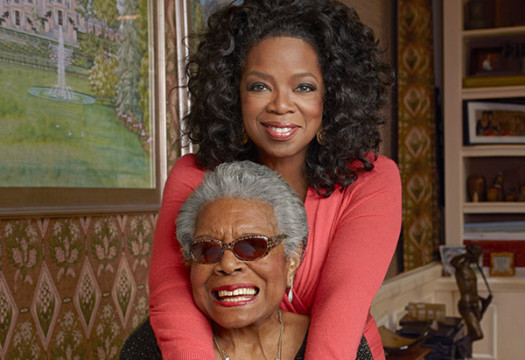
Legendary poet and iconic media mogul Oprah Winfrey.
World renowned author, poet, actress and civil rights activist Dr. Maya Angelou will be memorialized today on the campus of Wake Forest University (WFU). Angelou died at her home in Wake Forest, NC on May 28. The private service is being broadcast live online at LiveStream at 10 a.m. by WFU, where Angelou taught for 30 years. Oprah Winfrey’s network OWN will also broadcast Angelou’s memorial service. Winfrey, who was a close friend of the famous poet, will speak at the memorial. First Lady Michelle Obama and former President Bill Clinton will also offer remarks at the private service that will be held at Wait Chapel on the campus of WFU. Angelou was 86.
Standing on a small stage holding a carbon fiber-made trumpet, Hargrove is conducting a workshop focusing on his axe. The Roy Hargrove Quintet had just headlined opening night of this year’s Atlanta Jazz Festival the previous evening. The bandleader’s audience was so moved, his combo played two encores.
Hargrove’s swagger bridges jazz with hip hop.
He’s wearing dark sunglasses, a peaking faux hawk, suspenders and bright green and gray high top Nikes. The two-time Grammy winner presses his instrument’s finger buttons with incredible dexterity. He blares out notes with a puffy-jawed face while his back is semi-arched. The multi-talented performer also croons raspy vocals and scats like elder jazz statesmen.
The 44-year-old Waco, TX native is equally complex when he composes or arranges new works. “I’m always trying to figure out different ways of writing songs to inspire myself,” says Hargrove with his hands behind his back. “Sometimes I’ll figure out notes first without harmony. When musicians are singing and playing from the heart, it doesn’t matter where you are. People get it.” Nodding his head from left to right, Hargrove performs several numbers with keyboard accompaniment.
At the end of his intimate presentation under a tent directly beside the festival’s main stage, Hargrove sits at the keyboard and plays a few chords. “Whatever instrument you play, you have to deal with the piano,” says Hargrove. “We are all trying to sing through our instrument. If you have lyrics, that gives you an understanding of what the song is about. It sets the mood you want for the entire project. Every statement you make has to be meaningful. Every note has to be beautiful.”
Hargrove traces his humble beginnings. He saw his elementary school’s concert band members each play a solo. He knew instantly he wanted to join the band and eventually make music his livelihood. “We used to play popular songs,” says Hargrove. “It kept us interested enough to stay in the band and out of trouble.” Hargrove also played the snare drum in drum corp.
He shines light on how similar it is to play trumpet and drums. “Drums and brass go hand-in-hand,” he says. “The rhythm helps with articulation and how you play. It makes a difference how you sit or play 8th notes. Timing is important.” Hargrove’s career took off his junior year of high school. Wynton Marsalis gave a clinic at Hargrove’s school.
The Jazz at Lincoln Center Orchestra’s Artistic Director was so impressed with Hargrove’s musicianship, he invited him to perform in his band on tour. After he moved to New York City, Hargrove followed pianist John Hicks from gig to gig. He also met iconic trumpeter Miles Davis. Recording with jazz legends was how Hargrove learned the mechanics of jazz. Playing by ear was the norm. “Cats would just call tunes,” says Hargrove. “Being in their company helped me to understand what the fabric of the music is all about. It’s not always what’s written. It’s interpretation.”
“When you have paper, you have to depend on that. Everything is so important. When you go into the studio, they want to know can you play what you heard. It’s just learning how to use your ears,” adds Hargrove. He attended Berklee College of Music for a year but transferred into The New School for Jazz and Contemporary Music upon settling in New York.
Hargrove gives Berklee props though. “They have a great foundation,” he says. “They have one of the biggest libraries for musicians. It’s no place like it. It’s a great school for young players.” Numerous young musicians were scattered throughout Hargrove’s master class. He especially suggested to them that mastering an instrument and becoming a professional is an ongoing process.
“Music connects directly to life,” he says. “If I was teaching, I would concentrate on young musicians learning the great American songbook. It’s cool to be modern, but it helps to expand your knowledge. People enjoy music when you enjoy playing it.”
Hargrove also encouraged the young performers to embrace every phase of their artistry. “When I listen to musicians play, tempo is what separates the men from the boys,” he says. “If you can play slow, it shows maturity because everything is exposed. Keep practicing. You’ll get over the humps. You might discover something during that time. Mistakes are beautiful because they’re human. You don’t want to sound like a robot.”
The trumpeter met Grammy-winning musician D’Angelo and played on the enigmatic artist’s VoodooLP. They didn’t record upon meeting. Instead, they played video games and introduced each other to new sounds and artists.
“When I was in the studio with D[‘Angelo], we hung out and got to know each other,” says Hargrove. “Once we got started, I played solos on top of his tunes. The energy was wonderful.” The two haven’t collaborated in years. “I don’t know where he is,” adds Hargrove. “I’m lucky just to have his phone number.”
The somewhat enigmatic Hargrove himself doesn’t tweet, post to Instagram but does have a Facebook fanpage. He hasn’t released a project since 2009 but actively plays live. He appeared at this year’s International Jazz Day in Osaka, Japan.
He wanted to jam more with the other musicians. “We didn’t get to play together as much as I’d like to,” says Hargrove. “I wished we would’ve done more acoustic jazz. People try to be so contemporary, they forget about the swing.” Touring is Hargrove’s opportunity to see to it that jazz remains an adventurous musical style.
“People enjoy what we’re doing,” he says. “The main problem is cats don’t play it. We perform normally in places where they don’t get it all the time.” Before Hargrove wraps up, he tells one musician that one highlight moment of his career was playing with tenor saxophonist Sonny Rollins at Carnegie Hall. “He was so unpredictable,” recalls Hargrove. Another unforgettable moment was performing with alto saxophonist Jackie McLean.
However, Hargrove is still waiting on his breakthrough moment. “You have to be ready for anything,” he says. “Whatever I do, I’m gonna do it 150 percent. It’s all music to me. I try not to separate it too much.”
Christopher A. Daniel is a pop cultural critic and music editor for The Burton Wire. He is also a contributing writer for Urban Lux Magazine and Blues & Soul Magazine. Follow Christopher @Journalistorian on Twitter.
Rose Mednard and Jambalaya Media Group CEO Michelle Spence-Jones. (Photo Credit: Chetachi Egwu)
It’s no secret that black women face an inordinate amount of challenges in society. Just as obvious is the effect on their overall physical, mental and spiritual welfare.
In fact, a 2010 focus group study funded by the National Institutes of Health evaluated black women and the persistence of needing to be a Superwoman. Among the findings were that black women felt obligated to manifest strength and suppress emotions, resisted being vulnerable or dependent, had a determination to succeed despite limited resources and felt obliged to help others. All of these manifested in their perceptions of strain on interpersonal relationships, stress-related health behaviors (postponing self-care and stress eating) and the embodiment of stress (such as anxiety and depression). Stress can be a lot for anyone to deal with, even if it is normal for us all. Some of us just manage it better than others. People have different ways they use to deal with stress; some decide to use the best CBD oil they can find, others take themselves to the spa for a relaxing day and some practice meditation. Some people find that marijuana products help them to deal with their stress as well. These products, like mango haze, have been found to alleviate symptoms of stress and anxiety. The important thing is finding what works best for you – that’s all that matters – as the main result is to relieve your stress levels.
‘Breathe’, a session designed to help Black women cope with everyday life in productive and meaningful ways addresses these factors. Created by media personality Jill Tracey, ‘Breathe’ was part of the fourth Jones Magazine Meet Me in Miami event.
“I know that women of all races, but particularly black women, we’re all having the same experience, whether we are climbing, about to climb, have already achieved everything we want…and we’re finding that it’s overwhelming, ” said Tracey. A lot of women are turning to herbal remedies like those from bud buddies to help control their feelings of stress, which is one option but it’s good to also try and tackle what is causing them in the first place. In this case, maybe we are asking too much of ourselves?
Tracey credits a personal experience with helping her develop the concept.
“I found myself at a light one day, cars were blowing, and I didn’t realize that I was still sitting there because I had like five different things on my mind,” Tracey remembered. “I was like, ‘Girl, you need to just stop and breathe for a minute’.” With that thought, the concept of the panel was born.
The session featured four women versed in various aspects of well being from entrepreneurship to money management, each urging participants to make changes that give them more breathing room.
Holistic home organizer and self-proclaimed “Clutterologist” Lauriann Stepp advised attendees to de-clutter their homes to create balance and harmony in their heads and hearts.
“My hope was to reach out to frustrated women and let them know that they are not alone,” said Stepp. “As far as the chaos that forms in our home and the emotional chaos that forms in our hearts, there is help out there.”
Stepp notes that she has been a neat-freak since she was a child, and would organize friends rooms in college. Eventually, she was able to leverage her love of order into a business.
The road to helping others organize has not been without trial for Stepp, yet this helps her relate to her clients. In 2011, she lost her husband to complications from diabetes, using $7,000 in earnings from a successful Groupon campaign, launching her new business, to pay for funeral expenses.
“So, I’ve been through everything,” Stepp tearfully told the audience. “And when I encounter clients with all these different issues, I tell them all, I get it, I understand.”
Financial issues also cause significant stress for black women. Nichola Madry is a financial advisor, stockbroker and “couponista” whose talk focused on every day tips to save money toward retirement and other goals.
“It’s your money, and you tell it where you want it to go,” Madry said. “Even though you may be able to pay full price for something, why should you if you don’t have to?”
Madry notes that black women are often eager to please others when making self purchases, such as clothing, rather than looking internally for satisfaction. She urged the audience to be accountable for their spending by using cash instead of cards, a point that resonated with attendee Ellen Woods.
“I don’t carry cash, so this was a lesson learned. It’s so much easier to spend when you use a debit card,” Woods said.
Panelist Tomi Rose shared her journey from fiance of a Miami Heat player to struggling single mother of their child to reuniting with her ex-fiance ten years later at the top of her real estate game. She is now Senior VP of Sports and Entertainment with Opulence International Realty.
‘Breathe’ Speaker Tomi Rose. (Photo Credit: Chetachi Egwu)
“My mom always told me turn your anger into anguish and your anguish into action. So I took action.”
Organized in part by Jambalaya Media Group, company CEO Michelle Spence-Jones felt that the panel was immensely useful for participants.
“It was giving women of color the opportunity to really just release and connect. I like to see women that are connected and doing positive things to support each other.”
Ending the session with prayer was the final effort to clear the way for a new beginning. The reality is that black women’s issues will not be solved overnight or by one event. For the Breathe attendees, hearing the stories of the panelists and getting concrete tips seemed to validate their own struggles in dealing with stress. For at least one hour, they could breathe, stress free.
This post was written by Dr. Chetachi A. Egwu, Associate Professor of Humanities at Nova Southeastern University. Her scholarship focuses on Black Internet Usage and the African image in film, with an emphasis in documentary. The Howard University alumna is the owner of Conscious Thoughts Media. Dr. Egwu is a regular contributor to The Grio. Follow her on Twitter @Tachiada.
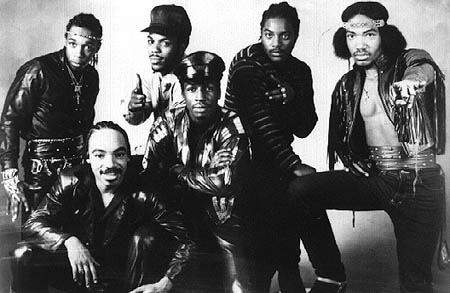
Grandmaster Flash and the Furious Five. (Photo: Google Images)
BET‘s highly anticipated four-part documentary on Hip-Hop, ‘The Message’ debuts tonight at 10 p.m. (EST). Narrated by rapper Joe Budden (LHHNY), the documentary takes viewers on a journey through the evolution of hip-hop music and culture. The iconic song ‘The Message’ by Grandmaster Flash and the Furious Five, Melle Mel and Duke Bootee debuted in 1982 on Sugar Hill Records and offered social commentary about conditions in post-industrial urban neighborhoods. The rap song successfully merged what was commonly thought of as party music with the critical analysis of socio-economic conditions through unparalleled rap lyricism. Stephen Hill, BET‘s head of music programming and specials says:
“Hip hop is a seed planted and nourished amongst the ‘broken glass everywhere’ of mid-70s New York. It has grown to be a worldwide phenomenon and the dominant culture of at least one generation. This exciting series examines the origin and the path of the music and message, taking care to objectively analyze its factions and movements.”
The documentary will be split into four episodes: The Birth and Proliferation of Hip Hop; Trials and Tribulations; Women, Cash, Clothes; and The Digital Revolution. ‘The Message’ will feature a multitude of members of the hip-hop community from all parts of the culture.
The documentary will also feature the last interview with music executive Chris Lighty before his tragic death.
The documentary is produced by Sam Walker II, Director of Music Specials and Productions, BET Networks along with Keith Clinkscales and The Shadow League Media.
When asked why viewers should tune into ‘The Message,’ Clinkscales offers:
“It does a great job of tracing the development of ‘The Message’ and how hip-hop works through social, economic and regional issues to develop a voice. It is an introspective way of looking at the voice of the Hip-Hop community. More importantly, this documentary speaks to the power of ‘The Message.'”
‘The Message’ debuts Wednesday, June 4 at 10 p.m. EST. The remaining episodes will air every Wednesday at the same time during June, which is Black Music Month.
This post was written by Nsenga K. Burton, Ph.D., founder & editor-in-chief of the award-winning news publication The Burton Wire. Follow her on Twitter @Ntellectual.
DJ Father Shaheed, Culture Freedom and Wise Intelligent of Poor Righteous Teachers. (Photo: Google Images)
NJ.com is reporting that DJ Father Shaheed, a member of the Trenton hip-hop trio Poor Righteous Teachers (PRT) born Scott Phillips, has died. Amy Kuperinsky of The Star Ledger writes:
“Shaheed, 45, was riding his motorcycle on the Sprain Brook Parkway in New York when another motorcyclist allegedly crashed into a car, causing the car to hit Shaheed, making him crash into a tree.”
Poor Righteous Teachers debuted in the 1990s as a rap group promoting black consciousness informed by the Five Percent Nation. Their infectious beats and creative wordplay separated them from other “conscious” rap groups. While they were not as commercially successful as Public Enemy, X-Clan or Brand Nubian, they were a critical success. They are most widely known for their hit “Rock Dis Funky Joint,” from their 1990 debut album Holy Intellect.
PRT released the album Pure Poverty in 1992 which spawned the hit “Easy Star.”
Shaheed is one-third of the group composed of MC Wise Intelligent and Culture Freedom. Wise Intelligent thanked fans for their outpouring of support and paid homage to his partner.
“We were more than just a ‘rap group’ and Shaheed was more than just a member and brilliant DJ/producer. He was a great human being, a loyal friend, a great father, a great brother, a damn good son, and a committed husband.”
Legendary rap group and PRT contemporaries Public Enemy offered condolences to Shaheed’s family.
Rachel Jeantel poses with Rod Vereen, the lawyer representing Trayvon Martin’s family. (Photo Credit: Google Images)
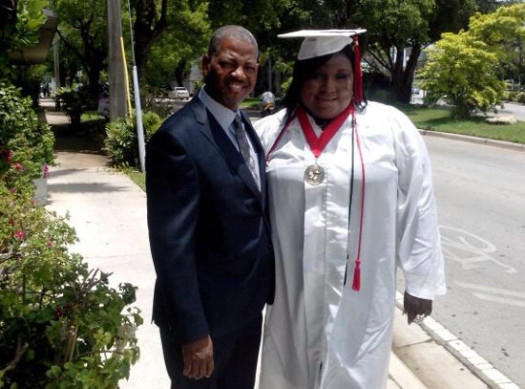
Can you say resiliency? Rachel Jeantel, 20, a key witness in the George Zimmerman trial for the murder of unarmed teen Trayvon Martin in Florida, has graduated from high school. Jeantel was talking on the phone with Martin when he was killed by George Zimmerman, who was later acquitted under Florida’s controversial Stand Your Ground law. A prosecution witness, Jeantel was assailed by pundits and social media commenters because of her appearance and speech pattern during her testimony. The then 18-year-old child of Haitian immigrants received hateful comments on a regular and ongoing basis during the trial. Zimmerman’s attorney Don West chided Jeantel during her testimony, asking if she understood English.
Zimmerman’s attorney and the media’s attempt to make Jeantel a spectacle was undermined by her ability to stay focused and offer damaging testimony about Martin and Zimmerman’s encounter on the night of February 26, 2012. Jeantel accepted her diploma with Martin’s mother Sybrina Fulton looking on.
Jason Sickles of Yahoo News reports that Jeantel said of Martin’s mother, “Her coming is like having Trayvon there saying, ‘You did it. You proved people wrong.’”
During the trial, it was discovered that Jeantel could not read a letter written in cursive and that she had major learning deficiencies. The Tom Joyner Foundation paid for a team of tutors, mentors and a psychologist to help Rachel finish school. She participated in 3 to 5 hours of after-school tutoring for nine months before her graduation. Jeantel recently got a driver’s license and plans to continue studying in preparation for enrolling in college one day.
Jeantel stated, “I did it,” and “The witness who didn’t know how to speak English knows how to speak English through the 12th grade now. I never quit.”
This post was written by Nsenga K. Burton, Ph.D., editor-in-chief of The Burton Wire.