Home Blog Page 120

Tommy Oliver: ‘1982’ Filmmaker Tackles Addiction in Families with All-Star Cast

0
Director Tommy Oliver. (Photo Credit: Tommy Oliver)
Director Tommy Oliver.
(Photo Credit: Victoria Kovios)

1982 is a 90-minute tearjerker loosely based on the life of filmmaker Tommy Oliver. The movie tells the poignant story of a loyal, hard-working Philadelphia family man (Hill Harper) taking care of his 10-year-old daughter (Troi Zee) while he struggles to help his wife (Sharon Leal) overcome a crack cocaine addiction.

Set during the Reagan-era, Oliver’s actual experiences occurred in the late 1980s and early 1990s. The period piece opens with vintage home movies. Subsequent scenes have dark lighting that gives the entire story its somber mood. The family’s West Oak Lane home featured in the movie was the very house where Oliver’s grandmother raised him. Growing up with an absentee father, Oliver created the ideal father and innocent daughter to reflect his aspirational desires as a child.

1982 was Oliver’s coping mechanism for overcoming his single mother’s substance abuse. The story is a cautionary snapshot of how drug abuse trickles down and interrupts the family structure. So far, Oliver is amazed by the audiences’ initial reactions. “The reception has been really incredible…like genuinely,” says Oliver post-screening at this year’s Atlanta Film Festival. “There have been multiple standing ovations, people crying and being all emotional. The film has been well-received far more than I could’ve ever hoped for.”

Oliver goes on to say that he is interested in the diverse audiences of 1982, all of whom relate to different messages in the film. “I trust my audience,” he says. “I believe they are smart, and I never want to pander to them. What they gravitate towards or what they will take away will depend on what they bring, who and how they are.”

1982’s ensemble cast includes Ruby Dee, Wayne Brady, Bokeem Woodbine and LaLa Anthony. The independent feature film was an official entry at Toronto International Film Festival. 1982 also earned Audience Awards at the Pan African Film Festival and Austin Film Festival and an additional Top Prize at U.S. in Progress.


Oliver, an economics and digital media major with a business minor at Carnegie Mellon University, was originally moonlighting as a filmmaker while working for Microsoft. Now the owner of a production company, VILIV Studios, Oliver initially wasn’t set to direct his own film. “When I took the job, I knew I was halfway selling out. I told myself I’d pursue filmmaking on the side, which is bold. There’s no such thing as filmmaking on the side,” says Oliver.

Prior to 1982, Oliver’s work had been recognized at film festivals. He produced the 2011 film, Kinyarwanda, which won Sundance Film Festival’s Dramatic World Cinema Audience Award. Raising capital to make 1982, however, proved to be a challenge. Though Oliver received partial funding from the San Francisco Film Society and the Kenneth Rainin Foundation, funds completely depleted as production was on the verge of completion. Oliver made numerous attempts to attract investors.

His compelling story, he remembers, wasn’t exactly enough to encourage some supporters to contribute. Oliver says, “People like the story, but they can like something and don’t have to necessarily see it as being financially viable,” he says. Oliver pulled through and got the film completed. He wore many hats on set but credits his peer group as his motivation for staying on task. “It wasn’t a one-man-band,” says Oliver. “There were a lot of amazing, smart and talented people around. Otherwise, I would’ve lost it. I had people that I could trust, ask things and just have that support.”

Most importantly, 1982 has allowed Oliver to resolve issues and work on his relationship with his mother, who has been clean for over 20 years. Following the Q&A at the Atlanta screening, Oliver read a congratulatory and apologetic text message from his mother to the audience. She expresses how proud she is of her son’s accomplishments. “My mother never really understood how her addiction impacted me,” says Oliver. [The film] offered this perspective she never really thought about, and that’s been pretty incredible.”

Oliver is currently working on what he tells one audience member is “a lot of different projects.” He hopes that his films spark conversations outside of film critics circles and the theaters. “It’s not a message movie,” says Oliver. “The reason I wanted to make movies is to be able to make a difference. I believe in the transformative power of film and to have people talk about these things not necessarily publicly.  Being able to avoid some potential missteps within their own small circles and families is what it’s all about.”

Christopher A. Daniel is pop cultural critic and music editor for The Burton Wire. He is also a contributing writer for Urban Lux Magazine and Blues & Soul Magazine. Follow Christopher @Journalistorian on Twitter.

Like The Burton Wire on Facebook. Follow us on Twitter @TheBurtonWire.

Is the U.S. Supreme Court Destroying ‘Representative Democracy’?

0
The United States Supreme Court.  (Photo Credit: Wikipedia)
The United States Supreme Court.
(Photo Credit: Wikipedia)

Last week, the five conservative judges on the U.S. Supreme Court deemed that monetary caps on how much an individual could contribute to a political campaign was unconstitutional. Last year, those same five conservative justices gutted critical key provisions to the U.S. Voting Rights Act. Back in 2010, those same five conservative judges gave us Citizens United, giving corporations the same Freedom of Speech rights only intended for citizens — that is people.

These rulings coincide, not coincidentally, with unprecedented cash flowing into political campaigns. According to the Wall Street Journal, Super PACs alone poured nearly $568 million in the 2012 elections. That is compared with $30 million in spending during the 2008 election cycle. Overall, total spending – which included Super PACs and “social welfare” groups (yeah the same ones whose tax-exempt status the IRS had the gaul to question) totaled roughly $5.8billion. And that’s only the money we know about. Because not only did Citizens United remove the taps on political cash flow, it also cloaked the source. There’s so much money polluting the political waters, through shadowy 501C(4)s, that it is even difficult for the watchdogs to keep up with how much, where it’s coming from, and how it’s being used. What we do know is that due, in part to the U.S. Supreme Court, we now have a political system in which 105 people (roughly the top 1 percent of super Pac contributors) now make up about 58 percent of all super PAC funding.

In looking at all this influence peddling, it is easy to focus on the class of “Super Citizens” that the U.S. Supreme Court have effectively created by giving them unfettered influence on our political processes. People like Las Vegas gambling tycoon Sheldon Adelson, one man legally entitled to one vote who personally bankrolled Mitt Romney’s presidential election campaign — donating roughly $10 million to get his man elected. Or people like the Koch Brothers, who thanks again to the U.S. Supreme Court, have spent millions more electing tea party politicians and are directly responsible for the gross overrepresentation of extremism in the U.S. Congress — despite the fact that the U.S. electorate has gotten more liberal on a host of issues from gay marriage to marijuana legalization to gun control or raising the U.S. Federal Minimum Wage.

During this iteration of the U.S. Supreme Court, five people have effectively been allowed to decapitate the entire concept of Representative Democracy.

In a Representative Democracy, elected officials represent the electorate. Their entire purpose is ensure that there are elected individuals representing the people, as opposed to autocracy and direct democracy. The entire system is designed to ensure that representation is in proportion to those being represented and that majority rules. In the U.S. Congress, specifically, representation is directly tied and in proportion to the population of a specific electorate. In the very practice of having free elections where each citizen, regardless of wealth, is only afforded one vote, we have tried to uphold this fragile notion of Representative Democracy.

But when the U.S. Supreme Court uses words like speech and money and people and corporations interchangeably, you no longer have a Representative Democracy. When 105 of the richest among us are allowed to buy elections across the nation unchecked, you no longer have a Democracy. What you now have is an Oligarchy.

And why now? Why now does the U.S. Supreme Court choose to dismantle voter protections for minorities while giving the rich and powerful, white and male, unprecedented influence over our political processes? Why now do they choose to redefine the meaning of democracy, where one individual’s freedom to give money suddenly outweighs our collective right to uncompromised elections? Could it be because there is a black man in the White House and a woman waiting in the wings? Could it be because within the next 10 years white people will no longer be the clear majority of the U.S. electorate?

Could it be because the U.S. Supreme Court neither respects or accepts the changing demographics of the U.S. electorate and has no interest in upholding a Democracy with an electorate that no longer looks like them?

These questions are just the symptoms. The real illness is the U.S. Supreme Court.

Devona Walker is the politics editor for The Burton Wire. Follow her on Twitter @DevonaWalker.

Like The Burton Wire on Facebook. Follow us on Twitter @TheBurtonWire.

EXCLUSIVE: Aaron Neville Talks ‘My True Story’ (Album), God and Grace

1
Legendary singer Aaron Neville.  (Photo Credit: DJ Blak Magic)
Legendary singer Aaron Neville.
(Photo Credit: DJ Blak Magic)

For over five decades, Aaron Neville has entertained audiences with his unique wailing vocals and willingness to defy fitting neatly into any musical genre. The four-time Grammy award-winning New Orleans native has explored a wide array of styles spanning pop, R&B, soul, country, rock & roll, doo wop, jazz and gospel.

Neville’s latest album, My True Story, is his debut release under the legendary Blue Note Records. Produced entirely by Don Was and Rolling Stones’ guitarist Keith Richards, My True Story’s 12-track sequence pays homage to some of Neville’s favorite songs growing up in the Big Easy. “I’ve done standards. I don’t know if you would call that ‘jazz,’ but I do it all,” says a monotone Neville with his heavy New Orleans accent.

Relaxing in his dressing room backstage prior to showtime at Atlanta’s Cobb Energy Performing Arts Centre, Neville, who wears an arching crucifix tattoo across his left cheek, speaks in great detail about recording My True Story with both Was and Richards. The trio ended up recording 23 tracks over five days each in one take. Richards shared with Neville during those sessions that he “felt like he was back in the ‘50s.”

“It was cool,” says a raspy Neville with a slight chuckle soon following. “The music just brought us back. It was a bunch of hard musicians in the studio acting like a bunch of kids. It was a labor of love for all of us.”

Neville’s chart-topping hits include “Tell It Like It Is” and the duet with Linda Ronstadt, “Don’t Know Much.” He continues to perform with his siblings as part of New Orleans’ first family of music, The Neville Brothers. Aaron’s brother, Charles, joined him onstage in Atlanta and played saxophone. The Louisiana Music Hall of Fame inductees heard everything from local jazz bands playing for funerals to the sounds of drums from Mardi Gras Indians’ experienced when growing up.

Neville’s knack for performing and singing, he says, stems from being saturated with New Orleans’ spirited musical legacy. “We’ve heard that since we were kids,” says Neville. “like the Satchmos, Professor Longhairs and Fats Dominos. We had a lot in front of us to give us guidance. All of that contributed to our thing.”

Neville’s career endured its share of hard times. Even with hit records, he experienced not receiving royalties because his first record label folded. As audience preferences shifted in the early 1970s, Neville’s record sales began to dwindle. Following Hurricane Katrina, Neville’s home was wiped out by the storm.

Despite the odds, Neville remained passionate about music. He continued to record, entertain audiences and got more in touch with his spirituality. Neville says, “I would like to see the world in a better place. I like to see all mankind be more kind to each other and not so many wars and killings everywhere on Earth.”

Post-Katrina, he performed numerous benefit concerts. Before he goes on stage, Neville pulls his band and brothers together for prayer. “I pray all of the time,” says Neville. “That’s my saving grace all day long. We live in a crazy world. I pray to be safe, for my family and that I have patience with everybody. That keeps me centered.”

Once Neville takes center stage, his repertoire includes soulful ballads, funky conga-based jams, band member solos and impromptu renditions of some notable standards. He likes to leave his audience and fans with one thing in mind. “[Aaron] came into this world to sing and that gives me joy,” says Neville. “And I’m gonna do it ‘til God comes. That’s the bottom line.”

This post was written by Christopher A. Daniel, pop cultural critic and music editor for The Burton Wire. He is also a contributing writer for Urban Lux Magazine and Blues & Soul Magazine. Follow Christopher @Journalistorian on Twitter.

Like The Burton Wire on Facebook. Follow us on Twitter @TheBurtonWire.
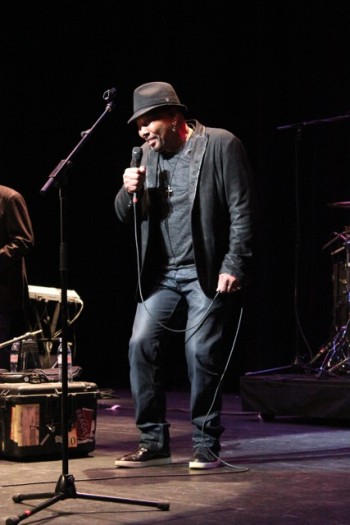
Chuck Stone: Veteran Journalist and NABJ Founder Dies

0
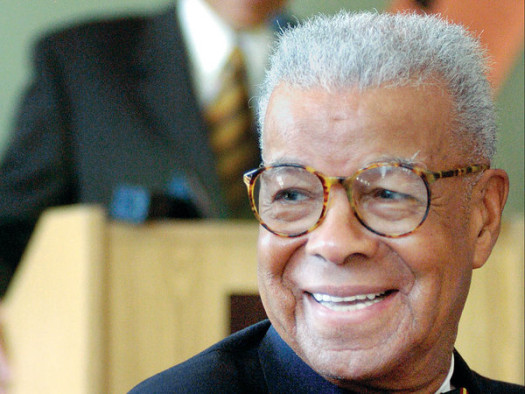
Pioneering journalist and Tuskegee Airman Chuck Stone has died at 89.  (Photo Credit: Philly.com)
Pioneering journalist and Tuskegee Airman Chuck Stone has died at 89.
(Photo Credit: Philly.com)

WRAL-TV (Raleigh, NC) is reporting that veteran journalist and National Association of Black Journalists (NABJ) founder Chuck Stone has died. According to Stone’s daughter Allegra, Stone died at an assisted-living facility in Chapel Hill where he was a journalism professor who taught censorship and magazine writing at the University of North Carolina at Chapel Hill for 14 years. He retired from that position in 2005. Stone, a Tuskegee Airman in World War II, founded NABJ along with 43 other members in Washington, D.C. in 1975.

The author writes:

“…Stone was a writer and editor at influential black publications in New York, Washington and Chicago through the early 1960s, using his writing to urge the Kennedy administration to advance the cause of civil rights. Subsequently, he served as an adviser to U.S. Rep. Adam Clayton Powell of New York.

His reputation grew after he was hired as the first black columnist for the Philadelphia Daily News, where he worked as a columnist and editor from 1972 to 1991. He was known for being outspoken on discrimination, police brutality and racism.”

Throughout his life, Stone received six honorary doctorates and multiple honors, including the Lindback Distinguished Teaching Award from The Christian R. and Mary F. Lindback Foundation, the National Association of Black Journalists’ Lifetime Achievement Award and The Freedom Forum’s Al Neuharth Free Spirit Award. He was NABJ’s first president.

In addition to Allegra Stone, Stone is survived by children Krishna Stone and Charles S. Stone III; grandchild Parade Stone and sisters Madalene Seymour and Irene Gordy. He was 89.

Like The Burton Wire on Facebook. Follow us on Twitter @TheBurtonWire.

Lupita Nyong’o Named New Face of Lancôme

0
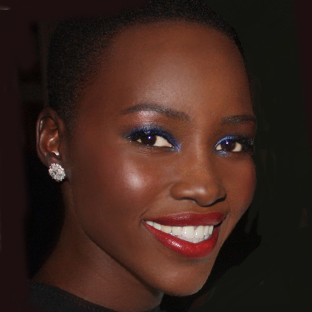
Academy award-winning actress Lupita Nyong'o has been named the new face of Lancôme.  (Photo Credit: Google Images)
Academy award-winning actress Lupita Nyong’o has been named the new face of Lancôme.
(Photo Credit: Google Images)

Vanity Fair is reporting that Academy award-winning actress and fashion darling Lupita Nyong’o has been named the new face of Lancôme cosmetics. Pria Rayo writes:

“Nyong’o joins fellow A-listers Julia Roberts, Kate Winslet, and Penelope Cruz as ambassadors for the brand. ‘What appealed to me about Lancôme is that they’re not dictating what beauty is,’ she told Women’s Wear Daily. ‘What they do supports something that already is — and that was appealing to me, too. It’s what drew me to them. Hopefully it’s a symbiotic relationship — that I benefit from being associated with them, and they benefit from being associated with me, as well. And for the consumer at large, I think Lancôme has a range of products for every woman, and I think having me will expand people’s understanding of, hopefully, what Lancôme stands for, who Lancôme is for.'”

Read more at Vanity Fair.

Like The Burton Wire on Facebook. Follow us on Twitter @TheBurtonWire.

Jackie Joyner Kersee and Tamera Young Talk Sexism in Sports

0
Iconic Olympian Jackie Joyner Kersee talks Title IX and giving back on Women's History Month panel.  (Photo Credit: Robin Walker Marshall/Robin Lori Photography)
Iconic Olympian Jackie Joyner Kersee talks Title IX and giving back on Women’s History Month panel.
(Photo Credit: Robin Walker Marshall/Robin Lori Photography)

Title IX prohibits gender discrimination in athletic programs that receive federal funding. Enacted in 1972, the law grants women and girls equal access to the essentials necessary for becoming successful competitors such as scholarships and training facilities.

Three-time Olympic gold medalist Jackie Joyner-Kersee and Chicago Sky forward Tamera Young are two generations of black female athletes both highly affected by reform. They are instrumental in changing the scope of how female athletes in general are perceived by various publics. During a two-day Women’s History Month celebration at Atlanta’s Roc House Women’s Fitness Spa, Kersee and Young were panelists sharing their insights.

Both women discussed the importance of female athletes of color continuing to defy the norms in male-dominated competitive spaces. Kersee, one of track and field’s most versatile and well-known figures, is still the first and only heptathlete to score over 7,000 points. Accumulating the points in the 1988 Summer Olympics, the Hall of Famer also holds the indoor record for long jump.

Making sports history was beyond anything the determined East St. Louis, IL native could’ve ever imagined. “I didn’t envision growing up that I would become a world record holder or Olympic champion,” says Kersee. “I really just wanted to get on television. It was challenging, but I wanted to do it.”

One of Kersee’s coaches registered her to compete in the heptathlon for her age group. Excelling in varsity volleyball and basketball also, Kersee earned a full track scholarship to UCLA. Black female participation in the heptathlon was unheard of at the time. On the other hand, a down home Kersee was up for the challenge.

“Black girls wanted to be strictly sprinters, jumpers or hurdlers,” says Kersee. “Once I started educating myself and learning more about how to get the points, I saw myself developing. I knew I wouldn’t win all of the time, but I kept on. You can’t take a day off. Multiple events keep you humble and give you a real view that you have to work hard.” Knowing talent when she sees it, the iconic Olympian keeps a close eye on Georgia freshman pentathlete Kendell Williams, who was named SEC Freshman of the Year. “She’s very special,” says Kersee. “She has all of the tools to be one of the greatest.”

Kersee’s and Young’s careers weren’t without prejudice from men. Kersee remembers her coaches keeping her away from racist and sexist coaches from opposing teams. She and her teammates often traveled in groups and sometimes couldn’t go into certain places. “I always wanted to focus on the positive,” says an optimistic Kersee. “I realized that wasn’t gonna stop me from achieving, believing and working hard. There’s no substitute for hard work.”

And then there’s Young, a Hall of Famer at Wilmington, NC’s Laney High School (basketball legend Michael Jordan’s alma mater) who set the conference record as a member of James Madison University’s women’s basketball squad. The stellar WNBA athlete was drafted in the first round by the Atlanta Dream in 2008.

Young, who likes to take a moment of silence before she steps on the court, became the first player from JMU to accomplish pro eligibility. “People thought men were better athletes than women,” says Young. “We actually had to prove that we can do the same as men. It takes hard work, effort and heart. If you have heart, then you’re a champion.” Young immediately follows through with more encouragement. “My motto growing up was ‘Prove doubters wrong,’” she says. “Don’t let anyone tell you something that you can’t do. If you believe in yourself, have self-discipline and motivation, you can prove anybody wrong.”

Since Kersee retired in 2001, she’s concentrating on being a people’s champion. She founded a facility, Jackie Joyner-Kersee Center, to encourage youth in her hometown to actively participate in physical activity. In 1988, she founded a nonprofit organization, the Jackie Joyner-Kersee Foundation, to enhance the quality of life for families and communities. Recently inducted into the American Alliance for Health, Physical Education, Recreation and Dance (AAHPERD) Hall of Fame, Kersee co-founded Athletes For Hope with other notable sports figures to promote humanitarianism and sportsmanship throughout athletics.

Already the author of two books, Kersee would like to produce children’s books to educate young people on some of the obstacles she has encountered. One specific focus would be on her bout with asthma. Kersee’s transition into humanitarianism came from watching her coaches chaperone her teammates and ensuring they had someone to confide in and look after them.

“I didn’t realize at the time how that would impact my life later on,” says Kersee with her legs crossed. “No matter where my path would take me, I knew I would always come back in the community and help others. If you give the world the best you have, the best will come back.”

Even with both generations of women having amazing careers in sports, competition remains at the core of their identities. Kersee would like to see more females become heptathletes. More importantly, she wants to be remembered as an athlete who performed well on-and-off the track. “I want to be known for being a great human being,” says Kersee. Young, however, just wants people who have dreams to pursue them despite criticism or a lack of support.

“Any kid growing up that wants to dream or wants to believe they can do something, I wish the best for them and hope they keep their dreams alive,” says Young. “Don’t let anyone take it away. You’re built, not born, to be a winner and a champion.”

This post was written by Christopher A. Daniel, pop cultural critic and music editor for The Burton Wire. He is also a contributing writer for Urban Lux Magazine and Blues & Soul Magazine. Follow Christopher @Journalistorian on Twitter.

Like The Burton Wire on Facebook. Follow us on Twitter @TheBurtonWire.
Africa: Women Tech Founders To Watch

0
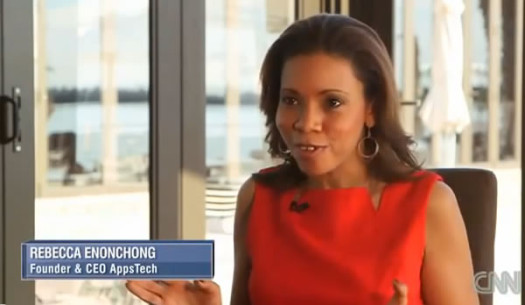
Rebecca Enonchong a Cameroonian national, is the founder and CEO of AppsTech, a Bethesda, Maryland-based global provider of enterprise application solutions. (Photo Credit: CNN Screen Grab)
Rebecca Enonchong a Cameroonian national, is the founder and CEO of AppsTech, a Bethesda, Maryland-based global provider of enterprise application solutions.
(Photo Credit: CNN Screen Grab)

Writing for Forbes.com, Mfonobong Nsehe highlights ten dynamic women in Africa who are succeeding despite the lack of representation of women in the ‘male-dominated tech scene’ on the continent. Nsehe writes:

“…there is a tiny handful of incredible women who are launching and building successful, innovative tech companies that are upending industries, setting new standards and earning their place at the cool table. These women create and innovate, exploiting ideas, products and services to produce dynamic businesses.”

Nsehe spoke to a few African tech entrepreneurs and hand-picked 10 of the brightest tech founders in Africa. Below are four of his choices:

Rebecca Enonchong, Cameroonian

Founder, AppsTech

Enonchong, a Cameroonian national, is the founder and CEO of AppsTech, a Bethesda, Maryland-based global provider of enterprise application solutions. AppsTech, which was founded in 1999 now has clients in more than 40 countries on 3 continents. The company, an Oracle ORCL +1.42% Platinum partner, offers a diverse range of enterprise software products and services including implementation, training and application management services for large and medium-sized companies. Enonchong also serves as an advisor/mentor to several African tech startups and is also the founder the Africa Technology Forum, a non-profit organization dedicated to promoting technology in Africa.

Anne Amuzu, Ghanaian 

Co-founder, Nandimobile

Amuzu, a graduate of Ghana’s Meltwater Entrepreneurial School of Technology (MEST) is a co-founder of Nandimobile, a company that develops software that enables companies to deliver customer support and information services through SMS. Amuzu co-founded the company in 2010 and it has more than 20 corporate clients in Ghana.

Nkemdilim Uwaje Begho, Nigerian

Founder, Future Software Resources

Begho founded Future Software Resources Ltd, a website design & web-solution provider located in Lagos, Nigeria in 2008. The company also provides online marketing, Search Engine Optimization (SEO), content management system development, online recruitment and IT consultancy services to more than 25 small and large Nigerian businesses and government agencies.

Judith Owigar, Kenyan

Co-founder, JuaKali

Owigar, one of Kenya’s most popular female tech leaders, is the founder of JuaKali, an online and mobile directory for Kenya’s skilled blue-collar workers. JuaKali which was founded in 2012 and is based in Nairobi connects service providers from the informal sector with institutional and individual clients. The service allows workers to create an online profile showing their expertise. The service can be accessed via web and mobile. Owigar is also the founder of Akirachix, an association that aims to inspire and develop young women in technology through a mix of networking, training and mentoring programs.

Read more at Forbes.com.

Like The Burton Wire on Facebook. Follow us on Twitter @TheBurtonWire.

‘A Haunted House 2’: Marlon Wayans Talks Creating Roles for Characters of Color

0
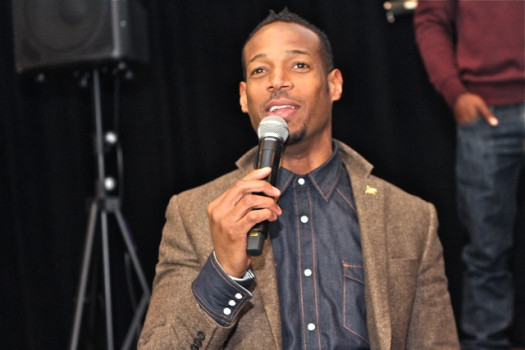
Marlon Wayans discusses his film 'A Haunted House 2' opening in theaters April 18.  (Photo Credit: Joi Pearson)
Marlon Wayans discusses his film ‘A Haunted House 2’ opening in theaters April 18.
(Photo Credit: Joi Pearson)

Funnyman Marlon Wayans is the lead actor, co-writer and co-producer of A Haunted House 2, the sequel to his paranormal spoof slated for nationwide theatrical release on Apr. 18.

In this installment, Wayans, who plays Malcolm, moves into his dream home with his new girlfriend (Jaime Pressly) and her two kids. The blended family is in store for a myriad of humorous but strange paranormal activity.  Wayans, on the other hand, is being taunted by his ex-girlfriend’s exorcist (Essence Atkins). Wayans is joined on-screen by Cedric the Entertainer, Affion Crockett and Gabriel Iglesias.

Wayans says of Malcolm’s story arc, “There’s trouble all around, and I’m the only one actually seeing it,” he says. “What I wanted to do with this was make it about an interracial couple. You got her point of view versus his point of view. It makes for an interesting conversation.” Shot in 21 days, an impressed Wayans had great chemistry with both Pressly and Atkins on- and off-camera. “They’re good strong comedic actresses,” adds Wayans. “They understand how to play a situation. I’m always ripping and trying new things, so I need a strong anchor.”

The Howard University alumnus remembers when he and his older brothers, Shawn and Keenen Ivory, were working on their lampoon of mid-1990s black films, Don’t Be a Menace to South Central While Drinking Your Juice in the Hood. The hilarious performer believes A Haunted House’s franchise was born out of that particular project. “It was just a bunch of funny sketches and really thin story. We just got off-the-wall crazy. We just have a very dark, crazy sense of humor. We can take the darkest thing and find light. That’s what ultimately led us to horror,” says Wayans.

Recently in Atlanta as part of A Haunted House 2’s press tour, Wayans, the youngest sibling of the first family of comedy, cracks up at Freddy Krueger from A Nightmare on Elm Street. The extremely cautious jokester-turned-filmmaker wanted A Haunted House 2 to develop beyond strictly being a full-blown comedic effort. “It’s a lot less slasher than the Scary Movie franchise,” says Wayans. “This time, it’s a little more grounded in storytelling. You take a chance because you’re desperate to get that laugh. The story we tell is all inclusive. The jokes all come out of the situation.”

Wayans thought it was also necessary to cast ethnically diverse talent. As with similar cases involving black actors and directors in Hollywood, the humorist points out Hispanic talent such as Iglesias are highly underrepresented in feature comedies. The lack of complex roles for black and Latino characters is why Wayans chooses to multitask on-set.

“When I auditioned, I got a lot of roles, but I still wasn’t doing what I wanted to do,” says Wayans. “There are no roles in Hollywood. Your chances of getting those are second to none, so I write and produce so I can act in the kinds of movies I wanna be in.”

Throughout Wayans’ career, he’s appeared on television as a third season regular cast member on In Living Color, co-starred in his own sitcom, The Wayans Bros.., a recurring guest star on the series, Second Generation Wayans and co-creator/voiceover on the animated series, Thugaboo. Wayans’ also acted in and worked behind-the-scenes on comedies like White Chicks, LiTTLE MAN, Senseless, Dance Flick and The Sixth Man.

As for dramatic and action roles, Wayans appeared in Above The Rim, G.I. Joe: The Rise of Cobra and Requiem For a Dream. The alumnus of New York’s famed LaGuardia High School appreciates that he practiced drama five hours per day as a student. One of the greatest moments on Wayans’ vitae, he says, was being able to collaborate with the Coen Brothers.

“I had a great time,” he says. “I got to be funny, bring things to the table and make them laugh on set. I try to challenge my dramatic ability and work with great directors.” While talking, Wayans knocks his tea over accidentally with his arm. Not distracted, he continues to make everyone in the room laugh.

Joking around is a constant whenever Wayans talks. “Knowing when to be what is one of the greatest keys to comedy,” he says before he jokes again. “I’m dramatically grounded. I’m dumb as f—k, but I can act. You gotta put on different hats. Drama is the easiest thing I could possibly do. I’m not challenged to do comedy. It’s so hard to make everybody feel the same emotion. There’s a fear factor involved.”

Making audiences laugh has been the core of Wayans’ career and identity. He recently launched What The Funny?, a digital comedy network that pokes fun at viral videos, current events and music videos. Wayans just wants the audience to enjoy themselves. “It’s a movie everybody can understand and have fun,” says Wayans. “I just want people to go laugh and not think too much. Go be a kid.”

This article was written by Christopher A. Daniel, pop cultural critic and music editor for The Burton Wire. He is also a contributing writer for Urban Lux Magazine and Blues & Soul Magazine. Follow Christopher @Journalistorian on Twitter.

Like The Burton Wire on Facebook. Follow us on Twitter @TheBurtonWire.
Cesar Chavez: The Only Latino-Centered Hollywood Release This Year?

0
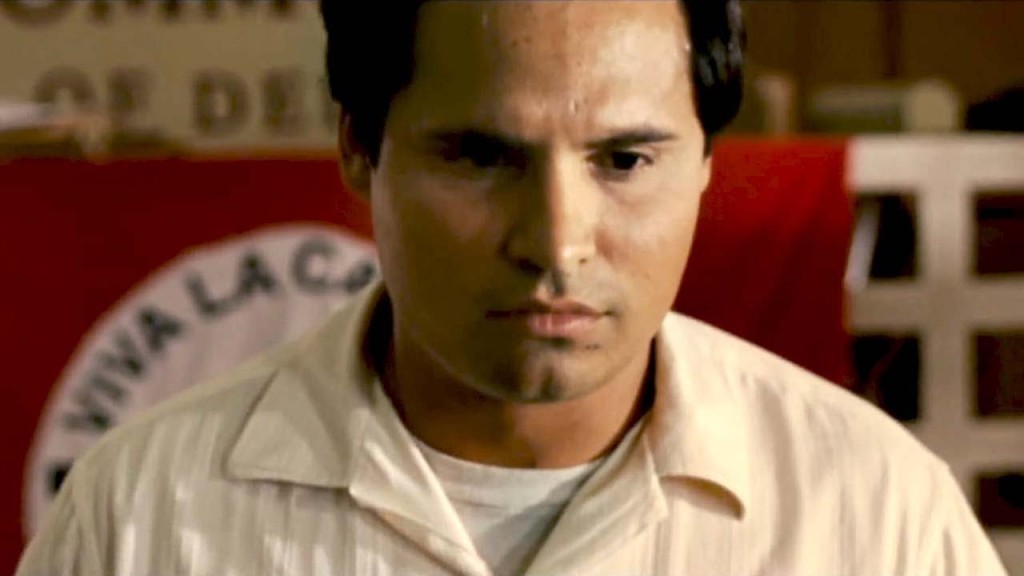
Michael Peña stars as iconic civil rights leader and labor organizer Cesar Chavez.  (Photo Credit: Google Images)
Michael Peña stars as iconic civil rights leader and labor organizer Cesar Chavez.
(Photo Credit: Google Images)

Reporting for Jezebel.com, Dodai Stewart highlights that director Diego Luna’s Cesar Chavez is the only Latino-centered studio film released this year. In her discussion, Stewart is referring to Jordan Zakarin’s article for The Wrap, which interviewed Luna about representations of Latinos in film and the process of getting the film made. Luna tells TheWrap:

“This community has been represented in very disrespectful ways, falling most of the time into the cliche.”

According to Luna, who has starred in the films ‘Milk’ and ‘Y Tu Mamá También’, every studio in Hollywood passed on the Cesar Chavez project. Luna, who had only directed one previous project, knew that his limited experience in directing would impact financing, but he also realized just how little Latino audiences are valued by Hollywood during this process. Luna adds:

“It’s because we haven’t sent a message as a community because we want to have our stories portrayed in cinema and celebrated,” he said. “You think about the last big hit story about a Latino, a true story? The last one, I would say, is ‘Selena,’ and there’s no film about a Latino character, a biopic, that is not a person from the entertainment business. As if we had no input in politics and science or sports or whatever. It’s ridiculous, and no one wanted to take the risk to be the first.”

Stewart adds to the discussion of Latinos in media. She writes:

“While Sofia Vergara may be the highest-paid actor on TV, Latinos face some of the worst stereotypes in entertainment and in movies; Latinas are often cast as in “spicy” overly sexualized roles or as maids. Before she died, veteran actor Lupe Ontiveros played a maid about 150 times, including Rosalita in The Goonies; actor Teresa Yenque has been on at least seven different episodes of Law & Order, playing “Cleaning Lady,” “Housekeeper,” and “Housekeeper/Nanny.” And when Eva Longoria brought a Latina-centric pilot to ABC, it was Devious Maids.”

What do you think about the lack of representation of Latinos in diverse roles in Hollywood studio releases? What will it take to change it? Let us know in the comments section below.

Read more at Jezebel or The Wrap.

Like The Burton Wire on Facebook. Follow us on Twitter @TheBurtonWire.

Boondocks Blackout? Aaron McGruder Speaks

1
Aaron MacGruder's seminal comic 'The Boondocks'.  (Photo Credit: Aaron MacGruder)
Aaron MacGruder’s seminal comic strip ‘The Boondocks’.
(Photo Credit: Aaron MacGruder)

The blogosphere has been buzzing over recent reports that Boondocks creator Aaron McGruder was not involved with Season 4 of the highly anticipated comic strip slated for an April 21st return. Fans have been perplexed as to why the date of the season 4 return has been pushed back and now there is some idea about why this may have happened. McGruder posted a letter on the Boondocks Facebook fan page explaining that he left Boondocks behind, but not explaining why he was not involved in season 4 of the popular series.

McGruder writes:

FROM AARON MCGRUDER:

As the world now knows, The Boondocks will be returning for a fourth season, but I will not be returning with it. I’d like to extend my gratitude to Sony and Adult Swim for three great seasons.

I created The Boondocks two decades ago in college, did the daily comic for six years, and was showrunner on the animated series for the first three seasons. The Boondocks pretty much represents my life’s work to this point. Huey, Riley, and Granddad are not just property to me. They are my fictional blood relatives. Nothing is more painful than to leave them behind.

To quote a great white man, “Hollywood is a business”. And to quote another great white man, “Don’t hold grudges”.

What has never been lost on me is the enormous responsibility that came with The Boondocks – particularly the television show and it’s relatively young audience. It was important to offend, but equally important to offend for the right reasons. For three seasons I personally navigated this show through the minefields of controversy. It was not perfect. And it definitely was not quick. But it was always done with a keen sense of duty, history, culture, and love. Anything less would have been simply unacceptable.

As for me, I’m finally putting a life of controversy and troublemaking behind me with my upcoming Adult Swim show, BLACK JESUS.

AM

This new information raises plenty of questions about authorship and ownership. Is a Boondocks without Aaron McGruder’s involvement worth watching? How will this new found knowledge about the creative process affect ratings for Adult Swim? How is it that programmers and creative executives at Adult Swim, which is known for being a progressive and subversive cable outlet, following suit with mainstream network and cable operators who are known to marginalize or patronize the creative voices of creators of color? The biggest question is will longtime Boondocks fans continue to watch?

Let us know your thoughts in the comments section below.

This post was written by Nsenga K. Burton, Ph.D., founder & editor-in-chief of the award-winning news site The Burton Wire. She is also a media scholar who serves as Chair of the Communications and Media Studies Department at Goucher College.

Like The Burton Wire on Facebook. Follow us on Twitter @TheBurtonWire.