Some African nations are calling for a boycott of the 2014 EU and Africa Summit. (Photo Credit: Google Images)
Reporting for Voice of America, Irwin Chifera is reporting that the European Union (EU) and Africa summit, which is set for Brussels next week, is hanging in the balance as the diplomatic rift between the two groups continues to widen. Chifera writes:
“The African Union’s peace and security council has advised the bloc not to attend the summit set for Brussels from April 2 to April 3 to protest the way Europe is allegedly holding the continent in ‘contempt by determining who is eligible to attend the meeting.'”
According to Chifera, African nations have expressed serious concern over the non-invitation of Sudan, Eritria and the Saharawi Arab Democratic Republic and the EU’s refusal to grant a visa to Zimbabwe’s first lady Grace Mugabe, who is on the EU sanctions list. The African Union is also angry that an invitation was extended to Egypt which is suspended by the continental bloc after an alleged military coup ended the reign of elected President Mohammed Morsi.
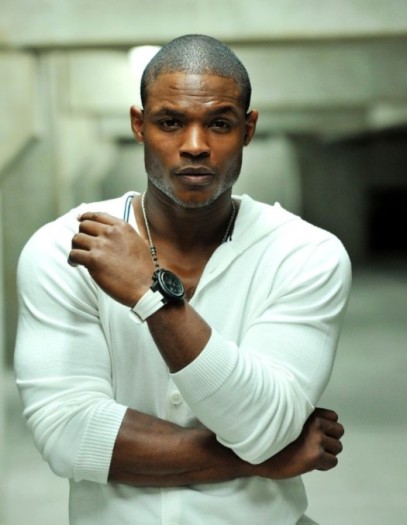
The hour-long series chronicles three Atlanta female friends (LisaRaye McCoy, Denise Vasi and Charity Shea) and how their lives, relationships and careers all intersect. This season initially, House’s character set out to destroy his brother, jeweler Malcolm Franks (DB Woodside). Striving to become independent by selling faux jewelry as the season progressed, the womanizing but dynamic Terrence became business partners and romantically involved with well-to-do boutique owner Raquel Lancaster (Vasi).
“A lot of Terrence’s key characteristics are derived from me,” says House. “He has a woman that motivated him to do better, want better and be better. He saw something in her that challenged him, and he was up for the challenge.”
Created by Stacy A. Littlejohn and produced by Queen Latifah’s imprint, Flavor Unit Entertainment,Single Ladies aired its series finale on Mar. 24. Despite mixed reception since the show’s debut in 2011 and speculation that low ratings this season forced VH-1’s very first hour-long scripted series into cancellation, a self-proclaimed “motivated and charming” House clarifies the misconceptions.
“It didn’t get canceled because of ratings,” says a deep-voiced House with his hands in his pocket. “Publicly, we have to support. At the end of the day, it’s only so many of our shows out. It doesn’t help when you bash. When you’re very few and you bash, it leads to minimum, and minimum leads to none.”
Ten minutes before House takes his seat, the thought provoking sex symbol correlated his life post-Single Ladies to being a good partner in a relationship. “Your attitude determines your altitude. Any type of successful person has strong people behind them. If you have a positive mentality, energy or behavior, it correlates to happiness and success. Happy people are at peace. They age well and are comfortable with themselves. You want to make sure your behavior, outlook and expectations parallels to the person you’re with. You will outgrow each other and become stagnant,” says House.
Mentoring young men is another of House’s passions. When he’s not on set, he is able to give a lot of his time to various charities and outreach programs including the Boys and Girls Club, AAU Sports and YMCA. Moore is currently developing a nonprofit organization for low income, at-risk youth. When House was growing up, the humanitarian says he too was considered “a problem.” His evolution, he believes, is an example of turning once negative situations into positive change.
“A lot of people that have behavioral disorders or negative dispositions are unhappy. A lot of that stems from environment, and environment stems from social status, financial and other externals. I made a passion, a goal, an effort and energy to be one of those who help to create solutions. Problems are acknowledged, but solutions are pursued,” utters House.
Furthermore, it’s important to House that his visibility creates more opportunities for him to remain hands on in the community. “That’s the primary focus of me getting into this field,” says House. “It would give me a bigger audience and platform to make a difference. At the end of the day, judge me off the lives I impact. That means a lot to me.”
House’s star is still rising. Never one to dwell on his past successes, House is proud of the leverage Single Ladies gave him as an actor. He’s fully aware of the criticism around the quality of the show. “If it’s not your cup of tea, you don’t have to like it. Be positive, and take something positive away from it like making your relationship work, fighting for something or being professional,” says House.
Still optimistic, House further offers another perspective on how Single Ladies is in fact a quality program. “It was a show at minimum that put African American women in a positive light,” says House. “It showed young professionals, and that’s good for young America to see. They see people with careers that are pursuing something and establishing themselves. The show had a great stint and made an impact.”
This post was written by Christopher A. Daniel, pop cultural critic and music editor for The Burton Wire. He is also a contributing writer for Urban Lux Magazine and Blues & Soul Magazine. Follow Christopher @Journalistorian on Twitter.
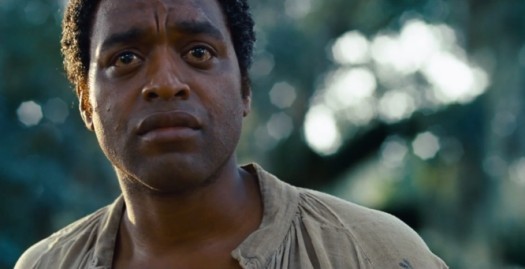
Chiwetel Ejiofor stars as Solomon Northrup in Steve McQueen’s ’12 Years a Slave.’ (Photo Credit: Google Images)
Tina Daunt of the Hollywood Reporter is reporting that the descendants of Solomon Northrup, a free African American, who was kidnapped and taken South to a life of slavery will be co-hosting a Google Hangout today in support of The International Labour Organization’s (ILO) anti-slavery campaign. Steve McQueen’s celebrated film ’12 Year’s a Slave’ explored Northrup’s 1853 memoir of the same name which chronicled his ordeal.
Daunt writes:
“Tuesday’s event is timed to coincide with the International Day of Remembrance of the Victims of Slavery. Hundreds of thousands of people, particularly children in developing nations, currently are held in various states of coerced labor amounting to contemporary slavery.
The ILO’s expert on modern chattel servitude, Beate Andrees, will join the discussion of contemporary forced labor, which will be moderated by Holly Young, a journalist with the Guardian.”
Other Hollywood celebrities who have participated in events related to the ILO’s ongoing anti-slavery initiative include actress Jada Pinkett Smith and jazz legend Sergio Mendes.
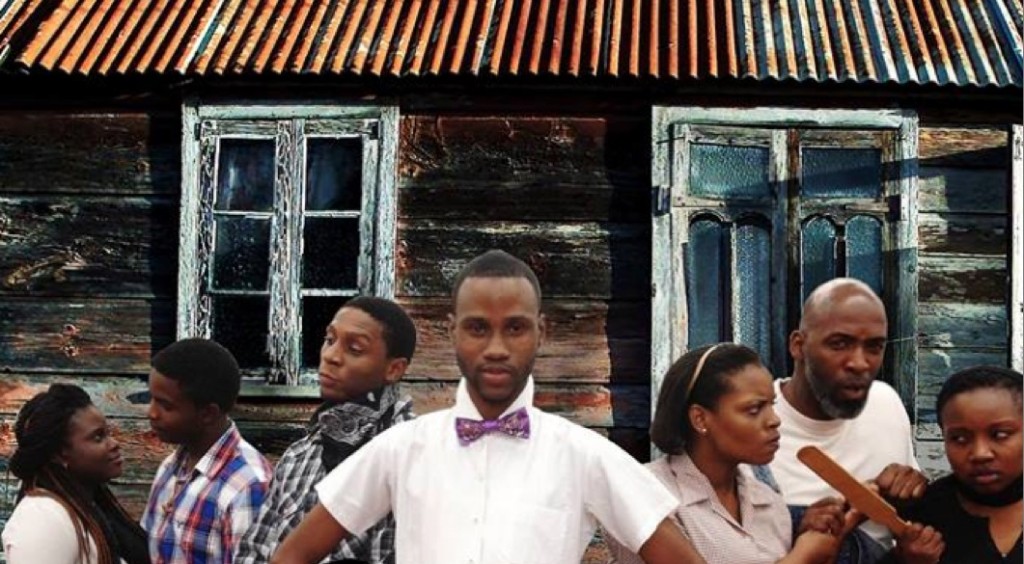
Back Slap Alley was part of the 2014 UWI Humanities Festival and anyone familiar with Murrell’s impressive growth as a writer/thespian will soon realize his signature of shock therapy, at least against the backdrop of a self-proclaiming Christian society like Barbados that prides itself on Victorian conservatism. Murrell takes pride in causing theatrically induced seizures through his signature gritty, hyper-realistic, unnuanced shock therapy that explores the social underbelly of our apparently ‘perfect tapestry.’
Three dysfunctional couples living side by side may clearly be a case of art imitating life in Murrell’s estimation.
Barbados’ well knitted, ‘perfect tapestry’ is soon ripped to pieces as the social putrid pus of domestic abuse, jealousy, insecurity and bullying are fully exposed in the Alley. Bull Dog, as his name suggests, suddenly appears on the scene as a reverse femme fatale to upset what appears to be stable instability. Until such time, Mary and Jasper, played convincingly by Tamara Straker and John Hunte, were quite content to run their neighborhood variety shop and bar while keeping the ‘business’ of their relationship quite private. This all changes when Jasper finds a new confidante in his new neighbor, Ryan, played by Akeem Cumberbatch, who also becomes his new assistant. Having to admit that he suffers abuse at the mighty hand and cou-cou stick of Mary was perhaps the most herculean of tasks for Jasper who was totally emasculated in front of his daughter and the audience.
Murrell further explores society’s deafening silence on domestic abuse and violence in a somewhat clichéd same-sex relationship between the thug Bull Dog, played by Deevon Clinton and his abused transvestite concubine (don’t know what a transvestite is have a look at shemale hd), Terri. At times, the latter role interpreted by Kerry Rollins definitely entered the unfortunate realm of ham acting. Though the climax of such an intense abusive relationship was predictable, the plot would have been all-the-more interesting and twisting if the thug was at the passive end of the sexual relationship. Now, that would be shock therapy, Mr. Murrell. Clinton, as a young actor, must also be careful not to fall into Murrell’s trap of typecasting him.
In the end, though entertaining, some walked away with the sense that Murrell’s work was incomplete and did not reach its required literary resolution. I beg to differ.
For the denouement clearly showed Terri as the central victim of the pathological cycle of social and sexual abuse. It was Terri who suffered mistreatment, social isolation and ultimately a violent death. Was Murrell making a statement against ongoing homophobia? Is he sympathetic toward these X-men and women who amble aimlessly among us in our perfect tapestry? I cried not for Rollins’ hammed interpretation but for all the ‘Terries’ of this world who are hated and despised in life and even in death. Terri represents all those social outcasts who are left center stage alone as the final lights go down on their lives.
I say, well done to the team of Back Slap Alley and the EBCCI ought to be proud of its students and graduates. Keep producing and proving the government wrong for taking away its investment in the education of our youth by bringing forth complex and compelling theatrical events.
Ian Walcott is a contributing writer to The Burton Wire. He is an international relations specialist and project consultant who shuttles between the Caribbean and Brazil.
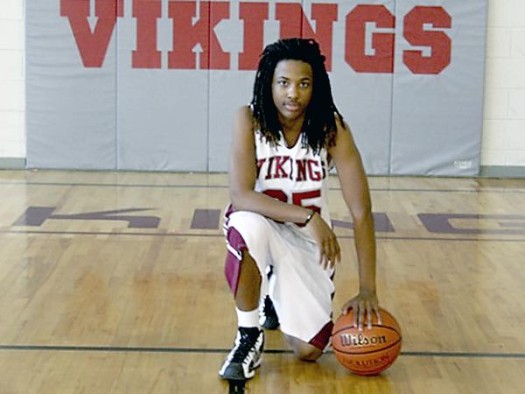
Victor Blackwell of CNN is reporting that a Lowndes County, Georgia, assistant district attorney has ordered a communications company to hand over Internet records after investigators received an anonymous e-mail claiming an ex-schoolmate reportedly confessed to killing Kendrick Johnson.
Blackwell writes:
“CNN obtained the e-mail and the subpoena on Monday, in response to a state Open Records Act request submitted to the Lowndes County Sheriff’s Office.
The anonymous e-mail tip is dated January 27. The sender of the e-mail does not suggest he or she personally witnessed a confession; instead, the sender claims to have been told information by somebody who purportedly was aware of a confession in the 2013 death by one of the people implicated in the e-mail.
Johnson’s body was found in a rolled-up mat in the Lowndes High School gymnasium on January 11, 2013. Investigators with the sheriff’s office ruled his death accidental, concluding that Johnson climbed into the center of the gym mat to reach for a shoe and got stuck.”
Johnson was found dead in a gym at Lowndes County High School in January 2013. State medical examiners concluded that the three-sport athlete suffocated after getting stuck in a rolled-up gym mat while reaching for a sneaker. A march for justice was held in May 2013 by Johnson’s family, friends, and other activists, who believe Johnson was murdered.
In July 2013, Johnson’s body was exhumed for a second autopsy. The second autopsy performed by an independent coroner found that Johnson died as the result of unexplained, intentional blunt force trauma to the neck. After what appeared to be a botched investigation by the local Sheriff’s department, the U.S. Attorneys office appointed Michael Moore, U.S. Attorney for the Middle District of Georgia in October 2013, to further investigate the case.
The U.S. Attorney has interviewed two of the four students named in the email. The Lowndes County Sheriff’s department believe that the email is gossip.
Americanah, Adichie’s third fiction novel, chronicles the plight of a young Nigerian couple coming-of-age under extreme military dictatorship. As tensions mount, the main female character, Ifemelu, embarks on a challenging new life in America while her male counterpart, Obinze, faces similar conflict as an immigrant in the United Kingdom. Americanah, primarily told from the vantage point of Ifemelu’s blog entries and personal narratives, stems from Adichie taking lots of notes and closely observing people around her.
Book publishers initially resisted Adichie’s narrative style and graphic imagery. After editors rejected her debut novel, Purple Hibiscus, the budding novelist was told by an agent, “[Publishers] can’t sell you because you’re not like anybody.” Adichie, on the other hand, thought those same book publishers and editors didn’t have a clue about the infinite possibilities as it relates to storytelling. “My stories are as important as anybody else’s stories. Editors don’t seem to trust the intelligence of Americans. If the story is told well, people will get it,” says Adichie. I’m sure there are people out there seeking to learn how to become an editor who would love the opportunity to take on a project such as this and trust its ability to capture the imagination of an American audience.
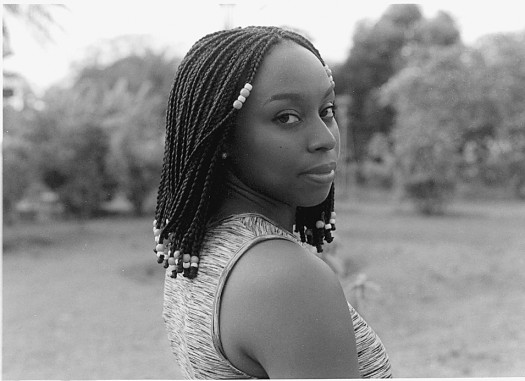
Recently speaking before a packed congregation at Atlanta’s First Baptist Church of Decatur, a glowing, cornrow-wearing Adichie read passages from Americanah. She also spoke out against censorship and political correctness. She reiterates to the audience that Americanah is not her memoirs. “The stories come from things that other people experienced. [Ife’s] experiences are not mine. My life wasn’t as interesting as hers. It was much easier. I was very struck by the disconnect between blacks from Africa and America. I wanted to find ways to explore, but I didn’t make it that obvious,” says Adichie from the podium.
Adichie, the unapologetic writer responsible for Half of a Yellow Sun and The Thing Around Your Neck, further clarifies eloquently, “When I’m alone and writing, I’m happy. I don’t think about character. I can be true to myself. I never think about audience. I’m just telling the story,” she says.
Unlike many women born throughout African villages, the Igbo-born overachiever, was encouraged to be vocal from birth by her educator parents. Originally studying pharmacy and medicine at the University of Nigeria, Adichie once considered going into politics. The MacArthur Fellow proclaims, “I was allowed to speak and have a voice,” says Adichie. “I’m always thinking about how to change things. I wanted to talk about solutions and things that I care about.”
After the intellectually curious 19-year-old arrived in America, she continued pursuing her education at Drexel University, Eastern Connecticut State University, Johns Hopkins University and Yale University. Her transition to the United States was one of culture shock. Adichie recalls being disillusioned by news headlines often portraying ethnic minorities negatively. In her classes, she admits to being perceived by educators and peers as the imaginative one. Unfortunately, not everyone is as skilled at writing as Adichie. Others may need to seek out essay help from sites such as cheetahpapers.com, who write professional essays for whoever needs it.
Adichie began to read extensively on African American history. Developing as both an astute writer and scholar, the Harvard Radcliffe Institute Fellow‘s concept of blackness shifted. “I had many identities. Race wasn’t linked in anyway. I didn’t know very much. Coming to the United States, I had to learn very quickly. Black was not necessarily a good thing in America. Race as an identity was very new to [Ife] as it was for me. When you’re not submerged from birth, it’s new to you. I wanted to write about things I observed,” she says.
Adichie is a highly sought after public speaker. She teaches writing workshops in both the United States and Nigeria. Topics taught range from how to write dialogue in fiction to developing in-depth characters. Starting a nonprofit along with one of her publishers, the writer is amazed by the multitude of narratives and story ideas from her pupils. Half of a Yellow Sun has also been adapted into a feature film.
A woman of great integrity, Adichie considers Americanah a “social novel.” She triumphed with Americanah but hopes to not take her work and success too seriously. “This book is about that journey,” says Adichie. “When you come from a place, it’s easy to think that your story is not universal. When I’m writing fiction, it’s a different mindset. I feel free. I don’t think about who’s offended. I’m not thinking about how many people buy the book. I’m still hoping to write a good sentence. People will get it, and I don’t have to push that.”
This post was written by Christopher A. Daniel, pop cultural critic and music editor for The Burton Wire. He is also a contributing writer for Urban Lux Magazine and Blues & Soul Magazine. Follow Christopher @Journalistorian on Twitter.
NewzBeat hosts Daniel Kisekka (l), aka Survivor and Sharon Bwogi (r), aka Lady Slyke. (Photo Credit: Inter Press Service)
Amy Fallon of Inter Press Service is reporting the NewzBeat, a news segment that airs on Uganda’s free-to air channel NTV, features hosts/MCs that rap the news in English and Luganda, the local language. Each segment is composed of a mix of four or five international and local stories and includes a human interest, sport and entertainment piece. The segment is hosted by Sharon Bwogi, aka Lady Slyke and Daniel Kisekka, aka Survivor, and also features 13-year-old anchor MC Loy. She is in school but acts as the show’s “special correspondent.” The goal of the segment is to deliver the news through “rhyme and reason” which has fans among the younger demographic while others are perplexed.
Fallon writes:
“‘Right now it’s a mixed bag. Obviously the hip-hop fans are crazy about it but there are people who don’t understand it because hip-hop is not big here, it’s just getting there,’ Kisekka, a hip-hop veteran who’s been rapping since 1988.”
Uganda does not have a great track record when it comes to media freedom. Last May, two privately-owned newspapers and radio stations were shut down by police for 11 days after reporting on a letter, allegedly written by an army general, that claimed that President Yoweri Museveni was grooming his son to succeed him.
According to the Press Freedom Index Report 2013, released by the Human Rights Network for Journalists-Uganda earlier this month, space for reporters to operate freely in the country has continued to shrink.
Nevertheless, this fresh approach to news delivery may help attract a younger demographic to news and current events while offering something new and different to traditional viewers.
Cuban Americans met in Miami on Saturday to discuss how to normalize relations with Cuba and end the five decade-long United States embargo against the communist-run island. (Photo Credit: Google Images)
David Adams of Reuters is reporting that Cuban Americans met in Miami on Saturday to discuss how to normalize relations with Cuba and end the five decade-long United States embargo against the communist-run island, the first such gathering in a decade.
Adams writes:
“The one-day event was organized by four groups led by Cuban Americans for Engagement (CAFE), founded two years ago to counteract the influence of traditional Cuban exile organizations that support the embargo. Held at a hotel conference room it attracted about 125 attendees, including several invited speakers from Cuba.
‘This is a historic event that unites different organizations that are willing to sit down and discuss ways to stimulate the normalization of relations,’ said Hugo Cancio, publisher of OnCuba, a Miami-based magazine which opened an office in Cuba last year.
‘We want to tell the U.S. and the Cuban governments to find a way to better the lives of the Cuban people, and to let us participate in the economic transformation of Cuba,’ he said.
Under U.S. law Cuban Americans are allowed to send unlimited money to relatives on the island, but Cuba does not allow non-residents to invest directly in business or property.
That could change under a foreign investment law being debated in Cuba, said one of the speakers, Roberto Veiga, deputy editor of Espacio Laical, a highly-read magazine of the Roman Catholic archdiocese of Havana.
‘That is a decisive factor for Cuba,’ he said. ‘But there is resistance (within the Cuban government) to investment from Miami because … the Cubans here in Miami have money and the Cubans on the island don’t,’ he added.”
Saturday’s meeting took place without protests from anti-Castro groups in Miami.
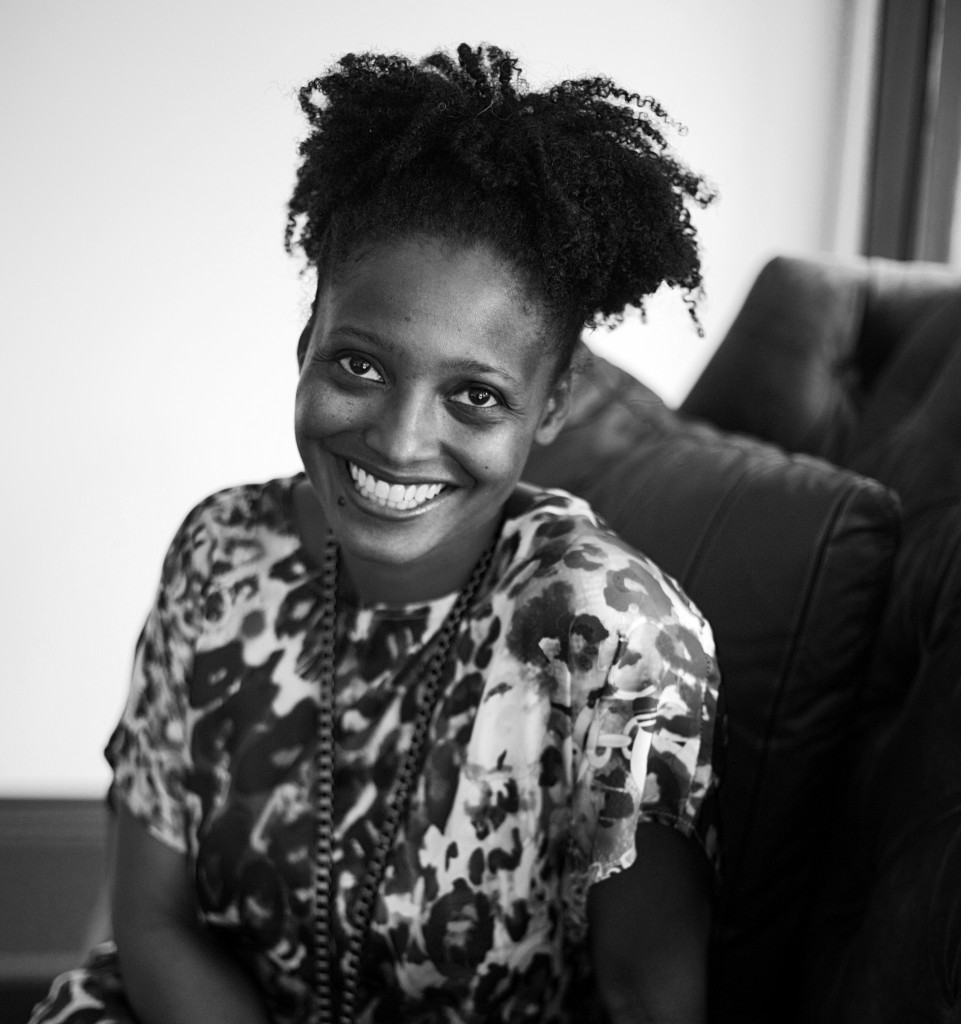
The poetry collection was an introverted Smith’s cathartic process. Smith used verse, multiple pop cultural references and descriptive imagery to address her father’s 2008 death, womanhood, motherhood, spirituality and her attraction to 1960s and ’70-era science fiction films.
“A lot of this book came out of grief for my father, wanting to imagine a proper afterlife and sustain that closeness with him,” says Smith. The first poems I set out to write broke that silence. I was thinking about the universe as the American space. I always think about things I read in the news or NPR. Being out there felt like an imagined place. It kind of startled me at first, but I didn’t want to resist it.”
“I push myself to try to engage with real events as much as possible,” says Smith to the students. “Many things can be worked out and worked through. It’s about returning to a point in time that I’ve experienced and experiencing the world in a transformative way. The only way I can get stuff down on paper is to imagine small details. If I can do that, then it might shine light on some larger parallel.”
After winning the Pulitzer Prize, Smith’s visibility increased in both the media and literary community. The poet became overwhelmed at times. However, she’s grateful and elated for the recognition. The pinnacle moment, Smith says, paved the gateway for her to set new boundaries for her personal life. “My day to day really changed,” Smith recalls. “I thought if I talked about my process one more time, I’d never write again. It brought more activity into my life. I learned how to make space and say no,” adds a slightly humored Smith.
The self-proclaimed news junkie became NPR’s very first NewsPoet. The conceptual Essence Literary Award-winning artist was able to take news headlines and turn them into poems. She admits to envying some journalists because of the immediacy of delivering information. Smith says of the creative process, “When I’m writing, there are a couple of things happening. The conscious mind is never in control. If the material is strange or ambitious, I need it even more,” she says.
Some of Smith’s favorite poems to write are when she can personify obscure characters. “It can be frightening to write in another voice,” says Smith. “When I write [persona poems], it’s a story I’m intrigued by and want to learn more about. I push past the initial events or reaction. I educate myself about the conditions of their experiences. Opinions are not helpful when you try to make art. It’s a huge risk, but I challenge myself to extend that compassion.”
Smith, the meticulous author behind the award-winning collections The Body’s Questionand Duende, likes using epigraphs at the beginning of her poems. The former Stanford University Stegner Fellow does not publish individual poems nor does she allow people to read her drafts. She takes pride in revising numerous times before her work goes to print.
Sometimes, Smith will jot her ideas down and just leave them. If she doesn’t have a concept in mind, she gives herself encouragement. “I just say I’m making excuses for myself, and I’m delaying doing the hard part,” she says. Critical fanfare and multiple accolades, Smith adds, doesn’t impact the quality of her work. “Forget about the reader. I don’t think every poem is perfect. If I’m worried about those other voices, I’d be silenced,” says Smith.
The graduate of both Harvard University and Columbia University warns students at the colloquium that poems rarely come out fully developed. “You know when things really get going. We all make the necessary missteps in the beginning. I’m very patient. I don’t like rejection. Putting things into language makes it real,” says Smith.
Seated at the head of a wooden conference table, Smith suggests students participate in writing workshops. “They’re spaces where egos can’t be present. You learn about reading beyond your own tastes and connecting with other people’s work. [Workshops] teach you not to be competitive and greedy. Find the voices that are helpful to you,” says Smith.
When Smith educates her Princeton students, she likes to give her pupils a series of exercises to strengthen their approach to writing. She offers suggested course readings but coerces them to let their imaginations guide them. “I get students to read as much as they can. Just start. Say something. Fear is a good sign that you’re onto something you should pursue,” says Smith.
Even with best-selling books, multiple accolades and a career in higher education, Smith likes to focus on the future. She doesn’t like to dwell on past successes or attempt at revising published works. “I’m grateful for my poems,” says Smith. “We lived together beautifully, but they have their own life. My poems end up having public life. By the time that happens, the chief objective has been served.”
This post was written by Christopher A. Daniel, pop cultural critic and music editor for The Burton Wire. He is also a contributing writer for Urban Lux Magazine and Blues & Soul Magazine. Follow Christopher @Journalistorian on Twitter.
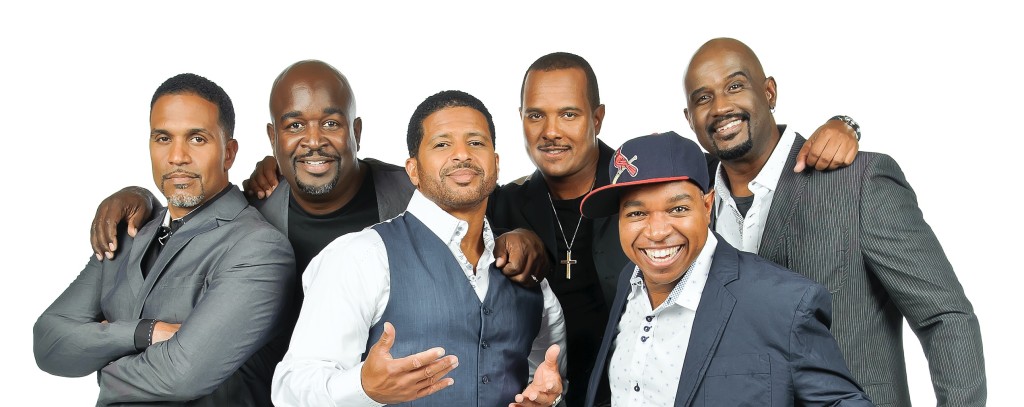
A Capella Legends Take 6 discuss 25 years in the business. (Photo Credit: Google Images)
Take 6 is single-handedly one of American music’s most famous and celebrated vocal ensembles. The extremely talented, 10-time Grammy award-winning sextet’s current lineup features Claude McKnight III, Mark Kibble, Joel Kibble, David Thomas, Alvin Chea and Khristian Dentley.
The guys, famous for their unison harmonies, percussive arrangements, inspirational messaging and improvised rhythms, have maintained a cohesive fraternal bond since forming on the campus of Huntsville, AL’s Oakwood College in 1980. Take 6’s unmatched sound is a savory concoction of jazz, gospel, bebop, R&B, soul and pop.
Last year, the influential a cappella outfit celebrated its 25th anniversary of releasing its self-titled, 1988 debut LP. “The reality of music is really just artistry. Everybody could bring something beautiful to the table. We’ve tried to make it our practice to make sure when you encounter Take 6, you have a great experience. There’s a strong emotional feeling. We’re gonna bring music, the artistry, a heavy dose of feel good, or what we call ‘God’s love,’” says Mark Kibble, lead singer and group spokesperson.
Take 6 directly refers to the number of times it took the group to settle on its stage name. The unit has undergone a few lineup changes and witnessed many changes in the music industry landscape firsthand. They’ve still been able to reap the benefits of an extraordinary career. Noted as the most Grammy-nominated vocal group in music history to date, Take 6’s incomparable musical ability accumulated millions of record sales, 10 Dove Awards and a Soul Train Award. “What we’ve really tried to do over the years is make the music accessible. We realized we could do a lot of tricks that might go over anybody’s head. There has to be at some point you can listen to us and connect,” says Kibble.
Backstage relaxing in a vacant dressing room, Kibble shares fond memories of shadowing and sitting beside “Brother Ray” in the studio. He’s still gets mesmerized from mentioning being in the booth and the control room with the musical icon. “We originally wanted him to do ‘Amazing Grace’ with us. He listened and literally said, ‘I can’t sing that song. That’s done,’” recalls Kibble.
Take 6 immediately came up a plan to pen the original number especially for “Brother Ray.” “He loved it. He put his stamp on it. It was amazing. I was so glad to connect with him,” adds Kibble. The group went onto perform for four U.S. Presidents and continues to entertain loyal fans across the globe. Take 6’s road to success, Kibble adds, was never an easy path to travel on.
“Over the past 25 years, it’s very obvious the entire industry has changed dramatically, so everybody’s learning the new ropes. From ‘87 to ‘88, we couldn’t have been more green (laughs). We were like deer caught in headlines back then. We had to learn the old ropes because we didn’t know them,” he says.
“One of the most important things to us is to form great relationships. The experience they have with us is what they remember aside from the music we do. If they were comfortable and had a good time, chances are they will call us back,” says Kibble.
For the digital music era, Take 6 remains one of few performing acts featuring men of color that primarily use distinctive vocals as instrumentation. Picking back up on the idea that black singing groups have virtually evaporated from mainstream music, Kibble acknowledges this void and offers his perspective on fickle audiences, corporate gratification and digital music platforms’ influence of mass culture.
“I really do wish people respected music a little bit more than they do. It’s very easy to get caught up and do flavor of the week. It’s even harder to know what flavor of the week is and to keep up,” says Kibble. Despite this shift and ongoing changes in the industry, Take 6 remains consistent with keeping traditional jazz music at the core of its sound. The group’s ties to jazz and gospel align their spirituality with their knack for improvisation.
“Take 6 is all about love. It’s the only music that allows you to be free with what you’re singing. It comes from the heart and soul. You don’t want to arrange so much. Where the rubber meets the road is in the song itself. You can make the room beautiful, but don’t lose the song in the process,” says Kibble.
This post was written by Christopher A. Daniel, pop cultural critic and music editor for The Burton Wire. He is also a contributing writer for Urban Lux Magazine and Blues & Soul Magazine. Follow Christopher @Journalistorian on Twitter.