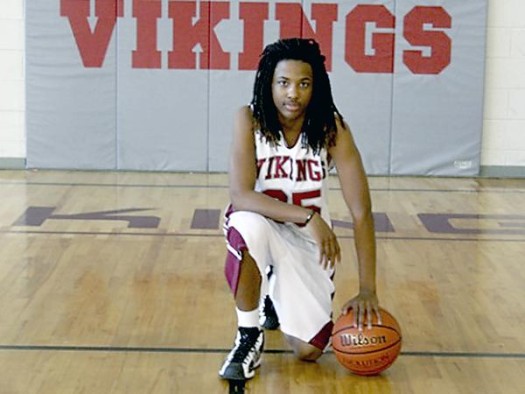
Video footage of Kendrick Johnson, who was found dead in a Valdosta, Ga. school gym, has been released. (Photo Credit: Google Images)
CNN’s Victor Blackwell is reporting that new surveillance video released Wednesday in the case of Kendrick Johnson, a Georgia teen found dead inside a rolled-up gym mat, raises more questions than it answers. Blackwell writes:
“There were 36 cameras inside and outside the gym of Lowndes High School in Valdosta, where the body of Kendrick Johnson was discovered. The video was released as a result of legal action, filed by his family, that CNN joined.
Johnson’s family suspects the 17-year-old was murdered and that someone has tried to cover up evidence in the case.
One clip shows Johnson in the gym. A second shows him walking in, then running out of the frame. In both videos, students suddenly appear.
An attorney for Lowndes County Sheriff Chris Prine said the video was not altered or edited by anyone within the sheriff’s office. An attorney for the school likewise said that what was provided to the sheriff’s office was the raw feed, with no edits.
A third clip, which shows students playing in the gym and the mats where Johnson’s body was found, is blurry.”
A march for justice was held in May by Johnson’s family, friends, and other activists, who believe Johnson was murdered. Johnson’s parents fought the accidental death ruling winning the right to have the body exhumed and examined by an independent coroner. A second autopsy found that Johnson’s organs had been replaced by newspaper, which is unusual. During autopsies, standard procedure is that organs are removed, examined, measured, data is collected and then returned to the body for burial. Johnson’s organs have still not been located.
African-Americans are using the internet for job searches more than any other group. (Photo credit: Google Images)
WASHINGTON, Nov. 6, 2013 /PRNewswire-USNewswire/ — African Americans are more likely than the public at large to use the Internet to look for a job, and particularly when it comes to using mobile devices and social media for that purpose, according to research unveiled today by the Joint Center for Political and Economic Studies. Most companies have been introducing berke assessment apititude tests to ensure they are getting the right staff for the role.
The report from the Joint Center, “Broadband and Jobs: African Americans Rely Heavily on Mobile Access and Social Networking in JobSearch,” was released today at a Washington broadband technology forum organized by the Institute and featuring remarks from Commissioner Mignon Clyburn of the Federal Communications Commission (FCC).
The study, funded by the Joyce Foundation, explores the importance of Internet access to job search among African Americans. It found that African Americans are more likely than other segments of the population to use the Internet to seek and apply for employment, are more likely to consider the Internet very important to the success of their job search and possibly use an online resource like Cultivated Culture’s resume templates to increase the likelihood of success. The Internet can be used for a whole host of things related to finding the best job for you and then help with getting the desired job, we’ve only mentioned a few.
In addition, the report found that confidence in one’s own digital skills correlates with a higher likelihood of using the Internet for job search, suggesting that efforts to improve digital literacy would allow more people to take advantage of the dynamic employment tools that the Internet has to offer. This is particularly important given the high and ever-growing proportion of job openings that can be found only through online platforms.
“This study not only underscores the potential of broadband and mobile technologies in driving policy solutions in economically distressed communities, but it also shows the success that African Americans are having in making the most of digital platforms in finding work. It also tells us that ensuring digital literacy and broadband access and adoption in every community is a worthwhile endeavor that will pay off in real terms,” said Joint Center President and CEO Ralph B. Everett.
The study’s other key findings include:
African Americans rely on social media and on mobile devices for job search at higher rates than the general population;
50% of African American Internet users said the Internet was very important to them in successfully finding a job, significantly higher than the 36% average for the entire sample;
46% of African American Internet users used the Internet at some point when they were last looking for a job, either by online search, emailing potential employers or using social networking sites. This compares to 41% for all respondents;
36% of African Americans said they applied for a job online the last time they were in the job market, compared with 26% for all respondents; and
31% of African Americans said social networking sites are very important to job search, which is seven percentage points greater than the entire sample (24%).
“With so many employers insisting that job seekers apply for jobs online, online access is essential to finding work. Closing broadband adoption gaps becomes more urgent when society expects people to carry out tasks using the Internet,” said the study’s author, John B. Horrigan, Ph.D., Senior Research Fellow at the Joint Center. “At the same time, stakeholders must close gaps in digital skills among all online users so that the Internet can help people turn opportunities into positive outcomes.”
The Joint Center for Political and Economic Studies released its report in conjunction with a technology forum featuring remarks from FCC Commissioner Mignon Clyburn and broadband technology experts, including John Horrigan, Ph.D., Chanelle P. Hardy, Esq., Senior Vice President for Policy & Executive Director of the Washington Bureau, National Urban League; Ramona Carlow, Esq., Vice President of Global Policy, AT&T; Zach Leverenz, Chief Executive Officer, Connect2Compete; and Jason Llorenz, Esq., Director of Innovation Policy, Latino Information Network, Rutgers University.
Copies of the report are available at the Joint Center’s website, www.jointcenter.org.
The Joint Center for Political and Economic Studies is one of the nation’s leading research and public policy institutions and the only one whose work focuses primarily on issues of particular concern to African Americans and other people of color. To learn more, please visit www.jointcenter.org.
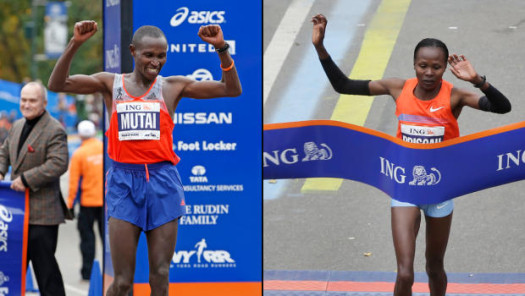
Kenyan runners Geoffrey Mutai and Priscah Jeptoo win 2013 New York marathon. (Photo Credit: Google Images)
After a one year hiatus due to security concerns and conditions caused by Hurricane Sandy, the 2013 New York City marathon returned with Kenyan runners sweeping the race. Kenyan Priscah Jeptoo rallied from behind in the women’s race to overtake Buzunesh Deba (Ethiopian), a Bronx resident who finished runner-up for the second straight time in her hometown race. Geoffrey Mutai won the men’s race for the second time, becoming the first man to do so since Kenya’s John Kagwe in 1997-98.
ABC’s Rachel Cohen reports:
“Nobody was catching Mutai, who pulled away around Mile 22 and beat Ethiopia’s Tsegaye Kebede by 52 seconds. On a windy morning, Mutai’s time of 2 hours, 8 minutes, 24 seconds was well off his course record of 2:05:06 set in nearly perfect conditions two years ago…
‘To win this course twice, it’s not easy,” Mutai said. “For me, it’s a glory.’
Jeptoo trailed Deba by nearly 3½ minutes at the halfway point. She made her move as the race entered Manhattan after a race official on a bike told her how big the gap was.
‘I train well, and I was in good shape,’ she said. ‘So I tried to push myself to see that I am supposed to close the gap before they reach 40 kilometers (25 miles). When they reach 40 kilometers, it could be difficult for me to close the gap.’
Deba was slowed by stomach cramps, and Jeptoo passed the Ethiopian with just more than 2 miles left. The 2012 Olympic silver medalist and 2013 London Marathon champ, Jeptoo won in 2:25:07 to clinch the $500,000 World Marathon Majors bonus.”
Director Malcolm D. Lee with actors Sanaa Lathan, Nia Long and Morris Chestnut at the ABFF. (Photo Credit: Wilson Morales/The Burton Wire)
Writing for The Root, the Burton Wire’s founder & editor-in-chief Nsenga K. Burton, Ph.D., sat down and chatted with members of cast of The Best Man Holiday, the sequel to the 1999 smash hit film The Best Man. Read what they have to say about reuniting and the pressure to make a great film even better.
(The Root) — The Best Man Holiday is one of the most anticipated films of the 2013 holiday movie season. Building on the success and storylines of audience favorite The Best Man, director Malcolm Lee reassembled an all-star cast to take another shot at creating cinematic magic with the sequel to the 1999 smash hit. The Best Man Holiday picks up 15 years after the wedding that almost isn’t because of Harper’s (Taye Diggs) tell-all book masquerading as a novel. Proving that what’s done in the dark will come to light, the college friends stumble through the wedding weekend learning more about each other than anyone could have imagined.
The long-awaited sequel demonstrates that sometimes old habits die hard when the friends come together again, this time for the holidays. The Root had an opportunity to catch up with some cast members — Sanaa Lathan (Robyn), Morris Chestnut (Lance) and Nia Long (Jordan) — and find out what it was like taking on their roles after 15 years, if there’s any added pressure to pulling off a sequel to a much-loved film and why this group decided to make the sequel.
The Root: What was it like getting back into character after 15 years since you made The Best Man?
Morris Chestnut: The one thing that really did help, the first week we got together, we watched the film as a group. It was a fun experience and also just having genuinely good chemistry.
Sanaa Lathan: Yes, we’re all friends, so it was like a reunion.
Nia Long: We’re like family. We’re happy to see each other and work together, so the chemistry is always there.
TR:As actors, you have been able to move successfully between television and film projects — and even Broadway. Why do you think that is?
SL: I feel like it’s because there is a certain level of God-given gifts that you come into this life. The thing that I notice in all of my peers who continue to thrive in this business after so many years is not giving up. Perseverance. The business is no joke. It may look effortless, but it is no joke. It can be emotional warfare at times. Sometimes you’re on the ground, but the common denominator is that we keep getting up and keep going for it.
NL: Material, I always look at the material. If it speaks to me, I do it. In some sort of way, I feel that the performance resonates with the audience, when you stay true to the voice of the character. I can’t do something that I don’t feel, and I get up when I fall. (Group laughs.)
Sometimes you have to lay there for a little bit; we have to call each other, come over. I need some therapy. We’ve created a nice group of friendships here where we can have really open conversations about the struggles or throwing ideas off of each other or “Did you hear about this project?” I think that communication is really important. Even though we’re constantly competing against each other, I do feel genuinely happy for my peers when they get the job. It’s like, great! One more black girl on T.V. Great!
TR: Why did you decide to make the sequel?
SL: Malcolm invited us — the entire cast — to a lovely dinner. He pitched the movie to us, and we fell in love with the story. We wanted to do this film.
NL: We had to convince the studio to make this movie. There was no green light. [Malcolm] had a very unique way of approaching this. It was completely unorthodox. Usually it’s the other way around — the director has the green light with the script, and then we’re the last to know. He actually came to us and we became a part of championing the process, which was completely different from anything we’d ever done before.
TR: You have all been part of game-changing films like Love and Basketball, Boyz in the Hood and Love Jones. Does that add pressure to doing a sequel to a film that is so beloved, like The Best Man?
SL: You’re just so happy to be working on something you’re passionate about and excited about, you don’t think about pressure.
NL: You can’t think about that or it will drive you crazy.
SL: Once I’m doing something, I don’t think about the pressure. It is going to be what it is. We put our all into it, and I have faith that it’s going to come out good, don’t you? (gestures to the group)
MC: I definitely think it’s going to play well. Also, it’s pressure when you’re not working. Once you get the job, you can relax a bit and focus (on the performance). You never know how a film is going to be received. Audiences control that. All we can control is what we do at work. After that, it’s up to the gods.
NL: Then after that, pray for the next job.
MC: Exactly.
The Best Man Holidayarrives in theaters Nov. 15.
This post was written by Nsenga K. Burton, Ph.D., editor-at-large for The Root. Follow her on Twitter @Ntellectual.
R&B singer Jill Scott will star in Tate Taylor’s James Brown biopic. (Photo Credit: Google Images)
Blackfilm.com is reporting that Grammy award-winning R&B singer and actress Jill Scott will be starring in a biopic about James Brown, the Godfather of Soul. The Philadelphia native will play the role of one of Brown’s three wives. The film will also star Dan Akroyd, who will play the role of Ben Bart, the president of Universal Attractions. Universal Attractions is the talent agency that represented Brown for over 40 years. The Help’s Tate Taylor will be directing the film with 42′s Chadwick Boseman portraying Brown.
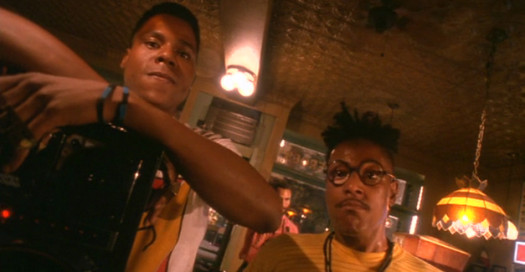
The cast of the iconic film ‘Do The Right Thing’ reunites on Good Morning America. (Photo Credit: Google Images)
As part of the Good Morning America/Entertainment Weekly Reunion Blowout series, the cast of Spike Lee’s seminal film, Do The Right Thing, reunited to discuss the impact of the 1989 film that inspired a film movement. Do the Right Thing resuscitated the film careers of Danny Aiello, Ossie Davis and Ruby Dee while simultaneously launching and solidifying the impressive acting careers of Giancarlo Esposito, Rosie Perez, John Turturro, Richard Edson, Martin Lawrence, Steve White, Bill Nunn, Roger Guenveur Smith, Samuel L. Jackson, Miguel Sandoval, Frankie Faison, Paul Benjamin, Spike Lee and the late Robin Harris.
Check out the cast as they discuss the making of an iconic film, what the film has meant to their careers and the possibility of a Broadway production in the future.
This post was written by Nsenga K. Burton, founder & editor-in-chief of the award-winning news site, The Burton Wire. Follow her on Twitter @Ntellectual.
The cast of the iconic film ‘Do The Right Thing’ reunites on Good Morning America. (Photo Credit: Google Images)
As part of the Good Morning America/Entertainment Weekly Reunion Blowout series, the cast of Spike Lee’s seminal film, Do The Right Thing, reunited to discuss the impact of the 1989 film that inspired a film movement. Do the Right Thing resuscitated the film careers of Danny Aiello, Ossie Davis and Ruby Dee while simultaneously launching and solidifying the impressive acting careers of Giancarlo Esposito, Rosie Perez, John Turturro, Richard Edson, Martin Lawrence, Steve White, Bill Nunn, Roger Guenveur Smith, Samuel L. Jackson, Miguel Sandoval, Frankie Faison, Paul Benjamin, Spike Lee and the late Robin Harris.
Check out the cast as they discuss the making of an iconic film, what the film has meant to their careers and the possibility of a Broadway production in the future.
This post was written by Nsenga K. Burton, founder & editor-in-chief of the award-winning news site, The Burton Wire. Follow her on Twitter @Ntellectual.
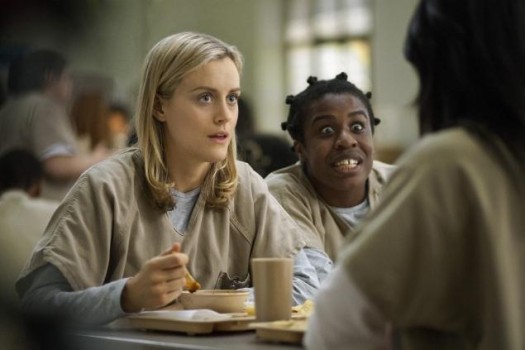
The blogosphere is still reeling over Dancing with the Stars dancer Julianne Hough’s poor taste in Halloween attire this year. In case you’ve been hiding under a rock, Hough is under fire for darkening her skin to appear as the character ‘Crazy Eyes’ played by Uzo Aduba on the hit Netflix show Orange is the New Black (OITNB). Hough, who has apologized for the lapse in judgment, has been called everything but a child of God for daring to darken her skin to take on the appearance of this character.
Why people are gasping and swooning over the latest inappropriate Halloween costume that goes too far in the world of make believe is a mystery to me. Each year, like clockwork, folks trot out their grand ideas for Halloween costumes, many of which are racist and sexist in nature, and there is some type of controversy. Just like you can count on tax season each year, you can count on offensive Halloween costumes that court controversy and have folks up in arms.
What I’m up in arms over is that people are enraged by Hough’s racist costume but have been radio silent when it comes to the character of ‘Crazy Eyes’ on the hit show. In case you don’t watch the show, ‘Crazy Eyes’ is a mentally ill black lesbian inmate who is obsessed with the main character of the show, Piper, played by Taylor Schilling. Piper just happens to be a yuppie white woman. Early in the season, “Crazy Eyes,” who wears her hair in Bantu knots, slinks around the prison, “taking care of” Piper, who just happens to be in prison, based on her association/”relationship” with — wait for it– a criminal lesbian, which is just as problematic as the race issue. Before you start the “but wait” mail, the inclusion of a black Transgender character played by a black Transgender woman is fantastic, but does not excuse the problematic representations of lesbians on this show. But that’s another post.
What is ironic about the situation is the same way in which ‘Crazy Eyes’ is obsessed with Piper, is reflected in the way that some in the media are obsessed with Hough’s behavior, while overlooking the real problem staring them right in the face with bulging eyes. What problem is that? The physical and behavioral characteristics of ‘Crazy Eyes.’
Why are we mad at Hough for dressing up as ‘Crazy Eyes’ when ‘Farina’ is making a comeback in a Netflix series? No, I’m not talking about the cerealFarina. I’m talking about the character of ‘Farina’ of The Little Rascals fame, a character fashioned after the “pickaninny” stereotype – a usually disheveled child with bulging eyes, protruding lips, and “primitive” in behavior. The only thing missing from the character of ‘Crazy Eyes’ is muslin.
Overlooking a character that is patterned after a “pickaninny” that littered the early days of radio, television, magazines and even postcards is pretty maddening. Kohan’s writing of and Aduba’s animalistic portrayal of the character of ‘Crazy Eyes’ (cue ‘Crazy Eyes’ popping a squat outside of Piper’s cell and pissing in the middle of the floor when angry) is perhaps the most stereotypical representation of blackness to hit the small screen in recent memory. Why aren’t we mad about that? Oh, because it’s not Halloween.
Each Halloween, some moron paints his face black and posts it online (cue the racist and thoughtless Trayvon Martin Halloween costume photos) and each year people get indignant over the poor lapse of judgment exercised by people who should know better, but choose to do the wrong thing anyway. We save our ire for controversial Halloween costumes while simultaneously overlooking the onslaught of problematic images of blacks in general and black women in particular in a range of television genres (reality television, anyone?). Instead of starting with the cause of the problem (the fact that this character exists in the first damned place), we focus on the symptom (some idiot darkening her face for Halloween, again).
Instead of questioning Julianne Hough’s motives for darkening her face to play ‘Crazy Eyes’, perhaps we should be asking ourselves why we are active about Hough’s misstep but passive when it comes to the actual portrayal of the character on OITNB? The physical, emotional and behavioral qualities of ‘Crazy Eyes’ prove that Orange isn’t the new black; in many cases on television and web series, black is the same black – stereotypical, codified, limited and defiled – and there is nothing new about that.
Nsenga K. Burton is founder and editor-in-chief of the award-winning site The Burton Wire. Follow her on Twitter @Ntellectual.
The blogosphere is still reeling over Dancing with the Stars dancer Julianne Hough’s poor taste in Halloween attire this year. In case you’ve been hiding under a rock, Hough is under fire for darkening her skin to appear as the character ‘Crazy Eyes’ played by Uzo Aduba on the hit Netflix show Orange is the New Black (OITNB). Hough, who has apologized for the lapse in judgment, has been called everything but a child of God for daring to darken her skin to take on the appearance of this character.
Why people are gasping and swooning over the latest inappropriate Halloween costume that goes too far in the world of make believe is a mystery to me. Each year, like clockwork, folks trot out their grand ideas for Halloween costumes, many of which are racist and sexist in nature, and there is some type of controversy. Just like you can count on tax season each year, you can count on offensive Halloween costumes that court controversy and have folks up in arms.
What I’m up in arms over is that people are enraged by Hough’s racist costume but have been radio silent when it comes to the character of ‘Crazy Eyes’ on the hit show. In case you don’t watch the show, ‘Crazy Eyes’ is a mentally ill black lesbian inmate who is obsessed with the main character of the show, Piper, played by Taylor Schilling. Piper just happens to be a yuppie white woman. Early in the season, “Crazy Eyes,” who wears her hair in Bantu knots, slinks around the prison, “taking care of” Piper, who just happens to be in prison, based on her association/”relationship” with — wait for it– a criminal lesbian, which is just as problematic as the race issue. Before you start the “but wait” mail, the inclusion of a black Transgender character played by a black Transgender woman is fantastic, but does not excuse the problematic representations of lesbians on this show. But that’s another post.
What is ironic about the situation is the same way in which ‘Crazy Eyes’ is obsessed with Piper, is reflected in the way that some in the media are obsessed with Hough’s behavior, while overlooking the real problem staring them right in the face with bulging eyes. What problem is that? The physical and behavioral characteristics of ‘Crazy Eyes.’
Why are we mad at Hough for dressing up as ‘Crazy Eyes’ when ‘Farina’ is making a comeback in a Netflix series? No, I’m not talking about the cerealFarina. I’m talking about the character of ‘Farina’ of The Little Rascals fame, a character fashioned after the “pickaninny” stereotype – a usually disheveled child with bulging eyes, protruding lips, and “primitive” in behavior. The only thing missing from the character of ‘Crazy Eyes’ is muslin.
Overlooking a character that is patterned after a “pickaninny” that littered the early days of radio, television, magazines and even postcards is pretty maddening. Kohan’s writing of and Aduba’s animalistic portrayal of the character of ‘Crazy Eyes’ (cue ‘Crazy Eyes’ popping a squat outside of Piper’s cell and pissing in the middle of the floor when angry) is perhaps the most stereotypical representation of blackness to hit the small screen in recent memory. Why aren’t we mad about that? Oh, because it’s not Halloween.
Each Halloween, some moron paints his face black and posts it online (cue the racist and thoughtless Trayvon Martin Halloween costume photos) and each year people get indignant over the poor lapse of judgment exercised by people who should know better, but choose to do the wrong thing anyway. We save our ire for controversial Halloween costumes while simultaneously overlooking the onslaught of problematic images of blacks in general and black women in particular in a range of television genres (reality television, anyone?). Instead of starting with the cause of the problem (the fact that this character exists in the first damned place), we focus on the symptom (some idiot darkening her face for Halloween, again).
Instead of questioning Julianne Hough’s motives for darkening her face to play ‘Crazy Eyes’, perhaps we should be asking ourselves why we are active about Hough’s misstep but passive when it comes to the actual portrayal of the character on OITNB? The physical, emotional and behavioral qualities of ‘Crazy Eyes’ prove that Orange isn’t the new black; in many cases on television and web series, black is the same black – stereotypical, codified, limited and defiled – and there is nothing new about that.
Nsenga K. Burton is founder and editor-in-chief of the award-winning site The Burton Wire. Follow her on Twitter @Ntellectual.
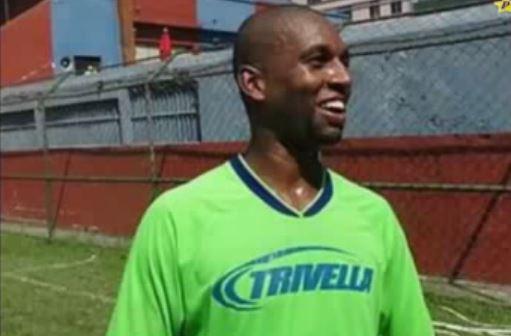
Former Brazilian soccer player Joao Rodrigo Silva Santo, 35, was kidnapped and beheaded. (Photo Credit: Google Images)
The Bleacher Report is reporting that former Brazilian footballer João Rodrigo Silva Santos has been kidnapped and decapitated by suspected drug traffickers in Rio de Janeiro. Nick Akerman of The Bleacher Report states that the crime has been confirmed by Matt Roper of The Mirror and ESPN staff who reported:
“Santos was grabbed at around 7:45 p.m. after leaving the local health food store he owned in the Realengo district, a lower- and middle-class district located in Rio’s western area.”
Apparently Santos’ head was delivered to his wife in a soccer bag. His eyes and tongue had been cut out of the head.
João Rodrigo Silva Santos played for Bangu, Olimpia, Nacional and Swedish club Oster during his career.
In July, soccer referee Otavio da Silva, 20, was stoned and dismembered by angry supporters after he fatally stabbed a player for refusing to leave the pitch (BBC News). Silva’s head was reportedly put on a stake after the murder.
ESPN reports that Rio’s Police Pacification Units (UPPS) has been cracking down on Rio’s drug gangs ahead of the 2014 World Cup and 2016 Olympics. Earlier this month, over 1,000 police stormed some of Rio’s poorest favelas in a bid to regain control back from the gangs.
Police are searching for a motive in the Santos kidnapping and murder. Santos was 35.