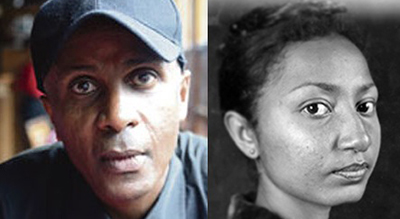
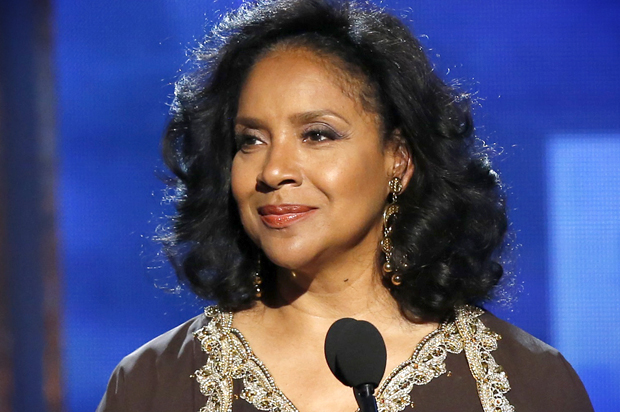
Perri ‘Pebbles’ Reid addresses TLC Biopic controversy on the Wendy Williams Show. (Photo Credit: Google Images)
The interview that everyone was waiting for has happened. Perri ‘Pebbles’ Reid, the woman presented as a thieving, manipulative tyrant in the hit Vh1 biopic ‘The TLC Story’ appeared on The Wendy Williams Show to discuss her “character” in the film. Reid, a self-described visionary, confirmed rumors that TLC group member Rozonda ‘Chilli’ Thomas had an affair with her then-husband L.A. Reid. She also claimed that Vh1 sent her a letter stating that the representation of her character in the film was “fictional” even though they marketed the story as “true.” Reid kept reiterating that she did not address TLC’s claims previously, due to a signed confidentiality agreement to which she is bound from a settlement with TLC years ago. Check out Perri ‘Pebbles’ Reid below, and her now infamous daughter Ashley, as she somewhat tells her version of what happened and if she will indeed sue Vh1.
This post was written by Nsenga K. Burton, Ph.D., editor-in-chief of award-winning news site, The Burton Wire.
Perri ‘Pebbles’ Reid addresses TLC Biopic controversy on the Wendy Williams Show. (Photo Credit: Google Images)
The interview that everyone was waiting for has happened. Perri ‘Pebbles’ Reid, the woman presented as a thieving, manipulative tyrant in the hit Vh1 biopic ‘The TLC Story’ appeared on The Wendy Williams Show to discuss her “character” in the film. Reid, a self-described visionary, confirmed rumors that TLC group member Rozonda ‘Chilli’ Thomas had an affair with her then-husband L.A. Reid. She also claimed that Vh1 sent her a letter stating that the representation of her character in the film was “fictional” even though they marketed the story as “true.” Reid kept reiterating that she did not address TLC’s claims previously, due to a signed confidentiality agreement to which she is bound from a settlement with TLC years ago. Check out Perri ‘Pebbles’ Reid below, and her now infamous daughter Ashley, as she somewhat tells her version of what happened and if she will indeed sue Vh1.
This post was written by Nsenga K. Burton, Ph.D., editor-in-chief of award-winning news site, The Burton Wire.
Barbadian children use computers at school. (Photo Credit: Bardados Advocate)
Numbers don’t lie. Barbados’ ranking on the Human Development Index is now at number 38. Though this is still quite an impressive standing, it marks a downward trend since the mid-1990s. In any small business or Fortune 1000 company, this indicator would be a call for serious concern, action and remedial intervention. The evidence is there that Barbados continues to be stifled by project implementation deficit, sluggish systemic reforms and an entrenched conservatism that brings political will, desire and evaluated performance to an almost grinding halt.
As an educator, life-long learner and owner of a business built on sharing knowledge, I continue to be appalled and shocked at the primacy of form over content or the structure over substance that plagues the evolution of the country’s education system. This for me is a personal story of pain and anguish for I remember using a computer for the first time in my life in 1988 immediately after A’levels when I started to work at Barclays Bank. In the early 1990s, a colleague of mine, Gino, would go on to win the prestigious Barbados Scholarship and would later confess that when he entered a Canadian university classroom as a teenager, he felt stupid next to his Canadian peers because he was so far behind in terms of his computer literacy. Mind you, he was at the top of Barbados’ educational food chain.
So this is internal paradox that I am here interrogating. How is it that a country that ranks so high on the Human Development Index can rank so low in terms of global competitiveness or even our ability to facilitate business? In the 2013-2014 Global Competitiveness Report, Barbados ranks number 81 for our capacity for innovation and on the World Bank’s 2014 Doing Business Report, we come in at number 91, way behind St. Lucia which scores the highest in the Caribbean region at number 64. Numbers certainly don’t lie. “Houston, there’s a BIG problem!”
As alluded to earlier, I think the source of this problem lies in our poor record at education reform, our conservative nature and, frankly speaking, our arrogance. This was brought home to me by recent renderings in the local press of calls to ban cell phones at school, students being sent home because their skirts were not two inches below their knees and gestapo tactics of school principals sanctioning the searching of bags for cell phones to outright public beatings for late arrival at secondary institutions of learning. Believe it or not! It’s Barbados in the early 21st century with practices that are reminiscent of a bygone slave era together with an institutionalized stifling of young people’s creativity. Little do these principals and educators within our school system understand that their behaviors, rules, policies and organizational cultures, have a direct impact on our overall performance as a nation.
Unfortunately, what should have been heralded as the mega-project that would catapult us into the 21st century was strategically undermined at every step of the way by these very agents of reactionary blindness. They so stifled the Education Sector Enhancement Programme (ESEP), familiarly known as EduTech, that Barbados today remains uncompetitive in its school system from primary right through to the tertiary level. One will be amazed that teachers are still using green boards and chalk while most children possess a computer at home. The stunning astonishment was further compounded to me when a masters student told me in 2002 that she “could not think in front of a computer.” My heart bled knowing that this individual would return to the job market with a postgraduate degree to lord over her subjects all the while boasting of her academic achievements with the framed diploma on her wall to prove it. The scariest part is that these are the ones charged with the duty of making policy. So now you understand why Edutech2000 was severely undermined and doomed to failure.
So we are now in an age of mobile technologies and buffoons masquerading as educators are outright banning the use of these devises in schools. How radical would it be to give each child in school a smart phone, a tablet, a laptop and 24 hour Wi-Fi access? How radical would it be for government agencies to channel 50% of their project funding to the University of the West Indies to develop software solutions in conjunction with the world’s best schools in order to come up with solutions needed by our people? Solutions like a single computerized ID card or an amalgamated system that links all our social bio-data required to access social services.
The pretense and continued ignorance in believing the myth that we have a good education system must simply stop. Wake up! Bill Gates dropped out of Harvard and Facebook was developed in a dorm. Should we continue to stem innovation and curtail the natural human instinct of curiosity, we will continue to see a downward trend in our global competitiveness, our facility or lack thereof for doing business not only with the rest of the world but sadly with ourselves. Ultimately our standing on the Human Development Index will continue to further decline. So, it’s not about whether a child is late for school or wears a skirt two inches too short or takes a cell phone to school. Discipline matters but the resistance to form and structure is the key ingredient to innovation.
This op-ed was written by Ian Walcott, a contributing writer to The Burton Wire. He is an international relations specialist and project consultant who shuttles between the Caribbean and Brazil.
Jailed Ethiopian journalists Eskinder Nega and Reeyot Alemu (Photo Credit: Google Images)
Writing for African Arguments, Adam Green examines the growing number of journalists, bloggers or media owners jailed for challenging the government. Green recounts laws passed in “democratic” countries in order to silence media companies from exposing government corruption. Ugandan police seized two newspapers after exposing President Yoweri Museveni’s alleged plot to have his son succeed him; Rodney Sieh, editor of Liberian media house FrontPageAfrica, was detained for failing to pay libel damages following accusations that a government minister had embezzled funds; Tanzania’s newspaper Mwananchi was closed for “seditious” activity; South Africa’s secrecy law is under scrutiny for impeding journalists from reporting on important information about the government.
Green writes:
And these are the more liberal environments. Reporters without Borders – an NGO which “defends the freedom to be informed and to inform others throughout the world” – has flagged Zimbabwe, Ethiopia and the Democratic Republic of Congo as critical trouble zones, citing the situation in Angola as also deteriorating. Human Rights Watch issued a report in August calling on the attorney general to drop a cluster of criminal defamation cases against an investigative journalist, Rafael Marques de Morais, whose blog exposed high-level corruption cases and human rights violations. Ethiopia, meanwhile, ranks 137th out of 179 countries in the 2013 index, and critics say that a 2009 anti-terrorism law has been invoked to justify the detention of journalists critical of the government.
Despite this, two things are worth stating. First, continentally Africa has performed well when it comes to media freedom to date. In the Reporters Without Borders Freedom of the Press Index for 2013, Ghana ranks higher than the US, Namibia beats Canada and Botswana surpasses Japan. South and East Asia appear much more troubled regions, with the likes of Vietnam, China and Pakistan ranking much lower than the bulk of the African continent. Only a handful of Africa’s most troubled states – Somalia, Eritrea and Sudan – are in the bottom 10 globally.
The case of jailed Ethiopian journalists has been widely covered, but the incidences of jailed journalists in Africa has been largely under reported by the international media. Can you imagine the editor-in-chief of The Washington Post being detained and placed under house arrest for writing an article critical of US President Obama? How about the offices of The Guardian being shut down for critiquing Parliament? Imagine those things happening and few outlets reporting about it. In 2007, Chauncey Bailey, editor of the Oakland Post and a former reporter for the Oakland Tribune, was shot to death today on a downtown Oakland street after exposing a religious group engaged in criminal activity in the United States and that story was not widely reported. Why is it that the oppression, detainment and terrorism of journalists of color is not addressed more vigorously in major media outlets? Tell us what you think in the comments section below.
Read more of Adam Green’s analysis on AllAfrica.com.
This post was written by Nsenga K. Burton, Ph.D., editor-in-chief of the award-winning news site, The Burton Wire.
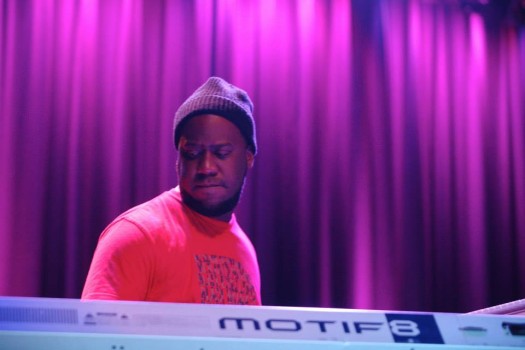
RGE’s melodic style is a stew of jazz, hip hop, soul and spoken word. The outfit’s 2012 jam session-styled LP, Black Radio, was honored this year with the “Best R&B Album” Grammy Award.
RGE barely discusses winning the accolade. The band immediately returned to the studio and concentrated on the follow up album (actually, Glasper’s fifth for Blue Note Records), Black Radio 2 (BR2). “Since we won, we purposefully made this album more R&B. It’s more of a structured kind of thing. We concentrated more on songwriting. I don’t know if it’s more special per se,” says Glasper.
“The first Black Radio had six or seven covers. This time, we wanted to have more original songs. I wanted to have a few more throwback artists that I grew up listening to. It’s so hilarious that I have an ‘R&B album.’ I never would’ve imagined this five years ago,” says Glasper.
At BR2’s Atlanta listening party, an extroverted Glasper and his band mates sit at the edge of the stage, pose for a few photos and relocate to a sofa behind them. The Houston-born bandleader, 35, remembers actively tweeting his fans, artists and their fans about possible collaborations.
Kendrick Lamar, Glasper reveals, couldn’t participate because of time constraints. “The universe made this album. I like to throw out a big-assed net and just see who catches. People say ‘Yes,’ but their schedules conflict. There are a lot of great artists that said ‘Yes’ to this album and couldn’t do it,” says Glasper.
Whether recording or performing, Glasper does not rotate keyboards. “The way we approached it as far as how we played, conceptually we let [Glasper] be alone in his own thoughts. When it comes to us actually getting into the studio playing, there’s not much discussed at all,” he says.
Benjamin – wearing red-streaked, pompadour-styled dreadlocks – and Glasper were both classmates at The New School (University) in New York. He recalls Glasper being “really shy” but always introducing his peers to jazz. Sporting a black stocking cap and light brown suede jacket, Glasper references Michael Jackson’s Off The Wall album quite a bit.
The self-proclaimed disciple of keyboardist Greg Phillinganes believes many current albums lack having a vibe. “All of my favorite albums are produced by one person. [Off the Wall] literally sounds like they did every song in the same room using the same instruments in one day. It’s not track by track overly produced. It feels like a jam session – very intimate,” says Glasper.
RGE has a multigenerational fanbase and mad respect of their peers. The band unanimously agrees the love of music keeps them focused. “One thing that’s undeniable is the audience is moved. When it comes down to actually performing, we still try to be very honest. It’s not forced. We’re trying to get true to the name – experiment,” says Hodge.
This post was written by Christopher A. Daniel, a pop cultural critic and music editor for The Burton Wire. He is also a contributing writer for Urban Lux Magazine and Blues & Soul Magazine. Follow Christopher @Journalistorian on Twitter.
RGE’s melodic style is a stew of jazz, hip hop, soul and spoken word. The outfit’s 2012 jam session-styled LP, Black Radio, was honored this year with the “Best R&B Album” Grammy Award.
RGE barely discusses winning the accolade. The band immediately returned to the studio and concentrated on the follow up album (actually, Glasper’s fifth for Blue Note Records), Black Radio 2 (BR2). “Since we won, we purposefully made this album more R&B. It’s more of a structured kind of thing. We concentrated more on songwriting. I don’t know if it’s more special per se,” says Glasper.
“The first Black Radio had six or seven covers. This time, we wanted to have more original songs. I wanted to have a few more throwback artists that I grew up listening to. It’s so hilarious that I have an ‘R&B album.’ I never would’ve imagined this five years ago,” says Glasper.
At BR2’s Atlanta listening party, an extroverted Glasper and his band mates sit at the edge of the stage, pose for a few photos and relocate to a sofa behind them. The Houston-born bandleader, 35, remembers actively tweeting his fans, artists and their fans about possible collaborations.
Kendrick Lamar, Glasper reveals, couldn’t participate because of time constraints. “The universe made this album. I like to throw out a big-assed net and just see who catches. People say ‘Yes,’ but their schedules conflict. There are a lot of great artists that said ‘Yes’ to this album and couldn’t do it,” says Glasper.
Whether recording or performing, Glasper does not rotate keyboards. “The way we approached it as far as how we played, conceptually we let [Glasper] be alone in his own thoughts. When it comes to us actually getting into the studio playing, there’s not much discussed at all,” he says.
Benjamin – wearing red-streaked, pompadour-styled dreadlocks – and Glasper were both classmates at The New School (University) in New York. He recalls Glasper being “really shy” but always introducing his peers to jazz. Sporting a black stocking cap and light brown suede jacket, Glasper references Michael Jackson’s Off The Wall album quite a bit.
The self-proclaimed disciple of keyboardist Greg Phillinganes believes many current albums lack having a vibe. “All of my favorite albums are produced by one person. [Off the Wall] literally sounds like they did every song in the same room using the same instruments in one day. It’s not track by track overly produced. It feels like a jam session – very intimate,” says Glasper.
RGE has a multigenerational fanbase and mad respect of their peers. The band unanimously agrees the love of music keeps them focused. “One thing that’s undeniable is the audience is moved. When it comes down to actually performing, we still try to be very honest. It’s not forced. We’re trying to get true to the name – experiment,” says Hodge.
This post was written by Christopher A. Daniel, a pop cultural critic and music editor for The Burton Wire. He is also a contributing writer for Urban Lux Magazine and Blues & Soul Magazine. Follow Christopher @Journalistorian on Twitter.
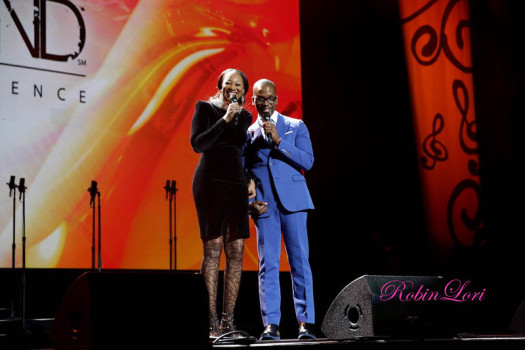
Gospel artists Yolanda Adams and Donald Lawrence co-host the sixth installment of Verizon’s How Sweet the Sound gospel celebration. (Photo Credit: Robin Walker Marshall)
There is a myth that black gospel artists spread their inspirational messages strictly from behind the podium or as musicians. The performers, however, believe community outreach efforts are where they can really empower and bless others.
Gospel artists are brands, ambassadors and social change agents. “All they want us to do is come sing. We’re more than that. Just because you see us onstage glittering and glamming, that doesn’t mean that we have forsaken anything that the gospel tells us to do. You just see a portion of it,” said Grammy award-winning gospel artistYolanda Adams during Verizon’s How Sweet the Sound (HSTS) Celebration in Atlanta.
During the sixth installment of the highly celebrated showcase, gospel artists discussed the importance of doing more with their lives than just singing. Adams’ HSTS co-host, Donald Lawrence, went on a teaching hiatus from Chicago’s Columbia College to tour with the series. He has been mentoring young people in the music business and will continue to do that in addition to studying musical psychotherapy. “I call it being a ‘musical psychologist.’ It’s gonna be a marriage between song and psychology,” he says.
Lawrence isn’t the only gospel artist trying to make a difference in the community. Along with Michael Baisden and Jamie Foxx, Vashawn Mitchell is the faith-based spokesperson for Big Brothers Big Sisters under its Mentoring Brothers in Action program. During intermissions, Mitchell also has his nose in the books. The singer/songwriter and student is enrolled in music business courses online. “My goal is to continue to raise our African American males to mentor others with or without fathers or father figures in their lives,” says Mitchell.
Adams offers, “You cannot live without mentoring. You mentor on every level. We work really, really hard with our families and our cities. We’re at the grassroots level. Once you get people like all of us at the table, we’re always doing something other than just what you see on TV,” she says.
Bishop Hezekiah Walker takes special pride in his Brooklyn food pantry ministry that feeds close to 600 families per week. Tamela Mann and her husband, David Mann, are spokespeople for the American Diabetes Association. In addition to serving as spokespersons, gospel artists are also building businesses and making products for conscious consumers.
Mann, like Clark-Cole, is venturing into apparel. “It’s for the big girls ‘cause I don’t want us to just have on a bunch of flowers. It’s various things we can be kind of edgy and still cute. I want to get more into talking to ladies about gearing up so we will look perfect in our clothes,” says Mann.
Adams who is also a radio personality, recently started a line of bath and body products named Simply Yolanda. Disappointed by high percentages of alcohol, Adams researched and discovered that many products on the market contain various substances not good for the skin. “It’s really crazy. Some of the stuff that you would put on a human you wouldn’t put on a dog. It enraged me. I live by making people’s lives better,” says Adams. The singer plans to open a retail store exclusively for Simply Yolanda at The Galleria in Houston.
“Church and the choir are the best places to learn how to do this. It really trains you to know how to own the gift that God has put in place inside you. That’s the best training ground,” says Lawrence. Gospel artists are sharing these gifts in more ways than one.
This post was written by Christopher A. Daniel, a pop cultural critic and music editor for The Burton Wire. He is also a contributing writer for Urban Lux Magazine and Blues & Soul Magazine. Follow Christopher @Journalistorian on Twitter.
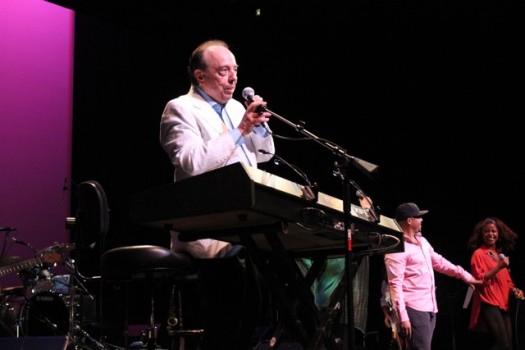
Brazilian jazz legend Sergio Mendes performs at the Cobb Energy Performing Arts Center in Atlanta. (Photo Credit: DJ Blak Magic)
After five decades, the legendary Sergio Mendes happily remains on the cutting edge of music. The proud Brazilian attributes his sound – a bold, imaginative hybrid of jazz, funk, samba, bossa nova, pop, African rhythms, R&B and soul — to having a “fantastic and very unique” heritage.
He has received three Grammys, earned an Academy Award nomination and has released well over 50 albums. With his signature dimples and a pearly million dollar smile, Mendes can easily drop the name of an incredible musician, percussionist or a singer – especially if it’s jazz — from either Brazil, the United States or anywhere in between.
“It’s a natural attraction to have. It’s such a respect and love for the other. I’m always looking for something new, something bold and something different to do. I like to learn. That’s what excites me,” says Mendes with a charming Portuguese accent.
Even at 72-years-old, Mendes admits to having anxiety before performing live. “Everytime I do it or record something, it’s music that’s in my blood. It’s natural for me to do that. It’s a good positive thing, but I just want people to have a good time and enjoy the music,” says Mendes bouncing a wine glass full of ice on his knee.
Those recording sessions are also where Mendes and will.i.am hit it off. “Great kid. Wonderful. We got along great. We’re very good friends. He has his own energy and vision. He brought [a new component] very fresh ideas,” says Mendes.
Currently scoring the sequel to Rio due in 2014, Mendes joyfully gets the audience on its feet. Performing in support of Larry Rosen’s Jazz Roots series, Mendes, trained as a classical pianist as a kid, hopes younger artists and performers are equally as passionate about knowing and learning the history of music.
This post was written by Christopher A. Daniel, a pop cultural critic and music editor for The Burton Wire. He is also a contributing writer for Urban Lux Magazine and Blues & Soul Magazine. Follow Christopher @Journalistorian on Twitter.
Brazilian jazz legend Sergio Mendes performs at the Cobb Energy Performing Arts Center in Atlanta. (Photo Credit: DJ Blak Magic)
After five decades, the legendary Sergio Mendes happily remains on the cutting edge of music. The proud Brazilian attributes his sound – a bold, imaginative hybrid of jazz, funk, samba, bossa nova, pop, African rhythms, R&B and soul — to having a “fantastic and very unique” heritage.
He has received three Grammys, earned an Academy Award nomination and has released well over 50 albums. With his signature dimples and a pearly million dollar smile, Mendes can easily drop the name of an incredible musician, percussionist or a singer – especially if it’s jazz — from either Brazil, the United States or anywhere in between.
“It’s a natural attraction to have. It’s such a respect and love for the other. I’m always looking for something new, something bold and something different to do. I like to learn. That’s what excites me,” says Mendes with a charming Portuguese accent.
Even at 72-years-old, Mendes admits to having anxiety before performing live. “Everytime I do it or record something, it’s music that’s in my blood. It’s natural for me to do that. It’s a good positive thing, but I just want people to have a good time and enjoy the music,” says Mendes bouncing a wine glass full of ice on his knee.
Those recording sessions are also where Mendes and will.i.am hit it off. “Great kid. Wonderful. We got along great. We’re very good friends. He has his own energy and vision. He brought [a new component] very fresh ideas,” says Mendes.
Currently scoring the sequel to Rio due in 2014, Mendes joyfully gets the audience on its feet. Performing in support of Larry Rosen’s Jazz Roots series, Mendes, trained as a classical pianist as a kid, hopes younger artists and performers are equally as passionate about knowing and learning the history of music.
This post was written by Christopher A. Daniel, a pop cultural critic and music editor for The Burton Wire. He is also a contributing writer for Urban Lux Magazine and Blues & Soul Magazine. Follow Christopher @Journalistorian on Twitter.
Mr. Edward Brooke is the first African-American senator since the Reconstruction era in the United States and the first Black senator elected by popular vote. (Photo Credit: Google Images)
“There was no hesitation or ill will that I could see,” Brooke recollected of this positive reception by his Senate colleagues. “Yet these were men who consistently voted against legislation that would have provided equal opportunity to others of my race. I felt that if a senator truly believed in racial separatism I could live with that, but it was increasingly evident that some members of the Senate played on bigotry purely for political gain.” – Senator Edward Brooke
On this date in 1966, Edward W. Brooke was elected to the U.S. Senate. Brooke, a Massachusetts Republican, became the first African-American senator since the Reconstruction era in the United States and the first Black senator elected by popular vote. The Senator from Massachusetts was born in Washington, D.C., October 26, 1919. Brooke attended the public schools of Washington, D.C., graduated from Howard University in 1941 and graduated from Boston University Law School in 1948.
Afterwards, Brooke served as a Captain in the United States Army, infantry, with five years of active service in the European theater of operations. After being honorably discharged, he served as chairman of the Finance Commission for the city of Boston from 1961-1962, was elected attorney general of the Commonwealth of Massachusetts in 1962, reelected in 1964 and elected as a Republican to the United States Senate in 1966. Senator Brooke was reelected in 1972 and served from January 3, 1967 to January 3, 1979, following his unsuccessful bid for reelection in 1978.
Brooke was the first African American elected to the Senate by popular vote. He was awarded the Presidential Medal of Freedom in 2004 and the Congressional Gold Medal in 2008, in recognition of his service to the nation. Senator Brooke is a resident of Miami, Fla.
The Akosua Report: Facts on The African Diaspora, is written by Akosua Lowery. Follow her on Twitter @AkosuaLowery.