Rwanda was highlighted for best practices in broadband technology. (Photo Credit: AfricanLiberty.org)
Caribbean News Now is reporting that The Broadband Commission for Digital Development has issued a report looking at several aspects of broadband and its positive effects on people, environment and society. The task force includes the International Telecommunication Union (ITU) and UNESCO. The author of this post writes:
“The report, entitled: ‘Transformative Solutions for 2015 and Beyond: the Report of the Broadband Commission Task force on Sustainable Development’, analyzes national broadband plans for 138 countries and identifies best government practices, urges governments to act now and to include broadband in their national development agenda. It also makes a number of supporting recommendations…”
“Dr. Hamadoun Touré, secretary general of the ITU, said:’Through this work the Broadband Commission would like to encourage the international community to recognize the need for transformative solutions in the post-2015 development agenda; and this report makes the case. The report presents for the first time new research showing how countries around the world use their national broadband plans as key policy instruments to leverage the full potential of broadband as an enabling infrastructure to accelerate sustainable development; yet there are also many missed opportunities, not least within poverty reduction and food security.”‘
Recommendations include making broadband affordable for all and to “deploy national development policies and plans to actively drive cross-sector integration of economic and social outcomes deliverable and scalable through ICT and broadband.”
Best practices were highlighted from several countries including Rwanda.
Rwanda is using its ICT strategy plan to coordinate widespread economic and social transformation. Developing three comprehensive ICT strategy plans known as the National Information Communication Infrastructure (NICI), ICT for development (ICT4D), and Vision2020, all government developmental programs, Rwanda aims to progressively transform the country from a predominantly agricultural economy to a predominantly knowledge-based economy. It has committed itself to implement the envisaged four-staged NICI/ICT4D Plans over the next 20-year life-span of Vision2020 and the ICT4D Policy, as complementary policies.
The smart professionals in three piece Sweating away their humanity in dribblets And wiping the blood from their brow
We have found a new land This side of eternity Where our blackness does not matter And our songs are dying on our lips. Standing at hell-gate you those who seek admission Still the familiar faces that watched and gave you up As the one who had let the side down, “Come on, old boy, you cannot dress like that” And tears well in my eyes for them Those who want to be seen in the best company Have abjured the magic of being themselves And In the new land we have found The water is drying from the towel Our songs are dead and we sell then dead to the other side Reaching for the Stars we stop at the house of the Moon And pause to relearn the wisdom of our fathers.
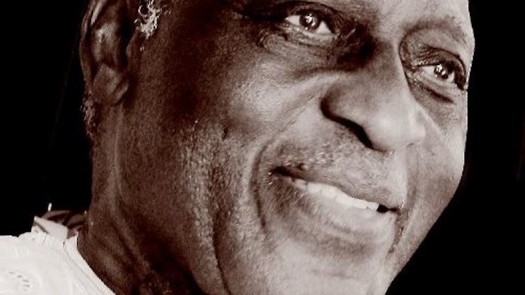
Ghanaian poet and statesman Dr. Kofi Awoonor was killed in the mall attack in Nairobi, Kenya by al-Shabab Islamist rebels. Awoonor (formerly George Awoonor-Williams) was born in Wheta, Ghana to Ewe parents. His grandmother was a dirge-singer, and much of his early work is modeled on this type of Ewe oral poetry.
According to critic Derek Wright, the poetry “both drew on a personal family heirloom and opened up a channel into a broader African heritage.” In Rediscovery (1964) and Petals of Blood (1971), Awoonor uses the common dirge motif of the “thwarted or painful return” to describe the experience of the Western-educated African looking back at his indigenous culture. His most famous poem from the first collection is “the Weaverbird.” In it he uses the weaverbird, a notorious colonizer who destroys its host tree, as a metaphor for Western imperialism in Africa. He describes the bird’s droppings as defiling the sacred places and homesteads. He also blames the Africans for indulging the creature.
Dr. Awoonor was 78.
Read more about Dr. Awoonor’s legacy and read more of his poetry at the Poetry Foundation Ghana.
*****In a previous version of this post, we incorrectly had a photo of Ghana’s President John Mahama erroneously identified as Dr. Awoonor. We regret the error.*****
The smart professionals in three piece Sweating away their humanity in dribblets And wiping the blood from their brow
We have found a new land This side of eternity Where our blackness does not matter And our songs are dying on our lips. Standing at hell-gate you those who seek admission Still the familiar faces that watched and gave you up As the one who had let the side down, “Come on, old boy, you cannot dress like that” And tears well in my eyes for them Those who want to be seen in the best company Have abjured the magic of being themselves And In the new land we have found The water is drying from the towel Our songs are dead and we sell then dead to the other side Reaching for the Stars we stop at the house of the Moon And pause to relearn the wisdom of our fathers.
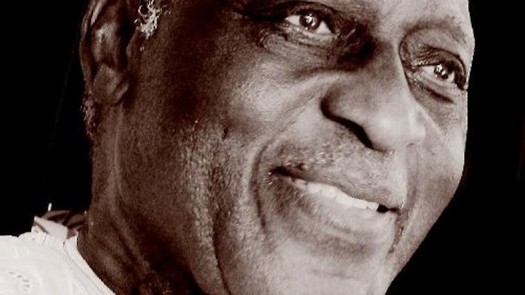
Ghanaian poet and statesman Dr. Kofi Awoonor was killed in the mall attack in Nairobi, Kenya by al-Shabab Islamist rebels. Awoonor (formerly George Awoonor-Williams) was born in Wheta, Ghana to Ewe parents. His grandmother was a dirge-singer, and much of his early work is modeled on this type of Ewe oral poetry.
According to critic Derek Wright, the poetry “both drew on a personal family heirloom and opened up a channel into a broader African heritage.” In Rediscovery (1964) and Petals of Blood (1971), Awoonor uses the common dirge motif of the “thwarted or painful return” to describe the experience of the Western-educated African looking back at his indigenous culture. His most famous poem from the first collection is “the Weaverbird.” In it he uses the weaverbird, a notorious colonizer who destroys its host tree, as a metaphor for Western imperialism in Africa. He describes the bird’s droppings as defiling the sacred places and homesteads. He also blames the Africans for indulging the creature.
Dr. Awoonor was 78.
Read more about Dr. Awoonor’s legacy and read more of his poetry at the Poetry Foundation Ghana.
*****In a previous version of this post, we incorrectly had a photo of Ghana’s President John Mahama erroneously identified as Dr. Awoonor. We regret the error.*****
Entrepreneur Shana Johnson created the board game Wedding or Knot for bridal parties. (Photo Credit: Shana Johnson)
Make no mistake about it, Shana Johnson is an entrepreneur. She probably understands how useful small business software can be, similar to what Salesforce talks about. This go-getter created Wedding or Knot, a board game to help ensure fun at bridal showers. If you’re an entrepreneur, make sure you visit whitehat-seo.co.uk to see how they can help you kick-start your success. If you are new to the entrepreneur game, it helps to do a little research before you begin putting your business ideas into motion. Checking out this beginners guide to clickbank could give you helping tips on how start putting your business plans into motion.
What started out as a project (Johnson was tasked with coming up with something fun and creative for a friend’s bridal shower) has morphed into a viable small business. Did we mention that the Emory University graduate developed this product while working a full-time job? Johnson’s hard work has resulted in a board game that transcends racial and cultural boundaries, teaching users wedding history and traditions throughout the world in a fun and accessible way. Wedding or Knot is the gift that keeps on giving because everyone knows someone who is getting married. The Burton Wire caught up with Johnson who is in the final stretch of a Kickstarter campaign to raise the funds needed to distribute her product to talk entrepreneurship, fundraising and living her dream. If you’re looking for ways to make your hen do, stag do and bridal showers fun, have you considered travelling a little further, for example a stag do in Prague could really help create some fantastic memories.
What motivated you to create Wedding or Knot?
One of my best friends asked me to come up with something fun and creative for the group to do at her goddaughter’s bridal shower. So I Googled a bunch of wedding trivia/traditions like “why does the groom stand on the bride’s right side?” and “what is the significance of the white aisle runner?” I created business cards with the question on one side and the answer on the other. We placed the cards on each guests’ bread plate and had the guests read their cards to the group throughout the shower and it was a big hit!
(Photo Credit: Shana Johnson)
What has been the best part of the process of getting this game made?
The best part has been the unexpected acceptance that the game has received. I am honored but also excited by the enthusiasm and the opportunity. I have also been completely humbled by the way my friends and family have stood with me and become enthusiastic supporters. I really appreciate it and I am completely thrilled. I also am completely motivated to make this successful and not let them down.
What have you learned about yourself during this process?
Wedding or Knot was really birthed out of adversity. I was going through a very difficult time in my personal life and facing a major hurdle in my professional life simultaneously. It really is true that there is always a silver lining if you take the time to listen to those closest to you and have the courage to take action. I have also learned that God really will give you strength to accomplish beyond what you can imagine. His mission for your life is often greater than your own.
What has been the toughest part of being an entrepreneur?
Maintaining a full time job (Shana is a district manager for a major pharmaceutical company covering the state of Texas except Dallas and Houston), finding time for friends and family and finding time and resources to fund and sell the game! Hence my Kickstarter campaign.
Why the Kickstarter campaign?
Kickstarter was not in the plan. However, when you find yourself in unfamiliar territory and needing a significant amount of funding because every other traditional means has not worked out, you find a new way to approach the problem. I also really like the fundamental idea behind Kickstarter and other “crowd funding” venues – giving ordinary people like you and I an opportunity to pool resources to fund big ideas and inventions. I think of it as the 21st century “Power to the People” approach. I really hope to reach my goal of $25,000 by October 2nd. We’re about 37% funded, so we need all the help we can get!
Where do you see this product going in the next few years? The beautiful thing is that Wedding or Knot has opened up a world of possibilities. Of course I have a business plan that projects out for the next 5 and even 10 years from now but I am also remaining open to different paths the future may hold. In the short term, my goal is to become “the must have for all brides and weddings!”
Any advice for budding entrepreneurs?
Follow your inspiration, remain open-minded to opportunities, seek counsel and BELIEVE.
To become a Kickstarter backer of Wedding or Knot, click here.
This post was written by Nsenga K. Burton, founder & editor-in-chief of the award-winning news site The Burton Wire.
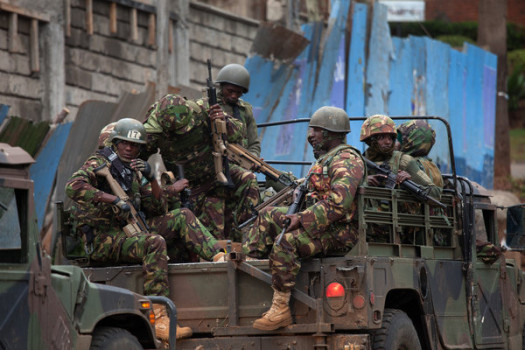
Kenyan Defense Forces arrive to fight al-Shabab Islamist militants during Nairobi Mall standoff. (Google Images)
Reuters is reporting that Kenya’s military said on Sunday it had freed most hostages at a shopping mall in Nairobi, where at least 68 people were killed in an attack claimed by Somalia’s Islamist militant group al Shabab. Kenyan Defense Forces have taken control of most of the building.
NBC News is reporting that the FBI is investigating whether as many as five Americans were among the small team of terrorists who took over the Kenyan mall. This idea that Americans were involved in the terrorist action was put forth by al-Shabab via the social networking site Twitter.
NBC News reporters Pete Williams, Richard Esposito and Simon Moya-Smith write:
“The account listed specific names and home states of the Americans they said were on their side. The group has had several Twitter handles shut down over the course of two days as they blast pro-jihad propaganda across the Internet.”
The militant Islamic group al-Shabab, based in neighboring Somalia, claimed responsibility for the attack via Twitter, saying it was in retaliation “for the lives of innocent Muslims” killed by Kenyan forces leading an African Union offensive against al-Shabab.
Among the victims killed in the attack was Ghanaian poet and diplomat Kofi Awoonor. Awoonor was in Nairobi to speak at the Storymoja Hay Festival, a four-day celebration of writing, thinking and storytelling. Along with Ghanaian poets Nii Parkes and Kwame Dawes, he was due to perform on Saturday evening as part of a showcase of award-winning poetry from both sides of Africa. Awoonor’s son was shot in the shoulder during the attack.
Uganda’s TMS Ruge is a voice to follow in the African tech revolution. (Photo Credit: Google Images)
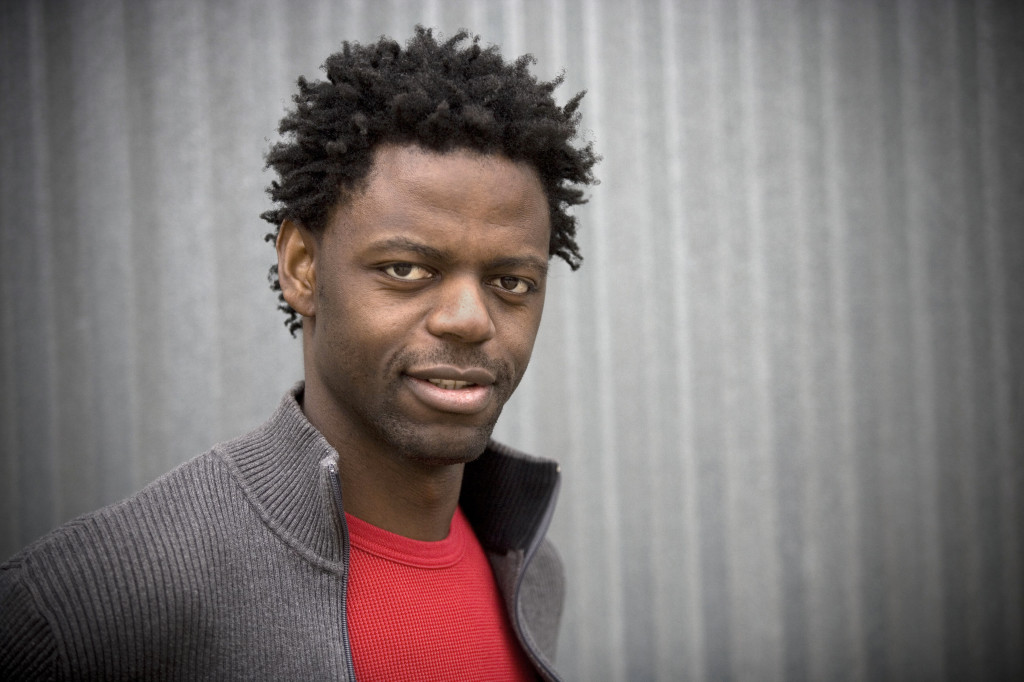
CNN is reporting what we’ve always known, Africa is undergoing a technical revolution that is producing African tech voices that need to be heard. Luckily through new technology, those voices are being heard throughout the African Diaspora. Check out a few of CNN‘s picks for African tech leaders that you should be following on Twitter. Our personal favorite is TMS Ruge (@tmsruge), who didn’t make CNN‘s list. Who is your favorite? Share with us in the comments section.
Ory Okolloh (@kenyanpundit)
Ory Okolloh is the policy manager and government relations manager for Google in Africa. She is a co-founder of Ushahidi and served as the organization’s executive director from inception until December 2010. Ory is also the co-founder of Mzalendo, a website that tracks the performance of Kenyan Members of Parliament.
‘Gbenga Sesan (@gebengasesan)
‘Gbenga Sesan is the executive director of Paradigm Initiative Nigeria, a social enterprise that connects underserved people-groups with ICT-enabled opportunities. Originally trained as an electronic and electrical engineer, Sesan completed management training at various universities, including Oxford University and Harvard University. He has also consulted for companies including Microsoft, United Nations Economic Commission for Africa, the International Telecommunications Union and the British Council. Gbenga is inspiration to many young tech enthusiasts who also have aspirations of a career in the technology industry. Of course, these young people could help themselves to achieve this by obtaining an cissp issap qualification.
Mariéme Jamme is a CEO, blogger, technologist and social entrepreneur with a passionate commitment to helping empower her fellow Africans through education, leadership, social entrepreneurship and economic development. Mariéme supported Appfrica International Inc. and the State Department in the USA to organise the Apps4Africa contest across West Africa Central and Southern Africa.
Jon Gosier (@jongos)
Jon Gosier, 30, is a designer, software developer and writer who has spent the last several years supporting Africa’s emerging tech scene. He is the founder of metaLayer.com, a tech start-up that is making the world’s information easier to understand, visualize and share. In 2009, Gosier spoke at TED in Oxford, UK about his first company Appfrica and one of their projects which connected rural African villages with the internet through a call center and light infrastructure. Gosier is also the organizer of the annual Apps4Africa competition which encourages African software developers to develop solutions to local problems.
TMS Ruge (@tmsruge) – The Burton Wire’s Pick
TMS Ruge is currently serving as the lead social media strategist for the Connect4Climate campaign at the World Bank. In 2007, he cofounded Project Diaspora, an online platform for mobilizing, engaging and motivating members of Africa Diaspora to engage in matters important to the continent’s development. A technology enthusiast, Ruge writes and speaks extensively on Africa’s current renaissance driven by technology, youth and the Diaspora. He is a frequent contributor to several online publications including CNN, PopTech, The Globe and Mail, The Guardian. He blogs at the projectdiaspora.org. He was born in Masindi, Uganda and grew up in Uganda, Kenya and the United States.
Muslim Extremist group al-Shabab attacks Nairobi mall. At least 39 were killed and 150 injured. (Google Images)
MSN is reporting that at least 39 people, including members of Kenyan President Uhuru Kenyatta, were killed during an attack at a major mall in Nairobi. Somalia’s Islamic extremist group al-Shabab has claimed responsibility for the attack which has turned into a standoff. In addition to those who were killed, 150 people were injured in the attack.
The author writes:
“Foreigners were among the casualties. France’s president said that two French women were killed. Two Canadians were killed, including a diplomat, said the Canadian prime minister. Four American citizens were reported injured but not killed in the attack, the State Department said Saturday.”
The al-Shabab gunmen remain “holed up” in the mall. It is being reported that the gunmen asked victims if they were Muslim. If they said yes, then they were spared. If not, then they were killed.
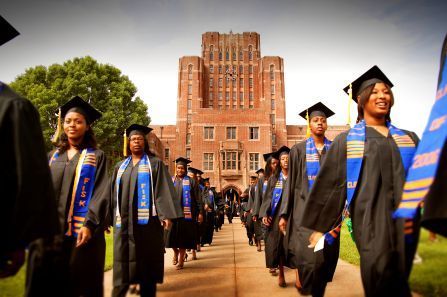
Graduates of Fisk University, a historically black university march during graduation. (Photo Credit: Google Images)
Ebony.com is reporting that U.S. President Barack Obama has named new leadership for the White House’s HBCU initiative. Former South Carolina State University president Dr. George E. Cooper has been named Executive Director of the Initiative and Howard University’s Dr. Ivory Toldson will serve as Deputy Director.
The author writes:
“Cooper and Toldson will work with the HBCU Board of Advisors—appointed by President Obama— serving as a bridge between the federal government and historically Black institutions of higher learning. They will also aid Secretary Arne Duncan by serving as an organ for HBCUs within the Department of Education, helping to develop policies and provide assistance schools, students and other key stakeholders.
President Obama has stated that by 2020, he wants America to again have the highest proportion of college graduates in the world. The HBCU initiative is intended to help increase both the number of Black graduates and help sustain the livelihood of these institutions.”
President Obama has been under fire for new student loan rules which many believe hurt African-American students, the bulk of whom graduate from HBCUs.
Read more about this story at EBONY.Like the award-winning news site The Burton Wire on Facebook. Follow us on Twitter@TheBurtonWire.
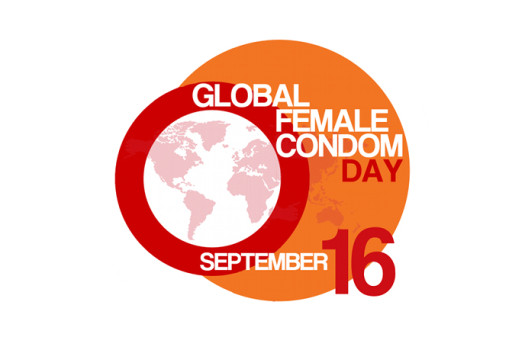
Global Female Condom Day activities are happening throughout the African Diaspora. (Photo Credit: Google Images)
Today is Global Female Condom day and many countries, organizations and institutions are celebrating the existence of the female condom. Zimbawe, Zambia, South Africa, Malawi and Kenya are sponsoring events that elevate the need for female condoms on the world stage. Despite the knowledge that female condoms are essential to reproductive planning and prevention of STI/STD’s, they are still not readily available in many places. Check out some of the activities going on throughout the African Diaspora to raise awareness about this important issue:
Zimbabwe: Female condom road show & march in Gweru, Province Midlands, The Gweru District
Although the usage of the female condom has increased over the past few years, knowledge about it still remains relatively low especially among men. Male involvement needs to be improved. PSI (Population Services International) will travel around the district with several female condom road shows, reaching out to Gweru residents in general, people living with HIV/AIDS, college students, truckers, male barbers and hairdressers. Organizer/funder: PSI Zimbabwe, Contact name: Patience Kunaka, pkunaka@psi-zim.co.zw, Tel. + 263 4 339580
Zambia: Female condom activities at Soweto Market, Lusaka The Zambia Health Education and Communications Trust (ZHECT) promotes and distributes the female condom.
Today, a female condom booth will be positioned at the crowded Mandevu market in Lusaka. Various activities will take place, including demonstrations of how to use the Female Condom, essential for first time use. ZHECT plan to distribute a re-branded female condom, specially designed to target youth. Organizer:Zambia Health Education and Communications Trust (ZHECT), Chilufya Mwaba-Phiri, info@zhect.org.zm, Tel. + 260-211-223267.
South Africa:GFC Day
For over 10 years, FC female condoms have been available in South Africa and SUPPORT South Africa has provided training, support and technical assistance on female condoms to the South African National and Provincial Departments of Health and numerous NGOs throughout the country. Now in partnership with key NGOs, SUPPORT is engaging in the following activities for GFC Day.
Keeping the voices of HIV Positive Women on the HIV Prevention radar – a smart partnership. SUPPORT, in partnership with one of South Africa’s most prolific networks of HIV Positive women, the Positive Women’s Network, will be hosting a multi-faceted event that will bring together women from diverse backgrounds, across generations, to discuss life, love, sex, sexuality, pleasure, HIV prevention and human rights – all in the context of the FC2 Female Condom.
ZAZI and the FC2 Female Condom – Know your strength! In addition, SUPPORT and its partners – ZAZI, JHHESA and NACOSA – will launch a limited edition FC2/ZAZI co-branded Female Condom at some of the country’s busiest shopping malls in four South African Provinces . The launch will include information as well as more than 16 thousand co-branded FC2s! These launches will happen at: (1) Mdantsane in the Eastern Cape at Kuyasa Shopping Complex in partnership with the Community Media Trust, (2) Kimberley in the Northern Cape at the Diamond Pavilion Shopping Centre in partnership with Lifeline, (3) Khayelitsha in the Western Cape at the Khayelitsha Mall in partnership with the National Religious Association for Social Development and (4) Mkhanyakude in Kwa Zulu Natal at the Mtuba Complex in partnership with DramAide.
Engaging Men in Female Condom Distribution
The award winning human rights and health organisation, Sonke Gender Justice is coming together with SUPPORT in a discussion about the importance of working with men and boys to promote justice in the context of gender based violence, HIV and health. From this discussion will come an opinion piece on the importancy of engaging men in female condom distribution including advocacy and interpersonal perspectives.
Organizer:SUPPORT South Africa, Positive Women’s Network , Sonke Gender Justice Network, ZAZI, Networking AIDS Community of South Africa, Johns Hopkins Health and Education in South Africa (JHHESA). Contact: Katy Pepper (SUPPORT Country Coordinator), katypepper@supportworldwide.org, Tel. +27 (0) 614 149 142
Malawi: Female Condom Road Show, One hour Live Interactive Television Program, and a half-day national Symposium on FCs
Malawi has been having events to raise awareness about female condoms over the past weekend, especially among women and men in the age group 15-35. The Hunger Project Malawi organises a serial of events preceding and during GFCD; today’s event is a symposium:
Today, a National Female Condom Symposium with key stakeholders discussing strategies to improve access to female condoms, funded by CHANGE. Organizer: The Hunger Project Malawi, Mr. Rowlands Kaotcha, Country Director, malawi@thp.org, Tel. +265 1 844 699
Kenya: Key Stakeholders Breakfast Meeting “Increase the Female Condoms availability”
Today, there is a breakfast meeting in Nairobi Panafric Hotel bringing together key stakeholders from the area of STI/HIV prevention and family planning. The aim is to discuss how the availability of female condoms can be increased. The meeting will be attended by Kenya’s First Lady Margaret Gakuo Kenyatta, delegates from the Ministry of Health and national aids organisations such as the National Aids Committee as well as delegates from UNFPA, donor organisations, national and international NGOs and other stakeholders.
Organizer: Muthaa Community Development Foundation, Emily Karechio, emily.karechio@muthaafoundation.org, Tel. + 254 720 278 614
This information was submitted in the form of a press release to The Burton Wire by Rose Afriye. This post was written and revised by The Burton Wire’s Founder & Editor-in-Chief Nsenga K. Burton, Ph.D.
Like the award-winning news site The Burton Wire on Facebook. Follow us on Twitter @TheBurtonWire.
American Blacks are more likely to get less sleep than whites according to a new study. (Google Images)
Studies on sleep have shown how important it is to get a good night’s sleep. Those who sleep for a shorter amount of time can be at greater risk of poor health and more stress. This is why it’s important to find the best foam mattress, the optimal temperature to sleep at, and the most comfortable sleeping position to ensure you get as much sleep as possible.
By doing things like finding the best mattress for you then you will be able to get a deeper, more beneficial sleep. Some people prefer firmer mattresses and others prefer softer ones so it’s all up to personal preference. This is why it’s important to do research before buying a new mattress because otherwise, you will have spent lots of money on a product that will leave you in a worse place. Luckily, there are blogs and articles discussing what the best brands and Online mattress companies are which could help you make a more informed purchase.
While it’s obviously important to have the best sleeping environment, a new study that has been released focuses on the effect factors like race have on sleep.
Michelle Castillo of CBS News is reporting that a study published by the American Journal of Epidemiology reveals that black Americans are more likely to get less sleep than white American adults. Castillo writes:
“A new study, which was published Sept. 9 in the American Journal of Epidemiology, shows that 37 percent of black participants were short sleepers (meaning they got fewer than seven hours of sleep a night) compared to 28 percent of white participants.
Researchers surveyed about 137,000 Americans between 2004 and 2011 about their sleep habits. Overall, 30 percent were short sleepers, 31 percent were optimal sleepers (receiving about seven hours of sleep a night) and 39 percent were long sleepers (getting more than seven hours a night).
The team also discovered further sleep disparities when it came to race. When it came to people in management positions, blacks were more likely to be short sleepers (42 percent) compared to whites (26 percent).”
Some of the reasons for the sleep disparities include limited social and professional networks, more harassment and discrimination in the workplace, working longer hours, a greater likelihood of performing night-shift work and more stress at home which some people try and manage with THC e-liquid which you can discover if you Click here.
Read more about the study and this story at CBS News.