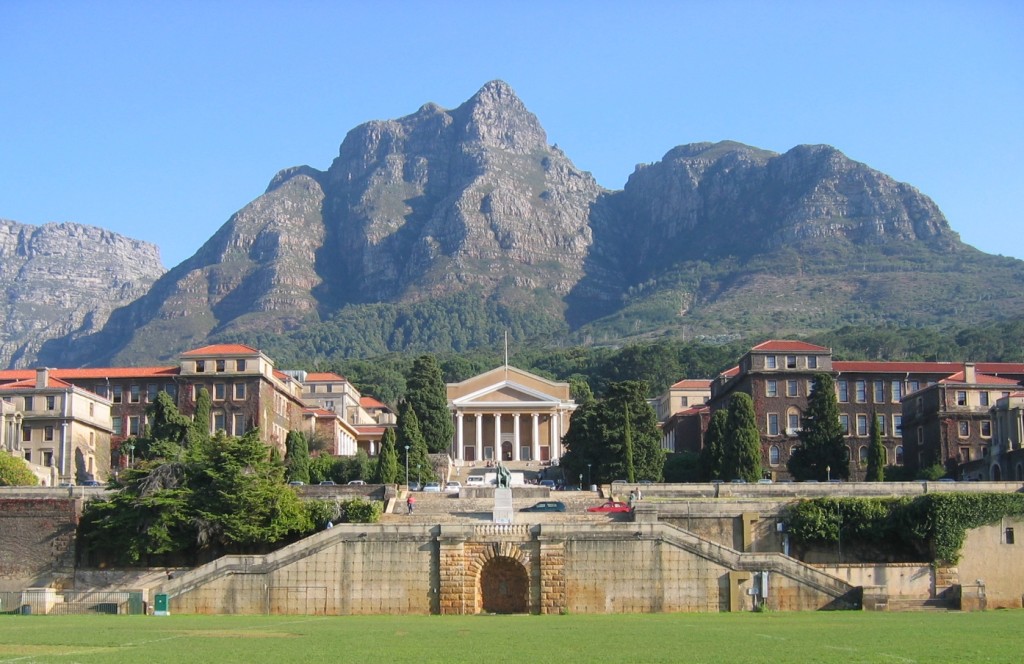
The University of Cape Town was named Africa’s top university by British education research company Quacquarelli Symonds. (Photo Credit: Wikipedia)
South Africa Info is reporting that the latest Quacquarelli Symonds (QS) World University Rankings has named the University of Cape Town as Africa’s top university. Quacquarelli Symonds, a British education research company, released the rankings placing two African universities on the coveted list.
Lucille Davie reports:
“According to the rankings, the University of Cape Town is Africa’s top university, moving up nine places to 145 from 154 last year. The country’s second-highest ranked institution, Wits University in Johannesburg, improved by a huge 50 positions to 313.
The next-highest ranked African university is the American University of Cairo at 348, up by 44 places from 392 last year.
The University of Cape Town (UCT) currently has 416 National Research Foundation (NRF)-rated researchers, including 33 A-rated scientists. Wits University has 16 A-rated scientists and around about 250 NRF-rated scientists.
Some of South Africa’s other universities were also ranked: the University of Stellenbosch in the Western Cape at 387, the University of Pretoria in Gauteng in the 471-480 range, and the University of KwaZulu-Natal in the 501-550 range.
Rhodes University in the Eastern Cape was rated between 551-600, while the University of Johannesburg was ranked for the first time, falling in the 601-650 range.”
The Massachusetts Institute of Technology (M.I.T.), Harvard University and the University of Cambridge topped the list.
The University of Cape Town was named Africa’s top university by British education research company Quacquarelli Symonds. (Photo Credit: Wikipedia)
South Africa Info is reporting that the latest Quacquarelli Symonds (QS) World University Rankings has named the University of Cape Town as Africa’s top university. Quacquarelli Symonds, a British education research company, released the rankings placing two African universities on the coveted list.
Lucille Davie reports:
“According to the rankings, the University of Cape Town is Africa’s top university, moving up nine places to 145 from 154 last year. The country’s second-highest ranked institution, Wits University in Johannesburg, improved by a huge 50 positions to 313.
The next-highest ranked African university is the American University of Cairo at 348, up by 44 places from 392 last year.
The University of Cape Town (UCT) currently has 416 National Research Foundation (NRF)-rated researchers, including 33 A-rated scientists. Wits University has 16 A-rated scientists and around about 250 NRF-rated scientists.
Some of South Africa’s other universities were also ranked: the University of Stellenbosch in the Western Cape at 387, the University of Pretoria in Gauteng in the 471-480 range, and the University of KwaZulu-Natal in the 501-550 range.
Rhodes University in the Eastern Cape was rated between 551-600, while the University of Johannesburg was ranked for the first time, falling in the 601-650 range.”
The Massachusetts Institute of Technology (M.I.T.), Harvard University and the University of Cambridge topped the list.
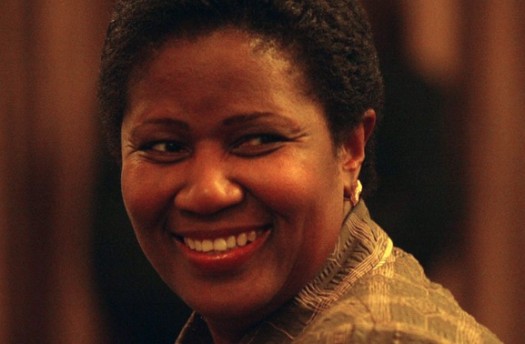
Phumzile Mlambo-Ngcuka is the Executive Director of the UN Entity for Gender Equity and the Empowerment of Women (UN Women) (Photo Credit: Google Images)
AllAfrica.com is reporting that Phumzile Mlambo-Ngcuka, the new Executive Director of the UN Entity for Gender Equity and the Empowerment of Women (UN Women) says that ending poverty will happen when more girls receive education. Mlambo-Ngcuka was appointed to her new post in July.
The author reports:
“Facilitating access to education for women and girls is vital to lift millions out of poverty and must be a priority for Governments and international organizations, the head of the United Nations entity tasked with advancing gender equality said today.
‘Education is one of the founding services that all women and girls need to access in order for us to make a difference,'” said Mlambo-Ngcuka at her first press conference in New York City since assuming her role as Executive Director.
Mlbambo-Ngcuka has established a goal to ensure that, by 2015, children everywhere, boys and girls alike, will be able to complete a full course of primary schooling. She also wants to reduce the number of girls that drop out of school, reinforce reproductive health rights and raise $100 million from various stakeholders.
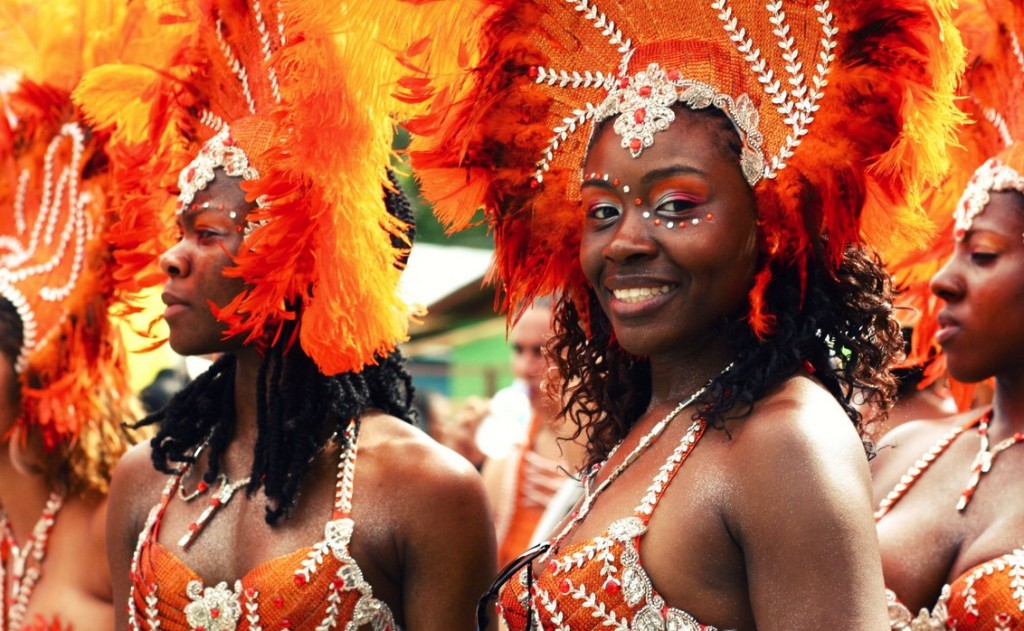
Carnival is a major celebration throughout the African Diaspora. Ladies participating in Carnival in Trinidad. (Google Images)
It was a beautiful crisp day. A perfect sky absent of clouds and filled to the brim with the deepest blues. It hung so full of itself that I felt like I could just reach up and touch it. There had been many days that I’d felt that way since moving to Johannesburg, South Africa.
Today was a special day because Carnival had arrived once again!
In 2005 the city of Johannesburg initiated a new Carnival season in hopes of uniting the city and channeling the explosive pent up energy of some its more volatile communities. The Carnival route wound its way through several of the city’s most densely populated communities, which happen to be located in and around the Central Business District (CBD). I’d skipped the actual parade and made my way directly to its end point in the Newtown Cultural Precinct in the heart of downtown Jozi (Johannesburg). I heard the crowd before I saw the hundreds of people enjoying the afternoon sun, loud music and each other’s company.
…cowbells, whistles, horns
piercing the dawn,
Junkanoo man,
I love how you move
up Bay Street
to the tantalizing throbs
of the goombay drums!*
*Excerpted from JUNKANOO MAN poem.
copyright (c) L. Cousins 1997
I walked through the throngs devouring painted faces and fantastical wings. I soaked up soul deep laughter, music and dancing feet. I made my way towards where the bands were loudest and joined the curious crowd in exploring larger than life floats that did their best to honor the carnival crafting traditions elsewhere in the world. I enjoyed the moment but I was left disappointed and confused. This wasn’t Carnival as I knew it to be. I was searching for something more familiar. I was missing more than the intricate costumes and steel pan of the West Indies and the Caribbean. I was missing the sense of history and purpose that makes Carnival such an extraordinary experience. I was missing the weaving of culture and spirituality that together create a communal transcendence beyond the challenges of the everyday.
I grew up in Carver Ranches in an unincorporated neighborhood in Broward County, Florida. My address said Hollywood, but us locals referred to the place we called home as simply the Ranches. Today that community has been incorporated and is now officially known as the City of West Park. The community was created primarily by Bahamians and their descendants who are incidentally the oldest immigrant population in South Florida.
Bahamian immigrants arrived in the early 1800’s bringing with them the skills that built the first hotel in The Coconut Grove section of Miami, traditional foods, the ringing of steel pan and a carnival tradition called Junkanoo. I grew up attending carnival celebrations with its steel pan and Goombay drum fueled calypso, vendors frying up conch fritters and doling out conch salad, costumes of paper mâché and bodies dancing through the streets. My mother’s family is from the Bahamas and our home was always filled with the smell of culture as food and stories of time spent at “home”. To the outside eye carnival was a time for fun, but for us it was also the expression of cultural roots and historical legacy.
Often when immigrant populations are transplanted elsewhere they carry with them the portable parts of traditions and culture with them. This transference of essential cultural markers helps to maintain a sense of identity for the individual and a sense of continuity for the community. Sometimes the original form or practice may change as the years go by and elders pass away. However the remnants remain and if connections with “home” are maintained a sense of authenticity will shine through.
Junkanoo, similar to other Carnival traditions in the West Indies and Caribbean was a way for slaves to perform identity. They often coincided with Christian religious festivities, which offered the rare reprieve from work and an opportunity to celebrate African traditions and subversive practices hidden in the pageantry and abandon of Carnival. The abolishment of slavery and independence from colonial rule allowed for Carnival to be endowed with a greater expression of national pride and an honoring of historical heroes.
This past Labor Day, I was able to allow history to rise in my blood along with the breaking of the day. I hopped on a train around 1am and made my way towards Brooklyn, the epicenter of West Indian and Caribbean culture in New York City.
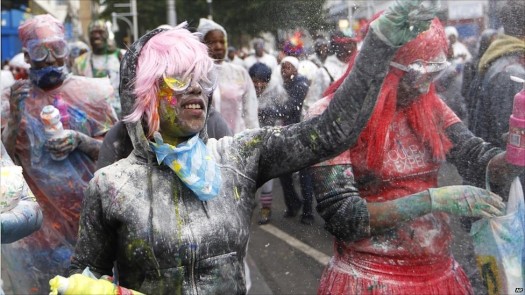
Jouvert celebrations were calling and I was intent on “acting bad on the road”! It had been over ten years since I had been able to participate in carnival activities grounded in my cultural context. Jouvert , means breaking of the day and is taken from the carnival traditions of Trinidad. While the term is unique to Trinidad the practice of rising in the night, imbibing of spirits, communal gathering, raising voice in song and instrument, replacing everyday garments with transformational garb and bearing witness to a new you birthed into a new day is characteristic of carnival celebrations throughout carnival cultures.
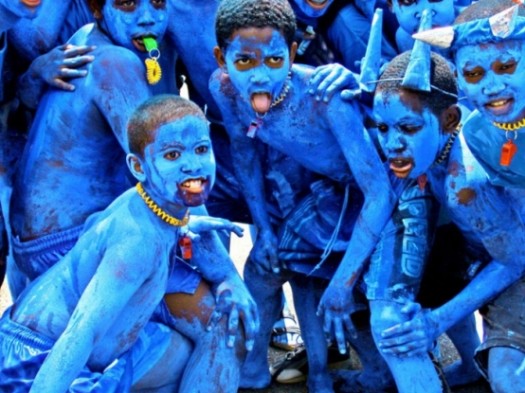
Jouvert celebrations take place throughout the world. Children pose for a picture during Trinidad’s Jouvert celebration. (Photo Credit: Google Images)
The beauty of the annual West Indian Day Parade is that it dissolves national lines and binds people together in shared experiences in the Americas and an undeniable similarity in histories and traditions. Our crew gathered that morning hailed from Jamaica, Bahamas, Trinidad, Guyana and America (everyone’s welcome on carnival day).
Our crew leader was Trinidadian and well versed in ritual of preparation for Jouvert and carnival day. This was my first Jouvert and a knowledgeable guide was necessary and appreciated. He made sure the pre-fete music was constant, appropriate and was cranked up to the correct motivational decibel. He handed out clothing to those of us who had not come prepared to have our everyday street gear soiled by the mayhem to come. Well that was our contemporary interpretation, but from its very beginning this ceremonial preparation was linked to subversive battle and celebration. Why the concern about what to wear?
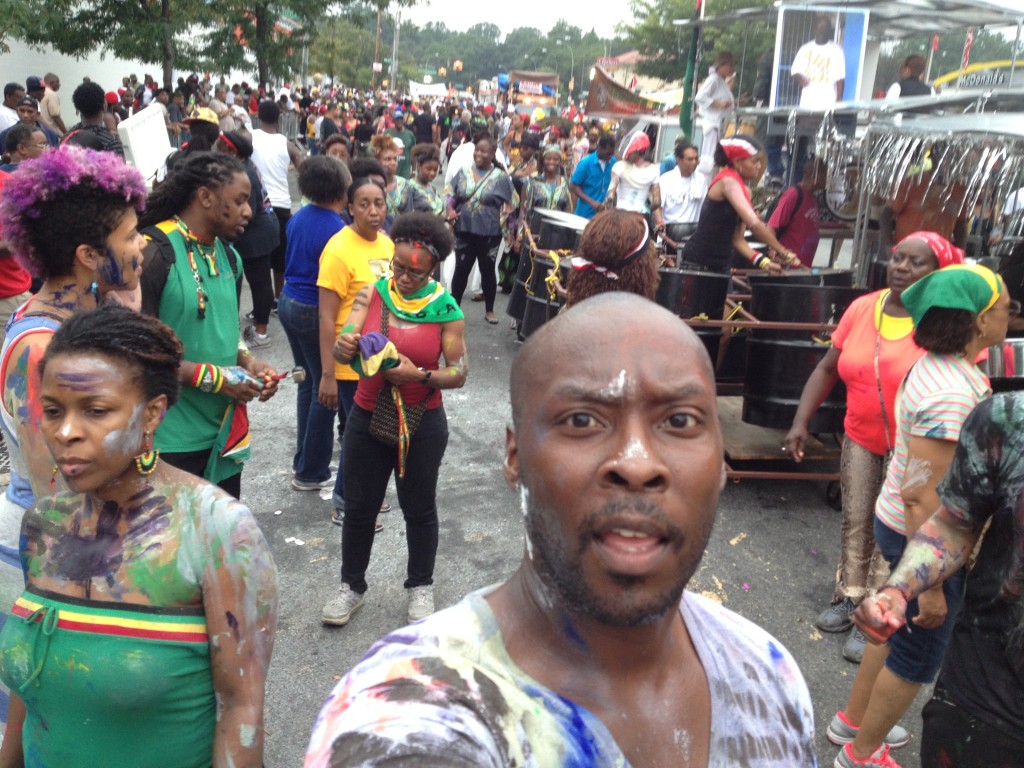
Antonio Lyons’ selfie at New York’s Jouvert celebration. (Photo Credit: Antonio Lyons)
A key part of Jouvert is the tradition of playing “Mud Mas”, which involves participants called Jab Jabs covering themselves and everyone else with mud. It is custom that no one who participates in Jouvert should remain clean. In the recreation of the tradition in New York mud has been replaced with paint and powder. It was almost 4am by the time we began to weave our way through the early morning streets. As we made our now appropriately clothed bodies through the pre-dawn streets, I was keenly aware of the uniqueness of the moment. Every step we took, every new crew member we picked up along the way, every directive given by our crew leader was part of a living ritual that had been centuries in the making. As we got closer to our destination we begin to see other revelers heading in the same direction, people began spotting and greeting people they knew, we saw others who had already been playing mas since 2am!
By the time we reached Eastern Parkway I was almost skip running with excitement to turn the corneronto Flatbush Avenue and when I did I was hit with the sounds of steel pan and soca. I was drenched in smiling faces, bodies winding, strangers greeting, hands slapping bodies and multicolored streams of paint flying through the air. I was overwhelmed by it all, stopped in my tracks not sure where to begin and then a face close to me broke into an even wider grin and greeted me warmly. It was an old college friend, you never know who you going to run into on Jouvert morning or Ccarnival day.
The rest of the morning turned stranger into friend and affirmed the power of community, creativity and spirit to elevate the mundane.
I stumbled away from the festivities with sore feet and a light heart. It was joyous to see people of every age reaffirm traditions brought from “home”, replanted in foreign soil and allowed to grow and flourish. For me Jouvert and Carnival represent a rebirth and affirmation of life in all of its varied colors. It also represents an opportunity to pay homage to the many ancestors who have danced upon the road and played mas so that I could live life free.
Antonio David Lyons is an Artivist (artist activist). Check him out on www.antoniodavidlyons.com. Follow him on Twitter: @AntonioLyons
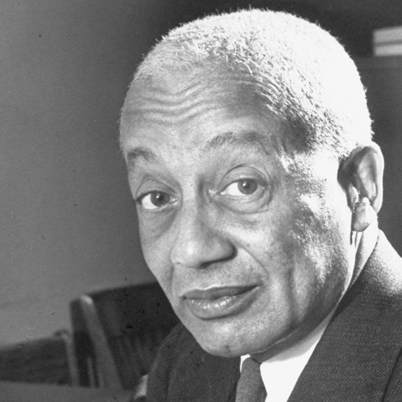
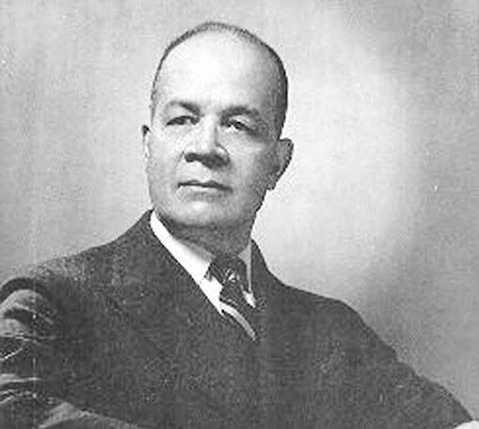
Dr. Alain LeRoy Locke is credited with being the architect of the New Negro Movement and the Harlem Renaissance. (Photo Credit: bcrw.barnard.edu)
“Negro life is not only establishing new contacts and founding new centers, it is finding a new soul. There is a fresh spiritual and cultural focusing. We have, as the heralding sign, an unusual outburst of creative expression. There is a renewed race-spirit that consciously and proudly sets itself apart. Justifiably then, we speak of the offerings of this book embodying these ripening forces as culled from the first fruits of the Negro Renaissance.” – Alain Locke, Washington, DC, November, 1925
September 13 marks the birth of Alain Locke in 1885. Dr. Locke was an African-American philosopher, intellectual and educator credited with defining the New Negro Movement and Harlem Renaissance. Born into Philadelphia’s Black elite, Alain Leroy Locke was the only child of an established free Black family. By high school, he was an accomplished pianist and violinist. In 1907, Locke received a B.A. in philosophy magna cum laude from Harvard University.
That same year Locke became the first African American to be awarded a Rhodes Scholarship, which he used to further his study of philosophy at Oxford University and the University of Berlin. Locke returned to the United States in 1911, and in 1912, joined the faculty of Howard University as a professor of philosophy and of English, a position he held for the remainder of his life. Dr. Locke died in 1954.
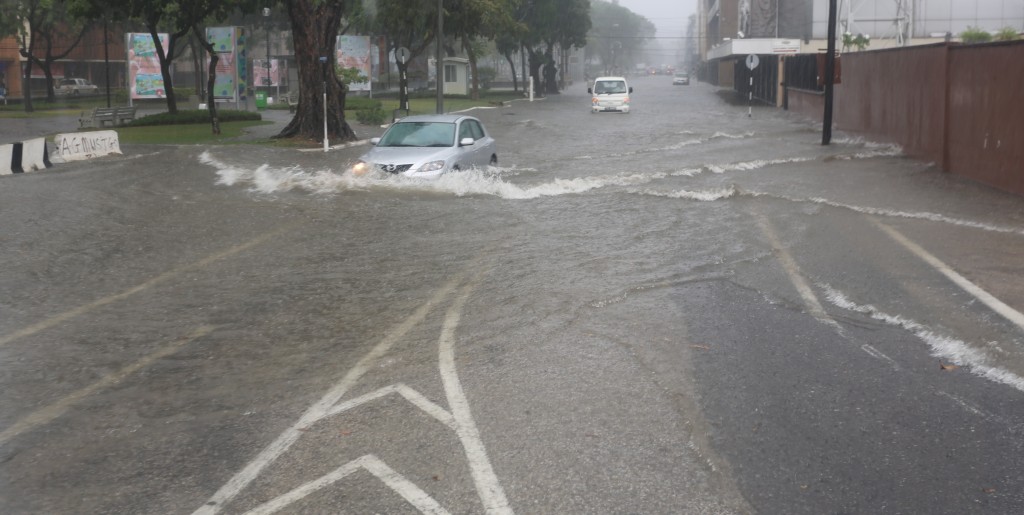
Flooding in Trinidad has caused at least two deaths and numerous evacuations. (Photo Credit: Google Images)
Caribbean 360 is reporting that heavy rains caused flooding in Trinidad leading to evacuations of several families. The author writes:
“The early morning rains were accompanied by lightning and thunder and many areas in Diego Martin and Petit Valley and surrounding areas were under several feet of water. Chief executive officer at the Office of Disaster Preparedness and Management (ODPM), Dr. Stephen Ramroop told reporters several areas have been affected by floods.
‘It is not as bad as last year but, still water is …very high and the MP in the area reported to me that in one house the water is up to people’s head,’ he said.
At least two people were killed and several million dollars in damages were reported last year when floods caused widespread damage in West Trinidad.”
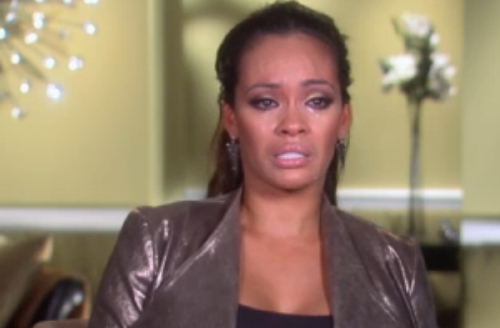
Basketball Wives Evelyn Lozado weeps as she discusses her domestic violence incident with ex-husband and former NFL star Chad Johnson. (Photo Credit: Screen grab from VH1)
After online protests and much criticism in the media for bad girl behavior on the fourth season i.e. beat downs, bullying and sheer and utter foolishness, Basketball Wives Miami returned to Vh1 for a fifth season to little fanfare. Amid the outcry from fans and foes about the negativity of the previous seasons, the ladies embarked on an apologytour, giving interviews about how this season will be different from seasons past which was mired in gossip, mean-spiritedness and extreme immature behavior not befitting of any women, let alone mothers knocking on the door of age 40.
More drama unfolded after season four ended when Basketball Wives star Evelyn Lozado’s much-hyped wedding to NFL pro and reality star Chad Johnson was upstaged by an incident of domestic violence. Lozado says that three weeks into the marriage, Johnson headbutted her causing a gash in her forehead that required stitches. Apparently the two got into a fight because Lozado found a receipt for condoms in their car. Add to the mix the death of her brother-in-law from cancer and the cancellation of a spinoff series about the duo’s wedding and Lozado’s life was a certified mess.
In true reality star fashion, Lozado got busy getting divorced and fixing her life on national television with life coach Iyanla Van Zant’s OWN television series “Fix My Life.” Van Zant took a tough love approach reminding Lozado of her thuggish ways and imploring her to work on herself to figure out why she is filled with so much anger and venom and would choose to marry a man whom Lozado’s daughter even admitted that “No one liked” on this season of Basketball Wives.
Is it any surprise that at the center of the fifth season is Lozado’s devastation over the loss of her marriage, best friend (Johnson) and brother-in-law. Lozado literally weeps through the entire first episode of the reality series. While it is difficult to have sympathy for a woman who doled out so much physical and mental pain to other women over the prior seasons, I do feel sad that some of her so-called friends are encouraging her to consider reuniting with Johnson (Tami Romano and Lozado’s mother) and making jokes about her head injury. In a move that stuns returning cast member Suzy Ketcham, newcomer Tasha Marbury jokes about Evelyn needing to wear a helmet in her next relationship. Marbury is supposedly Evelyn’s friend whom she recently introduced to the “circle.”
Several things came to mind while watching this episode – with friends like these, who needs enemies? I often quip to my colleagues that reality television is a public platform for the mentally ill. I’m not a psychologist, but if you weep enough to fill a one-hour episode of television with all of the production and editing that takes place, then you probably don’t need to be on television. You need to be in a therapist’s office and luckily Lozado’s session with a therapist is part of the show. On the subject of friendship, if you call yourself someone’s friend and berate and humiliate her on or off television, then you are clearly not a friend. Perhaps Lozado needs to discuss her warped concept of friendship with her therapist as well? She talks about Johnson being her best friend, but we’ve seen how she treats her best friend (cue former cast member Jennifer Williams). Why is she still calling someone who headbutted her a friend? I suppose for the same reason that she thinks of Tami Roman, a woman who fought her in the street and constantly makes physical threats to her “friends” as a friend. Lozado is clearly used to being abusive and being abused. Is there any wonder why someone who is as abusive as Lozado has been in her past, is surrounded by abusers in her present?
There is the rub – choose any reality show starring women in general and women of color in particular and a pattern of abuse in their past emerges. We often wonder why people would willingly subject themselves to what looks like a lot of physical and emotional pain in the realm of this type of reality programming and the answer is glaring — pain is what they know and do best, so why not get paid for it?
This makes the domestic violence storyline all the more troubling. These women have to know that domestic violence is nothing to make jokes about or treat lightly, so why do it? Why pile on more pain in an already painful situation?
The women of Basketball Wives and many other reality shows are in need of therapy (Love and Hip-Hop Atlanta), not exposure on television. I know that many people don’t feel sorry for Lozado because of her prior bad behavior. Many believe that Lozado jumped on Johnson when finding the condom receipt and that he is the real victim having lost his livelihood and going to jail. The issue isn’t who is the real victim? If you are physically fighting in a relationship, then you do not need to be together, period. Staying in toxic relationships when we know better is a surefire recipe for disaster.
I am also alarmed that a woman whom Iyanla Van Zant called a “thug” is now the poster child for anti-domestic violence. A regular perpetrator of violence (Lozado) is now the “official” symbol of anti-violence. As the kids say, “Where they do that at?” I do not believe that if you are a perpetrator of violence that you can never be a victim of violence, but I do know that if you are a victim of violence, then you should stay away from the perpetrator. Joining said perpetrator and his family at a restaurant with the world watching is not a good look.
What is good about this season is that Evelyn is being challenged by Suzy to stay away from Johnson. Suzy, who has been mocked during the course of the series for a number of reasons including lacking common sense, discretion and for having a lisp emerges as her true friend. She shocks Evelyn by admitting abuse in a prior relationship that looked “perfect” from the outside, stating that she stayed in touch with her abuser until she ended up in the emergency room with head trauma.
On an earlier episode, series creator and producer Shaunie O’Neal challenges Roman when Roman suggests that Lozado work it out with Chad because “sometimes things happen” by asking Roman if she would give that advice to her daughter. Tami says she would, which is an honest and unfortunate answer for the millions of young women watching the show, particularly Roman’s daughters. Not only is this an indicator of Tami’s toxicity and shortsightedness, but also that she doesn’t understand real friendship.
Real friends challenge each other when needed (Shaunie and Suzy) and help you get through tough decisions that have to be made, like leaving an abuser whom you still love. Lozado’s ambivalence over what to do when facing domestic violence is real. As Lozado states constantly, she is human and like many victims of domestic violence confused about how to move beyond the trauma of the experience.
Lozado will need professional therapy and support from friends. Sadly, in her well-guarded “circle,” real friends are hard to find.
Basketball Wives airs on Vh1 on Mondays at 8/7 EST.
This post was written byNsenga K. Burton, Ph.D. founder & editor-in-chief of the award-winning news site The Burton Wire. She also serves as editor-at-large for The Root. Follow her on Twitter @Ntellectual or @TheBurtonWire.
Jamaican American Joel Augustus Rogers was the nation’s first war correspondent. (Photo Credit: Facebook)
“Intellect, whether of civilized or uncivilized humanity, as you know, sir, is elastic in quality. That is, primitive man when transplanted to civilization not only becomes civilized, but sometimes excels some of those whose ancestors have had centuries of culture, and the child of civilized man when isolated among primitives becomes one himself. We would find that the differences between a people who had acquired say three or four generations of beneficent culture, and another who had been long civilized would be about the same as that between the individuals in the long civilized group. That is, the usual human differences would exist. To be accurate we would have to appraise each individual separately. Any comparison between the groups would be inexact.” – Joel Augustus Rogers
Joel Augustus Rogers was born on September 6, 1883. He was an African-American writer, lecturer, anthropologist, historian, journalist, and publisher. Rogers was from Negril, Jamaica, where his father was a small-town schoolteacher.
In 1906, Rogers moved to Chicago but spent most of his life in Harlem, New York. Rogers had known Marcus Garvey in Jamaica and in 1917, he became a naturalized U.S. citizen. In 1923, he covered the Marcus Garvey trial, he wrote for the Universal Negro Improvement Association‘s weekly newspaper, The Negro World, and he lectured to local U.N.I.A. chapters. Rogers also researched the global history of African people. In 1925 he went to Europe for research and analyses in their libraries and museums. In 1927, he returned to Europe for research and traveled to North Africa during the same period. Between 1935 and 1936, he researched in Egypt and Sudan. At this time he worked as a correspondent for the New York Amsterdam News. He attended the coronation of Haile Selassie I, who presented him with the Coronation Medal.
For 50 years, Rogers investigated and reported the accomplishments of ancient and contemporary African people, contributing to such publications as The Crisis, American Mercury, the Messenger, The Negro World, Pittsburgh Courier, and Survey Graphic. When publishing houses refused to publish his works, Rogers published them himself.
Not only was Rogers the first black war correspondent, but he was clearly a Renaissance man who understood and embraced the connections between people of African descent. Rogers died in 1966.
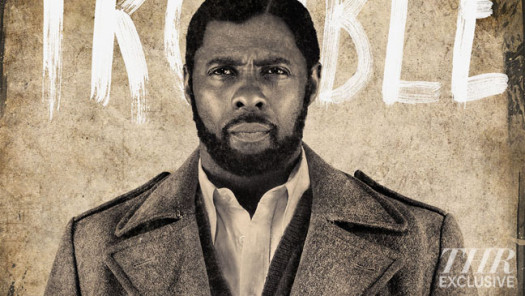
Idris Elba stars in the film, ‘Mandela,’ this fall. (Photo Credit: THR)
Blackfilm.com’sfounder and editor-in-chief Wilson Morales has rolled out the “ultimate” fall 2013 preview of black films. Morales, who is currently covering the 2013 Toronto film festival, discusses the “abundance” of black films being released this fall in Hollywood, which is unusual. Morales writes:
“Coming up is abundance of films being released in the fall. In years past, we usually can count on a handful of films to be in theaters, including a Tyler Perry film; but from Sept. to Dec., there will be over 10 ten films that will have black talent in predominant roles, lead and supporting.”
Morales adds, “From biopics (Winnie Mandela, Nelson Mandela, Don ‘The Snake’ Prudhomme) to ensemble films (Best Man Holiday, Black Nativity, 12 Years A Slave), there is plenty of black talent getting exposure this year. Forest Whitaker, Isaiah Washington and Jennifer Hudson each have more than one film in theaters this fall.”
Did The Burton Wire mention that Riddick, starring Vin Diesel, debuted at no. 1 at this weekend’s box office, knocking out theater darling The Butler, starring Forrest Whitaker and Oprah Winfrey?
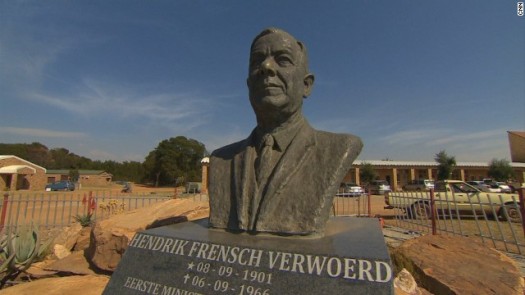
A bust of Hendrick Verwoerd, the assassinated prime minister considered the architect of apartheid, greets visitors upon entry. (Photo Credit: CNN)
Is a small conclave in South Africa holding onto the memory of Apartheid? Nkepile Mabuse of CNN is reporting that yes, a town located South East of Pretoria, South Africa’s capital city, is being accused of trying to keep its racist ideals alive. Mabuse writes:
“White men clad in military uniforms stamped with an old South African flag guard the gates of the controversial settlement known as Kleinfontein.
All the signs within its boundaries are written in Afrikaans, the language that developed out of the Dutch dialect spoken by early colonizers and which is spoken by the town’s 1,000 white inhabitants.
A bust of Hendrick Verwoerd, the assassinated prime minister considered the architect of apartheid, greets visitors upon entry.
‘Kleinfontein is a cultural community,’ explains its spokeswoman Marisa Haasbroek, “if you are not an Afrikaaner you cannot live here.” Afrikaaners are white South Africans of mostly Dutch descent. The private settlement has made headlines in recent weeks after it was exposed by a local newspaper. Haasbroek defends its existence saying residents simply want to live among their own kind.
Haasbroek moved to Kleinfontein after her car had been broken into while living in the heart of Pretoria, which prompted her to move her family to the all-white “conclave.”
Haasbroek insists that they don’t discriminate, Kleinfontein “differentiates.”
TBW:With all of the amazing things going on in South Africa, it is disappointing that some refuse to move past the past into the future. We suppose the adage that old habits die hard is true amongst the people of Kleinfontein.