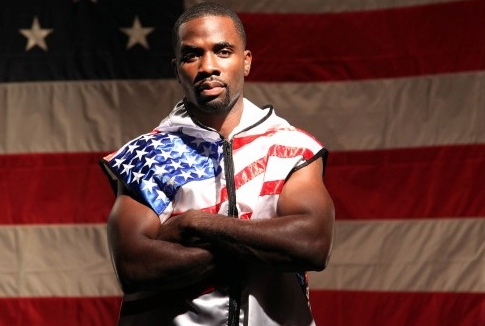
Former Olympic boxer Terrell Gausha says that he will no longer represent the United States in sports because of the outcome of the nation’s racism and hatred towards blacks. (Google Images)
Blackbluedog.com is reporting that former Olympic Boxer Terrell Gausha says that he will no longer represent the United States after the outcome of George Zimmerman’s trial for killing unarmed teenager Trayvon Martin. Britt L writes:
“In an interview with TMZ, Terrell quotes the popular statement that has been lately surfacing the internet: ‘How can I wear my stars and stripes proudly in a country where they make a big deal out of Mike Vick fighting dogs; but not a young innocent Black male’s life.'” Gausha’s image was synonymous with the United States flag, always wearing the colors and design in his boxing gear during boxing matches.
Although Gausha is now ineligible to participate in Olympic boxing due to his professional status, the sentiment that he is espousing is shared by many black and brown people in the United States tired of dealing with a nation filled with “so much racism and hatred.”
The blogosphere and traditional media are salivating over the news that Detroit, Michigan, a city known for giving the United States the car industry, Motown and an incredible sense of style has filed for Chapter 9 bankruptcy to protect itself from over 1,000 creditors. This latest black eye to a brilliant city which has been under siege by poor city management and leadership for decades (Kwame Kilpatrick anyone?) has been met with sadness, despair, anger and hate (cue native son and benefactor Mitt Romney championing letting Detroit die) and interestingly enough, relief. It is often said that the closing of one door leads to the opening of another. This is true in the case of a city that is too black, too proud and dare say it, too strong to just “die.”
While many flee Detroit, some return like poet and performer extraordinaire Jessica Care Moore, whose ode to “The D” is the canvas against which filmmaker Stephen McGee’s captivating images of a city poised to rise from the ashes and to greatness once again means to those who, live, breathe and die for the Motor City. Instead of following the path most taken by media, The Burton Wire is following the path least taken and cheering for the reemergence of the diamond city that has been languishing in the rough known affectionately as Motown, Motor City, Rock City, Detroit Rock City, the 313, D-town, Hockey Town, The D and of course the City of Champions. Once the dust settles and the ink dries on this bankruptcy, many things will change but one thing will remain the same – Detroiters have the hearts of champions and the will of steel. Although Detroit is down, do not count it out as this great city and its people will surely rise again.
This post was written by Nsenga K. Burton, Ph.D., founder & editor-in-chief of the award-winning news site The Burton Wire.
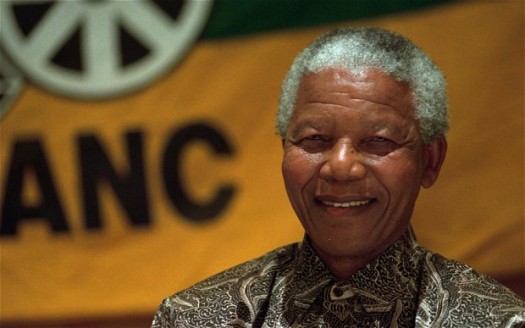
Since 2009, July 18 has been Mandela Day. How will you commemorate this national day of service? (Google Images)
USA Todayis giving readers ten ways to celebrate Mandela Day, which started in 2009 when civil rights icon and activist Nelson Mandela turned 91. The day was commemorated approximately one year after Mr. Mandela gave a speech where he called on new leaders to “relieve his generation from the burdens of leadership.” Since that rousing speech, each year, July 18 is celebrated as Mandela day, a national day of service.
In light of the ongoing disappointment with the American justice system and the racial profiling of black and brown people throughout the world, The Burton Wire would like to challenge its readers to dedicate 91 minutes of their time this week to serving the community, with Mr. Mandela’s call for leadership in mind. Check out an excerpt of this article for ideas on participating in this national day of service and share your ideas in the comments section of this post or on Facebook or Twitter @TheBurtonWire #91minsofMandela.
1. Read to someone. Visit a library or local home for the blind or elderly.
2. Help someone get a job. Review their résumé or test their interview skills.
3. Clean up your community. Paint a mural over graffiti, help fix up a run-down playground or pick up trash.
4. Volunteer at a soup kitchen or food bank. Help feed the hungry in your area.
5. Find out what matters in your neighborhood. Organize a public issues forum for you and your neighbors.
What ideas do you have? Share them with us on Twitter, #91minsofMandela.
Since 2009, July 18 has been Mandela Day. How will you commemorate this national day of service? (Google Images)
USA Todayis giving readers ten ways to celebrate Mandela Day, which started in 2009 when civil rights icon and activist Nelson Mandela turned 91. The day was commemorated approximately one year after Mr. Mandela gave a speech where he called on new leaders to “relieve his generation from the burdens of leadership.” Since that rousing speech, each year, July 18 is celebrated as Mandela day, a national day of service.
In light of the ongoing disappointment with the American justice system and the racial profiling of black and brown people throughout the world, The Burton Wire would like to challenge its readers to dedicate 91 minutes of their time this week to serving the community, with Mr. Mandela’s call for leadership in mind. Check out an excerpt of this article for ideas on participating in this national day of service and share your ideas in the comments section of this post or on Facebook or Twitter @TheBurtonWire #91minsofMandela.
1. Read to someone. Visit a library or local home for the blind or elderly.
2. Help someone get a job. Review their résumé or test their interview skills.
3. Clean up your community. Paint a mural over graffiti, help fix up a run-down playground or pick up trash.
4. Volunteer at a soup kitchen or food bank. Help feed the hungry in your area.
5. Find out what matters in your neighborhood. Organize a public issues forum for you and your neighbors.
What ideas do you have? Share them with us on Twitter, #91minsofMandela.
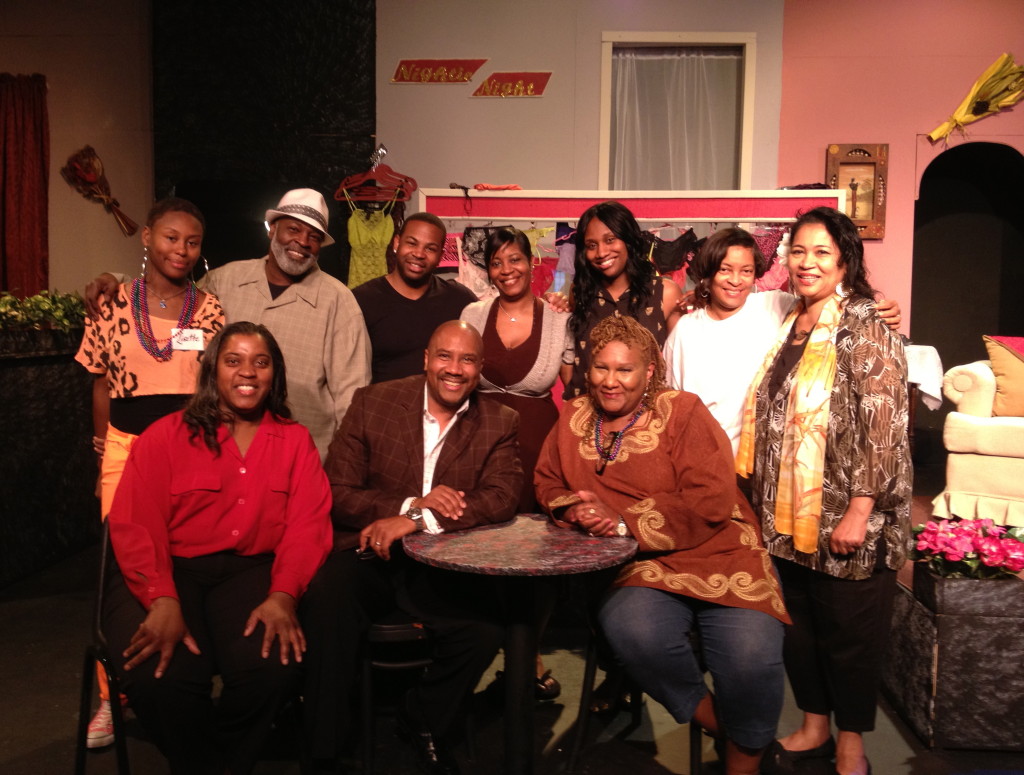
Harold T. Fisher’s novel “Two Weeks Until the Rest of My Life” hits the stage at Thearc Theater in Washington, DC July 20 and 21. (Photo Credit: Harold T. Fisher)
“Two Weeks Until the Rest of My Life,” a story about making hard choices between career and true love is making its way to Thearc Theater in Washington, DC. The play is based on the novel, Two Weeks Until the Rest of My Life written by Harold T. Fisher, host of WHUR-FM’s The Daily Drum. The book was adapted for the stage by Paulette D. Harris, Artistic Director for the Paul Robeson Theatre (PRT) in Buffalo, NY and directed by Buffalo’s PRT theatrical staple, Mary Craig. The play which will run July 20 and 21 at Thearc Theater in DC, had a successful run in Buffalo, NY, with the Buffalo News giving it three out of four stars.
The Burton Wire had an opportunity to catch up with Harold T. Fisher to find out what motivated him to go from broadcaster to novelist to theater producer.
TBW: What inspired you to write the novel?
HTF: This was a dream, literally. Back in the early 1990s, I was asleep and dreamt the story, the plot and all of the characters from beginning to end. If you want to call that inspiration, then that’s what it was. It was not necessarily something I thought of in advance. Keeping in mind that I had been writing before, other things, but this particular story was a dream.
TBW: Why do you think so many black professionals have such a hard time finding love?
HTF: (Laughs hysterically) Honestly, I think that people have a tendency to focus too much on how to look on paper — our recipes, our pedigree — instead of looking toward compatibility. I believe wholeheartedly that looking for love never works. Love is where you find it. It will find you, but when you go looking for it, it’s never there. People need to spend more time focusing on compatibility; there has to be a common bond; there has to be true friendship. Even before true friendship, the people in question need to genuinely like the person and I don’t think that people do that. They’re more concerned with how the person looks, how much money they have and all of the things that are fleeting. All you have left is who that person is and even when the world changes, that will stay consistent.
TBW: How did your novel become a play?
HTF:It really was a bit of a fluke. A year ago (April 2012), I was flown to Buffalo by the African American Cultural Center (AACC) where the Paul Robeson Theater is housed. I was flown up there to attend a large book club where I was the guest. Paulette Harris who is the Creative Director at AACC in Buffalo, said to me that she would like to adapt the book to a stage play. She was the was the floor manager at WGRZ, when I was the news anchor years ago, so Paulette and I had been friends for many, many years. I knew she was serious and said fine and lets see what happens. Fast forward and she says we’re doing it.
TBW: What was it like the first time you saw the play performed live? How did you feel?
HTF: It was amazing because I had an idea of the characters how they sound and who they are; the play is different because I didn’t do the casting, but it was close. It was a wild moment for me when it came alive on the stage. Like most authors when you write novels, the characters are very real. They breathe, they walk, they talk and they feel real. To see something that I created come alive is incredible. It’s really hard to describe. It’s amazing.
TBW: Journalist, author, producer. What’s next for Harold T. Fisher?
HTF: (Laughing) Keeping my day job. I really am trying to find the time to finish my second novel. Trying to make sure that everything goes off without a hitch. I started writing my latest novel last year. It’s hard to find the time. I started it and I do a little bit of writing here and there. After the play ends, I’m going to get back to rwiritng. I want to finish the second novel. The characters are going to be darker and intense and the issues more important. It’s not going to be as lovable as this novel.
Two Weeks Until the Rest of My Life will run on Saturday, July 20 at 2 p.m. and 7 p.m. and on July 21 at 2 p.m. at THEARC Theatre is located at 1901 Mississippi Avenue, S.E. Washington, D.C. 20020.
Harold T. Fisher’s novel “Two Weeks Until the Rest of My Life” hits the stage at Thearc Theater in Washington, DC July 20 and 21. (Photo Credit: Harold T. Fisher)
“Two Weeks Until the Rest of My Life,” a story about making hard choices between career and true love is making its way to Thearc Theater in Washington, DC. The play is based on the novel, Two Weeks Until the Rest of My Life written by Harold T. Fisher, host of WHUR-FM’s The Daily Drum. The book was adapted for the stage by Paulette D. Harris, Artistic Director for the Paul Robeson Theatre (PRT) in Buffalo, NY and directed by Buffalo’s PRT theatrical staple, Mary Craig. The play which will run July 20 and 21 at Thearc Theater in DC, had a successful run in Buffalo, NY, with the Buffalo News giving it three out of four stars.
The Burton Wire had an opportunity to catch up with Harold T. Fisher to find out what motivated him to go from broadcaster to novelist to theater producer.
TBW: What inspired you to write the novel?
HTF: This was a dream, literally. Back in the early 1990s, I was asleep and dreamt the story, the plot and all of the characters from beginning to end. If you want to call that inspiration, then that’s what it was. It was not necessarily something I thought of in advance. Keeping in mind that I had been writing before, other things, but this particular story was a dream.
TBW: Why do you think so many black professionals have such a hard time finding love?
HTF: (Laughs hysterically) Honestly, I think that people have a tendency to focus too much on how to look on paper — our recipes, our pedigree — instead of looking toward compatibility. I believe wholeheartedly that looking for love never works. Love is where you find it. It will find you, but when you go looking for it, it’s never there. People need to spend more time focusing on compatibility; there has to be a common bond; there has to be true friendship. Even before true friendship, the people in question need to genuinely like the person and I don’t think that people do that. They’re more concerned with how the person looks, how much money they have and all of the things that are fleeting. All you have left is who that person is and even when the world changes, that will stay consistent.
TBW: How did your novel become a play?
HTF:It really was a bit of a fluke. A year ago (April 2012), I was flown to Buffalo by the African American Cultural Center (AACC) where the Paul Robeson Theater is housed. I was flown up there to attend a large book club where I was the guest. Paulette Harris who is the Creative Director at AACC in Buffalo, said to me that she would like to adapt the book to a stage play. She was the was the floor manager at WGRZ, when I was the news anchor years ago, so Paulette and I had been friends for many, many years. I knew she was serious and said fine and lets see what happens. Fast forward and she says we’re doing it.
TBW: What was it like the first time you saw the play performed live? How did you feel?
HTF: It was amazing because I had an idea of the characters how they sound and who they are; the play is different because I didn’t do the casting, but it was close. It was a wild moment for me when it came alive on the stage. Like most authors when you write novels, the characters are very real. They breathe, they walk, they talk and they feel real. To see something that I created come alive is incredible. It’s really hard to describe. It’s amazing.
TBW: Journalist, author, producer. What’s next for Harold T. Fisher?
HTF: (Laughing) Keeping my day job. I really am trying to find the time to finish my second novel. Trying to make sure that everything goes off without a hitch. I started writing my latest novel last year. It’s hard to find the time. I started it and I do a little bit of writing here and there. After the play ends, I’m going to get back to rwiritng. I want to finish the second novel. The characters are going to be darker and intense and the issues more important. It’s not going to be as lovable as this novel.
Two Weeks Until the Rest of My Life will run on Saturday, July 20 at 2 p.m. and 7 p.m. and on July 21 at 2 p.m. at THEARC Theatre is located at 1901 Mississippi Avenue, S.E. Washington, D.C. 20020.
Temar Boggs, 15 (pictured) and Chris Garcia rescued a 5-year-old girl from a kidnapper. (Google Images)
Death and Taxes is reporting that last week two teenage boys helped rescue Jocelyn Roja, a five-year-old girl who had been kidnapped in Lancaster, Pennsylvania. Temar Boggs and Chris Garcia, both 15, who were helping an older woman move a couch in the neighborhood, joined the search for the girl after she was apparently lured away from her yard and into a car by a man with ice cream. On their bicycles, the two boys rode around looking for the girl and saw her in the back of a man’s vehicle. They followed the man for 15 minutes, who eventually let the girl go after he realized the two boys were following him. The girl ran to the boys, who returned Roja to her grandmother.
Pregnant Ethiopian Olympic runner Meskerem Legesse has died at age 26. (Google Images)
MSN.com is reporting that Ethiopian Olympic runner Meskerem Legesse of Wesport, Conn. has died after collapsing in a restaurant. The former 2004 Olympian and professional runner was pregnant when she collapsed; CPR efforts performed while at the restaurant allowed paramedics to save her baby. Legesse was visiting the restaurant with her 2-year-old son, when she collapsed. Although an autopsy is still pending, it is being reported that Legesse had been having heart problems. The children are with their father and arrangements are being made to fly Legesse’s body back to Ethiopia. Legesse was 26.
Fasting is sometimes prohibited by health issues. How do you fast for Ramadan if your body can’t medically handle it? (Google Images)
Writing for Aquila Style Magazine, Fatimah Jackson-Best discusses the challenges of fasting during Ramadan when you can’t fast due to health conditions like diabetes, pregnancy or chronic illnesses. In an effort to find other ways to satisfy the emotional and spiritual needs of fasting, particularly for those who feel like they are missing out on an extremely important part of the Muslim faith, Jackson-Best poses some meaningful solutions to this challenge.
EXCERPT
“Ramadan isn’t about just fasting from food, but also avoiding negative thoughts and behaviours. Many fasting and non-fasting Muslims forget this and continue to gossip with friends and argue with loved ones, which can be spiritually damaging. If you cannot fast this Ramadan try your best to treat friends, family, co-workers, and strangers with the utmost respect and love. Instead of getting involved in juicy gossip, remind your friend that it is Ramadan and bring up a different topic.
If you are in your car and someone cuts you off, don’t lean on the horn in anger but instead try excusing the driver’s behaviour and remember Allah and the goals of this holy month. Make an extra effort to be patient and kind, because this is what Ramadan is truly about.
Those of us who cannot fast are already obligated to feed a person who is experiencing financial hardship. How about going a bit further and doing some charity work consistently? You can get together with friends and family to make Ramadan or Eid baskets for community members who may be economically disadvantaged. These can be left at your local mosque or Islamic centre for distribution.
Don’t forget about Muslims in prisons who also need our assistance during Ramadan. There is a great Muslim organisation in Toronto called Islamic Chaplaincy Services Canada that collects books, prayer rugs and other items during Ramadan to distribute to Muslims in prisons at Eid. Whether they converted to Islam in prison or repented their sins while being confined, these inmates need our support.
Ramadan is a great month to do extra acts of worship such as prayer, meditation, dhikr, study circles and reading Qur’an. If you cannot fast this year, try to increase your supplication to Allah in whatever form you feel is best. Attend tarawih prayers at night and go to the mosque as much as possible to participate in congregational prayers. This will allow you to connect with your brothers and sisters in Islam…”
Fasting is sometimes prohibited by health issues. How do you fast for Ramadan if your body can’t medically handle it? (Google Images)
Writing for Aquila Style Magazine, Fatimah Jackson-Best discusses the challenges of fasting during Ramadan when you can’t fast due to health conditions like diabetes, pregnancy or chronic illnesses. In an effort to find other ways to satisfy the emotional and spiritual needs of fasting, particularly for those who feel like they are missing out on an extremely important part of the Muslim faith, Jackson-Best poses some meaningful solutions to this challenge.
EXCERPT
“Ramadan isn’t about just fasting from food, but also avoiding negative thoughts and behaviours. Many fasting and non-fasting Muslims forget this and continue to gossip with friends and argue with loved ones, which can be spiritually damaging. If you cannot fast this Ramadan try your best to treat friends, family, co-workers, and strangers with the utmost respect and love. Instead of getting involved in juicy gossip, remind your friend that it is Ramadan and bring up a different topic.
If you are in your car and someone cuts you off, don’t lean on the horn in anger but instead try excusing the driver’s behaviour and remember Allah and the goals of this holy month. Make an extra effort to be patient and kind, because this is what Ramadan is truly about.
Those of us who cannot fast are already obligated to feed a person who is experiencing financial hardship. How about going a bit further and doing some charity work consistently? You can get together with friends and family to make Ramadan or Eid baskets for community members who may be economically disadvantaged. These can be left at your local mosque or Islamic centre for distribution.
Don’t forget about Muslims in prisons who also need our assistance during Ramadan. There is a great Muslim organisation in Toronto called Islamic Chaplaincy Services Canada that collects books, prayer rugs and other items during Ramadan to distribute to Muslims in prisons at Eid. Whether they converted to Islam in prison or repented their sins while being confined, these inmates need our support.
Ramadan is a great month to do extra acts of worship such as prayer, meditation, dhikr, study circles and reading Qur’an. If you cannot fast this year, try to increase your supplication to Allah in whatever form you feel is best. Attend tarawih prayers at night and go to the mosque as much as possible to participate in congregational prayers. This will allow you to connect with your brothers and sisters in Islam…”