Home Blog Page 147

Morehouse School of Medicine Names First Woman President

0
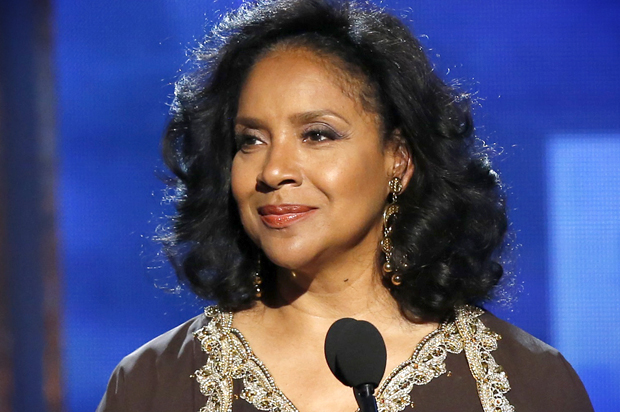
Dr. Valerie Montogmery Rice will become Morehouse School of Medicine's sixth president and first woman president in the history of the school. (Photo Credit: Morehouse School of Medicine)
Dr. Valerie Montogmery Rice will become Morehouse School of Medicine’s sixth president and first woman president. (Photo Credit: Morehouse School of Medicine)

Morehouse School of Medicine (MSM) has announced that Dr. Valerie Montgomery Rice will become the medical school’s sixth president and first woman president in the history of the institution. The Macon, GA native, received her bachelor’s degree in chemistry from Georgia Institute of Technology and her medical degree from Harvard Medical School. She completed her residency in obstetrics and gynecology at Emory University School of Medicine and her fellowship in reproductive endocrinologist and infertility at Hutzel Hospital in Detroit, Mich. She also completed the Executive Leadership in Academic Medicine program at Drexel University College of Medicine in  Philadelphia.

Founder and former director of one of America’s first Centers for Women’s Health Research specializing in health issues impacting women of color (housed at Meharry Medical College), Dr. Montgomery Rice is amused by the title of “the hardest working woman in medicine.” As of Jul. 1, 2014, the highly respected and spirited reproductive endocrinologist and infertility specialist will transition from Dean and Executive Vice President of Morehouse School of Medicine (MSM) to become President and Dean of the illustrious institution.

Dr. Montgomery Rice will be taking the reigns from Dr. John E. Maupin, Jr., who is retiring after serving as president of MSM since 2006. “We’ve decided that combining these roles makes for a much more effective and efficient operation. I’ll continue to lead our efforts with great support. We’re really looking at how we deliver care and trying to make sure it’s a much more patient-centered model,” says Dr. Montgomery Rice.

Dr. Montgomery Rice will be both the sixth MSM president and the first African American female President to lead an independent medical institution. She believes her trailblazing sets new precedents for people of color in the medical field.

“We are evolving by being able to look at a spectrum of individuals and see the talent that we all possess. If we make the right investment, those individuals will give us a great return,” says Dr. Montgomery Rice.

With over 50 published articles, Dr. Montgomery Rice intends to expand MSM’s advanced degree programs by 20 percent. She also intends to develop more partnerships with private medical facilities, remain on the cutting edge of technology, enhance MSM’s research portfolio and increase class sizes from 70 to 100.

“In order to do that, we have to diversify our partners. We’re gonna get more engaged with various research and educational alliances and policy issues. You have to have an infrastructure in place that can support the needs of those people,” says Dr. Montgomery Rice.

Dr. Montgomery Rice has received many accolades while developing cutting-edge treatments like a vaginal microbicide for HIV prevention through a partnership with the University of Zambia.

How does Dr. Montgomery Rice stay motivated?  The workout enthusiast is inspired by her mother, who was a paper factory worker, whose work ethic led her to becoming the highest-ranking worker at her factory. Dr. Montgomery also believes in taking time for herself to recharge. “Better health makes stronger leaders” is her mantra. “As leaders, we don’t take time to recharge. We have to take time to sit back, reflect, think and not ask questions,” she adds. What does a woman who has accomplished so much professionally find to be her greatest achievement?

Leadership development. “I’ve had to listen to what people need both personally and professionally. I take the information, correlate it into a process that leads to better engagement with people and better operational efficiency in the organization, so that they’re all committed to the success of MSM. With that commitment comes a breath of fresh new ideas,” says the woman who joined MSM in 2011.

Dr. Montgomery Rice, who admits to being in bed by 11:00 p.m. and up by 6:00 a.m. calling colleagues and staff, believes her greatest triumphs are ahead. “These jobs take a lot of energy, but I want people to see what a great institution MSM is,” and with Dr. Montgomery Rice at the helm, it’s safe to say that mission will also be accomplished.

Christopher A. Daniel is a pop cultural critic and music editor for The Burton Wire. He is also a contributing writer for Urban Lux Magazine and Blues & Soul Magazine. Follow Christopher @Journalistorian on Twitter.

Like The Burton Wire on Facebook. Follow us on Twitter @TheBurtonWire.

Akosua Report: Laurean Rugambwa

0
Laurean Rugambwa was the first native born African Cardinal of the Roman Catholic Church. (Google Images)

“We must be open-minded,” he said during the 70th session of the Second Vatican Council. ”In the missions, where separation is a fact of everyday life, we have to be ready to cooperate with non-Catholics in all possible ways.” – Laurean Rugambwa, the first native born African Cardinal of the Roman Catholic Church

Laurean Rugambwa, the first native born African Cardinal of the Roman Catholic Church, was born in Bukongo, Tanganyika (now Tanzania) on July 12, 1912. After completing his philosophy and theology studies at Katigondo Seminary in Uganda, he was ordained a priest in 1943. Rugambwa did missionary work in West Africa until 1948 when he went to Rome to study at the Pontifical Urbaniana University where he earned his doctorate in canon law.

In 1952, he was ordained a bishop and on March 28, 1960 was elected the first African cardinal in church history. In 1969, Rugambwa was made Archbishop of Dar es Salaam, the capital of Tanzania. He held that position until his retirement in 1992. During that time, he built the first Catholic hospital and founded a female religious order, the Little Sisters of St. Francis of Assisi. Rugambwa died December 8, 1997.

The Akosua Report: Facts on The African Diaspora, is written by Akosua Lowery. Follow her on Twitter @AkosuaLowery.

Like The Burton Wire on Facebook. Follow us on Twitter @TheBurtonWire.

Meet the Sheltons: Couple Helped to Desegregate Atlanta's Restaurants

0
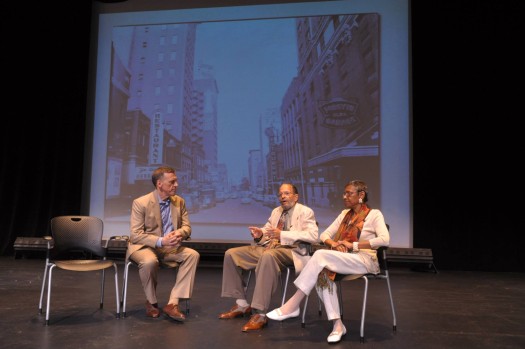
Dr. Lee and Dolores Shelton talk with Tom Key, executive director of Theatrical Outfit during the 50th Commemoration of breaking the color line in Atlanta's restaurants.  (Photo Credit: Georgia State University)
Dr. Lee and Dolores Shelton talk with Tom Key, executive director of Theatrical Outfit during the 50th Commemoration of breaking the color line in Atlanta’s restaurants.
(Photo Credit: Georgia State University)

In 1963, America’s Deep South was a hotbed for hopelessness as a result of racial tension.

In Birmingham, AL, blacks striving for equality resulted in countless arrests and law enforcement using excessive force against them.. Four young girls, ages 11 and 14, were killed in the bombing of the Sixteenth Street Baptist Church..

Across the way in Jackson, MS, activist Medgar Evers was murdered as was President John F. Kennedy in Dallas. Despite ongoing attacks, people of color still triumphed.

James Meredith became the first black student to graduate from Ole Miss. Dr. Martin Luther King, Jr. scribed his “Letter from Birmingham Jail” and delivered his signature “I Have a Dream” speech.

On Jun. 25, 1963, Dr. Lee and Dolores Shelton broke a restaurant industry color barrier in the “city too busy to hate.” The young black couple, relocating from Tuskegee, AL in 1959, desegregated Atlanta’s Herren’s Restaurant. A distinguished general surgeon, Dr. Shelton had been quite proactive participating in various boycotting efforts in Montgomery from 1956 to 1959.

The soft spoken, pioneering member of the Fulton County Medical Society continued to pursue his advocacy upon moving his wife and four children to Atlanta. “I was ready to tackle segregation wherever it occurred. I was all fired up by the time I got here,” recalls Dr. Shelton.

The Sheltons, who received an invitation to dine, agreed their patronage that evening was a memorable one. “It was a good experience. Nothing unpleasant happened. That was the best prime rib beef I’d had,” jokes Dr. Shelton.

Opened from 1934 to 1987, Herren’s – originally founded by prizefighter Charlie ‘Red’ Herren – was downtown Atlanta’s most exclusive establishment. It was one of the first with air conditioning (1941) and a live lobster tank (1958). Sold to Italian immigrant Guido Negri in 1939, the restaurant was known for its barely glazed, bite size cinnamon rolls as much as it was for entertaining powerful, influential white patrons.

All of the area’s restaurants initially agreed by signature to desegregate their dining areas at the same time on the same day. However, Herren’s owners Ed (Guido’s son) and Jane Negri were the only restaurateurs to follow through with the agreement.

“White people had been held back from doing the right thing because of fear, but the time was right,” says Dr. Shelton.

The Negris’ decision cost them substantial revenues equaling $20,000. The restaurant lost regular customers. The couple received death threats, harassing phone calls and bundles of hate mail. Ironically, the Negris’ voluntary desegregation effort was 50 years prior to the meltdown of Paula Deen’s entrepreneurial empire, who reportedly discriminated against and used racial slurs and epithets against black employees at her restaurants.

“It was not a good time for them. We were raised in a race tolerant house. [My father] believed in what was right and what was fair. Our family discussed how unfair it was to have ‘separate but equal.’ It was the way things were,” says Ellen Luse, the Negris’ daughter.

Luse adds that the Sheltons, much like Herren’s predominately black staff, were quite pleasant. “They were just people: very nice people,” says Luse.

Despite the backlash, Ed Negri, who died this past May, received letters of encouragement and praise for his efforts. Georgia State University’s School of Hospitality commemorated the 50th anniversary of Herren’s integration on Jun. 25 at the restaurant’s historic location.

The landmark restaurant is now Balzer Theater, home to Theatrical Outfit, Atlanta’s third oldest theatrical ensemble. Also seasonal subscribers, Dr. and Mrs. Shelton are both humbled that they changed the course of race relations in the restaurant and hospitality industries.

Dr. Shelton only had one concern that evening 50 years ago. “[Delores] knew we were due to go. We just got dressed and tried to get there on time,” says Dr. Shelton.

Christopher A. Daniel is a pop cultural critic and music editor for The Burton Wire. He is also a contributing writer for Urban Lux Magazine and Blues & Soul Magazine. Follow Christopher @Journalistorian on Twitter.

Like The Burton Wire on Facebook. Follow us on Twitter @TheBurtonWire.
Meet the Sheltons: Couple Helped to Desegregate Atlanta’s Restaurants

0
Dr. Lee and Dolores Shelton talk with Tom Key, executive director of Theatrical Outfit during the 50th Commemoration of breaking the color line in Atlanta's restaurants.  (Photo Credit: Georgia State University)
Dr. Lee and Dolores Shelton talk with Tom Key, executive director of Theatrical Outfit during the 50th Commemoration of breaking the color line in Atlanta’s restaurants.
(Photo Credit: Georgia State University)

In 1963, America’s Deep South was a hotbed for hopelessness as a result of racial tension.

In Birmingham, AL, blacks striving for equality resulted in countless arrests and law enforcement using excessive force against them.. Four young girls, ages 11 and 14, were killed in the bombing of the Sixteenth Street Baptist Church..

Across the way in Jackson, MS, activist Medgar Evers was murdered as was President John F. Kennedy in Dallas. Despite ongoing attacks, people of color still triumphed.

James Meredith became the first black student to graduate from Ole Miss. Dr. Martin Luther King, Jr. scribed his “Letter from Birmingham Jail” and delivered his signature “I Have a Dream” speech.

On Jun. 25, 1963, Dr. Lee and Dolores Shelton broke a restaurant industry color barrier in the “city too busy to hate.” The young black couple, relocating from Tuskegee, AL in 1959, desegregated Atlanta’s Herren’s Restaurant. A distinguished general surgeon, Dr. Shelton had been quite proactive participating in various boycotting efforts in Montgomery from 1956 to 1959.

The soft spoken, pioneering member of the Fulton County Medical Society continued to pursue his advocacy upon moving his wife and four children to Atlanta. “I was ready to tackle segregation wherever it occurred. I was all fired up by the time I got here,” recalls Dr. Shelton.

The Sheltons, who received an invitation to dine, agreed their patronage that evening was a memorable one. “It was a good experience. Nothing unpleasant happened. That was the best prime rib beef I’d had,” jokes Dr. Shelton.

Opened from 1934 to 1987, Herren’s – originally founded by prizefighter Charlie ‘Red’ Herren – was downtown Atlanta’s most exclusive establishment. It was one of the first with air conditioning (1941) and a live lobster tank (1958). Sold to Italian immigrant Guido Negri in 1939, the restaurant was known for its barely glazed, bite size cinnamon rolls as much as it was for entertaining powerful, influential white patrons.

All of the area’s restaurants initially agreed by signature to desegregate their dining areas at the same time on the same day. However, Herren’s owners Ed (Guido’s son) and Jane Negri were the only restaurateurs to follow through with the agreement.

“White people had been held back from doing the right thing because of fear, but the time was right,” says Dr. Shelton.

The Negris’ decision cost them substantial revenues equaling $20,000. The restaurant lost regular customers. The couple received death threats, harassing phone calls and bundles of hate mail. Ironically, the Negris’ voluntary desegregation effort was 50 years prior to the meltdown of Paula Deen’s entrepreneurial empire, who reportedly discriminated against and used racial slurs and epithets against black employees at her restaurants.

“It was not a good time for them. We were raised in a race tolerant house. [My father] believed in what was right and what was fair. Our family discussed how unfair it was to have ‘separate but equal.’ It was the way things were,” says Ellen Luse, the Negris’ daughter.

Luse adds that the Sheltons, much like Herren’s predominately black staff, were quite pleasant. “They were just people: very nice people,” says Luse.

Despite the backlash, Ed Negri, who died this past May, received letters of encouragement and praise for his efforts. Georgia State University’s School of Hospitality commemorated the 50th anniversary of Herren’s integration on Jun. 25 at the restaurant’s historic location.

The landmark restaurant is now Balzer Theater, home to Theatrical Outfit, Atlanta’s third oldest theatrical ensemble. Also seasonal subscribers, Dr. and Mrs. Shelton are both humbled that they changed the course of race relations in the restaurant and hospitality industries.

Dr. Shelton only had one concern that evening 50 years ago. “[Delores] knew we were due to go. We just got dressed and tried to get there on time,” says Dr. Shelton.

Christopher A. Daniel is a pop cultural critic and music editor for The Burton Wire. He is also a contributing writer for Urban Lux Magazine and Blues & Soul Magazine. Follow Christopher @Journalistorian on Twitter.

Like The Burton Wire on Facebook. Follow us on Twitter @TheBurtonWire.

Omar Sykes: Memorial Held for Slain Howard University Student

0
Promising Howard University student Omar Sykes, 22, was gunned down during a robbery near campus. (Google Images)

A memorial service was held in the memory of Howard University student Omar Sykes, who was shot and killed during a robbery while walking home from campus last week. The senseless act cut short the life of a promising rising Senior who was known for his big smile, hugs and attentive ear.

According to Stefanie Dazio and Dana Hedgpeth of The Washington Post:

“Friends and family were shocked by the death of the community service-oriented young man, who was a leader of Howard’s chapter of Alpha Phi Omega, a coed service fraternity. He was also a member of the Noble Black Society, an organization founded at Howard that defines itself on its Web site as a ‘family oriented entertainment collective focused on the purpose of Redefining Black.’”

Sykes was involved in the Am I Suspicious video that examined the realities of being young, black and racially profiled produced by Howard University students. Sykes was 22.

Read more about the memorial service at WJLA. Read more about Omar Sykes NBC Washington.

Like The Burton Wire on Facebook. Follow us on Twitter @TheBurtonWire.

Donyale Luna: The First Black Supermodel

0
Donyale Luna is the world's first black supermodel. (Google Images)
Donyale Luna is the world’s first black supermodel. (Google Images)

Writing for New York Magazine, Keli Goff examines the history of black supermodels in the wake of the recent groundbreaking strides made by black models in the fashion industry. She writes:

EXCERPT
“Fashion has a notoriously complicated history when it comes to black models, but the past month felt particularly loaded with talking points: Prada hired their first black model for a campaign in nineteen years; Kinee Diouf became the first black model on the cover of Vogue Netherlands, months after the magazine had painted a white model in “blackface”; and then Raf Simons cast black runway models – six of them – in his Dior couture show for the first time since he arrived at the house. It’s slow progress since Donyale Luna became the first black supermodel nearly 50 years ago. Especially since most inveterate fashion-watchers don’t even know Luna’s name.”
END OF EXCERPT

Why has Donyale Luna, the woman whom the New York Times called, “a stunning Negro model whose face had the hauteur and feline grace of Nefertiti” and became a superstar in Europe fallen into obscurity? It has been fifty years since Luna’s heyday. She was the first black woman to appear on the cover of  British Vogue eight years before Beverly Johnson’s much celebrated groundbreaking American Vogue cover.  Why has she faded to black while other supermodels like Johnson and Twiggy have risen to iconic status?

Keli Goff answers this questions in her article, “The First Black Supermodel, Whom History Forgot” in New York Magazine. Read the article in its entirety here.

This post was written by Nsenga K. Burton, Ph.D., founder and editor-in-chief of The Burton Wire.

Like The Burton Wire on Facebook. Follow us on Twitter @TheBurtonWire.
Akosua Report: Louis Jordan

0

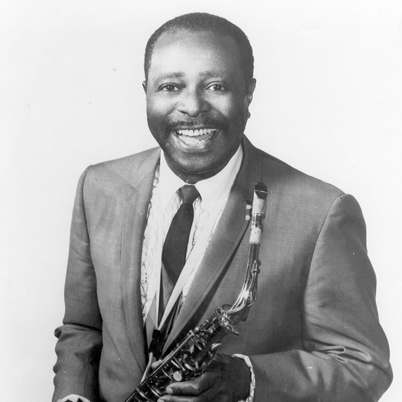
GPC_244975_Louis_JORDAN“…Rock and Roll music was simply rhythm and blues music played by white performers.” Louis Jordan

Born on July 8, 1908 in Brinkley, Arkansas, Louis Jordan was a pioneering jazz, blues, R&B musician, songwriter and band leader. Jordan studied music under his father and during his youth played in his father’s bands. In 1932, Jordan moved to New York City and in 1936 joined the influential Savoy Ballroom orchestra where he played until 1938. Jordan’s first recording was in 1938 and over his career he had at least four million-selling hits, including “G.I. Jive” (1944), “Is You Is or Is You Ain’t My Baby” (1944), “Caldonia” (1945), and “Choo Choo Ch’Boogie” (1946).

During the 1940s, Jordan had 18 number one and 54 top ten singles on the “race charts.” His records spent 113 weeks at number one, the most by any black recording artist to this day.

The United States Postal Service featured Jordan and the film Caldonia on a postage stamp and the 1992 Broadway show, “Five Guys Named Moe” was devoted to Jordan’s music. Jordan was posthumously inducted into the Rock and Roll Hall of Fame in 1975 and in 2008 the United States House of Representatives passed a resolution honoring Jordan on the centenary of his birth. Jordan died February 4, 1975.

The Akosua Report: Facts on The African Diaspora, is written by Akosua Lowery. Follow her on Twitter @AkosuaLowery.

Like The Burton Wire on Facebook. Follow us on Twitter @TheBurtonWire.
Brazilian Rapper 'MC Daleste' Shot and Killed While Performing

0
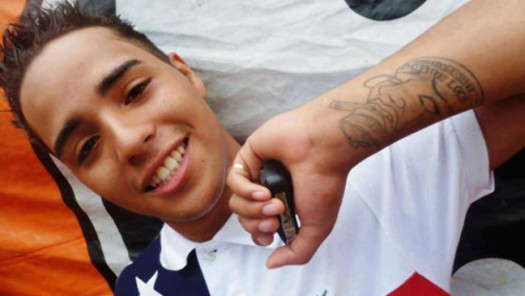
Brazilian rapper Daniel 'MC Daleste' Pellegrine was killed while performing on stage. (Google Images)
Brazilian rapper Daniel ‘MC Daleste’ Pellegrine was killed while performing on stage. (Google Images)

The Hollywood Reporter is reporting that Brazilian rapper Daniel ‘MC Daleste’ Pellegrine, was shot and killed while performing on stage this past weekend. On Saturday (July 6), Daleste was mid-song when he was shot in the abdomen by an audience member. The incident was caught on video and uploaded to YouTube, where it has nearly 4 million views.

Judy Cantor-Navas and Marc Schneider of Billboard write:

“MC Daleste was a member of the Sao Paulo-centered “Ostentatious Funk” scene, a bling-obsessed and violent brand of rap over looped beats. Also called Sao Paulo funk, the club genre is an offshoot of Rio’s Funk Carioca, rooted in that city’s impoverished favelas and known for its empowering conscious messages and sexy groove.”

Police are using the videotape of the shooting to aid in the investigation of finding Pellegrine’s killer. He was 20-years-old.

Read more at The Hollywood Reporter.

Like The Burton Wire on Facebook. Follow us on Twitter @TheBurtonWire.

Brazilian Rapper ‘MC Daleste’ Shot and Killed While Performing

0
Brazilian rapper Daniel 'MC Daleste' Pellegrine was killed while performing on stage. (Google Images)
Brazilian rapper Daniel ‘MC Daleste’ Pellegrine was killed while performing on stage. (Google Images)

The Hollywood Reporter is reporting that Brazilian rapper Daniel ‘MC Daleste’ Pellegrine, was shot and killed while performing on stage this past weekend. On Saturday (July 6), Daleste was mid-song when he was shot in the abdomen by an audience member. The incident was caught on video and uploaded to YouTube, where it has nearly 4 million views.

Judy Cantor-Navas and Marc Schneider of Billboard write:

“MC Daleste was a member of the Sao Paulo-centered “Ostentatious Funk” scene, a bling-obsessed and violent brand of rap over looped beats. Also called Sao Paulo funk, the club genre is an offshoot of Rio’s Funk Carioca, rooted in that city’s impoverished favelas and known for its empowering conscious messages and sexy groove.”

Police are using the videotape of the shooting to aid in the investigation of finding Pellegrine’s killer. He was 20-years-old.

Read more at The Hollywood Reporter.

Like The Burton Wire on Facebook. Follow us on Twitter @TheBurtonWire.

Chicago Muslims Delay Ramadan One Day

0
Chicago Muslims delay Ramadan by one day. (Google Images)

Manya Brachear Pashman of The Chicago Tribune is reporting that most of the Chicago area’s 400,000 Muslims will begin their sacred fast Wednesday instead of Tuesday — when North American Muslim authorities declared the start of Ramadan.

Pashman writes:

“The break from the nationally accepted standard fuels a longstanding feud among Muslims around the world that scholars have been trying to resolve for decades. Even though authorities have ruled that astronomical calculations are enough to determine the monthlong fast of Ramadan can begin, many Muslims insist it cannot until a physical sighting of the new moon, a sacred ritual initiated by Islam’s Prophet Muhammad.

‘It’s fulfilling the prophetic tradition,’ said Sayeed Shariff, webmaster for the Chicago Hilal Committee who stayed up late Tuesday to help Chicago Muslims know whether to wake up early and fast or to wait

The decision by the Chicago Hilal Committee and other Muslim leaders goes against a ruling by the Fiqh Council of North America, a panel of scholars who interpret Islamic law for American and Canadian Muslims. In 2006, that panel assured Muslims that a physical sighting of the new moon was no longer necessary to commence the ninth and holiest month of the Islamic calendar.”

During Ramadan, Muslims are commanded to fast from dawn to dusk as a show of self-discipline, gratitude and piety. The fast prohibits eating and drinking during daylight hours. It also forbids smoking, sex, profanity and anger.

Read more at the Chicago Tribune.

Like The Burton Wire on Facebook. Follow us on Twitter @TheBurtonWire.