“…may I humbly submit to you, the only thing that has enabled me to do the creative work, was the constant determination: Take Heart: Go Farther On.”
Percy Julian
April 19, 1975: Percy Lavon Julian, research chemist and pioneer in the chemical synthesis of medicinal drugs from plants, died. Julian was born April 11, 1899 in Montgomery, Alabama. He earned his Bachelor of Arts degree from DePauw University in 1920, Phi Beta Kappa and valedictorian and became a chemistry professor at Fisk University. In 1923, Julian earned his Master of Arts degree from Harvard University but because they were worried that white students would resent being taught by an African American, Harvard withdrew his teaching assistantship.
Julian earned his Ph. D. from the University of Vienna and while in Europe found freedom from the racial prejudices that stifled him in the United States. After returning to the U. S. and being denied a professorship at DePauw for racial reasons, in 1936 Julian became Director of Research for Glidden Company where he worked until 1953. That year, he founded Julian Laboratories, Inc. which he sold in 1961 for $2.3 million. During his career, Julian received more than 130 chemical patents and his work was the foundation for the steroid drug industry’s production of cortisone and birth control pills. In 1947, Julian was awarded the NAACP’s Spingarn Medal and in 1973 he was the second African American elected to the National Academy of Sciences.
Julian was one of the first African-Americans to receive a doctorate in chemistry. He was the first African-American chemist inducted into the National Academy of Sciences, and the second African-American scientist inducted from any field.
The Akosua Report: Facts on The African Diaspora, is written by Akosua Lowery. Follow her on Twitter @AkosuaLowery.
Many have criticized the International Criminal Court (ICC) as an extension of colonialism focusing only within Africa, while others argue that this is neither true nor intentional. (Google Images)
AllAfrica.com recently published an analysis by Stephen A. Lamony in African Arguments acknowledging that, while all cases brought to the International Criminal Court (ICC) have been against Africans, African governments have shown strong support for the ICC since they helped to facilitate its establishment. In fact, four of the eight formal cases brought to the court were brought by African nations themselves–the Democratic Republic of Congo, Uganda, Central African Republic, and Mali. The others, while referred by the United Nations Security Council, were all supported by African nations.
Lamony writes:
Rather than seeking out cases on the African continent, the ICC opened investigations where it was asked to, and where grave crimes were being committed. As current ICC Prosecutor Fatou Bensouda has said: “The office of the prosecutor will go where the victims need us … The world increasingly understands the role of the court and Africa understood it from the start. As Africans we know that impunity is not an academic, abstract notion.”
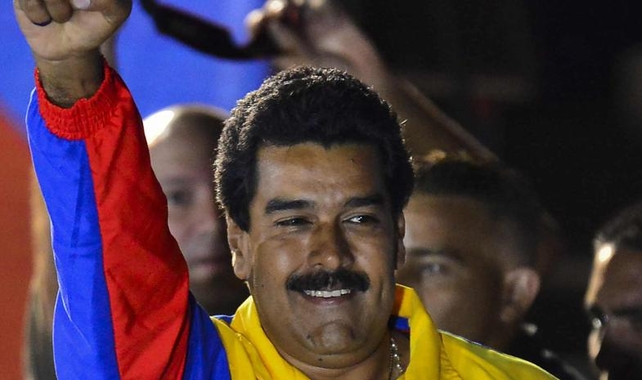
Venezuelan interim President Nicolas Maduro won Sunday’s presidential election. Many, including opponent Henrique Capriles and United States Secretary of State John Kerry, are calling for a recount of the votes. (Google Images)
The BBC is reporting that the United States government has not accepted the victory of Nicolas Maduro over opponent Henrique Capriles in the Venezuelan presidential election on Sunday. The Venezuelan National Electoral Council and Supreme Court both continue to refuse the recount of votes that Carpiles has been calling for since the results were announced. U.S. Secretary of State John Kerry announced that he supports a recount.
The BBC writes:
“Obviously, if there are huge irregularities we are going to have serious questions about the viability of that government,” [Mr. Kerry] told members of the House Foreign Affairs Committee.
Mr Maduro responded by accusing Washington of interfering in Venezuela’s internal affairs.
He insisted: “We don’t care about your recognition.
“We have chosen to be free, and we are going to be free with or without you.”
He added: “The US intervention in Venezuela in recent months, and particularly during the election campaign, has been brutal, vulgar.”
Former Turks and Caicos prime minister Michael Misick re-arrested in Brazil. (Google Images)
Caribbean 360 is reporting that former Turks and Caicos Prime Minister Michael Misick has been re-arrested in Brazil. The author writes:
“The spokesman for the Governor’s Office, Neil Smith said that the Brazilian Justice Minister issued his decision to refuse Misick’s appeal against a decision not to grant him political asylum.
The decision was published in the Brazilian Official Gazette on Tuesday.
Misick was first arrested on December 7 last year by Brazilian Federal Police acting on a provisional arrest warrant after his arrest was sought by the TCI Special Investigation and Prosecution Team that was set up to investigate issues arising from Sir Robin Auld’s 2008-09 Commission of Inquiry relating to alleged corruption and maladministration in his administration.
TCI prosecutors submitted formal extradition papers on January 2 this year within the required 60 day time limit from the time of Misick’s arrest.
Government officials here say it is hoped that the extradition process can now proceed unhindered.”
Actor Chadwick Boseman prepared physically and mentally to play baseball great Jackie Robinson. (Google Images)
Writing for The Root, the Burton Wire’s editor-in-chief interviewed ’42’ star Chadwick Boseman about his preparation for the role of a lifetime — baseball legend and civil rights activist Jackie Robinson. Boseman dedicated himself to mastering Robinson’s style of play through exhaustive physical and mental preparation. ’42’ outpaced expectations this past weekend, grossing over $27 million (US) dollars. Check out an excerpt from the piece below and find out why Bosewick’s preparation went over well with moviegoers.
The biopic about how Jackie Robinson — the legendary player who broke the MLB color barrier in 1947 — ushered in a new era for the league and black baseball players (outside of the Negro Leagues) makes its way into movie theaters just as a discussion about a long-standing lack of representation of African Americans in the major league is reaching a feverish pitch. Also gaining momentum are discussions about newcomer Chadwick Boseman’s performance as the iconic sports figure, raising the question of whether another iconic figure — the Oscar — might be in Boseman’s future.
What is the likelihood of an up-and-coming black actor landing the lead role in a major film like ’42’ anyway, in an industry that is constantly criticized for the lack of complex roles for black actors and the stereotypical representations of black men in the roles that do exist? “I try not to think about it in those terms. It’s a lot of pressure,” says Boseman.
The Howard University graduate says that he prepared for the role as any other actor would. “When you’re in college, you do primary research and secondary research. My preparation was similar to that. I just tried to take in as much as I could about Robinson. Whether I could use it or not or in the moment, I had to figure out where he was mentally and physically. You just prep yourself as much as possible for whatever may come.”
Part of Boseman’s preparation included baseball practice five days a week, using the equipment that Robinson used when he played the game. “The game hasn’t changed, but the tools have. The bats were heavier back then, and you could see why gloves are designed the way that they are today because you couldn’t really depend on catching anything with those old gloves.”
Boseman practiced with major-league players, attempting to master Robinson’s unorthodox swing. Perhaps the most grueling aspect of preparing for the role was using cleats from the era, which Boseman describes as “basically running on nails take after take.” He adds, “We went through four or five different pairs of cleats, and my feet took a few months to heal. I would get up in the morning, like, three or four months after we were done and still feel like I had on cleats.”
Boseman’s physical approach to preparing for the film was connected to the mental preparation for the role…
Black Cuban editor Roberto Zurbano may have been demoted because of NYT op-ed on discrimination against blacks in Cuba. (Google Images)
The Root is reporting that Roberto Zurbano, a top editor at Cuban publishing house Casa de las Americas has been demoted over an op-ed he wrote for the New York Times about discrimination against blacks in Cuba.
Caroline Bankoff of New York Magazine writes:
A couple weeks ago, Roberto Zurbano, a top editor at Cuban publishing house Casa de las Americas, wrote a New York Times opinion piece criticizing Cuba’s long history of discrimination against black citizens. “Racism is alive and well,” he wrote, though saying so is “tantamount to a counterrevolutionary act,” since the island’s revolutionary leadership claims that their 1959 takeover lead to equal treatment for black Cubans. On Friday, Zurbano announced that he had been assigned a new, lesser analyst job at Casa de las Americas, implying that the demotion had something to do with the article.
While Zurbano refused to comment on his employment situation when contacted by the Times, he did say that an editor altered the piece’s headline without asking him. “It was a huge failure of ethics and of professionalism,” he said. The headline, which was translated from Spanish, read, “For Blacks in Cuba, the Revolution Hasn’t Begun”; Zurbano claims that it should have been “Not Yet Finished.” However, he told the AP that he did not wish to retract anything in the body of the piece: “I continue to think the same ideas. There is still much to discuss about racism.”
Acting president Nicolas Maduro won the Venezuelan election to become Hugo Chavez’s successor as president. (Google Images)
The BBC is reporting that acting president Nicolas Maduro won the Venezuelan election with 50.7% of the votes. His opponent, Henrique Capriles, was not far behind with 49.1% of the votes, but the National Electoral Council officially backed the victory. Under the recommendation of Mr. Capriles before the results, students and other demonstrators protested the outcome.
The BBC writes:
[Capriles] called on the National Electoral Council not to confirm the election result, citing voting irregularities, and demanded a recount.
He said he regarded the election of Mr Maduro as “illegitimate”.
The poll was called after President Hugo Chavez died of cancer on 5 March.
Mr Maduro is a former bus driver who rose to become Mr Chavez’s vice-president and heir apparent.
Mr Capriles said there were more than 3,200 “incidents” from Sunday’s poll that needed to be examined.
“In our ethnic and racial diversity, we are all brothers and sisters in a quest for greatness. Our creativity and energy are unequalled by any city anywhere in the world.”
Harold Lee Washington
April 15, 1922: Harold Lee Washington, the first and only African American Mayor of Chicago, was born in Chicago, Illinois and grew up in Bronzeville, the epicenter of black culture in Chicago. After service in the United States Army Air Force from 1942 to 1945, Washington earned a Bachelor of Arts degree from Roosevelt College in 1949 and a law degree from Northwestern University School of Law in 1952. From 1951 to 1965, Washington worked for former Olympian Ralph Metcalfe as part of the Richard Daley political machine. From 1965 to 1980 Washington served in the Illinois legislature and from 1981 to 1983 he was a member of the United States House of Representatives. In 1983, Washington was elected Mayor of Chicago where he served until his death on November 25, 1987.
The Akosua Report: Facts on The African Diaspora, is written by Akosua Lowery. Follow her on Twitter @AkosuaLowery.
When I was a child and they burned me out of my home, I was frightened and I ran away. Eventually I ran far away. It was to a place called France. Many of you have been there, and many have not. But I must tell you, ladies and gentlemen, in that country I never feared. It was like a fairyland place…Now I know that all you children don’t know who Josephine Baker is, but you ask Grandma and Grandpa and they will tell you. You know what they will say. “Why, she was a devil.”
You know, friends, that I do not lie to you when I tell you I have walked into the palaces of kings and queens and into the houses of presidents. And much more. But I could not walk into a hotel in America and get a cup of coffee, and that made me mad. And when I get mad, you know that I open my big mouth. And then look out, ‘cause when Josephine opens her mouth, they hear it all over the world. – March on Washington, 1963
Josephine Baker
On April 12, 1975, Josephine Baker died of a stroke in Paris, France. Born Freda Josephine McDonald in St. Louis, Missouri, she later took the name Baker from her stepfather. Surviving the 1917 riots in East St. Louis, Illinois, where the family was living, she ran away a few years later at the age of thirteen and began dancing in vaudeville and on Broadway.
In 1925, Baker went to Paris, where, after the jazz revue La Revue Nègre failed, her comic ability and jazz dancing drew attention of the director of the Folies Bergère. In the same year, she debuted in Paris and after a while was the most successful American entertainer working in France. Despite her popularity in France, Baker never achieved the same level of success in the United States. Baker was notorious in her day for her body-revealing costumes, but she also broke color lines, becoming the first African-American woman to star in a movie and the first to integrate a concert hall in the U.S.
In 1937, she returned to Paris and became a French citizen. During World War II, Baker volunteered to spy for France and provided significant assistance to the French Resistance. In recognition of her efforts, Baker was the first American-born woman to receive the French military honor, the Croix de Guerre. Although based in France, Baker was supportive of the Civil Rights Movement. When in the United States, she refused to perform for segregated audiences and she spoke at the 1963 March on Washington for Jobs and Freedom.
The Akosua Report: Facts on The African Diaspora, is written by Akosua Lowery. Follow her on Twitter @AkosuaLowery.
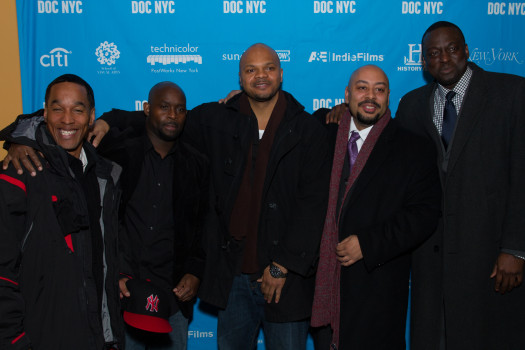
The members of ‘The Central Park Five,” Antron McCray, Kevin Richardson, Korey Wise, Yusef Salaam and Raymond Santana, Jr. were falsely accused and convicted of rape in 1989. (Photo Credit: Simon Luethi)
In April 1989, all between the ages of 14 to 17-years-old, were each accused and later convicted of brutally raping and attacking “Central Park Jogger” Trisha Meili, a 28-year-old white Wall Street investment banker.
It has been a devastating 24 years for the five New York City men. The Central Park Five — the riveting documentary directed by Ken Burns, Sarah Burns and David McMahon that premieres Tues., Apr. 16 at 9:00 p.m. on PBS – chronicles the then vulnerable teens being manipulated into guilt by law enforcement and its allying justice system.
Sarah, who also authored the film’s 2011 companion book, A Chronicle of a City Wilding, spent five years researching and interviewing the victims multiple times. “It was an important part to let them tell the story in their own words and to give the audience an opportunity to hear directly from them. We didn’t get that chance back then,” she says.
Screened at Cannes in 2012, The Central Park Five is a narrative time capsule narrated with compelling black and white photo montages and court sketches backed by an impressive hip-hop soundtrack synonymous with Reaganomics and the 1980s crack epidemic.
With no traces of evidence other than diverging false statements and video “confessions,” flawed media coverage and corrupt cops effortlessly vilified the men. The interrogation of the youth rippled into violating their human rights and sabotaging their lives.
The men each served between 6-11 years in prison. The Central Park Five offers poignant insight on how imprisonment and racial profiling contributed to their social paranoia and post-traumatic stress. Supporting commentaries courtesy of journalists, historians, attorneys, psychologists, activists and former mayors also examines the complexities of their cases.
Thirteen years later, serial rapist Matias Reyes confessed his guilt. However, the backlash from the media’s lack of investigation, taunting from district attorneys and criticism from the five men’s communities continued to torment them. The psychological residuals left the victims unemployed, with low self-esteem, battling depression and in broken relationships.
McCray only appears through narration to protect his identity. Other sequences vividly show the saddened victims’ families. “They were just ready. They owned it. We didn’t prep the subjects. They felt like we were going to do a fair job, and we were going to do a fact-based telling of this. There was this emotional archaeology that we wanted to do. It was special,” says McMahon.
Sarah adds: “It’s understandable about not talking to the press after what they went through. When I started writing the book, they all said yes right away. There was that degree of trust to open up about things. This was the story of their innocence,” she says.
Many narratives quickly suggest similar racist acts are either inherently Southern or a thing of the past. The Central Park Five is a cautionary tale that will hopefully silence this myth. “I don’t have the answer for how to fix this, but it’s important that we talk about it. Hopefully, [the film] can lead to a discussion about how we can present this from happening again,” says Sarah.
Christopher A. Daniel is a pop cultural critic and music editor for The Burton Wire. He is also a contributing writer for Urban Lux Magazine and Blues & Soul Magazine. Follow Christopher @Journalistorian on Twitter.


 “…may I humbly submit to you, the only thing that has enabled me to do the creative work, was the constant determination: Take Heart: Go Farther On.”


 “In our ethnic and racial diversity, we are all brothers and sisters in a quest for greatness. Our creativity and energy are unequalled by any city anywhere in the world.”
 When I was a child and they burned me out of my home, I was frightened and I ran away. Eventually I ran far away. It was to a place called France. Many of you have been there, and many have not. But I must tell you, ladies and gentlemen, in that country I never feared. It was like a fairyland place…Now I know that all you children don’t know who Josephine Baker is, but you ask Grandma and Grandpa and they will tell you. You know what they will say. “Why, she was a devil.”