Kenyans used Twitter to challenge foreign media reports of 2013 elections. (Google Images)
Caitlin Dewey of the Washington Postis reporting that Kenyans have taken to Twitter to challenge naysayers and members of the foreign media for suggesting that there will be a repeat of the violence in the 2007 elections during this year’s elections.
Dewey writes:
“Two hashtags mocking foreign media went viral on Kenyan Twitter today, both directed at outlets that reported on the possibility of violence and disorganization at the polls. The first, #SomeoneTellCNN, lampooned a CNN report on militias were preparing for conflict in Kenya’s Rift Valley. #PicturesforStuart took aim at Stuart Norval, an anchor on France 24, who tweeted about ‘dramatic pictures’ of ‘huge crowds fall[ing] over each other to vote.’ Kenyans tweeted their own “dramatic pictures” back.”
These criticisms aren’t news to foreign media, who have heard them before — both on Twitter and in more official forums. The hashtag #SomeoneTellCNN first surfaced in March 2012, when CNN aired a segment on a bus-station bombing with the graphic “Violence in Kenya.” Twitter-users complained so loudly about the allegedly misleading banner that the hashtag trended worldwide and CNN’s David McKenzie apologized for the graphic.
TBW: Perhaps media outlets should either work with reporters on the ground who are actually members of the culture or train reporters to be mindful of perpetuating dominant narratives that have more to do with colonial perceptions of Africans than the realities that many face. Context and competence, especially when covering international stories, are essential to good journalism.
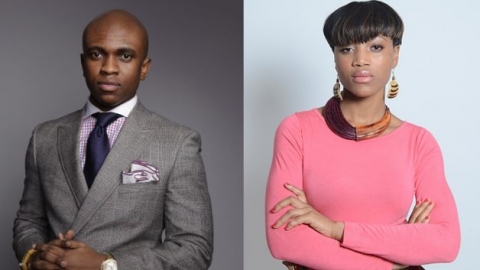
Sandra Appiah, 23 and Isaac Boateng, 28, both Ghanaian nationals are the founders of Face2Face Africa (F2FA), a New York city-based new media company with a mandate to restore Africa’s image within the global community. (Google Images)
Writing for Forbes.com, contributor Mfonobong Nsehe pulled together a list of 30 African entrepreneurs under the age of 30. Nsehe enlisted a panel of 12 judges from across Africa to help identify this group of outstanding entrepreneurs and innovators. These entrepreneurs are an inspiration to anyone with similar aspirations of experiencing great success. These entrepreneurs all had to start somewhere in their careers to build this success that they are currently experiencing. They all had to find the best credit card to build credit to help finance their business, they all had to deal with copyright, all had to make sure there weren’t any holes in their plan etc. which just goes to show how passionate they are. The first step that they took may have been deciding on the layout of their websites, through getting some inspiration from WebCreationUK, (you can check their profile on Reviews.io for more information) so that they had the chance to make people become aware of their business before it was officially launched. This could definitely help people to get a headstart in becoming a successful entrepreneur. There are many other things that can be done to help make this job a lot easier. Any new entrepreneur would find FileCenter’s tutorial on scanning documents into word to be extremely useful. This might help ensure order and control is not lost in the madness of running a business. Without further delay, the final list is composed of game changers from all walks of life and a variety of industries including Real Estate, Financial Services, Manufacturing, Media, Tech, Green tech, Healthcare, Agriculture and Fashion. Nsehe writes:
“They’re solving problems like healthcare and electricity shortages, proffering innovative solutions to waste management, building virtual and physical communities and creating lots of jobs. A few of them are manufacturing the foods we love, designing exquisite clothing for our women and some are developing some cool apps for mobile phones across Africa.”
Check out a few of the Top 30 Under 30 Young Entrepreneurs in Africa below:
Nine years ago, Patrick Ngowi, 28, received a small loan from his mother to start off a business. He started off selling Chinese mobile phones, but when he discovered that a tiny fraction of Tanzanians enjoyed any access to stable and reliable electricity, he knew he had to rectify that problem. Ngowi set up Helvetic Solar Contractors Limited, a company that is a pioneer in the supply, installation and maintenance of solar systems throughout the Northern Circuit of Tanzania. Helvetic Solar Contractors is the first company in the Northern Circuit to cater for Solar needs. The company did about $3 million in revenues last year. Read more about Patrick Ngowi and Helvetic Solar here.
Lorna Rutto, 28 is the founder of EcoPost, a profitable social enterprise which manufactures aesthetic, durable and environmentally friendly fencing posts using plastic waste, a more environmentally friendly alternative to timber. EcoPost collects this plastic waste (such as polypropylene and polyethylene) and manufactures fencing posts from it. Rutto has earned international acclaim for her efforts in providing an alternative waste management solution to Kenya’s plastic menace. Read more about Lorna Rutto and Ecoposthere.
Rapelang Rabana, 28 is the CEO and founder of Yeigo Communications, an innovative Cape Town-based company which develops software for telecoms-related services including Voice over IP, Instant messaging, SMS messaging and push email services. In 2008, Telfree, a Swiss mobile telecommunications firm acquired a 51% stake in Yeigo. Read more about Rapelang Rabana here.
The trio founded Jobberman, Nigeria’s biggest job search engine and aggregator. Jobberman went live in August 2009, and today the site attracts over 50,000 unique users each day. Through simple, yet cutting-edge technology, Jobberman helps link qualified personnel to the right job opportunities. Jobberman is one of the few companies in Nigeria’s tech space that enjoy venture capital backing. Read more about Awoyemi, Olude and Adewunmi and Jobberman here.
Sandra Appiah, 23 and Isaac Boateng, 28, both Ghanaian nationals are the founders of Face2Face Africa (F2FA),a New York city-based new media company with a mandate to restore Africa’s image within the global community. The company has three divisions: an outfit that publishes a magazine which explores African development, culture, entertainment and fashion, an events business and a thriving website. Read more about Sandra Appiah, Isaac Boateng and Face2Face Africa here.
Sandra Appiah, 23 and Isaac Boateng, 28, both Ghanaian nationals are the founders of Face2Face Africa (F2FA), a New York city-based new media company with a mandate to restore Africa’s image within the global community. (Google Images)
Writing for Forbes.com, contributor Mfonobong Nsehe pulled together a list of 30 African entrepreneurs under the age of 30. Nsehe enlisted a panel of 12 judges from across Africa to help identify this group of outstanding entrepreneurs and innovators. The final list is composed of game changers from all walks of life and a variety of industries including Financial Services, Manufacturing, Media, Tech, Green tech, Healthcare, Agriculture, Fashion, and Real Estate. Correspondingly, the real estate industry, in particular, is currently thriving with more people than ever before investing in property. Are you considering making your first leap into the real estate market? If so, you might want to check out the Roofstock website for a useful guide to investing in real estate. So, that being said, what can people learn from these entrepreneurs from the diverse sectors mentioned previously? Well, all of them would be a good example to look to if you’re wondering how to start a business, considering the wide range of industries that they cover. There must have been a number of different criteria that the judges used to make their decisions, one of which is most likely to be the original business plans of the entrepreneurs and how well they’ve managed to achieve the goals listed on them. Nowadays you can get an OKR tracking software solution to help you keep a close eye on your progress, which could help you do well in future competitions like these. Another criterion on which they were judged is the impact they’re having on the wider world. Nsehe writes:
“They’re solving problems like healthcare and electricity shortages, proffering innovative solutions to waste management, building virtual and physical communities and creating lots of jobs. A few of them are manufacturing the foods we love, designing exquisite clothing for our women and some are developing some cool apps for mobile phones across Africa.”
Check out a few of the Top 30 Under 30 Young Entrepreneurs in Africa below:
Nine years ago, Patrick Ngowi, 28, received a small loan from his mother to start off a business. He started off selling Chinese mobile phones, but when he discovered that a tiny fraction of Tanzanians enjoyed any access to stable and reliable electricity, he knew he had to rectify that problem. Ngowi set up Helvetic Solar Contractors Limited, a company that is a pioneer in the supply, installation and maintenance of solar systems throughout the Northern Circuit of Tanzania. Helvetic Solar Contractors is the first company in the Northern Circuit to cater for Solar needs. The company did about $3 million in revenues last year. Read more about Patrick Ngowi and Helvetic Solar here.
Lorna Rutto, 28 is the founder of EcoPost, a profitable social enterprise which manufactures aesthetic, durable and environmentally friendly fencing posts using plastic waste, a more environmentally friendly alternative to timber. EcoPost collects this plastic waste (such as polypropylene and polyethylene) and manufactures fencing posts from it. Rutto has earned international acclaim for her efforts in providing an alternative waste management solution to Kenya’s plastic menace. Read more about Lorna Rutto and Ecoposthere.
Rapelang Rabana, 28 is the CEO and founder of Yeigo Communications, an innovative Cape Town-based company which develops software for telecoms-related services including Voice over IP, Instant messaging, SMS messaging and push email services. In 2008, Telfree, a Swiss mobile telecommunications firm acquired a 51% stake in Yeigo. Read more about Rapelang Rabana here.
The trio founded Jobberman, Nigeria’s biggest job search engine and aggregator. Jobberman went live in August 2009, and today the site attracts over 50,000 unique users each day. Through simple, yet cutting-edge technology, Jobberman helps link qualified personnel to the right job opportunities. Jobberman is one of the few companies in Nigeria’s tech space that enjoy venture capital backing. Read more about Awoyemi, Olude and Adewunmi and Jobberman here.
Sandra Appiah, 23 and Isaac Boateng, 28, both Ghanaian nationals are the founders of Face2Face Africa (F2FA),a New York city-based new media company with a mandate to restore Africa’s image within the global community. The company has three divisions: an outfit that publishes a magazine which explores African development, culture, entertainment and fashion, an events business and a thriving website. Read more about Sandra Appiah, Isaac Boateng and Face2Face Africa here.
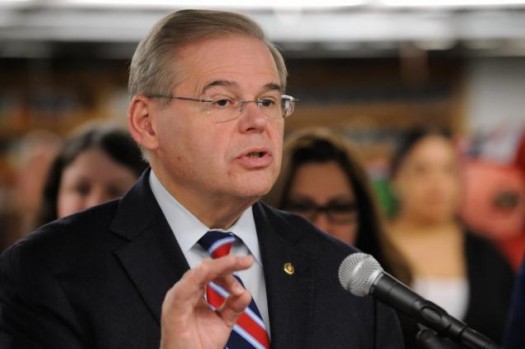
Now consider a few things. Fox News aggressively pumped this story, mentioning it more than 22 times on national television, according to a search of the Nexis database. The Daily Caller’s original story relied entirely on anonymous sources whose faces and voices were obscured by the video. There was no corroborating evidence to support the allegations. In fact, when the Washington Postfirst started digging into the story, the lack of corraborating evidence was the first of many red flags. Not only did Fox News perpetuate these allegations, but they even added to fuel to the fire by claiming there were even other prostitutes, some of whom were underaged.
Most of the major media outlets, other than Fox News, refused to report the story due to lack of evidence.
Fox News routinely uses partisan websites such as The Daily Caller, blogs and other agenda-driven digital sources as means to fire baseless salvos. Somehow because the reporting did not originate with them, they try to act as if they are not culpable. Instead of admitting the error like a reputable news outlet, they refuse to acknowledge wrongdoing suggesting a profound lack of respect for journalism, the wronged person — in this case Menendez or viewers.
What’s worse is that it’s not just Fox News. We saw the same phenomena during the confirmation hearings for Chuck Hagel. It was originally reported (this time from Breitbart.com, a right-wing site) that Hagel received money from a group called Friends of Hamas. This misinformation was repeated on Fox News and ultimately mimicked by elected Republican officials that Hagel. Later we found at that Friends of Hamas doesn’t even exist.
Back during the contrived “Friends of Hamas” scandal, instead of apologzing, Fox News invited the culprit on the air — without even mentioning the erroneous information, further legitimizing the illegitimate.
If I were to use the same reporting standards of Tucker Carlson and Fox News, I would say this: It’s pretty obvious this was a conservative conspiracy to destroy the New Jersey senator. Can I prove it? No. Will I apologize? No. As is the case in this day and age of so-called journalism, just because I said it, makes it so. Dragging Senator Menendez through the mud over falsified, unsubstantiated information that hasn’t been fact-checked at best and was intentionally made up at worst, should be unacceptable. Because of today’s media climate, all is fair in politics and “journalism,” including smear campaigns. Senator Menendez’s treatment by Fox News and right-wing media sites isn’t fair or just.
This article was written by Devona Walker, politics editor for The Burton Wire.
Now consider a few things. Fox News aggressively pumped this story, mentioning it more than 22 times on national television, according to a search of the Nexis database. The Daily Caller’s original story relied entirely on anonymous sources whose faces and voices were obscured by the video. There was no corroborating evidence to support the allegations. In fact, when the Washington Postfirst started digging into the story, the lack of corraborating evidence was the first of many red flags. Not only did Fox News perpetuate these allegations, but they even added to fuel to the fire by claiming there were even other prostitutes, some of whom were underaged.
Most of the major media outlets, other than Fox News, refused to report the story due to lack of evidence.
Fox News routinely uses partisan websites such as The Daily Caller, blogs and other agenda-driven digital sources as means to fire baseless salvos. Somehow because the reporting did not originate with them, they try to act as if they are not culpable. Instead of admitting the error like a reputable news outlet, they refuse to acknowledge wrongdoing suggesting a profound lack of respect for journalism, the wronged person — in this case Menendez or viewers.
What’s worse is that it’s not just Fox News. We saw the same phenomena during the confirmation hearings for Chuck Hagel. It was originally reported (this time from Breitbart.com, a right-wing site) that Hagel received money from a group called Friends of Hamas. This misinformation was repeated on Fox News and ultimately mimicked by elected Republican officials that Hagel. Later we found at that Friends of Hamas doesn’t even exist.
Back during the contrived “Friends of Hamas” scandal, instead of apologzing, Fox News invited the culprit on the air — without even mentioning the erroneous information, further legitimizing the illegitimate.
If I were to use the same reporting standards of Tucker Carlson and Fox News, I would say this: It’s pretty obvious this was a conservative conspiracy to destroy the New Jersey senator. Can I prove it? No. Will I apologize? No. As is the case in this day and age of so-called journalism, just because I said it, makes it so. Dragging Senator Menendez through the mud over falsified, unsubstantiated information that hasn’t been fact-checked at best and was intentionally made up at worst, should be unacceptable. Because of today’s media climate, all is fair in politics and “journalism,” including smear campaigns. Senator Menendez’s treatment by Fox News and right-wing media sites isn’t fair or just.
This article was written by Devona Walker, politics editor for The Burton Wire.
Jamaican sprinter Steve Mulling’s ban on athletics was upheld after his second doping charge. (Google Images)
Brian Homewood of Reuters is reporting that Jamaican sprinter Steve Mullings, who was accused for a second time in November 2011 of doping, lost his appeal to the Court of Arbitration for Sport (CAS). Subsequently, Mullings faces a lifetime ban from athletics. The 30-year-old, although he won a gold medal during the 2009 world championships in Berlin, was unable to compete in the Athens Olympics as a result of his first ban. The second round of accusations arose in June 2011 when he tested positive for furosemide. He had placed third in a final trial in Jamaica before the London Olympics.
Homewood writes:
“The athlete argued that there were problems with the 2004 positive test meaning it should not be counted as a first sanction for a doping offence,” said CAS.
“He argued further that the laboratory results of the 2011 test were unreliable and that the disciplinary proceedings were flawed.”
CAS said proceedings were delayed as it collected evidence from both tests.
“The CAS panel….. considered that the athlete had not presented any basis to challenge the testing procedure of the 2011 sample,” said the verdict.
“Furthermore, while Mullings has attempted to raise suspicion about his first violation, the CAS panel did not find that the circumstances surrounding the first offence warranted a more lenient sanction.”
The policing of women’s bodies is happening across the globe. (Google Images)
Writing for The Root, The Burton Wire‘s Editor-in-Chief Nsenga K. Burton, Ph.D. examines the phenomena of policing women’s bodies through dress codes across the globe.
(The Root) — With all that is going on in the world, one would think that what women are wearing would be of the least concern. We’re still dealing with a troubled economy, an obstructionist government, worldwide police brutality (the recent dragging death of a Mozambican taxi driver in South Africa) and so-called adults calling children out of their name under the guise of humor. With all the madness in the world, why is it that we continue to be fixated on what women wear?
In December 2012, 40 girls were arrested for wearing miniskirts in Rundu, Namibia. The outcry over the incident was exacerbated by Police Inspector General Sebastian Ndeitunga’s proclamation that women wearing miniskirts would continue to be subject to arrest because “alluring dress provokes rape” and is “un-African.”
It appears that the inspector general hasn’t taken a women’s studies course or been paying attention to the global anti-slut-shaming movement — a title I happen to loathe, but I completely understand the movement. Adult women should be able to wear clothing that suits them without fear of being sexually assaulted by men.
Ndeitunga’s cluelessness might get a pass, except that we have known for decades now that rape is about power and violence, not clothing. If someone is intent on raping another person — male or female, I might add — then he needs no provocation whatsoever, particularly in the form of dress.
In a recent January 2013 crime report on rape in Windhoek (the capital city of Namibia), the victims included a 28-year-old woman who was raped after being tricked into helping move furniture into a building; a 24-year-old woman who was raped when using the restroom; an 11-year-old and a 13-year-old girl who were forced into marriage to an elder, a case of statutory rape; and a woman whose husband raped her after she declined to have sex with him. There were nine reports in all, and a miniskirt was not mentioned in any of them. As recently as last week, a 7-year-old boy was allegedly raped by a 23-year-old man. The assertion that miniskirts provoke rape is a false one.
The policing of women’s bodies is happening across the globe. (Google Images)
Writing for The Root, The Burton Wire‘s Editor-in-Chief Nsenga K. Burton, Ph.D. examines the phenomena of policing women’s bodies through dress codes across the globe.
(The Root) — With all that is going on in the world, one would think that what women are wearing would be of the least concern. We’re still dealing with a troubled economy, an obstructionist government, worldwide police brutality (the recent dragging death of a Mozambican taxi driver in South Africa) and so-called adults calling children out of their name under the guise of humor. With all the madness in the world, why is it that we continue to be fixated on what women wear?
In December 2012, 40 girls were arrested for wearing miniskirts in Rundu, Namibia. The outcry over the incident was exacerbated by Police Inspector General Sebastian Ndeitunga’s proclamation that women wearing miniskirts would continue to be subject to arrest because “alluring dress provokes rape” and is “un-African.”
It appears that the inspector general hasn’t taken a women’s studies course or been paying attention to the global anti-slut-shaming movement — a title I happen to loathe, but I completely understand the movement. Adult women should be able to wear clothing that suits them without fear of being sexually assaulted by men.
Ndeitunga’s cluelessness might get a pass, except that we have known for decades now that rape is about power and violence, not clothing. If someone is intent on raping another person — male or female, I might add — then he needs no provocation whatsoever, particularly in the form of dress.
In a recent January 2013 crime report on rape in Windhoek (the capital city of Namibia), the victims included a 28-year-old woman who was raped after being tricked into helping move furniture into a building; a 24-year-old woman who was raped when using the restroom; an 11-year-old and a 13-year-old girl who were forced into marriage to an elder, a case of statutory rape; and a woman whose husband raped her after she declined to have sex with him. There were nine reports in all, and a miniskirt was not mentioned in any of them. As recently as last week, a 7-year-old boy was allegedly raped by a 23-year-old man. The assertion that miniskirts provoke rape is a false one.
President John Dramani Mahama, addressing a colourful parade of School children and a segment of the National Security Agencies at the Black Star square in Accra, called on citizens to unite as a nation to fight for the socio-economic and political emancipation for the prosperity of all.
EXCERPT of PRESIDENT MAHAMA’S SPEECH
“Today, we celebrate the vision, perseverance, and legacy of a generation of heroic Ghanaians.
Today we honour the leadership of Osagyefo Dr. Kwame Nkrumah. A leadership that was both committed and compassionate, one that extended beyond words and into action. And even today, significant parts of the national infrastructure we still enjoy are as a result of the vision of Osagyefo Dr. Kwame Nkrumah.
Yet the liberation of an entire nation cannot rest solely on the shoulders of a single individual. Even after a goal has been established by a designated leader, it takes the dedication, focus and work of millions before movement and progress can take place.
Today, we remember those millions, all of the founding fathers and mothers who organised and sacrificed; the millions of brave men and women who fought and died to give this country, and indeed all of Africa, freedom from colonial domination and repression. Some of them have been recognized; their names and faces are on our monuments and on our money. A greater number will most likely remain nameless and faceless.
But the people that made up those millions, those men and women were our grandfathers and grandmothers, our uncles and aunts, our mothers and fathers, our sisters and brothers. It is because of the courage, self determination and dignity they displayed that we stand here today, on this occasion, the celebration of Ghana’s 56th year as an independent nation.”
A trial of HIV-preventative drugs for women in Africa recently failed. (Google Images)
Donald G. McNeil Jr. of The New York Times is reporting that a trial in Africa of three HIV-preventative drugs for women recently failed. According to the scientists behind the study, the participants failed to keep to their medication regimens, two of which included pills and the other a vaginal gel. Previous studies have been done that show the positive effects of using these preventative measures, and AIDS experts insist that the results of this study, known as Vaginal and Oral Interventions to Control the Epidemic (VOICE), should not discourage donors from backing further similar research. AIDS prevention advocacy groups claim that the women in the study, much like many youth in Africa, simply believe that they won’t become infected.
McNeil writes:
The study … followed more than 5,000 women in South Africa, Uganda and Zimbabwe. Some were given daily pills to take containing the antiretroviral drug tenofovir, some got pills with Truvada (tenofovir and a booster drug), and some got a tenofovir-containing vaginal gel.
Although 95 percent of the women in the study made their monthly clinic visits, and 70 percent said they were using the pills or gel, blood tests suggested that only 25 percent actually were.