Home Blog Page 170

'Banshee': Multicultural Cast Shares Thoughts on Race in America

0
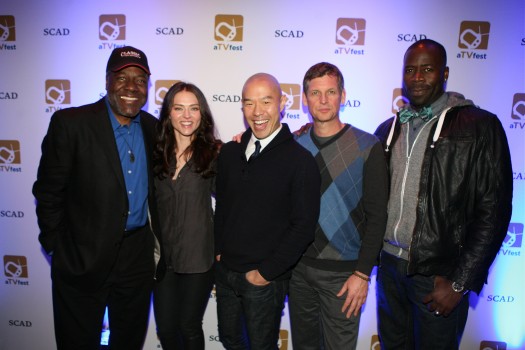
The cast of Cinemax's 'Banshee' discuss race in America. (PHOTO CREDIT: Shannon McCollum)
The cast of Cinemax’s ‘Banshee’ discuss race in America. (PHOTO CREDIT: Shannon McCollum)

Banshee doesn’t sound like much on the surface. It’s an hour-long Friday night series that chronicles an ex-con Lucas Hood (Antony Starr) who relocates to a fictional Pennsylvania shantytown and takes a dead sheriff’s identity.

That storyline is just the surface of the many complexities that lie beneath the seemingly benign exterior of the show. This show has legs and for good reason – excellent writing, production and acting from a multicultural cast that actually resembles the United States. Banshee is the final installment of Cinemax’s trilogy of original primetime television. The cable network – for 32 years and 17 million subscribers – was exclusively a purveyor of feature films and weekend late night soft core blocks.

Banshee features bleaker, grittier production than anything previously aired on Cinemax. The cinematography blurs the aesthetics of a bold, graphic comic book with obscure, pulp indie films. Created by writers Jonathan Tropper and David Schickler, Banshee’s multicultural cast, all from the theater world, agrees the show marries strong storytelling with subtle character development.

Hoon Lee portrays Job, an Asian, foul-mouthed, cross-dressing computer genius. Banshee marks the first time in Lee’s career he’s worn flamboyant costuming. “No one gets into acting to be comfortable. They want to be pushed, to grow, develop and try things that are challenging,” says Lee.

The cast says Emmy Award-winning director Greg Yaitanes and Academy Award-winning screenwriter Alan Ball are small screen visionaries. Filmed around Charlotte, N.C., a spontaneous, family-styled work ethic was encouraged on-set. Yaitanes frequently shot scenes out of order (episode four was in production before the pilot). Filming two episodes at a time was a norm.

In Banshee’s pilot episode alone, there are sequences marked with shed blood, illicit sex and explosions. Aryan characters violently taunt the Amish. In another shocking scene, the wealthy owner of a slaughterhouse, Kai Proctor (Ulrich Thomsen), forces one of his live-in ethnic mistresses, dressed in an Amish costume, to give him fellatio.

Lee adds the androgyny, though well-received, sets up his character’s depth. “At some point, you release your performance into the process. [Greg] and the entire executive team made us feel very safe in that way. There’s so much vulnerability from the actors and so much action,” says Lee.

Frankie Faison portrays Sugar Bates, an ex-boxer that befriends and often cautions Starr’s character, Lucas Hood. As one of Banshee’s two central black cast members, Faison suggests the character he portrays falls in sync with his personality. “I’m the voice of reason. I feel like it’s who I am. I’m grounded in reality. I like to give advice,” says Faison.

Faison was an influence on Demetrius Grosse, Banshee’s second black cast member, during production. Grosse plays Emmett Yawners, a former Penn State football standout who trades the gridiron for law enforcement. Yawners is married to a white woman, but Grosse keeps tight lips about the story arc. He calls Banshee “a slice of life show.”

“[Banshee] looks at all of that. The race issue in America is actually being looked at and tackled head on with subtlety, taste and a little provocation. I want America to see themselves – the melting pot, the salad bowl – but the metaphors are real” says Grosse.

So why would a show such as Banshee strike a chord? Rus Blackwell, who plays noble defense attorney Gordon Hopewell, believes Banshee is genuine entertainment. “Our job was to show up with a good backstory. When we show up on set, there’s a familiarity happening already. That’s all there is.” says Blackwell.

This post was written by Christopher A. Daniel.

Christopher A. Daniel is a pop cultural critic and music editor for The Burton Wire. He is also a contributing writer for Urban Lux Magazine and Blues & Soul Magazine. Follow Christopher @Journalistorian on Twitter.

Like The Burton Wire on Facebook. Follow us on Twitter @TheBurtonWire.

‘Banshee’: Multicultural Cast Shares Thoughts on Race in America

0
The cast of Cinemax's 'Banshee' discuss race in America. (PHOTO CREDIT: Shannon McCollum)
The cast of Cinemax’s ‘Banshee’ discuss race in America. (PHOTO CREDIT: Shannon McCollum)

Banshee doesn’t sound like much on the surface. It’s an hour-long Friday night series that chronicles an ex-con Lucas Hood (Antony Starr) who relocates to a fictional Pennsylvania shantytown and takes a dead sheriff’s identity.

That storyline is just the surface of the many complexities that lie beneath the seemingly benign exterior of the show. This show has legs and for good reason – excellent writing, production and acting from a multicultural cast that actually resembles the United States. Banshee is the final installment of Cinemax’s trilogy of original primetime television. The cable network – for 32 years and 17 million subscribers – was exclusively a purveyor of feature films and weekend late night soft core blocks.

Banshee features bleaker, grittier production than anything previously aired on Cinemax. The cinematography blurs the aesthetics of a bold, graphic comic book with obscure, pulp indie films. Created by writers Jonathan Tropper and David Schickler, Banshee’s multicultural cast, all from the theater world, agrees the show marries strong storytelling with subtle character development.

Hoon Lee portrays Job, an Asian, foul-mouthed, cross-dressing computer genius. Banshee marks the first time in Lee’s career he’s worn flamboyant costuming. “No one gets into acting to be comfortable. They want to be pushed, to grow, develop and try things that are challenging,” says Lee.

The cast says Emmy Award-winning director Greg Yaitanes and Academy Award-winning screenwriter Alan Ball are small screen visionaries. Filmed around Charlotte, N.C., a spontaneous, family-styled work ethic was encouraged on-set. Yaitanes frequently shot scenes out of order (episode four was in production before the pilot). Filming two episodes at a time was a norm.

In Banshee’s pilot episode alone, there are sequences marked with shed blood, illicit sex and explosions. Aryan characters violently taunt the Amish. In another shocking scene, the wealthy owner of a slaughterhouse, Kai Proctor (Ulrich Thomsen), forces one of his live-in ethnic mistresses, dressed in an Amish costume, to give him fellatio.

Lee adds the androgyny, though well-received, sets up his character’s depth. “At some point, you release your performance into the process. [Greg] and the entire executive team made us feel very safe in that way. There’s so much vulnerability from the actors and so much action,” says Lee.

Frankie Faison portrays Sugar Bates, an ex-boxer that befriends and often cautions Starr’s character, Lucas Hood. As one of Banshee’s two central black cast members, Faison suggests the character he portrays falls in sync with his personality. “I’m the voice of reason. I feel like it’s who I am. I’m grounded in reality. I like to give advice,” says Faison.

Faison was an influence on Demetrius Grosse, Banshee’s second black cast member, during production. Grosse plays Emmett Yawners, a former Penn State football standout who trades the gridiron for law enforcement. Yawners is married to a white woman, but Grosse keeps tight lips about the story arc. He calls Banshee “a slice of life show.”

“[Banshee] looks at all of that. The race issue in America is actually being looked at and tackled head on with subtlety, taste and a little provocation. I want America to see themselves – the melting pot, the salad bowl – but the metaphors are real” says Grosse.

So why would a show such as Banshee strike a chord? Rus Blackwell, who plays noble defense attorney Gordon Hopewell, believes Banshee is genuine entertainment. “Our job was to show up with a good backstory. When we show up on set, there’s a familiarity happening already. That’s all there is.” says Blackwell.

This post was written by Christopher A. Daniel.

Christopher A. Daniel is a pop cultural critic and music editor for The Burton Wire. He is also a contributing writer for Urban Lux Magazine and Blues & Soul Magazine. Follow Christopher @Journalistorian on Twitter.

Like The Burton Wire on Facebook. Follow us on Twitter @TheBurtonWire.

President Hugo Chavez Has Died: What Next?

0
A mural of Venezuelan president Hugo Chavez who died today. He was 58. (Google Images)

The New York Times, CNN and Washington Post are reporting that Venezuelan President Hugo Chavez has died. What does that mean for Venezuela?

According to Adam Taylor of The Business Insider, an election must be held within 30 days. Citing Sean Burges, a senior associate in the Australian National Centre for Latin American Studies at the Australian National University, Taylor reports that an election will have to be held within 30 days of Chavez’s death according to Article 323 of the Venezuelan constitution. This means that Vice-President Nicolás Manduro, who announced Chavez’s death, will serve as president until the actual election. Taylor writes:

“If Manduro chooses to contest the election, it seems likely he would face opposition leader Henrique Capriles, a young, charismatic politician received 46 percent of the vote when he competed against Chavez in October. Many suspect, however, that Diosdado Cabello, speaker in Venezuela’s congress and a hardline Chavez ally, may make a run for the presidency, forcing Chavez’s United Socialist Party of Venezuela into conflict with itself.”

Many are worried about the stability of the country if conflict breaks out over the next leader, especially within Chavez’s political party.

Read more at The Business Insider. View The Burton Wire‘s Photo Gallery of President Chavez here.

Like The Burton Wire on Facebook. Follow us on Twitter @TheBurtonWire.
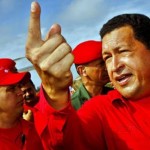
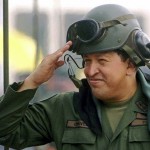
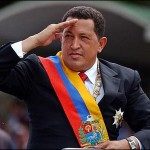
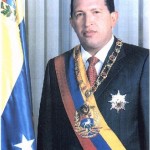
Photo Gallery: Hugo Chavez

2

Hugo Chavez: Venezuelan President Dies

0
Venezuelan president Hugo Chavez has died. (Google Images)

The New York Times and CNN are reporting that Venezuelan President Hugo Chavez has died. Vice President Nicolas Maduro just made the announcement. Chavez recently traveled to Cuba for cancer treatment and returned home two weeks ago amid reports that he had come home to die.  It was reported in January that the ill president was suffering from a severe lung infection. He was 58.

This story is developing.

Read more about Chavez on The Burton Wire and check out our photo gallery of Hugo Chavez.

Hugo Chavez: Home to Rule or Home to Die?

Cuba Leading the Way with New Cancer Treatments

Venezuela: Hugo Chavez is ‘Conscious’ in Cuba

Like The Burton Wire on Facebook. Follow us on Twitter @TheBurtonWire.
Knowledge is Power; Not Knowing is Privilege

0
Five officers of the Women's League, Newport, Rhode Island, 1900, Library of Congress, LC-USZ62-51555
Five officers of the Women’s League, Newport, Rhode Island, 1900, Library of Congress, LC-USZ62-51555

It has long since been understood that knowledge is power. Women and other subjugated voices have recognized that those who control the world are those who define the world—and thus define not simply what counts as knowledge—that is the content of knowledge, but they also define the production of knowledge—that is what sources and means are considered resources for knowing.

Just as Michel Foucault has made this clear in his deconstruction of discursive power, so have womanists and black feminists like Patricia Hill Collins who have called for an “epistemology of knowledge, where the meaning of knowledge itself, in terms of content and production, is re-examined and re-defined. For it is undeniable that the what and ways of knowing peculiar to marginalized groups and classes of people are rarely considered knowledge—perhaps “wisdom,” “folkways,” “customs,”   “superstitions,” or “women’s intuition,” but not knowledge, not something worth knowing and thus not something worth teaching. Why am I talking about all of this on today?

Each day I’m in the classroom, it never ceases to amaze me simply what students don’t know, but also what they apparently don’t need to know to be considered knowledgeable.  How many of you have heard of Jane Austin, Charlotte Bronte, George Eliot, Mary Shelley, Emily Dickinson, and Louisa May Alcott? All hands go up.

How many of you have heard of  Nella Larson,  Ann Plato, Frances Ellen Watkins Harper, Elizabeth Keckley or Anne Petry? A tentative one or two hands go up.

How many of you have heard of the Women’s Suffrage Movement, Elizabeth Cady Stanton and Susan B. Anthony? All hands go up?

How many of your have heard of the Negro Women’s Club Movement, Anna Julia Cooper and Maria Stewart? No hands go up.

If knowledge is power, then not knowing is privilege. Defining what one is privileged not to know, is just as important to understanding the dynamics of power as defining what one needs to know.  For it is not simply a matter of lack, it is a matter of absence.

Certain “cognitions” are completely absent from our discourse of knowledge, that is, not even considered to be a part of the terrain of possibility for what should at some point be known. It is not about “subjugation,” it is about “negation”; it is a negation of the very existence of “bodies” of knowledge. Certain bodies and experiences are not regarded as being knowledge producers and so they are more than subjugated — they are negated even from consideration of thought—and so they are virtually invisible to our knowing and too often in our teaching.

Why am I talking about all of this now? This is Women’s History Month and we’re just out of Black History Month and there are no two months that make me more aware of the negated bodies of knowledge than these two months.  Even as certain “heroines and heroes” are lifted up to a place of awareness, African American bodies of knowledge—that is ways of knowings/knowledge forms continue to be negated.  The way in which black bodies view the world and, the ways in which black bodies form knowledge are still not taken seriously. It does not altar or challenge the dominant understandings of knowledge and knowledge formation.

Black stories are grafted onto dominant cultural knowledge forms; they do not change those forms. Consequently, perspectives on realities, perceptions of truths and worldviews are not challenged or changed. The privilege of not knowing virtually remains intact.  The status quo of knowledge is unchallenged.

Why am I talking about all of this on today? Because knowledge changes the way we live in the world. It shapes the way we see ourselves, each other and god.  It fosters our relationships, human and divine.  It has the capacity to richly complicate our realities and to recognize that there is more than one way of seeing, being and knowing. It compels never-ending conversations with different bodies of knowers.  If we are indeed going to change this world and disrupt the way people are marginalized, mistreated and disregarded, and then epistemological privilege must be must be named, challenged and dismantled.

If knowledge is power, then not knowing is privilege and this phenomena needs to be reconciled.

This article was written by Dr. Kelly Brown Douglas, professor of philosophy and religion at Goucher College in Baltimore, MD. Douglas taught theology at the Divinity School of Howard University in Washington, D.C. for 14 years. She became the first black woman to be ordained as an Episcopal priest in the Southern Ohio Diocese. At the time, she was one of only five black female Episcopal priests nationwide. Douglas’ most recent book is Black Bodies and the Church: A Blues Slant.

Like The Burton Wire on Facebook. Follow us on Twitter @TheBurtonWire.
South Africa: Violent Protests Gain Momentum from Within Communities

0
A recently released study pinpoints community frustrations and under-representation as fuel for violent protests throughout South Africa. (Google Images)

In a recent analysis piece for AllAfrica.com, Hamadziripi Tamukamoyo explores the causes of violent protest throughout South Africa, most of which one study says can be attributed to circumstances within communities. Tamukamoyo says that, in addressing such protests, as President Jacob Zuma did recently, the government blatantly ignores these roots. In these communities, residents are often marginalized through social, economic, and community exclusion and lack of representation.

Tamukamoyo writes:

The National Development Plan (NDP), which received widespread support from a diversity of stakeholders, including parliamentarians from different political formations, has been positioned as being key to the growth of the South African economy and to tackling challenges such as unemployment, poverty and inequality.

Successfully implementing the NDP requires, for instance, a cohort of qualified managers and accountants in the public sector, as noted by Minister for Planning in the Presidency Trevor Manuel in his briefing to Parliament on 19 February.

It remains to be seen whether the broad ambitions of the NDP will have been achieved by the target year of 2030. However, it is not unreasonable to state that appointing competent individuals to managerial posts, for example in municipalities, should lead to an improvement in the quality of service delivery and consequently lessen frustration in local communities. Arguably, this may restore communities’ trust in the government.

Read more at AllAfrica.com.

This news brief was written by Kaitlin Higgins.

Like The Burton Wire on Facebook. Follow us on Twitter @TheBurtonWire.
Kenya: Early Election Results Show Kenyatta, Odinga Far Ahead

1
Vote counting began on Monday after Kenyans went to the polls for the first time in five years. (Google Images)

Wanyama Chebusiri and Gabriel Gatehouse of BBC Africa are reporting that election results have begun to come in from some polling places in Kenya, where people are voting for president, parliament and senate, and county governors and members of  assemblies. Observers report that people were lined up at polling stations well before they opened, and those who were in line at closing time would still  be allowed to cast their ballots in what could be the country’s most important election. Early results show the two favorite presidential candidates, Uhuru Kenyatta and Prime Minister Raila Odinga, polling well ahead of the other six. Both are confident in the results being in their favor, though many are wary that violence could continue, and even worsen, throughout the country, especially if both Mr. Kenyatta and Mr. Odinga do poorly. Kenyatta is already slated to appear before the International Criminal Court (ICC) next month for involvement with the violent fallout that occurred after the 2007 election.

Chebusiri and Gatehouse write:

Authorities had urged Kenyans to avoid a repeat of the 2007 ethnic and political violence that killed more than 1,000 people amid claims the poll had been rigged.

As thousands continued to queue to cast their ballots, voting was extended by up to seven hours to cope with long queues at polling stations.

Kenya’s Independent Electoral and Boundaries Commission (IEBC) issued a notice via social media saying: “We wish to inform members of the public that all Voters on the queue by 5:00pm will be allowed to vote.”

The electoral commission said some delays were caused by a new system intended to reduce fraud, which observers hope will prevent the kind of widespread ethnic violence that followed the last poll in 2007.

Read more at BBC Africa.

This news brief was written by Kaitlin Higgins.

Like The Burton Wire on Facebook. Follow us on Twitter @TheBurtonWire.

Akosua Report: Miriam Makeba

1

“I ask you and all the leaders of the world, would you act differently, would you keep silent and do nothing if you were in our place? Would you not resist if you were allowed no rights in your own country because the color of your skin is different from that of the rulers, and if you were punished for even asking for equality? I appeal to you, and to all the countries of the world, to do everything you can to stop the coming tragedy. I appeal to you to save the lives of our leaders, to empty the prisons of all those who should never have been there.” – Miriam Makeba in a speech to the UN, 1963

Miriam Makeba

On this date in 1932, Miriam Makeba was born. She was a South African singer, entertainer, and activist.

From Prospect, South Africa, throughout her life and singing career, Miriam Zenzi Makeba has used her voice to draw the attention of the world to the music of South Africa and to its oppressive system of racial separation, apartheid.

With her appearance in the semi-documentary antiapartheid film Come Back, Africa (1959), Makeba drew the attention of international audiences. That same year, Makeba traveled to London where she met African-American performer and civil rights activist Harry Belafonte.

Belafonte became her sponsor and promoter in the United States. Through him, she appeared on the Steve Allen Show, which led to nightclubs around New York City and recordings of South African music. Some songs became hits in the United States, including “Patha Patha,” “Malaika,” and “The Click Song.” Her music also contained a political component, the denunciation of apartheid, which earned Makeba the hostility of the South African government, who revoked her passport when she attempted to return for her mother’s funeral in 1960. Makeba pressed on and, in 1963, she addressed a United Nations special committee on apartheid, characterizing South Africa as “a nightmare of police brutality and government terrorism.”

Her marriage to African-American civil rights activist Stokely Carmichael (now Kwame Ture) derailed her career in the United States.

In 1982 Mother Africa, as she was known, reunited with South African trumpeter Hugh Masekela, to whom Makeba was married from 1964 to 1966. Continuing her activism, in 1975, she served a term as a United Nations delegate from Guinea. In addition, she was awarded the Dag Hammarskjöld Peace Prize in 1986. In 1987, Makeba performed on Paul Simon’s Graceland tour. She finally returned to South Africa in 1990.

In 1991, she released “Eyes on Tomorrow” and, that same year, Makeba gave her first live performance in South Africa since her departure more than 30 years earlier.

The Akosua Report: Facts on The African Diaspora, is written by Akosua Lowery. Follow her on Twitter @AkosuaLowery.

Like The Burton Wire on Facebook. Follow us on Twitter @TheBurtonWire.
Nigeria: Demolitions in Lagos Leave Residents Homeless

0
Ijora-Badia was the latest of informal settlements and neighborhoods demolished in Lagos, Nigeria. (Google Images)

Jon Gambrell of The Associated Press is reporting that Nigeria has begun destroying informal settlements and neighborhoods in Lagos in order to make way for improved infrastructure. Most recently, the government tore through the Ijora-Badia neighborhood on Feb. 23, although this comes after the demolition of many others.  Residents were forced to sleep outside, in a community hall, and in a nearby church.  Poverty is widespread in Lagos, the country’s largest city, inescapable even in areas mostly populated by wealthy politicians.

Gambrell writes:

The reason for the demolition is unclear. Some at the site said they believed the area would be converted into an upper-class housing estate, which seemed unlikely as it sits in an industrial area.

This is the latest of a string of demolitions to target slums in the city, most conducted without any prior warning. In July, police and state officials began razing homes in the waterfront slum of Makoko, an iconic neighborhood of Lagos where thousands live in shack homes rising out of the city’s lagoon on stilts. The government stopped after a public outcry, but many fear officials could resume tearing homes down at any time. Similar demolitions have occurred elsewhere in the country, including Port Harcourt, where activists say some 25,000 families lost their homes.

Read more at Yahoo! News.

This news brief was written by Kaitlin Higgins. 

Like The Burton Wire on Facebook. Follow us on Twitter @TheBurtonWire.