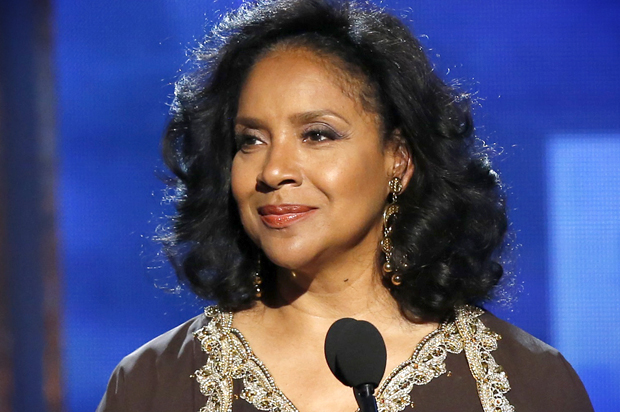
“We want more soul, a higher cultivation of all spiritual faculties. We need more unselfishness, earnestness, and integrity. We need men and women whose hearts are the homes of high and lofty enthusiasm and a noble devotion to the cause of emancipation, who are ready and willing to lay time, talent, and money on the altar of universal freedom.” – Frances Ellen Watkins Harper
Frances Ellen Watkins Harper
On this day, the “Bronze Muse” died in Philadelphia, Pennsylvania.
Frances Ellen Watkins Harper (September 24, 1825 – February 22, 1911) was an African-Americanabolitionist, poet and author. Born free in Baltimore, Maryland, she had a long and prolific career, publishing her first book of poetry at age 20 and her first novel, the widely praised Iola Leroy, at age 67.
Frances Ellen Watkins Harper wrote more than a dozen books, including Poems on Miscellaneous Subjects (1854); Moses, a Story of the Nile (1869); and Sketches of Southern Life (1872). Harper was the most famous female poet of her day and the most famous African-American poet of the 19th century. Also a well-known orator, she spoke frequently in public (sometimes twice in one day), promoting equal rights for women and African-Americans. She was a worker for the Underground Railroad, and in 1896 she helped establish the National Association of Colored Women.
The Akosua Report: Facts on The African Diaspora, is written by Akosua Lowery. Follow her on Twitter @AkosuaLowery.
Venezuelan president Hugo Chavez returned home amid speculation that he will die. (Google Images)
The blogosphere has been lit up this week with the return of Venezuelan president Hugo Chavez to Caracus. Chavez spent the last two months in Cuba receiving treatment for cancer, enduring a fourth operation over the course of 18 months. Simeon Tegel of the Independent (UK) is reporting that speculation is increasing that Chavez has come home to die as he has entered the terminal phase of his illness.
Tegel writes:
News of his return prompted jubilant scenes among his supporters, many of whom gathered outside the Carlos Arvelo military hospital, where Chavez was transferred by ambulance from the airport, to celebrate.
But hopes that their idol would once again take up the reins of his “Bolivarian” socialist revolution appear to have rapidly dissipated. Since returning to Caracas, the 58-year-old President has remained hidden from public view and the government has made it clear that his battle with cancer is far from over.
“The President has returned to continue his medical treatment. The President’s time right now is not political,” Rodrigo Cabezas, a senior member of Chavez’s ruling United Socialist Party of Venezuela said on state TV.
Rick Gladstone of the New York Timesis reporting that Bolivian president Evo Morales, one of Chavez’s
closest friends, said that the Chavez’s family is now “encouraged” with his return home.
President Chavez has fought a long and courageous battle. Only time will tell what his return home means for the people of Venezuela, South America and the world at large.
Venezuelan president Hugo Chavez returned home amid speculation that he will die. (Google Images)
The blogosphere has been lit up this week with the return of Venezuelan president Hugo Chavez to Caracus. Chavez spent the last two months in Cuba receiving treatment for cancer, enduring a fourth operation over the course of 18 months. Simeon Tegel of the Independent (UK) is reporting that speculation is increasing that Chavez has come home to die as he has entered the terminal phase of his illness.
Tegel writes:
News of his return prompted jubilant scenes among his supporters, many of whom gathered outside the Carlos Arvelo military hospital, where Chavez was transferred by ambulance from the airport, to celebrate.
But hopes that their idol would once again take up the reins of his “Bolivarian” socialist revolution appear to have rapidly dissipated. Since returning to Caracas, the 58-year-old President has remained hidden from public view and the government has made it clear that his battle with cancer is far from over.
“The President has returned to continue his medical treatment. The President’s time right now is not political,” Rodrigo Cabezas, a senior member of Chavez’s ruling United Socialist Party of Venezuela said on state TV.
Rick Gladstone of the New York Timesis reporting that Bolivian president Evo Morales, one of Chavez’s
closest friends, said that the Chavez’s family is now “encouraged” with his return home.
President Chavez has fought a long and courageous battle. Only time will tell what his return home means for the people of Venezuela, South America and the world at large.
Namibians have been reacting to a ban on mini-skirts, arguing that the law is sexist. (Google Images)
written by Kaitlin Higgins
Margreth Nunuhe of New Era is reporting that, in Namibia, women will soon be arrested for wearing skirts that are deemed by police to be too “short and revealing.” After this statement from Police Inspector General Sebastian Ndeitunga, reactions on social media networks were high. While Ndeitunga claimed that the stipulation is to preserve and “underline the importance of culture,” many respondents have been wondering how in touch with African culture the Inspector General is. Some pointed to the even more revealing dress of some young people today, and others have argued that if the legislation was truly in the name of outlawing un-African clothing, “we must go back to our original African theme of wearing hand made clothes from animal skin such as the Himbas.” Likewise, many agree that such a law is sexist and oppressive and have organized to wear mini-skirts in protest this Friday.
Nunuhe writes:
“Amanda Kaipiti Utjiua said the banning of mini-skirts was oppression towards women, a sexist view and a way of shifting focus from serious issues at hand such as finding Shanduka. ‘We have a lot of things that are unAfrican including the Bible and Christianity which was brought by the missionaries, the clothes, means of transportation and all kinds of machines. Mind you people in the past (we) use(d) to wear clothes made from animal skin, use(d) to believe in ancestors and used to travel by foot or donkey even on cattle’s (sic),’ she said, adding that we have passed the stage of transformation from traditional societies to a modern society many years ago.
‘Holy Saudi Arabia. Why is it that when ‘African culture’ is invoked to justify a repressive measure, it sounds so much like rightwing Christianity? The San and Himba are also African last time I checked. Arresting women for wearing mini-skirts? That’s not a good sign people,’ wrote Rob Parker. “
Namibians have been reacting to a ban on mini-skirts, arguing that the law is sexist. (Google Images)
written by Kaitlin Higgins
Margreth Nunuhe of New Era is reporting that, in Namibia, women will soon be arrested for wearing skirts that are deemed by police to be too “short and revealing.” After this statement from Police Inspector General Sebastian Ndeitunga, reactions on social media networks were high. While Ndeitunga claimed that the stipulation is to preserve and “underline the importance of culture,” many respondents have been wondering how in touch with African culture the Inspector General is. Some pointed to the even more revealing dress of some young people today, and others have argued that if the legislation was truly in the name of outlawing un-African clothing, “we must go back to our original African theme of wearing hand made clothes from animal skin such as the Himbas.” Likewise, many agree that such a law is sexist and oppressive and have organized to wear mini-skirts in protest this Friday.
Nunuhe writes:
“Amanda Kaipiti Utjiua said the banning of mini-skirts was oppression towards women, a sexist view and a way of shifting focus from serious issues at hand such as finding Shanduka. ‘We have a lot of things that are unAfrican including the Bible and Christianity which was brought by the missionaries, the clothes, means of transportation and all kinds of machines. Mind you people in the past (we) use(d) to wear clothes made from animal skin, use(d) to believe in ancestors and used to travel by foot or donkey even on cattle’s (sic),’ she said, adding that we have passed the stage of transformation from traditional societies to a modern society many years ago.
‘Holy Saudi Arabia. Why is it that when ‘African culture’ is invoked to justify a repressive measure, it sounds so much like rightwing Christianity? The San and Himba are also African last time I checked. Arresting women for wearing mini-skirts? That’s not a good sign people,’ wrote Rob Parker. “
Accra, Ghana has been named one of Africa’s most liveable cities. (Google Images)
Yolaan Begbie of Africa.com has compiled a list of cities in various countries in Africa that would be great for people looking to live, conduct business or travel for extended periods of time throughout the continent. Capetown, South Africa topped the list, followed by Accra, Nairobi, Johannesburg and Gaborone, Botswana. How did the staff at Africa.com come up with the list? They relied on both quantitative and qualitative data to determine which cities would make this list, excluded island cities for a variety of factors explained at the tail end of the post; aggregated data primarily from African sources in order to remove a Western bias; examined availability of goods and services, quality of infrastructure, and overall security (which is defined both in personal terms and in national political terms) and used their extensive network on the continent for qualitative input as a “reality check” to the results that the data yielded.
Check out excerpts of Africa.com‘s most liveable cities.
Capetown, South Africa
It possesses all of the amenities and sophistication of a urban area, yet the pace is decidedly relaxed, with the city being nestled between the ocean and the mountains, creating an ideal mix of work and play. A short drive away and you can find yourself in one of the hundreds of vineyards that produce some of the world’s top wines. While summers (October–April) are lovely, winters can be dreary with much fog, rain, and wind.
Accra, Ghana Ghana’s capital city is a sophisticated urban area, with a full range of restaurants, bars, nightclubs, and increasingly, shopping malls. There are many affluent areas, including East Legon—the location of the city’s only traditional shopping complex, Accra Mall. Another popular option is Osu, locally referred to as “Oxford Street”, where many go to shop and hang out. The downtown area has seen much development over the last decade and the range of serviced high rise apartments makes it an easy location to set up home quickly. The warmth of the Ghanaian people is an asset and is an important part of what attracts Nigerians to want to spend their leisure time here. The tropical climate makes it all the more appealing.
Nairobi, Kenya Nairobi is fast becoming the African city of choice for multinational companies seeking a foothold for their African operations. Nairobi is a gracious city that possesses much of the sophistication of the large South African cities, but provides these offerings in a “kinder and gentler” way. General Electric and the Rockefeller Foundation recently chose Nairobi to anchor the African operations, so too the likes of China’s CCTV news broadcaster. While there is some tension surrounding the upcoming elections, the government is generally considered stable.
Johannesburg, South Africa
Johannesburg is considered a world-class city. ORTIA rivals some of the best airports in developed worlds. It’s sleek, modern, expansive and offers a wealth of stores and restaurants, much like many parts of South Africa’s and Africa’s economic capital.
Since the late 1800s, thousands migrated to the city seeking employment at one of the many gold mines. The quarries have since dried up but an influx of people continues today. They come from other parts of the country and from across the continent, to work and to make money. Johannesburg is also an attractive base for many African companies as it provides easier access to international opportunities.
Gaborone, Botswana Though young—having only gained independence from Britain in the 1960s—Gaborone has flourished. Politically stable and economically buoyant, Botswana’s capital is considered to be a peaceful city. It’s likely partly due to it being small in size, with a population of just over 230,000, but still offers a diverse mix of people, and places to see.
Gabs, as it is popularly known, is located in a country known for being one of the world’s largest producers of rough diamonds. The precious stone continues to play a major role in the city’s development. Just recently, leading diamond producer de Beers announced it would be moving some of its operations to the sub-Saharan country from London. Apart from diamonds, the economy is also driven by its beef exports, the majority of which is sold in Europe as well as the growing tourism industry. The development of modern sports facilities saw the city successfully hosting the Africa Junior Athletics Championships in 2011, and has made it a popular contender to host the 2014 African Youth Games.
The poll by the Caribbean Development Research Services (CADRES), published in the Sunday Sun newspaper however indicates that Arthur’s Barbados Labour Party (BLP) still hold a “slight edge” for control of the 30 seats in the parliament.
It said that the BLP had a 37 per cent favourable rating as against 34 per cent for the ruling Democratic Labour Party (DLP) with 29 per cent of the voters either not giving an indication of how they will vote on Thursday or did not know which party would most likely win nationally.
The poll has a margin of error of +/-5 per cent, meaning that there is a high probability that the election will be decided by undecided voters.
After the resignation of Pope Benedict XVI, pictured here in 2008 with then-President Luiz Inácio Lula da Silva, Catholics in Brazil are hoping for a Brazilian successor. (Google Images)
written by Kaitlin Higgins
Ben Tavener of The Rio Times is reporting that, after the resignation of Pope Benedict XVI on February 11, the Catholic population of Brazil–the largest in the world–is wondering if they might supply his successor. Most speculation predicts another European Pope, although an increase in Catholicism in China and Africa, for example, could be reason enough for doubt. Five Brazilian Cardinals, two of whom the media favors, could potentially claim the papacy. Although significant, however, the Catholic population of Brazil has been declining and will not necessarily impact the choice for the next Pope.
Tavener writes:
“Estimates from 2010 census suggest that Brazil is almost 65 percent Catholic, and 22 percent Protestant. The statistics indicate the Catholic Church become less prominent in recent years, partly due to a concerted recruitment drive by evangelical churches, but also because opinions, particularly among younger Brazilians, have been increasingly at odds with those expressed by both the Catholic Church.
On Benedict XVI’s trip to Brazil in 2007, he called Catholics to stem the mass conversion to Protestantism and of reinvigorating Brazil’s connection to Catholicism.
Regular Opinion writer for The Rio Times Michael Royster says the Catholic Church’s hard line on women, homosexuality and birth control has not rung true with many Brazilians, and the fact that Protestant churches allow women in their ranks and have married clergy has encouraged conversion.”
First there was the drunk old idiot from Idaho who sat down next to a white woman and her black baby. The woman says the guy was drunk and belligerent during the whole flight, but things went from bad to “bat-shit crazy” when the plane began its descent.
The baby gets fussy and dude tells the woman to shut that “Nigger baby up.” Later, he slaps the baby upside his head… Now his lawyer tells us not to rush to judgment. Dude’s lucky he didn’t try that crap with me. I would have rushed to kick his sorry butt back to Idaho. When did this story break? Last week. When did the media start covering it with any intention — this past weekend.
“This school is not safe for Somali students,” Adnan Farah, a junior, told the Star-Tribune. “Throughout this year, there have been a lot of fights.”
A school district spokesman would not comment but said racism complaints are taken seriously. Obviously, they haven’t been taken it that seriously and neither has the media since there has been scant coverage of this growing problem.
That brings me to the now deceased LAPD Officer Christopher Dorner. We all saw “Black Rambo” pre-empt the State of the Union Address. But not everyone has followed the aftermath. It seems Dormer — fired by the LAPD for allegedly filing a false report against a fellow officer and then went postal on the LAPD, killing several officers, as well as his union rep’s daughter and her fiancee — is still causing problems even after his “elimination” by the LAPD.
I don’t defend Dorner’s actions. But I am unconvinced like many that the LAPD set that fire accidentally. And I am puzzled by the outrage that folks read truth in his manifesto. Prior to his murderous rampage, Dorner thoroughly articulated several problems within the LAPD, outlining issues of racism and corruption. Clearly the LAPD is no more capable of cleansing itself of corruption and racism than some would say the Catholic church is of ridding itself of pedophiles. But instead of addressing any possible precursors, the media clings to this manufactured affront to the family members of those he killed. This was not an OJ moment. It was the LAPD’s inability to deal with its own stuff — whether that be its inability to assess the mental capacity of its own force, racism, police corruption, or the justifiable lack of trust between the department and the black community in Los Angeles.
Here are the man’s words: “During the second Obama term, however, additional threats are growing. Latin American drug gangs have invaded every city of significant size in the United States. Phoenix is already one of the kidnapping capitals of the world, and though the states on the U.S./Mexico border may be the first places in the nation to suffer from cartel violence, by no means are they the last.”
Will it be unthinkable, out of the blue, and completely “by surprise” when some NRA-card-carrying, gun-collecting nut goes on a killing spree, targeting black kids, Latino immigrants, politicians, or civil servants? Will it be this classic and repetitive “What the F$53K?” American moment? When do we realize from manipulating and occupying weaker and poverty-stricken countries, to pretending racism doesn’t exist except for in the imaginations of black people, to the untold collateral damage of drone attacks, to this incessant “Taking our country back” rhetoric that actions (including actionable words) have consequences. That people — even reasonable ones and especially unreasonable ones — have breaking points. After all nothing is more fragile than the human mind.
Devona A. Walker is the politics editor for The Burton Wire.
Like The Burton Wire on Facebook. Follow us on Twitter @TheBurtonWire.
First there was the drunk old idiot from Idaho who sat down next to a white woman and her black baby. The woman says the guy was drunk and belligerent during the whole flight, but things went from bad to “bat-shit crazy” when the plane began its descent.
The baby gets fussy and dude tells the woman to shut that “Nigger baby up.” Later, he slaps the baby upside his head… Now his lawyer tells us not to rush to judgment. Dude’s lucky he didn’t try that crap with me. I would have rushed to kick his sorry butt back to Idaho. When did this story break? Last week. When did the media start covering it with any intention — this past weekend.
“This school is not safe for Somali students,” Adnan Farah, a junior, told the Star-Tribune. “Throughout this year, there have been a lot of fights.”
A school district spokesman would not comment but said racism complaints are taken seriously. Obviously, they haven’t been taken it that seriously and neither has the media since there has been scant coverage of this growing problem.
That brings me to the now deceased LAPD Officer Christopher Dorner. We all saw “Black Rambo” pre-empt the State of the Union Address. But not everyone has followed the aftermath. It seems Dormer — fired by the LAPD for allegedly filing a false report against a fellow officer and then went postal on the LAPD, killing several officers, as well as his union rep’s daughter and her fiancee — is still causing problems even after his “elimination” by the LAPD.
I don’t defend Dorner’s actions. But I am unconvinced like many that the LAPD set that fire accidentally. And I am puzzled by the outrage that folks read truth in his manifesto. Prior to his murderous rampage, Dorner thoroughly articulated several problems within the LAPD, outlining issues of racism and corruption. Clearly the LAPD is no more capable of cleansing itself of corruption and racism than some would say the Catholic church is of ridding itself of pedophiles. But instead of addressing any possible precursors, the media clings to this manufactured affront to the family members of those he killed. This was not an OJ moment. It was the LAPD’s inability to deal with its own stuff — whether that be its inability to assess the mental capacity of its own force, racism, police corruption, or the justifiable lack of trust between the department and the black community in Los Angeles.
Here are the man’s words: “During the second Obama term, however, additional threats are growing. Latin American drug gangs have invaded every city of significant size in the United States. Phoenix is already one of the kidnapping capitals of the world, and though the states on the U.S./Mexico border may be the first places in the nation to suffer from cartel violence, by no means are they the last.”
Will it be unthinkable, out of the blue, and completely “by surprise” when some NRA-card-carrying, gun-collecting nut goes on a killing spree, targeting black kids, Latino immigrants, politicians, or civil servants? Will it be this classic and repetitive “What the F$53K?” American moment? When do we realize from manipulating and occupying weaker and poverty-stricken countries, to pretending racism doesn’t exist except for in the imaginations of black people, to the untold collateral damage of drone attacks, to this incessant “Taking our country back” rhetoric that actions (including actionable words) have consequences. That people — even reasonable ones and especially unreasonable ones — have breaking points. After all nothing is more fragile than the human mind.
Devona A. Walker is the politics editor for The Burton Wire.
Like The Burton Wire on Facebook. Follow us on Twitter @TheBurtonWire.


 written by Akosua Lowery