Home Blog Page 182

Africans Launch Blogs to Repair Image of Continent

0
Capetown, South Africa native Dr. Sean Jacobs recently launched a blog, “Africa is a Country,’ to challenge images of Africa that only include famine, Bono or Barack. (Google Images)

Ebony.com is highlighting a number of Africans that are launching publications to combat the negative stereotypes of Africans in culture and society. Nana Ekua Brew-Hammond writes:

The stereotypes about Africa/Africans are too many to list here. They’re mostly negative, myopic depictions that focus on war, famine, abject poverty, disease, and corruption. In other oversimplifications, Africans are written up as model immigrants, overachieving geniuses, or displaced chiefs moonlighting as gas station attendants.

Outside of these caricatures, many Africans are going to work and school, voting in their local elections, and spending way too much time on Facebook. And they’re over the ignorance that has collectively miscast them. In response, a swelling movement of young Africans are launching concerted efforts to wrest the image of Africa from entities and interests that don’t promote a balanced understanding of the continent.

Among this group is South African professor Sean Jacobs who founded the incisive Africa is a Country, billing it as “the media blog that’s not about famine, Bono, or Barack Obama.” Ghanaians Sandra Appiah and Isaac O. Babu-Boateng launched Face 2 Face Africa Magazine to combat portrayals of Africa as pathological and troubled.

Likewise, Nigerian-American Enyinne Owunwanne started ecommerce boutique Heritage 1960 to promote what she says is “the best of the best, when it comes to African fashion, lifestyle and culture”. Fellow Nigerian-American Ngozi Odita initiated AFRIKA21 to broaden the conversation around what 21st century Africa really looks like, apart from the stereotypes, you could even pick up some tips on how to start an eCommerce website of your own.

Read more at Ebony.com.

Like The Burton Wire on Facebook. Follow us on Twitter @TheBurtonWire.

Cameroon: Men Jailed for 'Looking Gay' Released

0
Two men convicted sentenced to 3 years for ‘looking gay’ in Cameroon, are freed. (Google Images)

The Associated Press is reporting that a Cameroonian court has overturned the conviction of two men who were sentenced for five years in prison for “looking gay” and ordering Bailey’s Irish Cream.

The Court of Appeals Monday acquitted the men and ordered their release. The two men had already spent more than a year in jail where they were subjected to abuse from guards and other prisoners, according to human rights advocates.

The new ruling has been hailed by human rights lawyers and gay rights advocates who urged President Paul Biya to release all other prisoners found guilty under the country’s harsh anti-gay laws.

On Dec. 17, a Cameroonian court upheld the five-year-sentence of another man, Roger Jean-Claude Mbede, who was convicted of sending a text message that said “I love you” to another man.

TBW Commentary: What is the world coming to when you can’t have a shot of Bailey’s Irish Creme? What is the world coming too when foolishness like this passes as justice?

Read more at Province.com.

Like The Burton Wire on Facebook. Follow us on Twitter @TheBurtonWire.

Cameroon: Men Jailed for ‘Looking Gay’ Released

0
Two men convicted sentenced to 3 years for ‘looking gay’ in Cameroon, are freed. (Google Images)

The Associated Press is reporting that a Cameroonian court has overturned the conviction of two men who were sentenced for five years in prison for “looking gay” and ordering Bailey’s Irish Cream.

The Court of Appeals Monday acquitted the men and ordered their release. The two men had already spent more than a year in jail where they were subjected to abuse from guards and other prisoners, according to human rights advocates.

The new ruling has been hailed by human rights lawyers and gay rights advocates who urged President Paul Biya to release all other prisoners found guilty under the country’s harsh anti-gay laws.

On Dec. 17, a Cameroonian court upheld the five-year-sentence of another man, Roger Jean-Claude Mbede, who was convicted of sending a text message that said “I love you” to another man.

TBW Commentary: What is the world coming to when you can’t have a shot of Bailey’s Irish Creme? What is the world coming too when foolishness like this passes as justice?

Read more at Province.com.

Like The Burton Wire on Facebook. Follow us on Twitter @TheBurtonWire.

Caribbean: S&P Lowers Credit Rating for Several Countries

0
Standard & Poor downgraded several Caribbean countries including Barbados and the Bahamas in 2012. (Google Images)

Peter Richards of Caribbean 360 gives the lowdown on all of the changes that occurred in the Caribbean that resulted in a bevy of social, economic and political turmoil in 2012. Richards methodically highlighted the challenges facing many countries in the Caribbean:

*McKeeva Bush became the the first head of government (Cayman Islands) in modern Caribbean history to be detained by police on suspicion of theft in connection with financial irregularities relating to the alleged misuse of a government credit card, breach of trust, abuse of office and allegedly importing explosive substances without valid permits on or before February 2012. Subsequently, he received a vote of no-confidence and was voted out of office by his administration.

*After leading his Free National Movement (FNM) into defeat in the general elections in March, Hubert Ingraham bowed out of politics in the Bahamas. “I shall return to private life from whence I came,” he said, soon after the Progressive Liberal Party (PLP), headed by Perry Christie, won what it termed the “most important general elections since 1967”.

*In Grenada, Prime Minister Tillman Thomas got Governor General Sir Carlyle Glean to prorogue parliament in the face of a second vote of no confidence in 2012. The first, filed in April, had been brought by the main opposition New National Party (NNP) of Dr. Keith Mitchell and although the National Democratic Congress (NDC) closed ranks in defeating the motion, the second in September was brought by Thomas’s former foreign affairs minister Karl Hood.

*Former Turks and Caicos Islands premier Michael Misick was arrested at the Santos Dumont Airport in Rio de Janeiro by Brazilian Federal Police. INTERPOL had issued an international warrant for Misick, who also found himself the subject of a warrant issued by the Brazilian Supreme Court. His arrest was sought in relation to an ongoing investigation by the Turks and Caicos Islands authorities into issues uncovered during the Sir Robin Auld’s 2008-09 Commission of Inquiry regarding alleged corruption and maladministration. Misick was implicated in large-scale corruption in Turks and Caicos that led to the suspension of the democratic government in the TCI by the United Kingdom. He faces several “serious charges” relating to corruption and maladministration.

*Jamaica has still yet to sign a new Stand By Agreement with the International Monetary Fund (IMF).

*In St. Lucia, the government of Prime Minister Dr. Kenny Anthony launched a multi-million dollar stimulus package in a bid to turn around a sluggish economy.

*The US-based rating agencies, Standards & Poor’s (S&P) and Moody’s, downgraded several Caribbean countries including Barbados and the Bahamas during 2012, with S&P also downgrading the Barbados-based Caribbean Development Bank (CDB) long term rating to AA with a warning that the ratings could plunge even lower if a regional government borrower fails to “clear its arrears” with the financial institution.S&P said that the decision to lower the ratings from AA+ to AA reflects “embedded credit risks in CDB’s loan portfolio.”

Read more at Caribbean 360.

Like The Burton Wire on Facebook. Follow us on Twitter @TheBurtonWire.
Caribbean: S&P Lowers Credit Rating for Several Countries

0
Standard & Poor downgraded several Caribbean countries including Barbados and the Bahamas in 2012. (Google Images)

Peter Richards of Caribbean 360 gives the lowdown on all of the changes that occurred in the Caribbean that resulted in a bevy of social, economic and political turmoil in 2012. Richards methodically highlighted the challenges facing many countries in the Caribbean:

*McKeeva Bush became the the first head of government (Cayman Islands) in modern Caribbean history to be detained by police on suspicion of theft in connection with financial irregularities relating to the alleged misuse of a government credit card, breach of trust, abuse of office and allegedly importing explosive substances without valid permits on or before February 2012. Subsequently, he received a vote of no-confidence and was voted out of office by his administration.

*After leading his Free National Movement (FNM) into defeat in the general elections in March, Hubert Ingraham bowed out of politics in the Bahamas. “I shall return to private life from whence I came,” he said, soon after the Progressive Liberal Party (PLP), headed by Perry Christie, won what it termed the “most important general elections since 1967”.

*In Grenada, Prime Minister Tillman Thomas got Governor General Sir Carlyle Glean to prorogue parliament in the face of a second vote of no confidence in 2012. The first, filed in April, had been brought by the main opposition New National Party (NNP) of Dr. Keith Mitchell and although the National Democratic Congress (NDC) closed ranks in defeating the motion, the second in September was brought by Thomas’s former foreign affairs minister Karl Hood.

*Former Turks and Caicos Islands premier Michael Misick was arrested at the Santos Dumont Airport in Rio de Janeiro by Brazilian Federal Police. INTERPOL had issued an international warrant for Misick, who also found himself the subject of a warrant issued by the Brazilian Supreme Court. His arrest was sought in relation to an ongoing investigation by the Turks and Caicos Islands authorities into issues uncovered during the Sir Robin Auld’s 2008-09 Commission of Inquiry regarding alleged corruption and maladministration. Misick was implicated in large-scale corruption in Turks and Caicos that led to the suspension of the democratic government in the TCI by the United Kingdom. He faces several “serious charges” relating to corruption and maladministration.

*Jamaica has still yet to sign a new Stand By Agreement with the International Monetary Fund (IMF).

*In St. Lucia, the government of Prime Minister Dr. Kenny Anthony launched a multi-million dollar stimulus package in a bid to turn around a sluggish economy.

*The US-based rating agencies, Standards & Poor’s (S&P) and Moody’s, downgraded several Caribbean countries including Barbados and the Bahamas during 2012, with S&P also downgrading the Barbados-based Caribbean Development Bank (CDB) long term rating to AA with a warning that the ratings could plunge even lower if a regional government borrower fails to “clear its arrears” with the financial institution.S&P said that the decision to lower the ratings from AA+ to AA reflects “embedded credit risks in CDB’s loan portfolio.”

Read more at Caribbean 360.

Like The Burton Wire on Facebook. Follow us on Twitter @TheBurtonWire.

U.S.: North Carolina Governor Pardons Wilmington 10

0
Gov. Bev Perdue pardons the Wilmington 10, who were falsely accused, convicted and imprisoned for crimes they did not commit while fighting for civil rights. (Google Images)

Ann Blyth of the Charlotte Observer is reporting that North Carolina Bev Perdue has pardoned members of the Wilmington 10, a group of civil rights activists, falsely accused and convicted of crimes they did not commit. Blyth writes:

“Ben Chavis fell to his knees in prayer on Monday after learning that Gov. Bev Perdue had pardoned him some four decades after a tainted and racially biased Civil Rights-era prosecution wrongfully sent him to prison.

With five days left in office, Perdue issued a full pardon of innocence for Chavis and the nine others who became known as the Wilmington 10…

Chavis, who went to Wilmington in 1971 as head of the United Church of Christ’s Commission for Racial Justice, has lived much of his life clouded by a smoldering injustice.

In 1971, Chavis was arrested with eight other black men and one white woman and accused of firebombing a white-owned grocery store in a black neighborhood in Wilmington. They also were accused of shooting at emergency workers who responded to the blaze.

The accused denied any role in the fire or the shooting, but they were convicted of arson and conspiracy and sentenced to prison.”

The Wilmington 10 served several years in prison before their sentences were commuted but not pardoned by then Governor Jim Hunt. In addition to Chavis, the surviving members of the Wilmington 10 are Reginald Epps, James McKoy, Wayne Moor, Marvin Patrick and Willie Earl Vereen. Those who have died are Jerry Jacobs, Ann Shepard, Connie Tindall and Joe Wright. Wright was the youngest, arrested when he was 16 years old.

Read more at the Charlotte Observer.

Like The Burton Wire on Facebook. Follow us on Twitter @TheBurtonWire.

Venezuela: Hugo Chavez Suffering from Lung Infection

0
Venezuelan president Hugo Chavez is suffering from a severe lung infection. (Google Images)

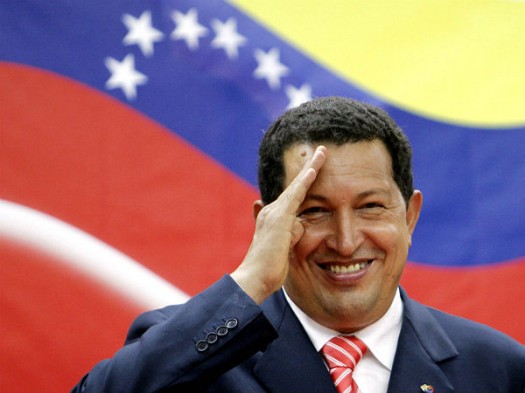
CNN is reporting that Venezuelan president Hugo Chavez is suffering from a “severe” lung infection. Mr. Chavez has been battling cancer and is reportedly in respiratory failure due to the lung infection.

Catherine E. Skoichet of CNN writes:

“Chavez, 58, has been hospitalized in Cuba since undergoing cancer surgery more than three weeks ago.

He is following a strict treatment regimen for “respiratory insufficiency” caused by the infection, Venezuelan Information Minister Ernesto Villegas said in a televised statement Thursday night.

The information minister did not provide details about the treatment or prognosis. ‘It is something quite serious in many cases,’ said Dr. Elmer Huerta, an oncologist and past president of the American Cancer Society. Chavez is probably on artificial respiration and receiving high doses of antibiotics, Huerta told CNN en Español. The situation is further complicated by the fact that Chavez’s immune system is already weakened from cancer, he said.”

Read more at CNN.

Like The Burton Wire on Facebook. Follow us on Twitter @TheBurtonWire.

African Diaspora: New Year's Eve Traditions

0


Réveillon is celebrated throughout the world including New Orleans in the United States. (Google Images)

In a photo gallery, Chantal Martineau of the Huffington Post shares different New Year’s Eve traditions that occur throughout the African Diaspora. Martineau highlights “Watch Night,” which began with prayers for freedom on New Year’s Eve by slaves who were typically auctioned off on New Year’s Day in the U.S. and throughout the Caribbean.  Black-eyed peas and collard greens (prosperity and good luck) are staples in African-American communities on New Year’s Eve. She also shares the story of Haiti’s Soup Joumou, a pumpkin soup once forbidden to slaves, which is made in honor of their independence hard fought and won in 1804. The Junkanoo, which is a carnival featuring bands and costumes that began with slaves having the day off on New Year’s Eve, takes place in the Bahamas. Réveillon happens worldwide including Brazil, where extravagant parties are hosted in celebration of the new awakening and attendees wear white to symbolize a fresh start.

The Junkanoo is New Year’s Eve tradition in the Bahamas. Celebrations are marked by music, dance, costumes and food as Bahamians highlight the coming of the New Year. During slavery, the Junkanoo was a celebration of having the day off. (Google Images)

However you choose to ring in the New Year, keep in mind that people throughout the African Diaspora will be participating in shared traditions marked by hope, peace and prosperity. The Burton Wire wishes you a happy and safe New Year.

View Martineau’s photo gallery of African Diasporic New Year’s Eve Traditions on Huffington Post.

Like The Burton Wire on Facebook. Follow us on Twitter @TheBurtonWire.
Africa: U.N. Launches Mobile Phone Health Initiative

0
A farmer in Ghana uses his cell phone to access information. The U.N.’s mHealth initiative will also help him to receive alerts about his health, medications and other important health related information. (Google Images)

Jocelyne Sambira of AllAfrica.com is reporting that the United Nations will launch a mobile phone health initiative to save lives, reduce illness and disability and bring down healthcare costs. Sambira writes:

Increased access to communications technologies has given rise to the concept of “mobile health,” or mHealth, involving the use of mobile phones for healthcare purposes. The World Health Organization (WHO) and the International Telecommunication Union (ITU) are currently testing mobile solutions to help people with non-communicable diseases (NCDs) like diabetes, cardiovascular maladies, respiratory diseases and cancer to better manage their conditions. The agencies also hope to encourage people to quit smoking, exercise more and eat healthier, in a similar way that phones for elderly citizens could promote healthy living among senior residents.

An estimated 36 million people die every year from NCDs in both developed and developing countries alike, according to WHO. They also account for a major share of health care needs and expenditures. In the next decade deaths from NCDs in Africa will jump by 24 per cent, the agency forecasts.

ITU Secretary-General Hamadoun Touré believes that these diseases can be controlled through the intervention of mHealth initiatives.

Rwanda, Kenya and Ghana have made the most progress in adopting information and communications technology, according to a new report by the International Telecommunications Union (ITU).

Critics of the initiative want to measure the impact of mHealth programs in comparison to food programs and want to know who will cover costs associated with the mHealth program.

Read more at AllAfrica.com.

Like The Burton Wire on Facebook. Follow us on Twitter @TheBurtonWire.

Ethiopia: Africa's First Commodity Exchange Transformed Economy

0
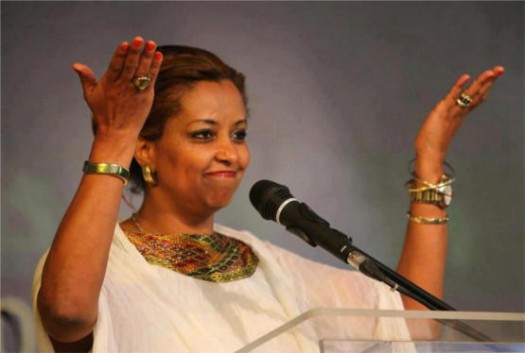
Dr. Eleni Gabre-Madhin, the founder and outgoing CEO of the Ethiopia Commodity Exchange (ECX), established a reliable interface for buyers and sellers to meet. (Google Images)

In the Guardian, Lauren Everitt of All Africa.com interviews Eleni Gabre-Madhin on how a market has empowered Ethiopian farmers by focusing on distribution as well as production. She writes:

While government leaders, NGOs and corporations devise strategies to churn out more food for future generations, Eleni Gabre-Madhin is taking a different approach. Concerned by a 2002 famine in her home country of Ethiopia that followed bumper crops in 2000 and 2001, the Stanford-educated economist decided it was time to go beyond food production and take a hard look at distribution.

The result? Africa‘s first commodity exchange. As the founder and outgoing CEO of the Ethiopia Commodity Exchange (ECX), Gabre-Madhin established a reliable interface for buyers and sellers to meet – an idea that has inspired other African countries to follow suit. Gabre-Madhin won the Yara award at the African Green Revolution Forum in Arusha, Tanzania, for her role in transforming Ethiopia’s commodity market.

What prompted your decision to found Africa’s first commodity exchange in Ethiopia? I had been doing research on grain markets and other agriculture markets in Africa for many years and, as it happened, I did my PhD on grain markets in Ethiopia. One of the things I kept seeing over and over, which I’d seen in other parts of Africa, was just how difficult it was for buyers to find sellers and sellers to find buyers, and how difficult it was to enforce the contract.

You’d see that a seller, such as a farmer, for example, who sold grain or coffee visually to check if it was really the quality they’d been told it was. They would have to reweigh it and rebag it to see if it was the actual quantity and quality that they were contracting.

So these are all the problems in the supply chain that make us poor and make us food insecure. If people can’t get grain where it’s produced really efficiently to where it’s needed, then you have markets that are segmented. You have pockets of surplus where prices collapse and places in other parts of the county where prices shoot up because there’s a deficit and there’s no grain coming in.

That’s exactly what happened in 1984 in the big famine that claimed a million lives in Ethiopia. There was obviously a shortage in the north and yet Ethiopia had to go to the world and beg for food aid, but there was a grain surplus in the fertile parts of western Ethiopia.

When I found out about this, I said: “It can’t just be about producing more – sure, producing more is important but we’ve got to figure out how to distribute it. We’ve got to figure out how to make an efficient market work for everybody – for the farmers, for the buyers, because otherwise we’re always going to be in this cycle.”

Read the interview in its entirety at The Guardian.

Like The Burton Wire on Facebook. Follow us on Twitter @TheBurtonWire.