The Associated Press is reporting that Mali’s Prime Minister Cheikh Modibo Diarra, 60, has been arrested and forced to resign. Diarra made the announcement hours after military soldiers stormed his house. Diarra was arrested by approximately 20 soldiers who showed up just as he was planning to leave the country.
Diarra is a NASA astrophysicist who has contributed to numerous space exploration missions including the Magellan probe to Venus and the Galileo spacecraft to Jupiter. The writer states that Diarra offered the following via state run television:
“Our country is living through a period of crisis. Men and women who are worried about the future of our nation are hoping for peace,” he said on television. “It’s for this reason that I, Cheikh Modibo Diarra, am resigning along with my entire government on this day, Tuesday, Dec. 11, 2012. I apologize before the entire population of Mali.”
He is now under house arrest, said a spokesman for the junta, Bakary Mariko. Diarra’s arrest comes after a coup in March taking authority away from the military and giving it back to civilians. The U.N. is currently deciding whether to back a military intervention in Mali, which has been in a constant state of turmoil in recent years. The forced resignation of Diarra has been rejected because of the inability to determine whether empowering the military to try and take back Mali’s north from Islamic extremists.
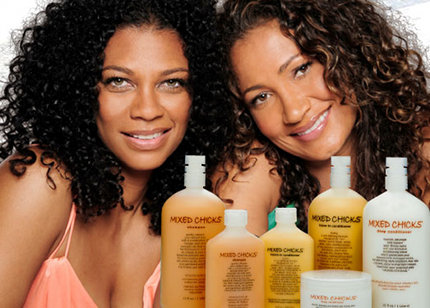
Mixed Chicks LLC successfully was $8 million from Sally Beauty Supply for trademark infringement. (Google Images)
Jet is reporting that hair care company Mixed Chicks was awarded $8 million against the Sally Beauty Supply chain in a trademark infringement lawsuit that has been going on for two years. Chandler Rollins of Jet writes:
“Mixed Chicks had filed a lawsuit against the national beauty supply chain in March 2011, for selling a product called “Mixed Silk” at their over 2,000 locations. The plaintiffs felt that the overall appearance of the Mixed Silk product line infringed on their trademarked labeling due to similarities.”
Similarities between labeling, brand logos, and names happen all too often in the business world. Most of the time, this will be done accidentally, and you’re more than happy to change it. But if you are knowingly doing this, you could be doing more harm than good to your business before it’s even been created. Mixed Chicks had every right to file for a trademark cancellation, as there is an increased likelihood that there could be confusion amongst the public. For Mixed Chicks, they’re doing everything in their power to protect their brand. This is just one of the many grounds for canceling a trademark.
The jury agreed that Sally Beauty had infringed on the Mixed Chicks trademark, and acted “willfully with malice and oppression.” The jury verdict awarded Mixed Chicks LLC $839,535 in actual damages and $7,275,000 in punitive damages.
Mixed Chicks will also be seeking additional monies to cover attorney’s fees. They also want a portion of Sally Beauty’s profits of Mixed Silk products and an order to ban the selling of Mixed Silk products.
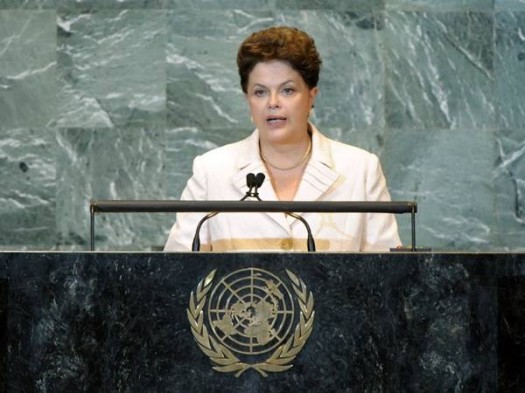
Brazilian President Dilma Rousseff is under fire for low third quarter economic growth. (Google Images)
The New York Times‘ Simon Romero is reporting that Brazil’s economic growth has been sluggish in the third quarter. Romero writes:
“Brazil’s economy registered anemic growth in the third quarter as investment levels remained disappointingly low, according to figures released on Friday. The results cast doubt on policies meant to prevent Brazil from turning into a laggard among Latin America’s economies. Gross domestic product grew just 0.6 percent from the previous quarter, stunning economists who had forecast double that rate. Brazil’s economy is now expected to grow only about 1 percent in 2012, delivering a challenge to President Dilma Rousseff, who has tried to increase growth through an array of huge stimulus projects.”
President Rousseff’s economic policies aggressively direct large government banks and other state-controlled enterprises in order to promote growth. The last year of former President Luiz Inácio Lula da Silva’s tenure, Brazil’s economy grew 7.5 percent. The third quarter report suggests that Brazil is on track to deliver its weakest two-year period of growth since the early 1990s, before a stabilization program that radically restructured the economy. Nonetheless, Finance Minister Guido Mantega contends that Brazil is on the cusp of a recovery, forecasting 4 percent growth next year.
Journalist Rose Afriyie speaks with NPP presidential hopeful Nana Akufo-Addo. (Photo: Rose Afriyie)
by Rose Afriyie
In an exclusive interview for The Burton Wire, Ghanaian journalist Rose Afriyie speaks with defeated NPP presidential candidate Nana Akufo-Addo about his views on improving Ghana’s economy.
Ghana’s recently elected President John Dramani Mahama has started the process of reaching across the political aisle. In recent interviews, the National Democratic Congress (NDC) party leader stated that he sees the opposition party as “partners” in improving Sub-Saharan Africa’s 5th fastest growing economy.
I had the opportunity of sitting down with Nana Akufo-Addo, the defeated New Patriotic Party (NPP) presidential candidate, in his Accra office during campaign season. We discussed economic policy at length and his insights about the future of Ghana.
“Our main aim in Ghana today must be the transformation of the structure of the Ghanaian economy. We produce essentially raw materials in Ghana: cocoa, gold, timber, crude oil – we don’t do too much value addition of the things that we produce here,” explained Akufo-Addo. His solution is the “industrialization of the Ghanaian economy” which he believes will be the result of private and public partnerships. Akufo Addo said that this industrialized economy requires “people investing their funds and companies investing their funds in value addition activities such as industrial ventures – medium scale and small scale.” For the government’s part, Akufo-Addo thinks that fiscal and financial currency incentives will encourage individuals and entities to make these investments.
Akufo-Addo also believes that two things should be prioritized with respect to oil wealth if poverty reduction is to become a reality:
1. Creating within the oil sector a viable proto-chemical industry
2. [Oil] Revenues being used to support the transformation of the Ghanaian economy.
Some sections of the 2011 Petroleum Revenue Management Act partially address the latter concerns as the construction of roads and agricultural modernization are prioritized in the Act and vital to economic transformation. Yet, Akufo-Addo believes that the Act in question has problems. “I think it was a mistake to… make it possible for 70 percent of oil revenues to go directly to a consolidated fund…because it becomes more difficult to see what benefit we are getting from the oil,” said Akufo-Addo. While the legislation has been viewed as an international success, a provision that has been largely criticized involves revenues being used as collateral for development projects.
Aside from the benefit a national conversation on oil revenue reform might have towards unifying a politically fractured nation, oil reform and the fair distribution of revenues is an extremely relevant issue.
If President Mahama’s camp is to succeed at appealing to the 47.7 percent of NPP supporters, many of whom believe that the election was stolen, these issues of value addition and oil revenue reform can serve as conversation starters between the opposition and President Mahama’s NDC Party.
Rose Afriyie is a journalist based in the Bronx. She is also the project manager of actNOW, a Google-funded mobile application that will enable everyday Ghanaians to easily petition corporates and politicos in Ghana in response to investigative exposés. Tweet at her: @RoseSerwah.
Hip-Hop legend Dr. Dre released the seminal LP ‘The Chronic’ twenty years ago. (Google Images)
By the early 1990s, hip hop was on a roll with heavy MTV rotation, modest Billboardchart success, prime time sitcoms, product placement ads and of course BET‘s commitment to the genre. A largely East Coast invention, Hip-Hop had made its way across the country, with groups charting from the ATL, Texas, Chicago, Louisiana and the West Coast. Dr. Dre’s seminal LP ‘The Chronic’ would literally transform the Hip-Hop landscape, making West Coast rap a force to be reckoned with in Hip-Hop culture.
Twenty years ago on December 15, Dr. Dre released his epic “solo” debut, The Chronic. Not even he could understand what influence he would have on pop culture going forward. In the mid-1980s, he was instrumental in the glitter-laden electro funk collective World Class Wreckin’ Cru. He would evolve with the groundbreaking supergroup, N.W.A., and take direct hits from various authorities including the F.B.I. N.W.A.’s grotesque, first person narratives detailed the harsh realities of Compton’s inner city culture. The group became one of the most influential of its time and helped initiate the so-called “gangsta rap” subgenre.
Over a span of 16 aromatic, well-produced tracks and sketches, The Chronic reaffirmed and slightly toned down Dr. Dre’s musical identity. The then newly developed Death Row Records’ breakthrough LP took melodic, cosmic ‘70s funk primarily from Parliament-Funkadelic’s discography and married them with a few whirring synth riffs, heavier bass lifts, Blaxploitation film dialogue snippets and an ebb of lewd (offensive to some) stanzas to create “G-funk.”
The Chronic’s music and lyrical imagery were so vivid that Dr. Dre took the listener to the West Coast without even actually visiting. The Chronic’s simple yet memorable cover art mocked Zig Zag rolling papers packaging. An added bonus to the album was a then unknown Long Beach native with an amazing laid back flow and one-of-a-kind vocal named Snoop (Doggy) Dogg. Now two of most iconic, recognizable and adored talents in American music, The Chronic was Dr. Dre and Snoop Dog’s (reborn Snoop Lion) foundation.
One listen created a sprawling intoxication that could very well rival the high grade marijuana the album title was named after, although ironically Dr. Dre was not a weed smoker at the time of the LP’s release.
At its best, The Chronic is the soundtrack and morale boost to an American culture feeling the hopelessness and despair from the headlining Rodney King beating and the resulting rioting. Infectious grooves — “Nuthin’ But a ‘G’ Thang,” “Let Me Ride” and “F*** Wit Dre Day” – became bonafide classics that raised the bar for rappers’ abilities to make credible hip-hop singles that could climb and take over the pop charts. Dr. Dre made it no secret (satirizing via music video) that his former N.W.A cohort Eazy-E along with the group’s manager Jerry Heller were on his bad side. Supporting parodies and insultsdirected at Miami bass artist Luther “Luke” Campbell and Bronx rapper Tim Dog were also prevalent on the LP.
At times, The Chronic discussed menacing in recording studios, spoke of gunplay, misogyny, sex, homophobia, hypermasculinity, overindulgence in marijuana and 40 oz. bottles of malt liquor through the songs including “A Nigga Witta Gun,” “Rat-Tat-Tat-Tat,” “Lyrical Gangbang,” “High Powered,” “The Roach,” “Deeez Nuuuts,” “The Day The Niggaz Took Over” and “Stranded on Death Row.” The album’s spirit reminds listeners of what it means to have a good time in the midst of the uncertainty and danger of life in the hood.
To date, The Chronic has sold eight million copies worldwide. In decades since, Dr. Dre has become an esteemed Grammy Award-winning entrepreneurial force in music and technology. Though Aftermath Entertainment, home to Eminem, 50 Cent and Kendrick Lamar, and Beats Electronics continue to make Dr. Dre a household name, nothing will replace The Chronic’s legacy. It is the album that sparked “gangsta rap’s” pop accessibility and coolness to the masses without any compromise.
Christopher A. Daniel is a pop cultural critic and music editor for The Burton Wire. He is also a contributing writer for Urban Lux Magazine and Blues & Soul Magazine. Follow Christopher @Journalistorian on Twitter.
Hip-Hop legend Dr. Dre released the seminal LP ‘The Chronic’ twenty years ago. (Google Images)
By the early 1990s, hip hop was on a roll with heavy MTV rotation, modest Billboardchart success, prime time sitcoms, product placement ads and of course BET‘s commitment to the genre. A largely East Coast invention, Hip-Hop had made its way across the country, with groups charting from the ATL, Texas, Chicago, Louisiana and the West Coast. Dr. Dre’s seminal LP ‘The Chronic’ would literally transform the Hip-Hop landscape, making West Coast rap a force to be reckoned with in Hip-Hop culture.
Twenty years ago on December 15, Dr. Dre released his epic “solo” debut, The Chronic. Not even he could understand what influence he would have on pop culture going forward. In the mid-1980s, he was instrumental in the glitter-laden electro funk collective World Class Wreckin’ Cru. He would evolve with the groundbreaking supergroup, N.W.A., and take direct hits from various authorities including the F.B.I. N.W.A.’s grotesque, first person narratives detailed the harsh realities of Compton’s inner city culture. The group became one of the most influential of its time and helped initiate the so-called “gangsta rap” subgenre.
Over a span of 16 aromatic, well-produced tracks and sketches, The Chronic reaffirmed and slightly toned down Dr. Dre’s musical identity. The then newly developed Death Row Records’ breakthrough LP took melodic, cosmic ‘70s funk primarily from Parliament-Funkadelic’s discography and married them with a few whirring synth riffs, heavier bass lifts, Blaxploitation film dialogue snippets and an ebb of lewd (offensive to some) stanzas to create “G-funk.”
The Chronic’s music and lyrical imagery were so vivid that Dr. Dre took the listener to the West Coast without even actually visiting. The Chronic’s simple yet memorable cover art mocked Zig Zag rolling papers packaging. An added bonus to the album was a then unknown Long Beach native with an amazing laid back flow and one-of-a-kind vocal named Snoop (Doggy) Dogg. Now two of most iconic, recognizable and adored talents in American music, The Chronic was Dr. Dre and Snoop Dog’s (reborn Snoop Lion) foundation.
One listen created a sprawling intoxication that could very well rival the high grade marijuana the album title was named after, although ironically Dr. Dre was not a weed smoker at the time of the LP’s release.
At its best, The Chronic is the soundtrack and morale boost to an American culture feeling the hopelessness and despair from the headlining Rodney King beating and the resulting rioting. Infectious grooves — “Nuthin’ But a ‘G’ Thang,” “Let Me Ride” and “F*** Wit Dre Day” – became bonafide classics that raised the bar for rappers’ abilities to make credible hip-hop singles that could climb and take over the pop charts. Dr. Dre made it no secret (satirizing via music video) that his former N.W.A cohort Eazy-E along with the group’s manager Jerry Heller were on his bad side. Supporting parodies and insultsdirected at Miami bass artist Luther “Luke” Campbell and Bronx rapper Tim Dog were also prevalent on the LP.
At times, The Chronic discussed menacing in recording studios, spoke of gunplay, misogyny, sex, homophobia, hypermasculinity, overindulgence in marijuana and 40 oz. bottles of malt liquor through the songs including “A Nigga Witta Gun,” “Rat-Tat-Tat-Tat,” “Lyrical Gangbang,” “High Powered,” “The Roach,” “Deeez Nuuuts,” “The Day The Niggaz Took Over” and “Stranded on Death Row.” The album’s spirit reminds listeners of what it means to have a good time in the midst of the uncertainty and danger of life in the hood.
To date, The Chronic has sold eight million copies worldwide. In decades since, Dr. Dre has become an esteemed Grammy Award-winning entrepreneurial force in music and technology. Though Aftermath Entertainment, home to Eminem, 50 Cent and Kendrick Lamar, and Beats Electronics continue to make Dr. Dre a household name, nothing will replace The Chronic’s legacy. It is the album that sparked “gangsta rap’s” pop accessibility and coolness to the masses without any compromise.
Christopher A. Daniel is a pop cultural critic and music editor for The Burton Wire. He is also a contributing writer for Urban Lux Magazine and Blues & Soul Magazine. Follow Christopher @Journalistorian on Twitter.
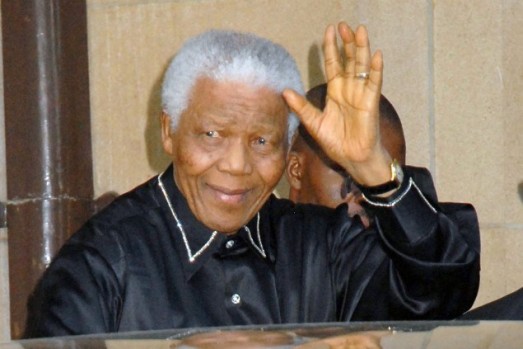
Former South African President and anti-Apartheid activist Nelson Mandela, 94, has been hospitalized. (Google Images)
Reuters is reporting that former South African president Nelson Mandela was admitted to the hospital over the weekend for medical tests. The government maintains that Mandela, 94, was admitted to undergo tests and there is no cause for alarm.
Current South African President Jacob Zuma’s office released the following statement:
“Former President Mandela will receive medical attention from time to time which is consistent with his age,” the statement said.
“President Zuma assures all that Madiba is doing well and there is no cause for alarm,” it added, referring to Mandela by his clan name.
Mr. Mandela has been in and out of the hospital over the past couple of years, most recently in February while suffering from abdominal pain. He has since spent most of his time in his ancestral home in Qunu, a village in the impoverished Eastern Cape province.
Egyptian President Mohamed Morsi has issued an edict allowing the army to take over security ahead of the vote on a constitutional referendum. (AFP)
Boston.com is reporting that the Egyptian military has assumed responsibility for security and protecting state institutions in the country until the results of a Dec. 15 constitutional referendum. Members of the army will also have the right to arrest citizens while maintaining security during the process.
This is a simple up-or-down referendum: If a majority of voters approve of the constitution, it will go into effect.
If the constitution is rejected, then – pursuant to another decree issued by Morsi, this one on December 8 – a new assembly will be elected, by popular vote, within three months. It will have six months to draw up a new constitution, which will then face another public vote.
The edict goes into effect on the eve of mass rallies called by the opposition and President Morsi’s supporters.
Incumbent President John Mahama has won the 2012 presidential election in Ghana. (Google Images)
The Guardian Nigeria is reporting that incumbent John Mahama has won Ghana’s presidential election. The electoral commission reported that Mahama won 50.7% against opposition leader Nana Akufo-Addo on 47.74%. However, the opposition NPP says it will contest the result, accusing the governing NDC party of conspiring with commission staff to fix Friday’s poll.
Opposition leader Nana Akufo-Addo, who lost the 2008 election by less than 1 percent, came in second with 5.2 million votes, or 47.7 percent, Afari-Gyan said. Voter turnout was high, with around 80 percent of the roughly 14 million registered voters casting ballots in Friday’s presidential and parliamentary elections. In a draft statement seen by reporters, the opposition said it would contest the results.
“This situation, if allowed to go unchallenged and uncorrected, would seriously damage the essence of the electoral process and the substance of democracy in Ghana,” the New Patriotic Party said in a draft statement that was emailed to reporters.
The opposition has accused Mahama of rigging the polls because of problems with fingerprinting devices that forced the elections to be extended by a second day.
The election was declared free and fair by observers of the regional body, the Economic Community of West African States (Ecowas).
Police in the capital Accra fired tear gas to disperse opposition protesters from outside the commission’s offices on Sunday evening. Tanks guarded the electoral commission and roads around the offices were barricaded by police as the results were announced.
Unarmed teenager Jordan Davis, 17, was shot and killed by Mike Dunn, 45 who is invoking Florida’s controversial “stand your ground” in his defense. (Google Images)
Writing for The Root, Nsenga K. Burton, Ph.D., The Burton Wire’s Editor-in-Chief wonders why there is a national outcry when an unarmed black teen is killed by a non-black person, but there is little fanfare in many cases when the perpetrator is black. UPDATE (7/16/13): Here is the article in its entirety:
The recent killing of 17-year-old Jordan Davis has black folks and social-justice activists up in arms over yet another senseless death of an unarmed black boy at the hands of an armed white man in Florida. I’m still trying to figure out how an argument over the volume of music escalated to the use of deadly force against unarmed teenagers.
I’m also perplexed as to why the shooter, 45-year-old Michael Dunn, allegedly fled the scene if he felt that the shooting was justified and he was “covered” by Florida’s controversial “stand your ground” law. If he hadn’t done anything wrong or excessive, then why leave the scene, particularly when there were eyewitnesses?
What I find most perplexing is the national outcry by black folks when a black boy is gunned down by a nonblack person, but there’s a “business as usual” attitude (from some media organizations and political leaders) when black boys and girls are gunned down by other blacks in communities of color throughout the country.
One has only to look at what is happening in inner-city Chicago. Six people were killed on Aug. 18, tying the record for killings in a single day in Chicago set on Feb. 19. Four of the victims were teenagers. The record-setting killings were dwarfed by the number of people wounded during that weekend: 36, to be exact.
To add insult to injury, five people were wounded the following Monday night in a south side shooting, including two teenage girls who were grazed while sitting on a porch. Blood has been running through the streets of Chicago for far too long, yet there is very little being said or done on a national level about what’s happening there.
What about Detroit? In February a 9-month-old died after being hit by bullets from an AK-47 after his house was “sprayed,” allegedly because of a dispute over seating at a baby shower, and a 6-year-old was killed in what appears to have been a carjacking by a pair of 15-year-olds wielding AK-47s — this after a 12-year-old girl was killed in January after getting caught in the crossfire of a man and a woman engaged in an argument that turned violent. Where was the huge national outcry about these killings?
Record numbers of murders are not found just in Midwestern cities. One only has to look at Camden, N.J.; Stockton, Calif.; Oakland, Calif; Memphis, Tenn.; St. Louis, Mo.; Birmingham, Ala.; and Baltimore to find murder rates that are out of control. Statistically speaking, most crimes are committed by people who look like their victims, because crimes occur in neighborhoods that are largely segregated racially and economically.
I find it maddening that the same outrage and disgust expressed when an unarmed black teen is killed by a nonblack adult is not reflected on a national level, when incidents of gun violence, murder and mayhem — many involving teenagers — are happening on a regular basis in communities of color throughout this country.
Why does it seem less acceptable when someone from outside the community kills a black teenager than when someone from inside the community does the killing? The level of anger and desire for justice for the victim and punishment for the perpetrator should not be driven by the color of the alleged assailant’s skin. If black folks do not appear to value the lives of our children every day in our communities, then why do we think that people outside the community would value those same lives?
Unlike in Trayvon Martin’s case, Davis’ killing had several eyewitnesses who are helping the police build a case against Dunn. In some of our communities, if there are eyewitnesses to violent crimes, we often discourage them from working with the police to apprehend the suspects. Instead, they are often labeled “snitches” if they actually report the crime and offer testimony.
We still don’t know who killed Tupac, Biggie or Jam Master Jay, and there were eyewitnesses to all three of those high-profile murders. What difference does it make if you are considered a pioneer, genius or game changer in the American mainstream and in black popular culture if your life isn’t valued enough for someone to reveal, “Who Shot Ya?”
I understand that there are many cultural reasons for this phenomenon of silence (fear of retaliation, police occupation instead of protection, economic inability to leave the community where the perpetrator might also reside). However, at what point do we stop leaning on these factors and start standing up for the black bodies — many of them teenagers’ — that are lining the streets of our communities?
What happened to Jordan Davis is awful, and we should all be calling for justice at the tops of our lungs. That demand should be just as loud when the alleged killer of one of our children looks like us, because if we don’t value our own, then who will?
Nsenga K. Burton is editor-at-large for The Root and founder & editor-in-chief of The Burton Wire.