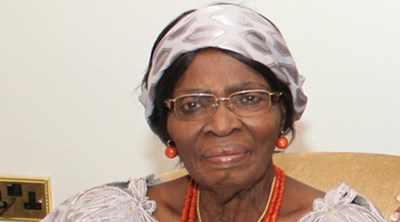
Professor Kamene Okonjo, mother of Nigeria’s finance minister Ngozi Okonjo-Iweala has been released by kidnappers. (Google Images)
AllAfrica.com is reporting that the mother of Nigeria’s finance minister Ngozi Okonjo-Iweala has been released. Professor Kamene Okonjo, 83, was abducted on Sunday by ten gunmen who stormed the palace of her husband, Professor Chukuka Okonjo who is a traditional ruler in Delta State.
BBC NewsAfrica is reporting that Prof. Okonjo was dropped off on a main road near her home in southern Nigeria. Apparently, she had received threats leading up to the kidnapping, which are popular in Nigeria and a lucrative criminal enterprise.
Details of the release are not being shared. While it is government policy not to pay ransoms, some families negotiate privately with kidnappers. It is not clear if a ransom was paid for Prof. Okonjo’s release. The driver of the car that dropped off Okonjo has been arrested.
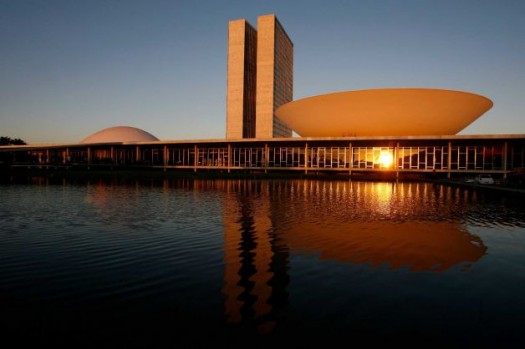
Legendary Brazilian Architect Oscar Niemeyer designed Brazil’s National Congress Building, which was inaugurated in Brasilia, Brazil in 1960. He passed away at age 104. (Google Images)
Ben Tavener of the Rio Times is reporting that legendary Brazilian architect Oscar Niemeyer has died. Mr. Niemeyer designed many of the most prominent government buildings in Brasília and the UN Headquarters in New York City. Tavener reports:
“Niemeyer rose to international fame in the 1960s as the new futuristic capital city was unveiled to the nation. The hallmark architectural swoops he used in his designs were, by his own admission, inspired by the “free-flowing sensual curves” of Brazilian women.
An ardent communist and atheist, he fled Brazil during the military dictatorship of the 1970s and 1980s, and continued to build on his career in France. His innovative use of reinforced concrete and rejection of conventional angled designs earned him both admirers and critics.
Some of his most prominent works in Brazil include top government palaces and buildings and the hyperboloid Cathedral of Brasília, the spaceship-like Contemporary Art Museum in Niterói and the Oscar Niemeyer Museum in Curitiba with its eye-shaped gallery that emerges from water.”
Mr. Niemeyer was widowed at 2004 at the age of 93 after 76 years of marriage and remarried at age 99. His body lay in state at the presidential palace on Thursday. Mr. Niemeyer’s body will be returned to Rio’s Palácio da Cidade in Botafogo for a private ceremony with friends and family on Frida, before being opened to the public. His funeral is expected to take place on Friday afternoon in Botafogo. He was 104.
Funeral arrangements for Mexican superstar Jenni Rivera are under way as the singer’s remains have arrived in Los Angeles, CA. (Google Images)
The tragic ending of the life of Mexican American superstar Jenni Rivera has become even more real. ABC News.go.com is reporting that the remains of Rivera landed in Los Angeles, CA this morning. Angie Romero reports:
“The remains of Mexican American superstar Jenni Rivera have been “100 percent” identified, her brother Pedro told reporters outside his parents’ home in Lakewood, Calif. on Thursday.
“It is 100 percent confirmed that Jenni is no longer with us. That is Jenni and she’s on her way back home now,” said Rivera’s brother, adding, “God let us borrow our sister, the daughter of Don Pedro Rivera and Rosa Rivera, the singer, the artist, the friend, the strong woman who always showed love – La Gran Señora. God let us borrow her for a time, 43 years, and now God has taken her. I know she is in His presence.”‘
Rivera and six others died in a plane crash in Northern Mexico last Sunday. Her publicist, lawyer and make-up artists were among the casualties. Known to fans as “La Diva de la Banda” or The Diva of Banda Music, Rivera was leaving a concert in Monterrey and en route o appear as a judge on “La Voz” (the Mexican version of the TV vocal competition “The Voice”). Authorities have not determined what caused the crash. Earlier this week, two Mexican police officers were arrested for stealing personal effects from the crash site.
Rivera’s brother Pedro Rivera shared at a press conference that two months ago he had a premonition that she would die in a plane crash. Ms. Rivera was 43.
Funeral arrangements for Mexican superstar Jenni Rivera are under way as the singer’s remains have arrived in Los Angeles, CA. (Google Images)
The tragic ending of the life of Mexican American superstar Jenni Rivera has become even more real. ABC News.go.com is reporting that the remains of Rivera landed in Los Angeles, CA this morning. Angie Romero reports:
“The remains of Mexican American superstar Jenni Rivera have been “100 percent” identified, her brother Pedro told reporters outside his parents’ home in Lakewood, Calif. on Thursday.
“It is 100 percent confirmed that Jenni is no longer with us. That is Jenni and she’s on her way back home now,” said Rivera’s brother, adding, “God let us borrow our sister, the daughter of Don Pedro Rivera and Rosa Rivera, the singer, the artist, the friend, the strong woman who always showed love – La Gran Señora. God let us borrow her for a time, 43 years, and now God has taken her. I know she is in His presence.”‘
Rivera and six others died in a plane crash in Northern Mexico last Sunday. Her publicist, lawyer and make-up artists were among the casualties. Known to fans as “La Diva de la Banda” or The Diva of Banda Music, Rivera was leaving a concert in Monterrey and en route o appear as a judge on “La Voz” (the Mexican version of the TV vocal competition “The Voice”). Authorities have not determined what caused the crash. Earlier this week, two Mexican police officers were arrested for stealing personal effects from the crash site.
Rivera’s brother Pedro Rivera shared at a press conference that two months ago he had a premonition that she would die in a plane crash. Ms. Rivera was 43.
Morehouse School of Medicine unveils a Mobile Clinical Research Unit to help fight health disparities in disenfranchised communities. (KreativTouch Photography)
The 30-foot long RV is the first of its kind in the entire state of Georgia. The clinical unit will travel and provide outreach into metro Atlanta and various rural areas to treat patients unable to have access to proper medical attention or transportation to a research center. America’s only other similar mobile facility is The Mayo Clinic in Rochester, Minn.
The $600,000 handicapped accessible camper is fully equipped with the same technology and capabilities as MSM. The trailer’s interior features two full exam rooms, a waiting area, telemonitoring equipment, a processing area, wireless computers, freezer, refrigerator, plasma monitors, a satellite phone and a retractable wall. One exam room includes a treadmill and state-of-the-equipment used in cardio testing, ultrasounds and EKGs. Across the front is a shaded seating area used strictly for consultation. The full unit is fireproof, soundproof and has individual temperature settings in each room.
Research will be conducted relating to health disparities primarily affecting African Americans such as strokes, hypertension, Vitamin D and diabetes. Designed in direct correlation to the National Institutes of Health’s (NIH) standards, MSM’s Mobile Clinic Research Unit is a breakthrough for both medicine and community health in the Southeast. “This unit is designed and equipped for patient safety,” says Priscilla Johnson, MSN, PhD, MSM’s Assistant Director of Clinical and Administrative Affairs. “It’s about taking care of patients and improving healthcare.”
Morehouse School of Medicine, one of America’s four Historically Black medical schools, commemorated the development with a ribbon-cutting ceremony and scheduled tours. Some of the institution’s distinguished alumni include U.S. Surgeon Generals and medical school presidents. In the past, MSM hosted health screenings at numerous health fairs, churches and community centers.
The Winnebago is the end result of a 10-year project to further educate and eliminate health disparities.
Christopher A. Daniel is a pop cultural critic and music editor for The Burton Wire. He is also a contributing writer for Urban Lux Magazine and Blues & Soul Magazine. Follow Christopher @Journalistorian on Twitter.
Lagos is the first African city to receive a customized version of the famous Monopoly board game. (Google Images)
BBC News is reporting that the first African city edition of the famous board game Monopoly has been launched in Lagos. The article states:
“The board’s layout was unveiled at an event in Lagos City Hall, with the man-made Banana Island named as the upmarket equivalent of Mayfair in the London edition. Makoko, the slum on stilts over the city’s lagoon, is the cheapest property for sale on the Lagos board.
The Nigerian Stock Exchange, Murtala Muhammed International Airport and several hotels are other properties on the board.
Many of the squares are sponsored by banks and shopping centres and even the Lagos state government appears, while some major landmarks like Tinubu Square, the New Afrika Shrine nightclub, Third Mainland Bridge and the National Theatre have been left out.”
The board also has Lagos specific sites and instructions like “Go Directly to Kirikiri jail.”
Monopoly was originally developed in the U.S. in 1934. A U.K. version soon followed in 1935. Morocco and South Africa are two African countries that have versions of Monopoly, but Lagos is the first African city to receive a customized version.
The Associated Press is reporting that Mali’s Prime Minister Cheikh Modibo Diarra, 60, has been arrested and forced to resign. Diarra made the announcement hours after military soldiers stormed his house. Diarra was arrested by approximately 20 soldiers who showed up just as he was planning to leave the country.
Diarra is a NASA astrophysicist who has contributed to numerous space exploration missions including the Magellan probe to Venus and the Galileo spacecraft to Jupiter. The writer states that Diarra offered the following via state run television:
“Our country is living through a period of crisis. Men and women who are worried about the future of our nation are hoping for peace,” he said on television. “It’s for this reason that I, Cheikh Modibo Diarra, am resigning along with my entire government on this day, Tuesday, Dec. 11, 2012. I apologize before the entire population of Mali.”
He is now under house arrest, said a spokesman for the junta, Bakary Mariko. Diarra’s arrest comes after a coup in March taking authority away from the military and giving it back to civilians. The U.N. is currently deciding whether to back a military intervention in Mali, which has been in a constant state of turmoil in recent years. The forced resignation of Diarra has been rejected because of the inability to determine whether empowering the military to try and take back Mali’s north from Islamic extremists.
Mixed Chicks LLC successfully was $8 million from Sally Beauty Supply for trademark infringement. (Google Images)
Jet is reporting that hair care company Mixed Chicks was awarded $8 million against the Sally Beauty Supply chain in a trademark infringement lawsuit that has been going on for two years. Chandler Rollins of Jet writes:
“Mixed Chicks had filed a lawsuit against the national beauty supply chain in March 2011, for selling a product called “Mixed Silk” at their over 2,000 locations. The plaintiffs felt that the overall appearance of the Mixed Silk product line infringed on their trademarked labeling due to similarities.”
Similarities between labeling, brand logos, and names happen all too often in the business world. Most of the time, this will be done accidentally, and you’re more than happy to change it. But if you are knowingly doing this, you could be doing more harm than good to your business before it’s even been created. Mixed Chicks had every right to file for a trademark cancellation, as there is an increased likelihood that there could be confusion amongst the public. For Mixed Chicks, they’re doing everything in their power to protect their brand. This is just one of the many grounds for canceling a trademark.
The jury agreed that Sally Beauty had infringed on the Mixed Chicks trademark, and acted “willfully with malice and oppression.” The jury verdict awarded Mixed Chicks LLC $839,535 in actual damages and $7,275,000 in punitive damages.
Mixed Chicks will also be seeking additional monies to cover attorney’s fees. They also want a portion of Sally Beauty’s profits of Mixed Silk products and an order to ban the selling of Mixed Silk products.
Brazilian President Dilma Rousseff is under fire for low third quarter economic growth. (Google Images)
The New York Times‘ Simon Romero is reporting that Brazil’s economic growth has been sluggish in the third quarter. Romero writes:
“Brazil’s economy registered anemic growth in the third quarter as investment levels remained disappointingly low, according to figures released on Friday. The results cast doubt on policies meant to prevent Brazil from turning into a laggard among Latin America’s economies. Gross domestic product grew just 0.6 percent from the previous quarter, stunning economists who had forecast double that rate. Brazil’s economy is now expected to grow only about 1 percent in 2012, delivering a challenge to President Dilma Rousseff, who has tried to increase growth through an array of huge stimulus projects.”
President Rousseff’s economic policies aggressively direct large government banks and other state-controlled enterprises in order to promote growth. The last year of former President Luiz Inácio Lula da Silva’s tenure, Brazil’s economy grew 7.5 percent. The third quarter report suggests that Brazil is on track to deliver its weakest two-year period of growth since the early 1990s, before a stabilization program that radically restructured the economy. Nonetheless, Finance Minister Guido Mantega contends that Brazil is on the cusp of a recovery, forecasting 4 percent growth next year.
Journalist Rose Afriyie speaks with NPP presidential hopeful Nana Akufo-Addo. (Photo: Rose Afriyie)
by Rose Afriyie
In an exclusive interview for The Burton Wire, Ghanaian journalist Rose Afriyie speaks with defeated NPP presidential candidate Nana Akufo-Addo about his views on improving Ghana’s economy.
Ghana’s recently elected President John Dramani Mahama has started the process of reaching across the political aisle. In recent interviews, the National Democratic Congress (NDC) party leader stated that he sees the opposition party as “partners” in improving Sub-Saharan Africa’s 5th fastest growing economy.
I had the opportunity of sitting down with Nana Akufo-Addo, the defeated New Patriotic Party (NPP) presidential candidate, in his Accra office during campaign season. We discussed economic policy at length and his insights about the future of Ghana.
“Our main aim in Ghana today must be the transformation of the structure of the Ghanaian economy. We produce essentially raw materials in Ghana: cocoa, gold, timber, crude oil – we don’t do too much value addition of the things that we produce here,” explained Akufo-Addo. His solution is the “industrialization of the Ghanaian economy” which he believes will be the result of private and public partnerships. Akufo Addo said that this industrialized economy requires “people investing their funds and companies investing their funds in value addition activities such as industrial ventures – medium scale and small scale.” For the government’s part, Akufo-Addo thinks that fiscal and financial currency incentives will encourage individuals and entities to make these investments.
Akufo-Addo also believes that two things should be prioritized with respect to oil wealth if poverty reduction is to become a reality:
1. Creating within the oil sector a viable proto-chemical industry
2. [Oil] Revenues being used to support the transformation of the Ghanaian economy.
Some sections of the 2011 Petroleum Revenue Management Act partially address the latter concerns as the construction of roads and agricultural modernization are prioritized in the Act and vital to economic transformation. Yet, Akufo-Addo believes that the Act in question has problems. “I think it was a mistake to… make it possible for 70 percent of oil revenues to go directly to a consolidated fund…because it becomes more difficult to see what benefit we are getting from the oil,” said Akufo-Addo. While the legislation has been viewed as an international success, a provision that has been largely criticized involves revenues being used as collateral for development projects.
Aside from the benefit a national conversation on oil revenue reform might have towards unifying a politically fractured nation, oil reform and the fair distribution of revenues is an extremely relevant issue.
If President Mahama’s camp is to succeed at appealing to the 47.7 percent of NPP supporters, many of whom believe that the election was stolen, these issues of value addition and oil revenue reform can serve as conversation starters between the opposition and President Mahama’s NDC Party.
Rose Afriyie is a journalist based in the Bronx. She is also the project manager of actNOW, a Google-funded mobile application that will enable everyday Ghanaians to easily petition corporates and politicos in Ghana in response to investigative exposés. Tweet at her: @RoseSerwah.