ZeeNews.com is reporting that Somalia’s newly elected president Hassan Sheikh Mohamoud, who survived an assassination attempt two days after being elected, was inaugurated Sunday in Mogadishu. Mohamoud, a teacher and activist, won the election last week against outgoing President Sheik Sharif Sheikh Ahmed by the legislative vote of 190 to 79.
Security at the inauguration was extremely tight around Mohamoud, who promised to be a democrat and to create “an effective justice system” that serves all Somalis.
Zee News reports, “I promise (that) my government will deliver a new democratic beginning,” he told a congregation at the Police Academy, the same venue where he was elected.
The UN-backed political process that resulted in Mohamoud’s election was condemned by Islamist militants who said it was manipulated by the West.
Al-Jazeera is reporting that Mohamoud has said that he is open to meeting with al-Shabab, who claimed responsibility for the assassination attempt that left eight people dead.
Read more about the inauguration on Zee News and hear President Mohamoud’s plans for Somalia in the video above courtesy of Al-Jazeera News.
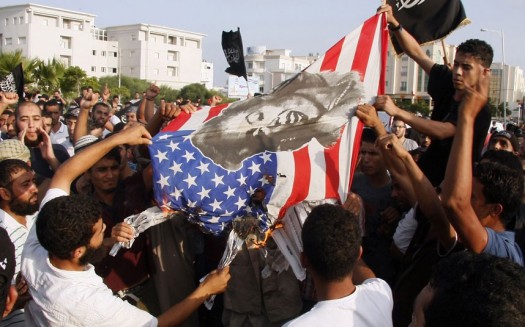
Protesters in Tunisia burn American flag with Marilyn Monroe image. (Google Images)
Jamal al-Jabiri of Mail & Guardian is reporting that the Middle East has been swept with anti-U.S. fury over an obscure 14 minute film made by Nakoula Basseley Nakoula, an Egyptian who is a Coptic Christian, living in California. The Pentagon has sent troops to embassies located in the Middle East to boost security as protesters are enraged over the film that reportedly mocks Islam.
CNN is reporting that people have taken to the streets in 10 nations and the Indian-controlled region of Kashmir, according to U.S. Sen. Dianne Feinstein, railing against “Innocence of Muslims” and the nation where it was produced, the United States. This outrage, and danger to Americans, could worsen in the coming days, the U.S. Department of Homeland Security and FBI warned Thursday in a joint intelligence bulletin. The frenzy erupted after traditional Muslim Friday prayers. Fury over the film has been stoked by Internet video footage, social networks, preachers and word-of-mouth.
Protesters clashed with U.S. police at the embassy near Cairo, broke into the German Embassy in Khartoum, hoisting the Islamic flag and one person has been killed during protests in Tripoli.
Meanwhile, the bodies of four Americans killed in Libya were returned to the United States on Friday. The body of Ambassador to Libya Christopher Stevens was one of them. It is thought that the attack on the U.S. embassy in Libya is related to the film.
The Burton Wire‘s guest blogger Jamar Thrasher writes an open letter to rising star Kendrick Lamar, a Compton rapper who doesn’t vote and urges his fans not to vote in a Truth is Scary video (NSFW – Not Safe For Work). Thrasher wants the rising star to reconsider his position on voting and to be more responsible with his messaging. There are a few other rappers he might add to the list (Lupe Fiasco and Nicki Minaj) but check out what he has to say to Lamar below:
Dear Mr. Lamar:
I want to address your recent comments regarding why you do not exercise your right to vote. You cite contradictions and lack of control of world events and affairs as reasons not to vote. You have a right to your opinions, but your statements were foolish and dangerous.
Now that you have been pushed into the public spotlight, you are burdened with being a role model; whether you are tactful and responsible in your new role is up to you. You have an influence and reach that is phenomenal: Your music is on the top music blogs, you have fans all over the world, and most importantly, you deliver meaningful messages. When you are a rapper, it’s almost certain that you are a trendsetter. People, the youth especially, will follow and listen to your every word and some might emulate your behavior.
In 2012, voting and politics are “cool.” Elections, especially presidential elections, have become mainstream events; they have even become more closely associated with hip-hop culture. Jay-Z, Diddy, and Young Jeezy have all asserted messages in their music urging their fans to vote. In 2008, hip-hop was instrumental in improving voter participation in election campaigns, motivating young people to get out and vote.
According to a report by the U.S. Census Bureau tracking voting trends in presidential elections, voters ages 18-24 were the “only age group to show a statistically significant increase in turnout in the most recent election, reaching 49 percent in 2008, compared with 47 percent in 2004.”
If timing is everything, then your words do a disservice to the disenfranchised communities of America, especially now, during an election year. This seems odd, especially since your music paints vivid pictures of the issues plaguing the world, specifically poverty issues.
In your seminal work, “Section .80,” you rap, “Everybody can’t drive Benzes so I make it my business to give them my full attention.”
When people aren’t getting the attention they deserve from politicians, they have to demand it.
Politicians have a job, and at the end of every term, they are faced with reelection. The two main resources politicians need to create a successful campaign and win an election are money and votes. In disenfranchised communities, there might not be money, but there are votes. Voting demands attention from the top.
For years, community organizers have developed strategic ways to get people to vote. One way is by having community leaders (like you) get the message out about the benefits of voting.
Many times, people stop believing in the American Dream when it seems like it is unattainable, but by voting, they have a say. People in low-income communities can vote for candidates who have an interest in raising the minimum wage, for example.
Even if you do not vote, please encourage your listeners to do so. Voting is a right community members must exercise to have a say in how their communities operate. If communities do not make decisions about their communities, someone else will make these decisions for them.
Vote for the black citizens who were, at various points in history, threatened, intimidated, maimed, raped, and killed for wanting to vote. Vote for the women who fought tooth and nail during the suffrage movement to cast a vote. Vote even for people in other countries across the world that are still revolting and rising up against tyrant political systems to get a chance to get their voices heard. Vote for the people who cannot vote: the mentally ill, the incarcerated, and the youth who are not old enough to vote.
Music educates people, and as a teacher, you must be cognizant of the lessons you are teaching.
By not voting, you further exacerbate and make definite your claim that you have no say in how the world is run.
Thank you, Jamar Thrasher
Jamar Thrasher received his undergraduate degree in political science and communications from the University of Pittsburgh. He is currently a graduate student at Carnegie Mellon University’s Heinz College for Public Policy and Management. Thrasher is also a partner at Kennedy Blue Communications.
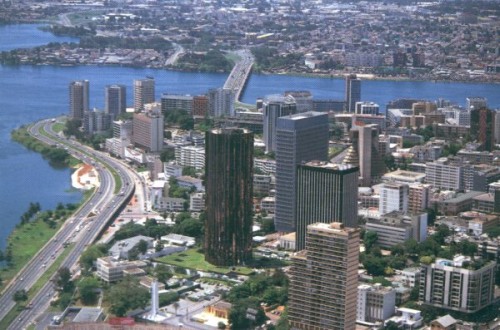
Birame Faye of Trust Media London is reporting that the ending of Ivory Coast’s crisis is proving to be a blessing for the economy of the sub-region. Despite international financial turmoil, high oil import prices and food shortages in the Sahel, the West African Economic and Monetary Union expects a comfortable growth rate for 2012, in contrast to last year.
The organization, known by its French acronym UEMOA, attributes the growth above all to the strong recovery of Ivory Coast’s economy since the end of its long-running conflict last year.
According to UEMOA forecasts the economic zone, comprising eight mainly Francophone countries, will see a growth rate of 6.1 per cent this year compared to 1 per cent last year.
“Investors are coming back to Ivory Coast. That has benefits for all of West Africa, since it is the country that has the most immigrants (from the region). Besides, it accounts for 40 per cent of the union’s gross domestic product,” says Valeria Fichera, the International Monetary Fund’s representative in Senegal.
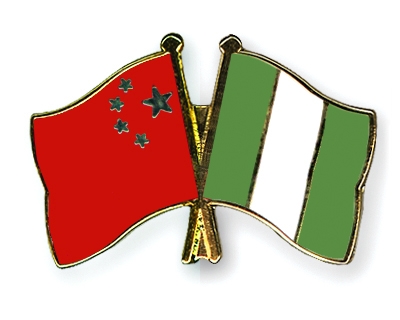
The New York Times is reporting that China is offering Nigeria $1.1 billion in loans to help build airport terminals, a light rail line for its capital city and communication system improvements, the country’s Finance Ministry said Wednesday. The loans reflect the economic ties between oil-rich Nigeria and China, which already is involved in building major road and railway projects in the West African nation. However, similar deals with China and Sambla Finland have fallen apart amid corruption allegations, problems that persist today and could potentially put this new deal at risk as well.
The light rail project for Abuja, the nation’s central capital, would bring commuters in from suburbs surrounding the city’s distant international airport and from neighboring Nasarawa state, the finance ministry said. That project would cost about $500 million, the ministry said. Another project, valued at $100 million, part of a loan deal already signed involving the light rail, would go toward improving Nigeria’s Internet capability, the ministry said.
The 20-year, 2.5 percent interest loan for those two projects has a grace period of seven years before payment is required, the ministry said. The loan for improving the airports will be to the tune of $500 million which is much needed since the airports have not been repaired since the 1960s and 1970s.
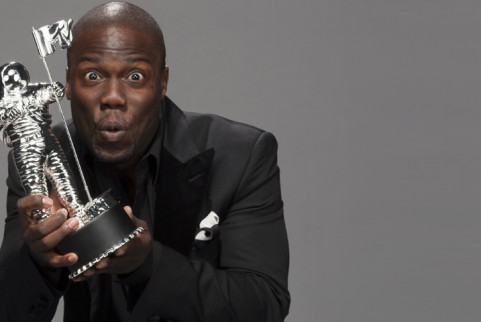
Writing for TheRoot.com, The Burton Wire‘s editor-in-chief Nsenga K. Burton, ponders why MTV’s Video Music Awards (VMAs) would counter program against the Democratic National Convention.
Imagine my surprise to learn that CBS/Viacom had scheduled the broadcast of MTV’s 2012 Video Music Awards on the same Thursday evening that President Obama was scheduled to accept the Democratic Party’s nomination for his candidacy for the 2012 Democratic presidential ticket.
You may recall that 20 years ago, Rock the Vote launched a movement to “engage and build political power for young people in our country.” The Rock the Vote campaign has been wildly successful, registering more than 5 million young voters through grassroots organizing, the innovative use of technology and leveraging pop cultural and celebrity connections to mobilize and motivate young voters. Rock the Vote became a household name through public service announcements featuring celebrities that played routinely on MTV, VH1 and BET, all stations currently owned by CBS/Viacom.
How is it that a network that has done so much in the past to help young voters could do so poorly now by counterprogramming against the final night of the DNC in which President Obama accepted his party’s nomination? What happened to helping to inform young voters about the election process and motivating them to register to vote? Since when does MTV air the VMAs on a Thursday night, anyway? What message does it send to potential young voters when an awards show is scheduled at the same time as the convention of a major political party two months before Election Day?
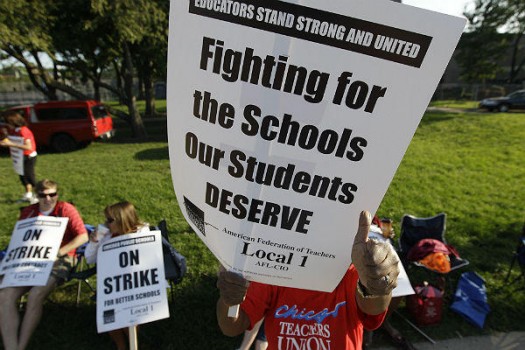
Chicago Public Schools’ teachers strike continues. (Google Images)
As a former school teacher, I understand the challenges of teaching. Long hours, short pay — damned if you do, damned if you don’t. I remember being overworked and underpaid, so much so that I qualified for food stamps even though I didn’t take them. Of course, I would be the first to say that teachers deserve compensation for what many equate to a work of love, an act of selflessness – a calling, if you will. Even though I understand why teachers in Chicago (CPS) are striking, I think they need to focus more on the root of the problems as opposed to the quick-reform measures they are seeking.
The prevailing rhetoric surrounding the strike is that Chicago’s teachers fail to see the forest for the trees. They’re striking within a system that needs an overhaul, not small reforms. The strike talk needs to expand, quickly to consider this factor.
Teachers in Chicago Public Schools oppose Mayor Rahm Emmanuel’s proposals regarding pay, health benefits, and a new evaluation system. While many say the strike is hurting administrators and the mayor’s office, CPS students are taking the hardest hits.
From an outsider’s perspective (I live in California), this strike, which sees low-performing students missing valuable instructional minutes, seems to be about individuals, not the collective. Don’t get me wrong, teachers should argue for fair wages, push for small class sizes, discuss the length of the school day and determine a fair evaluation system. When folks see the educational outcomes CPS produces and then examine teacher demands, their position is severely weakened.
In addition to counselors and social workers, student assessment needs to be examined. The validity and reliability of standardized tests is debatable. Currently, it is the measure used for determining many things including promotion (student and teacher) so it does matter. Standardized tests cannot holistically measure student achievement and are not always indicative of teacher effectiveness either. If teachers don’t like the proposed evaluation system and they think tests do more harm than good, strike against high-stakes testing.
School structure needs to be added to the list. Schools are still using antiquated models that actually impede 21st century learning—the new education craze. Strike to change the structure of schools, from the bells to the physical classroom settings.
While we’re discussing classrooms, how about cultural incompetence? Teaching is made more difficult and the drop out rate is increased when students cannot connect to relevant curriculum and responsive teaching. Strike for curricular and instructional changes and development that allow teachers to connect with students.
Let’s not forget poverty. Students sometimes come to the classroom lacking proper nutrition, with inadequate or no healthcare insurance and coping with traumas one can only imagine. Strike for fair and equitable social policies that affect your students’ lives and influence what happens in your classrooms. How can you think straight or focus if you haven’t eaten?
Teachers and unions have the power to further the national dialogue around teaching and learning.
This strike could mobilize us as a nation to ponder what’s best for students inside and outside the classroom. Teaching is a hard gig, which is why teachers should look beyond the quick reform options and focus on the roots of their concerns. Unions can be used to strike against policy and practice that make teaching more difficult and learning more arduous for kids. As it is now, this strike serves as a missed opportunity for all involved to move forward, together.
Dr. Rema Reynolds is an Associate Professor in Azusa Pacific University’s School Counseling and School Psychology Department and teaches Global Leadership classes abroad. Dr. Reynolds works closely with parents for improved student outcomes and has worked as a consultant for a number of school districts across the country.
Somalia MPs will elect a new president on Somalian soil for the first time in years. (Google Images)
BBC News is reporting that Somalia’s parliament is in the midst of electing a new president in another step to end a decades long war. The newly elected MPs have convened at a police academy in Mogadishu for the secret ballot. There are 22 candidates vying for the presidency and the winner will lead the country for the next four years.
For the first time in years, voting will take place on Somalian soil, which speaks to the growing stability of the war-ravaged country. In spite of being driven out of Mogadishu by African Union troops and pro-government forces, al-Qaeda linked al-Shabab, which still controls many southern and central parts of the country, has staged frequent suicide attacks.
Current Islamist President Sheikh Sharif Sheikh Ahmed, in power since 2009, is regarded as one of the favorites among the 22 candidates.
Somalia MPs will elect a new president on Somalian soil for the first time in years. (Google Images)
BBC News is reporting that Somalia’s parliament is in the midst of electing a new president in another step to end a decades long war. The newly elected MPs have convened at a police academy in Mogadishu for the secret ballot. There are 22 candidates vying for the presidency and the winner will lead the country for the next four years.
For the first time in years, voting will take place on Somalian soil, which speaks to the growing stability of the war-ravaged country. In spite of being driven out of Mogadishu by African Union troops and pro-government forces, al-Qaeda linked al-Shabab, which still controls many southern and central parts of the country, has staged frequent suicide attacks.
Current Islamist President Sheikh Sharif Sheikh Ahmed, in power since 2009, is regarded as one of the favorites among the 22 candidates.
Will “ethnic” hairstyles keep African Americans out of corporate America? (Stockfresh)
Kids these days with their cornrows, tattoos, sagging pants and piercings—how will they ever get a job if they don’t look respectable? This is a moot question if the “kids” in question are earning MBAs to create jobs, not just land one. I understand that often one has to be twice as good to get half as far, but in a global society, is it really productive to police personal style? With that in mind, it is simply baffling that the administration of Hampton University’s MBA program continues to ban male students from wearing cornrows or dreadlocks.
The rationale for the rule is that individuals with such hairstyles are less employable than others with a more corporate style. In a time where the Brooks Brothers suit is the exception rather than the rule, this attempt at increasing Black men’s chances of getting a good job is not only antiquated and misguided; it is a complete and utter waste of time. These self-appointed grand poobahs of what constitutes an acceptable Negro for mainstream society are relics of the Civil Rights Movement. Since when does a hairstyle give any indication of intelligence, aptitude or job performance?
If this were the policy of a mainstream university, there would be hell to pay. Imagine the fallout if the illustrious business schools of Wharton, Kellogg or Harvard implemented such a policy. Rallies, boycotts, marches and gnashing of teeth would ensue; Black folks would ask for the dean’s head on a platter. So why do we expect others to treat us better than we treat ourselves?
It is a certainty that Wharton, Harvard and Kellogg do not waste time concerning themselves with the appearance of their MBA candidates. They attract the best and the brightest and it is understood that a degree from any of those programs is money in the bank–literally and figuratively. While Hampton is stalling in the starting blocks, the rest of the country’s MBA candidates are off to the races and crossing the finish line. Blacks have fought so hard to be judged on actions, deeds and achievements so it is even more disappointing that an HBCU has resorted to the very same tactics Blacks would fight against in any other context.
It smacks of an “Our Kind of People” mentality that is equal parts bourgeois gatekeeper and plantation overseer keeping all the darkies in check for Massa. No doubt, some of it is well-intentioned but that doesn’t make it any less appalling that a Black institution would make a value judgment on something so trivial. How sad is it that an HBCU–presumably a haven where Black students are nurtured and encouraged—would resort to what amounts to a paper bag test in the 21st century?
Operating as if it is 1912 instead of 2012 is doing a disservice to the next wave of potential entrepreneurs and trailblazers. These are adult men pursuing graduate degrees and treating them like children is as emasculating as Jim Crow. Everyone pursuing an MBA isn’t looking for a 9 to 5 or aspires to work for someone else. Tools for success are within reach, but the lack of vision is apparently an obstacle because it isn’t hard to see that the focus should be on what is in their heads and not what is on them.