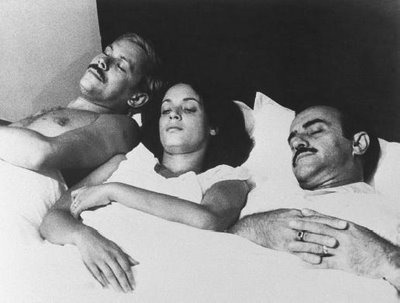
A scene from the Brazilian classic film “Dona Flora and Her Two Husbands,” starring Sônia Braga. (Google Images)
While the United States is arguing over the definition of marriage and whether same-sex couples should be granted the same legal protections as heterosexual couples, Brazil has taken it one step further legally sanctioning civil unions for a three-way couple. The unidentified couple at the center of the case that has started an uproar is composed of “three professionals in their 30s who live together and say they love one another as equals and are like any other non-married cohabiting couple,” as reported by CNN.
Yamiche Alcindor of USA Today reports that the Brazilian public notary granted the three-way couple all of the legal benefits of marriage. The couple sought the protection in case of separation or death. Some religious and legal groups are fighting the validity of the judgment because Brazilian law defines marriage as a union between two people, not three people. Supporters can argue that three is made up of a couple so the law applies. Referred to as “polyfidelitous” relationships, other cases will be forthcoming including a quintet (two men and three women) and another trio (one woman and two men).
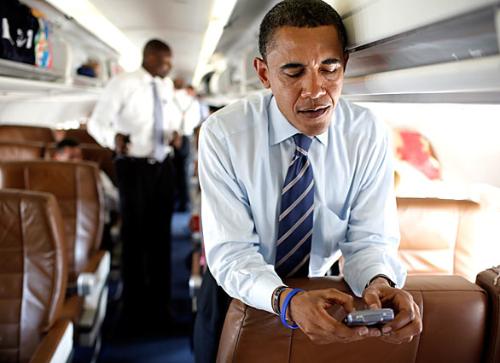
The Obama campaign’s use of technology may make the difference in the 2012 election. (Google Images)
Since the 2008 presidential election, the Obama campaign has displayed a remarkable understanding and mastery of the revolutionary potential of new media. From video games and social media networks like Facebook and Twitter to the crowd-funding collaboration site, Kickstarter, team Obama has effectively demonstrated a more current world outlook than many politicians on today’s national scene. At the center of the “Yes We Can” and “Forward” presidential election campaigns, is a unique combination of a grassroots movement that connects with working-class folks and celebrities alike.
President Obama’s image as designed – because all political candidates are constructed tactically (even graphically) – is founded on a platform of change and old school values simultaneously. The Obama campaign’s use of new media technology reflects this approach moving way beyond traditional fireside chats through technology, yet connecting with millions of people through a story of grit and glory. In an article by Jim Stein for the Huffington Post, President Obama’s campaign manager Jim Messina stated, “This [technological innovation] is light-years ahead of where we were in 2008. We are going to make 2008, on the ground, look like ‘Jurassic Park.’” Messina added that the campaign intends to surpass its record-breaking records set four years ago because through “trial and error,” they have learned how to run a better campaign.
Take one charismatic president with popular appeal, add an opposition seemingly out of touch with regular folks and an aggressive digital marketing strategy and digital success is imminent. This is not to say the Romney campaign does not have a formidable digital presence; Romney lacks President Obama’s star quality and is targeting an older demographic that uses social media, but not to the same extent as President Obama’s supporters, whichskew younger and are the most active users of social media networks. Messina understands the need to explore new technological developments and to develop custom products, which is why the Obama campaign currently dominates the Internet battleground.
In line with Messina’s predictions, the campaign is finding new means of connecting with the masses, and incorporating all identifiable methods to combat America’s shrinking attention span. Although Romney and the Republican Party are catching on, they are dwarfed by the web savvy of the Obama campaign. For instance, President Obama has over 28 million Facebook fans while Romney has 6.3 million.
The Obama ‘Ask Me Anything’ (AMA) campaign on Reddit is brilliant because it connects everyday people to the leader of the free world, which is desirable in a democracy.
Reddit is based on a democratic model allowing users to vote for or against a topic. The democratic element lends itself to similar social media networks like Twitter, where anyone can steal the show at any given time, which President Obama did, during the RNC.
In the past, the President has held town hall style chats on Twitter and LinkedIn to great success, but his ‘Ask Me Anything’ initiative on Reddit was groundbreaking. Reddit received record visitation at over 5 million visitors on that day, and 2.9 million page views during the ‘Ask Me Anything’ initiative. President Obama’s DNC speech garnered 52,757 tweets per minute, which is a Twitter record. Social media is still in its infancy so it is hard to determine how it influences presidential outcomes, but if President Obama’s campaign continues exploring and developing social media strategies, then social media as a political tool may turn out to be the key to winning four more years.
While a great deal of society and their social media accounts overwhelmingly praised First Lady Michelle Obama’s address at the 2012 Democratic National Convention, another set of fabulous first ladies were being rediscovered in the fashion documentary Versailles ’73: American Runway Revolution (Coffee Bluff Pictures).
The directorial debut of Georgia native Deborah Riley Draper tells the miraculous story via candid interviews, press clippings and actual footage of some incredible African American fashion models who grace the catwalk at a chilly yet landmark November 1973 fashion show designed by famed fashion publicist Eleanor Lambert and Palace of Versailles curator Gerald Van der Kemp. Billed “The Battle of Versailles,” the show was a “competition” between American designers Stephen Burrows, Bill Blass, Anne Klein, Oscar de la Renta and Halston and French designers Yves Saint Laurent, Christian Dior, Givenchy, Pierre Cardin and Emanuel Ungaro as a fundraising effort to restore the ceiling of the esteemed European landmark.
Considering history and fashion experts are quick to acknowledge Beverly Johnson’s color barrier-breaking Aug. 1974 Vogue cover along with Jayne Kennedy gracing the cover of Playboy in July 1981, Versailles ’73 takes a closer glance at some of the fashion industry’s unsung black beauties. They approach haute couture/pret-a-porter with a one-of-a-kind attitude, presence and simplicity that is so trendsetting — counter to the stiff, posh and regal vibe of French fashion – that it affords these pioneering African American women the adoration of the fashion elite and world dignitaries.
Keep in mind, Versailles ‘73 totally predates the world’s obsession with America’s Next Top Model and Vanessa Williams becoming Miss America in 1983. Narrated by famed fashion historian Cameron Silver, Versailles ’73 won the CNN Outstanding Documentary Award at this year’s Martha’s Vineyard African American Film Festival and received critical acclaim at Cannes and the SoHo House feature. The film documents the personal experiences, horror stories, cultural discrimination and triumphs via sequins, chiffon, pop art styles and trains according to black fashion icons Burrows, Mikki Taylor, Pat Cleveland, Billie Blair, Alva Chinn, Norma Jean Darden, Charlene Dash, Bethann Hardison, Barbara Jackson, Jennifer Brice, Ramona Saunders and Amina Warsuma.
The ladies, in 33 minutes versus the French’s two-and-a half hour production, strutted their stuff, sashayed gracefully and turned their swag on in the finest ensembles — down the same aisle where Louis XVI married Marie Antoinette — in front of Princess Grace of Monaco, Liza Minelli, Andy Warhol, Christina Onassis, the legendary Josephine Baker, dynasties and a slew of wealthy millionaires. Miraculously, this cultural shift in beauty and fashion came post-Civil Rights and Black Nationalism but just at the helm of Vietnam and Watergate. The evening not only changed how African American models — who originally had to impress three of the five selected designers to make the cut — impacted the fashion industry through innovation, and also changed the course of how American fashion and its designers help define global attitudes towards fashion as a whole.
Christopher A. Daniel is a pop cultural critic and contributor to The Burton Wire. He is also a contributing writer for Urban Lux Magazine and Blues & Soul Magazine. Follow Christopher @Journalistorian on Twitter.
President Barack ‘Closer-in-Chief’ Obama closes the deal at the 2012 Democratic National Convention with presidential speech. (Google Images)
OPINION
by
Jasper Alexander
During the Democratic National Convention, Democrats spent the majority of the week making their case to the American electorate, more specifically to independent voters, that the future their platform offers America is more inclusive and more in line with the principles in which this country were founded. The DNC proved to be a case study on political marketing. The convention started with First Lady Michelle Obama serving as the character reference for the President, giving America a glimpse of what truly motivates the man and a clear sense of his moral fabric. Then President Clinton provided the detailed job performance evaluation, with the unique perspective that only a former president could provide, that afforded America real insight into just how difficult things were when President Obama was elected and how successful he truly was given those circumstances. Between these two amazing speeches were a number of enthusiastic, passionate speeches that proved powerful in their own right, which leads me to President Obama’s speech.
As with any big sales pitch, after the case has been made, a closer is brought in to give the decision-maker a sense of comfort that it is okay to say “yes, I’m sold”. A closer is a combination of smooth energy, inspiration, integrity, confidence and competence. On day three of the DNC, Barack Obama proved to be the Closer-In-Chief. Instead of employing the oratorical gifts and flair that we have seen from him during his previous speeches at the 2004 and 2008 conventions where he was a candidate, President Obama made a stately speech that clearly delineated the differences between him and his opponent, Mitt Romney. The President laid out his goals matter-of-factly while showing enough confidence in what he was offering to even acknowledge his “failings” without fear of how his opponent may try to use his words against him.
The Democratic Party seemingly has had an unbelievably successful three days in the spotlight. They have offered voters a beautifully choreographed sales pitch concluded with the voice of the President. In the coming days, we will get an idea of how successful the convention really was when we see how large of a “bump” the President gets in the polls. Ultimately, we will see how effective our country’s Closer-In-Chief was in making his case for another four years.
A contributor (nycsouthpaw) for Buzzfeed visually demonstrates why former president Bill Clinton is considered to be one of the best public speakers in modern history. The wildly popular, former president’s prepared speech for the 2012 Democratic National Convention (DNC) ran twice as long as scheduled, making multiple additions and deletions in the process. Clinton’s ability to explain what President Barack Obama has been doing in a way that even President Obama has not been able to, may make the difference in the minds of voters. Check out this transcript against former President Clinton’s remarks and see how the nation’s 42nd president switched it up on the fly to create yet another historical moment at the 2012 Democratic National Convention.
Buzzfeed breaks down former President Clinton’s 2012 DNC speech.
A contributor (nycsouthpaw) for Buzzfeed visually demonstrates why former president Bill Clinton is considered to be one of the best public speakers in modern history. The wildly popular, former president’s prepared speech for the 2012 Democratic National Convention (DNC) ran twice as long as scheduled, making multiple additions and deletions in the process. Clinton’s ability to explain what President Barack Obama has been doing in a way that even President Obama has not been able to, may make the difference in the minds of voters. Check out this transcript against former President Clinton’s remarks and see how the nation’s 42nd president switched it up on the fly to create yet another historical moment at the 2012 Democratic National Convention.
Buzzfeed breaks down former President Clinton’s 2012 DNC speech.
Africa’s elephants are being slaughtered by military poachers. (Google Images)
Jeffrey Gettleman of The New York Times is reporting that the continent of Africa is experiencing epic elephant slaughter at the hands of poachers driven by the need for ivory to sustain war and profits. Conservation groups are reporting that military poachers are murdering tens of thousands of elephants, more than at any other time in the last two decades and that the ivory trade is becoming “militarized.”
EXCERPT
“Like blood diamonds from Sierra Leone or plundered minerals from Congo, ivory, it seems, is the latest conflict resource in Africa, dragged out of remote battle zones, easily converted into cash and now fueling conflicts across the continent.
Some of Africa’s most notorious armed groups, including the Lord’s Resistance Army, the Shabab and Darfur’s janjaweed, are hunting down elephants and using the tusks to buy weapons and sustain their mayhem. Organized crime syndicates are linking up with them to move the ivory around the world, exploiting turbulent states, porous borders and corrupt officials from sub-Saharan Africa to China, law enforcement officials say.”
Scientists, park officials and Congolese authorities believe that the Ugandan military has been killing elephants at Garamba National Park located in the Democratic Republic of the Congo. The Ugandan military is one of the Pentagon’s closest partners in Africa. The elephants are shot in the head with a single bullet and then stripped of their tusks. No stone is left unturned as baby elephants are also being slaughtered.
In a rousing speech, former President Bill Clinton nominates President Barack Obama for the U.S. presidential ticket at the 2012 Democratic National Convention. (CBS News)
OPINION
by
Jasper Alexander
In 48 minutes, former president Bill Clinton reminded the country of why he is considered by many to be one of the greatest speakers in American history. Clinton showed that he is still very capable of connecting to an audience and telling an amazing story that highlights his political beliefs and what he thinks is best for the country. The former president touched on many themes including the power of constructive cooperation and compromise, shared prosperity and equal opportunity. Clinton may be the one person capable of energizing a crowd like a successful coach of a sports team before the big game while educating them like a college professor before the tough exam.
The former president’s speech and nomination of President Barack Obama was substantive, detailed, personable and charismatic all while destroying the Republican platform issue by issue. Clinton succinctly framed the prevailing theme from the recent Republican National Convention. “In Tampa, the Republican argument against the President’s re-election was actually pretty simple, pretty snappy… We left him a total mess, he hadn’t cleaned it up fast enough…so fire him and put us back in.” From saving the auto industry, to lowering taxes for 95% of Americans, to creating a policy that provides affordable health care to all Americans, Clinton detailed President Obama’s accomplishments while explaining the challenges of his presidency. “No president, not me, not any of my predecessors… no one could have fully repaired all the damage that he found in just four years.”
Most importantly, Clinton, in his eloquence, moved the conversation squarely to contrasting the platforms of each party as they relate to the middle class. His message was clearly designed to resonate with independent voters and to energize those voters from four years ago who are frustrated with the slower than expected recovery of our economy. He painted a vision for our country’s future by paralleling the success of his presidency with that of the next four years of President Obama’s. Former President Clinton has spoken and there is little doubt that America has listened — and America will be better off for it in November.
Jasper Alexander is a contributing writer to The Burton Wire.
First lady Michelle Obama delivers speech at the 2012 Democratic National Convention. (Google Images)
OPINION
by
Tara J. Wilkinson
Listening to First Lady Michelle Obama’s Democratic National Convention Speech, it hit home that although we so often think of ourselves as different, and we are in many ways, the issues that we face every day in the Caribbean are global.
Living in the Caribbean, we often discuss the unequal power relations between developing and developed countries; particularly the relationship between the United States and the Caribbean. Whether it’s issues of the perceived U.S. media dominance, conflicts around tax havens or the on-going discussions about preference for imported commodities over local ones, these issues are raised in casual conversations, on political platforms and educational agendas.
Caribbean people are always conscious of these issues, but in Michelle Obama’s speech, there was another story; a story of the common obstacles women face regardless of our invented positions of ‘developed’ or ‘developing’ countries. The stories about the lives of single mothers, the fight for a woman’s right to control her body and earn fair wages, the struggle for access to quality health care and the plight of working-class families and small businesses to keep afloat in a damaged economy all resonate with Caribbean populations.
In Mrs. Obama’s speech, she talks about how President Obama was raised by a single mother who struggled to pay the bills, and by grandparents who stepped in to offer support when she needed help. In the Caribbean, more than 60% of households are female-headed. While female-headed households are largely considered a vulnerable and at-risk of poverty group, these experiences also show that these women have made amazing sacrifices to improve their lives and the lives of their children. Extended family structures are also prevalent in the Caribbean with many aunts, uncles and grandparents acting as support networks for families.
Another issue raised by the first lady is a woman’s right to make choices about her body free of political and religious intervention. This issue is particularly pertinent in light of the worldwide attention on the teenager who died in the Dominican Republic after an abortion ban after being denied treatment for leukemia due to a pregnancy. The tragic consequences of anti-abortion laws are endless but only a few stories attract media attention.
The same can be true for wage-gap issues. A woman’s right to earn fair wages has been a long held discussion by Caribbean feminists. Mrs. Obama’s comments about President Obama’s support for the Lilly Ledbetter Fair Pay Act to help women get equal pay for equal work, reminds us of non-discrimination clauses that we subscribe to in the Caribbean, but which falter at the level of implementation. For example, while women are better educated than men in Barbados and Jamaica, men out earn women by between 14 and 27 percent in Barbados and between 8 and 17 percent in Jamaica depending on what factors you control for in analyzing the wage gap.
Michelle Obama’s DNC speech drives home the fact that women face these issues together. While some countries are better positioned and have greater access to economic and social capital, the issues impacting women are common. Our collective leaders can inspire and lobby for change like Mrs. Obama, but it is up to everyday women to make a difference in small ways — every day. The continued fight for women’s equality knows no boundaries, geographical or otherwise.
Tara Wilkinson–McClean, Ph.D Candidate, is a Feminist Media Scholar & Part–Time Lecturer in Media & Communication at the Barbados Community College and the University of the West Indies, Cavehill Campus. She is a contributor to The Burton Wire and owns Tara Wilkinson Communications.
First lady Michelle Obama delivers speech at the 2012 Democratic National Convention. (Google Images)
OPINION
by
Tara J. Wilkinson
Listening to First Lady Michelle Obama’s Democratic National Convention Speech, it hit home that although we so often think of ourselves as different, and we are in many ways, the issues that we face every day in the Caribbean are global.
Living in the Caribbean, we often discuss the unequal power relations between developing and developed countries; particularly the relationship between the United States and the Caribbean. Whether it’s issues of the perceived U.S. media dominance, conflicts around tax havens or the on-going discussions about preference for imported commodities over local ones, these issues are raised in casual conversations, on political platforms and educational agendas.
Caribbean people are always conscious of these issues, but in Michelle Obama’s speech, there was another story; a story of the common obstacles women face regardless of our invented positions of ‘developed’ or ‘developing’ countries. The stories about the lives of single mothers, the fight for a woman’s right to control her body and earn fair wages, the struggle for access to quality health care and the plight of working-class families and small businesses to keep afloat in a damaged economy all resonate with Caribbean populations.
In Mrs. Obama’s speech, she talks about how President Obama was raised by a single mother who struggled to pay the bills, and by grandparents who stepped in to offer support when she needed help. In the Caribbean, more than 60% of households are female-headed. While female-headed households are largely considered a vulnerable and at-risk of poverty group, these experiences also show that these women have made amazing sacrifices to improve their lives and the lives of their children. Extended family structures are also prevalent in the Caribbean with many aunts, uncles and grandparents acting as support networks for families.
Another issue raised by the first lady is a woman’s right to make choices about her body free of political and religious intervention. This issue is particularly pertinent in light of the worldwide attention on the teenager who died in the Dominican Republic after an abortion ban after being denied treatment for leukemia due to a pregnancy. The tragic consequences of anti-abortion laws are endless but only a few stories attract media attention.
The same can be true for wage-gap issues. A woman’s right to earn fair wages has been a long held discussion by Caribbean feminists. Mrs. Obama’s comments about President Obama’s support for the Lilly Ledbetter Fair Pay Act to help women get equal pay for equal work, reminds us of non-discrimination clauses that we subscribe to in the Caribbean, but which falter at the level of implementation. For example, while women are better educated than men in Barbados and Jamaica, men out earn women by between 14 and 27 percent in Barbados and between 8 and 17 percent in Jamaica depending on what factors you control for in analyzing the wage gap.
Michelle Obama’s DNC speech drives home the fact that women face these issues together. While some countries are better positioned and have greater access to economic and social capital, the issues impacting women are common. Our collective leaders can inspire and lobby for change like Mrs. Obama, but it is up to everyday women to make a difference in small ways — every day. The continued fight for women’s equality knows no boundaries, geographical or otherwise.
Tara Wilkinson–McClean, Ph.D Candidate, is a Feminist Media Scholar & Part–Time Lecturer in Media & Communication at the Barbados Community College and the University of the West Indies, Cavehill Campus. She is a contributor to The Burton Wire and owns Tara Wilkinson Communications.