British Interior Minister Amber Rudd.
(Photo: Wikipedia Commons)
British Interior Minister Amber Rudd. (Photo: Wikipedia Commons)
Ralph Ellis of CNN is reporting British Interior Minister Amber Rudd resigned over “inadvertently” misleading the government over Caribbean groups targeted for deportation, known as the “Windrush Generation.” Rudd is the fourth high-ranking official to resign from the administration of British Prime Minister Theresa May. Ellis writes:
“Rudd resigned Sunday amid a growing scandal over the government’s mistreatment of the so-called “Windrush generation,” men and women from the Caribbean who arrived in Britain in the 1950s and 60s, but in recent years have been declared illegal immigrants despite having lived in the country for decades…
Rudd had been under pressure to step down over her involvement in the affair, following allegations that members of the Windrush generation — so named after the ship that had brought hundreds of Caribbean migrants to Britain — had recently been refused medical care, denied housing and threatened with deportation. On Monday, Rudd was due to face a fiery session in the House of Commons. Instead, May is expected to announce Rudd’s replacement, an influential role that comes at a delicate time for the UK government as its negotiates Britain’s exit from the European Union.”
Parliament will debate a petition for an amnesty for “anyone who was a minor that arrived In Britain between 1948 to 1971,” which would include the Windrush generation.
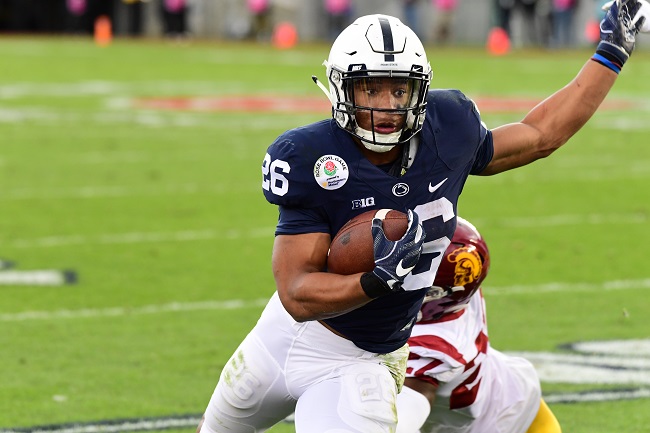
Pasadena, CA - January 2, 2017 - Rose Bowl: Saquon Barkley (26) of the Penn State University Nittany Lions during the 2017 Rose Bowl Game presented by Northwestern Mutual
(Photo by Scott Clarke / ESPN Images)
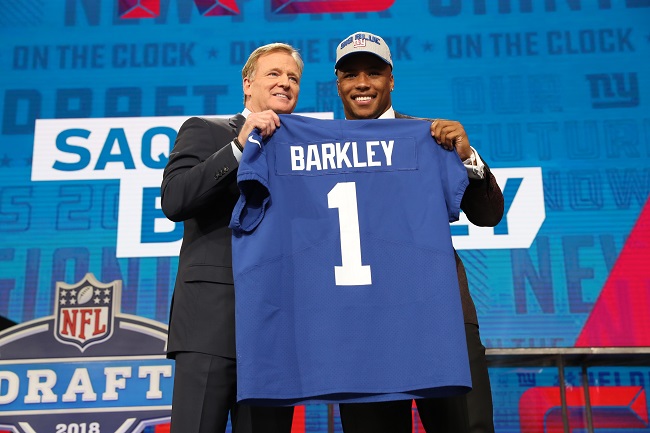
Penn State running back Saquon Barkley gets drafted to the New York Giants with NFL Commissioner Roger Goodall (Photo Credit: Allen Kee/ESPN Images).
Thursday, Apr. 26, 2018 is the day Penn State running back Saquon Barkley (#26) had envisioned. The football standout was selected by the New York Giants as the second overall NFL Draft pick in the first round.
The six-foot, Bronx, N.Y-born junior that shattered records with his quick cuts, sprinter form and mile-high leaps netted 53 total career touchdowns and 5,538 all-purpose yards. Barkley became the only player in Penn State’s history to gain over 3,000 rushing yards and over 1,000 receiving yards his entire college career. He was the highest drafted running back since Reggie Bush going to the New Orleans Saints in 2006. Barkley’s teammate, wide receiver Odell Beckham, Jr., was so impressed by the Giants’ latest addition, he even sent praises to Barkley via Twitter.
The Burton Wire sat for a chat with the 21-year-old exceptional talent and father of a newborn daughter, Jada Clare Barkley, when he was visiting Atlanta. The soft-spoken, poised student-athlete shortlisted for the Heisman Trophy flashed a pearly white smile for the duration of the interview.. Modest yet focused, Barkley already had a plan B – a career in broadcast journalism – if advancing to the pros didn’t pan out. Little did Barkley know, the four-star recruit’s jersey would go on to sell the most units on draft night than any other first round picks.
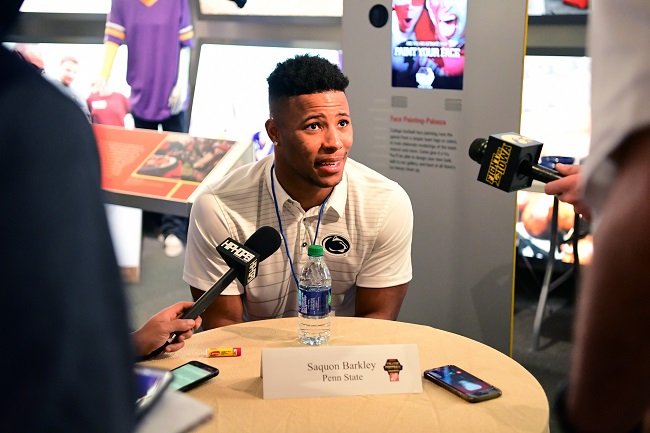
Not once losing his radiant, boyish smile the entire chat, Barkley, wearing a white Penn State polo shirt, shared how he maintains work/life balance despite hectic practice and game schedules, his broadcast idols and how choosing to become a Nittany Lion on the gridiron has made him a better person.
TBW: So you’re a journalism major. Talk about your course load and what encouraged you to declare that major.
SB: So I started off wanting to be a business major. I was undecided. A business major is hard to get into at Penn State obviously, especially with the workload and football. My goal in life is to play in the NFL. I am aware that the NFL is not forever. There comes a point in time where you have to start off a career, and I would love to talk about football as long as I can. You’re able to do that, especially with broadcasting, being a commentator, being an analyst. You guys give me a lot of practice, so as I grow and feel more comfortable, I would love to take it to another level where I could be on ESPN, Monday Night Football or College GameDay to talk about the sport because I love football. I love sports. I may not be able to play it forever, but I can talk about it for awhile. That’s kinda why I went into that area.
As far as class, the point I’m at right now really doesn’t have anything to do with what I want to do. We have News Media & Ethics – what’s ethically right, what’s ethically wrong. Next semester, that’s when I get into technology and being on camera. I took a Studio Communication class in high school, so I was able to work behind the camera: not really a big fan of that. I’d much rather be on TV.
Barkley makes a play during Rose Bowl in Pasadena, Ca. (Photo Credit: Scott Clarke/ESPN Images).
TBW: What journalists or commentators would you like to pattern yourself after? Who are you looking at as your muse to drive you towards your destiny?
SB: Someone that popped in my head is Michael Strahan because he’s not only doing sports. I forgot what that show is called…Good Morning America…he’s also on that. I see the Monday Night Football guys, the Dan Marinos and be on the sidelines like Matt Leinart with Fox Sports.
TBW: Between practice and making sure you’re performing well on the field, work/life balance can be a little difficult and stressful. How are you balancing your schoolwork and academics versus being on the field?
SB: Actually, it’s not as hard as people think, especially at Penn State. I know a lot of people can complain about that, but I do think Penn State does a great job of getting you adjusted to college as a freshman. So, when you come in as a freshman, you got 10 study hall hours mandatory throughout the week. That’s a lot, so you get to get adjusted to the college workload and playing sports. I was fortunate enough as a freshman to play and have some success. When you get to the next level your sophomore year, because of your GPA, you could go from 10 to 6. You could go from 10 to 0 or 10 to 3. It’s motivation because you don’t want to be in study hall that long.
We got the Morgan Academic Center; it’s beautiful, it’s new and they just built it. There are a lot of resources; you can go in there and write papers. You got tutors. You got it all. That’s another reason why I picked Penn State. I truly think it’s not as hard as you think. It’s hard, especially in the offseason, because you have morning workouts, and you’re tired. You have a lot of stuff that helps you balance it out. I forgot about the academic advisors, but they’re on you. They check your classes and check for grades. You’ve got to meet with them at least once or twice every week.
I don’t know how it is at every other school, but Penn State does a really good job of helping you adjust and balance your workload.
Barkley giving comments at the 2017 College Football Awards media day (Photo Credit: Phil Ellsworth/ESPN Images).
TBW: What’s your current GPA?
SB: That’s a good question; I don’t know what it’s going to be after this semester, but I think I’m at 2.9 or 2.8. I’m shooting for a 3.0; that’s the goal in our running back room. I’m not gonna sit here, lie to you and say I’m the smartest guy of all-time, but I’m a lot better than what I was in high school. I’ll keep pushing for that 3.0. Whatever happens, I’m going to make sure I get my degree.
TBW: What have you been able to improve on the most being at Penn State?
SB: It’s kinda off with school. What I think improved the most is speaking: not only in front of people but using better grammar and bigger words. You can fool someone just by making them think that you’re probably the smartest person in the world just by the way you talk. Another thing is talking to people and building relationships. I understand that relationships go a long way. The people that you meet, especially at Penn State, where the networking is so big along with their alumni association. It’s helping you to meet people that will help you set up better opportunities for the rest of your life.
This post was written by Christopher A. Daniel, pop cultural critic and music editor for The Burton Wire. He is also adjunct faculty in the Department of Mass Media Arts at Clark Atlanta University. Follow Christopher @Journalistorian on Twitter.
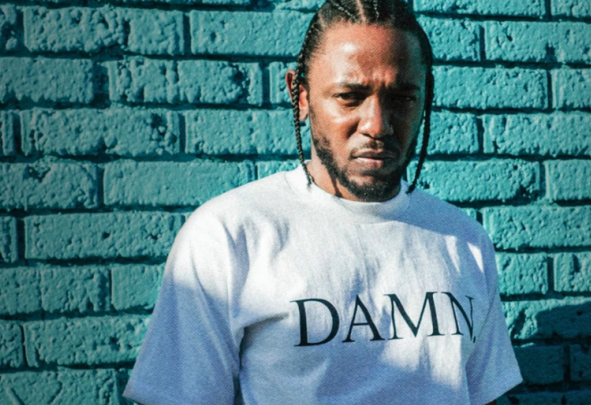
Kendrick Lamar wins the 2018 Pulitzer Prize for Music. (Google Images)
Kendrick Lamar wins the 2018 Pulitzer Prize for Music. (Google Images)
Sandra Gonzalez of CNNis reporting rapper Kendrick Lamar has won a Pulitzer Prize for his fourth studio album “Damn.” Lamar is the first rapper to win the music award. Previous award winners have come from the classical and jazz musical genres. Gonzalez writes:
https://youtu.be/QeFwtA3p4Mw
“Lamar’s politically charged performance at the Grammy Awards in January won him wide praise. ‘DAMN’ picked up best rap album at the award show. His song “Humble” also picked up best rap performance, best rap song and best music video.”
Lamar’s ‘Damn’ was described by the Pulitzer Prize selection committee as “a virtuosic song collection unified by its vernacular authenticity and rhythmic dynamism that offers affecting vignettes capturing the complexity of modern African-American life.”
Former president Nelson Mandela and Winnie Mandela after his release.
(Photo: Google Images)
Former president Nelson Mandela and Winnie Mandela after his release. (Photo: Google Images)
BBC Africa is reporting anti-Apartheid activist and freedom fighter Winnie Madikizela-Mandela has died. The former wife of South Africa’s first black president, Nelson Mandela, “succumbed peacefully in the early hours of Monday afternoon surrounded by her family and loved ones,” following a long illness, which had seen her go in and out of hospital since the start of the year,” said family spokesman Victor Dlamini.
The article reported retired archbishop and Nobel laureate Desmond Tutu praised her as a “defining symbol of the struggle against apartheid”.
“Her courageous defiance was deeply inspirational to me, and to generations of activists,” he added.
This story is developing. Read more on the BBChere.
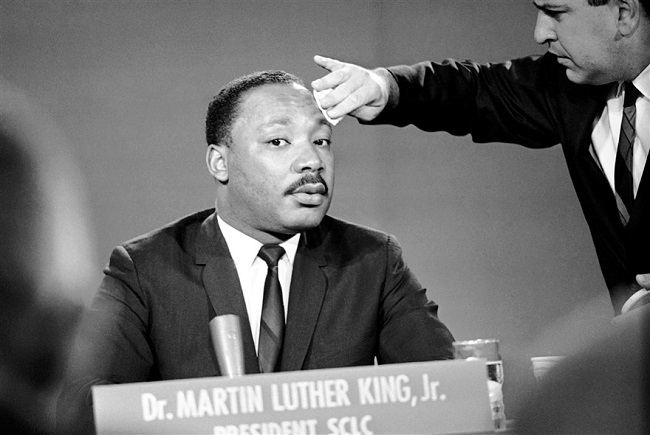
MLK, Jr. tapes a 1957 episode of NBC’s ‘Meet the Press’ (Photo Credit: Henry Burroughs/AP)
Six decades before social media and viral videos projected the unjust killings of African-Americans often by brutal police force, Dr. Martin Luther King, Jr. understood media, especially broadcast television, could raise public consciousness about racism and spark social change.
The NBC News/MSNBC documentary Hope & Fury: MLK, The Movement and The Media chronicles in stock photos, tear sheets and archived footage how Dr. King made both print and visual media a part of his plan to make society confront the horrors of racial bias and inequality.
The two-hour film revisits historic moments like the murder of Emmett Till, the Montgomery Bus Boycott, the Little Rock Nine integrating Central High School, lunch counter sit-ins, James Meredith integrating Ole Miss, the Freedom Riders and the Bloody Sunday march in Selma, Alabama. The timely documentary ties those movements into #BlackLivesMatter, the elections of former President Obama, a Facebook Live video capturing the murder of Philando Castille in real time and protests in Ferguson, Mo. and Charlottesville, Va., demonstrating the continuity of those landmark moments.
“Civil rights protests have entered the 21st Century,” says Hope & Fury co-producer and co-director Phil Bertlesen. “Dr. King’s strategies have inspired a new generation who fully understand that the struggle continues and are taking every advantage of technological advancement and human access to tell their own stories.”
Veteran journalist and Pulitzer Prize-winning author Hank Klibanoff concurs. “As this continues to go on, what we don’t know is what young people are going to be further motivated to go into journalism and tell these stories the same way that Moses Newson and L. Alex Wilson did,” says the Emory University professor of practice and consultant on Hope & Fury. “There’s a story to tell.”
Hope & Fury features insights and commentaries from journalists (Joy-Ann Reid, Gay Talese, Taylor Branch, Lester Holt, Klibanoff, Bryant Gumbel, Richard Valeriani, Chris Hayes and Tom Brokaw) and activists (Rev. Al Sharpton, Rev. Jesse Jackson, Ambassador Andrew Young, Rep. John Lewis and Rev. Dr. C.T. Vivian) who either worked alongside Dr. King or were directly inspired by his methodology.
“It was fully apparent that the story was continuing and the importance of good journalism was as vital as ever,” says Bertlesen. “The opportunity to show what social media has done, whether the use of personal cell phones and video, has done to fight injustice was very analogous with what Mamie Till did 50-plus years ago.”
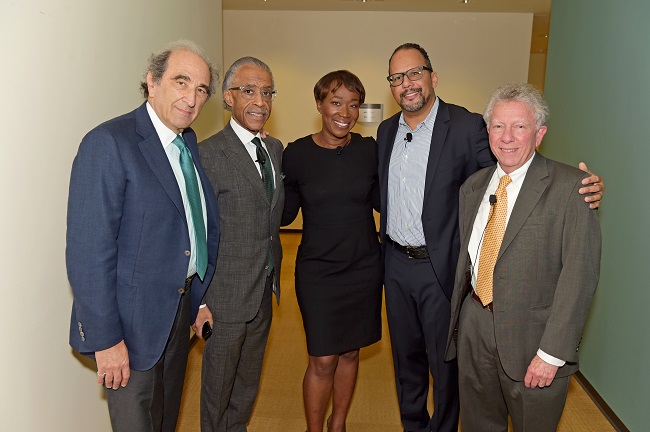
NBC News Chairman Andy Lack, Rev. Al Sharpton, Joy-Ann Reid, Phil Bertlesen and Hank Klibanoff attend a special screening of ‘Hope & Fury’ in Atlanta (Photo Credit: NBC News/MSNBC).
Taking a year to produce, Hope & Fury also highlights how important black media outlets like Jet, Ebony, The Baltimore Afro-American and The Pittsburgh Courier were in documenting and disseminating coverage on the devastating experiences African-Americans faced during Jim Crow. Rev. Sharpton believes both black press and network television encouraged audiences to have empathy for people of color.
“They had the audience; they would market and distribute to us,” says Rev. Sharpton. “They had the trust; they would tell the story because they knew the story: a story a lot of other Americans just didn’t know. What black media did was address it so everybody could see what we had to live everyday.”
Rev. Sharpton, the current host of MSNBC’s PoliticsNation and founder and current president of the National Action Network (NAN), continues: “We were trained if you can’t put it out there and make it a public issue, it will never turn into public law and policy. We would read Jet; we would read Ebony. They didn’t sell the New York Times in Brownsville, Bed-Stuy and Harlem where I grew up. They didn’t even distribute in our community. We’ve always had our own media; TV made it one channel.”
Hope & Fury is one of the special televised events that precedes and commemorates the 50th anniversary of Dr. King’s assassination on Apr. 4. Leaving a legacy synonymous with prophetic words and an optimistic vision for a more equal, inclusive America, the orator and strategist forced various communities to deal with graphic images of social dysfunction whether or not they wanted..
“For some people, it’s a story,” says Rev. Shapton. “For us, it’s a cause and a way of life. These are not families that, like me, chose to be activists. One day, something happened, and they’re suddenly in the middle of a tragic experience that a lot of us don’t understand. The genius of Martin Luther King, Jr. was he brought the human pain and put it in everybody’s living room.”
Hope & Fury: MLK, The Movement and The Media reairs Sunday, Apr. 1 at 10 p.m. EST on MSNBC.
This post was written by Christopher A. Daniel, pop cultural critic and music editor for The Burton Wire. He is also adjunct faculty in the Department of Mass Media Arts at Clark Atlanta University. Follow Christopher @Journalistorian on Twitter.
U.N. calls for investigation into Brazilian activist Marielle Franco was assassinated.
(Photo: La Republica)
U.N. calls for investigation into Brazilian activist Marielle Franco was assassinated. (Photo: La Republica)
Philip Reeves of National Public Radio (NPR) is reporting the U.N. is calling for an investigation into the assassination of Brazilian activist Marielle Franco. Franco campaigned for women’s rights and civil rights for black Brazilians while protesting lethal tactics used by Brazilian police. Reeves states:
“It’s been two weeks since Marielle Franco and her driver were shot dead in their car in Rio. The following day, tens of thousands of Brazilians took to the streets, demanding the killers be held to account and calling for an end to the bloodshed plaguing their society. So far, the police have made no arrests, and the violence is spreading.”
Protesters are hoping that an investigation will help end the violence spreading throughout the country. Five teenagers were recently killed execution style. The boys were members of a rap circle that critiqued these same issues. Some say it was random while others believe it is part of a campaign of terror against people speaking out against major issues like those Franco confronted.
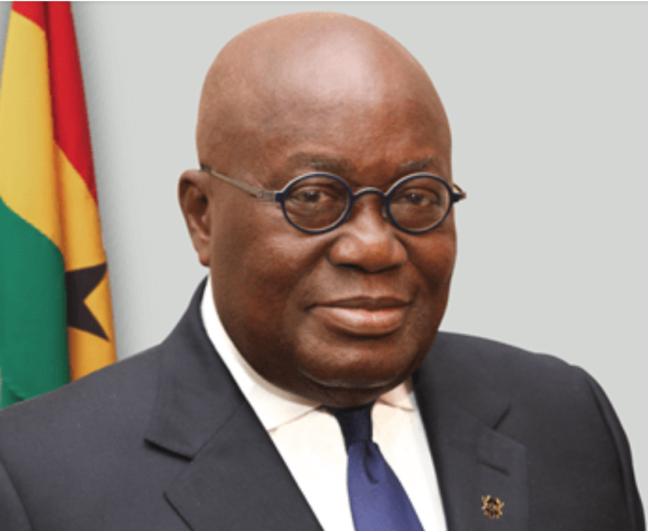
Nana Akufo-Addo, President of Ghana. (Photo: un.org)
Nana Akufo-Addo, President of Ghana. (Photo: un.org)
Thomas Naadi of BBC Africa is reporting students and politicians are joining forces to protest against a security cooperation agreement with the United States. Naadi writes:
“A group called Ghana First, made up students and politicians, gathered in the capital Accra to protest against a security cooperation agreement with the US.
Ghana’s parliament endorsed the controversial deal last Friday amidst opposition boycott and protest.
The protesters, numbering over 1,000, want President Akufo-Addo to reject the co-operation agreement.
The deal which will allow US forces and equipment to be deployed in Ghana is seen as undermining the country’s sovereignty.
It also requires Ghana to provide unimpeded access to agreed facilities and areas to US forces and their contractors.
Protesters are also unhappy that the US will be able to use Ghana’s radio spectrum for free and be exempted from paying tax on equipment imported into the country.”
Filmmaker and editor Samuel D. Pollard vividly remembers taking the subway from 96th Street to 72nd Street in his hometown, East Harlem, N.Y., as a kid. The further he traveled, the more the Emmy and Peabody award winner would notice how black people were less and less visible geographically.
Somehow convinced that his new surroundings were a sign of upward mobility, Pollard never wanted to be considered the elephant in the room, or what he calls “the black kid from East Harlem,” around his new company. “I wanted to be assimilated,” the gap-toothed documentarian said while rubbing his crossed legs. “I wanted to be a part of that white world.”
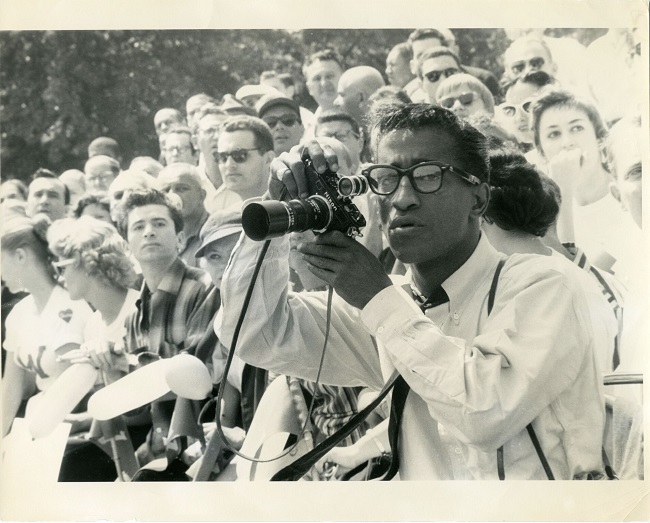
Pollard’s comments and second guesses about his racial identity brought his life full circle when he was asked by American Masters executive producer Michael Kantor to direct the feature documentary Sammy Davis, Jr.: I’ve Gotta Be Me. Timed at 100 minutes and taking 3 years to finance and produce, the first ever film to highlight Davis’s life explores and chronicles Davis’s (1925-1990) six decade career and journey to become one of the greatest and most influential entertainers of the 20th century.
I’ve Gotta Be Me closely examines how Davis, a self-proclaimed “colored, Jewish and Puerto Rican,” weathers the storms of racism and articulating his own racial and ethnic identities before both black and white audiences at the height of the Civil Rights Movement.
“He struggled with trying to find his place in America as a black man,” Pollard declares now rubbing his ankles minutes prior to I’ve Gotta Be Me’s Southeast premiere on the opening night of this year’s Atlanta Jewish Film Festival. “He grew up in a horrific time of segregation. He has all of this talent and wants to succeed but tries to negotiate the racial animosity that existed in the country then and still exists on a certain level today.”
Pollard divides the installment of the PBS profile series into chapters, exploring the complexities of Davis’s image and influence. Born in Harlem, N.Y. just like Pollard, the pint-sized performer is captured as a singer, dancer, rebel, leading man, activist, patriot and hipster. Massive amounts of stock images, performance clips and classic footage show Davis’s fancy footwork and position as the only person of color in The Rat Pack along with Frank Sinatra and Dean Martin.
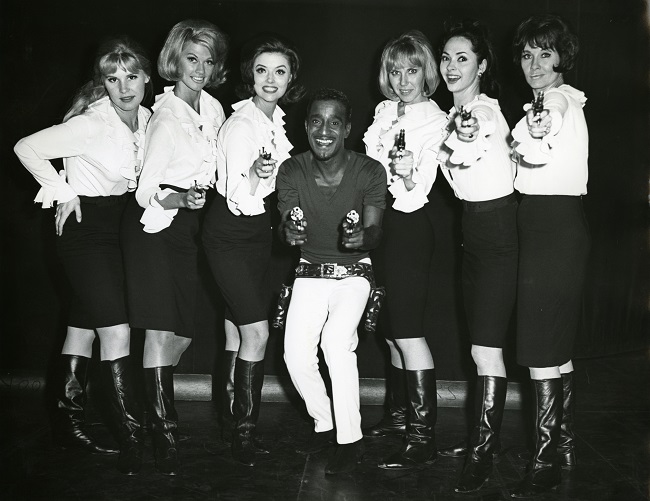
Davis poses with models (Photo credit: Menemsha Films)
An ensemble of comedians (Billy Crystal, Whoopi Goldberg, Jerry Lewis), actors (Diahann Carroll, Kim Novak, Tony Curtis, Harry Belafonte), producers (Norman Lear, Quincy Jones), writers (Jason King, Gerald Early, Max Rudin, Burt Boyer), scholars (Dr. Todd Boyd), historians, collaborators and members of Davis’ staff contribute testimonials and insights on Davis on-and-offstage.
Pollard, who created informative, intimate biographical sketches on vocalist Marvin Gaye, author Zora Neale Hurston, playwright August Wilson, musician John Coltrane and the much-anticipated feature documentary on the first black Atlanta Mayor Maynard Jackson, believes conveying the human connection on film is what resonates with viewers and structures a cohesive narrative.
“I want to try to find people that make the story as emotional as possible and find the emotional connection to the subject of the film to tell the story,” Pollard, both a film professor at NYU and one of Spike Lee’s go-to editors, said with a slight decrescendo in his voice.
I’ve Gotta Be Me depicts both seminal moments and obstacles that tested Davis’s popularity and sense of self. Performing in blackface as a kid, the Spingarn Medal recipient went on to become the first African-American to sleep in the White House in 1973. A near-fatal car accident in November 1954 caused the performer to lose his left eye. His 1972 cameo and kiss on the sitcom All in the Family is still one of primetime television’s landmark moments.
Davis’s financial contributions to the Civil Rights Movement, highly publicized romantic relationships with white women and visit to see soldiers in the Vietnam War made him a greater target: bombarding him with numerous death threats and attempts by Hollywood executives to blacklist him. He was considered a sellout among some black audience members. The entertainer’s indulgences – alcohol, cigarettes, luxury cars, opulent jewelry and expensive clothes – consumed him greatly until throat cancer ended Davis’s life on May 16, 1990.
“Sometimes in his need to feel accepted by the white community, he alienated the black community,” Pollard mentions. “Sometimes, he alienated the white community; it feels like a man without a country. With all of his talent, he was just as vulnerable and human as any of us are.”
Pollard continues, “You want to try to create a story where people can cry, laugh, be angry and be happy. You want the audience to feel what they had to confront and deal with to get to the level they got to.”
That same empathy Pollard wants viewers to have on the subject of his films is why he takes great pride in completing I’ve Gotta Be Me. He references his youth when he avidly watched Davis on The Ed Sullivan Show, The Merv Griffin Show and in Rat Pack films like Ocean’s Eleven, Sergeants 3 and Robin and the 7 Hoods.
Referring back to his own bouts with his ethnic identity, Pollard says he realizes filmmaking can be a vehicle for inspiring new generations of youth to be proud of who they are. “It’s the same thing that Sammy struggled with,” Pollard confirms.
“Many of us young black people struggle with America telling you to assimilate, be American or forget where you come from. If you forget, you learn as you get older to not forget where you come from. Cement your sense of identity; you could become lost.”
Pollard concludes: “When I do these films, I look at who these people are that I’ve dissected and see how it impacts who I was, how I am and what I hope to be. I hope these films inform a younger generation of African-American men and women to see what Sammy had to go through and how they deal with their place in this immoral world of America, which is always important for us to negotiate and understand.”
This post was written by Christopher A. Daniel, pop cultural critic and music editor for The Burton Wire. He is also visiting faculty in the Department of Communication at Georgia State University. Follow Christopher @Journalistorian on Twitter.
Caribbean 360 is reporting Fyre Festival promoter Billy McFarland plead guilty to fraud, admitting in a Manhattan (NYC) court he had falsified documents, defrauded 80 investors and a ticket vendor to the tune of $26 million.
Billy McFarland. (Google Images)
McFarland co-founded the music festival with Hip-Hop star Ja Rule. The festival was supposed to take place on the Bahamian island of Exuma in April and May of 2017, but never happened due to many tactical errors. Festival attendees who shelled out $12,000 per ticket, were left stranded without adequate food, water and accommodations. The festival was eventually cancelled.
The New York Times is reporting Ghana is a contender for having one of the world’s fastest growing economies. Ghana’s status change from struggling economy to robust economy is due to the rapid expansion of the nation’s oil production and cocoa.
NYT’s Tim McDonnell reports:
“…as oil prices rise again and the country’s oil production rapidly expands, Ghana is on track to make a remarkable claim for a country mired in poverty not long ago: It is likely to have one of the world’s fastest-growing economies this year, according to the World Bank, the African Development Bank, the International Monetary Fund and the Brookings Institution.
Its projected growth in 2018, between 8.3 and 8.9 percent, might outpace even India, with its booming tech sector, and Ethiopia, which over the last decade has been one of Africa’s fastest-growing economies thanks to expanding agricultural production and coffee exports.
According to the I.M.F.’s projections, only Bhutan, with a minuscule economy, and Libya, whose war-ravaged economy plunged in recent years, may have a higher rate of growth this year.
In January, Ghana’s benchmark stock index achieved the world’s highest rate of growth, 19 percent, according to Bloomberg.”