Home Blog Page 47

Anchor 1.0: ‘Wavers’ Lose Community With 1.0 Shutdown

0
(Google Images)
(Google Images)

The announcement came from Anchor team member Nir on a Monday, June 26. By Wednesday, June 28, Anchor 1.0 would be no more. The original beacon of collective voices would disappear into a vortex, like an old TV with a bad vacuum tube.

Founded in 2015 from a tiny apartment in New York City, Anchor is a radio app that allows users to create stations and post audio content. There were two versions for a time, Anchor 1.0 and Anchor 2.5.2, until the team decided 1.0 had outlived its usefulness.

For a segment of the Anchor community, Nir’s announcement functioned like a funeral elegy. So, in its final hours, a handful of the app’s OGs gathered on 1.0  for a virtual wake-keeping and libation pouring, decrying their devotion to the space that had provided entertainment and solace.

Barbara Kolbe Baker, a Cincinnati-based marketing strategist, noted a number of reasons for her love of the first version.

“Part of what was interesting about the last gang on [Anchor 1.0] was that there were people from all over. People stayed because they wanted to engage,” Baker said. “Now, it’s more of a listening app, not so much of an engagement app.”

She also noted a voyeuristic reason for remaining on 1.0 — to observe its demise.

“I made a commitment to stay on Anchor 1.0 because I was going to watch the death of an app. I was curious as to what they were going to do with this ‘rogue’ community.”

The remaining ‘renegades’ on Anchor 1.0 was its lifeline, some refusing to transition to other apps despite the state of limbo. The uncertainty is what troubled tech consultant Avie Uniglicht. He feels that a lack of communication from Anchor developers led to misunderstanding from the users.

At the same time, Uniglicht recognizes that Anchor is, at its core, a business.

“As a tech guy I understand the process. I’m fine with Version 2, but was not fine with their communication style [about it],” said Uniglicht.

“We as users made it interactive, even if Anchor did not intend it this way. But does it make for a business, can it be monetized? Those are the questions.”

For Kevin Williams in Los Angeles, the engagement and connections are what made 1.0 endearing.

“There was the illusion of intimacy. You felt like you were telling something to just one person, though it was available publicly. People got to know you through listening to your feed and other people’s feeds.”

It’s reasonable that social media users would experience a sense of loss when an app goes kaput, similar to losing a friend. This may come from the perception that the connections made through the app will also fizzle.

Retired professor, psychotherapist and relationship coach Dr. Debra Nixon affirms this, citing the human need for interaction.

“It’s like losing something,” Nixon says regarding what people experience when social media apps fold. “We need people in a way we don’t often admit. So social media gives us an opportunity to get connected.”

There’s also another aspect – the fact that change is difficult.

“Change is always hard,” says Nixon. “It’s as if a sense of certainty is lost. They had a community, and they liked the way it was working.”

As an avid “waver”, I hadn’t thought much the demise of 1.0, but I did feel nostalgic listening to audio threads that recalled good times as the final hours crept closer.

This is not the first social app to pivot, and will not be the last. It’s not about the platform, it’s about the people. See you on Anchor 2.5.2.

This post was written by Dr. Chetachi A. Egwu, Communication Faculty at University of Maryland University College.  Her scholarship focuses on media, tech and pop culture and the African image in film, with an emphasis on documentary. The Howard University alumna is the host of the livestreamed show MediaScope, co-host of the podcast TV Channeling and owner of Conscious Thought Media. Follow her on Twitter @Tachiada.

Follow The Burton Wire on Instagram and Twitter @TheBurtonWire.

American Koko: Watch Second Season of Viola Davis Web Series

0
(Photo: Google Images)

ABC‘s streaming service has launched the second season of ‘American Koko,’ the web series produced by Viola Davis and Julius Tennon. The series follows the character of Akosua Millard, played by show creator Diarra Kilpatrick, who solves racially tinged crimes through the E.A.R. (Everybody’s a Little Bit Racist) agency. Amanda N’Duka of Deadline interviewed Tennon about the series, whose second season debuted on Juneteenth.


Tennon stated:

“Race has always been a issue in our country. Now, in our current political climate, a show like American Koko, which is about helping people navigate sticky racial situation, creates a conversation around race in an insightful, funny, and interesting way. The conversation around race should be as open as they can be. It can create some situations for solutions on how people view race. It’s going to be a show that addresses a lot of things people don’t talk about, so they’ll learn something.”

Read N’Duka’s article in entirety on Deadline.

Watch American Koko on ABC Go.

Follow The Burton Wire on Instagram or Twitter @TheBurtonWire.

Fourth of July: James Earl Jones Reads Frederick Douglass Speech

0
Legendary thespian James Earl Jones reads Frederick Douglass' historic speech critiquing Fourth of July. (You Tube screen shot)
Legendary thespian James Earl Jones reads Frederick Douglass’ historic speech critiquing Fourth of July.
(You Tube screen shot)

Democracy Now‘s Amy Goodman talks Frederick Douglass’ July 5, 1852 address to the Rochester Ladies Antislavery Society entitled, ” “The Meaning of July Fourth for the Negro.” Watch legendary thespian James Earl Jones read Douglass’ historic speech which reflects the challenges surrounding the issue of race still facing America.

Follow The Burton Wire on Instagram or Twitter @TheBurtonWire.
#HalalPaint: Orly Launches Nail Line for Muslim Women

0
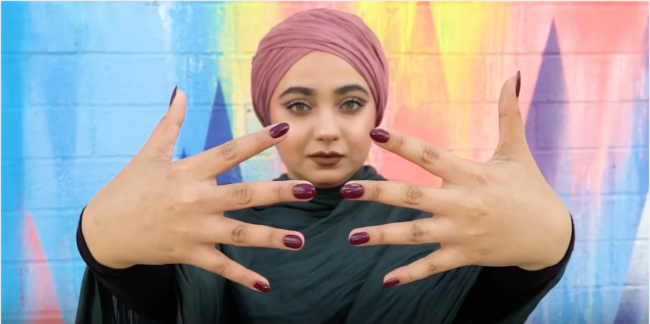
Orly launches #HalalPaint nail polish line for Muslim women and girls. (Photo: Screenshot)
Orly’s new line #HalalPaint is made for Muslim women.
(Photo: Orly)

Perri Konecky of Pop Sugar is reporting nail company Orly has launched a new line #HalalPaint that makes “breathable” nail polish so Muslim women can wear nail polish. The line which is created by Muslim women for Muslim women can be worn by anyone. Konecky reports:

“Many Muslim men and women are not able to wear regular nail polish because it conflicts with prayer practices. The coats of polish are believed to create a barrier over the skin, which prevents water from touching every part of the body during ablutions, but Orly’s new polish collection offers a solution. In an effort to bridge the diversity gap in the beauty world, the polish brand has teamed up with Muslim Girl to release a new collection of six halal-certified polishes, all of which let oxygen and moisture pass through the polish.

The Breathable line called #HalalPaint features adorably sassy polish names like Haram-Bae, The Perfect Amani-Cure, What the Fatima?, Ig-Noor the Haters, and more, named by MuslimGirl.com founder Amani Al-Khatahtbeh and the Muslim Girl team.

‘This line is important because there are so many girls and young women who aren’t represented in mainstream beauty,’ Azmia Magane, Muslim Girl chief of staff, said in a press release. ‘They either don’t fit that definition or see things about them that are designed without them, instead of for them and by them. This is our way of bridging the gap.'”

Read more at Pop Sugar.

Follow The Burton Wire on Twitter or Instagram @TheBurtonWire.

Breaking: Morehouse College Interim President Taggart Dies

0
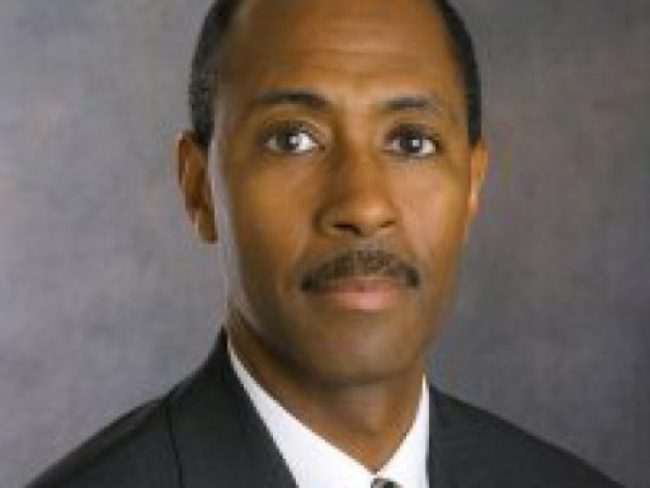
Morehouse Interim President Bill Taggart dies. (Photo: Google Images)
Morehouse Interim President Bill Taggart has died. (Photo: Rolling Out)

Eric Sturgis of the Atlanta Journal Constitution is reporting Bill Taggart, Morehouse College’s interim president, has died. Sturgis reports:

“The Fulton County Medical Examiner’s Office told The Atlanta Journal-Constitution an autopsy will be conducted Thursday. Taggart was named interim president in April. The college’s board of trustees released the following statement to The Atlanta Journal-Constitution:

‘We are deeply saddened by the sudden passing of Bill Taggart, a beloved colleague, father and friend. For the past two years, Bill devoted himself wholeheartedly to Morehouse College. We are eternally grateful for his loyal support, counsel and the leadership he provided to students, faculty and alumni. Throughout his tenure, Bill had a positive impact on Morehouse College and the Greater Atlanta Business Community. He leaves behind a long legacy of compassion, integrity and devotion.’”

Taggart was previously COO of Wachovia Securities, LLC, COO of Federal Student Aid at the Department of Education and President and CEO of Atlanta Life Financial Group. Taggart’s wife Lydia Rose Roston Taggart passed away in 2013. He is survived by their daughter Elizabeth Fortune Taggart.

Read more at AJC.com.

Follow The Burton Wire on Instagram or Twitter @TheBurtonWire.


G7 Summit: Migrant Landings Banned During Conference

0
Photo: G7 Tormina logo (Google Images)
Sicily, Italy (Google Images)

Crispian Balmer of Reuters Africa is reporting migrant boats that typically land in Sicily will be banned during the 43rd G7 being held May 26-27 in Taormina (ME). The main G7 countries include Canada, United States of America, United Kingdom, France, Germany, Italy, Japan and the European Union. Invited guests include Ethiopia, Kenya, Tunisia and Nigeria. The mission or theme of this year’s summit is “Building the Foundations of Renewed Trust,” which will try to address citizen’s mistrust of governments. One of the main goals of the summit is to stress that “governments should first and foremost adopt policies aimed at meeting their citizen’s overall expectations.” Does the migrant boat ban mean that the plight of African migrants will be ignored?

Balmer reports:

“A common sight off Sicily in recent years, the authorities have banned all migrant landings on the island during the Group of Seven Summit for security reasons, telling rescue vessels that pick them up at sea to take them to the mainland during the two-day meeting.

Out of sight does not mean out of mind. Italy chose to host the summit in Taormina, on the cliffs of eastern Sicily, to concentrate minds on Europe’s migrant crisis and to seek ways of developing Africa’s economy to hold back the human tide.

‘Africa is very important for us. Indeed, it is perhaps the focus of our G7 presidency,’ said Raffaele Trombetta, the senior Italian diplomat who has led behind-the-scenes negotiations on the G7 agenda with colleagues from the United States, Japan, Germany, Britain, France and Canada.

‘We don’t just want to talk about crises, like migration and famine, but also to promote innovation in Africa and see what we can do to help,’ he told Reuters.”

Read more of Crispian Balmer’s story at Reuters Africa.

Follow The Burton Wire on Instagram or Twitter @TheBurtonWire.

OPINION: Let Go Of Our Girls Hair and Let Our Girls Learn

0
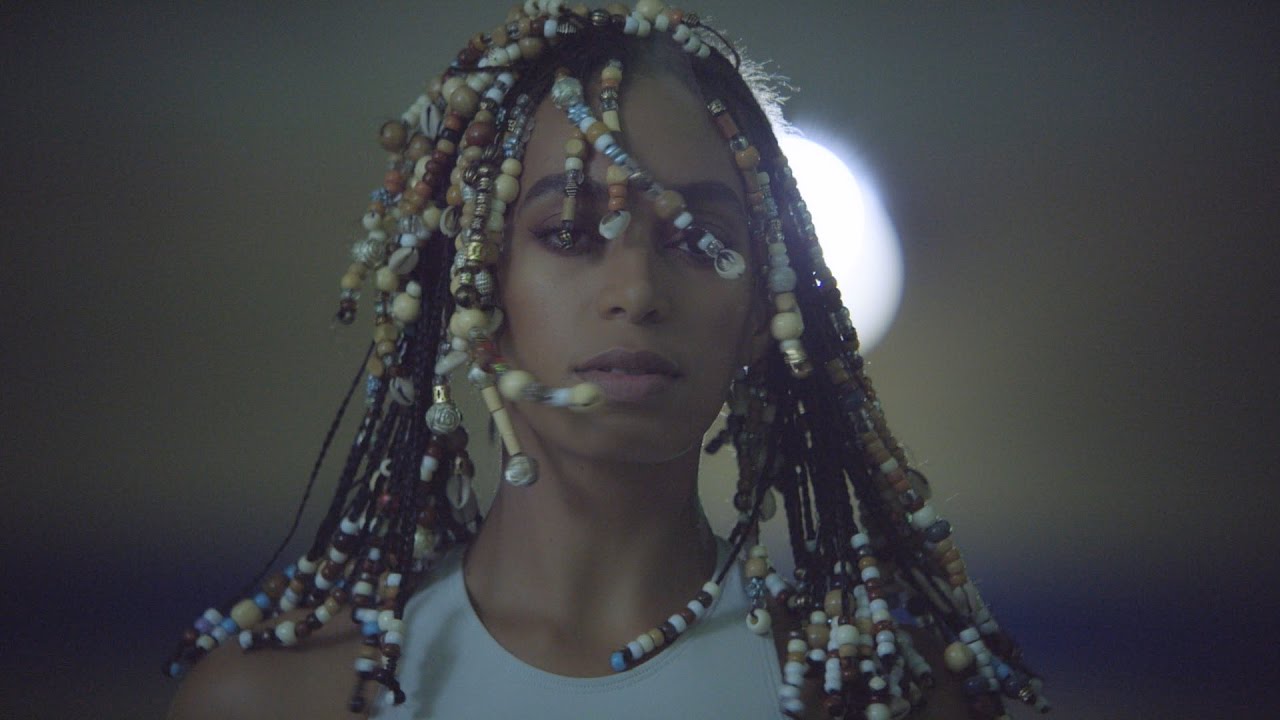
Solange Knowles, "Don't Touch My Hair." (Photo: Screen shot of YouTube video)

Writing for The Root, The Burton Wire‘s founder & editor-in-chief Nsenga K. Burton, Ph.D., discusses the growing number of cases of black girls being punished at school for wearing natural hair styles. Dr. Burton calls out “educators” for policing black girls bodies which is the only thing unnatural about wearing natural hairstyles. Check out an excerpt below:

EXCERPT

In recent weeks, there have been a number of news stories about black girls being discriminated against at school for wearing natural hairstyles. In July 2016, a news story went viral about a school in Pretoria, South Africa, banning black girls from wearing natural hairstyles like Afros because they were “untidy” and “unladylike.”

In March 2017, twins Grace and Thabisa, who are of South Sudanese descent, were pulled out of their classes at Bentleigh Seconday School in Melbourne, Australia, and told to remove their braids because it didn’t “represent the school.” After an uproar from parents who said the policy was an attack on African culture, the girls were allowed to return to school.

Last week, there was a story about twins Maya and Deanna Cook, students at Mystic Valley Regional Charter School in Malden, Mass., who were kicked off their sports teams and prohibited from attending a prom because they wore their hair in braids.

The school said that the girls were in violation of the dress code for wearing their hair in an “unnatural” way, which includes braids. The girls were also placed in detention for two weeks for refusing to change their hair, and other black students were singled out for hair inspections…

So why are black people in general and black girls specifically being targeted?

 The Petty Pendergrass in me thinks that some folks are jealous because they don’t have the versatility that natural hair affords black women. We can loc, twist, cut, grow, curl, weave, braid, shave—pretty much do anything we want with it and look good doing it. If natural hairstyles worn by black girls are so bad, then why are white celebrities like Fergie, David Beckham, Juliette Lewis and the Kardashians celebrated for wearing them?

The academic in me knows that there’s something more occurring: the targeting of black girls for whatever infraction—perceived or real—of normative worldwide behavior. Historically, the bodies of young black girls have been policed, touched, harassed and violated—legally. See slavery. See segregation. See the civil rights era. See the post-civil-rights era. See the new millennium. See Halle Berry’s unwanted kiss from Adrien Brody at the 2003 Academy Awards. See the kidnapped girls of Chibok, Nigeria. If you think that a focus on people touching black women inappropriately, especially when it comes to our hair, is a stretch, then listen to Solange’s song “Don’t Touch My Hair” for a recent testimony.

What is happening to our girls now is not a stretch. In fact, it is part of the fabric of our country and its institutions…

EXCERPT ENDS.

Read the entire article at The Root.

Follow The Burton Wire on Instagram or Twitter @TheBurtonWire.

Habari Gani: How to Greet in Africa’s Top 10 Languages

0
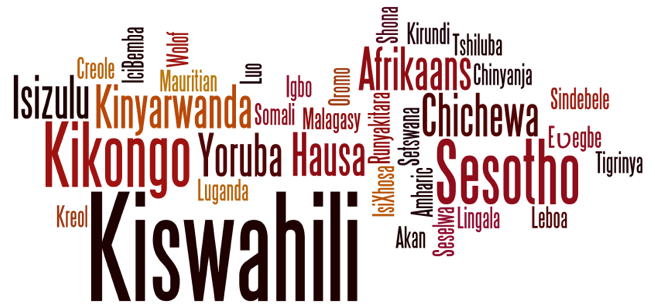
Screen Shot of Language Cloud. (Google Images)
Graphic: Nationsonline.org

Africa.com has done a great service for travelers who may find themselves in one of the continents 54 countries by creating a Top 10 list of greetings in Africa’s most used languages. The top 10 languages spoken other than English and Arabic (more than 100 million speakers) are Swahili, Amharic, Yoruba, Oromo, Hausa, Igbo, IsiZulu, Shona, Portuguese and French.

The author writes:

“Africa is home to the highest linguistic diversity in the world with over 1500 different languages. Even though the continent has a wide range of languages, the principal languages found across all 54 countries include Arabic, French and English. Interesting facts to know about languages in Africa is that they form part of four language groups, namely Afro-Asiatic covering Northern Africa, Central Sahara and the Horn of Africa, Nilo-Saharan covering Central and Eastern Africa, Niger-Congo covering Central, Southern and Eastern Africa and Khoisan, covering the western part of Southern Africa.” 

Check out a few of the ways to greet people in African languages below:

Swahili

Hello – “Hujambo,” but if you’re greeting elders or people older than you, say “Habari,” which also means “Good morning.”

How are you? – “Habari gani”

I am fine – “Nzuri”

Thank you – “Asante,” and “Thank you very much” is “Asante sana.”

Amharic

Hello – “Selam” or “Iwi selami newi.”

How are you? – “Inidēti nehi?” or “tenastalign?”

I am fine – “Dehina nenyi.”

Thank you – “Ameseginalehu.”

Yoruba

Hello – “Ẹ nlẹ o” for a general greeting; however, when greeting elders, the general greeting is “E nle ma” for women and “E nle sir” for men.

How are you? – “Ṣe daadaa ni o wa?” or “Bawo ni o se wa?”

Thank you – “E dupe” or “O se” or “E se.”

IsiZulu

Hello – “Sawubona” when greeting one person and “Sanibonani” when greeting two or more people.

How are you? – “Unjani?” but when asking elders, you say “Ninjani?”

I am fine – “Ngiyaphila”

Thank you – “Ngiyabonga.”

Learn more about African languages and greetings at Africa.com.

Follow The Burton Wire on Instagram or Twitter @TheBurtonWire.

2017 NAB Show: Explores the Intersection of Media, Tech & Entertainment

0
Golden Globe award-winning actress America Ferrera receives NAB Television Chairman’s Award. (Photo: Chetachi Egwu)
Golden Globe award-winning actress America Ferrera receives NAB Television Chairman’s Award.
(Photo: Chetachi Egwu)

The lights on the infamous Las Vegas strip were not all that shone brightly last week. In addition to serving as an advocacy group for American broadcasters, the National Association of Broadcasters (NAB) touts the largest forum of electronic media in the world, The NAB Show. An estimated 100,000 participants descend upon Las Vegas each April to engage in the business of media creation, delivery and consumption across platforms. This year’s event boasted 103,443 registered participants from 161 countries, about 1806 exhibitors in 1,091,792 net square feet of space, and numerous sessions and keynotes with media notables. The NAB Show event serves as the quintessential venue for anyone in the broadcast and entertainment industries.


Flying drone at 2017 National Association of Broadcasters Show.
(Photo: Chetachi Egwu)

This year’s theme, the M.E.T. Effect (Media, Entertainment and Technology), examined convergence, communities and transformation and what M.E.T. means for the future of media, whether it be bringing in some of the ideas that VANTIQ sees in the business technology world or by changing the public perception at play. While it was impossible to see everything at NAB, allow me to point out some show highlights:

ATSC 3.0/Next Gen TV

The industry’s new broadcast standard went from last year’s conversation to this year’s demonstration, prominently featured on the Grand Concourse of the Las Vegas Convention Center. So what is Next Gen TV? Essentially, it allows for, two-way communication, live data delivery to multiple places (cars, homes, televisions, mobile devices) and can carry high dynamic range 4K TV, among other things. This takes it steps above the current over-the-air system, making for a richer viewing experience. The standard is currently being finalized in the U.S.

4K Livestream – From Space

On Day 3 of the show, a crowd of about 300 people was treated to the first-ever 4K livestream from space, thanks to a partnership between NASA and Amazon Web Services (AWS). The crowd cheered loudly as astronauts Peggy Whitson and Jack Fisher spoke from space, making live stream history.

NAB Television Luncheon

It was evident that recognition of diverse voices is still some part of the NAB conversation. The honorees at this year’s Television Luncheon were actor/activist and star of ABC’s ‘Superstore’ America Ferrera, and longtime Univision journalist Maria Elena Salinas. Ferrera earned the NAB Television Chairman’s Award and Salinas was inducted into the NAB Hall of Fame.

Virtual Reality gets social

One of the more talked about aspects was VR,AR and 360 video. From the M.E.T. 360 Pavillion on the concourse to vendors providing VR experiences, the VR, AR and 360 are starting to span beyond just being ‘cool’ to practical applications in advertising and medicine. One of my favorite experiences was Canon’s 60-foot Virtual Reality Dome. Virtual reality is usually a solitary experience, but leaning back in a comfy bean bag chair with 17 other people makes it more collective. Though the resolution could have been sharper, it won’t be long before this is the standard for the movie-going experience.

Live video is the new static

In addition to industry mainstays like Teradek and Live U who offered the latest in affordable livestreaming solutions, there were numerous sessions and dozens of media publications and personalities using Facebook Live (who had their own pavilion at the show), YouTube and Periscope to share the show floor with the outside world, present company included.

…and podcasting is still the new black

The success of the podcast ‘Serial’ and spin-off ‘S-town’, and the fact that the podcast ad market is projected to hit $250 million in 2017, has sparked even more interest in the platform. As such, there were sessions aimed at audience building, monetization, and radio using podcasts for growth.

The biggest takeaway? In this age of vilifying “the media”, and despite skeptics, that media matters, perhaps more than ever.

This post was written by Dr. Chetachi A. Egwu, Communication Faculty at University of Maryland University College. Her scholarship focuses on media, tech and pop culture and the African image in film, with an emphasis on documentary. The Howard University alumna is the host of the livestreamed show MediaScope, co-host of the podcast TV Channeling and owner of Conscious Thought Media. Follow her on Twitter @Tachiada.

Follow The Burton Wire on Instagram or Twitter @TheBurtonWire.