Caribbean 360 is reporting Haiti’s president-elect Jovenel Moïse, who was announced as winner of last month’s presidential election, is still facing challenges from opposition parties. The author writes:
“Three opposition parties have been successful in challenging the November 20 election results which saw the banana exporter, who was chosen by former president Michel Martelly to represent his party, taking 55.67 per cent of the vote.
The country’s electoral court last night ordered a review.
The three main opposition candidates — Jude Celestin who won 19.52 per cent of the vote, Jean-Charles Moïse who got 11.04 per cent and Maryse Narcisse who managed only 8.99 per cent — challenged the tally giving more than 55 per cent of the November 20 vote to Moise, , Tet Kale (PHTK).
Judges for the National Bureau of Electoral Litigation (BCEN) said they considered it ‘necessary to shine a light to establish the truth’ and therefore ordered the ballots to be ‘transported to the tabulation centre for the verification of 12 per cent of the results.’
The decision followed lengthy arguments by lawyers for the opposition candidates and more than five hours of deliberation by the judges.”
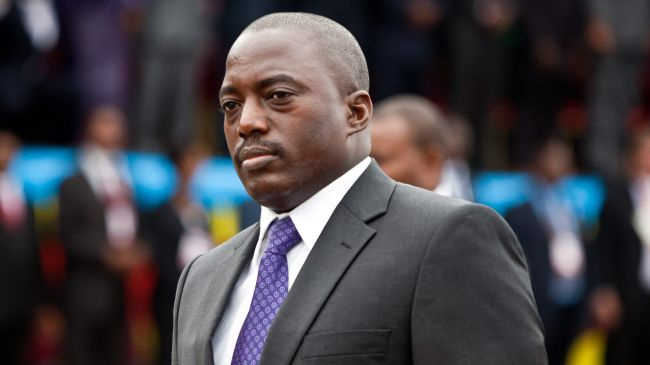
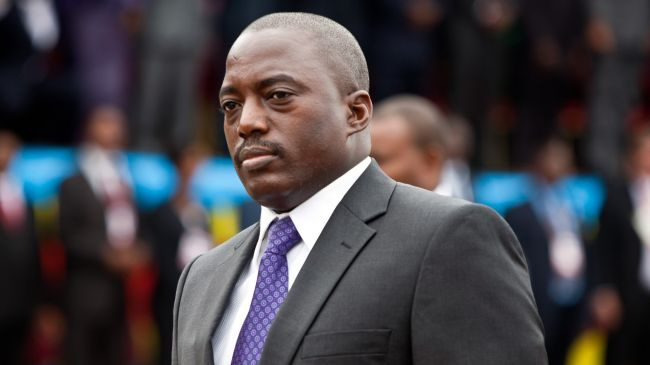
Democratic Republic of the Congo President Joseph Kabila is refusing to step down at the end of his term.
(Photo: Flikr/Creative Commons)
Democratic Republic of the Congo President Joseph Kabila. (Photo: Flikr/Creative Commons)
Reuters Africa is reporting security forces in Democratic Republic of Congo killed at least 34 people during protests this week against President Joseph Kabila’s refusal to step down at the end of his mandate.
The author writes:
“Congo’s capital Kinshasa and other cities were convulsed by violent demonstrations on Tuesday as Kabila, in power since 2001, reached the end of his second term in office without an election in place to choose his successor.
Human Rights Watch (HRW)’s Central Africa director said on Twitter that the deaths, including 19 in the capital Kinshasa and five in the southeastern mining hub of Lubumbashi, happened at protests early on Tuesday and HRW was verifying reports of more deaths.”
Hip-Hop legends Salt ‘N Pepa’s seminal album Hot, Cool and Vicious turned 30 years old this week (Dec. 8, 1986). Hot, Cool and Vicious featured the neighborhood anthems, “The Showstopper,” “My Mic Sounds Nice,” “I’ll Take Your Man,” and “Tramp.” The album was re-released in 1987 and the all-girl collective crossed over with their hit single “Push It,” propelling the album to platinum status. Ironically, the group was nominated for a Grammy for best rap single by an artist or duo in 1989, two years after the song had been an international success and three years after the album had become a Hip-Hop classic. Nonetheless, Hot, Cool and Vicious helped cement the group’s status as Hip-Hop legends when they became the first American female rap group to go gold and then platinum.
The original group was composed of Cheryl James (Salt), Sandra Denton (Pepa) and Latoya Hanson, who was replaced by Deidra Roper (Spinderella). The trio went on to make five albums before disbanding in 1999, winning a 1995 Grammy award for Best Rap Performance by a Duo or Group for “None of Your Business,” from their 1995 album Very Necessary. The group got back together in 2005, were part of a reality show and went out on the Legends of Hip-Hop national tour in 2011.
Check out some of their hits from their seminal album Hot, Cool and Vicious and five albums below:
This post was written by Nsenga K. Burton, Ph.D., founder & editor-in-chief of The Burton Wire. Follow her on Twitter @Ntellectual.
Zadie Smith has written several novels, including On Beauty, which was shortlisted for the Man Booker Prize in 2005.
Zadie Smith has written several novels, including On Beauty, which was shortlisted for the Man Booker Prize in 2005.
Fresh Air Weekend highlights an interview between host Terry Gross and internationally-acclaimed novelist Zadie Smith. Smith, whose first novel White Teeth won the Whitbread First Novel Awardand was a finalist for the National Book Critics CircleAward talks about her latest novel Swing Time, which tells the story of two girls who dream of becoming dancers, but one only has the talent to do so. Smith reads an excerpt from the novel. Listen below:
On October 27, Tiffany Martinez, an aspiring professor posted “Academia, Love Me Back,” to her blog, as a response to the wave of emotions she felt when a professor circled “hence” on her paper and wrote “this is not your word.” Her professor’s “blue pen was the catalyst that opened an ocean of self-doubt” (Martinez). Temporarily paralyzed from working on her next assignment, Martinez turned to her blog to vent. When I read her story, I read my own journey towards a PhD. Seeing my reflection, I wanted to hold the mirror up to other young brown and black women with similar goals and, in my Beyoncé voice, urge them to getin formation and to use instances such as these as catalysts for greatness, instead of self-doubt.
Like Ms. Martinez, I too aspired to be a college professor and was judged on my appearance. The first day I reported to my master’s program in English Literature, my advisor informed me that I couldn’t possibly have a graduate assistantship. “They are highly competitive” he assured me. Like Martinez, “my appearance immediately instill[ed] a set of biases . . .” I nervously held up a piece of paper and petitioned, “But I have the letter they sent to my mom.” At that moment his face turned bright red. He had suddenly realized his mistake. “Wha-what’s your social security number?” he asked, as he typed frantically on his keyboard. And then he turned white. Ghost white. “I-I’m so sorry, Rachel. Yes, of course you have a full scholarship,” he stammered as he continued with some lame excuse for the mix up.
This man didn’t know me from Eve and assumed I didn’t have the chops to compete. I was disheartened. So what did I do? I twirled on my haters. I concentrated on narratives written by women of color and completed my coursework a semester early.
I dream it, I work hard, I grind ‘til I own it.
Later, in my PhD program, I was encouraged to research the problems of black women (since I wanted to study us so badly). Nope. I wanted to study what we do right. I basked in the work of Sarah Lawrence Light-Foot, esteemed African American sociologist at the Harvard Graduate School of Education, and discovered that she had developed her own methodology. Portraiture. I used her foundation to write the narratives of middle-class, college educated, Black women who were leading their communities on holistic practices.
I stunt, yellow bone it.
Doctoral programs typically give students 7-10 years to complete the dissertation and coursework. This particular program was accelerated and students could possibly complete it in three. In my second year, my then- husband and I found out we were expecting. Then the comments came, “Good luck finishing on time now” from some of my peers.
Catch my fly and my cocky fresh
I birthed my baby and my dissertation the same year and I was the only person of color in my class to finish “on time.”
Prove to me you got some coordination
With each disparaging word I made my way. I stayed in connection with supportive women and to spirit. I kept writing and empowering myself to supersede any perceived limitations. And for those of you like Ms. Martinez and myself, you’ll need to do the same. Keep writing your stories and shining a light on instances where others attempt to make you feel inferior. Align yourselves with professors of color and white faculty advocates who might be feeling just as isolated as you and can help you navigate rough waters. Trust me, I sat at their feet and drank from their wells of wisdom when I felt overwhelmed. Hence, I sought support.
We gone slay
Reach out to like-minded peers and create a game plan. Make a pact with other women who have similar goals as you.
Be good to yourself. Exercise, rest, and eat well. Talk to a mental health counselor and/or a spiritual advisor if needed so that you don’t begin to internalize the negativity of others.
Martinez wrote, “The entire field of academia is broken and erases the narratives of people like me.”
And this is why we have to continue to write ourselves in it. Tell your stories. Go off. Go Hard. Write yourself to wellness and graduate with honors.
In the end, the best revenge is yo’ paper.
Rachel Panton, PhD is a wellness writer and founder of Write my Life Memoirs. She is the creator and co-editor of the forthcoming book, Sassin’ through Sadhana: Narratives of Black Women Yoginis. Dr. Panton is a Lecturer at the University of Miami. Follow Dr. Panton on Twitter @rachelpantonPhd.
Turkey Day is officially over and the march to holiday season is on! No matter what religion to which you subscribe, gift giving is more than likely a part of the tradition. If you’re not religious, then you may be looking to score some items at a discounted rate by taking advantage of the Cyber Monday deals. In addition to The Burton Wire, a few of our folks have done some legwork for you to help you “Buy Black” this holiday season and in general. Some have even given tips on how to avoid supporting the businesses of people who are not friends to black and brown communities. We’ll give you all of the info we have to help you make informed decisions about how you will use your $1.2 trillion buying power on Cyber Monday and going forward.
To learn more about black buying power, check out David Love’s article for Atlanta Black Star or Janie Boschma’s article for The Atlantic.
Will you “Buy Black” this holiday season? Let us know on Twitter@TheBurtonWire.
This post was curated by Nsenga K. Burton, Ph.D., founder & editor-in-chief of the award-winning news blog The Burton Wire. Follow her on Twitter @Ntellectual.
Sharon Jones of the Dap-Kings died of pancreatic cancer. She was 60.
Photo: RogerEbert.com
Sharon Jones of the Dap-Kings died of pancreatic cancer. She was 60. Photo: RogerEbert.com
Legendary performer and soul singer Sharon Jones of the Dap-Kings lost her battle with pancreatic cancer last Friday at the age of 60.
Sharon Jones’ career is truly remarkable because she rose to fame later in life. Initially when Jones tried to pursue a career in music, executives told her she was “too short, too fat, too black and too old.” The Augusta, Ga born Jones who moved to Bedstuy, Brooklyn at age 4, worked as a security guard at Rikers Island and for Wells Fargo while continuing to pursue her dream. Despite the obstacles, Jones found success with the Dap-Kinds in her early 40s with their first album Dap Dippin’ with Sharon Jones and the Dap-Kings released in 2001. The rest is herstory.
Terry Gross of NPR’s Fresh Air, revisits interviews with legendary singer Sharon Jones of the Dap-Kings, who died of pancreatic cancer last Friday. Gross states:
“We have two interviews to play for you. Sharon Jones has been called the female James Brown. She grew up in his hometown Augusta, Ga., and imitated him as a child. She became known for fronting the band the Dap-Kings. The band’s retro soul sound was also heard on several tracks of Amy Winehouse’s hit album ‘Back To Black,’ including the songs ‘Rehab’ and ‘You Know I’m No Good.'”
Gross’ first interview with Jones was recorded in 2007 and also includes Dap-Kings founder Gabriel Roth also known as Bosco Mann.
Gross goes on to interview Sharon Jones last July about her latest album ‘Give the People What They Want,” and Barbara Kopple’s documentary entitled, Miss Sharon Jones. Watch the trailer and an excerpt from the documentary below:
Sharon Jones and the Dap-Kings performed with Prince in July of 2011. Check it out below:
Read Jon Pareles remembrance of Jones for the New York Times here.
Sharon Jones was 60-years-old.
This post was curated by Nsenga K. Burton, Ph.D., founder & editor-in-chief of The Burton Wire. Follow her on Twitter @Ntellectual.
Caribbean 360 is reporting that torrential rains are wreaking havoc in the Dominican Republic. President Danilo Medina has declared a state of emergency. The author reportss:
“According to disaster official Jose Manuel Mendez, more than 20,000 people on the country’s north coast have already been displaced, amid the heavy rains that have pounded the country for more than two weeks… More than 130 rural towns in that region were cut off by heavy rains that destroyed 50 homes and severely damaged 62 others,” he told the Associated Press.
Thousands of people have been evacuated including 700 inmates.
It seems everyone, everywhere, is talking about this year’s election. There are countless articles discussing the importance of the Black vote, whether Black people should vote at all, and many explaining why they are or are not voting in this presidential election. The National Newspaper Publishers Association and Howard University just released a national black voter poll (#BlackVoterPoll) results on what black voters think, feel and plan to do in this election. In spite of So you’ve decided to protest vote or not vote for Former Secretary Clinton and Trump? Fine.
I’m not here to suggest that you should be With Her or that one need feel any particular way about the idea of Mak[ing] America Great Again. To be quite honest, the last eight years have proven to me just how important local elections are to our everyday lives. The President of The United States (POTUS) can, and will, only do as much as they can without the full weight of an ideologically aligned Congress behind them. Who am I kidding? Without a partisan Congress, I mean. People can feel how they want about President Obama, but the fact of the matter is, Congress has thwarted many attempts at passing legislation and reaching across the aisle for whatever reason.
Despite these efforts, I still believe every single one of you who can vote, should vote.
As a Georgia resident, I’m currently facing several amendments that may mean the end of worker and parental autonomy as we know it. For instance, Amendment 1asks voters to consider giving the state power to seize local schools, while Amendment 2 suggests a link between strip clubs and other adult entertainment venues and prostitution in the name of protecting sexually exploited children. From my perspective, Amendment 2 minimizes adult agency and is a prime example of government overreach—but I’m just one person reading into its vague language.
These amendments, like other measures on the ballot, are where my indifference to protest voting, and not voting at all, come to an end.
There seems to be an assumption that one can’t vote in local elections without voting for a presidential candidate and this is wholly untrue. Write in a name. Vote for Hillary, even if you don’t like her, because as some argue it will provide Bernie Sanders with a significant committee chair position. Vote for Trump because you think we need a U.S. version of Brexit to stick it to the man. Don’t vote for a presidential candidate at all and skip the question by leaving it blank. Whatever the reason(s), you’ve got options beyond indifference when the future of education, or local transportation, or something else locally significant depends on your voice and vote.
I get it — many of you are frustrated with the lack of bipartisanship at the federal level. Others are tired of feeling like their voices aren’t heard. And here I sit hoping the federal government won’t dictate whether you blithely look on to watch Tuesday unfold as the future of your local community hangs in the balance. So consider doing yourselves and your neighbors a favor by protesting, but put an asterisk by it. Take this opportunity to split your protest vote by foregoing the general for POTUS and using this time to hold your state officials accountable. There’s too much at stake at all levels of government and I doubt you’ll regret it.
This post was written by Brittany M. Williams, a freelance career development & admissions specialist, researcher, #2a supporter, & politics and pop culture aficionado. Follow her on Twitter @Ms_BMWilliams.
Promoting voting among minority groups. ( Photo credit: Google Images.)
Promoting voting among minority groups. ( Photo credit: Google Images.)
The 2016 general election will be held on Tuesday, November 8, 2016. If you haven’t voted early or by absentee ballot, this is the day to cast your vote for President as well for any federal Congressional seats that are up for a vote in your area. State and local races may be on your ballot too.
The Presidential primaries and caucuses are now over. If you want to see when they were held in your state, check this chart or visit your state election office site. Whether you voted in the primaries or participated in the caucuses has no bearing on your eligibility to vote for President in the general election. It’s not a requirement.
Here are a few tips offered by USA.GOV for what to do when you go vote tomorrow:
Find Your Polling Location
For the most updated information on your polling place and hours, or to request an accommodation, contact your state/territorial election office.In addition, there are several tools online that can help you find your polling location, hours, and other details:
Two-thirds of states request or require that you provide some form of identification before you’re allowed to vote at the polls.
Do you need to bring an ID?
Your state’s laws, as indicated by this state legislators’ map, determine whether you will need to show an ID, and if so, what kind.
Photo ID versus Non-Photo ID
About half of the states with voter ID laws accept only photo IDs, such as driver’s licenses, state-issued ID cards, military ID cards, and passports. Many of these states now offer a free voter photo ID card if you don’t have another form of valid photo ID.
Other states accept certain types of non-photo IDs, such as birth certificates, Social Security cards, bank statements, and utility bills. Each state is specific about the documents it will accept as proof of identification. Be sure you know your state’s voter ID requirements prior to Election Day.
You should also be aware that legal challenges continue to affect some states’ voter ID laws, and requirements can change as a result. It’s always wise to check directly with your state election office to ensure you have the proper ID.
Procedures for Voting Without ID Even if you don’t have a form of ID that your state asks for, you may be allowed to vote. But some states require you to take additional measures after you vote to make sure that your vote counts.
Some states may ask you to sign a form affirming your identity. Other states will let you cast a provisional ballot, which is used when there is a question regarding a voter’s eligibility. In some states, election officials will investigate the voter’s eligibility and decide whether to count the vote.
Other states require that you return to an election office within a few days and show an acceptable form of ID. If you don’t, your vote won’t be counted.
Sample Ballots
Sample ballots can be helpful to review before Election Day and to bring with you to the polls. Your state or territory may mail you a sample ballot prior to Election Day or allow you to download one from its election site. The sample ballot may look exactly like the real one you see when you vote, and will show you all the races—federal, state, and local—and candidates you’ll be able to vote for, as well as any state or local propositions or measures being decided.
Some non-profit organizations also produce unofficial sample ballots for elections throughout the U.S., based on locality. These ballots may not look identical to what you’ll see when you vote, but will provide the same information. They are different than the sample ballots often provided by the major political parties. Those ballots, which you may receive in the mail or be offered by volunteers as you approach your polling entrance, feature the candidates representing that party.
As a voter with a disability, you have the right to:
Vote privately and independently
Have an accessible polling place with voting machines for voters with disabilities
If you have a disability, then there should be someone at the polling location available to assist you.
Do You Need Help at Your Polling Station?
You may also request assistance if you speak a language other than English, although it is best to bring someone with you who can translate for you. You may also request assistance if you are unable to read or write although again, it is best to bring someone with you whom you trust.
When in doubt, check with your local board of elections.