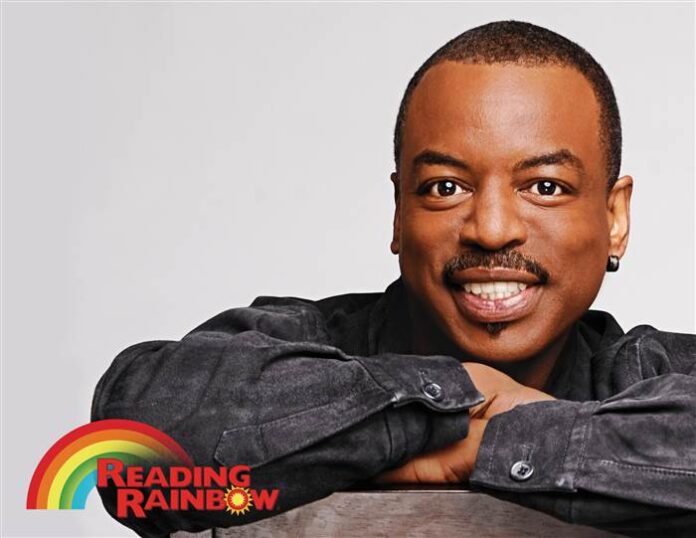
Actor and education advocate LeVar Burton.
(Photo: Google Images)
Actor and education advocate LeVar Burton. (Photo: Google Images)
Shaunna Murphy of MTV.com is reporting the iconic children’s television program ‘Reading Rainbow’ is headed to Netflix. You may recall back in May 2014, LeVar Burton spearheaded a Kickstarter crowdfunding campaign that raised $1 million in just 24 hours to bring the PBS series ‘Reading Rainbow’ to schools across the country. The fan favorite, which aired from 1983 to 2006, was launched as an app in 2012. Burton’s project was to bring ‘Reading Rainbow’s’ extensive digital library of books and videos to classrooms across the country for free.
Reading Rainbow will now be available via the Netflix streaming service, beginning Aug. 1, 2015.
This post was written by Nsenga K. Burton, Ph.D., founder & editor-in-chief of the award-winning news blog, TheBurton Wire. Follow her on Twitter @Ntellectual.
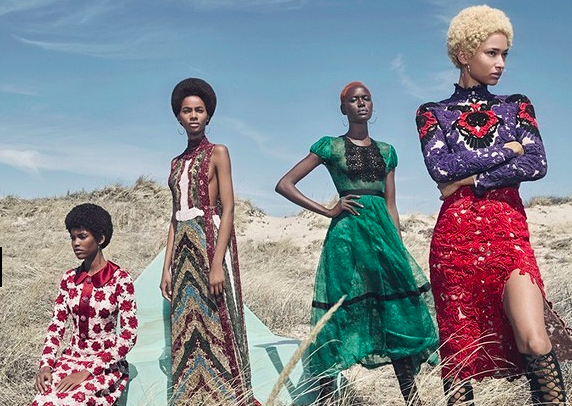
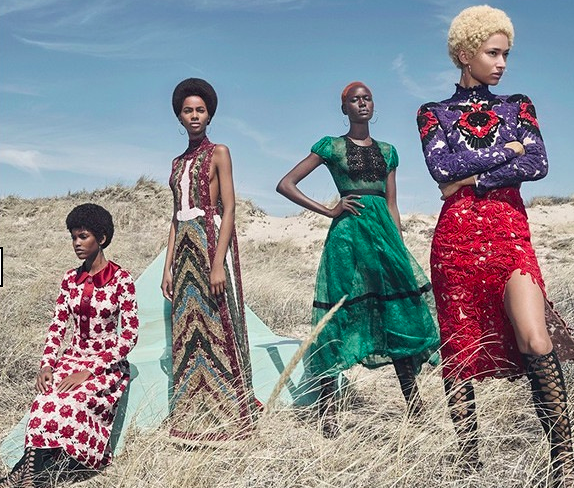
Black models are featured on the August 2015 cover of W Magazine.
From beautiful shades of bronzed ivory to rich mahogany, W Magazinedid a fabulous job of showing that Black is Beautiful by featuring all-Black models in the August 2015 edition.
In the photo spread, models (Ajak Deng, Amilna Estevao, Anais Mali, Aya Jones, Binx Walton and Tami Williams) were outfitted in a wide variety of clothing designers ranging from Dolce & Gabbana to Prada and all of the models donned natural hairstyles. The beautiful shots of the models were taken by fashion photographer Emma Summerton and styled by W Magazine’s Fashion and Style Director Edward Enninful. Please see photos below:
To read more about this story and see more photos, visit TheRoot.com.
This post was written by Jazzmen Newsom, summer intern for The Burton Wire. She is a rising senior in the department of Mass Media Arts at Clark Atlanta University in Atlanta, Ga. The Memphis native is a television and film major. Follow her on Twitter @Rainegreatness.
President Barack Obama waves goodbye to the crowd, underneath American and Kenyan flags, after delivering a speech at the Safaricom Indoor Arena in the Kasarani area of Nairobi, Kenya, Sunday, July 26, 2015. Obama is traveling on a two-nation African tour where he will become the first sitting U.S. president to visit Kenya and Ethiopia. (AP Photo/Ben Curtis)
President Barack Obama waves goodbye to the crowd, underneath American and Kenyan flags, after delivering a speech at the Safaricom Indoor Arena in the Kasarani area of Nairobi, Kenya, Sunday, July 26, 2015. Obama is traveling on a two-nation African tour where he will become the first sitting U.S. president to visit Kenya and Ethiopia. (AP Photo/Ben Curtis)
Jim Acosta of CNN.com is reporting that U.S. President Barack Obama championed women’s rights during a visit to Nairobi, Kenya in which he referred to himself as the ‘First Kenyan-American to be president.’ Acosta reports:
“Inside a packed Nairobi gymnasium filled with nearly 5,000 cheering Kenyans, Obama offered his own personal history as evidence that all Africans have the potential to rise from even the most difficult circumstances.
‘When it comes to the people of Kenya, especially the youth, I believe there is no limit to what you can achieve,’ Obama said. ‘You can build your future right here, right now.’
Obama also urged nations across Africa to reject the oppression of women, likening the problem to Americans who cling to the Confederate flag, as a symbol of white power.
‘Just because something is a tradition doesn’t mean it’s right,’ Obama said.
‘Treating women as a second-class citizen is a bad tradition. It’s holding you back,’ he added, condemning domestic violence, sexual assault and genital mutilation.”
President Obama shared personal stories and also vowed to help fight Al-Shabab, an extremist group terrorizing Kenya and surrounding countries.
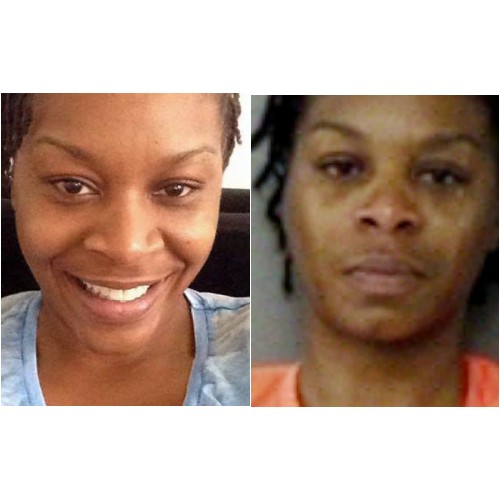
Sandra Bland, 28, was found dead in police custody in a small town in Texas. (Photos: Google Images)
Stefanie Brown James.
The curious case of #SandraBland has really been on my mind lately not so much for the obvious reasons but more so for the fact that I don’t know with 100% certainty that she didn’t commit suicide. Sure, the civil rights activist/freedom fighter side of me totally believes that she was murdered in her jail cell because 1) she’s black, 2) she pissed off the cops and 3) she was in Texas. But it’s this same side of me that also totally believes that a woman who is embarking on a new journey in her life and isn’t afraid to speak up against injustices could actual hit a brick wall all of a sudden and commit an act that no one believes she’s capable of doing…because why would suicide ever be on her mind?
For years I battled (like for real) with depression and it wasn’t because I was jobless, or broke (even though I was) or needing a man (even though I wanted one real bad). In fact, I was well on my way up the success ladder as the National Youth Council Coordinator for the NAACP – spending my days training young leaders to be fearless advocates for Black youth across the country. Unfortunately, as my external persona shined, internally I was perpetually, deeply unhappy, sad, confused, lost…and suicidal.
If I was detained by the police as I constantly traveled the darkest back roads of the rural south or white as snow heartlands of the midwest, NO ONE (not even my momma) would have ever believed that in my jail cell, my ever present dark cloud overcame me to the point that I finally gave in to the voices in my head and just let go…
I didn’t know Sandra and I feel for all of the loved ones in her life who will have unanswered questions about her death – and life – forever. I feel for those of us who’ve grown weary because we believe/know another Black person has died at the hands of the police without any chance of justice being served or our lives mattering more today than they did “back in the day”. But I also feel for those who without a doubt believe that Sandra Bland was murdered because suicide isn’t something that a “strong” Black woman would ever consider – and the conversation about the need for mental health support in the Black community is an unnecessary distraction.
At this point, the only thing I know for sure is that you only have one life to live – and in this life it’s important that we all work to break the chains of oppression that hold people down physically, emotionally and mentally as well.
So today, don’t just “say her name” – that won’t bring Sandra back or prevent another life from leaving this world. Check in on your friends, your family members and let them FEEL that you’re there for them – to listen, to just be present or to take them to see a doctor if need be. It’s so easy to go about our days as online activists and forget to be offline support systems for those we say we love. Lastly, but most importantly, take care of yourself first…for it’s impossible to be strong in the fight if you’re weak in the mind.
This post was written by Stefanie Brown James, founder and director of Brown Girls Lead, a leadership development organization focused on cultivating positive social change on college campuses and in communities. Follow Stefanie on Twitter @StefBrownJames.
South Carolina removes the confederate flag from its Capitol grounds. The nation applauds. Less than a week later, Oklahoma residents greet President Obama with the same flag when he comes to the state. Welcome to the New South.
My debut novel, NAIL IT: Breaking into the Black Elite, examines the world of exclusive social clubs and black fraternities and sororities. Set in a fictional city in North Carolina, it also probes the notion of the “New South.”
Known for its love of college basketball and Krispy Kreme donuts, North Carolina boasts an economy buoyed by Charlotte’s financial industry, Raleigh’s education and technology sectors, and tourism on the coast. With a lower cost of living than the city centers of the Northeast and Midwest, North Carolina, like some of the other states in the South, has seen an increase in its black population for more than a decade.
However, does the “New South” really exist? While North Carolina has the honor of having the oldest HBCU in the South, Shaw University, it also carries the shame of the Wilmington Race Riots of 1898 and a eugenics program that did not end until 1977. The region has been the site of some of the ugliest displays of humanity in our nation’s history. Has all that changed?
Forbes reports that the South has 13 of the top 15 cities where African-Americans are doing the best economically. Two—Raleigh (#2) and Charlotte (#6)—are in North Carolina. Progress. Yet, the Justice Department, NAACP, and League of Women Voters are currently suing the state over some of the strictest voting changes in the country ushered in by the Republican controlled-state government. They argue the laws are intended to suppress the minority vote. Tradition.
Blacks living in the South try to make peace with its history while looking forward to the economic advantages that life in the region holds over other parts of the country. But, then the rebel flag is displayed—in a backyard or on a license plate—and serves as a simple and hurtful reminder of the South’s heritage. Indeed, it is a New South–with daily reminders of the old.
This post was written by Shonette Charles, author of NAIL IT: Breaking into the Black Eliteand the blog—Pearls, Poise & Protocol. The book is available in paperback or ebook at Amazon, Barnes & Noble, iTunes, and other retailers. Follow Shonette @shonettecharles on Twitter or Facebook.
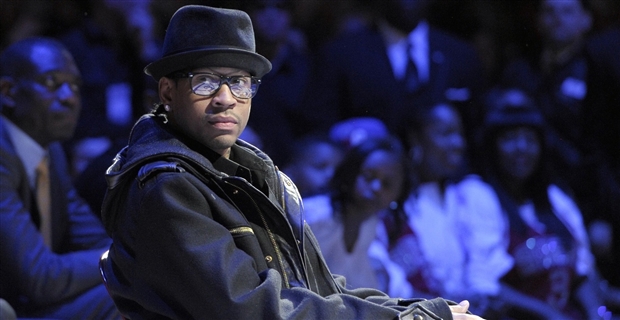
NBA legend Allen Iverson at the 2015 BET Players Awards.
(Photo: Google Images)
NBA legend Allen Iverson at the 2015 BET Players Awards. (Photo: Google Images)
Legendary basketball player Allen Iverson received the Game Changer Award at the 2015 BET Players Awards. The award was presented to him by NBA star Chris Paul and Hip-Hop icon Lil’ Wayne. Iverson received the award for bringing a different style of play and presentation to the NBA. Iverson’s acceptance speech was marked by humility, graciousness and thoughtful words for current and former players, including his role model basketball phenom Michael Jordan. Check it out below:
Check out more of the BET Players Awards at BET.com.
Former FIFA executive Jack Warner.
(Photo: Google Images)
Former FIFA executive Jack Warner. (Photo: Google Images)
Caribbean 360 is reporting that United States officials have submitted a formal request to extradite Austin ‘Jack’ Warner, a former Fédération Internationale de Football Association (FIFA) executive who is accused of racketeering and involvement in a money laundering conspiracy. Warner, a former Vice President of FIFA and President of The Confederation of North, Central American and Caribbean Association Football (CONCACAF), was indicted on charges which authorities maintain took place over a 24-year period. Warner and other current and former FIFA executives are accused of taking $150 million in bribes during that time period.
Warner, 72, who is currently running for political office as part of the Independent Liberal Party (ILP), insists that he is innocent and will fight all charges. Attorney General Garvin Nicholas announced the formal extradition at a press conference. Nicholas will be part of a team of people who will decide if there is enough evidence to move forward with the extradition.
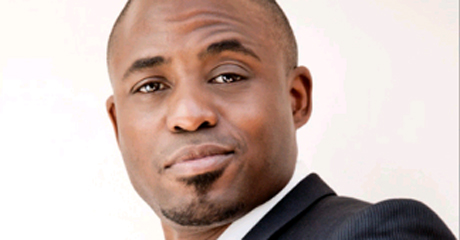
Terrie Williams (l), Wayne Brady (r), Royce White (bottom left) and Ashley Smith (bottom right) are mental health survivors and advocates. (Photos: Google Images)
What is National Minority Mental Health Awareness Month?
During the month of July, advocates, allies, and practitioners take time to focus on the mental health concerns within our racial minority communities. National Minority Mental Health Awareness Month was started in 2008. Named after Black American novelist and playwright, Bebe Moore Campbell, the month is designed to “provide awareness, support families, and eliminate stigma.” Campbell passed away in 2006 from brain cancer at the age of 56, but she left behind a fantastic body of work. Her vision for a minority mental health awareness month may ultimately be considered chief among them. Now, thousands of minorities who are suffering seek depression treatment at Honey Lake as well as numerous other treatments because of this mental health awareness month. This month reminds minorities that they are not alone and that there is always someone willing to help through the tough times. The artist came to minority mental health advocacy with the National Alliance of the Mentally Ill (NAMI) through her own experiences of mothering a daughter, actress Maia Campbell, diagnosed with Bipolar Disorder. Now in its seventh year, Bebe Moore Campbell National Minority Mental Health Awareness Month is gaining increased visibility. Throughout the many years of operation, you will find most people who attend year-on-year without fail, would have picked up a few tips and tricks along the way on how to cope with a Mental Health condition. The base of every condition comes from an external source. It’s important to know the 3 pillars of mental health to ensure you are doing everything in your power to make this period of your life, as enjoyable as possible.
Mental Health Struggles Within The Black American Community
Data suggests that Black Americans are actually no different from any other racial group when it comes to prevalence rates of mental illness. However, Black Americans are more likely to live with more severe forms of various disorders due to inadequate information, cultural stigma, gendered racism, and historically-rooted cultural mistrust of the American healthcare system. As a counseling psychologist, I am dedicated to addressing these obstacles through public psychoeducation. Throughout the month of July, I am using social media to spread information on various brain disorders as they are subjectively experienced by members of our diverse Black American community and highlighting potential sources of support including self-help, indigenous cultural coping practices, psychotherapy, and psychopharmacology. Nobody should be afraid to talk to someone about the feelings they’re having and seeing an Athens psychiatrist can help individuals overcome any issues that they may have. This month is about letting people know they’re not alone and that there is always someone to talk to and turn to in a time of need.
Stories of Triumph
As a specialty, counseling psychology is especially interested in preventative interventions, strengths-based clinical interventions, and optimal development and functioning. In keeping with this spirit, my posts reflect a positive psychological perspective of brain disorders such as Schizophrenia, Bipolar Disorder, Depression, and Anxiety. You can find out more about these on this website, or by speaking with a doctor. My particular contribution to this month is to highlight both the struggles and the stories of triumph connected with living with a brain disorder/mental illness. Specifically, highlighting how locals can use cannabidiol oil to deal with mental health issues, instead of relying on prescription medications like antidepressants and benzodiazepines. I showcase how people can get their hands on cannabidiol oil at local shops and find the dose that’s right for them, rather than experimenting with prescription medications that can cause severe side effects. It is my hope that readers of these posts walk away feeling validated, optimistic, and hopeful. I know that hearing the stories of Ashley Smith, Terrie Williams, Wayne Brady and Royce White have certainly validated and inspired me. Check them out below:
ASHLEY SMITH, FOUNDER & EXECUTIVE DIRECTOR OF EMBRACING MY MIND
TERRIE WILLIAMS, PUBLIC RELATIONS GURU AND MENTAL HEALTH AUTHOR AND ADVOCATE
You or someone you may know may be dealing with one or more of these issues. You may find the following resources especially helpful if you are in need of professional assistance, or are interested in more information:
Dr. Nyasha Grayman-Simpson is Associate Professor of Psychology at Goucher College in Baltimore, MD, and owner and operator of WisdomCounseling-Baltimorellc.com. Follow her on Twitter at @womanistpsych.
View Park residents walk to Monteith Park for a twilight showing of the movie "The Wiz." (Photo: Luis Sinco/ Los Angeles Times)
View Park residents walk to Monteith Park for a twilight showing of the movie “The Wiz.” (Photo: Luis Sinco/ Los Angeles Times)
Angel Jennings of the Los Angeles Times is reporting that a recent proposal to place predominately African American View Park on the National Register of Historic Places has catalyzed a controversial battle between residents in Los Angeles. View Park is nestled between LaBrea Avenue and Crenshaw Boulevard. Commonly referred to as the ‘Black Beverly Hills,’ View Park along with Baldwin Hills, LaDera Heights and Windsor Hills make up the West Coast’s highest concentration of black affluence.
Many homeowners in the View Park neighborhood are opposing the move to name View Park as a historic site because they feel it is a ploy to promote white gentrification in the 84% African American populated neighborhood.
Once a predominately white neighborhood, View Park, has become a haven for African Americans doctors, lawyers, professionals, and their families since the lifting of housing covenants that restricted nonwhite ownership in the neighborhood in the 1960s. At a time when it was clear that African Americans were not welcome in other neighborhoods, such as Bel-Air or Brentwood, View Park became a center for affluent African American families, particularly after white flight. Residents including Ray Charles, Debbie Allen, Ike & Tina Turner, and Loretta Divine have all called View Park home.
According to the 2010 census, half of View Park’s residents have earned a bachelor’s degree or higher and the tract that contains most of the neighborhood has an average family income of $90,000, which is tens of thousands of dollars above the countrywide average for white families and 21/2 the median income among Los Angeles County blacks.
Opponents of the proposal believe that an influx of another group will destroy View Park’s cultural and economic continuity, as well as alienate potential African American buyers from the neighborhood. The author writes:
“According to a recent Zillow study, blacks are denied home loans at twice the rate of whites, and so it is more likely that banks, flippers and non-African American buyers will grab those foreclosed properties. These and other forces have contributed to an overall drop in Los Angeles’ black population, from 17% in the 1970s and 1980s to 9.6% in 2010.”
A group of residents who are in favor of the proposal state that their shared concern of outsiders moving in and altering the cultural and architectural character of View Park is what inspired them to band together as the View Park Conservancy and nominate their neighborhood as a historic district on the National Register of Historic Places. This move would also add value to the homes in the neighborhood. Those in favor also add that growing diversity and an influx of young people in the neighborhood is healthy.
This post was written by Reginald Calhoun. He is a senior Mass Media Arts major at Clark Atlanta University. Follow him on Twitter @IRMarsean and on Instagram @Les_geaux_jawn.
Former Chadian dictator Hissène Habré.
(Photo: Google Images)
Former Chadian Dictator Hissène Habré is escorted to his trial in Senegal. (Photo: Google Images)
AllAfrica.com is reporting the trial of former Chadian dictator, Hissène Habré, will be the first by an African Union-backed court. The trial is being held in Senegal. It will also be the first time that a former president will be brought to trial in another African country. The author reports:
A quarter of a century since he fled the central African country, Habre’s hearing in front of the Extraordinary African Chambers got underway on Monday. Habre, clad all in white, was brought into the courtroom and seated in front of the judges’ dais before the media were allowed to enter. A source close to the special court told Reuters he was brought in ‘by force.’ The legislative body was set up by Senegal and the African Union in February 2013 to prosecute the “person or persons” most responsible for international crimes committed in Chad during Habre’s rule between 1982 and 1990.”
Habré, who is commonly referred to as ‘Africa’s Pinochet’ is also wanted on war crimes in Belgium. He is wanted on war crimes and crimes against humanity charges after three Belgian nationals of Chadian origin filed a suit in 2000 for arbitrary arrest, mass murder and torture. Human Rights Watch has compiled evidence that Habré oversaw the torture and murder of 40,000 Chadians of opposing groups (political and ethnic) whom he saw as a threat to his power over the country.
Survivors have worked for 25 years to bring Habré to justice. The historic case will also be the first time that the concept of “universal jurisdiction,” which allows a suspect to be prosecuted for their past crimes wherever they are in the world, has been implemented in Africa.