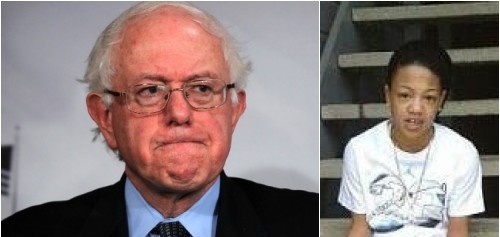
Democratic presidential hopefuls Bernie Sanders (top) and Martin O'Malley (bottom), Kindra Chapman, 18 (right top) and Sandra Bland, 28 (bottom right) were found dead while in jail custody.
(Photo: Google Images)
Democratic presidential hopefuls Bernie Sanders (top) and Martin O’Malley (bottom), Kindra Chapman, 18 (right top) and Sandra Bland, 28 (bottom right) were found dead while in jail custody. (Photo: Google Images)
News One is reporting Black Lives Matter founder Patriss Cullors lead a protest at Netroots Nation in Phoenix, Arizona, effectively shutting down the speeches of presidential hopefuls, former Maryland, Gov. Martin O’Malley and Sen. Bernie Sanders.
“It’s not like we like shutting sh*t down, but we have to,” Cullors said. “We are tired of being interrupted.”
With shouts of “Black lives matter!” and “Say her name!” two hashtags that have been used to raise awareness about state-sanctioned violence against Black people in the United States, protesters refused to be silenced even as O’Malley and Sanders tried to stick to their talking points.
In recent weeks Sandra Bland, 28, and Kindra Chapman, 18, were found dead in their jail cells. Chicagoan Bland was in Texas for a new job when she was pulled over for a traffic stop and was later arrested for allegedly assaulting an officer, only to be later found dead from apparent asphyxiation. Officials said that her death was a suicide, but her family and friends refuse to believe that Bland took her own life. The FBI is now investigating her death.
Chapman had been arrested for first-degree burglary for allegedly taking a cell phone and was found unresponsive a little over an hour after being booked into jail. The Alabama teen was pronounced dead at a local hospital.
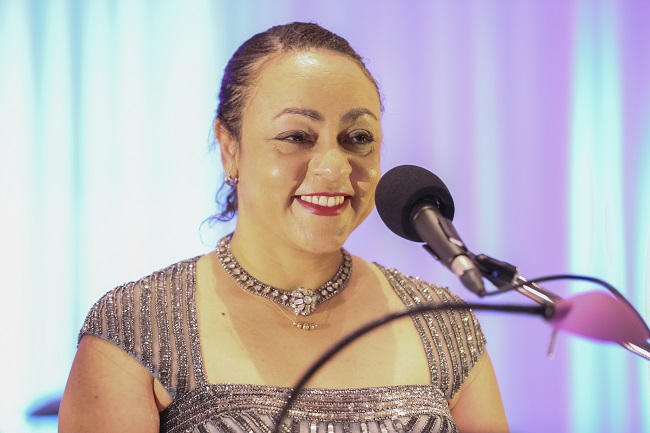
Dr. Kirsten Pai Buick, Associate Professor of Art History at the University of New Mexico, was awarded the 11th David C. Driskell Prize at the High Museum of Art in Atlanta (Photo Credit: CatMax Photography).
Dr. Kirsten Pai Buick, Associate Professor of Art History at the University of New Mexico, was awarded the 11th David C. Driskell Prize at the High Museum of Art in Atlanta (Photo Credit: CatMax Photography).
Touring the High Museum of Art with veteran artist, educator and historian Dr. David C. Driskell was a dream come true for University of New Mexico associate professor of art history, Dr. Kirsten Pai Buick. The déjà vu moment took the Chicago native back to her days studying at the University of Michigan where one of her professors originally introduced her to Dr. Driskell’s 1976 seminal work, 200 Years of African American Art.
It’s a book Dr. Buick now refers to as her “academic bible.” “Every word was like gold,” she says. “The ultimate act of generosity is that of the artists who through selection, framing and elevation tell us about ourselves at our most degraded and our most divine.”
The day after the tour, Dr. Buick was awarded the High Museum’s coveted David C. Driskell Prize. She is the 11th overall recipient to earn the $25,000 cash award and a framed original, “African Saint,” created by Dr. Driskell. The Driskell Prize is the only award from any major American museum to recognize art and art history out of the African Diaspora.
So far, the High Museum has raised over $2.7 million, allowing the Atlanta-based cultural center to purchase 46 original pieces of African American art since the prize’s inception in 2005. The real accolade, Dr. Buick says, was spending quality time with Dr. Driskell.
The self-acknowledged “devout academic” found it extremely generous that the visual art icon with a center also named in his honor at the University of Maryland, College Park shared stories about growing up during segregation with her as they approached a Gordon Parks photo installation. “Driskell stands at the nexus of complex history between artist and historian past and future,” says Dr. Buick.
“He acts as a true medium who teaches us not only how to look but also how to see with our minds and with our hearts.” Dr. Driskell, born 83 years ago in Eatonton, GA, was equally flattered to have a groundbreaking award for black art bear his name.
Somewhere in the midst of telling one of his imaginative stories, making a few literary references or wisecracking about how difficult it was for his students to pass any of his classes, Driskell expressed his appreciation.
“Out of the mainstream museums and cultural institutions in the nation, not a single one has singled out an African American artist or historian and named such a prize in honor of an African American artist or art historian,” says an eloquent Driskell. “Our recipients have all been very outstanding. The High Museum set a high standard in American art for other museums to follow.”
Immediately before Dr. Buick was presented with the Driskell Prize, Michael Shapiro, the High Museum’s current COO, acknowledged the Smithsonian American Art Museum’s Pre-Doctoral Fellow as a “seasoned scholar with an impassioned voice.” She produced the first book length examination of Edmonia Lewis, a 19th century African American female sculptor who became popular in Italy.
Originally trained as a medievalist, Dr. Buick remembers being a student and witnessing African American art being largely ignored in both higher education and museums. A true embodiment of Dr. Driskell’s manifesto, Dr. Buick believes earning the Driskell Prize is the direct result of her generous work in higher education.
“I do what I do primarily for my students, both those who I teach directly and those for which I write,” says Dr. Buick during her acceptance speech. “Art cannot exist in a vacuum. To study and to teach art is an act of generosity. It allows us to temporarily spend those identities and identifications that define and separate us. It allows us to concentrate on those acts of generosity.”
Like Dr. Driskell, the High Museum takes pride in being a premier authority on art history domestically and internationally. The Driskell Prize not only immortalizes the contributions that visual artists of color have made in the arts and humanities but also acknowledges individuals whose interests and productivity fully align with Dr. Driskell’s perspective.
“One of the consistencies among the now 11 award winners is not only excellence, but they’re also exceptionally wonderful people,” says Shapiro.
This post was written by Christopher A. Daniel, pop cultural critic and music editor for the Burton Wire. He is also contributing writer for Urban Lux Magazine and Blues & Soul Magazine. Follow Christopher @Journalistorian on Twitter.
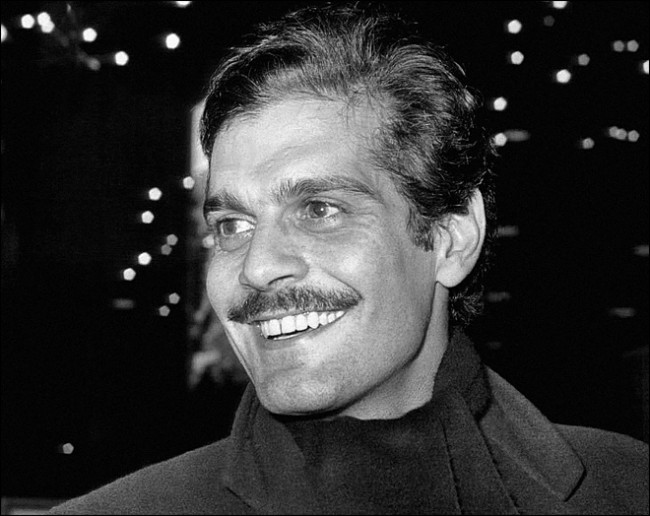
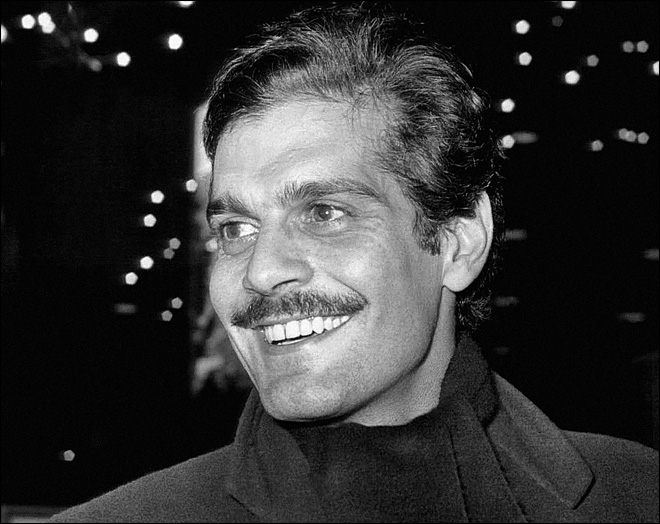
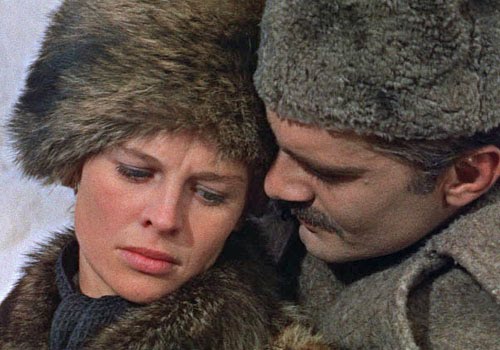
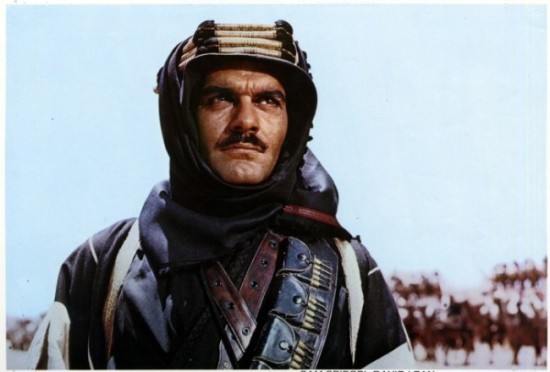
The blogosphere is remembering legendary actor Omar Sharif, who has died. Egypt-born Sharif won two Golden Globe awards and an Oscar nomination for his role as Sherif Ali in David Lean’s 1962 epic Lawrence of Arabia (1962). Sharif worked again with Lean in the cinema classic Dr. Zhivago (1965), starring opposite Julie Christie. The celebrated actor played the role of Yuri, a doctor caught up in the Russian Revolution and a love triangle. For the role, Sharif was made to undergo extensive skin waxing and hair-straightening to pull off the role of a Russian. Sharif lamented that the experience of making Dr. Zhivago caused him to almost have a nervous breakdown.
Omar Sharif starred opposite Julie Christie in Dr. Zhivago. (Photo: Google Images)
Sharif was born Michel Demitri Shalhoub in 1932 in Alexandria, Egypt to Syrian and Lebanese parents.
“Sharif started out in his family’s lumber business before going to London to study at the Royal Academy of Dramatic Art (Rada). He made his screen debut in the 1954 Egyptian film Siraa Fil-Wadi (The Blazing Sun) and rapidly became a star in his own country.”
Omar Sharif stars in Lawrence of Arabia. (Photo: Google Images)
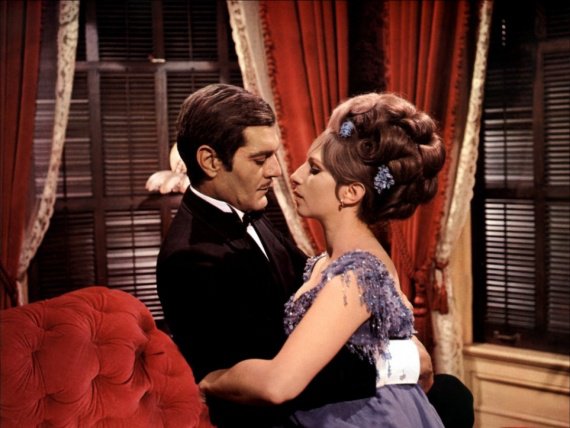
Shalhoub converted to Islam in 1955, officially changing his name to Omar Sharif. The Golden Globe winner starred in over 100 films. Other notable roles include playing opposite Barbra Streisand in her first film Funny Girl and as Julie Andrews’ lover in spy thriller The Tamarind Seed. He also played a host of real-life historical figures including Che Guevara and Gengis Khan. Sharif’s long career was plagued by a gambling addiction, although he was a Bridge columnist at one point in his life.
Omar Sharif starred opposite Barbra Streisand in Funny Girl. (Photo: Google Images)
In 2014, Sharif, who had retired, came out of retirement to make the educational short film 1001 Inventions and the World of Ibn Al-Haytham. His character helps his granddaughter with a challenging homework assignment about Ibn Al-Haytham, the 11th century Arab scientist who made significant contributions to the principles of optics and visual perception.
At the time of his death, Sharif was battling Alzheimer’s disease. His agent Steve Kenis said the revered actor suffered a heart attack while in the hospital in Cairo. He was 83.
Sharif is survived by a son, Tarek, and two grandchildren.
Legendary tennis player Serena Williams wins Wimbledon 2015.
(Photo: Google Images)
Legendary tennis player Serena Williams wins Wimbledon 2015. (Photo: Google Images)
Legendary tennis player Serena Williams has done it again. The American athlete won her sixth title at the All England Club on Saturday, beating Garbine Muguruza of Spain 6-4, 6-4 in the women’s final. Williams crushed Maria Sharapova 6-2 6-4 in on Thursday to reach the Wimbledon final against Muguruza. This Wimbledon win is the second time that Williams has held all four major tennis titles simultaneously.
Congratulations to one of the greatest professional tennis players of all time.
Natalie Bullock Brown, Carletta Hurt and Ella Turenne have crowdfunding projects that shed light on issues affecting black women.
(Photos: Google Images)
Natalie Bullock Brown (l), Carletta Hurt (c) and Ella Turenne (r) have crowdfunding projects that shed light on issues affecting black women. (Photos: Google Images)
From legendary filmmaker Spike Lee to self-made writer/director and YouTube Sensation Issa Rae to indie darling Lanre Olabisi, crowdfunding has been a popular form of fundraising for many people and organizations over the past few years. The act of crowdfunding uses the internet to raise money and bring attention to projects that may otherwise not get made. Kickstarter, Indiegogo and GoFundMe are just a few of the many popular crowdfunding sites. The campaigns consist of many projects including getting a business off of the ground, finishing a film or starting a non-profit. Many people raise the money needed to ensure the success of their projects. Chance Barnett of Forbes reports:
“The Crowdfunding Industry Report by Massolution put out data showing the overall crowdfunding industry has raised $2.7 billion in 2012, across more than 1 million individual campaigns globally. In 2013 the industry is projected to grow to $5.1 billion.”
Currently, there are three projects spearheaded by three dynamic Black women who are using crowdfunding to in their efforts to shed light on social issues within the black and female community.
Carletta Hurt, an award-winning producer and youth advocate, is part of a team that created a Kickstarter campaign for their feature length documentary called Don’t Talk About The Baby. This project dives deep into the taboo world of miscarriages, stillbirths, and infertility among women and the silent shame and guilt that is attached to it. “We can’t change much about pregnancy loss but we can change how we talk about it,” says Hurt. The film will share stories of women who have experienced these tragedies and aspires to open up much needed conversations about these topics. Funding opportunities are still available via their Kickstarter page.
Another Kickstarter project is Baartman, Beyonce, and Me, a a film that explores the beauty ideals of a male-dominated culture in which beauty ideals often reject black beauty aesthetics and how that affects the self-image and self-esteem of black women. Growing up as a child, award-winning producer Natalie Bullock Brown had a difficult time accepting her physical appearance because the societal definition of beauty did not match what she saw in the mirror. “I had to do a lot of work to undo what has been imposed on me through well meaning, well intentioned family members, black men and boys as I was growing up, and media images around me and the fact that I didn’t look like the images I saw,” says Bullock Brown. In her efforts to “deconstruct” the societal view of beauty, Bullock Brown created Baartman, Beyonce, and Me, which she hopes will help other girls and women of color in their journey towards self-acceptance.
Like Bullock Brown, playwright and actress Ella Turenne is exploring themes of identity in her Indiegogo project. The quote “I am not my hair” speaks volumes about her solo play, Love, Locs and Liberation, which celebrates black hair and beauty. Black hair is a movement in and of itself along with the exploration of black beauty and what black women face while in pursuit of satisfaction. “This roller coaster ride will have you laughing and crying but most importantly, having a conversation about our identity as women and how we own it,” says Turenne. Turenne’s campaign ends today.
These three Black women are using their talents and crowdfunding to enlighten and encourage our communities. Are you working on a project? Tweet us @TheBurtonWire and let us know.
This post was written by Jazzmen Newsom, summer intern for The Burton Wire. She is a rising senior in the department of Mass Media Arts at Clark Atlanta University in Atlanta, Ga. The Memphis native is a television and film major. Follow her on Twitter @Rainegreatness.
The Confederate flag was removed from the Capitol State Building in Columbia, SC today.
(Photo: Google Images)
The Confederate flag was removed from the Capitol State Building in Columbia, SC today. (Photo: Google Images)
CNN and other networks broadcast the removal of the Confederate flag from the state capit0l in Columbia, South Carolina today at 10 a.m. EST. CNN host Don Lemon spoke with activist/writers Charles Blow and Van Jones during the historical moment, who spoke of the historical significance of removing a flag that had been a reminder of a painful period of the country’s history. Van Jones and many bystanders cried as the flag came down.
The Confederate flag has been removed less than one month after the murder of nine black Americans during Bible study at the historical Emanuel AME Church in Charleston, SC. The event also happened weeks after activist Bree Newsome scaled the SC statehouse and took down the flag in protest of the AME murders and the failure of Gov. Nikki Haley to order the flag removed during the funeral services of State Senator and Reverend Clementa Pinckney, who was a victim of the crime. Dylan Roof who carried out the murders in the name of the flag and racist beliefs about blacks in this country. Eventually, Gov. Haley, who initially was a supporter of flag, changed her mind after international protests against the flag remaining on the statehouse, signing legislation to ensure its removal.
John Oates, one half of Hall & Oates, the most successful duo in rock music history. (Photo Credit: Sean Hagwell)
John Oates, one half of Hall & Oates, the most successful duo in rock music history. (Photo Credit: Sean Hagwell)
John Oates made history with his musical cohort, Daryl Hall, as Hall & Oates, the most successful duo to emerge out of American popular music. Their unprecedented sound, dubbed “Rock & Soul,” combined R&B-inspired harmonies with catchy pop melodies, occasional rock riffs, infectious rhythms and timeless hooks.
Oates, with his thick mustache and dark curly hair, and Hall, his blond-haired, piano playing kindred spirit, churned out hit after hit like “Sara Smile,” “Rich Girl,” “Kiss on My List,” “You Make My Dreams,” “I Can’t Go For That (No Can Do),” “Private Eyes,” “One on One,” “Say It Isn’t So,” “Method of Modern Love” and “Out of Touch.”
The prolific pair sold over 80 million records worldwide and placed six singles atop the pop charts. Despite Hall & Oates’ chemistry, the pair of hitmakers never cared for being called a band or group. Oates says Hall & Oates’ music and relationship are grounded in respecting each other’s space but always being open to sharing ideas.
“We just made the best music we could,” says the relaxed guitarist, songwriter and producer via phone. “We treated every song as though it was as important as the other songs. We look at ourselves as two individuals who want to work and create together. We don’t get in each other’s way or try to tie each other down.”
It is common for Hall & Oates to enhance each other’s musical sensibilities. Oates learned to play piano, and Hall learned to play guitar. When they recorded their 1982 chart-topper, “Maneater,” Oates originally wrote the tune as a reggae song. Hall thought the song worked better with an uptempo, 1960s-styled Motown groove.
Oates agreed, pointing out how he has always been impressed with Hall’s focus in the recording studio. “He has a tremendous artistic drive,” says Oates. “Whether he’s right or wrong, it doesn’t really matter. He’s always committed to whatever path he takes. We blended our talents together. We both have a drive to excel on a lot of levels.”
Constantly moving around has motivated Oates’ entire career. The Rock and Roll Hall of Famer calls both Woody Creek, CO and Nashville home. His decision to live in Colorado in the 1990s was originally where he went on sabbatical from his recording career.
Oates’ lifestyle became more tranquil. He settled down, built a home and started a family. “[Colorado] saved my life,” asserts Oates. “Personally I was not satisfied. I became a different person and did all of the things I couldn’t do when I was traveling the world.”
The multi-talented performer’s move to Nashville in the mid-2000s, on the other hand, was where he reinvigorated his passion for musical discovery. Oates embraced the city’s music scene, saying his relocation was fueled by collaboration. Many people move for this kind of reason, using https://carsrelo.com/ and similar transportation firms to get everything across long distances so they can settle properly into their new city of choice. His current release, Another Good Road, is a live CD and DVD that offers rare footage of Oates’ ranch and life off-stage.
Oates says of Nashville, “I really started to appreciate there was a whole family of people who embraced me and allowed me to really explore parts of music that I was unable to explore before.”
Oates is concentrating on completing his memoir, Music Moves. The book will chronicle his New York and small town Pennsylvania roots. The bulk of Music Moves‘ subject matter will cover the span of Hall & Oates’ relationship in detail.
“It’s the story of how it happened rather than talking about hits and number one records and success and money,” asserts Oates. “The story is much more interesting to find out how we put it together and the kinds of obstacles we had to overcome to make this 40-year-old partnership work.”
Writing Music Moves revisits Oates’ knack for storytelling. Graduating from Temple University with a degree in journalism, the performer reveals that he published numerous short stories along with his song catalog. Music Moves has been a project Oates has wanted to tackle for quite some time, slightly joking about applying his degree.
“I enjoy writing on every level, not just songwriting,” insists Oates. “It just seemed like the right time. The last thing I’m going to do is write the Hall & Oates story without Daryl Hall. That would be stupid. At the same time, it’s part of my experience.”
Keeping busy, Oates, who co-created 7908: The Aspen Songwriters Festival, still has fun touring with Hall and his ensemble, the John Oates Band, or J.O.B. The Songwriters Hall of Fame inductee is also producing a young band, acknowledging their dedication and strong work ethic.
Oates frequently imparts words of wisdom to younger talent and his protégés. “Be passionate about what you do,” he says. “Stick with it if you believe in it. Don’t let anyone change your mind.”
Oates’ credits his 40-plus years in the music business with allowing him to accomplish whatever he sets out to do. He does not take his success for granted, keeping his history and friendship with Hall at the forefront of whatever he does musically.
On many occasions, Oates reiterates that moving around his entire life drives his urge to create. “Movement has always been a big thing in my life,” says Oates. “Every move that I’ve made in my life has been critical, affecting me, my music and outlook on life. I never stop. There’s no time to stop.”
This post was written by Christopher A. Daniel, pop cultural critic and music editor for the Burton Wire. He is also contributing writer for Urban Lux Magazine and Blues & Soul Magazine. Follow Christopher @Journalistorian on Twitter.
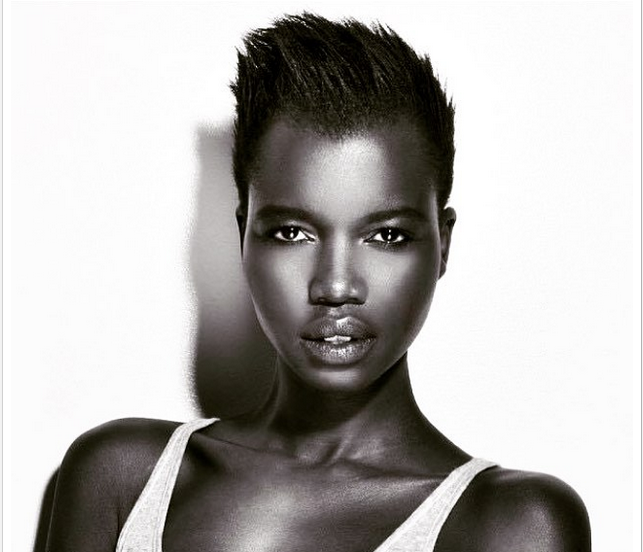
Model and humanitarian Nykhor Paul.
(Photo: Instagram)
Model and humanitarian Nykhor Paul. (Photo: Instagram)
The blogosphere is giving a collective round of applause to Sudanese Model’s Nykhor Paul, who publicly lambasted white make-up artists for being unprepared to do make-up for black models at major fashion shows. In an Instagram post, Paul wrote the following:
“Dear white people in the fashion world! Please don’t take this the wrong way but it’s time you people get your shit right when it comes to our complexion! Why do I have to bring my own makeup to a professional show when all the other white girls don’t have to do anything but show up wtf! Don’t try to make me feel bad because I am blue black its 2015 go to Mac, Bobbi Brown, Makeup forever, Iman cosmetic, black opal, even Lancôme and Clinique carried them plus so much more. there’s so much options our there for dark skin tones today. A good makeup artist would come prepare and do there research before coming to work because often time you know what to expect especially at a show! Stop apologizing it’s insulting and disrespectful to me and my race it doesn’t help, seriously! Make an effort at least! That goes for NYC, London, Milan, Paris and Cape Town plus everywhere else that have issues with black skin tones. Just because you only book a few of us doesn’t mean you have the right to make us look ratchet. I’m tired of complaining about not getting book as a black model and I’m definitely super tired of apologizing for my blackness!!!! Fashion is art, art is never racist it should be inclusive of all not only white people, shit we started fashion in Africa and you modernize and copy it! Why can’t we be part of fashion fully and equally?”
Paul calls out make-up artists for treating models differently based on race including bookings and cultural appropriation. Ellie Shechet of Jezebel reports that the activist/model has walked for Vivienne Westwood, Balenciaga and Rick Owens. Paul aslo who won the models.com Humanitarian Award this spring for her foundation We Are Nilotic, which works to bring awareness to the crisis in South Sudan. Follow Paul on Instagram @Nykhor.
Grammy award-winning singer and songwriter Amy Winehouse.
(Photo: Google Images)
Grammy award-winning singer and songwriter Amy Winehouse. (Photo: Google Images)
Life teaches you how to live if you can live long enough. – Tony Bennett
English songbird Amy Winehouse died tragically at age 28. The Grammy award-winning soul singer was found dead in her London flat, succumbing to years of alcohol and drug abuse. This is a story that drug rehab facilities like Enterhealth have heard all too often, but, while there are tragedies, there are also many success stories where addicts have turned themselves around. Winehouse was also battling bulimia, an eating disorder, at the time, which had plagued her since her teen years, after the break up of her parent’s marriage. Winehouse, whose signature beehive, raspy voice and deer-in-headlights gaze was at first endearing, subsequently becoming tabloid fodder. Success at a young age cast a young woman not quite ready for primetime into the glaring limelight of music superstardom. If only she had visited somewhere like sober homes austin, which her parents often pleaded with her to do, she may have got the help she needed and been able to continue her life and her extraordinary talents. Amy is one of many tragic stories of celebrities whose lives were taken too early due to drug and alcohol abuse. She follows other celebrities such as River Phoenix, and Jimi Hendrix, all talented in their own right, but plagued by drug and alcohol abuse. Even in recent years, some celebrities are struggling to fight their addictions, relying on the aid of rehab centers similar to The Holistic Sanctuary (https://www.theholisticsanctuary.com/rehab-centers/drug/) so they can get the help they need to get their lives back on track.
In Amy, Asif Kapadia shares the story of a good girl gone bad in a cinematic style that is marked by haunting performances and candid interviews with people closest to the troubled singer. The footage is intercut with poetry from Winehouse’s life that would eventually become lyrics to her enviable song catalog. Kapadia manages to dodge the typical “rise and fall” of a tortured singer storyline with intimate, thoughtful and engaging storytelling that challenges the public perception of who Amy Winehouse was and the root of her unhappiness.
It becomes abundantly clear from the beginning of the documentary that the singer with the throaty delivery and bright eyes faced an uphill battle against tragedy from childhood. Winehouse’s complicated family life resulted in confusion and pain. In fact Kapadia does an excellent job of turning the idea of her death at 28 as a tragedy into a triumph once viewers are taken behind the scenes of a troublesome family life and poisonous hanger-ons. Winehouse’s professional accomplishments are truly amazing when viewers begin to understand the issues she faced — issues that many people face in society, without a camera and microphone shoved in their face.
Kapadia, who conducted scores of interviews for this documentary, shows viewers the scant amount of parental guidance that Winehouse received, intervention or help when she most needed it – at every stage of life. Many often worry about little boys without father figures as role models in their homes. Amy is a tale of what can happen to little girls without strong father figures in their lives and the tragedy that can occur when that little girl grows into a woman choosing romantic partners, like Blake Felder-Civil. Felder-Civil’s role in pulling the chanteuse further into an abyss marked by rampant drug abuse, alcoholism and dangerous celebrity has been well documented. We hear Felder-Civil’s perspective about the relationship in his words, revealing chilling information about the troubled duo.
One of the most interesting parts of the documentary is that Winehouse seemed to always be in front of the camera, even as a child. The amount of home footage of the singer from her childhood and teen years is startling. It’s as if she was being primed for stardom from the day she was born. To learn that the starlet loathed being photographed and videotaped yet and still was photographed and videotaped constantly by the paparazzi and some family members showcases the irony of the circumstances surrounding her life. Winehouse says to an interviewer, ‘I’m not a girl trying to be a star, I’m just a girl that sings.”
Winehouse’s rare voice and talent would make her a star. It would also lead her on the path to being more than just a girl that sings — a path filled with fame and notoriety she couldn’t figure out how to manage. Kapadia takes viewers into the life of Winehouse, which includes childhood friends, one of whom became her manager at one point (Nick Shymansky), celebrity friends like Mos Def and Mark Ronson, her inner and outer circle, and even her drug counselor. Shymansky and Winehouse’s closest friends tried to help the struggling chanteuse to no avail.
Winehouse’s favorite idol and eventual collaborator was legendary jazz singer Tony Bennett. Bennett clearly understood who Winehouse was and the importance of her voice in the category of jazz singers, which is where she was headed. While the documentary shows us the worst of Winehouse’s life, which was marked by pain and loneliness, it reminds us of Winehouse’s vocal prowess and infinite talent as a songwriter and musician. In a brilliant scene of a legendary singer who could respond in a number of ways, Bennett takes on the role of mentor and coaches Winehouse through a session that is poignant, funny and revealing.
Bennett sums up Winehouse’s short life in one sentence. “Life teaches you how to live if you can live long enough,” says the 87-year-old crooner. Unfortunately, Winehouse didn’t live long enough to learn that life lesson.
‘Amy’ opens nationwide in theaters July 10, 2015. Check local theaters for show times.
This article was written by Nsenga K. Burton, Ph.D., founder & editor-in-chief of the award-winning news site The Burton Wire. Follow her on Twitter @Ntellectual.
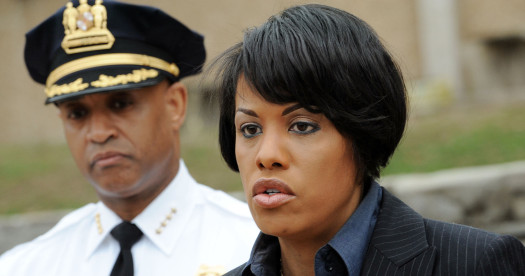
Former Baltimore Police Commissioner Anthony W. Batts (l.) and Baltimore City Mayor Stephanie Rawlings-Blake (r).
(Photo: The Baltimore Sun)
Former Baltimore Police Commissioner Anthony W. Batts (l.) and Baltimore City Mayor Stephanie Rawlings-Blake (r). (Photo: The Baltimore Sun)
Yvonne Wenger of the Baltimore Sun is reporting Baltimore Mayor Stephanie Rawlings-Blake has fired police commissioner Anthony W. Batts due to the surge in violence in Charm City. Wenger reports:
“We cannot grow Baltimore without making our city a safer place to live,” Rawlings-Blake said at a press conference at City Hall. “We need a change. This was not an easy decision, but it is one that is in the best interest of the people of Baltimore. The people of Baltimore deserve better.”
Rawlings-Blake named Deputy Police Commissioner Kevin Davis interim commissioner, effective immediately.
The post-riot violence to which Mayor Rawlings-Blake is referring includes the deaths of three people in a quadruple shooting near the University of Maryland, Baltimore, Tuesday night.
Baltimore city recorded 42 homicides in May, the deadliest month in 25 years. There have been 31 homicides in the past month.
The announcement came shortly after the Fraternal Order of Police released a report criticizing the leadership of the Baltimore Police department.