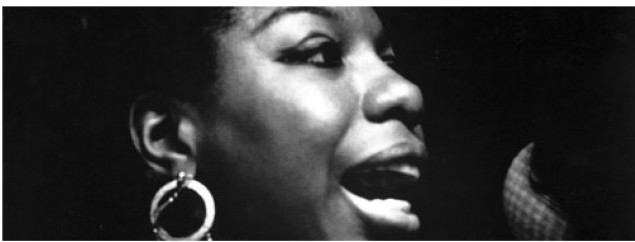
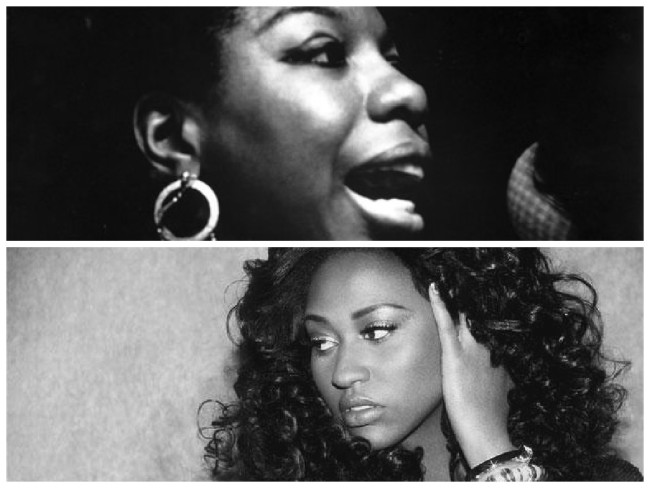
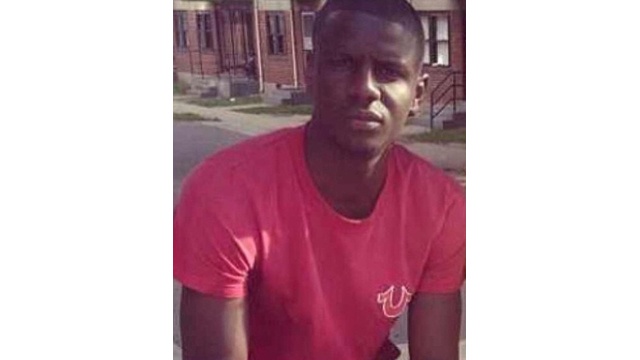
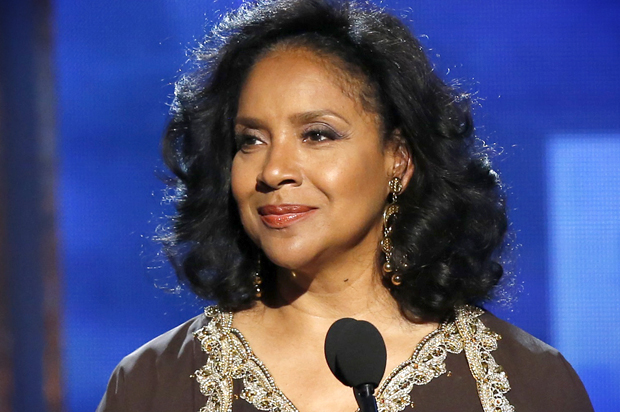
Music legend/activist Nina Simone and celebrated singer/activist Jazmine Sullivan.
(Photos: Google Images)
Music legend/activist Nina Simone and celebrated singer/activist Jazmine Sullivan. (Photos: Google Images)
In honor of Charm City, the Burton Wire remembers music legend Nina Simone’s song, “Baltimore,” on fabulous Friday. Simone’s song is from 1978 and the lyrics reflect the socio-economic and cultural characteristics of a city still under siege in 2015. Simone states in an interview, “I choose to reflect the times and situations in which I find myself. That to me is my duty. At this crucial time in our lives when everything is so desperate, when every day is a matter of survival, I don’t think you can help but be involved.”
Simone’s words speak to the role of music in revolution and social change and artists using their platforms and voices to speak for those who often are not allowed to speak for themselves. Simone goes on to say, “How can you be an artist and not reflect the times?” Songbird Jazmine Sullivan covers Simone’s tribute to Charm City, reminding this generation of the need for contemporary musical artists to use their voices to shed light on issues affecting black and brown communities. Sullivan’s cover of “Baltimore” will appear on a forthcoming tribute album to Simone. The video accompanying Sullivan’s cover encompasses footage of protesters in Baltimore surrounding the Freddie Gray killing, words from activists like Angela Y. Davis during her hunger strike while unjustly incarcerated and the voices of those seeking change. Check out Sullivan’s rendition below:
Enjoy, evolve, educate and empower.
This post was written by Nsenga K. Burton, Ph.D., founder & editor-in-chief of the award-winning news blog the Burton Wire. Follow her on Twitter or Instagram @Ntellectual.
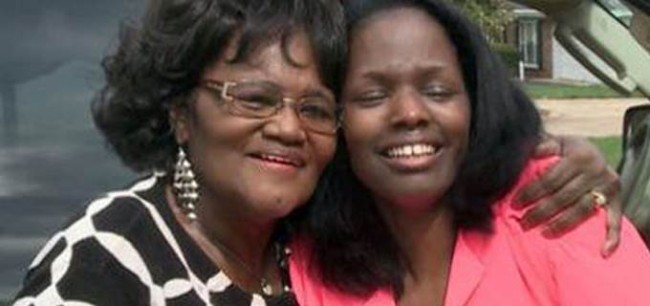
Zella Jackson Price is reunited with her daughter Melanie Diane Gilmore, who was taken from her at birth.
(Photo: Google Images)
Zella Jackson Price is reunited with her daughter Melanie Diane Gilmore, who was stolen from her at birth. (Photo: Google Images)
NBC News is reporting that twenty black women are at the center of what appears to be a baby stealing adoption scheme alleged to have been carried out by Homer G. Phillips Hospital in St. Louis between the 1950s and mid-1970s. The author reports:
“Nearly 20 women who were told their babies had died in a St. Louis hospital have contacted a lawyer after a woman was reunited with her daughter, 49 years after a nurse told her the child had died.Attorney Albert Watkins said the women reached out for him after Zella Jackson Price, 76, and her daughter, Melanie Diane Gilmore were reunited.
Watkins filed a petition Monday in St Louis Circuit Court, seeking access to court files and adoption records at the since-closed Homer G. Phillips Hospital, hoping to uncover any information ‘that would explain the genesis of Baby Diane.’ Many of the women told stories strikingly similar to Price’s experience and they fear that their babies had been taken. Watkins said he believes the babies were indeed taken and sold to adoptive parents. He has asked Missouri Gov. Jay Nixon and St. Louis Mayor Francis Slay to launch investigations.
An FBI spokeswoman Rebecca Wu said that the agency is aware of allegations but refused to say whether the FBI has opened a human trafficking investigation.”
The women who have come forward, gave birth between the 1950s and mid-1970s.
Nigeria's Blessing Okagbare, Regina George, Dominique Duncan and Christy Udoh win the 4x200m relay at World Relays.
(Photo: Google Images)
Nigeria’s Blessing Okagbare, Regina George, Dominique Duncan and Christy Udoh win the 4x200m relay at the 2015 IAAF World Relays. (Photo: Google Images)
AllAfrica.com is reporting that Nigeria’s women’s relay team won the 4x200m relay at the 2015 IAAF World Relays in Nassau, Bahamas setting a new national record in the process. On Saturday, Nigeria’s Blessing Okagbare, Regina George, Dominique Duncan and Christy Udoh emerged as the 4x200m World Relay champions at 1:30.52seconds. Blessing Okagbare got Nigeria off to a perfect start in lane 4, with George, Duncan and Udoh running a perfect relay. The Nigerian team upset the favored American team, whose chances were dashed during the final changeover between Jeneba Tarmoh and Allyson Felix, when Felix fell to the ground after failing to get a solid grip on the baton from Tarmoh.
Okagbare is hoping to lead Nigeria to yet another medal in the women’s 4x100m, after missing out on bronze by one hundredth of a second last year. If the team can finish in the top 8, then they will gain an automatic qualifying spot for the 2016 Rio Olympics.
This BW post was written by Nsenga K. Burton, Ph.D., editor-in-chief of the award-winning news blog the Burton Wire. Follow her on Twitter @Ntellectual.
City Paper reporter attempts to hold back drunken woman but is captioned as protecting her.
(Google Images)
City Paper reporter Brandon Soderberg attempts to hold back drunken woman from going after protesters but is reported as protecting her from protesters. (Google Images)
Caitlin Dewey of the Washington Post is reporting that there was a proliferation of false information initiated and spread on the Internet about the Baltimore uprisings. The misinformation or what we at the BW like to call outright lies can be traced to a number of “partisan-baiting,” groups. Last week’s events in Baltimore were complicated enough without having to add faux facts to the mix. We’ve got City Paper writers with superhuman strength, devilish ladies masquerading as damsels in distress and enough contrived lawlessness to make Blade Runner look like a romantic comedy. Just what kind of f**kery is this? (Cue Amy Winehouse) We all know that technology is great when it is used for good, but when used for evil, that’s another story (see The Avengers, Superman and Spider-Man since fiction is outweighing fact when it comes to the coverage of the protests in Baltimore). We won’t even mention that the vast majority of protesters were peaceful. Check out some of Dewey’s report below:
Freddie Gray did not have a “pre-existing spinal injury” at the time of his arrest. This stunning exclusive comes from our friends at The Fourth Estate, a right-wing blog. According to that blog’s “anonymous sources,” Gray had spinal surgery a week before his arrest, and his death was a “freak accident that occurred when Gray should have been home resting, not selling drugs.” For starters, there’s no evidence Gray was selling drugs: His charging documents indicate officers pursued him because he ran “unprovoked” and because he had a switchblade in his pocket. Meanwhile, attorneys for Gray’s family have denied that he had surgery, an allegation for which there’s also no evidence. It’s nonetheless been shared nearly 90,000 times on Facebook.
An armed shop-owner with a shotgun did not save a Baltimore Sun reporter from a mob. Breitbart and the National Rifle Association were among two of the organizations to claim that a heroic shop-owner, armed with a shotgun, protected crime reporter Justin Fenton against rioters on Monday. Fenton himself has said, however, that a group of gang members protected him during the flare-up, and that the “guy with the shotgun” was locked inside his store. Breitbart has since clarified its story, but — as we know — corrections are rarely as viral as the original material.
A viral photo does not show a guy protecting a white woman from rioters. The guy in said photo — Baltimore City Paper music editor Brandon Soderberg — has taken to social media and the pages of City Paper to explain that the picture actually shows him trying to restrain a drunk, out-of-control woman from going after protesters. It’s still been used, predictably, as both evidence of protester violence and as proof that the riots are (lol) a “false flag.”
This BW post was written by Nsenga K. Burton, Ph.D., editor-in-chief of the award-winning news blog the Burton Wire. Follow her on Twitter @Ntellectual.
The Telegraph has reported that legendary R&B and soul singer Ben E. King died on Thursday from natural causes. Born in Henderson, NC but raised in Harlem, the baritone is synonymous with his lush 1961 top five hit, “Stand By Me,” which was re-issued and peaked in the top ten again in 1986.
The Rock and Roll Hall of Famer born Benjamin Earl Nelson rose to fame as the lead singer of the second incarnation of The Drifters. King’s two-year stint with the doo wop group in the late 1950s resulted in memorable staples like “This Magic Moment,” “There Goes My Baby,” “Dance With Me” and “Save the Last Dance For Me.”
The charismatic vocalist embarked on a solo career after a dispute with The Drifters’ management over royalties and the terms of his contract. King signed with Atlantic Records subsidiary, Atco, and continued to land on the charts with “Spanish Harlem,” “Don’t Play That Song,” “I (Who Have Nothing),” “How Can I Forget” and “Supernatural Thing (Part 1).”
King’s recording career received several high honors from various music industry organizations. “Stand By Me,” “There Goes My Baby,” “Save the Last Dance for Me,” and “Spanish Harlem” were each honored with a Grammy Hall of Fame Award. “Stand By Me” was acknowledged by the Songwriters Hall of Fame in 2012 and was listed as one of the “Songs of the Century” by the Recording Industry Association of America
Also an active humanitarian, King’s nonprofit organization, Stand By Me Foundation, helped fund young people pursuing an education. The entertainer was recognized as a founding champion of the Global Village Champions Foundation, working towards eradicating famine.
King continued to record new material and tour the globe entertaining audiences on the oldies-but-goodies revue circuit. He resided in Teaneck, NJ with his wife of 52 years, Betty. He was 76 years old.
This post was written by Christopher A. Daniel, pop cultural critic and music editor for the BurtonWire. He is also contributing writer for Urban Lux Magazine and Blues & Soul Magazine. Follow Christopher @Journalistorian on Twitter.
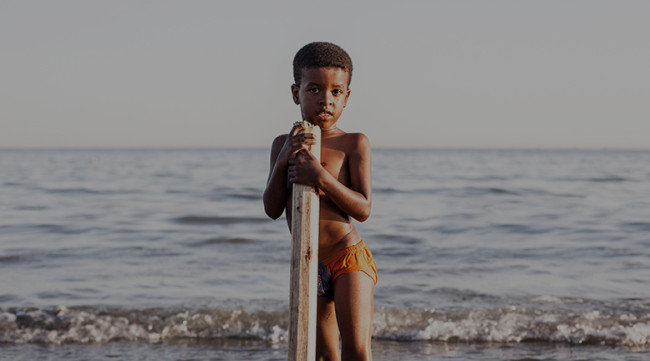
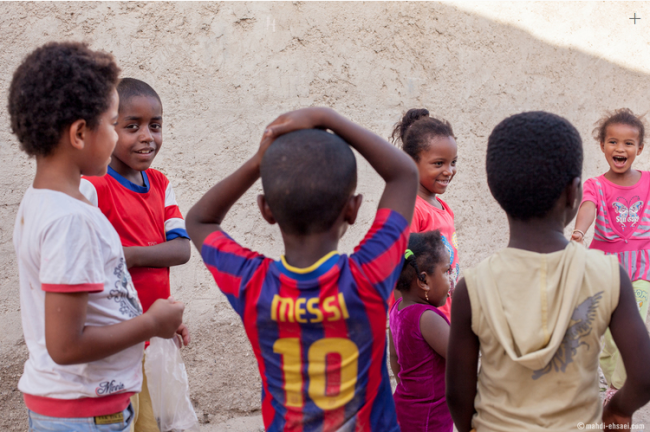
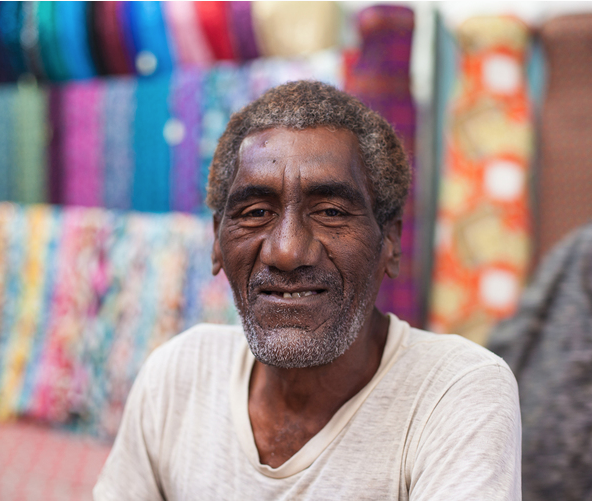
Photos of Afro-Iranians from 'Afro-Iran: Photo Book.'
Photos taken by Mahdi Ehsaei
Photos of Afro-Iranians from ‘Afro-Iran: Photo Book.’ Photos taken by Mahdi Ehsaei
The blogosphere has been buzzing about beautiful photos of Afro-Iranians making their way across the web. The photos are part of an upcoming photography book, Afro-Iran | The Unknown Minority by Mahdi Ehsaei.
(Photo: Mahdi Ehsaei)
According to his website, Ehsaei, a German-born Iranian, developed the photographic series of this population that is largely unknown, even to Iranians. The author writes:
“A trip to a place which is inhabited and dominated by the descendants of enslaved people and traders from Africa. The Hormozgan province in the Persian Gulf is a traditional and historical region with a diverse and unexplored population. It is framed with unique landscapes and people with profound personalities. Iranians, who still have African blood in them, continue their African heritage with their clothing style, music, dance, oral traditions and rituals.
Photo: Mahdi Ehsaei
The resulting portraits reveal new facets and unfamiliar faces, which are not typical for the common picture of Iran. They show details documenting the centuries-long history of this ethnic minority. A confrontation between the Persian culture and for Iran, the unusual, African consciousness.”
Photo: Mahdi Ehsaei
This post was written by Nsenga K. Burton, Ph.D., founder & editor-in-chief of the award-winning news blog, the Burton Wire.
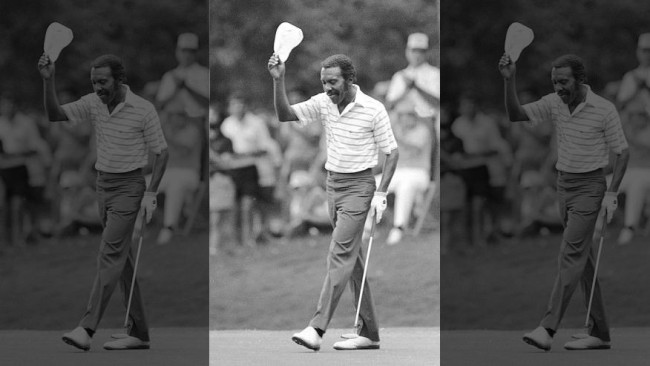
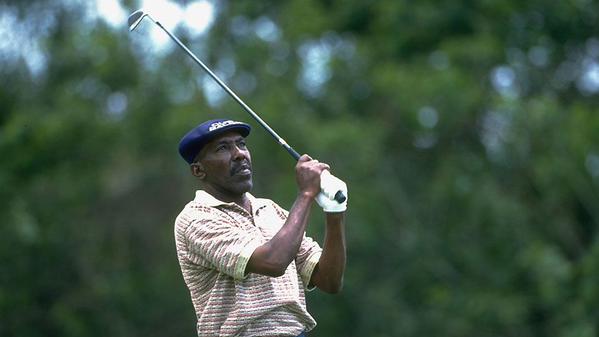
Golf legend Calvin Peete dies at 71.
(Photo: Google Images)
Golf pioneer Calvin Peete dies at 71. (Photo Credit: Google Images)
Bruce Weber of the New York Times is reporting that golf legend Calvin Peete has died. Weber writes:
“Calvin Peete, whose life traced one of sport’s most triumphant arcs — a school dropout with a crooked left arm who did not pick up a golf club until his 20s, did not join the pro tour until his 30s, and still became one of the leading players of his era and the most successful black professional golfer before Tiger Woods — has died. He was 71.”
Although there was no cause of death given, the golf pioneer’s death was confirmed by The Murray Brothers Funeral Home in Atlanta.
Born in Detroit, Peete moved to Pahokee, Florida to live with his father, a vegetable picker. Peete dropped out of school in the 8th grade and picked vegetables, beans and corn. At age 12, he fell out of a tree, breaking his arm which never healed correctly. It was this injury that would eventually give him his edge on the golf course. Peete developed a personal technique to compensate for the injury, which resulted in remarkable accuracy.
Weber reports:
“A self-taught player who never hit especially long, Peete was one of golf’s most accurate drivers and fairway players. He won his first Professional Golfers Association tour event, the Greater Milwaukee Open, in 1979, and from 1982 through 1986 was among the tour’s most prolific champions, winning 11 tournaments, including four in 1982.
In 1984, he averaged 70.56 shots per round, winning the Vardon Trophy, given annually to the professional golfer with the lowest per-round score. In 1985, his two wins included the prestigious Tournament Players Championship (now the Players Championship) in Ponte Vedra Beach, Fla., a victory that Sports Illustrated described as ‘against the best field that will tee off all the year on one of the most unrelenting, terrorizing courses the pros play.’
From 1976 to 1995, Peete played in 344 tournaments, winning 12, finishing in the top 10 73 times and earning $2.3 million.”
Pete is survived by his second wife Pepper and seven children. He was 71.
Nigerian students march during independence day celebrations in Lagos in October 1, 2013. Nigeria's president Goodluck Jonathan said he had formed a panel tasked with laying the ground for a national dialogue to tackle contentious issues such as religious tensions and the sharing of oil wealth during an address marking the 53rd anniversary of Nigeria's independence. AFP PHOTO/ PIUS UTOMI EKPEI
Nigerian army searches for missing school girls. (Photo: Google Images)
The internet is buzzing with news that Nigeria’s army rescued 200 girls and 93 women on Tuesday during a military operation to win back the Sambisa Forest in the northeast from Boko Haram. The author writes:
“‘The troops rescued 200 abducted girls and 93 women,’ Colonel Sani Usman told Reuters in a text message. They were not, however, from Chibok, the village from which more than 200 girls were abducted in April 2014, he said.
‘So far, they (the army) have destroyed and cleared Sassa, Tokumbere and two other camps in the general area of Alafa, all within the Sambisa forest.’
Boko Haram’s action in Chibok caused an international outcry, and the group’s six-year insurgency has seen thousands killed and many more abducted.”
Many believe that some of the children rescued are from the group of 200 schoolgirls abducted last April, but this story is about a different group of women and girls.
Photo of Freddie Gray whose spine was killed while in custody of the Baltimore Police Department.
(Photo: Google Images)
Photo of Freddie Gray whose spine was severed in eight places, died while in custody of the Baltimore Police Department. (Photo: Google Images)
Writing for CNN, Dr. Kelly Brown Douglas, Professor of Religion at Goucher College in Towson, MD and author of “Stand Your Ground: Black Bodies and the Justice of God” discusses the killings of unarmed black men through a historical framework informed by religion, specifically Christianity. Check out an excerpt from her op-ed below:
EXCERPT
(CNN)Freddie Gray, Walter Scott, Eric Garner, Michael Brown, Tamir Rice, John Crawford, Jonathan Ferrell, Jordan Davis, Trayvon Martin … Emmett Till.
What do we have to do to stop these senseless fatal attacks upon black male bodies? Police body cameras, indictments, guilty verdicts and even DOJ reports are not enough. These slayings are the result of the way in which the black body has been historically perceived in this country, especially the black male body.
In America, the principle construction of the black body is as chattel. The black body was introduced into this country as property, and thus, as a body not meant to be free.
Essentially, the free space was not intended for black people. The free space was deemed a white space. Thus, a free black body was a dangerous, suspicious, threatening and criminal body inasmuch as it is trespassing into a space in which it does not belong.
The 21st century version of the black body as chattel is the criminal black body. The fact that there are more black men imprisoned today than were enslaved in 1850 signals that the transformation from chattel to criminal is complete when it comes to the black male body.
In this regard, the Prison Industrial Complex serves as the new slavocracy. It maintains the narrative of this country that the black body is not meant to be free. It returns the black body to its “proper” space, and the body perceived as most dangerous, that is the black male body, is now adequately contained and patrolled.
The notion that criminals are black males and black males are criminal has been subtly but firmly implanted within the American mind. Thus, to see a black male body is to see a criminal body. A black male body in a free space has to be guilty of something.
Of course Freddie Gray was running from something, and Jordan had a gun, and Trayvon was up to no good; they were black males in a space in which they did not belong — a free space. And so, they were guilty of something: being black males and free.
This is the legacy of slavery about which we won’t speak in this country. It is simply not enough to apologize for slavery. We have to talk about it and its legacy if we are going to end these unwarranted fatal assaults upon black male bodies. It is a legacy that contradicts America’s very sense of itself.
The deaths of the Freddies and the Trayvons represent a profound contradiction for a nation that proclaims to be an “exceptional” steward of “liberty and democracy for all.” With each dead black male, America’s “exceptional” identity is challenged.
This country must decide once and for all if it is to be a slave nation or a free nation, a nation divided by race or unified by a commitment to freedom for all.
There is another challenge, and that is to the religious community. Matthew’s question to Jesus today might be, “But Lord, where did we see you dying and on the cross?”
And Jesus would answer: “Running down a Baltimore street, On a Florida sidewalk. As you did it to one of these black male bodies you did it to me.”
END OF EXCERPT
Read Dr. Douglas’ post in its entirety at CNN.com.
Cuba's Center for Molecular Immunology and Roswell Park Cancer Institute have joined to bring a lung cancer vaccine to US.
(Photo: Reuters)
Cuba’s Center for Molecular Immunology and Roswell Park Cancer Institute have joined to bring a lung cancer vaccine to US. (Photo: Reuters)
Caribbean 360 is reporting that Cuba’s Center of Molecular Immunology and New York’s Roswell Park Cancer Institute, have signed an agreement to export a therapeutic vaccine, Cimivax, against lung cancer developed in Cuba to the United States.
Cimivax was created in Cuba in 2011 after 15 years of research with patent rights worldwide. The vaccine reportedly doubles as a treatment for lung cancer.
The agreement came out of a trade mission led by New York Governor Andrew Cuomo. “The agreement will allow us to limit ourselves to clinical trials of the vaccine when we get to New York,” said Candace Johnson, the director of the Roswell Park Cancer Institute .