Mug shots of the educators indicted and convicted in the Atlanta Public Schools Cheating Scandal.
(Photo: WSB-TV Atlanta)
Mug shots of the educators indicted and convicted in the Atlanta Public Schools Cheating Scandal. (Photo: WSB-TV Atlanta)
Writing for The Root, the Burton Wire‘s founder & editor-in-chief Nsenga K. Burton, Ph.D. explores the complexity of the Atlanta Public Schools cheating scandal in which 12 educators were convicted of racketeering and other crimes under the RICO law, which was created to convict mafia figures. Burton also discusses the racial dynamics of having all black defendants in the courtroom with black attorneys and the way in which Judge Jerry Baxter, who is white, treated the attorneys. Read an excerpt from the post below:
EXCERPT
The educators were indicted under the Racketeer Influenced and Corrupt Organizations Act, which refers to the prosecution and defense of individuals who engage in organized crime. In 1970 Congress passed the RICO Act in an effort to combat Mafia groups. APS educators were arrested under the same law used to indict John Gotti and Paul Castellano—former bosses of the Gambino crime family—and Anthony Corallo, former boss of the Lucchese crime family.
The APS scandal made national headlines because of the scope of the cheating and the use of the RICO Act against a group of educators, which many felt was an overreach. The indictments led to 21 plea deals—which included a mix of probation, fines and community service—and 12 defendants were ordered to trial. Only one defendant, Dessa Curb, was acquitted of all charges against her. Hall, who was too ill to stand trial, passed away in March of cancer.
After being convicted on April 1 and led out of court in handcuffs, two of the defendants who stood trial, Donald Bullock and Pamela Cleveland, accepted plea deals with some confinement (house arrest and weekend jail), a $1,000 fine and community service, while the others, who refused the plea deal, were sentenced to five to 20 years. They also received fines ranging from $5,000 to $25,000 and community service ranging from 1,000 to 2,000 hours.
The three top administrators—Tamara Cotman, Sharon Davis-Williams and Michael Pitts—received the stiffest sentences. Each of them received a 20-year sentence and is expected to serve seven years in prison and 13 on probation, as well as pay $25,000 in fines and do 2,000 hours of community service. Another defendant, who just gave birth to a child, will be sentenced in August.
Folks have been engaged in heated discussions online and offline about the trial, with some saying that the convicted educators got what they deserved, and others noting the overzealous prosecution of the defendants—who are all African American—and the copious amount of attention being paid to the educators as opposed to the students affected by their cheating.
I fall somewhere in between, wholeheartedly agreeing that the educators who were convicted of cheating should be punished, but recoiling at the use of the RICO Act to charge and convict them. As an educator, I find it hard to support prosecuting educators under a law devised to protect citizens against the Mafia, a law that seems to have become a catchall for cases that are not easily proved.
Cheating students out of an education is criminal but not “mafioso criminal.” The fact that many of the defendants were denied first-offender status is as problematic as being indicted under the same act as the late John Gotti. My displeasure with the sentence also has to do with the racial dynamics on full display in the courtroom during the sentencing hearing…
NBC is reporting that Amandla Stenberg, best known for her role as “Rue” in The Hunger Games, has been the cause of much controversy after taking the lead on the conversation of race and culture in America.
Recently, the 16-year-old actress posted a school video project on her Tumblr account, entitled “Don’t Cash Crop My Cornrows: A Crash Discourse on Black Culture.” In the video, Stenberg discusses the meaning of cultural appropriation and race in pop culture.
In the video, Stenberg acknowledges that it is not always easy to say what is admiration and what is appropriation, but Stenberg attempts to clear the distinction between the two. The actress says:
“The line between cultural appropriation and cultural exchange is always going to be blurred. But here’s the thing: Appropriation occurs when a style leads to racist generalizations or stereotypes where it originated, but is deemed as high fashion, cool or funny when the privileged take it for themselves. Appropriation occurs when the appropriator is not aware of the deep significance of the culture that they are partaking in. Hip-hop stems from a black struggle. It stems from jazz and blues, styles of music that African-Americans created to retain humanity in the face of adversity, which itself stems from songs used during slavery to communicate and survive. On a smaller scale but in a similar vein, braids and cornrows are not merely stylistic. They are necessary to keep black hair neat.”
This was not Stenberg’s first role in the debate of race relations. Stenberg’s first take on race came soon after the airing of the first Hunger Games movie. Finding that “Rue” was black, many Hunger Game fans found themselves disgruntled and took to the internet airing their disbelief that the young heroine, as well as other key protagonists, were black. One fan even went as far to say, “Why did the producer make all the good characters black?”
In her video Stendberg goes on to discuss the recent cases of police brutality against those in the black community and raises the question: “What would America be like if we loved black people as much as we loved black culture?”
This post was written by Reginald Calhoun, editorial assistant for the Burton Wire. He is a junior Mass Media Arts major at Clark Atlanta University. Follow him on Twitter @IRMarsean.
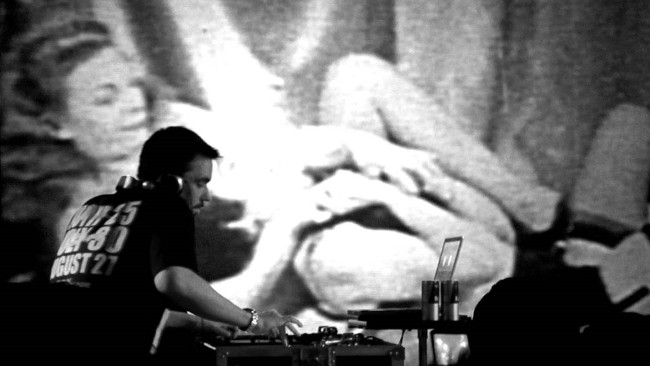
'As I AM: The Life and Times of DJ AM,' directed by Kevin Kerslake, premiered at this year's Tribeca Film Festival. (Photo Provided by Sunshine Sachs)
‘As I AM: The Life and Times of DJ AM,’ directed by Kevin Kerslake, premiered at this year’s Tribeca Film Festival. (Photo Provided by Sunshine Sachs)
Kevin Kerslake’s latest film, As I AM: The Life and Times of DJ AM, is a 97-minute feature documentary profiling the success and tumultuous life of one of music’s most talented-yet-complicated DJs and remixers. The movie maker’s current effort premiered on opening night of this year’s Tribeca Film Festival.
The groundbreaking music video and commercial director brought together a slew of home movies, photo albums, offbeat montages and memorable performances to capture DJ AM’s legacy. Interviews from Mark Ronson, Red Foo, A-Trak, Paul Oakenfold, Jazzy Jeff, Diplo, Jon Favreau, Steve Aoki, Z-Trip and Clark Kent among others rounded out Kerslake’s riveting tribute film.
Throughout As I AM, the filmmaker who studied at Loyola Marymount re-purposed an echoing, self-deprecating speech DJ AM delivered during a recovery meeting as the narration of his life story. The entertainer’s vivid anecdotes uncover his brutal honesty about the difficulty in fully accepting who he was but selflessly dedicating himself to helping other recovering addicts.
“It’s a complex movie with a lot of different parts,” says Kerslake often taking pauses over the phone. “I just try to get into the soul and pass the surface. With AM, his life offered an incredible amount of travel into many different corners of pop culture and his personal psyche.”
Before DJ AM’s life ended tragically from a drug overdose in 2009 at age 36 back when Narcan wasn’t as popular as it is today, the Philadelphia native born Adam Goldstein was in his element when it came to playing music. The former member of the chart-topping rock-rap act Crazy Town pioneered and popularized “mash-ups,” or extended mixes that link together words and melodies from various genres of music, pre-Serato on the club circuit.
The sought after DJ’s party rocking style led to him becoming Vegas’ first resident DJ to negotiate an unprecedented million-dollar contract. Celebrities like Madonna, Tom Cruise, Usher, Jay Z, J.Lo and Christina Aguilera often booked the sneakerhead to spin at their parties. It seemed like DJ AM was on top of the world.
Despite having success, DJ AM’s entire life was haunted by an addiction to crack cocaine, physical abuse, anxiety, trauma from his parents’ divorce, low self-esteem and life-threatening post-traumatic stress resulting from a 2008 near fatal plane crash with drummer Travis Barker.
Kerslake felt it was necessary to dedicate his high energy 2011 concert film, Electric Daisy Carnival Experience, to DJ AM, who appeared in the film just before his passing. Armed with 50 terabytes of footage after two-and-a-half years, it was extremely important to Kerslake, still periodically pausing between statements, to not translate tunnel vision about DJ AM’s life into the final product.
“When you have to translate that into film,” says Kerslake, “it’s easy to get lured into one aspect of his life. The task that Joel [Marcus], my editor, and I had was to fuse all of those things together and have as much of that naturalism that we could have on his life.”
Kerslake was completely authorized by DJ AM’s estate to bring his story to the big screen. The highly creative director bonded especially with DJ AM’s mother. She frequently appears throughout As I AM.
“They came to trust me to tell AM’s story in a way that embraced everything about him, honored his legacy and to be honest about the darker undercurrents that he was subject to,” says Kerslake.
There was no specific agenda for creating As I AM. Kerslake intentionally avoided using one style of camera angles or editing techniques synonymous with many of his filmmaking contemporaries. “I was so promiscuous with styles,” adds Kerslake.
“I fought that instinct to brand myself like that. You’re always in for surprise, so being open to the possibilities they can afford you is super important. Have the patience and the openness to let things happen and to not force the issue. When you’re doing a film, the relentless push to find new material is a big endeavor.”
Kerslake sums up filmmaking as a combination of connecting with the subject, discovering a distinct style of storytelling and having the mojo to complete the task. Though he never officially met DJ AM, he describes making As I AM as “insane fun with a lot of sleepless nights.”
Now the film is complete, Kerslake identifies with DJ AM’s unwavering love for music. “Film is to me what music was to him,” says Kerslake, sharing that he was a musician prior to filmmaking. “Having that daily and even minute-by-minute connection to your passion is a privilege to be able to immerse yourself in as fully as he did.”
The proceeds from As I AM are going towards the DJ AM Memorial Fund funneled directly through MusiCares, DJ AM was actively supported. The funds will go towards those in recovery, battling dependency and experiencing post-traumatic stress disorder.
It’s difficult for Kerslake to have an objective for audiences that will see As I AM. One thing he would like for viewers to come away with is having empathy for others despite their own personal struggles.
“Because AM’s work in that regard was really one of the most important things in his life,” says Kerslake, “it was paramount to extend that legacy forward. If anything goes to raise awareness about the plight of certain people, then the world is a better place. It’s a matter of being appreciative of what people are going through and having compassion for them even when you’re suffering yourself. That’s the core of why I made the movie.”
This post was written by Christopher A. Daniel, pop cultural critic and music editor for the BurtonWire. He is also contributing writer for Urban Lux Magazine and Blues & Soul Magazine. Follow Christopher @Journalistorian on Twitter.
Each year, Earth Day, April 22, marks the anniversary of what many consider the birth of the modern environmental movement in 1970. Millions of of people take to the streets, parks, and auditoriums to demonstrate for a healthy, sustainable environment in massive rallies. Thousands of colleges and universities organize protests against the deterioration of the environment. Groups that had been fighting against oil spills, polluting factories and power plants, raw sewage, toxic dumps, pesticides, freeways, the loss of wilderness, and the extinction of wildlife come together to create change that will help protect Earth, which is changing due to nature and how we treat her.
Caribbean 360 is reporting that planet Earth has had its warmest first quarter of the year on record in 2015, including its warmest March, according to the National Oceanic and Atmospheric Administration (NOAA).
During March 2014, record warmth was achieved in parts of the western United States and Canada, and parts of eastern Africa, Scandinavia, northwest Russia, south central China and northeast Australia. In California, the 12 month period ending in March was the warmest on record. Record or near record warmth is likely to continue over the globe for the remainder of this year. Why does this matter? Tropical storms and hurricanes.
As we celebrate Earth Day, we must remember to pay attention to the data that informs the action.
This post was written by Nsenga K. Burton, Ph.D., founder & editor-in-chief of the award-winning news blog, the Burton Wire. Follow her at @Ntellectual.
AllAfrica.com is reporting that Eritrea is the most censored country in the world, according to a new list released by the Committee to Protect Journalists. According to the article, thousands of Eritreans flee to Europe to escape arbitrary arrests and torture in their homeland.
Stefanie Duckstein writes:
“The human rights organization Amnesty International describes Eritrea as one of the most repressive regimes in the world. President Isaias Afewerki has been in power for 22 years. Afewerki is in effect the union head of state, head of government, commander in chief of the armed forces, parliament speaker and leader of the only authorized party, the PFDJ. ‘Since 1993 when Eritrea gained independence, it has had only one president, only one party. And no opposition is allowed,’ says Clara Braungart, Eritrea researcher at Amnesty International. All forms of civil society are prohibited. Media is not independent as there is only one state-run TV and radio outlet. ‘Against this background, no freedom is possible,’ says Braungart.”
Since 1998, Eritrea has been involved in a border dispute with Ethiopia. Many oppressive laws and policies are passed under the banner of being a “threat to national security.” At age 18, Eritreans are also required to serve 16 months in the military for very little pay. If they refuse, then they are arrested and tortured. In 2012, the Eritrean football team sought asylum in Uganda because of the oppressive environment. In January 2015, six Eritrean journalists were freed after spending six years in prison. According to Reporters Without Borders, sixteen journalists remain jailed.
While there has been some push back against the oppressive state of the country, human rights activists are saying it just isn’t enough.
This post was written by Nsenga K. Burton, founder & editor-in-chief of the award-winning news blog the Burton Wire. Follow her on Twitter @Ntellectual.
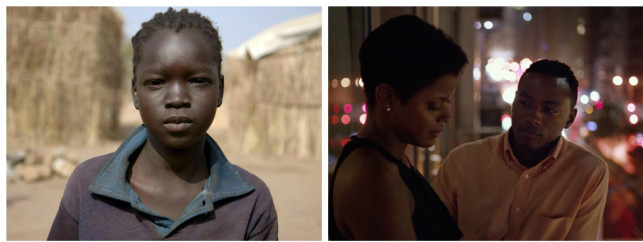
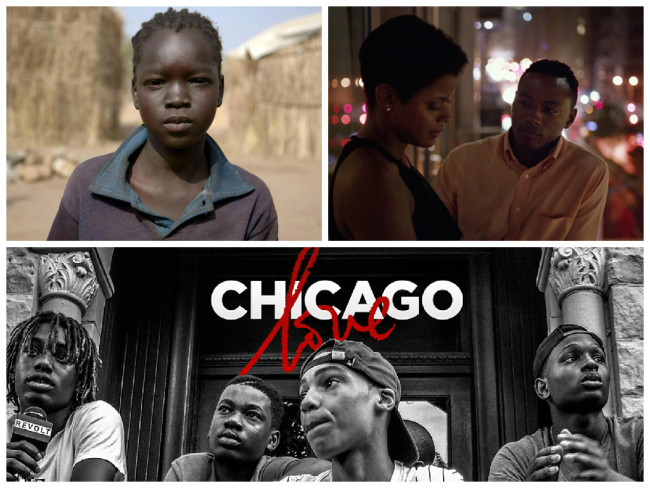
ATLFF 2015 featured diverse films including Madina's Dream (top left), Somewhere in Between (top right) and Chicago Love.
(Photos: ATLFF 2015)
ATLFF 2015 featured diverse films including Madina’s Dream (top left), Somewhere in Between (top right) and Chicago Love. (Photos: ATLFF 2015)
The 39th annual Atlanta Film Festival (ATLFF) was a celebration of films from all walks of life. The film festival, which is one of the region’s largest and longest-running celebrations of cinema in the Southeast, has over 20,000 attendees come out to see the independent, animated, documentary and short films each year. The Academy Award qualifying festival receives over 3500 submissions from over 100 countries each year and includes screenings, discussions, workshops and panels throughout the year. The 2015 festival took place March 20-29th at the Plaza Theatre and seven stages served as principle venues throughout the city including the Fox and Rialto Theaters. Justin Kelly’s film I Am Michael, starring James Franco as Michael Glatze, an openly gay magazine editor who after a health scare, renounces homosexuality and becomes a Christian, opened the festival, setting the stage for a festival reflective of the diversity of movie going audiences.
ATLFF also screened the stories of filmmakers from many parts of the African Diaspora.
Revolt screened the documentary Chicago Love (2015)at the festival. Chicago Love is a 90-minute documentary that explores the causes of the unprecedented violence happening in the windy city. Created by Sean ‘Diddy’ Combs, the film takes an unapologetic look at the role education, politics, economics, art, music and dance play in the current state of affairs in Chicago in an attempt to answer the question of why is this happening?
Divided Time (2014)takes an unflinching look at nine artists at various stages of their Hip-Hop careers and the choices they make as it relates to their families. The documentary challenges the prevailing stereotype of men in Hip-Hop as violent, narcissistic, misogynistic players, highlighting the reality of the complex choices that affect families when pursuing a dream, particularly a career in the music industry.
Imba Means Sing (2014) follows Moses and Angel, members of the Grammy-nominated African Children’s Choir from Uganda, on their journey to obtaining an education despite living in extreme poverty. Director Danielle Bernstein offers a poignant story about two kids, like any other, who just want the opportunity to pursue their dream of becoming a pilot and the first female president of Uganda, which should not be determined by access to resources or capital. They travel the world spreading their message of hope and equality through song and action.
In Our Son’s Name (2015) tells the story of Phyllis and Orlando Rodriguez, who lost their son Greg in the September 11, 2001, World Trade Center terrorist attack. Directed by Gayla Jamison, the film shows how this family chose the path of great resistance — nonviolence — to deal with the grief over losing their son, unlike many who called for revenge in the wake of the devastating losses.
Lanre Olabisi’s film Somewhere in the Middle (2015) explores the romantic complications that arise when the lives of several couples intersect. Olabisi, who takes a “Mike Nichols-esque” approach to filmmaking raised funds for the film through a Kickstarter campaign, which was discovered by award-winning producer Peter Gilbert and former NBA star and producer Chris Webber, financed the rest of the film.
Madina’s Dream directed by Andre Berens is a documentary film tells the story of Madina, an 11-year-old Nuba girl who dreams of a peaceful existence amid the civil unrest in Sudan. Madina’s story is told against the backdrop of the Sudanese government’s plan to attack the inhabitants of the Nuba mountains. Many families flee to South Sudan for safety. The film explores the conflict between the government and indigenous populations over land and identity in a fractured country through the eyes of a girl who just wants to safety and peace.
Old South (2015), directed by Danielle Beverly, explores the complexities of living in a college town in the American south. The documentary takes place in Athens, GA and follows the conflict between a white fraternity that flies the confederate flag and reenacts an antebellum parade which passes through a historically black neighborhood. Both stakeholders believe in the preservation of history, but whose version of history will prevail?
This post was written by Nsenga K. Burton, Ph.D., founder & editor-in-chief of the award-winning news blog the Burton Wire. Follow her on Twitter @Ntellectual.
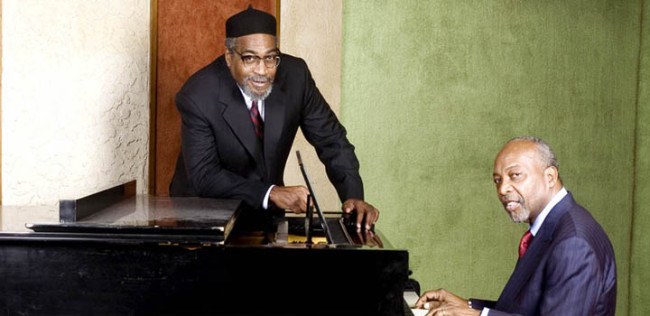
Philadelphia International Records' founders/producers Kenny Gamble (l.) and Leon Huff (seated) (Photo Credit: Gamble-Huff Music)
Philadelphia International Records’ founders/producers Kenny Gamble (l.) and Leon Huff (seated) (Photo Credit: Gamble-Huff Music)
The house where legendary songwriters Kenny Gamble and Leon Huff crafted “The Sound of Philadelphia” has been dismantled coincidentally on Record Store Day.
Vince Lattanzio of NBC 10 Philadelphia reported that headquarters for the prolific Philly Soul architects’ historic Philadelphia International Records (PIR) office and its accompanying Sigma Sound Studios will be replaced by a 47-story, 152-room complex including a hotel and condominiums.
Throughout the 1970s and early ‘80s, PIR, founded in 1971, churned out simultaneous gold and platinum hit singles and LPs by MFSB, The Three Degrees, The O’Jays, Teddy Pendergrass, Harold Melvin & The Blue Notes, Jerry Butler, Patti LaBelle, The Stylistics, Lou Rawls, Billy Paul, The Jacksons, Phyllis Hyman, McFadden & Whitehead and The Jones Girls among others.
Buildings nearby were damaged following a fire in 2010, leaving PIR as the lone structure. The high rise is set to open in 2017 and will feature signed gold bricks at the foundation to commemorate the building’s history.
This post was written by Christopher A. Daniel, pop cultural critic and music editor for the Burton Wire. He is also contributing writer for Urban Lux Magazine and Blues & Soul Magazine. Follow Christopher @Journalistorian on Twitter.
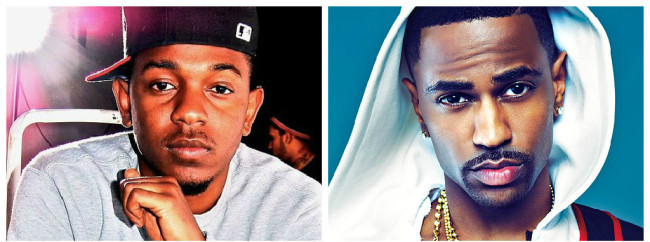
Rappers Kendrick Lamar, Big Sean and Drake.
(Photos: Google Images)
Rappers Kendrick Lamar, Big Sean and Drake. (Photos: Google Images)
What if anything is to be gleaned from the recent news that within the first three months of 2015 no less than 3 rappers have topped the Billboard 200 list? If you’re keeping track, that would be Kendrick Lamar in pole position with To Pimp a Butterfly, Drake with If You’re Reading This It’s Too Late, and Big Sean’s Dark Sky Paradise. Clearly this is a stellar first quarter for the perennially “dead” genre of hip-hop, illustrating that those incessantly ranting of its demise are in essentially the same company as climate change deniers. Hip-hop, like its guitar-driven cousin metal, appears to be settling into the global landscape as an eternal window into the soul of testosterone fueled young men and the women who love and emulate them.
Now clearly, public infatuation with certain genres shifts. The “Year of Rock” is inevitably replaced with the “Year of EDM” or “Year of Hip-hop” or “Year of Country” or whatever fashion surfaces from the primordial ooze of the zeitgeist. But why do certain genres come into fashion to begin with? What can they tell us about our present state of mind and cultural trajectory?
Over the last year we’ve witnessed a rebirth of Black consciousness after the stupefied post-racial haze following President Obama’s first election. For a moment, the country breathed a collective sigh of relief as centuries-old tensions appeared to evaporate within the span of a single political cycle. Cracks in this facade began to materialize almost immediately but such was the strength and naïveté of the recently dubbed “coalition of the ascendant” that we were willing to overlook them.
Then Trayvon Martin’s killer was exonerated despite overwhelming evidence of culpability. We watched a man beaten to death in NYC by cops and get off without so much as a slap to the wrist. By the time Ferguson arrived, we were ready to throw our hands up, facts in hand or not, and take it to the streets to protest the simple assertion that black lives matter.
Over that time, I have seen two distinct reactions from the Black artistic community. On one hand, you have those representing the New Blackness—those post-racialists clinging to the fiction that systemic racism has been supplanted by, at worst, a pernicious classism; ignoring entirely the volumes of evidence, some released as recently as last week, that collective disparities between blacks and whites are still as chasmic as ever. The other side, largely marginalized over the last decade, has remained unconvinced. The artistic offspring of Public Enemy, Tupac, and the Native Tongues movement—best typified by the hyper-fluency of a Kendrick Lamar—are increasingly finding an audience eager to wash the taste of indifference and false equivalence from their pallets.
The reason for this new hunger for reality-based rap cannot be limited to purely domestic causes. All around the world, movements forged from the frustration of the ignored, the marginalized and oppressed are upsetting the long-held balance of power. The Arab Spring, initially hailed for its promise of non-violent change in the Middle East, has given way to ISIS, Boko Haram, and bombings in the very streets where peaceful protesters once marched. From all over the world, young people exhausted with stasis have chosen violence and upheaval in preference to the droning platitudes of a one-size fits all New World Order. Domestically, millennials bashed over the head with dwindling hopes of advancement in the corporate world are creating their own paradigms, disrupting established industries, confronting previously impervious institutions, and all around raising hell in the name of a broken promise.
Is there any doubt as to why an art form like rap, with its origin in poverty stricken black and Latino neighborhoods, resonates so strongly? Is there any doubt why Big Sean’s aspirational Dark Sky Paradise, its very title drenched in conflict, resonates as a battle cry for anyone who has longed for the fabled good life—even at the potential expense of one’s soul. This theme recurs in both Dark Sky as well as TPAB—this sense that success is inherently problematic. It’s a reiteration of the old rap adage, “more money, more problems,” and even older, “money is the root of all evil.” Success in the context of Dark Sky is passage out of soul-crushing deprivation, but also a removal from the context that made such success possible. It’s the loss of trust, family and identify. You can practically here the desperation in Big Sean’s voice when he concludes in “Outro.” “Say I’m hard to get in contact with/oh, is that true/But what about now?/ 313-515-8772, bitch, call me.”
The same desperation is even clearer in Kendrick’s latest opus, weaving throughout the entire tapestry and perhaps most poignantly in “u” where K-Dot assumes the role of a forsaken homie. Even Drake, who largely eschews direct political commentary, seems obsessed with establishing his geographic bona fides and the criteria by which trust—whether to friends, business associates or women—can be extended. His world is an insular one framed by an absent father and a maniacal desire to be viewed as a man, even as he is dogged by boyish vices and insecurities.
This may very well be another Year of Rap, but there are still three more quarters to go. Nevertheless, even at this point, there’s very little risk in asserting that this latest crop of work from rap’s currently senior class is a complex mural of masculine ego, fear of erasure, and a desire to reconnect with a community that they fear may have deserted them. Or worse, may not be up the challenge of following them into the stratosphere.
Nyaze Vincent is a creative professional living in Los Angeles who moonlights as a musician when not helping clients navigate the tumultuous landscape of social media and digital production. Follow him on Twitter @ghettosavant.
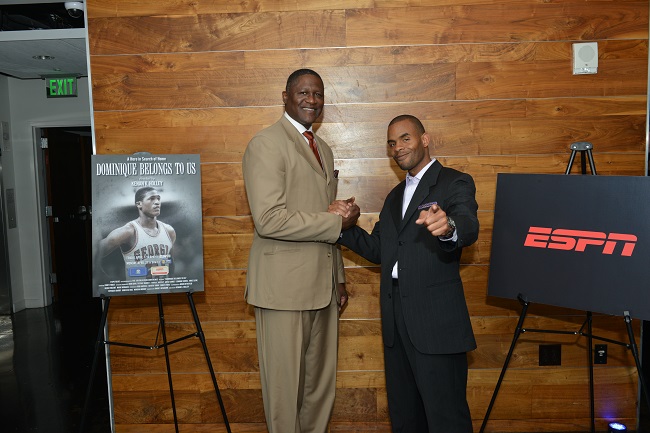
Basketball legend Dominique Wilkins and 'Dominique Belongs To Us' director/writer Kenan K. Holley at the Atlanta premiere. (Photo Credit: Richard DuCree/ESPN Images)
Basketball legend Dominique Wilkins and ‘Dominique Belongs To Us’ director/writer Kenan K. Holley at the Atlanta premiere. (Photo Credit: Richard DuCree/ESPN Images)
Kenan K. Holley is living out all of his dreams through his latest documentary, Dominique Belongs To Us. The extroverted Houston native’s latest cable program chronicles the life of his all-time favorite basketball player, Dominique Wilkins. Wilkins, who persevered over many personal and professional obstacles, is one of the most iconic players in the history of pro basketball. Out of all of the legendary basketball players he could have made a film about, the Duke educated Holley is clear on why he chose Wilkins.
“For me, it’s the chance to do a movie on someone who I admire so much,” says Holley immediately following a private screening of the 50-minute film in Atlanta. “I had to do it. I locked in tunnel vision and put the fan side away.”
Narrated by Andre “3000” Benjamin, Holley’s favorite rapper, the risk-taking ESPN Films writer and director’s installment of the four-episode SEC Storied franchise unveils the forgotten saga seminal to the Basketball Hall-of-Famer’s legacy. The film traces “The Human Highlight Film’s” complex beginnings; Wilkins was born on an Air Force base in Paris, France, moved to a Baltimore tenement with seven other siblings and raised solely by a determined divorced mother, and then making a very grown-up decision as a teenager to move to Washington, NC with his grandparents to pursue basketball as a way out of poverty, where he became legendary.
The story originates from a whiteboard full of ideas regarding potential profiles of sports figures. Holley, who previously created original content for NFL Films and NASCAR, remembers his childhood schoolmates being fans of Michael Jordan. On his first day at ESPN, the director was tasked with making informative documentaries on groundbreaking black athletic figures. Options included Nolan Richardson, Herschel Walker and Wendell Scott but he immediately jumped at the chance to cover Wilkins, his favorite basketball star and the leading scorer for the Atlanta Hawks, because he also deserved to have his important story told.
Wilkins admits that when Holley originally pitched the idea, he thought the self-motivated filmmaker was joking. The nine-time NBA All-Star changed his tune once Dominique Belongs To Us went into production, calling the film “breathtaking.”
“I couldn’t have told this story better than ESPN,” shares Wilkins following the screening. “It told a lot about the journey I went through and still go through.” Dominique Belongs To Us is chock-full of vintage slam dunk footage, press tear sheets and game film highlights along with commentaries from journalists, broadcasters, coaches, Wilkins’ siblings, former teammates and hometown spectators.
Despite leading his team to state championships and being a highly sought after recruit for North Carolina-based ACC colleges, Wilkins’ last minute commitment to UGA created a backlash. The future two-time Slam Dunk Champion got into fights, had property vandalized by irate fans, witnessed threats and at one point couldn’t retrieve his transcripts.
The captivating final cut wasn’t the original treatment. As Holley conducted research, his editor sent over a Time magazine clipping, completely altering the angle. “It was a total change of direction,” says Holley. “I could see the feeling between the town and Dominique. That’s what made the story.”
Directing Dominique Belongs To Us forged Holley’s professional relationship with Wilkins. He had to give the basketball legend precise instructions in order to create a personal film experience. Never one to meet a stranger, the athlete always waved and greeted people during filming. Various coaches on UGA’s campus would ask Wilkins to come speak with other student-athletes.
“He’s such a part of the fabric,” says Holley, mesmerized by Wilkins’ ingenuity and humility. “He’s just tied in with the people.” The movie was cathartic for Wilkins, who never fully accepted his past. The exceptional sportsman reiterates how indebted he is to ESPN and Holley for encouraging him to confront his history.
“I always wanted to go back,” says Wilkins, “but something kept me from doing that. When I went back, it was so emotional, I almost couldn’t talk.”
Holley, a former coordinator of Street Poets, Inc. a mentorship program committed to rehabilitating incarcerated Los Angeles-based male youth through writing, identifies with Wilkins’ experience. Healing through forgiveness, the director says, is often avoided in sports-related programming.
“You don’t hear that much amongst men,” suggests Holley, co-producer of The Book of Manning and Snoop & Son: A Dad’s Dream. “Even though we don’t talk about it as guys or say that stuff, it still has to be part of our letting go.” Prideful of mentoring youth and performing outreach, the father of two sons draws parallels between filmmaking and hip-hop music.
“It’s you, your voice and people,” says Holley. “Can your voice and what you have to say touch people? That’s all you got. I try to make what I write lyrical. If you can do something artistic with facts, it breaks something in people’s mind.”
Because of Holley’s work, Wilkins is grateful that his story can inspire others. He hopes audiences can look beyond his athletic ability and focus on how he defied the obstacles that nearly threatened his success.
“The film is about life and struggle,” urges Wilkins. “Never let anyone tell you what you can’t do.” Holley, on the other hand, has his sights set on producing specials covering Howard University’s 1971 soccer championship team, the brotherhood of Mizzou’s football team and possibly another collaboration with Snoop Dogg.
Describing his work as “relentless and real,” Holley recognizes both ESPN and SEC for allowing him to flex his creative license.
“This story has controversy, race and people turning against each other,” says Holley, “and they let us go and do it. That’s trust and vision for a conference that big with that much at stake to allow us to do our thing.”
Dominique Belongs To Us premieres Fri., Apr. 17 on ESPN at 8:00 p.m. ET and re-airs on SEC Network on Mon., Apr. 27 at 9:00 p.m.
This post was written by Christopher A. Daniel, pop cultural critic and music editor for the BurtonWire. He is also contributing writer for Urban Lux Magazine and Blues & Soul Magazine. Follow Christopher @Journalistorian on Twitter.
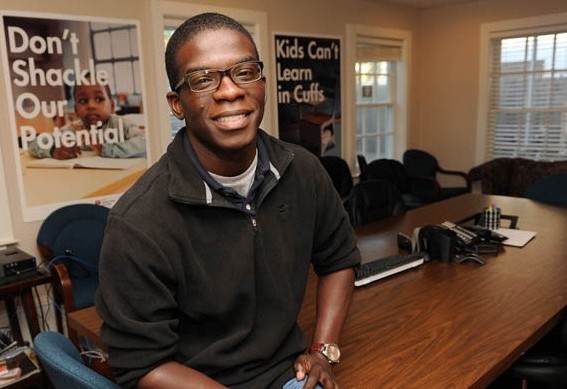
Theo Shaw, 25, of the Jena Six is headed to law school in the fall.
(Photo: Southern Poverty Law Center)
Theo Shaw, 25, of the Jena Six is headed to law school in the fall. (Photo: Southern Poverty Law Center)
Jarvis DeBerry of Nola.com is reporting that former Jena Six defendant Theo Shaw is headed to the University of Washington Law School on a full scholarship. Shaw was one of six black students at Jena High School in Central Louisiana arrested in December 2006 after a school fight in which a white student was beaten and suffered a concussion and multiple bruises. The six black students were charged with attempted murder and conspiracy and facing 100 years in prison with no parole. The boys ranged in age from 15 to 17.
The fight took place after three nooses were found hanging under a tree where a black student had sat the previous day. Shaw, who was 17 at the time of his arrest and spent 7 months in jail awaiting trial, maintained his innocence during the trial. The other defendants were Robert Bailey, then aged 17; Mychal Bell, then 16; Carwin Jones, then 18; Bryant Purvis, then 17 and Jesse Ray Beard, then 14. Through online media outlets, the case of the Jena Six became widely known leading to an national civil rights campaign to help the boys, who sat in jail because of the inability to pay the bail, attain their freedom.
Bell was initially convicted as an adult of aggravated battery and conspiracy to commit aggravated battery and was facing 22 years in jail. His conviction was later overturned in juvenile court. All plead no contest to misdemeanor simple battery.
Shaw, who prior to this life event had no plans to attend college, decided to change his life and the life of others.
DeBerry writes:
He will enroll this fall at the School of Law at the University of Washington. That law school, which U.S. News and World Report puts in the country’s top 30, has chosen Shaw as one of the incoming class’ five William H. Gates Public Service Law Scholars. It’s a full scholarship, covering tuition, books and even some money for room and board and incidental expenses.
“You have already shown yourself to be a person of commitment and drive,” the letter congratulating Shaw reads. “Your participation as a Gates Scholar will help us continue to build our law school community, and will also help in making our world a better place.”
Shaw graduated from the University of Louisiana at Monroe in 2012 with a BA in political science and has been working at the Southern Poverty Law Center counseling juvenile offenders. He heads to the University of Washington this fall.